

Note: This article contains affiliate links. If you click on these links and make a purchase, I may earn a small commission at no extra cost to you. This helps support my research and content. Read my full affiliate disclosure here.
Picking the right manure can make a noticeable difference in flower beds, container borders, and mixed perennial plots. The best manures balance nutrients, organic matter, and ease of use so you get richer soil without overwhelming tender roots. This guide covers seven shortlisted manures that suit different flower-garden situations, from heavy clay beds to raised containers. We evaluated options based on nutrient profile, ease of application, weed and pathogen risk, and how each product affects soil structure over time. Read on to find types that match your garden goals and growing conditions.
Top Picks at a Glance
| Best Overall The best all-around choice for most situations | BRUT Worm Farms Cow Compost — 10 Quart Bag |  |
| Best Quality Built to a higher standard if you want something more solid | Plantonix Worm Bliss Organic Worm Castings (8 qts) |  |
| Best Value The sweet spot between price and what you get | R&M Organics Cow Manure Compost Soil Amendment (10 lb) |  |
| Best Budget The cheapest option that still gets the job done reliably | Home and Country USA Organic Composted Cow Manure (1 Quart) |  |
| Highest Rated A top-rated pick with lots of positive feedback | Lancaster Agriculture Chicken Manure Pellets, 4 lb |  |
| Most Popular A crowd favorite that many people choose with confidence | Brut Organic Worm Castings, 5 lb |  |
| Best Seller A high-volume bestseller chosen again and again | Espoma Organic Chicken Manure Granules, 3.75 lb |  |
BRUT Worm Farms Cow Compost — 10 Quart Bag

| Unit Count | 192 Ounce |
|---|---|
| Volume | 10 quarts |
| Brand Name | BRUT WORM FARMS |
| UPC | 860000284295 |
Brut Cow Compost is a ready‑to‑use bagged cow manure compost aimed at improving soil fertility and structure. It is made from 100% composted cow manure that has been finely sifted, which makes it easy to mix into potting mixes, top‑dress containers, or incorporate into garden beds. Notable features include an OMRI listing for organic use, a nutrient profile with nitrogen, calcium and iron, and a low‑odor, non‑burning formula that is safe around seedlings and houseplants. In practice the compost increases microbial activity and helps retain moisture, so plants show healthier foliage and better growth when used regularly. The 10 quart bag is convenient for small gardens, potted plants, or spot treatments without handling bulk loads. Limitations are the modest volume per bag for larger beds and the product is a general amendment rather than a complete, balanced fertilizer, so heavier feeding or specific NPK management may still be needed for high‑demand crops.
Best for: Gardeners who want an easy, certified organic soil amendment to boost soil life and moisture retention in containers, small beds, or targeted spots without handling raw manure.
Less Ideal for: People establishing large garden plots or those seeking a complete NPK fertilizer for heavy feeding crops should consider bulk compost or supplemental fertilizers instead.
- OMRI‑listed organic compost safe for edible and ornamental plants
- Finely sifted, low‑odor formula suitable for indoor use and seedlings
- Adds organic matter and beneficial microbes to improve moisture retention and soil structure
- Versatile application as top dressing, mix‑in amendment, or container soil enhancer
- Small 10 quart volume requires multiple bags for larger garden projects
- Not formulated as a balanced complete fertilizer for high‑demand crops
Verdict: A compact, OMRI‑listed bag of finely composted cow manure that reliably adds organic matter and microbial life to containers and small garden beds.
Plantonix Worm Bliss Organic Worm Castings (8 qts)

| Unit Count | 160 Ounce |
|---|---|
| Item Type Name | Soil and Soil Amendments |
| Style Name | 100% Pure Worm Castings for Plants & Gardening |
| Manufacturer | Plantonix |
Worm Bliss is pure, undiluted worm castings processed and screened to remove grit so it can be used straight into potting mixes or worked into garden soil. You can top-dress container-grown hollies or mix a small portion into the root zone when planting to improve nutrient availability and water retention. Notable features include an OMRI-listed organic formulation, climate-controlled production and claims of high nutrient and microbe content. In practice the product provides a gentle, slow-release source of nitrogen, phosphorus and potassium plus humus that improves soil structure and supports beneficial microbes without burning roots. For risk-averse gardeners this is an easy-to-use, low-risk biostimulant: apply a light top dressing every few months or blend 10 to 20 percent into potting mixes. The main limitations are that it is not a complete fertilizer for immediate heavy feeding needs and results are gradual, requiring repeated applications for long-term soil improvement.
Best for: Gardeners who prioritize safe, natural soil improvement for ornamental plantings and want a low-risk amendment to support holly trees in containers or beds.
Less Ideal for: Growers needing rapid, high-dose feeding for heavy-producing edibles or landscapers who need bulk quantities for large-scale soil renovation.
- 100% organic, screened worm castings with no fillers
- Helps retain moisture and improve soil structure for better root aeration
- Encourages beneficial soil microbes that aid nutrient availability
- Easy to apply as a top dressing or mixed into potting soil
- Not a fast-release, complete fertilizer so plants needing immediate high nutrient boosts may require supplemental feeding
- Volume (8 qts) may be modest for larger landscape projects
Verdict: A gentle, fully organic worm-casting amendment that safely improves soil structure and microbial health for holly trees and other ornamental plantings.
R&M Organics Cow Manure Compost Soil Amendment (10 lb)

| Item Form | Solid |
|---|---|
| Specific Uses For Product | Organic |
| Application Method | Apply a thin layer around plants or mix into soil |
| Coverage | All-purpose |
| Target Species | fruits, vegetables, flowers, lawns, trees |
This 10 lb bag of R&M Organics compost is a straightforward, all-purpose soil amendment aimed at improving soil health in garden beds, containers, and raised beds. Made from cured cow manure and fully composted, it is low-odor and easy to work with — apply a thin quarter-inch layer around established plants or mix into planting soil at the recommended 5:1 ratio for new beds. The compost enhances moisture retention, aeration, and organic matter, which helps roots establish and reduces watering frequency. Its small bag size and modest weight make it convenient for small to medium projects and for gardeners who prefer incremental soil improvements. Because the product is pure compost rather than a balanced fertilizer, it is best used as a long-term soil builder rather than a quick nutrient fix; you may still need targeted fertilizers for heavy-feeding vegetables or to correct specific nutrient deficiencies. The simplicity and low odor make it a practical choice for backyard growers who want a reliable organic amendment without handling fresh manure or bulk deliveries.
Best for: Gardeners who prefer incremental, low-effort soil improvement for beds and containers and who prioritize organic, low-odor amendments for everyday maintenance.
Less Ideal for: Large-scale gardeners or landscapers who need bulk amendments or immediate corrective fertilizers for specific nutrient deficiencies should look for bulk compost or formulated plant foods.
- Fully composted cow manure reduces pathogens and minimizes odor compared with raw manure
- Improves soil structure and moisture retention for beds, containers, and raised beds
- Small 10 lb bag is easy to carry, store, and apply for small to medium gardens
- Versatile all-purpose amendment suitable for fruits, vegetables, flowers, lawns, and trees
- Not a formulated fertilizer so it may not supply immediately available nutrients for heavy feeders
- Bag size is small for larger beds or bulk soil rebuilding projects
Verdict: A convenient, low-odor organic compost that steadily improves soil structure and moisture retention for small to medium garden beds.
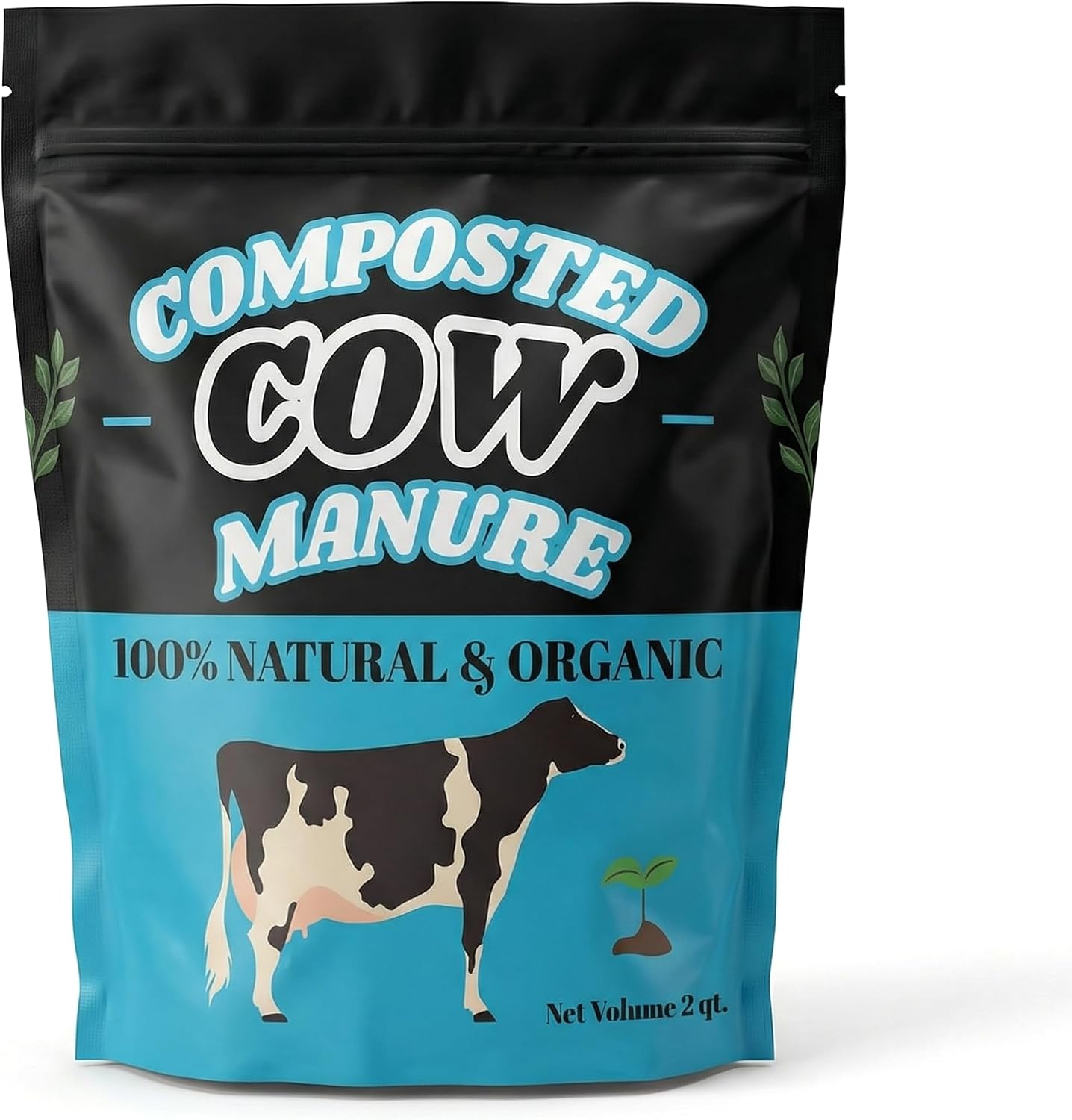
Home and Country USA Organic Composted Cow Manure (1 Quart)
| Item Form | Liquid |
|---|---|
| Application Method | Incorporate into soil |
| Target Species | vegetables, flowers, shrubs |
| Liquid Volume | 1 quarts |
| Mixing Ratio | 1:10 |
This 1-quart organic composted cow manure is a concentrated liquid fertilizer designed to be mixed and incorporated into garden soil. Typical use is blending the product at the recommended 1:10 ratio and applying it to raised beds, vegetable plots, potted plants or around shrubs to boost soil fertility and water retention. Notable features include an organic formulation from U.S. farms, a liquid form that makes even application and quick integration into soil, and guidance for full garden coverage. Practical benefits are faster distribution than bulky bagged manure, suitability for small-plot gardeners who want organic inputs, and an easy mixing ratio for dilute feeding. Limitations are the small container size, which means you will need multiple bottles for larger beds, and the liquid form may require more frequent applications than slow-release amendments. It is most useful as part of a regular feeding routine or to quickly refresh potted soils rather than as a sole long-term soil builder.
Best for: Gardeners working with small beds, containers or raised planters who want an easy-to-apply organic feed on a budget and prefer quick soil refreshes.
Less Ideal for: Large-scale vegetable growers or those seeking a single-product soil-building amendment for extensive beds should consider bulk compost or bagged manure instead.
- Certified organic composted manure sourced from U.S. farms
- Liquid form mixes easily with water for even application
- Targets vegetables, flowers and shrubs so it is versatile for garden beds and containers
- Small 1-quart volume requires multiple purchases for medium to large gardens
- Liquid feed works faster but does not provide long-term bulk organic matter
Verdict: A convenient, wallet-friendly organic liquid manure for quickly boosting soil fertility in small beds and containers.
Lancaster Agriculture Chicken Manure Pellets, 4 lb

| Item Form | Pellets |
|---|---|
| Target Species | Flowers |
| Unit Count | 64 Ounce |
| Mixing Ratio | 4:2:2 |
These chicken manure pellets are a ready-to-use organic fertilizer intended to boost soil fertility in vegetable and flower beds. The product comes as heat-treated, dehydrated pellets that you sprinkle around the drip line and water in, so there is no mixing or composting required before application. With a 4-2-2 NPK ratio and about 8% calcium, the pellets supply steady, slow-release nitrogen and useful phosphorus and potassium for leafy and fruiting vegetables. Practical benefits include convenience of pellets for targeted side-dressing, suitability for monthly feeding of vegetables during the growing season, and a clear mixing ratio listed for custom blends. Because the material is heat-treated, it is safer to handle than raw manure, but the nutrient release is not instant so expect gradual soil improvement rather than rapid greening. The bag size is small for larger plots, so frequent purchases or larger-volume sourcing may be necessary for sizeable vegetable gardens. This product suits gardeners who prioritize an organic, consistent fertilizer that is simple to apply and integrates well into regular feeding schedules.
Best for: Home vegetable gardeners who want an organic, low-hassle fertilizer they can apply regularly to maintain soil fertility and support steady crop growth.
Less Ideal for: Gardeners needing a high-volume solution for large-scale plots or those who require fast-acting, high‑nitrogen feed for immediate greening should consider bulk amendments or concentrated fertilizers instead.
- Heat-treated, pelleted form for easy, mess-free application
- Balanced 4-2-2 NPK analysis with added calcium for general vegetable needs
- Suitable for monthly side-dressing of vegetables and regular use on flowers and shrubs
- Small 4 lb unit may be insufficient for larger vegetable plots
- Slow-release action means nutrients are gradual rather than immediate
Verdict: A convenient, organic pelleted chicken manure that provides steady, slow-release nutrition ideal for regular feeding of home vegetable gardens.
Brut Organic Worm Castings, 5 lb

| Item Form | Granules |
|---|---|
| Specific Uses For Product | Gardening,Organic |
| Target Species | All plants |
| Mixing Ratio | 1:5 |
Brut Organic Worm Castings function as a concentrated, natural soil amendment you mix into potting mixes or top-dress garden beds and raised beds. Typical use is mixing at the recommended 1:5 ratio for new indoor plants, sprinkling a cup around established houseplants, or working into outdoor planting holes and beds according to the brand directions. The product is OMRI/CDFA listed and produced in controlled conditions, which supports consistent nutrient content and beneficial microbial life that help roots establish, improve soil structure, and increase moisture retention without burning plants. Practical benefits for raised garden beds include improved aeration, slow-release nutrients, and a boost in microbial activity that supports long-term fertility. Limitations are that it is not a complete NPK fertilizer for immediate heavy feeding needs and larger beds require significant quantities to hit the suggested per-square-foot rates, so frequent applications or bulk purchases may be needed for big projects.
Best for: Gardeners who prioritize dependable, organic soil improvement for raised beds and container gardens and prefer predictable, low-risk amendments that support long-term soil health.
Less Ideal for: Those needing immediate, high-NPK feeding for heavy-feeding crops or gardeners who want to amend very large beds without buying supplemental bulk material.
- Certified organic and produced indoors for consistent purity
- Rich in beneficial microbes that improve soil structure and plant vigor
- Easy-to-use granular form suitable for mixing or top-dressing
- Not a standalone high-NPK fertilizer for rapid nutrient correction
- Five-pound bag may be small for large raised beds and repeated seasonal use
Verdict: Use this OMRI/CDFA-listed worm castings product to reliably build long-term fertility and microbial health in raised beds and containers.
Espoma Organic Chicken Manure Granules, 3.75 lb

| Item Form | Granules |
|---|---|
| Application Method | Scatter around plants |
| Target Species | Flowers, Vegetables, Trees, Shrubs |
| Specific Uses For Product | Gardening, Organic, Plant Food |
Espoma Organic Chicken Manure is a ready-to-use, granulated poultry manure fertilizer aimed at home gardeners who want an organic nitrogen-rich soil amendment. With a 5-3-2 NPK analysis and added calcium, it is scattered around the plant drip line and watered in to release nutrients; the granulated, heat-treated form makes application tidy and eliminates the need for mixing. It is labeled for monthly use on vegetables and for seasonal use on trees and shrubs, which makes it practical for routine feeding of tomatoes, peppers and other vegetable beds. The product is registered for organic production and contains no fillers, so you get mostly poultry manure rather than blended proprietary mixes. Because it is dehydrated and granulated there is minimal odor and easier storage than fresh manure, but nutrient levels are moderate so heavy-feeding crops may need larger or repeated applications. Also it does not supply specific micronutrient balances or slow-release polymers, so pairing it with a balanced organic program will give best results.
Best for: Gardeners who prioritize certified organic inputs and want a simple, easy-to-apply manure fertilizer for regular feeding of vegetable beds and common garden plants.
Less Ideal for: Growers seeking a single-product, high-analysis or slow-release fertilizer for intensive commercial production should consider concentrated or formulated alternatives.
- Certified for organic gardening and made from dehydrated poultry manure
- Granulated, heat-treated form is easy to apply and has lower odor than fresh manure
- Straightforward 5-3-2 NPK plus calcium provides usable nitrogen for vegetables
- Ready-to-use with no mixing required and simple scatter-and-water application
- Moderate nutrient analysis may require more frequent applications for heavy feeders
- Does not list a full micronutrient profile or slow-release formulation
Verdict: A simple, certified organic chicken manure in granule form that makes monthly feeding of vegetable beds easy and low-odor.
Choosing the Right Manure for Flower Garden: Key Factors to Consider
Nutrient Balance and Release Pattern
Flowers need a mix of nitrogen, phosphorus, and potassium, but the ideal proportions depend on the species and growth stage. Fertile annuals often respond quickly to available nitrogen, while bulbs and bloom-focused plants benefit from phosphorus. Slow-release nutrients from well-rotted manure feed plants over weeks to months and reduce the chance of nutrient spikes that can cause lush foliage at the expense of blooms.
Evaluate whether the manure is well-aged or composted. Fresh manures can be high in soluble nitrogen and salts that may burn roots, while properly cured manure has more stable, plant-available nutrients. For container-grown flowers or recently planted transplants, choose a product with gentler, slower nutrient release.
Organic Matter and Soil Biology
Organic matter improves water retention in sandy soils and enhances drainage and tilth in heavy clay. Manure that contributes substantial organic carbon helps build a sponge-like structure, encouraging beneficial microbial activity and root development. Over time, this leads to stronger, more resilient flower beds that need less frequent feeding.
Consider how a manure integrates into your existing soil. High-fiber manures can require longer breakdown times and may temporarily immobilize nitrogen as microbes decompose carbon-rich material. Mixing with compost or applying at the correct time of year helps manage these effects.
Application Method and Labor
Ease of spread, odor, and how the manure is packaged affect whether you will use it consistently. Pelleted or bagged composted manures are easier to apply evenly in borders and containers, while loose bulk products may be economical for large beds but harder to handle. Some manures require incorporation into the soil and time to settle before planting, whereas others can be worked lightly into topsoil or used as a surface mulch.
Think about seasonal timing too. Late-fall applications give time for breakdown over winter, while spring applications may need to be well-aged to avoid transplant stress. Your physical ability and garden scale also determine which format is practical.
Weed Seed and Pathogen Risk
Not all manures are equally safe when used uncooked. Manure sourced from animals fed lots of weed seed or that has not been heated properly during composting can introduce persistent weeds into flower beds. Raw manure may also harbor pathogens that can survive on foliage or soil, presenting a risk in edible gardens or areas accessed by pets and children.
Check whether a manure has been fully composted or pasteurized. For ornamental-only flower gardens, some risk is tolerable if the product is known and from a reliable source, but for low-maintenance or high-traffic areas choose products with low weed and pathogen potential.
Salt Levels and Plant Sensitivity
Some manures and composted manures can retain higher soluble salt content, which stresses salt-sensitive ornamentals or newly rooted plants. Salt buildup is a particular concern in container planting where there is limited leaching. Salt issues manifest as leaf burn, stunted growth, or reduced water uptake.
If you grow salt-sensitive species or use containers, prefer well-rinsed, thoroughly composted materials and avoid fresh manures. Periodic soil testing or observing plant response after small test applications will help prevent long-term damage.
Sourcing and Sustainability
Where and how the manure is produced affects nutrient consistency, contamination risk, and environmental impact. Manure from certified organic or pasture-based systems often has fewer chemical residues. Local sourcing reduces transport footprint and usually means fresher, more traceable material. Conversely, unknown sources can vary widely in quality and could contain unwanted additives.
Consider whether you want a product that supports circular garden practices, such as locally composted manure, or one that is processed for consistency and ease of use. Transparency from the supplier about composting processes and feedstock helps you make a safer choice for flowers.
When to Apply Manure in Flower Beds
Timing manure applications matters for plant safety and effectiveness. For established beds, apply composted manure in late fall so winter rains and soil microbes can finish stabilizing nutrients before spring growth. This approach improves soil structure and feeds perennials gradually without burning new shoots.
For spring-planted annuals and bulbs that need an early nutrient boost, use well-rotted manure applied several weeks before planting or blended with potting mix at low rates for containers. Avoid applying high-nitrogen fresh manure immediately before bloom if you want strong flower production rather than lush foliage.
- Fall application encourages breakdown and reduces transplant risk
- Incorporate composted manure into topsoil rather than placing raw manure against roots
- For containers, mix small amounts into potting media and monitor plant response
Integrating Manure With Compost and Mulch
Manure works best as part of a broader organic program. Mixing it with finished compost balances nutrient release and helps prevent problems like nitrogen immobilization or salt stress. A common approach is to layer composted manure under a finished compost topdressing, then mulch with shredded bark to retain moisture.
Mulch protects manure-amended soil from erosion and helps moderate temperature swings that influence microbial activity. In high-rainfall areas, a stable mulch layer also reduces nutrient leaching so more of the manure's benefits stay in the root zone.
- Blend manure with compost to smooth nutrient release
- Topdress with compost then mulch to lock in moisture and prevent erosion
- Avoid burying fresh manure under mulch where it cannot aerate
Choosing Manure for Containers and Small Beds
Containers and small raised beds concentrate salts and require materials that are low-risk and uniform. Pelletized or bagged composted manures are easier to measure and mix into potting media. Look for products labeled as well-aged or fully composted for use in confined spaces.
For small beds, apply a thin layer incorporated into the top few inches of soil and monitor plants for signs of overfeeding. Containers often need more frequent, dilute feedings because of faster nutrient depletion and leaching during watering.
- Use composted, low-salt products for containers
- Measure small applications carefully to avoid burn
- Topdress annually for small beds rather than heavy in-ground incorporation
Dealing With Odor and Neighborhood Concerns
Fresh manure can produce strong odors that neighbors and family members notice. If odor is a concern, choose well-composted or pelletized products that have largely lost their ammonia smell. Applying manure in cooler weather and incorporating it into soil reduces detectable odors.
For urban gardens where discretion matters, work manure into beds when fewer people are around and avoid applying large fresh loads just before events or gatherings. Properly finished materials are much less likely to cause complaints.
- Composted products have minimal smell
- Incorporate or cover fresh applications to reduce odor
- Schedule application timing with neighbor and household activity in mind
Testing Soil Before and After Application
A simple soil test helps match manure choice to existing nutrient levels and pH. Knowing your soil's baseline can prevent excess phosphorus or nitrogen that may harm plant balance. Repeat tests every couple of years to track how repeated manure use shifts soil chemistry and to adjust application rates.
Post-application observation is also useful. Watch for leaf burn, slowed growth, or unexpected weed flushes that may indicate contamination or overapplication. Adjust future use based on these signs.
- Test soil to determine baseline nutrient and salt levels
- Adjust application rates based on test results and plant response
- Keep records of applications to monitor long-term changes
How We Chose the Best Manure for Flower Garden
We narrowed candidates by focusing on attributes that affect flowering plants directly. Nutrient balance was a primary filter because flowers need a steady supply of nitrogen for leafy growth, phosphorus for blooms, and potassium for overall health. We also prioritized organic matter content and how the material improves soil structure, drainage, and moisture retention-especially important in clay or sandy soils. Application ease and readiness were judged to reflect how quickly gardeners can use each manure without long composting delays. We screened for contamination risks such as persistent weed seeds or high salt content, excluding sources with known pathogen or heavy metal concerns. Longevity of soil benefits and compatibility with common flower garden practices like mulching and companion planting were considered. Excluded from the list were raw manures that require long hot composting to be safe, products with poor sourcing transparency, and any material that would consistently burn tender flower roots. The final picks represent practical, garden-ready manure choices that suit a range of flower-bed types and maintenance levels.
FAQ
Is fresh manure safe to use in flower beds?
Fresh manure can be risky because it often contains high soluble nitrogen and salts that can burn roots. It may be used safely if well-aged or composted first. For most flower gardens, composted manure is the safer, more forgiving choice.
How much manure should I add to my perennial border?
A light application of composted manure-about an inch worked into the top few inches of soil-is usually sufficient for established borders. Heavier applications can be done in fall and then mixed in over winter to avoid overwhelming roots in spring.
Can manure change soil pH and should I be worried?
Manure can affect soil pH slightly depending on the source and composting process, but changes are generally gradual. If you grow pH-sensitive flowers, test soil before applying and retest after major amendments to ensure levels remain suitable.
Will manure introduce weed seeds into my flower garden?
Uncomposted or poorly composted manure may contain viable weed seeds. Choosing fully composted products or those processed at high temperatures reduces this risk. For low-maintenance beds, prefer materials certified or marketed as composted and screened.
How often should I replenish manure in established beds?
Annual light topdressing or a modest incorporation every other year is common. Frequency depends on plant demand, soil texture, and how much organic matter you want to build. Watch plant vigor and soil structure as guides for timing.
Can I use manure around newly planted seedlings?
Avoid placing fresh manure directly against new roots. Use composted manure applied several weeks before planting, or mix small amounts into soil away from immediate root balls. This reduces the risk of nutrient burn and transplant shock.
Final Verdict
Choosing manure for flower beds involves balancing nutrient needs, soil-building goals, and practical handling concerns. Prioritize composted materials for containers and newly planted areas, while beds that need major organic matter improvement can tolerate coarser, higher-fiber manures applied with time to decompose. Focus on nutrient balance, low weed risk, and how the material will change soil texture over seasons. With those tradeoffs in mind, you can pick a manure type that steadily feeds blooms and improves soil health without adding unnecessary risks.
