

Note: This article contains affiliate links. If you click on these links and make a purchase, I may earn a small commission at no extra cost to you. This helps support my research and content. Read my full affiliate disclosure here.
Picking the right manure for flowers matters because different manures change soil structure, nutrient timing, and how your beds behave through a season. The correct choice can lift bloom count, deepen color, and reduce watering needs by improving soil moisture retention. This guide collects six well-suited manures for flowers that gardeners commonly use, and explains why each option made the shortlist. We evaluated each type for nutrient profile, how it affects soil texture and drainage, application and odor, and suitability for common flower beds and containers. Read on to match the manure style to your soil and seasonal plan.
Top Picks at a Glance
| Best Overall The best all-around choice for most situations | BRUT Worm Farms Cow Compost — 10 Quart Bag |  |
| Best Value The sweet spot between price and what you get | Hoffman Dehydrated Super Manure Pellets, 4-2-3 (5 lb) |  |
| Best Budget The cheapest option that still gets the job done reliably | Bunnydoo Rabbit Manure Pellets, Organic Soil Conditioner (4 lb total, 2×2 lb bags) |  |
| Highest Rated A top-rated pick with lots of positive feedback | Lancaster Agriculture Chicken Manure Pellets, 4 lb |  |
| Most Popular A crowd favorite that many people choose with confidence | Espoma Organic Chicken Manure Granules, 3.75 lb |  |
| Best Seller A high-volume bestseller chosen again and again | COOP GRO Organic Pelleted Chicken Manure Fertilizer, 6 lb |  |
BRUT Worm Farms Cow Compost — 10 Quart Bag

| Unit Count | 192 Ounce |
|---|---|
| Volume | 10 quarts |
| Brand Name | BRUT WORM FARMS |
| UPC | 860000284295 |
Brut Cow Compost is a ready‑to‑use bagged cow manure compost aimed at improving soil fertility and structure. It is made from 100% composted cow manure that has been finely sifted, which makes it easy to mix into potting mixes, top‑dress containers, or incorporate into garden beds. Notable features include an OMRI listing for organic use, a nutrient profile with nitrogen, calcium and iron, and a low‑odor, non‑burning formula that is safe around seedlings and houseplants. In practice the compost increases microbial activity and helps retain moisture, so plants show healthier foliage and better growth when used regularly. The 10 quart bag is convenient for small gardens, potted plants, or spot treatments without handling bulk loads. Limitations are the modest volume per bag for larger beds and the product is a general amendment rather than a complete, balanced fertilizer, so heavier feeding or specific NPK management may still be needed for high‑demand crops.
Best for: Gardeners who want an easy, certified organic soil amendment to boost soil life and moisture retention in containers, small beds, or targeted spots without handling raw manure.
Less Ideal for: People establishing large garden plots or those seeking a complete NPK fertilizer for heavy feeding crops should consider bulk compost or supplemental fertilizers instead.
- OMRI‑listed organic compost safe for edible and ornamental plants
- Finely sifted, low‑odor formula suitable for indoor use and seedlings
- Adds organic matter and beneficial microbes to improve moisture retention and soil structure
- Versatile application as top dressing, mix‑in amendment, or container soil enhancer
- Small 10 quart volume requires multiple bags for larger garden projects
- Not formulated as a balanced complete fertilizer for high‑demand crops
Verdict: A compact, OMRI‑listed bag of finely composted cow manure that reliably adds organic matter and microbial life to containers and small garden beds.
Hoffman Dehydrated Super Manure Pellets, 4-2-3 (5 lb)

| Item Form | Pelletized |
|---|---|
| Application Method | Sprinkle |
| Target Species | Flowers, Vegetables, Lawn Grass |
| Coverage | Medium |
| Mixing Ratio | 4-2-3 |
Hoffman Dehydrated Super Manure is a pelletized poultry manure designed to be sprinkled into garden beds to build humus and improve soil texture. Typical use is to broadcast or lightly work pellets into soil before planting or around established flowers, then water to activate nutrients. The low-moderate 4-2-3 N-P-K makes it suitable as a steady organic feeder rather than a quick-release boost, and the pellet form is easy to apply cleanly compared with raw manures. Notable features include encouragement of earthworm activity and a mixing ratio provided for those who want to make blends. Practical benefits are improved soil structure over time and reduced risk of burning plants compared with high-nitrogen inputs. Limitations are that nutrient release is relatively slow and N-P-K is modest, so you will need supplementary fertilizers if plants show specific deficiencies or if fast greening is required. This product is aimed at gardeners who prioritize soil health and organic matter additions rather than instant, high-feeding results.
Best for: Gardeners who prioritize improving soil structure and long-term flower bed health and who want an easy-to-apply organic manure for routine soil building.
Less Ideal for: Gardeners needing fast-acting, high-nitrogen feeds for rapid green-up or those seeking a corrective fertilizer for diagnosed nutrient deficiencies.
- Pelletized form makes even, low-mess application.
- Organic poultry manure builds soil humus and texture over time.
- Gentle 4-2-3 nutrient ratio reduces risk of burning flowers.
- Encourages earthworm activity which benefits long-term soil biology.
- Modest nutrient levels mean slower visible results compared with concentrated fertilizers.
- Not formulated for rapid nitrogen-driven greening or correcting acute nutrient deficiencies.
Verdict: A convenient pelletized poultry manure for gardeners focused on steadily improving flower bed soil and long-term plant health.
Bunnydoo Rabbit Manure Pellets, Organic Soil Conditioner (4 lb total, 2×2 lb bags)

| Item Form | Pellet |
|---|---|
| Specific Uses For Product | Organic,Soil Conditioner |
| Unit Count | 64 Ounce |
| Number of Items | 4 |
These rabbit manure pellets function as a cold, pet-safe fertilizer and soil conditioner you can sprinkle or mix into potting soil, raised beds, or compost piles. The pellets are whole, not composted or ground, so they release nutrients slowly and will not burn plants thanks to the approximate 2-1-1 NPK balance. Because they are virtually odor-free and free of chemical additives, they are convenient for indoor use, seedling flats, or gardeners who need a gentle, steady nutrient source. Practical features include small pellet form for easy spreading and a pet-safe profile for households with small animals. Limitations are that the product is not pre-composted, so faster nutrient availability requires composting first or allowing time in the soil; also the nutrient analysis is an approximation rather than a guaranteed label. For gardeners wanting quick-release feeding or precise NPK control, this is less suitable than a processed fertilizer, but for improving soil structure and adding organic matter it is an effective, low-risk option.
Best for: Gardeners who prioritize practical, low-risk soil improvement and want an easy-to-handle organic amendment for compost piles, containers, or raised beds.
Less Ideal for: Growers who need fast-acting, precisely measured fertilizer for high-demand crops or who prefer commercially standardized nutrient formulations.
- Organic, natural source of nutrients and organic matter
- Cold fertilizer that will not burn seedlings or established plants
- Virtually odor-free, suitable for indoor or small-space use
- Whole pellets are easy to spread and handle
- Not pre-composted so nutrients release slowly unless composted first
- NPK ratio is approximate rather than precisely certified
Verdict: A gentle, low-odor organic pellet fertilizer that's ideal for practical gardeners who want an easy-to-use soil conditioner to improve compost and potting mixes.
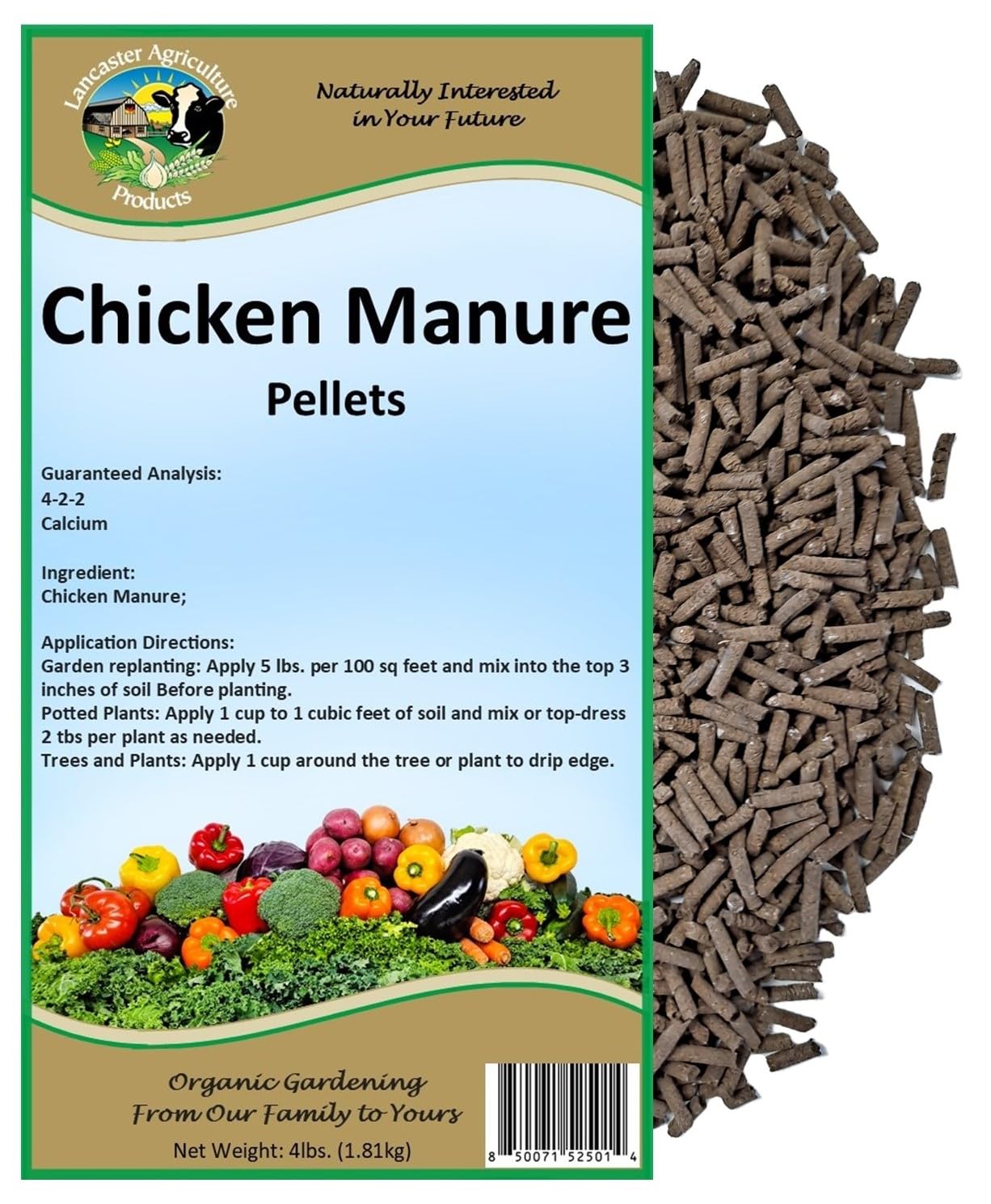
Lancaster Agriculture Chicken Manure Pellets, 4 lb
| Item Form | Pellets |
|---|---|
| Target Species | Flowers |
| Unit Count | 64 Ounce |
| Mixing Ratio | 4:2:2 |
These chicken manure pellets are a ready-to-use organic fertilizer intended to boost soil fertility in vegetable and flower beds. The product comes as heat-treated, dehydrated pellets that you sprinkle around the drip line and water in, so there is no mixing or composting required before application. With a 4-2-2 NPK ratio and about 8% calcium, the pellets supply steady, slow-release nitrogen and useful phosphorus and potassium for leafy and fruiting vegetables. Practical benefits include convenience of pellets for targeted side-dressing, suitability for monthly feeding of vegetables during the growing season, and a clear mixing ratio listed for custom blends. Because the material is heat-treated, it is safer to handle than raw manure, but the nutrient release is not instant so expect gradual soil improvement rather than rapid greening. The bag size is small for larger plots, so frequent purchases or larger-volume sourcing may be necessary for sizeable vegetable gardens. This product suits gardeners who prioritize an organic, consistent fertilizer that is simple to apply and integrates well into regular feeding schedules.
Best for: Home vegetable gardeners who want an organic, low-hassle fertilizer they can apply regularly to maintain soil fertility and support steady crop growth.
Less Ideal for: Gardeners needing a high-volume solution for large-scale plots or those who require fast-acting, high‑nitrogen feed for immediate greening should consider bulk amendments or concentrated fertilizers instead.
- Heat-treated, pelleted form for easy, mess-free application
- Balanced 4-2-2 NPK analysis with added calcium for general vegetable needs
- Suitable for monthly side-dressing of vegetables and regular use on flowers and shrubs
- Small 4 lb unit may be insufficient for larger vegetable plots
- Slow-release action means nutrients are gradual rather than immediate
Verdict: A convenient, organic pelleted chicken manure that provides steady, slow-release nutrition ideal for regular feeding of home vegetable gardens.
Espoma Organic Chicken Manure Granules, 3.75 lb

| Item Form | Granules |
|---|---|
| Application Method | Scatter around plants |
| Target Species | Flowers, Vegetables, Trees, Shrubs |
| Specific Uses For Product | Gardening, Organic, Plant Food |
Espoma Organic Chicken Manure is a ready-to-use, granulated poultry manure fertilizer aimed at home gardeners who want an organic nitrogen-rich soil amendment. With a 5-3-2 NPK analysis and added calcium, it is scattered around the plant drip line and watered in to release nutrients; the granulated, heat-treated form makes application tidy and eliminates the need for mixing. It is labeled for monthly use on vegetables and for seasonal use on trees and shrubs, which makes it practical for routine feeding of tomatoes, peppers and other vegetable beds. The product is registered for organic production and contains no fillers, so you get mostly poultry manure rather than blended proprietary mixes. Because it is dehydrated and granulated there is minimal odor and easier storage than fresh manure, but nutrient levels are moderate so heavy-feeding crops may need larger or repeated applications. Also it does not supply specific micronutrient balances or slow-release polymers, so pairing it with a balanced organic program will give best results.
Best for: Gardeners who prioritize certified organic inputs and want a simple, easy-to-apply manure fertilizer for regular feeding of vegetable beds and common garden plants.
Less Ideal for: Growers seeking a single-product, high-analysis or slow-release fertilizer for intensive commercial production should consider concentrated or formulated alternatives.
- Certified for organic gardening and made from dehydrated poultry manure
- Granulated, heat-treated form is easy to apply and has lower odor than fresh manure
- Straightforward 5-3-2 NPK plus calcium provides usable nitrogen for vegetables
- Ready-to-use with no mixing required and simple scatter-and-water application
- Moderate nutrient analysis may require more frequent applications for heavy feeders
- Does not list a full micronutrient profile or slow-release formulation
Verdict: A simple, certified organic chicken manure in granule form that makes monthly feeding of vegetable beds easy and low-odor.
COOP GRO Organic Pelleted Chicken Manure Fertilizer, 6 lb

| Item Form | Pellets |
|---|---|
| Application Method | Top dressing or mixed into soil |
| Coverage | 1 (6lb) bag covers 200 Square Feet |
| Mixing Ratio | 3-3-4 NPK |
This pelleted chicken manure from COOP GRO is an easy-to-use organic fertilizer formulated for flowers, vegetable beds and potted plants. The 3-3-4 NPK ratio and added secondary nutrients make it suitable as a general feeding amendment, and the pellets are intended for top-dressing or mixing into soil so you can apply it around established flowers or work it into new beds. The product is OMRI‑certified and described as slow-release from a fermentation process, which reduces burn risk and provides steadier nutrient delivery over time. A resealable, water-resistant 6 lb bag is convenient for small garden areas and the stated coverage is about 200 sq ft. Limitations to expect are the relatively light nutrient ratio compared with concentrated synthetic fertilizers and the modest bag size for larger beds, so frequent reapplication or larger quantities will be needed for bigger plantings. There is a low odor and it is marketed as safe for family and pets when used as directed.
Best for: Gardeners who prefer low‑risk, certified organic amendments for flower beds and potted blooms and who value easy, safe application over high‑strength feeds.
Less Ideal for: Large-scale gardeners or those seeking a high‑strength, fast‑acting fertilizer for quick green‑up should consider bulk or higher‑N options instead.
- OMRI certified organic formulation suitable for organic flower gardens
- Pelleted form easy to apply as top dressing or mixed into soil
- Slow‑release fermentation process lowers risk of burning plants
- Resealable, water‑resistant bag keeps pellets dry between uses
- 6 lb bag covers a limited area so not ideal for large flower beds
- Lower NPK ratio than concentrated fertilizers, may require more frequent applications
Verdict: A simple, certified organic pelleted chicken manure that delivers gentle, slow‑release nutrition for flower gardens and small planted areas.
Choosing the Right Manure for Flowers: Key Factors to Consider
Nutrient Balance and Bloom Support
Flowers respond to a mix of nutrients rather than a single input. Manure supplies nitrogen, phosphorus, and potassium in varying proportions depending on the source animal and how the manure was processed. High nitrogen can drive foliage at the expense of flowers, while adequate phosphorus supports bud formation and root health. Knowing the typical N-P-K tendencies of a manure type helps you time applications so nutrients are available during bud set rather than early vegetative stages.
Testing your soil before large amendments clarifies existing nutrient levels and prevents overapplication. When soil tests show sufficient phosphorus, choose manures lower in P or apply smaller amounts to avoid lockup or runoff. For container-grown annuals, prefer manures blended into potting mixes or applied as well-aged compost to prevent salt buildup and root stress.
Soil Texture and Water-Handling
Different manures change soil physical properties. Fibrous, coarser manures increase porosity in heavy clay soils, improving drainage and root aeration. Finer, more decomposed manures add organic matter that boosts moisture retention in sandy soils and helps reduce irrigation frequency. The particle size and degree of decomposition determine whether a manure will loosen or bind the existing soil matrix.
Consider how your garden holds water and the plants' moisture preferences. For shallow-rooted bedding plants, choose materials that strike a balance between aeration and moisture. In raised beds and containers, incorporate well-aged manure into the mix rather than fresh manure to avoid structure collapse or compaction after settling.
Freshness, Composting, and Pathogen Safety
Raw manure can contain weed seeds, pathogens, or high ammonia levels that harm tender roots and foliage. Composting or aging manure reduces pathogen risk, stabilizes nutrient release, and reduces strong odors. For top-dressed beds or near edible borders, use only well-composted manure and follow recommended wait times before planting.
If you plan to use manure around perennial flowers, apply composted material in the fall so biological activity moderates nutrients over winter. For annuals, incorporate well-rotted manure into the planting mix several weeks before setting out plants to allow microbial processes to finish and reduce burn risk.
Application Method and Labor
Manures differ in how gardeners apply them. Some come as loose, fluffy compost that spreads easily with a shovel; others are denser or wetter and need mixing into soil or raised bed mixes. Consider the physical effort, tools, and frequency of application your site allows. Top-dressing once per season is practical for established beds, while newly prepared flower beds may benefit from deeper incorporation during initial soil preparation.
Also account for container use where repeated small additions are needed. Packable block or pelletized manures can be convenient for accurately metering nutrient additions to pots, while bulk composted manure suits in-ground beds and larger landscape areas.
Odor, Neighborhood Impact, and Timing
Odor intensity matters when planting near patios, walkways, or neighboring properties. Well-composted manures have milder, earthier smells and are less likely to attract attention. Strong odors are typical of fresh manure and can persist until decomposition proceeds. Plan applications for times when rain is unlikely to cause runoff and when odor will be least disruptive to household activity.
Timing also affects flowering outcomes. Apply nutrient-rich manures early enough for microbes to process the material into plant-available forms before bloom. Late-season heavy applications can shift plant energy into foliage instead of finishing blooms, so match timing to the flowering cycle of your plants.
Salt Content and Container Suitability
Some manures and livestock bedding materials carry higher soluble salts that can stress roots, especially in containers and small raised beds. Soluble salts concentrate more quickly in confined media as water evaporates, risking leaf scorch or poor germination. For containers, prioritize low-salt, well-leached composted manure or use it sparingly mixed into potting blends.
If you suspect salt concerns, perform a simple salt test or leach the material with water before use. When renovating beds, blend manure with bulky organic matter to dilute potential salts and improve drainage, balancing immediate nutrient release with longer-term soil health.
When to Use Composted Manure Versus Fresh Manure
Composted manure is generally safer and more gardener-friendly because it has a stabilized nutrient profile, milder odor, and reduced pathogen risk. Use composted material when planting annuals, working in high-traffic yards, or near patios.
Fresh manure releases nutrients faster but carries a higher risk of burning roots and producing odors. It can be useful in offseason garden renovations where long-term microbial activity is desired, but it should be aged and incorporated well before planting to avoid damaging seedlings.
- Composted manure: low odor, stable nutrients, good for immediate planting
- Fresh manure: stronger nutrients short-term, must age before planting
- Match choice to planting timeline and risk tolerance
Using Manure in Containers and Hanging Baskets
Containers need a potting medium with balanced drainage and low salt. Use only well-aged, leached manures and mix them into potting soil at conservative rates. Pelletized or processed forms can make dose control easier and reduce the chance of hot spots that scorch roots.
Top-dress containers lightly during the growing season with a thin layer of composted manure, and refresh the surface when you repot. Avoid heavy side-dressing in small pots where salts can accumulate quickly.
- Mix small proportions into potting mix rather than using raw manure
- Prefer pelletized or finely screened compost for even distribution
- Top-dress lightly to maintain nutrients without shocking roots
Timing Applications Around Bloom Cycles
Apply the bulk of manure-based amendments well before peak bloom so microbial breakdown delivers nutrients when buds set. Late-season high-nitrogen applications can prolong leafy growth at the cost of flower production and should be avoided.
For spring-blooming perennials, apply composted manure in fall so winter soil biology can moderate nutrient release. For summer annuals, incorporate well-rotted manure into the soil several weeks before planting to allow stabilization.
- Fall application for spring bloomers to stabilize nutrients over winter
- Early spring incorporation for summer annual beds
- Avoid heavy feeding during peak bloom unless plants show deficiency
Integrating Manure with Mulches and Organic Matter
Manure works best when combined with other organic inputs. Mulches help retain moisture and reduce surface nutrient loss while slowly releasing material into the root zone. When spreading manure as a top-dress, follow with a thin layer of mulch to reduce odor and limit surface runoff.
Mixing manure into compost piles with yard waste speeds decomposition and yields a balanced soil amendment. Use layered additions rather than a single thick application to promote even microbial activity and avoid anaerobic pockets.
- Top-dress then mulch to lock in nutrients and reduce odor
- Blend manure with yard compost for balanced amendments
- Avoid thick uncomposted layers that can create anaerobic conditions
Addressing Common Problems After Application
If plants show signs of nutrient burn or poor growth after adding manure, flush the area with water to leach excess salts and stop further applications. Remove any visible fresh manure touching stems or crowns to reduce disease risk.
If odors persist, incorporate material into soil and cover with mulch or finished compost. Persistent poor performance can indicate a mismatched manure type for your soil texture or an imbalance in nutrients; test the soil and adjust future applications accordingly.
- Water heavily to leach salts if burn appears
- Incorporate or cover fresh manure to reduce odors and pest attraction
- Soil test if problems persist to identify nutrient imbalances
How We Chose the Best Manure for Flowers
We shortlisted manures that are practical for flowering beds and container-grown ornamentals, focusing on attributes gardeners notice in real use. Selection prioritized nutrient balance, especially nitrogen-to-phosphorus ratios that support blooms without excessive leafy growth. We also evaluated how each manure alters soil structure, looking for materials that improve crumb structure and water retention without compacting or creating drainage problems. Handling and odor were key filters because many gardeners apply manure near living spaces and on tighter urban plots. We checked typical application methods and whether the manure requires composting or aging before use. Persistence of nutrients and potential to burn tender roots were considered so gardeners can match timing to planting and bloom cycles. We excluded raw or unprocessed inputs that carry a high risk of pathogens or that legally require special permits. Inputs that are primarily turf or livestock bedding with no clear nutrient data were also omitted. The final list reflects materials that are realistic for home gardeners, seasonally appropriate, and supported by common horticultural practice.
FAQ
Can I use fresh manure directly in flower beds?
Fresh manure can be used cautiously but is best aged or composted first. Fresh material often contains high ammonia and salts that can burn roots and may include pathogens or weed seeds. If you must use fresh manure, apply it well before planting and incorporate it into the soil to speed decomposition.
How much manure should I add to a perennial flower bed?
Amounts vary with manure type and soil conditions, but a thin layer of composted manure applied annually or every other year is usually sufficient. For initial soil building, mix a larger volume into the top 6 to 8 inches during bed preparation, then maintain with lighter annual applications.
Is manure safe for container-grown flowers?
Manure can be safe if it is well-composted and used at low rates in potting mixes. High salt levels and uneven nutrient distribution are risks in containers, so choose leached, processed forms or incorporate small amounts into compost blends rather than using raw manure.
Will manure make my flowers leafier instead of flowering?
A high-nitrogen manure applied too close to bloom time can encourage leafy growth at the expense of flowers. To favor blooms, use manures with balanced nutrient ratios or time higher-nitrogen applications well before bud set so plants move energy into flowering later.
How long after applying manure can I expect results?
Results depend on whether manure is fresh or composted. Composted manure can improve soil structure immediately and supply nutrients over weeks to months. Fresh manure requires biological breakdown and may take longer to release plant-available nutrients. Expect gradual improvement rather than instant changes.
Are there odor-free manure options for small yards?
Composted and processed manures have much milder smells than fresh materials. Pelletized or screened composted products reduce surface area and odors, making them suitable for patios or small yards. Applying and then covering with mulch also cuts down on noticeable odors.
Final Verdict
Choose a manure that matches your soil texture, planting schedule, and tolerance for handling. If you need quick structural improvement in heavy soils, coarser composted manures help loosen the bed. For containers and delicate annuals, use well-aged, low-salt materials applied conservatively. Prioritize safety by using composted options near high-traffic areas and follow timing guidelines so nutrients support bud formation rather than just leafy growth. With the right match of manure type and application timing, you can boost bloom quality and long-term soil health without unnecessary risk.
