

Note: This article contains affiliate links. If you click on these links and make a purchase, I may earn a small commission at no extra cost to you. This helps support my research and content. Read my full affiliate disclosure here.
If you work with sheet metal, tubing, or small steel stock, the right metal cutting hand saw makes the difference between a clean job and extra finishing work. You need a tool that tracks straight, stays sharp through abrasive metal, and gives consistent tooth engagement so cuts are safe and predictable. This guide covers seven shortlisted metal cutting hand saws chosen for real workshop use and varied metalworking needs. We evaluate durability, blade life, ergonomics, and cut speed to help you pick the best saw for regular maintenance, hobby projects, or occasional fabrication. Read on to see which features matter most and which saw types fit your metal cutting tasks.
Top Picks at a Glance
| Best Overall The best all-around choice for most situations | Milwaukee Compact Hand-Operated Hacksaw with Tool-Free Blade Change (10" Blade) |  |
| Best Quality Built to a higher standard if you want something more solid | Milwaukee 12" High Tension Hacksaw (48-22-0050) |  |
| Best Value The sweet spot between price and what you get | WORKPRO 12-inch Hacksaw with 3 Bi-Metal Blades |  |
| Best Budget The cheapest option that still gets the job done reliably | STANLEY 10-Inch Mini Hacksaw (20-807) |  |
| Highest Rated A top-rated pick with lots of positive feedback | Lenox HT50 High-Tension 12-inch Hacksaw |  |
| Most Popular A crowd favorite that many people choose with confidence | CRAFTSMAN 12-Inch Hacksaw (CMHT20138) |  |
| Best Seller A high-volume bestseller chosen again and again | TOOLAN 8-in-1 Multi-Blade Hand Saw with Quick-Change Handle |  |
Milwaukee Compact Hand-Operated Hacksaw with Tool-Free Blade Change (10" Blade)

| Blade Material | High Speed Steel |
|---|---|
| Blade Length | 10 inches |
| Handle Material | Rubber |
| Model Number | 48-22-0012 |
The Milwaukee Compact Hand-Operated Hacksaw is a small-format metal cutting saw intended for quick, on-the-job cuts where access is limited. It uses a standard 10 inch high-speed steel blade and a tool-free blade change mechanism so swapping blades is fast and straightforward, which is handy when you need to change tooth geometry or replace a dull blade in the field. The rubber overmold handle improves grip and reduces hand fatigue during repeated cuts, and the adjustable blade setup makes it easier to get flush cuts against surfaces. Because it is compact and lightweight, it excels for plumbing, conduit, and trim work where reach and clearance matter. The limitations are its manual operation and shorter blade length, so it is not the fastest option for long rip cuts or heavy production runs compared with power tools or larger hacksaws. For occasional to moderate metal cutting tasks that require portability and quick blade changes, this saw is a practical, durable choice.
Best for: Metalworkers, plumbers, and DIYers who need a portable, easy-to-use hand saw for tight spaces and occasional to moderate metal cutting tasks.
Less Ideal for: Users who need high-volume metal cutting or long continuous cuts should choose a power saw or a full-size hacksaw instead.
- Tool-free blade change for fast blade swaps on site
- Compact design fits and cuts in tight spaces
- Rubber overmold handle improves grip and comfort
- High speed steel 10" blade suitable for cutting metal
- Manual saw limits cutting speed and endurance for large or repetitive jobs
- Short blade length reduces efficiency on long straight cuts
Verdict: A durable, compact hacksaw that delivers fast, tool-free blade changes and comfortable handling for tight-space metal cutting tasks.
Milwaukee 12" High Tension Hacksaw (48-22-0050)

| Blade Length | 12 inches |
|---|---|
| Cutting Angle | 45 degrees |
| Other Special Features | Ergonomic handle, Heavy duty frame, High tension blade |
| Blade Material | Metal |
The Milwaukee 12" High Tension Hacksaw is built for demanding metal cutting tasks where blade tension and control matter. Its reinforced metal frame supports higher tension so blades stay straight under heavy cutting, and the high-leverage tension knob makes it quick to tighten for cleaner, faster cuts. The saw positions the blade at 45 degrees, which helps when you need near-flush cuts on pipe or sheet metal. Practical touches include internal storage for up to six spare blades and an over-molded rubber handle that improves grip and reduces hand fatigue during extended use. Expect a robust, tool-bench feel and consistent cutting performance on metal surfaces, but remember this is a manual hacksaw so cutting thick sections will take effort compared with powered cutters. If you need occasional fine adjustments or very high-volume metal cutting, pair it with sharp quality blades and a steady cutting technique.
Best for: Buyers who prioritize cutting performance and durable hand tools for metalwork and need a reliable hacksaw for workshop or jobsite tasks where control and blade tension are important.
Less Ideal for: Users who primarily do high-volume or heavy gauge metal cutting and want a powered solution or those who need longer blade lengths for large workpieces.
- Reinforced metal frame supports higher blade tension for straighter, cleaner cuts
- High-leverage tension knob makes it fast and easy to achieve and maintain tension
- Internal blade storage holds up to six spare blades for convenience on the job
- Over-molded rubber handle improves grip and comfort during extended use
- Manual operation requires physical effort for thick or long cuts compared with powered tools
- Blade length limited to 12 inches which may need more strokes on larger workpieces
Verdict: Choose this hacksaw when you want a rugged, high-tension manual saw that delivers precise metal cuts and convenient onboard blade storage.
WORKPRO 12-inch Hacksaw with 3 Bi-Metal Blades

| Blade Length | 12 inches |
|---|---|
| Blade Material | Bi-Metal |
| Handle Material | Thermoplastic Elastomers |
| Included Components | Hacksaw, 3PC Saw Blades |
This WORKPRO 12-inch hacksaw is a straightforward metal‑cutting hand saw built around a solid aluminum alloy frame and a comfortable thermoplastic elastomer handle. It ships with two 24‑TPI bi‑metal blades and one 18‑TPI blade, so you can switch between finer metal cuts and coarser wood or plastic cuts. The frame accepts blades at 45 or 90 degrees and has a tensioning knob so you can tighten replacements quickly. In real use the aluminum frame keeps the saw rigid under pressure and the TPR grip reduces hand fatigue during repetitive cutting. The 12‑inch blade length and bi‑metal construction make it capable for cutting metal pipe, conduit, and sheet, while the coarser blade covers quick cuts in wood and PVC. Limitations are its manual cutting speed compared with powered tools and the blade life that depends on material hardness and user technique, so heavy industrial use will require frequent blade changes. For home shops and maintenance tasks this hacksaw is durable, easy to service, and versatile enough for most metal cutting chores.
Best for: Practical DIYers and home maintenance owners who want a durable, serviceable hand saw for occasional to regular metal, PVC, and wood cutting without relying on power tools.
Less Ideal for: Professionals who need high daily throughput or contractors who primarily cut thick metal where powered saws and industrial blades are more efficient.
- Aluminum alloy frame provides rigidity and durable support during cutting
- Includes two 24‑TPI and one 18‑TPI bi‑metal blades for metal and wood/PVC tasks
- Adjustable blade angle (45° or 90°) increases versatility for different cutting positions
- TPR ergonomic handle reduces hand fatigue and improves grip during repetitive use
- Manual hacksaw work is slower than power tools for large or thick metal jobs
- Blade wear depends on material hardness so frequent replacements may be needed with heavy use
Verdict: A rugged, no‑frills hand hacksaw that gives practical metal cutting capability with included bi‑metal blades and an adjustable frame for versatile workshop use.
STANLEY 10-Inch Mini Hacksaw (20-807)

| Power Source | Manual |
|---|---|
| Blade Material | Carbon Steel |
| Blade Length | 10 inches |
| Other Special Features | Ergonomic grip with thumb rest, blade cover in handle |
The STANLEY 10-inch Mini Hacksaw is a small, manual saw built for light metal and plastic cutting where access is restricted. Its short 10-inch blade and compact frame let you work in tight spots that full-size hacksaws cannot reach, while the ergonomic handle with a thumb rest improves control and reduces hand fatigue during repeated cuts. A blade cover stored in the handle adds a simple but useful safety touch for transport and storage. The carbon steel blade and high-impact polymer coating on the frame provide reasonable durability for occasional workshop and household tasks, though the saw is intended for light-duty use rather than heavy or continuous cutting. With six teeth and a 45 degree cutting angle it gives predictable, controlled cuts but will be slower than larger hacksaws or powered options on thicker stock. For buyers focused on a low-cost tool that fits a toolbox and handles occasional metal or PVC trimming, this is a practical, no-frills choice; users needing heavy-duty or high-speed cutting should choose a larger hacksaw or powered cutter instead.
Best for: Practical DIYers or homeowners who need an inexpensive, compact saw for occasional metal, plastic, or small workshop cutting in confined spaces and value portability and comfort.
Less Ideal for: Professional tradespeople or anyone who frequently cuts thick metal, large stock, or requires high cutting speed should choose a full-size hacksaw or powered cutting tool instead.
- Compact frame fits and cuts in tight or hard-to-reach spaces
- Ergonomic handle with thumb rest for improved control and reduced hand strain
- Blade cover integrated into handle for safer carry and storage
- Carbon steel blade and polymer-coated frame offer adequate durability for light tasks
- Designed for light-duty work and will be slow or struggle on thicker or hardened metals
Verdict: A budget-friendly, compact mini hacksaw that delivers controlled, comfortable light-duty metal and plastic cutting in tight spaces.
Lenox HT50 High-Tension 12-inch Hacksaw

| Blade Length | 12 inches |
|---|---|
| Number of Teeth | 24 |
| Blade Material | High Speed Steel |
| Handle Material | Rubber |
The Lenox HT50 is a heavy-duty 12-inch high-tension hacksaw frame built to deliver straight, fast cuts in metal and wood. Its I-beam construction tensions blades up to 50,000 psi, which keeps blades rigid for accurate cutting and reduces wobble when slicing through metal. The frame accepts standard Lenox reciprocating saw blades so you can convert it to a jab saw for plunge cuts, and the I-beam stores up to five spare 12-inch blades for convenient on-tool storage. A rubberized handle gives a secure grip in wet or cold conditions, and the saw ships with a 24 TPI bi-metal blade suitable for metal cutting. The practical benefits are consistent tension for cleaner cuts, easy blade changes, and an ergonomic grip that maintains control during long jobs. Limitations are that it is a manual tool so cutting thick or very hard metals is slower than power options and blade life depends on cutting technique and material hardness.
Best for: Buyers who prioritize a dependable, durable hand saw for regular metal cutting tasks and want a tool that maintains blade tension and control for accurate cuts.
Less Ideal for: People who need to cut large volumes of thick or hardened metal quickly or who prefer power tools for faster throughput should consider a powered metal-cutting solution instead.
- I-beam construction tensions blades up to 50,000 psi for straighter, more accurate cuts
- Accepts Lenox reciprocating blades to function as a jab saw for plunge cuts
- Built-in storage holds up to five extra 12-inch blades for on-tool convenience
- Rubberized handle improves grip and control in wet or cold conditions
- Manual operation makes cutting thick or hardened metals slower than power tools
- Includes a single 24 TPI blade which may need replacement for specialty metal work
Verdict: Choose the Lenox HT50 when you need a robust, high-tension hand hacksaw that keeps blades rigid for precise metal cutting.
CRAFTSMAN 12-Inch Hacksaw (CMHT20138)
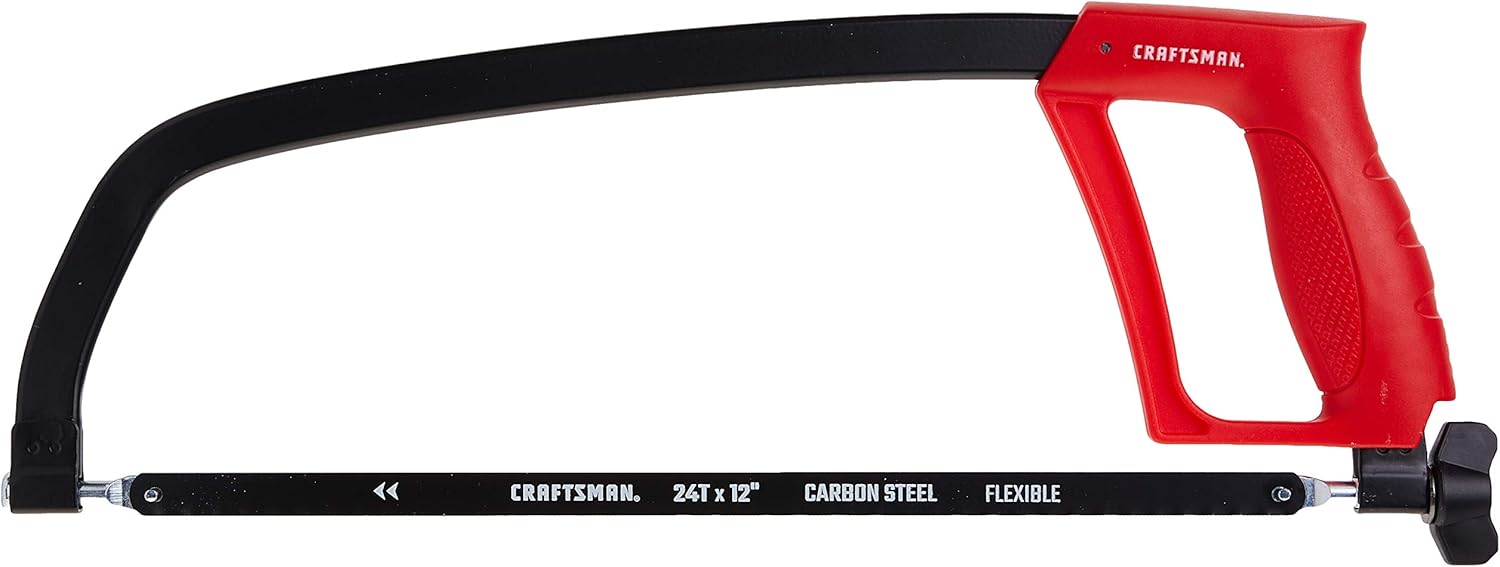
| Blade Length | 12 inches |
|---|---|
| Number of Teeth | 6 |
| Surface Recommendation | Metal,Plastic |
| Warranty Type | lifetime warranty |
The CRAFTSMAN 12-inch hacksaw is a straightforward, no-frills metalworking saw built around a solid metal frame and a fixed 12-inch blade. It is intended for cutting metal and plastic and is commonly used for plumbing, light fabrication, and workshop tasks where a short, stiff blade is easier to control. The frame is rated for high blade tension which helps keep cuts straighter and reduces blade flex on thicker stock. Angle adjustments for 90 and 180 degrees let you make flush and square cuts, and the large tension knob with a full-grip plastic handle makes blade changes and hand positioning simple during repetitive work. With six teeth and a rectangular blade profile the saw favors medium-to-coarse cutting in routine metal and plastic tasks rather than fine finish work. The tool is lightweight and easy to maneuver but its plastic handle and basic tooth count mean it is not optimized for precision finish cutting or prolonged heavy industrial use. For home shops and tradespeople who need a reliable compact hacksaw, it performs well; those needing ultra-fine cuts or heavy daily production may prefer a specialized blade or powered solution.
Best for: Buyers who want a dependable, compact hacksaw for occasional to regular metal and plastic cutting in a home shop or on-site jobs where a sturdy frame and simple operation matter more than fine finish.
Less Ideal for: Users who need ultra-precise finish cuts, high-tooth-count blades, or heavy daily production where powered cutting tools would be more efficient.
- Solid metal frame supports high blade tension for straighter cuts
- 90 and 180 degree blade positions allow flush and square cutting
- Large tension knob and full-grip handle simplify blade changes and control
- Lightweight design is easy to handle for overhead or tight-space cuts
- Only six teeth limits cutting speed and smoothness on fine or thin materials
- Plastic handle is less durable and comfortable than molded or rubberized grips for long sessions
Verdict: A rugged, easy-to-use 12-inch hacksaw that reliably handles everyday metal and plastic cutting tasks thanks to its tensioned metal frame and simple controls.
TOOLAN 8-in-1 Multi-Blade Hand Saw with Quick-Change Handle

| Power Source | Manual |
|---|---|
| Blade Material | Alloy Steel |
| Handle Material | Plastic |
| Included Components | 1 pcs handle, 8 pcs blade |
The TOOLAN 8-in-1 Multi-Blade Hand Saw is a lightweight manual cutter that uses a single ergonomic handle and a quick-change, self-locking clamp to accept eight different reciprocating blades. It is typically used for small demolition and workshop tasks where a powered reciprocating saw is unnecessary or inconvenient, such as cutting drywall, plywood, PVC and light metal. Notable features include an anti-slip TPR handle to reduce hand fatigue, a blade quick-change mechanism that supports both side-hole and middle-hole blades, and a supplied assortment of blades for different materials. In practice this makes the tool handy for one-off cuts, plunge cuts in drywall, trimming small metal pipes and precision work where control matters. The blades are standard reciprocating types so replacements are easy to find. The main limitations are that it is a hand-powered tool so cutting thicker metal or large timbers will be slow and require effort, and thin blades are best for light or precise cuts rather than heavy demolition. For users who need a compact, non-powered metal-cutting option for occasional jobs, it is a practical choice.
Best for: Buyers who prioritize a reliable, low-risk cutting solution for occasional metal, drywall and small woodworking tasks and who prefer a manual tool that is simple to maintain and replace blades for.
Less Ideal for: Users who regularly cut thick metal, large timbers, or who need high-speed production cutting should choose a powered saw instead.
- Quick-change, self-locking clamp accepts both side-hole and middle-hole reciprocating blades
- Includes eight blades suited to drywall, wood, plastic and light metal work
- Ergonomic anti-slip handle reduces hand fatigue during repeated cuts
- Compact, lightweight design is easy to carry and store
- Hand-powered design makes long or thick metal cuts slow and tiring
- Some supplied blades are thin and intended for light or precise cuts rather than heavy-duty use
Verdict: A compact, easy-to-use manual saw kit ideal for safe, occasional metal and drywall cutting when a powered tool is unnecessary.
Choosing the Right Metal Cutting Hand Saw: Key Factors to Consider
Blade Material and Heat Treatment
Blade composition and heat treatment determine how long teeth stay sharp when cutting abrasive metals. High-carbon steel blades that receive proper tempering tend to hold an edge longer than untreated blades, which reduces the frequency of blade changes and filing.
For stainless or hardened steels, specialized alloy blades or teeth with hardened tips resist dulling. Consider the types of metal you cut most often because a blade that excels on thin sheet aluminum may wear quickly on mild steel. Corrosion resistance also matters if you store saws in a humid workshop.
Tooth Geometry and Pitch
Tooth shape and the number of teeth per inch (TPI) control the cut quality and speed. Finer pitches produce smoother edges and are better for thin sheet metal to avoid snagging; coarser pitches remove material faster and are suited to thicker stock.
Tooth gullet size and rake angle affect chip removal. For frequent crosscuts in metal, look for geometry optimized for fine, controlled cutting rather than aggressive ripping, which can bind or create burrs.
Cut Speed and Efficiency
Cut speed is how quickly a saw removes material for a given effort. Faster cutting can save time on repetitive tasks but usually comes with tradeoffs in control and finish. A saw with an efficient tooth pattern and proper blade hardness will cut faster while producing fewer burrs.
Think about whether you need short, quick cuts or long, straight rip-style strokes. Faster blades often require more frequent maintenance, so weigh speed against the effort you are willing to spend on sharpening or blade replacement.
Ergonomics and Vibration Control
Comfortable handles and vibration damping reduce hand fatigue and improve cut accuracy during extended use. Look for handles shaped to your grip size with non-slip materials and a balance that keeps the blade tracking straight.
Excessive vibration not only tires the user but also accelerates tooth wear and can cause chatter marks on the metal. For jobsite use, choose designs that protect the hand while allowing precise guidance along layout lines.
Blade Mounting and Tension System
How the blade attaches and how tension is applied affect straightness and replaceability. A rigid frame and a secure tensioning mechanism keep the blade from twisting under load, producing straighter cuts and preventing tooth damage.
Quick-release or simple clamp systems speed blade changes for different TPIs, while fine adjustment tensioners let you eliminate blade drift. Strong, durable mounting hardware is especially important if you cut thicker stock or use the saw under heavy loads.
Maintainability and Replacement Options
Consider how easy it is to replace blades and obtain spare tooth patterns or TPIs. Some metal cutting hand saws use common blade sizes that are widely available, while others require proprietary parts.
Also evaluate how accessible the blade is for filing or re-sharpening. A saw that is simple to maintain will cost less and stay in service longer than one that forces you to discard the whole tool when the blade dulls.
Best Uses for Metal Cutting Hand Saws
Metal cutting hand saws are versatile for light fabrication, trimming conduit, cutting small sections of angle iron, and detail work on sheet metal. They are most effective for jobs where a portable, low-noise tool is preferable to power tools and where access limits the use of electric saws.
Reserve these saws for cuts up to a few inches deep depending on blade length. For repeated heavy ripping of large sections, powered options are more efficient, but a hand saw gives precise control for fit-up and small adjustments.
- Trimming conduit and pipe sections
- Cutting small angle iron and flat bar
- Detail trimming on sheet metal and flashing
- On-site adjustments where power is unavailable
Blade Selection for Different Metals
Match blade TPI and material to the metal you cut. Use finer-toothed blades for thin, ductile metals and coarser blades for thicker, softer stock. Specialized hardened-tooth blades are better for stainless and other harder alloys.
When switching between nonferrous and ferrous metals, swapping blades can preserve edge life. Consider carrying two blade types if your work mixes aluminum and mild steel.
- Thin sheet metal: higher TPI, finer geometry
- Thicker stock: lower TPI, larger gullets
- Hardened alloys: blades with hardened tips or special alloys
Safe Cutting Techniques
Secure the workpiece firmly and mark the cut line clearly. Use a clamp or vice to prevent movement and reduce the risk of the blade grabbing the metal. Start the cut with light forward strokes to establish a kerf before increasing pressure.
Keep your body out of the line of the blade and use steady, controlled strokes. If the blade binds, stop and relieve tension rather than forcing the cut. File or deburr edges after cutting to remove sharp burrs and preserve safe handling.
- Clamp metal to prevent movement
- Establish a starting kerf before full strokes
- Relieve pinching by adjusting workpiece or blade angle
- Deburr edges after cutting
Storing and Caring for Metal Cutting Blades
Wipe blades clean of metal dust and oil lightly to prevent rust after use. Store spare blades flat or hung on a pegboard to avoid bending and edge damage. Keep blades away from corrosive chemicals and high humidity when possible.
Inspect blades before each use for missing teeth, bends, or excessive wear. Replace blades that show damage rather than attempting to correct severe deformities, which can compromise cut quality and safety.
- Clean and lightly oil blades to prevent rust
- Store flat or hung to avoid bending
- Inspect for damage before each use
- Replace rather than repair bent or missing-tooth blades
Accessories That Improve Results
Useful accessories include clamping guides to keep cuts straight, blade files for minor touch-ups, and replacement blades in multiple TPIs. A simple miter box made for metal can also help produce repeatable angle cuts without power tools.
Consider a folding saw frame for portability and blade protection during transport. Protective gloves, safety glasses, and hearing protection remain essential even for hand sawing.
- Clamping guides or small miter boxes
- Blade files and sharpening stones
- Replacement blades in common TPIs
- Protective gloves and eye protection
How We Chose the Best Metal Cutting Hand Saw
Our selection process prioritized attributes that directly affect how a metal cutting hand saw performs in real workshop and field conditions. We focused on blade composition and tooth geometry because these determine cutting longevity and how cleanly a saw severs ferrous and nonferrous metals. Cut rate and tooth pitch were evaluated to balance speed with control for thin sheet metal versus thicker stock. Handle ergonomics and vibration control were included since sustained cutting should be comfortable and safe. Blade mounting and tension systems were assessed for straightness and ease of replacement. We also considered corrosion resistance and heat treatment where that impacts blade life. We excluded tools intended primarily for wood or plastics, multi-tool blades that are not dedicated metal cutters, and any saws whose specifications did not include tooth count or blade material details. Final picks were those that met minimum thresholds across blade durability, cut speed, user comfort, and maintainability.
FAQ
What tooth count is best for cutting sheet metal?
Finer tooth counts are better for thin sheet metal because they reduce snagging and produce smoother edges. Typically, higher TPI blades are chosen for sheets, while lower TPI blades are used for thicker sections.
Can I use a wood-cutting hand saw on metal in a pinch?
Wood saws are usually not suitable because their tooth geometry and hardness are designed for wood and will dull quickly on metal. A dedicated metal cutting blade is recommended for efficiency and safety.
How do I reduce burrs after a hand saw cut in metal?
Use a file or deburring tool to remove sharp edges, and choose a finer-tooth blade when surface finish matters. Holding the workpiece steady and using controlled strokes also minimizes chatter and burr formation.
How often should I replace a metal cutting blade?
Replacement depends on use and the materials cut. Blades that show reduced cutting speed, increased effort, or missing teeth should be replaced. Frequent cutting of hardened metals accelerates wear and shortens service life.
Are there specific safety tips for cutting small metal tubing?
Secure the tubing to prevent collapse or rotation, support both sides of the cut, and use a blade with an appropriate TPI to avoid snagging. Padding the clamp contact points protects the tubing shape while keeping it immobile.
Final Verdict
Pick a metal cutting hand saw that matches the metal types and typical cut lengths you handle most often. Prioritize blade material and tooth geometry for durability and finish, and choose a comfortable handle and solid tensioning system for straight, controlled cuts. Balance cut speed against maintainability: faster blades save time but may need more frequent replacement. With the right blade selection and care, a metal cutting hand saw is a reliable, low-noise tool for workshop and on-site metalwork.
