

Note: This article contains affiliate links. If you click on these links and make a purchase, I may earn a small commission at no extra cost to you. This helps support my research and content. Read my full affiliate disclosure here.
When you need crisp, accurate cuts on tiny stems, flower spikes, or bonsai branches, the right micro pruning shears make the difference between clean healing and ragged wounds. These compact snips are designed for close work in tight spaces where larger pruners are awkward or damaging. This guide covers the top shortlisted micro pruning shears chosen for precise cutting, comfortable repeated use, and durability in everyday garden conditions. We evaluate each option across blade sharpness, ergonomic handling, and build resilience so you can pick the tool suited to delicate pruning, deadheading, or bonsai maintenance. Read on for practical notes that clarify which features matter most for small-stem pruning and why these picks earned a place on the list.
Top Picks at a Glance
| Best Overall The best all-around choice for most situations | Fiskars 6" Micro‑Tip Pruning Snips |  |
| Best Quality Built to a higher standard if you want something more solid | Saboten Japanese Magnetic Harvesting Shears (Fine-Tip, Fluorine-Coated) |  |
| Best Value The sweet spot between price and what you get | Fiskars 6" Non-Stick Micro-Tip Pruning Snips |  |
| Best Budget The cheapest option that still gets the job done reliably | Fondwell 6.5" Micro-Tip Pruning Shears |  |
| Highest Rated A top-rated pick with lots of positive feedback | Kbenison Double-Edge Micro-Tip Garden Shears (Bypass) |  |
| Most Popular A crowd favorite that many people choose with confidence | VIVOSUN 6.5" Gardening Pruning Shears with Straight Stainless Steel Blades |  |
Fiskars 6" Micro‑Tip Pruning Snips

| Blade Material | Stainless Steel |
|---|---|
| Blade Type | Bypass |
| Hand Orientation | Ambidextrous |
| Features | Easy Action spring, SoftGrip handle |
These Fiskars 6" Micro‑Tip Pruning Snips are designed for precise, repetitive trimming tasks around the garden. The micro‑tip bypass blades cut cleanly to the tip, making them well suited for deadheading, shaping flowers and snipping herbs in tight spaces. Fully hardened stainless steel blades hold a precision ground edge for long lasting sharpness while the Easy Action spring reopens the blades after each cut to reduce hand strain during extended use. SoftGrip touchpoints improve control and comfort and an easy‑open lock plus included sheath make storage and transport safe. Because the blades are small and built for precision, they are not intended for thicker branches or heavy pruning. For gardeners who want a reliable, comfortable snip for everyday fine work, these deliver consistent, accurate cuts; users needing heavier cutting power should choose larger bypass pruners.
Best for: Gardeners who want a dependable, comfortable snip for everyday precise tasks like deadheading, shaping blooms, and harvesting herbs and who value ease of use during repetitive cutting.
Less Ideal for: People who need a single tool for heavy pruning or cutting woody stems should choose larger pruning shears or loppers instead.
- Micro‑tip bypass blades cut precisely to the tip for clean cuts in tight spots
- Hardened stainless steel with precision‑ground edge stays sharp through regular use
- Easy Action spring reduces hand fatigue during repetitive trimming
- SoftGrip handles provide comfort and improved control
- Includes sheath and an easy‑open lock for safe storage and transport
- Small blade size limits use to stems, flowers, and herbs rather than thick branches
- Not suitable as the primary tool for heavy pruning or woody stems
Verdict: A precise, comfortable micro‑tip snip ideal for routine deadheading, herb harvesting, and detailed floral work.
Saboten Japanese Magnetic Harvesting Shears (Fine-Tip, Fluorine-Coated)

| Blade Material | Stainless Steel with a Fluorine Coating |
|---|---|
| Hand Orientation | Ambidextrous |
| Product Style | Japanese |
| Included Components | Harvesting Shears |
These Saboten harvesting shears are designed for precision work on herbs, flowers, bonsai, and indoor plants. The blades are heat-treated Japanese stainless steel with a fluorine coating that resists sap and makes wipe-clean maintenance fast. Instead of a metal spring the tool uses magnetic repulsion to reopen the blades, which creates a smooth, consistent cutting rhythm and reduces hand fatigue during repetitive tasks. The extra-slim angled tip lets you slip between tight stems and leaves for accurate snips useful in propagation, deadheading, and micro pruning. Handles are cushioned and non-slip with a safety lock for secure storage, and the blades are sharpenable for long-term use. Limitations: these are intended for soft to semi-woody stems and precise detail work rather than cutting thick branches, and their very small blade length means they are not efficient for bulk harvesting where larger pruners would be faster.
Best for: A performance-focused gardener who prioritizes crisp, repeatable cuts for detailed work like micro pruning, bonsai shaping, propagation, and precision harvests.
Less Ideal for: Landscapers or gardeners who need a single tool to handle heavy pruning or high-volume cutting should choose larger bypass pruners instead.
- Magnetic springless action delivers smooth reopen and reduced hand fatigue during repetitive cuts
- Fine angled 35 mm blade reaches tight spaces for precise micro pruning and propagation
- Fluorine-coated stainless steel reduces sap buildup for easier cleaning
- Lightweight, ambidextrous design with cushioned non-slip grip for comfortable extended use
- Not suitable for cutting thick woody branches or heavy pruning tasks
- Very small blade length makes it slower for large-volume harvesting
Verdict: Choose these shears when you need razor-sharp, low-fatigue precision for micro pruning and delicate harvesting tasks.
Fiskars 6" Non-Stick Micro-Tip Pruning Snips

| Cutting width | 1.81 inches |
|---|---|
| Blade Type | Anvil |
| Blade Material | Alloy Steel |
| Hand Orientation | Ambidextrous |
| Included Components | Pruning Shears |
These Fiskars 6" Micro-Tip Pruning Snips are small, lightweight shears made for precise, repetitive work around the garden. The precision-ground alloy steel blades cut all the way to the tip so you can trim flower buds, harvest herbs, and snip tiny stems cleanly in tight spaces. A non-stick blade coating reduces resin build-up and jamming, which keeps the tool working smoothly when you move between sticky sap-bearing plants. The Easy Action spring opens the blades after each cut to reduce hand strain during longer sessions, and Softgrip touchpoints improve comfort and control. The included sheath and easy-open lock make storage and transport safe. Because these are micro-tip snips they are intended for light pruning and detailed tasks rather than thick branches, so heavier cutting tools are still needed for larger jobs. For gardeners who want a small, durable everyday snip, these deliver precise performance and low fatigue in a compact package.
Best for: Ideal for gardeners who need a compact, precise snip for deadheading, shaping, and harvesting herbs and small flowers and who value low hand fatigue during repetitive tasks.
Less Ideal for: Not a good fit for users who need a single tool for heavy pruning or cutting larger diameter branches; they should choose heavier-duty pruners instead.
- Micro-tip precision blades cut right to the tip for clean cuts in tight spaces
- Non-stick blade coating reduces resin build-up and jamming
- Easy Action spring reduces hand fatigue during repetitive snipping
- Softgrip handles improve comfort and control
- Includes sheath and blade lock for safe storage and transport
- Designed for light, detailed pruning only and cannot handle thicker branches
Verdict: A compact, low-fatigue micro-tip snip that delivers clean, resin-resistant cuts for everyday light pruning and harvest tasks.
Fondwell 6.5" Micro-Tip Pruning Shears

| Blade material | Stainless steel |
|---|---|
| Length | 6.5 inches |
| Handle material | TPR grips |
| Coating | Non-stick |
| Safety feature | Push-to-lock mechanism |
These Fondwell 6.5" micro-tip pruning shears are small, lightweight snips built for precise work around the garden. The ultra-sharp stainless steel blades with a non-stick coating let you make clean cuts in tight spaces, which is useful for deadheading, shaping bonsai, harvesting small fruits, and trimming indoor plants. The TPR grips and spring-action frame reduce hand fatigue during repeated cuts, and the push-to-lock keeps the blades closed for safe storage. Because they are compact and maneuverable, they excel at detailed, close-in tasks rather than heavy woody pruning. The rust-resistant finish helps blade longevity and reduces sap buildup, but the small size limits leverage on thicker stems. For gardeners on a budget, these shears offer solid cutting performance and comfort without extra frills, making them a dependable everyday tool for precision pruning tasks.
Best for: A practical buyer who wants an inexpensive, no-frills snip for detailed tasks like bonsai shaping, deadheading, or indoor plant care and values comfort during repeated use.
Less Ideal for: Those who need shears for heavy-duty pruning of thick branches or for professional landscapers who require larger, more robust pruning tools.
- Micro-tip stainless steel blades for precise cuts in tight spaces
- Non-stick coating reduces sap buildup and eases cleaning
- Ergonomic TPR grips and spring action reduce hand fatigue
- Push-to-lock safety latch for secure storage
- Not suited for thick woody stems where more leverage or larger blades are needed
Verdict: A budget-friendly, precision-focused pruning shear that delivers sharp, comfortable performance for close-up gardening tasks.
Kbenison Double-Edge Micro-Tip Garden Shears (Bypass)

| Blade Material | High Carbon Steel |
|---|---|
| Hand Orientation | Ambidextrous |
| Product Style | Bypass |
| Cutting width | 0.18 inches |
These Kbenison micro-tip garden shears are built for precise pruning tasks like trimming herbs, deadheading flowers, and fine bonsai work. The double-edge, extra-heavy straight blades use high-carbon steel and a 4.5 mm thickness to give stable, clean cuts on small branches up to about 1/5 inch, while the very fine tip makes it easy to work in tight or dense growth. Ambidextrous hand orientation and a relatively short 5.12 inch opening distance make the snips comfortable for repeated use and for users with different hand sizes. They are best used for detailed tasks that need accuracy rather than heavy-duty lopping. Maintenance is straightforward but important: wipe sap from the blades and apply oil to prevent corrosion and preserve cutting performance. Expect long-lasting sharpness if cared for, but remember high-carbon steel needs regular cleaning to avoid rust and may require sharpening over time.
Best for: A buyer who prioritizes consistent, reliable cutting performance for detailed pruning and small-branch work and who will maintain tools regularly to preserve sharpness.
Less Ideal for: Not a good choice for gardeners who need a tool for thick limbs or heavy structural pruning or for users who want a low-maintenance stainless option.
- High-carbon steel double-edge blades for crisp, precise cuts
- Extra-heavy 4.5 mm blade thickness provides stable cutting on fine branches
- Micro-tip design lets you reach tight spots and trim close to stems
- Ambidextrous orientation suits left- or right-handed users
- Compact opening distance reduces hand strain during repetitive trimming
- High-carbon steel requires regular cleaning and oiling to prevent rust
- Not intended for thick branches or heavy-duty pruning
Verdict: Buy these shears if you want a precision micro-pruner that delivers stable, clean cuts for detailed garden work when maintained properly.
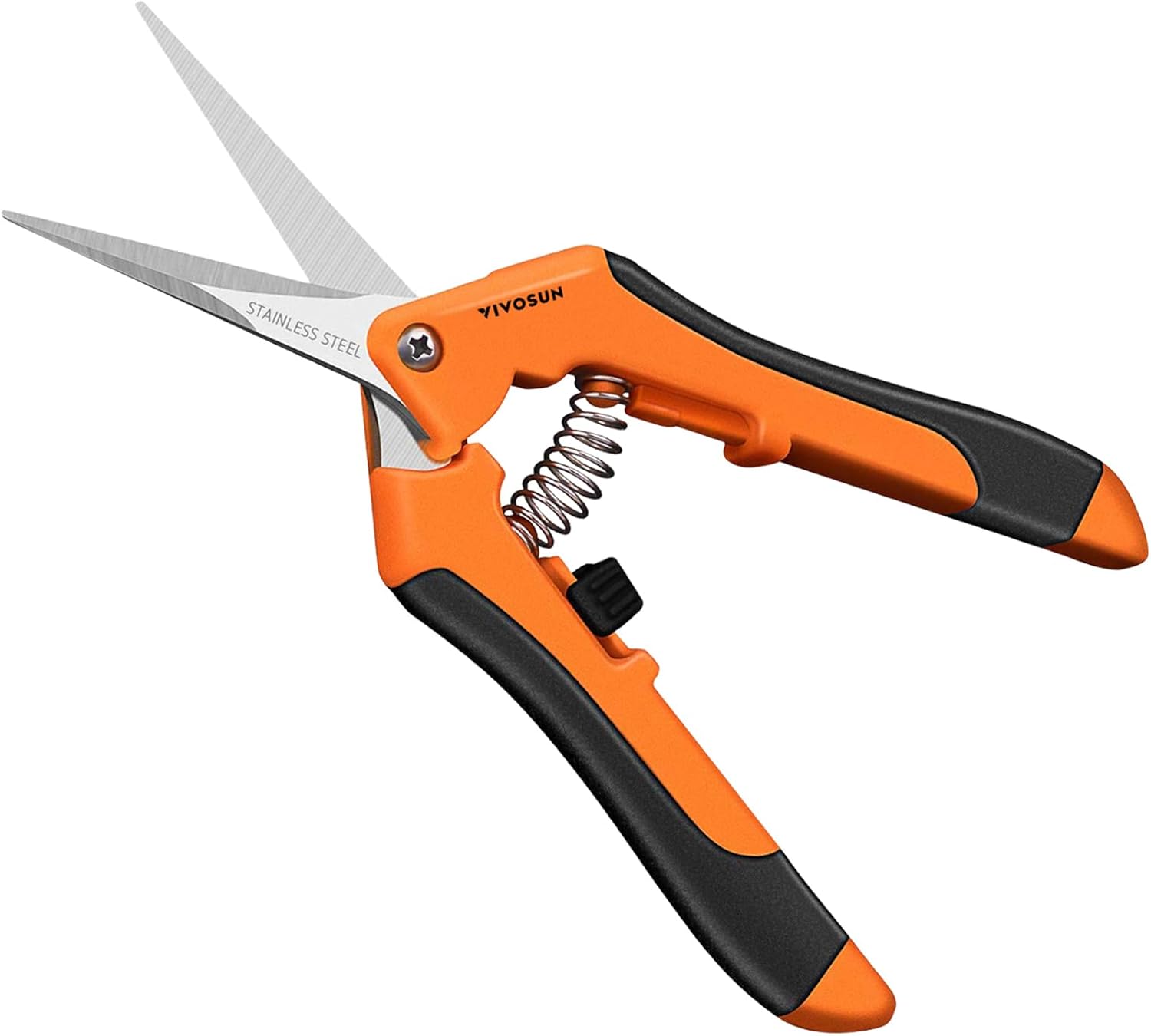
VIVOSUN 6.5" Gardening Pruning Shears with Straight Stainless Steel Blades
| Blade Type | Anvil |
|---|---|
| Blade Material | Stainless Steel |
| Hand Orientation | Ambidextrous |
| Blade Edge | Straight |
These VIVOSUN 6.5-inch pruning shears are small, light, and built for precise cutting of flowers, small stems, and detailed garden tasks. The straight, precision-sharpened stainless steel blades and micro tip design let you get into tight spaces for deadheading, shaping, and bonsai work without disturbing nearby stems. An ambidextrous polished stainless steel handle keeps the tool simple and durable while a sideways locking mechanism secures the blades when not in use. Because it is an anvil-style cutter with a short 2.1-inch blade, it excels at delicate snips rather than thick branch work; expect best results on softwood and thin-diameter growth. The low weight and ergonomic grip reduce hand fatigue for long sessions, though heavier pruning or cutting branches near 3/4 inch will require a larger bypass pruner. For gardeners who want a budget-friendly, fuss-free snipping tool for everyday trimming, these shears cover the basics reliably with minimal maintenance required.
Best for: A no-frills, cost-conscious gardener who needs an easy-to-use snipping tool for daily deadheading, shaping, and light pruning around flowers and small shrubs.
Less Ideal for: Gardeners who regularly cut thick woody branches or need a shear for heavy-duty tree pruning should choose a larger bypass pruner or lopper instead.
- Precision micro-tip stainless steel blades for tight, detailed cuts
- Ambidextrous design and comfortable grip reduces hand strain
- Sideways locking mechanism keeps blades closed and safe when stored
- Lightweight construction makes it easy to use for extended trimming sessions
- Anvil blade and short blade length limit effectiveness on thicker woody stems
Verdict: A simple, affordable micro pruning shear that delivers precise, low-effort snips for everyday deadheading and light pruning.
Choosing the Right Micro Pruning Shears: Key Factors to Consider
Blade Geometry and Steel
The blade profile and steel alloy determine how cleanly a micro shear slices a stem. Thin, acute-edge blades deliver the scissors-like cut that small-diameter stems need, producing a narrow wound that heals quickly. Harder steels hold an edge longer but may be more brittle; look for a balance that suits how often you will use the tool.
Blade finish and coating matter for corrosion resistance when you work around sap and moisture. A well-honed bevel and consistent grind keep cuts predictable. For gardeners who do frequent deadheading or bonsai work, easier re-sharpening and accessible blade edges extend the tool's useful life.
Comfort and Ergonomics
Micro shears are used for many quick snips in close work, so grip shape and handle spacing affect fatigue and precision. Ergonomic handles that cradle the fingers reduce pressure points and let you control the blade with minimal wrist movement. Hand size, glove use, and whether you prefer thumb-and-forefinger control or a full-hand grip will change which handle profile feels best.
Look for features like soft-touch inserts where your fingers rest and a smooth, low-profile lock that does not interfere with finger placement. Lightweight construction helps with repetitive tasks, but balance between weight and solidity influences perceived control.
Hinge Design and Mechanical Reliability
The pivot or hinge controls blade alignment and cutting force transfer. A precise, tight hinge keeps the blades tracking cleanly against each other so stems are sheared rather than crushed. Adjustable pivot screws allow you to tighten or loosen the action as the tool wears, preserving performance.
Poor hinge design leads to wobbly blades and uneven cuts. Consider whether the hinge is serviceable for cleaning and whether it uses a replaceable pivot pin or a fixed rivet. Sturdier hinge components extend the tool's usable life in garden environments.
Corrosion Resistance and Finish
Garden tools meet water, sap, and fertilizer residues that promote rust. Blade coatings, stainless alloys, and plated finishes all influence how well micro shears resist corrosion. A finish that sheds moisture and resists staining reduces the maintenance burden and keeps blades moving freely.
Even corrosion-resistant blades benefit from basic care, but a more robust finish is especially helpful if you prune in damp climates or near salty coastal air. Inspecting finishes around the pivot and blade tips is important because those areas often show wear first.
Maintenance, Sharpening, and Parts
Micro pruning shears are small, but their maintenance needs are similar to larger pruners. Ease of sharpening, accessibility of the bevel, and whether blades are replaceable determine long-term value. A tool that opens fully or has screws that let you separate components simplifies cleaning and de-sapping.
Availability of replacement parts, a simple locking mechanism for safe storage, and straightforward lubrication points make day-to-day upkeep fast. For gardeners who rely on precise tools, the ability to restore sharpness or swap blades without specialist tools keeps shears in service through seasons of use.
When Micro Shears Make Sense
Micro pruning shears shine when you are working on fine, delicate tasks that require control within tight spaces. Use them for deadheading single bloom stems, trimming bonsai shoots, harvesting herbs, and shaping tender annuals where larger bypass pruners would crush or block the view of the cutting point.
They are not intended for woody branches or structural pruning. Treat micro shears as a precision instrument for finishing work rather than a primary cutting tool for thick stems.
- Ideal for stems under about 1/4 inch diameter
- Best for repeated small snips and detailed shaping
- Not suitable for dead branches or dense woody growth
Care and Sharpening Tips
A clean, sharp blade reduces plant stress and infection risk. Wipe blades after each use to remove sap and moisture. For routine sharpening, use a fine diamond or ceramic rod to true the edge with light, consistent strokes following the original bevel.
Disassemble the shear if the design allows to clean the pivot and remove trapped debris. Apply a light oil to the hinge and a thin coating on the blade to slow corrosion before storage. Avoid heavy-handed grinding that changes blade geometry; minor touch-ups preserve the tool's intended cutting profile.
- Wipe blades after use and oil the pivot
- Sharpen with light strokes on a fine rod
- Disassemble for deep cleaning if possible
Using Micro Shears Safely and Effectively
Position the plant and your hand so you can see the cutting point clearly. Close the blades with a steady motion; avoid twisting the wrist at the moment of cut, which can slip and damage tissue. Small snips are best taken at a slight angle to promote water runoff and faster healing.
Keep a secure lock on when carrying shears in your pocket or bag. Replace or refurbish the blade when cuts become ragged or the shear begins to crush stems instead of slicing cleanly.
- Make clean, single-motion snips; avoid tearing
- Cut at a slight angle for better drying and healing
- Use the lock for transport and storage
Choosing a Shear for Bonsai and Detail Work
For bonsai, prioritize absolute control and a narrow blade profile that lets you reach between branches without disturbing nearby foliage. A shorter handle and compact head help when working on tight forks and fine shoots. Consider blade bevel and edge angle because those traits influence how delicately the tool removes tissue.
If you also use the shears for herb harvesting or flower arranging, favor a slightly sturdier construction that balances precision with repeatability across many quick cuts.
- Short head and slim profile for tight access
- Consistent edge for clean cuts on delicate cambium
- Balanced weight for steady hands during long sessions
Storage and Seasonal Maintenance
Store micro shears in a dry place where the blade is protected from knocks and moisture. Use a sheath or dedicated compartment to prevent dulling and accidental contact. At the end of heavy-use seasons, perform a full service: clean, sharpen, lubricate the pivot, and inspect for loose fasteners.
Replace worn components promptly to maintain cutting geometry. Routine seasonal maintenance keeps a precision tool performing like new and reduces the chance of transferring disease between plants.
- Keep shears dry and protected when not in use
- Perform a full service after peak pruning season
- Inspect and replace parts that affect blade alignment
How We Chose the Best Micro Pruning Shears
We selected products that excel at precise cutting tasks common to small-stem gardening, bonsai care, and flower arranging. Our editorial filters prioritized blade geometry and material because thin, sharp edges and corrosion resistance determine initial cut quality and edge retention. Ergonomic handling was the next key filter; small shears must fit a range of hand sizes, minimize pinch points, and reduce muscle strain during repeated snips. Build durability and hinge design were assessed so tools hold alignment and maintain cutting action with normal garden use. Safety and maintenance features such as a secure lock, easy-to-access pivot for cleaning, and simple blade replacement were also part of the selection criteria. We excluded larger bypass pruners, multi-tool gadgets, and general-purpose garden scissors that do not offer the fine control or blade profile expected from micro pruning shears. The final list focuses on compact, single-purpose snips that perform precise cuts on stems typically under 1/4 inch diameter. Evaluation dimensions used across picks included blade sharpness, ergonomic handling, corrosion resistance, hinge durability, and ease of maintenance.
FAQ
What size stems can micro pruning shears handle?
Micro shears are typically designed for stems under about 1/4 inch in diameter. They excel on herbaceous growth, flower stems, and small bonsai shoots but are not suitable for woody branches.
How often should I sharpen micro pruning shears?
Frequency depends on use, but light touch-ups every few weeks during heavy use help maintain clean cuts. If you notice crushing or tearing instead of a clean slice, it is time to sharpen or service the blade.
Can I use micro shears while wearing gloves?
Glove compatibility varies by handle design and hand size. Thin gardening gloves usually work, but bulky gloves can reduce control. If you plan to wear gloves regularly, test grip comfort and closure before committing to a particular shape.
Are replaceable blades worth it for micro shears?
Replaceable blades can extend the tool's useful life and simplify maintenance, especially if you prune frequently. However, a well-made fixed blade that is easy to sharpen can also last a long time with proper care.
How do I reduce sap build-up on the blades?
Wiping blades after each use and using a mild solvent or warm soapy water for periodic cleaning helps prevent sticky residue. A light coating of oil after cleaning also reduces sap adhesion and corrosion.
Final Verdict
For precision pruning of small stems, prioritize shears with a keen blade geometry, comfortable handling, and a reliable hinge. Expect tradeoffs between maximum edge retention and the ease of sharpening; choose the balance that fits how often you prune. Regular cleaning and simple seasonal maintenance will keep a compact shear cutting cleanly for years, so focus on fit, access to the cutting point, and serviceability when making your choice.
