

Note: This article contains affiliate links. If you click on these links and make a purchase, I may earn a small commission at no extra cost to you. This helps support my research and content. Read my full affiliate disclosure here.
Mosquitoes inside the home are more than a nuisance. They can disturb sleep, trigger allergic reactions, and spread rare pathogens in some regions. Picking the right mosquito repellent for use indoors matters because you need effective bite prevention without compromising air quality, surfaces, or the safety of children and pets. This guide highlights six shortlisted options suited for indoor use and explains how each type performs on effectiveness, safety, and convenience. We evaluated candidate products for how well they repel or trap mosquitoes indoors, how they affect living spaces, and how easy they are to use and maintain. Read on to find the approach that fits your room size, household, and tolerance for maintenance.
Top Picks at a Glance
| Best Overall The best all-around choice for most situations | Simashts Q5 Plug‑In Indoor Mosquito Repeller |  |
| Best Quality Built to a higher standard if you want something more solid | Raid Flying Insect Killer Spray, 18 oz |  |
| Best Budget The cheapest option that still gets the job done reliably | LASER HAND Small Indoor Electric Mosquito Killer Lamp |  |
| Highest Rated A top-rated pick with lots of positive feedback | SAHETO Mosquito Repellent Balls, 36-Pack |  |
| Most Popular A crowd favorite that many people choose with confidence | SCFKAOF Mosquito Repellent Balls (8 Pack) |  |
| Best Seller A high-volume bestseller chosen again and again | Jqely Ultrasonic Indoor Pest Repeller, 6-Pack |  |
Simashts Q5 Plug‑In Indoor Mosquito Repeller
| Power Source | ac |
|---|---|
| Unit Count | 1 Count |
| Material Type | Plastic |
| Number of Pieces | 1 |
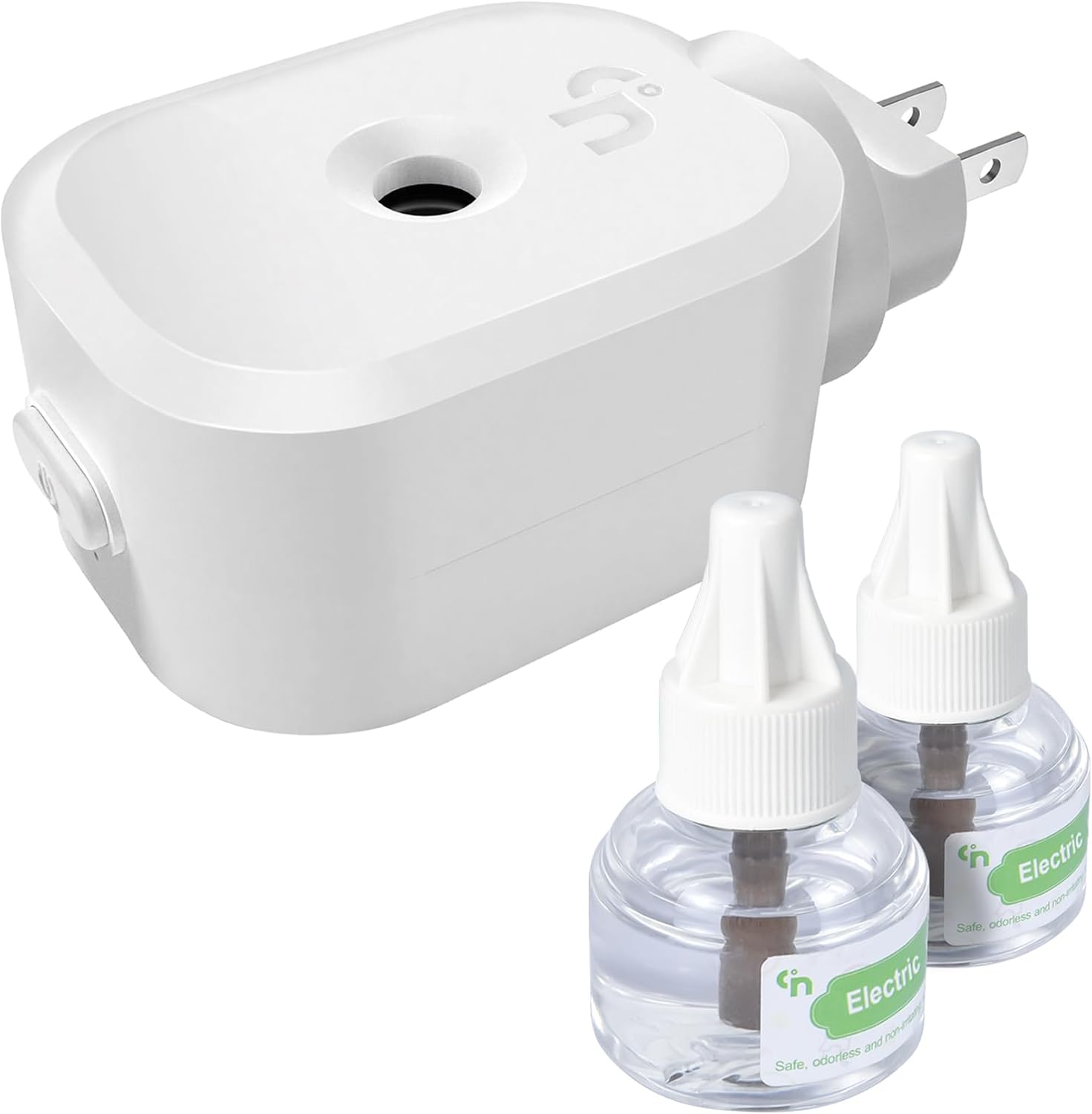
The Simashts Q5 is a small plug‑in mosquito repeller designed for indoor rooms and common areas. You install a refill bottle, plug it into an AC outlet and press the single button; an indicator light shows it is running and the unit claims to protect roughly a 20‑foot area within about 15 minutes. The Q5 uses a rotating 90 degree plug so it fits different outlet orientations and stays upright in power strips. For everyday home use it is convenient and low-maintenance: no sprays, no fans to clean and refills provide long run times per bottle. It is compact and unobtrusive, so it works well in bedrooms, living rooms, kitchens, and offices where continuous protection is desired. Limitations are that it relies on chemical refill cartridges so coverage depends on placement and room airflow, and it is intended for indoor use only so it will not replace outdoor devices for patios or yards.
Best for: Buyers who want a simple, low‑maintenance indoor solution for routine mosquito control in bedrooms and living spaces and prefer a plug‑and‑forget device.
Less Ideal for: People needing outdoor or whole‑yard protection or those who prefer non‑chemical methods such as traps or nets.
- Plug‑in design with 90° rotatable plug fits upright in different outlets or power strips
- Single‑button operation and indicator light for simple, hands‑off use
- Advertised 20‑foot protection zone suitable for typical rooms
- Uses replaceable refill bottles for long run times without frequent maintenance
- Indoor use only so not suitable for outdoor patios or open areas
- Protection depends on correct placement and room airflow since it disperses repellent passively
Verdict: A compact, easy‑to‑use plug‑in repeller that offers hands‑off indoor mosquito protection for typical rooms.
Raid Flying Insect Killer Spray, 18 oz

| Unit Count | 18 Ounce |
|---|---|
| Item Form | Spray |
| Target Species | Insects |
| Specification Met | EPA |
| Active Ingredients | d-Phenothrin 0.125%, prallethrin 0.100% |
Raid Flying Insect Killer is an 18 oz aerosol spray designed to kill mosquitoes, flies, gnats, small moths, wasps and similar flying pests on contact and by misting treated areas for short-term residual control. For indoor use you close doors and windows, spray with a sweeping motion into the air about three feet from walls and fabrics, then leave the room to allow the mist to work before ventilating after two hours. Notable features include a water-based formula that dries without a greasy residue and an "Outdoor Fresh" scent that reduces strong chemical odor. The product is EPA-specified and includes active pyrethroid ingredients for rapid knockdown. Practical benefits are quick results when insects are present and the ability to treat entry points like screens and around doors for continued control. Important limitations are the required safety precautions: the spray is harmful if inhaled or contacted, contains flammable ingredients, and rooms must be vacated and ventilated for a set time after use, which makes it less convenient for frequent or casual indoor use around children, pets, or food preparation areas.
Best for: Buyers who need a fast, reliable indoor solution to eliminate mosquitoes and other flying pests and who are comfortable following strict safety and ventilation steps after treatment.
Less Ideal for: Households that need frequent quick-turnaround sprays around children, pets, food areas, or where leaving rooms closed for extended ventilation is impractical.
- Kills a wide range of flying insects on contact including mosquitoes and flies
- Mist application allows room treatment without having to target each insect
- Water-based formula that dries without a greasy residue and has milder scent
- EPA-specified formulation with fast-acting pyrethroid active ingredients
- Requires vacating treated area and two hours of ventilation before re-entry
- Contains flammable ingredients and chemicals that require careful handling
Verdict: Use this aerosol when you want fast, on-contact elimination of mosquitoes and other flying insects and can follow the required safety and ventilation steps.
LASER HAND Small Indoor Electric Mosquito Killer Lamp

| Brand Name | LASER HAND |
|---|---|
| Unit Count | 1 Count |
| Manufacturer | LASER HAND |
| Customer Reviews | 2.8 out of 5 stars |
This compact LASER HAND mosquito killer plugs into a standard AC outlet and uses a high-intensity light to attract indoor flying insects, then electrocutes them on a charged metal mesh. It is designed for simple, plug-and-play use: set it in a bedroom, kitchen, living room, or balcony and leave it running quietly. The unit is lightweight and easy to clean—unplug and brush away dead insects—which makes maintenance straightforward for busy households. The manufacturer states an effective coverage of about 300 square feet, so it can handle a modest living area or single room. Important limitations are its basic feature set and modest build quality typical of budget models, and the reliance on light attraction means it is less effective against insects that are not drawn to UV or bright visible light. Placement matters for performance and it should be kept away from children and pets due to the exposed electrified grid.
Best for: Buyers looking for an inexpensive, no-frills indoor solution to reduce flying insects in single rooms who prioritize ease of use and low upfront cost.
Less Ideal for: People who need whole-house coverage, professional-level pest control, or solutions targeting non-light-attracted insects should consider more capable alternatives.
- Plug-and-play design requires no setup or consumables
- Quiet operation suitable for bedrooms and living spaces
- Easy to clean by unplugging and brushing away insect remains
- Advertised coverage roughly appropriate for a single room (about 300 sq ft)
- Basic construction and features compared with higher-end models
- Effectiveness depends on insects being attracted to light rather than other cues
Verdict: A very affordable, easy-to-use plug-in mosquito zapper for reducing flying insects in a single room.
SAHETO Mosquito Repellent Balls, 36-Pack

| Package contents | 36 balls |
|---|---|
| Intended coverage per pouch | Up to 110 sq. ft. (manufacturer estimate) |
| Estimated scent duration | Approximately 30–90 days |
| Manufacturer | SAHETO |
These mosquito repellent balls use plant-derived essential oil fragrances held in small pouches to provide a no-spray, no-plug, low-maintenance option for keeping mosquitoes away from indoor areas. You place the balls in the included pouches and set them around rooms, near doorways, or in enclosed spaces such as bedrooms, garages, RVs, or porches. Each pouch is intended to cover up to about 110 square feet and the manufacturer estimates scent release lasting roughly 30 to 90 days depending on ventilation and placement. The product’s strengths are its simplicity and lack of chemicals that require spraying or electrical outlets, making it easy to move and safe for use around common living areas when directions are followed. Limitations are that effectiveness depends on airflow, room size, and mosquito pressure, and fragrance-based repellents can be less reliable than active-contact insecticides in heavy infestation scenarios. For someone who wants a discreet, low-effort indoor option, these provide a convenient baseline level of protection.
Best for: Homeowners or renters who prioritize a low-maintenance, non-spray indoor solution to reduce mosquito presence and prefer a discreet, scent-based approach for bedrooms and common rooms.
Less Ideal for: People needing rapid elimination of heavy indoor infestations or those who require evidence-backed, high-efficacy insecticide solutions should choose a different product.
- Works without spraying or electricity so it is simple to deploy indoors
- Plant-based essential oil fragrance blends that are less intrusive than aerosol treatments
- Includes 36 balls for multiple rooms or repeated placement around the home
- Each pouch is designed to provide long-lasting scent release estimated at 30 to 90 days
- Fragrance-based deterrent performance varies with ventilation and may be limited in high mosquito pressure
- No measured active ingredient or efficacy data provided for guaranteed knockdown
Verdict: A convenient, no-spray indoor mosquito deterrent for people who want a low-effort, fragrance-based way to reduce mosquitoes in bedrooms and living areas.
SCFKAOF Mosquito Repellent Balls (8 Pack)

| Number of Items | 8 |
|---|---|
| Unit Count | 8 Ounce |
| Size | 1 Ounce (Pack of 8) |
| Coverage | 120 Sq. Ft |
| Duration | Up to 60 Days |
These mosquito repellent balls are small, plant-based disks sold in an eight-pack that you place where you need protection. They are designed for simple, no-setup use indoors or on covered patios: put a ball in a room, near a doorway, or inside a tent and the manufacturer says a single ball helps deter mosquitoes within roughly 120 square feet. The product emphasizes plant-derived ingredients and a scent-based deterrent rather than sprays or open flames, which makes them easy to move and suitable for living rooms and bedrooms. Each ball is intended to last up to 60 days, reducing the need for frequent replacement. Limitations to expect are that scent-based repellents depend on air movement and room layout, so coverage can be uneven in larger or open-plan spaces and may need multiple balls for reliable protection. Also, while marketed for indoor use, people sensitive to fragrances should test one in a small area first.
Best for: Buyers who want a low-effort, plant-based indoor mosquito option they can place around living spaces and who prioritize ease of use and milder ingredients over industrial-strength control.
Less Ideal for: People needing rapid knockdown in heavily infested rooms or large open-plan interiors should consider more powerful or active control methods instead.
- Plant-based formula suitable for families preferring non-chemical options
- Simple place-and-forget application with no mixing or power source
- Each ball is rated to last up to 60 days, lowering replacement frequency
- Claims to cover about 120 square feet, useful for single rooms or small indoor spaces
- Effectiveness can vary with room ventilation and layout, requiring multiple balls for larger areas
- Contains fragrances that may bother people with scent sensitivities
Verdict: A convenient, plant-based place-and-forget option for reducing indoor mosquito presence in single rooms without sprays or devices.
Jqely Ultrasonic Indoor Pest Repeller, 6-Pack

| Unit Count | 6 Count |
|---|---|
| Power Source | Electric |
| Sound Wave Frequency | 10kHz-65kHz |
This Jqely 6-pack is a simple plug-and-play ultrasonic system intended to reduce indoor mosquito, fly, ant, roach, and small-rodent activity without traps or chemicals. Each unit plugs into a standard outlet and offers three modes: a low-noise overnight mode for general pests, a moderate-frequency mode for crawling insects, and a higher-intensity mode for heavier infestations that should be used only when people and pets are away. The seller claims coverage up to 1,600 sq ft in open space, so you will likely need more than one unit for multiroom homes because walls and furniture block ultrasonic waves. Power draw is low at about 3 to 5W so the devices can run 24/7 with minimal energy impact. Practical benefits include no bait or cleanup and the ability to leave units running continuously in sleeping areas when using the quiet mode. Important limitations are that ultrasonic effectiveness varies by species and layout, some modes can be audible and uncomfortable, and results are rarely instant so expect gradual improvement rather than immediate elimination.
Best for: Homeowners who want a low-maintenance, chemical-free way to reduce indoor mosquitoes and common household pests and are comfortable trying a nonlethal, preventive approach that runs continuously.
Less Ideal for: People seeking a guaranteed, fast kill for heavy infestations or those who need a single-device solution for an entire multiroom dwelling should consider alternative control methods.
- Three selectable ultrasonic modes for targeting different pest types
- Low continuous power draw (about 3–5W) for 24/7 operation
- Chemical-free, no-bait solution that requires minimal cleanup
- Sold as a six-pack so multiple rooms can be covered without buying extras
- Ultrasonic waves are blocked by walls and furniture, so coverage is reduced in multiroom homes
- Highest-intensity mode can produce audible noise and must not be used around people or pets
Verdict: A convenient chemical-free option for risk-averse buyers who want continuous, low-energy mosquito and pest suppression across multiple indoor rooms.
Choosing the Right Mosquito Repellent for Inside the House: Key Factors to Consider
Effectiveness in Enclosed Spaces
How well a repellent reduces mosquito landings and bites inside a room is the most important factor. Performance can vary with the product format: passive diffusers, electric vaporizing units, mechanical traps, and topical aerosols each behave differently in enclosed air. Consider the typical size and layout of the rooms where you need protection because devices rated for small bedrooms may not cover open-plan living areas.
Placement matters. A unit tucked behind furniture or a diffuser stashed in a corner will underperform. For traps, proximity to mosquito entry points and dark resting spots improves capture. For chemical-based dispersal, closed doors and windows can concentrate active ingredients and boost efficacy, but they also increase occupant exposure. Think about how many rooms you need to protect and whether you want a single portable device or multiple smaller units.
Indoor Safety and Air Quality
Indoor repellents interact directly with the air you, your children, and your pets breathe, so safety is paramount. Look for options with lower volatile emissions or consumer-friendly active ingredients designed for indoor use. Consider whether occupants have asthma, allergies, or chemical sensitivities; these conditions make low-emission or non-chemical approaches more attractive.
Also assess residue and surface contact risks. Spray or aerosol formats can leave films on textiles and furniture, while heated or vaporized systems may produce detectable odors. Mechanical traps and physical barriers reduce chemical exposure but may require battery power or periodic cleaning. Review product labeling for recommended ventilation practices and any age- or species-specific warnings.
Coverage Area and Runtime
Different products report coverage differently. Electric vaporizers might specify bedroom-size coverage, while traps list an effective capture radius. Runtime matters because some units run continuously for nights at a time while others need frequent replacement or recharging. If you prefer overnight protection, prioritize longer run times or larger refill reservoirs to avoid interruptions.
Also factor in power source: battery-operated units offer placement flexibility but need recharging or fresh batteries; plug-in devices provide steady power but limit positioning. For refill-based systems, check how long a cartridge or pad lasts under normal use so you can budget for replacements and avoid lapses in protection.
Noise, Light, and Household Disruption
A device that effectively repels mosquitoes but hums loudly or emits bright lights may be unsuitable for bedrooms or media rooms. Mechanical traps with fans can generate steady background noise, while LED lures or indicator lights can disturb light-sensitive sleepers. Some vaporizing units are nearly silent, making them better for sleeping areas.
If you plan to run devices overnight, test or confirm noise levels and light intensity. Also consider whether maintenance activities such as emptying a trap or swapping pads are easy to do quietly. Minimizing disruption helps ensure consistent use, which is often more important than marginal differences in claimed efficacy.
Maintenance and Consumable Availability
Many indoor repellents require periodic attention. Traps need emptying and occasional part replacement; vaporizing units require cartridges or pads; topical aerosol cans must be stored and replaced. Ease of maintenance affects long-term performance and ongoing cost. Choose a format you will realistically maintain-forgetting to change a pad or empty a trap reduces protection.
Also consider how easy it is to find replacement consumables locally or online. Proprietary cartridges that are hard to source can make an otherwise good device impractical. Simpler solutions with generic pads or rechargeable batteries can lower lifetime headaches.
Child and Pet Considerations
Household composition should shape your choice. If you have crawling children, curious pets, or birds and reptiles with sensitive respiratory systems, select options with lower direct exposure risks and secure placements out of reach. Avoid open reservoirs or devices that spray liquid droplets in areas children might touch.
Consider how devices are mounted or placed. Wall-mounted or high-shelf units reduce accidental contact. For households with pets that groom themselves, minimizing residues on floors and fabrics is important. Some active ingredients are safe for humans but harmful to certain animals, so always check guidance for specific species.
Types of Indoor Mosquito Repellents
Indoor mosquito repellents come in several practical formats. Passive diffusers release repellents slowly from pads or cartridges and are low-noise and low-maintenance. Electric vaporizers heat a pad or liquid to disperse an active ingredient across a room for continuous protection.
Mechanical traps use light or CO2 mimics plus fans to lure and catch mosquitoes without releasing chemicals. Topical aerosols and sprays provide targeted spot control but require careful application to avoid residue on surfaces. Each format has tradeoffs between chemical exposure, upkeep, and coverage that affect where and how you use it in the home.
- Passive diffusers: quiet, often fragrance-based, limited coverage
- Electric vaporizers: steady protection, need power and pads
- Mechanical traps: chemical-free capture, require cleaning
- Topical sprays: on-demand control, surface contact risk
Placement Tips for Best Indoor Performance
Proper placement can multiply a product's effectiveness. Put devices near likely mosquito entry points such as windows, doors, or screened vents to intercept insects before they spread through the room. For traps, place units in darker corners or near furniture where mosquitoes rest during the day.
Avoid close placement to occupied seating areas when using vaporized or fragranced repellents to limit direct inhalation. For multiroom coverage, use multiple units rather than relying on a single device to fill a large open plan space.
- Place near entry points or resting spots
- Keep electrical units away from fabrics and curtains
- Use multiple smaller units for open layouts
Safe Use Around Children and Pets
When children or pets are in the household, prioritize low-emission methods and secure mounting. Choose devices that place active ingredients well above reach or use traps that do not rely on airborne chemicals. Always read and follow label instructions about room sealing, ventilation, and recommended exposure times.
If a device uses replaceable pads or liquids, store consumables in sealed containers out of reach. For topical sprays, avoid use on bedding and areas where pets may come into contact with residues. Monitor sensitive occupants for signs of irritation and stop use if symptoms appear.
- Prefer mechanical traps or sealed diffusers for high-sensitivity homes
- Store consumables securely and follow label warnings
- Test a device briefly and watch for respiratory or skin irritation
Maintaining and Cleaning Indoor Devices
Regular maintenance keeps repellents working and minimizes odors or mold. Empty mechanical traps frequently to prevent build-up and to keep insect lures effective. Replace pads and cartridges on schedule and clean housing components per manufacturer guidance to avoid clogging or reduced dispersion.
For electric units, unplug before cleaning and use a soft cloth to remove dust. Avoid abrasive cleaners that can damage plastic or heating elements. Keeping devices clean also reduces the likelihood of unpleasant smells that might otherwise discourage consistent use.
- Empty and clean traps weekly in active seasons
- Replace pads or cartridges as recommended
- Unplug devices before any maintenance
Combining Repellents with Other Indoor Measures
No single solution eliminates all mosquitoes in the home. Combine repellents with physical barriers and habitat reduction for best results. Use window and door screens in good repair, reduce standing water in plant saucers or trays, and seal gaps around screens and doors where insects can enter.
Strategic use of repellents at peak mosquito hours and targeted trapping near entry points will lower indoor populations faster than passive use alone. For seasonal spikes, step up maintenance frequency and add extra units to high-traffic rooms.
- Keep screens and door seals intact
- Remove standing water indoors
- Use repellents during peak mosquito activity hours
How We Chose the Best Mosquito Repellent for Inside the House
We focused on practical, indoor-safe performance and excluded outdoor-only devices and treatments that require professional application. Selection prioritized products and formats suited to living rooms, bedrooms, and enclosed patios rather than large open-air use. Our editorial filters included documented repellency or capture rates in enclosed environments, safety data for typical household exposure, and real-world usability for everyday home settings. Key evaluation criteria were effectiveness at reducing mosquito landings or bites in rooms of typical home size, indoor safety including low volatile emissions and compatibility with children and pets, duration of protection or run time between refills, and ease of setup and cleaning for regular household use. We also considered noise level and light output where relevant, plus maintenance costs and availability of replacement consumables. We excluded products intended only for outdoor yards, heavy-duty fumigation requiring specialist equipment, and options that rely on unproven or potentially hazardous active agents. The final list favors balanced solutions that perform reliably indoors while limiting chemical exposure and upkeep.
FAQ
Are indoor mosquito repellents safe to use around babies?
Many indoor options are formulated for household use but safety varies. For babies, choose low-emission devices, place units well out of reach, and avoid direct application to skin or bedding. If unsure, consult pediatric guidance and consider mechanical traps as a lower-exposure choice.
How long should I run an indoor repellent each night?
Run time depends on the product. Some plug-in or vaporizing units are designed for continuous overnight use, while refill pads may last several nights. Check product guidance for recommended runtimes and replace consumables on schedule to maintain protection.
Will one device protect an entire open-plan living area?
Often not. Coverage claims vary and many units are intended for single rooms. For open-plan spaces, multiple units placed strategically or higher-capacity devices made for larger rooms will provide more consistent protection.
Do mechanical traps work without chemicals?
Yes. Mechanical traps rely on light, heat, or fan suction to lure and capture mosquitoes and typically do not emit active chemicals. They reduce airborne exposure but require regular cleaning and proper placement to be effective.
Can I use topical sprays indoors safely?
Topical and aerosol sprays can be used indoors for spot control but may leave residues on surfaces and fabrics. Use sparingly, ventilate the room if directed, and avoid spraying near food, children, and pets.
How do I choose between refillable and rechargeable devices?
Refillable devices may be convenient but incur ongoing consumable costs. Rechargeable units avoid pads or liquids but need recharging and may have shorter continuous runtimes. Match the choice to how often you plan to run the device and how you prefer to manage upkeep.
Final Verdict
Choosing the right mosquito repellent for inside the house means balancing bite protection with indoor safety and ease of use. Prioritize solutions that match your room size, household sensitivity, and willingness to maintain consumables or traps. Expect tradeoffs between chemical exposure, noise, and upkeep. If you need overnight bedroom protection, favor quiet, low-emission options with long runtimes. For households with children or pets, lean toward mechanical or well-contained diffusers. Use repellents as part of an integrated approach that includes screens, sealing gaps, and eliminating standing water for the most reliable indoor mosquito control.
