

Note: This article contains affiliate links. If you click on these links and make a purchase, I may earn a small commission at no extra cost to you. This helps support my research and content. Read my full affiliate disclosure here.
Picking the right mulch for blueberry plants matters because blueberries thrive in acidic, consistently moist soil and are sensitive to nutrient shifts. The wrong mulch can raise pH, compact around roots, or fail to retain enough moisture, which reduces yield and plant vigor. This guide covers seven carefully shortlisted mulches suited for blueberry beds, focused on how they influence soil acidity, moisture retention, and long-term soil quality. Each option is evaluated for gardeners who want reliable acidity management and easy seasonal maintenance. Read on to see how the key criteria shaped the selections and what to expect when applying each type.
Top Picks at a Glance
| Best Overall The best all-around choice for most situations | Soil Sunrise Pine Bark Mulch Nuggets (12 Quarts) |  |
| Best Quality Built to a higher standard if you want something more solid | Plantonix Coco Chips Mulch Brick (10 lb) – Compressed Coconut Husk Chips |  |
| Best Value The sweet spot between price and what you get | Hoffman Canadian Sphagnum Peat Moss, 10 Qt Soil Conditioner |  |
| Best Budget The cheapest option that still gets the job done reliably | MAQIHAN Pine Needle Mulch for Orchids and Acid-Loving Plants, 11 oz |  |
| Highest Rated A top-rated pick with lots of positive feedback | Doter Natural Pine Bark Mulch (10 qt) |  |
| Most Popular A crowd favorite that many people choose with confidence | Rio Hamza Trading 100% Natural Pine Bark Mulch Nuggets (8 Quarts) |  |
| Best Seller A high-volume bestseller chosen again and again | USA PINESTRAW Long Needle Pine Straw Mulch – Square Bale |  |
Soil Sunrise Pine Bark Mulch Nuggets (12 Quarts)

| Unit Count | 1 Count |
|---|---|
| Item Type Name | Mulch |
| Brand Name | Soil Sunrise |
| Volume | 12 quarts |
Soil Sunrise Pine Bark Mulch is a bagged, all-natural pine bark nugget product intended for container gardening, bonsai, terrariums and acid-loving plants. The half-inch nuggets are used both as a top dressing and mixed into potting mixes to improve drainage and increase airflow around roots. In practice the mulch helps reduce surface evaporation and shades roots, which is helpful for blueberry plants that prefer consistent moisture and acidic conditions. The slow breakdown of the bark adds organic matter over time and supports long-term soil structure without chemical additives. As a small 12-quart bag it is convenient for individual pots and small blueberry bushes but you may need multiple bags for larger garden beds. Nugget size makes it less suitable as a fine soil amendment unless shredded further, and because it is pure bark it will not supply significant nutrients quickly. For acid-loving plants the natural pine bark is a sensible, low-maintenance choice for improving drainage and maintaining soil moisture in containers and small patches.
Best for: Buyers who maintain a few container blueberries or small acidic beds and want a natural, low-maintenance mulch to retain moisture and improve drainage while giving pots a tidy appearance.
Less Ideal for: Gardeners planting large in-ground blueberry patches or seeking a nutrient-rich amendment should consider bulk mulches or compost instead.
- 100% natural pine bark with no chemical additives
- Half-inch nuggets improve drainage and increase airflow when mixed into potting media
- Helps retain moisture and reduce surface evaporation for potted or small blueberry plants
- Slow decomposition adds organic matter over time to support soil structure
- Attractive reddish-brown nuggets provide a finished look as a top dressing
- Small 12-quart volume means several bags are required for larger beds
- Nugget size is coarse for use as a fine soil amendment without breaking or shredding
Verdict: A compact, all-natural pine bark mulch that helps blueberry plants retain moisture and improve drainage in containers and small plantings.
Plantonix Coco Chips Mulch Brick (10 lb) – Compressed Coconut Husk Chips

| Unit Count | 160 Ounce |
|---|---|
| Item Type Name | Soil and Soil Amendments |
| Manufacturer | Plantonix |
| Volume | 15 gallons |
Plantonix Coco Chips arrive as a compact 10 lb brick that expands when hydrated into loose coconut husk chips used as mulch or soil amendment. Gardeners typically rehydrate the block, break the material apart, and spread a 1–3 inch layer over soil or mix into potting mixes to improve aeration and water retention. The product is pre-screened, washed, and aged to reduce dust, with low electrical conductivity and a neutral pH that make it safe around sensitive plants. Practical benefits include strong moisture retention to reduce watering frequency, good airflow that helps prevent compaction, and a long-lasting, slow-decomposing texture that keeps beds tidy and gives a tropical look. It is renewable and a peat-free alternative for environmentally minded gardeners. Important limitations are that the chips do not add significant nutrients as they are mainly structural, and you need to hydrate and fluff the brick before use which takes time and space to process. Also take basic dust precautions when handling and keep away from pets and children during processing.
Best for: Buyers who prioritize consistent moisture control and healthy root aeration for acid-loving shrubs and container-grown plants and who prefer a sustainable, peat-free mulch solution.
Less Ideal for: Gardeners seeking a nutrient-rich soil amendment or a mulch that quickly breaks down into organic matter should consider compost or aged bark instead.
- Expands from a compact 10 lb brick for easy storage and transport
- High moisture retention reduces watering frequency
- Pre-screened and washed to remove dirt, sand, and rocks
- Lightweight, airy chips improve soil aeration and resist compaction
- Provides little in the way of nutrients so fertilization is still required
- Requires rehydration and breaking up the brick before use which adds prep time
Verdict: Choose this coco husk chip brick if you want a peat-free, long-lasting mulch that improves aeration and holds moisture for blueberry beds and containers.
Hoffman Canadian Sphagnum Peat Moss, 10 Qt Soil Conditioner

| Item Type Name | Peat Moss |
|---|---|
| Brand Name | Hoffman |
| Volume | 17.9 ml |
| Unit Count | 1 Count |
| Style Name | Peat Moss |
Hoffman Canadian Sphagnum Peat Moss is a straightforward peat-based soil conditioner intended to boost water retention and loosen compacted soils. Gardeners typically work it into native soil or mix it with perlite and vermiculite when making potting media; it is also commonly used as a top dressing or component in mulches for acid-loving plants. The product is made from sphagnum peat harvested from Canadian bogs and sold in a 10 quart bag that is easy to handle for small beds and containers. Practical benefits include improved aeration in heavy or clay soils, increased organic content, and better moisture holding capacity—qualities that help shallow-rooted shrubs establish and stay evenly moist. Important limitations are that peat acidifies soil over time and does not readily break down to supply nutrients, so it is best used as part of a balanced amendment plan rather than the sole soil amendment. Peat is also a nonrenewable resource, so gardeners concerned with sustainability may prefer alternatives like composted bark or coconut coir.
Best for: Buyers who want a reliable, easy-to-use soil conditioner to hold moisture and improve structure in small beds and containers, especially when preparing acidic soil mixes for shrubs and berries.
Less Ideal for: Gardeners prioritizing sustainable or renewable amendments or those who need a nutrient-rich amendment as a primary soil improvement should consider compost or bark alternatives.
- Improves moisture retention for plants that need consistent soil moisture
- Loosens dense or clay soils to improve drainage and root penetration
- Premium-grade sphagnum peat from Canadian bogs suggests consistent texture and performance
- Acidifying nature means pH effects should be monitored for certain plants
- Provides little in the way of nutrients and breaks down slowly
- Peat is a nonrenewable material compared with some alternatives
Verdict: A practical moisture-retentive soil conditioner that reliably improves aeration and structure for acid-loving plants like blueberries.
MAQIHAN Pine Needle Mulch for Orchids and Acid-Loving Plants, 11 oz

| Brand Name | MAQIHAN |
|---|---|
| Unit Count | 11 Ounce |
| Item Highlight | Orchid Potting Mix for Landscaping Repotting Indoor Potted Plants,Gardening,Soil Moisture Retention |
This small 11-ounce bag of pine needle mulch is a lightweight, natural mulch intended for acid-loving plants and potted specimens. It is typically used as a top dressing around root zones, a component in potting mixes for orchids and blueberries, or mixed into compost to slowly release nutrients as it decomposes. Notable features include its naturally acidic pH and loose, breathable texture that improves soil aeration and helps retain moisture. For blueberry growers the mulch can help maintain a slightly acidic root environment and reduce surface evaporation when applied 2 to 4 inches thick. The product is sold in a compact pack, so it is most useful for small beds, containers, or to top-dress individual plants rather than large landscape jobs. Because fresh pine needles can draw nitrogen while breaking down, they are best composted or combined with other organic materials before heavy incorporation into planting beds. Expect modest quantity per bag and the need to reapply seasonally for continuous benefits.
Best for: Home gardeners growing a few blueberry plants or container-grown acid-loving shrubs who prioritize an inexpensive, natural mulch to maintain slightly acidic soil and conserve moisture.
Less Ideal for: Gardeners needing bulk mulch for large landscapes or those growing neutral to alkaline plants that dislike acidic conditions should choose a different product.
- Naturally acidic, suitable for acid-loving plants such as blueberries and azaleas
- Loose, breathable texture improves aeration and reduces surface compaction
- Helps retain soil moisture when applied as a 2 to 4 inch top layer
- Biodegradable and slowly releases nutrients as it decomposes
- Small 11 oz package provides limited coverage and is not suited for large beds
- Fresh needles may temporarily tie up soil nitrogen unless composted first
Verdict: A compact, budget-friendly pine needle mulch that helps create and maintain the slightly acidic, moisture-retentive conditions blueberry plants prefer.
Doter Natural Pine Bark Mulch (10 qt)

| Brand | Doter |
|---|---|
| Volume | 10 quarts |
Doter Natural Pine Bark is a coarse pine bark mulch sold in a 10-quart volume that functions as a long-lasting soil amendment, potting medium component, and surface mulch. Gardener use typically involves mixing it into potting mixes for orchids and succulents, blending it with garden soil to increase porosity, or spreading it as a top dressing to retain moisture and suppress weeds. Notable features include a porous structure that promotes aeration and drainage, a slightly acidic nature useful for acid-loving plants, and durability that slows decomposition so it does not compact quickly. Practical benefits for blueberry growers are improved root oxygenation, better water management in containers or raised beds, and gradual release of organic matter to feed soil life. Important limitations are the coarse texture, which may be too chunky for direct seed starting or fine surface application without additional finer compost, and a need to monitor pH over time if your soil is already very acidic. Handle carefully to avoid dust inhalation.
Best for: Buyers who prioritize a reliable, long-lasting mulch to improve soil structure and drainage for acid-loving shrubs and container-grown fruit plants.
Less Ideal for: Gardeners seeking a fine-textured seed-starting medium or an instant, nutrient-rich topdressing should consider blends with compost or finer media instead.
- Improves drainage and aeration to reduce waterlogging risk
- Naturally slightly acidic, compatible with acid-loving plants like blueberries
- Durable pieces that resist quick decomposition and prevent compaction
- Versatile: usable as potting mix amendment, garden mulch, or soil structure booster
- Coarse particle size can be too large for seed starting or fine topdress applications
- May require pH monitoring if used heavily on already acidic soils
Verdict: A dependable, long-lasting pine bark mulch that improves drainage and supports acid-loving plants like blueberries.
Rio Hamza Trading 100% Natural Pine Bark Mulch Nuggets (8 Quarts)

| Brand | Rio Hamza Trading |
|---|---|
| Unit Count | 256 Square Feet |
| Item Type Name | Potting Soil |
| Style Name | All Natural Pine Bark Mulch |
| Volume | 8 quarts |
This pine bark mulch is a simple, chemical-free product for adding organic mulch or mixing into potting mixes. The half-inch nuggets are marketed for indoor and outdoor containers, bonsai, terrariums, and landscape beds; used as a top dressing they help retain surface moisture and give pots a tidy, red-brown finish, and worked into soil they improve drainage and aeration to reduce waterlogging. The bagged format and small nugget size make it easy to spread on a 12-inch container or to top-dress blueberry pots where slightly acidic, well-draining media is preferred. Because it contains no added fertilizers or pesticides it will not alter fertilizer plans, but it also does not supply nutrients, so plan to use it alongside your regular feeding routine. The product is lightweight and best for decorative and drainage purposes rather than bulk landscape coverage, so multiple bags are needed for larger beds. Overall this is a straightforward, natural mulch that supports root health and moisture management when used appropriately around acid-loving plants like blueberries.
Best for: Buyers who prefer an all-natural, no-additive mulch for container-grown blueberry plants or other acid-loving potted shrubs and who value visible, tidy top dressing and improved drainage.
Less Ideal for: Gardeners needing large-volume landscape mulch or a product that adds fertilizer or quick nutrients should look for bulk bark or amended mulches instead.
- Made from 100% natural pine bark with no added chemicals or fertilizers
- Half-inch nuggets improve surface appearance and help retain moisture
- Can be mixed into potting mix to improve drainage and reduce waterlogging
- Suitable for indoor pots, bonsai, terrariums and outdoor containers
- Small 8 quart bag provides limited coverage for garden beds so multiple bags are required for larger areas
- Does not provide nutrients so additional fertilization is needed for long-term feeding
Verdict: A small-batch, chemical-free pine bark mulch that tidy-finish tops pots and improves drainage—ideal for blueberry containers and other acid-loving potted plants.
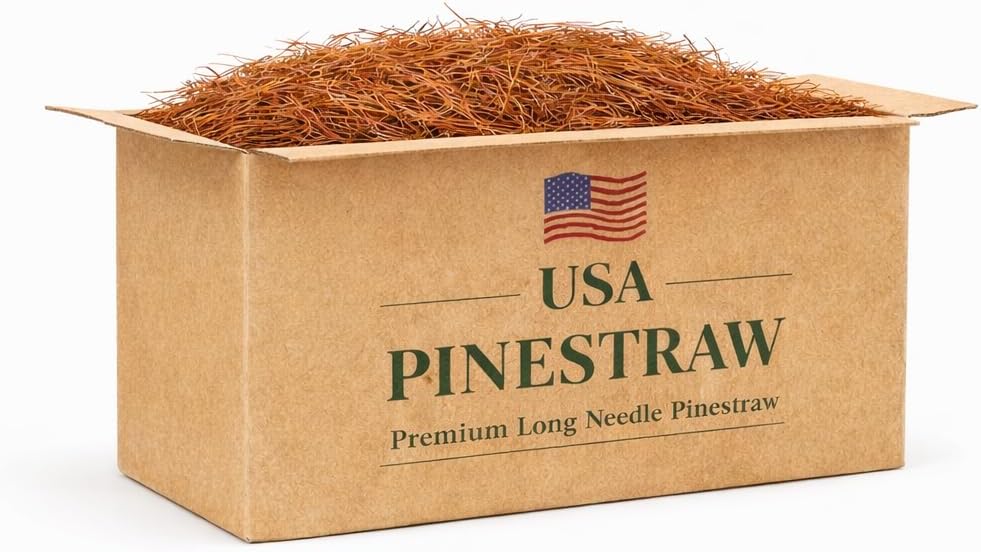
USA PINESTRAW Long Needle Pine Straw Mulch – Square Bale
| Material Type | Pine |
|---|---|
| Size | 14 inch |
| Package Size Name | Square Bale |
| Other Special Features of the Product | Organic |
This product is a single 14-inch square bale of long-needle pine straw harvested for use as organic mulch. It is applied by spreading the straw in a 2–4 inch layer around beds, trees, and shrubs to conserve soil moisture, suppress weeds, and reduce erosion. Because it is organic pine material, it breaks down slowly and helps moderate soil temperature while adding organic matter over time. The bale format is easy to handle for small to medium beds and the long needles interlock well to form a stable mulch layer that resists wind displacement. Limitations are that one bale covers a modest area, so larger plantings will need multiple bales, and pine straw can slightly acidify surface soil as it decomposes so gardeners who monitor soil pH should account for that around acid-sensitive plants. It is lightweight to place but may require occasional topping up each season as it settles and decomposes.
Best for: Gardeners who want a low-maintenance, natural mulch for small blueberry beds and prefer predictable, easy-to-place materials that support moisture retention and weed control.
Less Ideal for: Large-scale plantings or landscapers who need bulk coverage per delivery or gardeners who require neutral-to-alkaline mulches without any acidifying effect.
- Natural organic material from pine that improves moisture retention and reduces erosion
- Long needles interlock to form a stable mulch layer that resists wind scatter
- Helps suppress weeds without chemicals when applied at recommended depth
- Single square bale format is easy to handle and place around small beds
- One bale provides limited coverage so multiple bales are needed for larger areas
- Can modestly acidify the soil surface as it decomposes, which may affect pH-sensitive plants
Verdict: A convenient, organic square bale of long-needle pine straw that provides reliable moisture retention and weed suppression for small blueberry beds.
Choosing the Right Mulch for Blueberry Plants: Key Factors to Consider
Soil Acidity and pH Effect
Blueberries need acidic soil, typically between pH 4.5 and 5.5, so the mulch you choose should not raise pH over time. Organic mulches vary in how they influence surface and near-root-zone pH as they break down. Pine needles and well-aged pine bark usually help maintain acidity, while some composts and wood ashes can increase pH. Testing your soil before mulching and annually afterward helps track any shifts so you can adjust mulch type or add acidifying amendments.
Consider the long-term trend: rapidly decomposing mulches can temporarily change soil chemistry as microbes process nitrogen and other elements. Choose mulches known to either lower pH or remain neutral, and avoid materials that include lime, calcareous shells, or crushed concrete that could raise alkalinity.
Moisture Retention and Drainage
Mulch moderates soil moisture by reducing evaporation and buffering against heavy rainfall, both important for healthy blueberry roots. Some mulches form a dense mat that holds moisture well but may reduce oxygen exchange if applied too thickly. Others let water pass through more readily, which can be useful in heavy soils where drainage is a concern.
Aim for a mulch that balances moisture retention with air flow. In dry climates or during hot spells, a thicker layer that holds water is advantageous. In cooler, wetter sites, a coarser mulch that sheds excess water and dries between rains helps prevent root rot.
Nutrient Cycling and Organic Matter
As mulch decomposes, it adds organic matter and feeds soil life, improving structure and nutrient-holding capacity. However, fresh high-carbon materials can temporarily tie up nitrogen as microbes break them down, which is important to consider during active growth. Well-composted materials are less likely to cause nitrogen drawdown than raw wood chips or sawdust.
Choose mulches that contribute beneficial humus without creating long-term nutrient imbalances. Periodic topdressing and light fertilization can offset transient nutrient competition. Also consider whether the mulch will encourage earthworms and beneficial microbes that support blueberry roots.
Weed Suppression and Cleanliness
Mulch helps suppress weeds by blocking light and physically preventing seed germination. Dense, fine mulches and thicker layers perform best at reducing weed pressure, which lowers competition for moisture and nutrients. Some mulches, such as uncomposted yard trimmings, can introduce weed seeds if not properly processed.
Select a mulch that minimizes weed introduction and is easy to keep tidy between rows. Avoid mulches that contain common weed seed or were sourced from unprocessed landscape waste unless you can screen or compost them first.
Longevity and Maintenance Frequency
Mulches differ in how long they last before needing replenishment. Coarse bark and wood chips can persist for multiple seasons with minimal settling, while straw and leaf mulch break down faster and require annual top-ups. Longer-lasting mulches reduce yearly labor but may be slower to integrate as organic matter into the soil.
Balance the desired level of maintenance with soil improvement goals. If you want rapid soil building, choose a faster-decomposing mulch and plan for more frequent replacement. For low-maintenance plantings, choose a durable option and monitor soil health with occasional tests.
Application Practicalities and Safety
Consider how easy the mulch is to transport, spread, and store. Lightweight options are easier for small garden plots but may blow away in windy sites. Coarser materials are bulkier but resist displacement. Also think about potential safety or hygiene issues: some bark products can harbor fungal spores or pathogens if wet and poorly aged, and some organic materials can attract rodents if applied too thickly near stems.
Select mulches you can handle comfortably and that suit your storage space. For container-grown blueberries, prefer fine, stable mulches that do not compact or block drainage.
Mulch Depth and Timing
How deep you lay mulch affects moisture, air flow, and bud development. For blueberry plants, a layer of 2 to 4 inches is usually sufficient to conserve moisture without suffocating the crown. Freshly planted bushes benefit from a lighter touch initially; increase depth after the first growing season as roots establish.
Apply mulch in spring after soil has warmed enough for root activity and again in late fall to insulate roots through winter. Keep mulch a few inches away from the main stem to avoid bark moisture buildup and potential rot.
- 2 to 4 inches typical depth for established bushes
- Keep mulch away from the crown and main stem
- Top up annually based on breakdown and soil test results
Mulch Options by Garden Situation
Different garden contexts call for different mulch choices. In raised beds or containers, use fine, clean materials that do not compact or clog drainage. In orchard-style plantings, coarser bark or wood chip mulches are practical for long-term pathways and lower maintenance.
For acidic soil maintenance, select materials that lean acidic in breakdown or remain neutral. In windy or sloped sites, heavier or coarser mulches resist displacement better than light, fibrous options.
- Containers and small raised beds: fine, sterile mulches
- Open beds and landscapes: coarser, longer-lasting mulches
- Windy sites: heavier pieces or tacky organic blends
Seasonal Management and Mulch Renewal
Plan a seasonal mulch routine that aligns with plant phenology. In spring, clear any compacted, moldy material and refresh with a clean layer to encourage early root growth. In summer, monitor moisture and add water if surface drying occurs. In autumn, add a protective layer to buffer winter temperature swings and reduce heaving.
Avoid deep single applications in late fall that could delay soil warming in spring. Instead, aim for gradual topdressing so the soil can warm naturally and roots can resume activity when temperatures rise.
- Spring: refresh and remove compacted material
- Summer: check moisture levels more frequently
- Autumn: add insulating topdress but avoid excessive thickness
Pairing Mulch with Fertilization and Soil Amendments
Mulch and fertilizer strategies should align. Because some mulches immobilize nitrogen temporarily, apply balanced, acid-friendly fertilizers at planting or in early spring so nutrient availability matches top growth. For mulches that decompose slowly, incorporate a thin layer of compost beneath the mulch to feed roots without altering the surface pH too rapidly.
If you use acidifying amendments such as sulfur or acidic fertilizers, apply according to soil test recommendations and allow several months for changes to take effect before changing mulch types.
- Apply slow-release or acid-friendly fertilizer in early spring
- Place compost under mulch rather than mixing in surface layers
- Monitor soil test results before major amendment changes
Common Mistakes to Avoid
Avoid piling mulch against the base of the plant. A mulch volcano traps moisture against stems and creates a pathway for disease. Also avoid applying a single very thick layer with the expectation it will not need maintenance; excessive thickness can lead to anaerobic conditions and pest habitat.
Do not assume that all 'natural' mulches are safe for blueberries. Some materials may contain lime, shells, or other alkaline residues that counteract acidity. If sourcing bulk mulch from landscapers, ask about contents or test a small sample first.
- Keep mulch pulled back from trunks by several inches
- Avoid very thick, uncompacted layers that stay wet
- Test unknown bulk materials before full application
How We Chose the Best Mulch for Blueberry Plants
We selected mulches based on criteria that directly affect blueberry health and ease of garden care. Primary evaluation points were pH influence, moisture retention, organic matter contribution, and potential for nutrient tie-up or contamination. We also considered longevity and maintenance needs, looking at how often a gardener must replenish the layer and whether the mulch breaks down into beneficial humus or undesirable compounds. Products that neutralize acidity or contain lime were excluded, as were mulches with known pests, weed seeds, or chemical residues. We favored materials that either maintain or promote the slightly acidic conditions blueberries prefer and those that moderate soil moisture without causing crown rot. Practical handling factors such as ease of spreading, availability for small-scale gardeners, and compatibility with drip irrigation were included. The scoring emphasized measurable, garden-relevant dimensions so readers can match a mulch type to their soil test results and maintenance rhythm.
FAQ
How often should I top up mulch around blueberry bushes?
Usually once a year is sufficient for most mulches, with top-ups in spring to replace material lost to decomposition. Faster-breaking materials like straw or leaves may need midseason attention, while coarse bark can last several years with only a light surface refresh.
Can I use compost as the only mulch for blueberries?
Compost is beneficial for adding organic matter but can break down quickly and may not provide long-term moisture protection alone. Many gardeners use a thin compost layer under a more durable surface mulch to combine nutrient benefits with moisture control.
Do pine needles really help lower soil pH for blueberries?
Pine needles are often recommended because they tend to be acidic and decompose slowly, which helps maintain acid conditions. Their actual effect on pH is gradual, so they are best used as part of an overall acidity management plan that includes soil testing and appropriate fertilizers.
Will wood chips cause nitrogen deficiency in my blueberry plants?
Fresh high-carbon materials can temporarily tie up nitrogen at the soil surface as microbes decompose them. Placing a layer of compost or applying a small amount of nitrogen-rich fertilizer underneath or when applying fresh chips mitigates this risk and protects plant growth.
Is mulch necessary for potted blueberry plants?
Mulch helps potted blueberries by moderating moisture and insulating roots, but it must be lightweight and not block drainage. Fine bark or shredded leaves work well in containers when kept shallow and monitored for compaction.
Final Verdict
Choose a mulch that reinforces the acidic, moist conditions blueberries prefer while matching your maintenance capacity. If you want low-effort, pick a coarse, long-lasting mulch and monitor soil acidity. If your goal is rapid soil improvement, use faster-decomposing organic material with planned annual renewal and supplemental acid-friendly fertilization. Prioritize pH impact and moisture control above appearance. Regular soil tests and modest seasonal top-ups will keep bushes productive and reduce common problems related to improper mulching.
