

Note: This article contains affiliate links. If you click on these links and make a purchase, I may earn a small commission at no extra cost to you. This helps support my research and content. Read my full affiliate disclosure here.
Choosing the right mulch for a chicken coop affects bird health, cleaning time, and how well you control odors and moisture in the run. The wrong material can compact, hold ammonia, or harbor parasites, while the right mulch reduces maintenance and keeps birds comfortable through wet seasons and hot summers. This guide covers seven top contenders for mulch in and around chicken coops, each shortlisted for common backyard flock needs. We evaluated options for moisture control, odor suppression, ease of cleaning, and safety for poultry. Read on to see how these factors influence real-world coop care and which traits matter most for the size and setup of your flock.
Top Picks at a Glance
| Best Overall The best all-around choice for most situations | Small Pet Select Hemp Hurd Chicken Coop Bedding, 18 lb |  |
| Best Quality Built to a higher standard if you want something more solid | RentACoop Premium Hemp Bedding 300L (30 lb) |  |
| Best Value The sweet spot between price and what you get | Small Pet Select Pine Shavings Chicken Bedding, 141L |  |
| Highest Rated A top-rated pick with lots of positive feedback | HealthiStraw FarmStraw Coarse-Cut 3 cu ft Compressed Wheat Straw Bedding |  |
| Most Popular A crowd favorite that many people choose with confidence | DOMINION HEMP Premium Hemp Bedding for Chicken Coops, 10+ cu ft (285L) – 30 lb |  |
Small Pet Select Hemp Hurd Chicken Coop Bedding, 18 lb

| Unit Count | 18 Pounds |
|---|---|
| Material Type | Hemp Hurd |
| Recommended Uses For Product | Indoor, Outdoor |
| Pet Type | Bird |
This hemp hurd bedding is made from the inner core of the hemp stalk and is intended as a coop-safe, eco-friendly alternative to straw or wood shavings. In everyday use you spread it across the coop floor or nest boxes to absorb droppings and moisture; the manufacturer states it will absorb up to 400% of its weight, which helps reduce odor and the frequency of full cleanouts. The material is low-dust and described as soft and warm, which is easier on birds with respiratory sensitivities and provides a comfortable resting surface. It is biodegradable and compostable, so spent bedding can be added to a compost pile rather than discarded. Practical limits are the single 18 lb bag size, which may be modest for larger flocks or deep-litter systems, and the product is a loose chip form that will require occasional topping up and raking to maintain even coverage. If you want a sustainable, highly absorbent bedding that cuts odor and dust, hemp hurd performs well compared with many traditional materials.
Best for: Buyers who want an eco-conscious, low-dust bedding that controls odor and keeps coop maintenance easier for small to medium flocks.
Less Ideal for: Large-scale keepers running deep-litter systems who prefer bulk bedding options or those who need a pre-compacted or pelletized product.
- Very high absorbency (manufacturer claims up to 400% of its weight) to reduce moisture and odor
- Low-dust composition suitable for animals with respiratory sensitivities
- Made from 100% natural hemp hurd and fully biodegradable for composting
- Soft, warm texture that provides comfortable bedding for chickens and small pets
- Sold in a single 18 lb bag which may require frequent replacement for larger coops
- Loose chip form needs routine raking and topping up to keep even coverage
Verdict: A sustainable, low-dust bedding that soaks up moisture and reduces odor, making it a solid choice for balanced coop care.
RentACoop Premium Hemp Bedding 300L (30 lb)

| Material Type | Hemp |
|---|---|
| Capacity | 300 liters |
| Item Form | loose |
| Scent Name | Unscented |
| Unit Count | 480 Ounce |
RentACoop Premium Hemp Bedding is a bulk hemp bedding bale intended for chicken coops, brooders, nest boxes and small animal habitats. The loose, soft hemp fibers are low-dust and unscented, which helps maintain cleaner air around birds and small mammals and reduces respiratory irritation during daily use. Hemp is highly absorbent so wet spots are minimized and ammonia odors are controlled; the bale expands to roughly 10.6 cubic feet and the manufacturer says one bale covers about 60 sq ft at a 2-inch depth. That absorbency and the loose, workable texture make spot cleaning and sifting straightforward and also suit the deep litter method for less frequent full changes. The material is natural and compostable, so spent bedding can be added to a compost pile rather than sent to landfill. Limitations are that a single 30 lb bale is bulky to handle, and initial cost per bale is higher than some cheap shavings or paper litters; also hemp availability varies seasonally so plan ahead for refills.
Best for: Buyers who prioritize coop performance and animal respiratory health and want a long‑lasting, highly absorbent bedding that supports spot cleaning or the deep litter method.
Less Ideal for: Those who need very frequent small refills, have limited storage or want the lowest upfront purchase cost per use should consider smaller bags or cheaper bedding alternatives.
- Soft, rounded hemp fibers are gentle on feet and nesting birds
- Low-dust formulation helps reduce airborne dust and respiratory stress
- High absorbency that controls moisture and ammonia odors
- Biodegradable and compostable after use
- Bale is heavy and bulky to move and store
- Higher upfront cost compared with basic wood shavings or paper bedding
Verdict: Choose this hemp bedding when you want a low-dust, highly absorbent, compostable bedding that improves coop air quality and reduces cleaning frequency.
Small Pet Select Pine Shavings Chicken Bedding, 141L

| Fill Material | Heat Treated All Natural Pine Shavings |
|---|---|
| Unit Count | 1 Count |
| Recommended Uses For Product | Indoor |
| Other Special Features of the Product | Dust Free |
| Product Benefits | 99% Dust-Free, Biodegradable, Odor Control |
This pine-shavings bedding is made from heat-treated, triple-screened pine and is sold in a large 141L package that expands after fluffing, making it suitable for nesting boxes, brooders, and general coop litter. Typical use is to spread a layer in nesting areas or across the coop floor; it absorbs moisture well and helps control odor because it reportedly absorbs roughly three times its weight. The product is marketed as 99% dust-free, which reduces respiratory irritation for birds and simplifies coop cleaning compared with dusty alternatives. Being fully biodegradable and compostable, used bedding can be composted for garden use rather than thrown away. Important limitations are that pine shavings still require regular spot cleaning and full bedding changes to remain sanitary, and some poultry keepers prefer other substrates for deep-litter systems or if they want a material that compacts more for bedding insulation. For someone focused on a clean, low-dust coop and straightforward disposal, this performs as a practical, eco-friendly bedding option.
Best for: Buyers who want an easy-to-use, low-dust bedding that absorbs well and can be composted, and who prioritize straightforward maintenance and coop cleanliness.
Less Ideal for: Keepers seeking a bedding that compacts into an insulating deep-litter layer or those who prefer non-wood substrates should consider alternatives.
- Triple-screened and marketed as 99% dust-free to reduce respiratory irritation
- High absorbency that helps control moisture and odor in nesting boxes and coop floors
- Heat treated and free of additives, lowering contamination risk
- Biodegradable and compostable for environmentally responsible disposal
- Requires routine spot cleaning and full bedding changes to maintain hygiene
- May not compact or insulate as well as some deep-litter materials preferred by certain keepers
Verdict: A low-dust, highly absorbent, and compostable pine shavings bedding that keeps coops cleaner with minimal fuss.
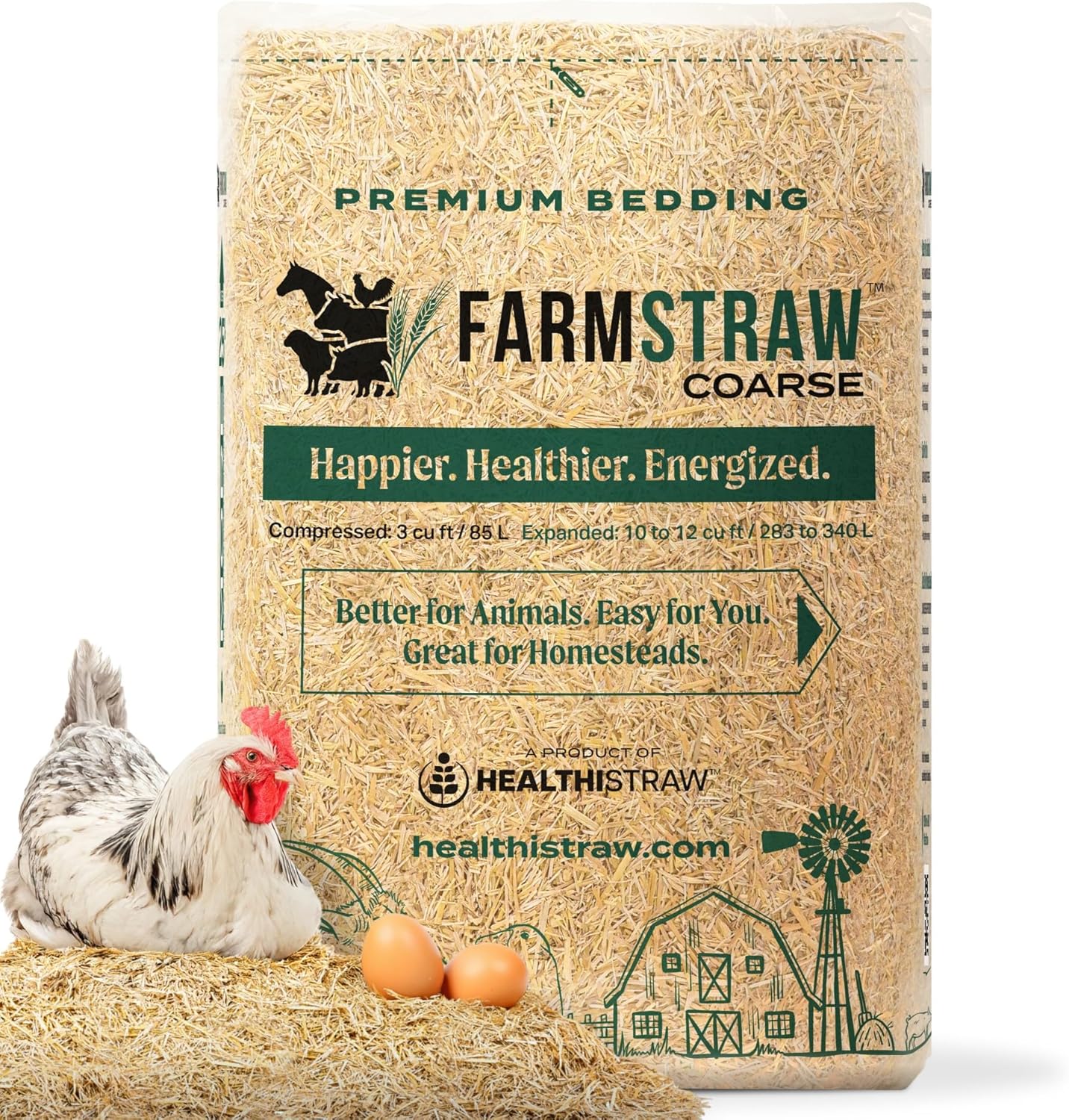
HealthiStraw FarmStraw Coarse-Cut 3 cu ft Compressed Wheat Straw Bedding
| Material Type | 100% Non-GMO Wheat Straw |
|---|---|
| Included Components | FarmStraw Fine Cut Chicken Bedding, 3 cu ft (25lb) |
| Specific Uses For Product | Chicken coops, nesting boxes, chick brooders, chicken runs and hen houses |
| Additional Features | Biodegradable, Eco-Friendly, Lightweight |
HealthiStraw FarmStraw is a compressed 3 cu ft bale of coarse 2–3 inch non-GMO wheat straw that expands to more than 10 cu ft for use as bedding and mulch in chicken coops, runs, and nesting boxes. The coarse cut produces a fluffy, insulative layer that cushions birds and helps protect eggs while wicking moisture and controlling odors by pulling dampness down into the straw. The product is cleaned to be low-dust, making it easier on flock respiratory health compared with dusty alternatives. It is lightweight to move when compressed and decomposes faster than wood-based bedding, so spent material can be composted to enrich garden soil. Important limitations are that a single 3 cu ft bale is modest coverage for larger runs and straw can mat in very wet climates, so occasional turning or replacement will be required to keep the run dry and clean. For run mulching, expect to top up periodically and monitor for compaction in high-traffic zones.
Best for: Buyers who want a practical, easy-to-store bedding and mulch that improves coop dryness and compostability while minimizing dust exposure for their flock. Good fit for owners who rotate and manage bedding regularly to optimize coop hygiene.
Less Ideal for: Not the best choice for owners who need a one-time, long-term ground cover for very large outdoor runs without regular maintenance or for extremely wet climates where straw will stay soggy.
- Expands from a compressed 3 cu ft bale to cover 10+ cu ft for easy storage and deployment
- Coarse 2–3 inch cut offers insulation and cushioning for birds and eggs
- Low-dust, all-natural cleaning process supports better respiratory conditions
- Wicks moisture and helps control odors by absorbing from the bottom up
- Biodegradable and decomposes faster than wood alternatives for composting use
- Single bale provides limited coverage for large runs so frequent top-ups may be needed
- Can compact or mat in persistently wet conditions requiring more maintenance
Verdict: A compact, low-dust wheat straw bale that expands into a fluffy, insulative bedding and mulch ideal for practical coop owners who prioritize dryness and easy composting.
DOMINION HEMP Premium Hemp Bedding for Chicken Coops, 10+ cu ft (285L) – 30 lb

| Unit Count | 10 Square Feet |
|---|---|
| Weight | 30 pounds |
| Material | USA-grown hemp |
| Absorbency | Absorbs up to 4X its weight |
This 10+ cubic foot bag of Dominion Hemp bedding is made from USA-grown hemp hurd and is intended as a bedding or mulch-style base for chicken coops, runs, and small animal cages. In use it absorbs moisture well—the brand claims up to four times its weight—so it helps keep coop floors drier and controls ammonia odors longer than many wood shavings. The material is low dust, which reduces airborne particulates around birds and small pets and is gentler for respiratory health. It is also biodegradable and compostable, so used bedding can be incorporated into garden compost or spread on flower beds after processing. Practical limitations are that this is a loose, bulk material that requires periodic turning and replenishing (the brand suggests one bag for an 8×6 coop with top-ups about every 60 days), and handling a 30 pound bag can be cumbersome. For fenced outdoor runs you may need a thicker layer or containment method to keep the hemp in place and prevent scattering.
Best for: Buyers who prioritize a cleaner, low-dust bedding that controls moisture and can be composted, and who prefer a premium, sustainable option for coop floors and nesting boxes.
Less Ideal for: People who need a ready-made mat or interlocking flooring solution or who cannot handle moving and managing large, loose bulk bags frequently.
- High absorbency claimed to soak up to 4× its weight, helping reduce wet spots and odor
- Low dust formulation reduces airborne particulates for better coop air quality
- Biodegradable and compostable so spent bedding can be reused in compost or garden
- Long-lasting fiber structure means fewer full bedding changes compared with some wood shavings
- Comes as a heavy 30 lb bulk bag that can be awkward to lift and distribute
- Loose material can scatter in open runs without an edge or containment
Verdict: A sustainable, low-dust, highly absorbent hemp bedding that keeps chicken coops drier and composts back into the garden.
Choosing the Right Mulch for Chicken Coop: Key Factors to Consider
Moisture Management
How a mulch handles water determines how often you need to clean or replace it. Materials that wick moisture away and dry quickly reduce ammonia buildup and discourage bacterial growth.
In a coop or run that sees rain or frequent watering, choose mulch that resists compaction and lets air move through the bedding. If you keep birds in a humid climate, prioritize fast-draining, breathable materials to prevent matting and mold.
Odor Control
Ammonia from droppings is the most common odor issue in coops and it can harm birds' respiratory systems. Some mulches naturally bind or neutralize odor while others merely mask smells temporarily.
Look for materials with odor-absorbing properties or that can be mixed with additives known to reduce ammonia. Regular raking and spot-cleaning keep odors low, but a mulch that actively reduces smell cuts down on labor and improves neighbor relations.
Ease of Cleaning
Cleaning frequency and method affect how practical a mulch is for your routine. Some materials allow for simple spot removal and top-up, while others require full replacement when soiled.
Consider how you will remove, carry, and dispose of used mulch. Lightweight, non-sticky materials speed up chores. If you use a deep-litter approach, choose a mulch that composts readily and that will not trap excess moisture when layered over time.
Dust and Respiratory Safety
Fine particles from dusty mulches can aggravate poultry respiratory health and create uncomfortable conditions for both birds and keepers. Dust also complicates ventilation strategies by settling on surfaces and equipment.
If your flock includes young chicks, elderly birds, or birds with known respiratory sensitivity, avoid very dusty materials. Dampening dusty bedding slightly during application and using coarser blends can reduce airborne particles.
Pest and Parasite Resistance
Some mulches discourage mites, lice, and flies by being inhospitable or by drying quickly. Others may unintentionally create microhabitats that shelter pests if they remain damp or compacted.
Assess how a material will behave across seasons. In warm months, fly pressure rises and a mulch that dries and breaks down exposes larvae to predators and heat. Materials that accumulate less organic slime and that can be raked apart help limit parasite hotspots.
Safety and Chemical Exposure
Not all mulches are safe for birds. Some wood-based products contain oils, resins, or treatment residues that can irritate or harm poultry. Treated or colored materials should be avoided in coop settings.
Choose untreated, natural materials and verify that any additives are poultry-safe. Also consider the risk of mold: damp materials that are prone to fungal growth are a health hazard and should be excluded.
Best Mulch Characteristics for Small Backyard Flocks
Small flocks have different needs than larger commercial operations. Space constraints and limited storage will steer you toward mulches that are easy to handle in small batches and that can be refreshed without large equipment.
For a small coop, prioritize low-dust, lightweight materials that allow frequent spot-cleaning. Look for options that compost well in backyard piles so you can reuse spent bedding in the garden after proper composting.
- Choose materials you can scoop and carry in one trip to the compost pile.
- Prefer mulches that mix well with droppings for effective backyard composting.
- Avoid materials that cake or seal when wet in confined runs.
Managing Mulch Across Seasons
Seasons change moisture and pest pressure. In wet seasons, you need mulch that drains and dries quickly to avoid anaerobic conditions. In hot months, select materials that limit fly breeding and that do not overheat when piled.
Adjust your maintenance cadence: more frequent turning and replacement during rainy spells, and deeper dry bedding during wet months to keep birds off cold, damp surfaces.
- Increase bedding depth slightly in winter for insulation if material compresses less when dry.
- Rake and aerate bedding more often during humid periods to prevent matting.
Using Mulch Inside Versus Outside the Coop
Materials used inside the enclosed coop should prioritize dust control and odor suppression because birds spend extended periods there. Outside in the run, durability and particle size matter more because weather and scratching behavior will break down materials faster.
You can use a finer, softer bedding in nesting boxes and a coarser, longer-lasting mulch in high-traffic run areas. This mixed approach balances bird comfort and maintenance workload.
- Employ softer, absorbent materials in nesting and roosting zones.
- Reserve coarser, longer-lasting mulches for runs and pathways.
Composting and Reusing Spent Mulch
Many coop mulches can become valuable compost after proper treatment. To reuse spent bedding safely, ensure the compost pile reaches temperatures that kill pathogens and parasite eggs. Turn the pile regularly and allow sufficient aging before applying to edible garden beds.
Avoid using fresh, soiled bedding from sick birds or bedding heavily infested with external parasites in your vegetable garden without extended composting. When managed correctly, reused mulch adds organic matter and nutrients to landscape soil.
- Monitor compost temperature to ensure adequate pathogen kill.
- Use spent coop bedding on ornamental beds sooner than on vegetable plots unless fully composted.
Practical Application and Maintenance Tips
Layer bedding in manageable depths so you can spot-clean and replace only what is needed. Raking daily and deep-cleaning weekly or monthly depends on flock size and the material chosen. Keep a small supply on hand to respond to wet weather or increased droppings during molt or heat stress.
Use basic tools like a stiff rake, shallow shovel, and wheelbarrow for efficient removal. If you practice deep-litter, monitor temperature and moisture closely and aerate the litter periodically to avoid anaerobic pockets.
- Store dry mulch in a covered, ventilated area to prevent premature moisture pickup.
- Inspect bedding weekly for signs of compaction, mold, or heavy ammonia smell.
How We Chose the Best Mulch for Chicken Coop
We shortlisted mulches that are practical for everyday coop use and that address the biggest management concerns for backyard flocks. Our selection criteria focused on materials that perform well at moisture management and odor control, because damp bedding and ammonia are primary health risks for chickens. We also prioritized ease of cleaning and replacement, since frequent handling and labor drive long-term satisfaction for keepers. Durability and compaction behavior were evaluated so we could rule out materials that cake into wet, anaerobic mats. We looked for natural pest- and parasite-resistance where applicable, and considered dust levels because high dust can aggravate respiratory issues. Safety for birds was another filter: non-toxic, non-mold-prone organic materials scored higher. Exclusions included any material known to produce persistent toxins, or that requires specialized equipment to install or maintain. The criteria we applied align with the scoring dimensions listed below and reflect what gardeners and backyard poultry keepers actually need from coop mulch.
FAQ
Can I use the same mulch year-round in my chicken coop?
Often you can, but seasonal changes affect how a material performs. A mulch that works in dry months may compact and sour in wet seasons. Rotate or adjust depth and maintenance to match weather and flock needs.
How deep should mulch be inside the coop and in the run?
Depth depends on material and management style. For spot-cleaning approaches, a few inches is usually enough. For deep-litter systems, 6 to 12 inches can work if you monitor moisture, aerate, and turn material to prevent anaerobic conditions.
Is dusty mulch safe for chicks and young birds?
Dusty materials often irritate respiratory systems and are best avoided for chicks. Choose low-dust, coarser bedding for young birds and keep ventilation gentle but consistent.
Can spent coop mulch be used in the garden?
Yes, after thorough composting. Ensure the compost reaches temperatures that kill pathogens and parasite eggs and age it long enough before applying to vegetable plots. Fresh, soiled bedding should not be applied directly to edible beds.
How do I know when to replace versus top up mulch?
Replace when bedding is compacted, holds moisture, smells strongly of ammonia, or shows mold. Top up when droppings are mainly on the surface and the base layer still looks dry and loose.
Final Verdict
Pick mulch that matches your coop layout, climate, and how much time you can spend on maintenance. Prioritize moisture control and low dust for bird health, and choose materials that make cleaning and composting straightforward. Consider seasonal adjustments and mix finer bedding inside with coarser mulch outdoors for the best balance between comfort and durability. Ultimately, the right mulch reduces odor, cuts labor, and supports flock health. Focus on the factors outlined above to choose a material that fits your routine and local conditions, and you will manage a cleaner, healthier coop with less effort.
