

Note: This article contains affiliate links. If you click on these links and make a purchase, I may earn a small commission at no extra cost to you. This helps support my research and content. Read my full affiliate disclosure here.
In hot, sunny gardens the right mulch can be the difference between stressed plants and a thriving yard. Mulch moderates soil temperature, reduces evaporation, and slows weed pressure – all critical in warm regions where heat and drought stress are common. This guide covers seven shortlisted mulches suited specifically for hot climates and explains how we evaluated each option. You will find practical notes on how each type behaves in heat, how it affects watering needs, and which garden situations each mulch fits best. Use the evaluation criteria to match a mulch to your site conditions and plant types before reading the individual product summaries below.
Top Picks at a Glance
| Best Overall The best all-around choice for most situations | Plantonix Coco Chips Mulch Brick (10 lb) – Compressed Coconut Husk Chips |  |
| Best Quality Built to a higher standard if you want something more solid | Hull Farm Cocoa Bean Shell Mulch, 2 Cubic Feet |  |
| Best Value The sweet spot between price and what you get | Gro-Med Coco Husk Chips Block (10 lb) — Compressed Coconut Husk Mulch |  |
| Best Budget The cheapest option that still gets the job done reliably | Miuwauer Compressed Coco Coir Brick (1-Pack) |  |
| Highest Rated A top-rated pick with lots of positive feedback | FDGARDEN Coco Husk Chips Coconut Substrate (Compressed Brick, 16 fl oz) |  |
| Most Popular A crowd favorite that many people choose with confidence | HealthiStraw GardenStraw Premium Garden Mulch, 3 cu ft |  |
| Best Seller A high-volume bestseller chosen again and again | Mosser Lee Spanish Moss — Natural Decorative Moss, 400 Cubic Inches |  |
Plantonix Coco Chips Mulch Brick (10 lb) – Compressed Coconut Husk Chips

| Unit Count | 160 Ounce |
|---|---|
| Item Type Name | Soil and Soil Amendments |
| Brand Name | plantonix |
| Volume | 15 gallons |
Plantonix Coco Chips arrive as a compact 10 pound brick that hydrates and expands into lightweight coconut husk chips for use as mulch, soil amendment, or terrarium bedding. You soak or wet the block to break it apart, then spread the chips over garden beds, containers, orchid pots, or raised beds to reduce evaporation and moderate soil temperature. The product is pre-screened, washed, and aged to remove dirt and rocks, and the low electrical conductivity and near-neutral pH make it safe to mix with potting mixes. Practical benefits include improved drainage and aeration compared with heavy wood mulches, long-lasting moisture retention that can reduce watering frequency, and an attractive tropical look. Important limitations are that you must rehydrate and break up the compressed brick before use which adds prep time, and coco chips do not supply nutrients so you will still need to fertilize regularly. Also note the safety warning about dust and keeping it away from children and pets during handling.
Best for: Buyers who prioritize reliable, consistent mulch performance and want a sustainable, low-maintenance material that retains moisture and improves soil structure for beds and containers.
Less Ideal for: Gardeners who need a nutrient-rich soil amendment or who prefer a no-prep, ready-to-spread loose mulch should consider alternatives.
- Made from 100% recycled coconut husks, a renewable alternative to peat and wood mulches
- Pre-screened and washed to remove dirt, rocks, and excess fiber
- Excellent at retaining moisture while maintaining airflow and drainage
- Lightweight and long-lasting so it does not compact like some organic mulches
- Requires soaking and manual breakup of the compressed brick before use
- Does not provide plant nutrients and should be used with a fertilizer plan
Verdict: A dependable, renewable mulch solution that holds moisture and improves aeration without compacting, ideal for gardeners who want consistent performance.
Hull Farm Cocoa Bean Shell Mulch, 2 Cubic Feet
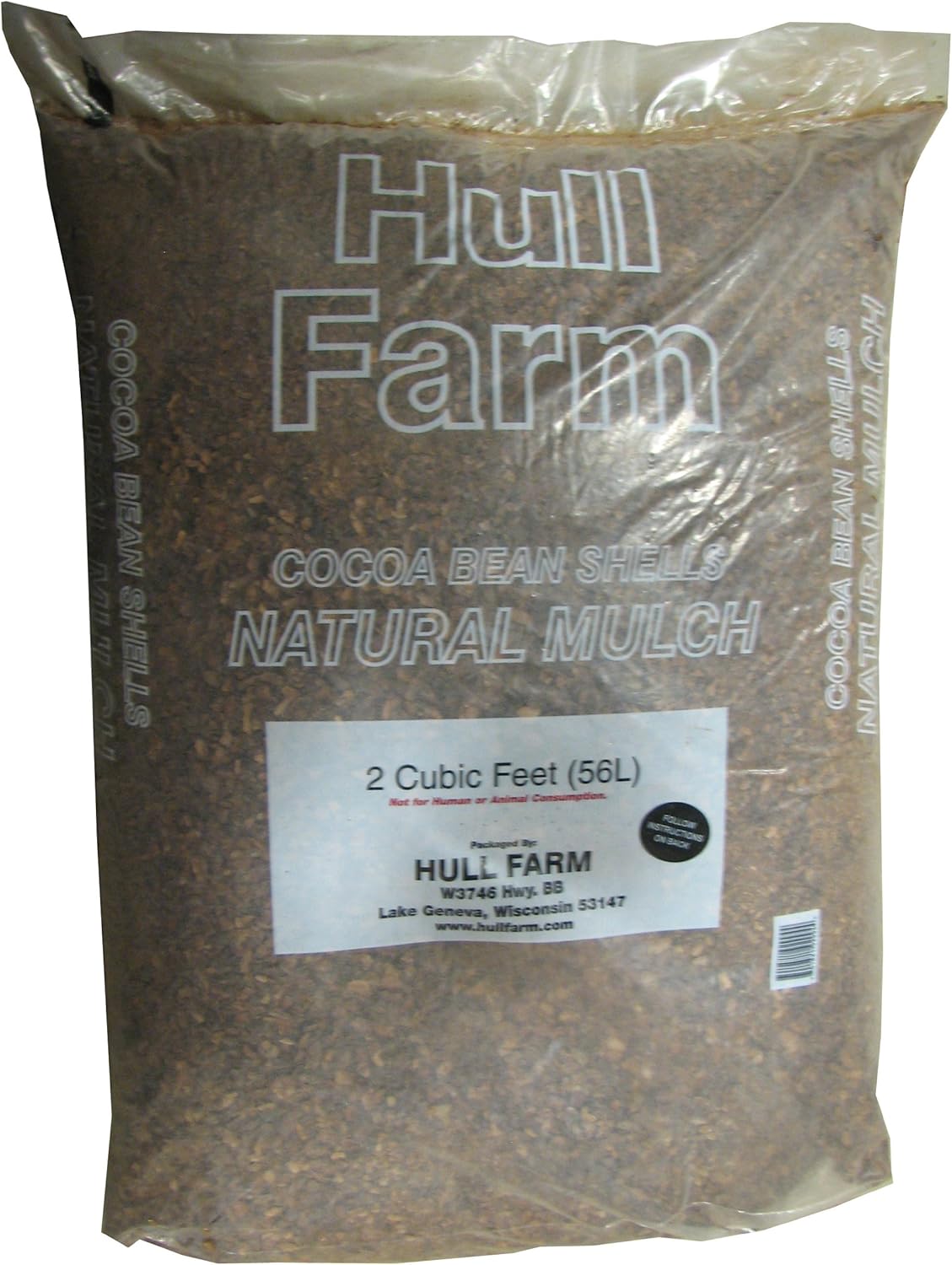
| Brand Name | Hull Farm |
|---|---|
| Model Name | 50150 |
| Material | Plastic |
| Package Weight | 12.72 kg |
Hull Farm Cocoa Bean Shell Mulch is a bagged organic mulch made from cocoa bean shells marketed for landscape beds. It is typically applied as a 1 to 3 inch layer around ornamentals or edibles to suppress weeds, conserve soil moisture, and improve appearance; the shells also slowly break down and provide a small nutrient contribution with an approximate analysis near 2.5-1-3. The product is easy to spread from the 2 cubic foot bag and leaves a fine, attractive textured surface that is less likely to mat than some other fine mulches. Because it is organic it will decompose over time, so plan to replenish annually or as needed. Note that cocoa shell mulch can attract pets if they are tempted to eat it and should be used with care around animals and children; also its small particle size means it can compact in heavy rain and may require light fluffing. For gardeners looking for an attractive, nutrient-contributing mulch that supports moisture retention and weed suppression, this is a practical option for tomato beds when used correctly.
Best for: Gardeners who prioritize plant performance and want a decorative organic mulch that also contributes modest nutrients and conserves moisture for productive beds such as tomatoes.
Less Ideal for: Those with pets that scavenge mulch or gardeners who prefer an inert, longlasting inorganic mulch that will not decompose over a season.
- Adds a mild, slow-release nutrient contribution (approx. 2.5-1-3) as it breaks down
- Fine, attractive texture that spreads evenly and helps retain soil moisture
- Sold in a manageable 2 cubic foot bag for easy handling and targeted application
- Less likely to mat compared with very fine composts, maintaining surface airflow
- Can attract pets or wildlife that may chew or eat the shells
- Small particles can compact after heavy rain and may need occasional fluffing
Verdict: Choose this cocoa shell mulch when you want an attractive organic mulch that helps retain moisture and gives tomatoes a light nutrient boost as it decomposes.
Gro-Med Coco Husk Chips Block (10 lb) — Compressed Coconut Husk Mulch

| Brand Name | Gro-Med |
|---|---|
| Ingredients | Coco Husk |
| Volume (expanded) | 65 quarts |
| Style Name | Coconut Husk Block 10 lb, Mulching, Potting Soil Mix, Orchid Mix, Gardening, Reptile Bedding |
Gro-Med Coco Husk Chips arrive as a 10 lb compressed block that expands with water into loose coconut husk chips suitable for mulching, mixing into potting soil, or reptile bedding. In practice you add warm water, wait about 20 minutes, then fluff the material and spread a 2–3 inch layer as mulch or mix roughly one part chips into three parts potting mix to improve drainage and structure. The product is triple-washed for low electrical conductivity and pH balanced, which helps avoid nutrient lockup when used around ornamentals, vegetables, or orchids. The chips provide noticeably better aeration than compacted soils and retain moisture longer than regular bark, so they reduce watering frequency and help roots stay healthy. Limitations to note are that the material is coarse so it breaks down slower than fine coir or compost and will not supply significant nutrients on its own, so occasional top-dressing or fertilizing is needed for long-term beds. For container mixes you may still want to combine with compost or slow-release fertilizer for best results.
Best for: Gardeners who want a low-maintenance, peat-free mulch or soil amendment that improves root health and reduces watering needs while prioritizing practical storage and easy handling.
Less Ideal for: If you need a fast‑breaking, nutrient-rich soil conditioner or a fine seed-starting medium, a compost or finer coir product would be a better fit.
- Expands from a compact block for easy storage and transport
- Triple-washed, low EC and pH-balanced for safer use with sensitive plants
- Improves aeration and drainage compared with compacted soil or bark mulch
- Higher water retention than regular bark, reducing watering frequency
- Coarse chip texture decomposes slowly and contributes little nutrient content
- Requires rehydration step before use and can be dusty until fully expanded
Verdict: A compact, low-EC coconut husk block that expands into a long‑lasting, moisture-retentive mulch ideal for gardeners who want easy storage and improved root aeration.
Miuwauer Compressed Coco Coir Brick (1-Pack)

| Brand Name | Miuwauer |
|---|---|
| Number of Packs | 1 |
| Unit Count | 1 Count |
| Style Name | Brick,Coco Coir |
This 1-pack compressed coco coir brick is a compact, budget-friendly way to get organic mulch and a reusable growing medium for seed starting, potting mixes, and garden beds. The brick hydrates quickly and expands into a fluffy, water-retentive substrate that improves aeration around roots and reduces the need for frequent watering. It is pH neutral and contains naturally occurring minerals that support plant growth, making it suitable for flowers, vegetables, succulents, and foliage. Practical benefits include easy storage and transport while compressed, low mess when hydrated, and versatility as a soil amendment or top dressing. Important limitations are the single small brick size and the need to premix or combine with compost or potting soil for long-term container plants, since coco coir lacks substantial nutrient content on its own. Also take care to add water slowly to avoid dust and to rehydrate fully before use to reach the advertised volume.
Best for: Gardeners on a tight budget who want an affordable, organic mulch alternative or a lightweight seed-starting and potting substrate; good for small beds, containers, and starting transplants.
Less Ideal for: Large-scale landscapers or gardeners who need ready-to-use, nutrient-rich potting mixes for many containers without additional amendments.
- Expands rapidly with water into a lightweight, easy-to-handle growing medium
- Good water retention while maintaining aeration to reduce root rot risk
- pH neutral and contains natural minerals useful for a range of plants
- Compact compressed form saves storage space and shipping bulk
- Sold as a single small brick so you may need multiple packs for larger projects
- Not a complete fertilizer and should be mixed with compost or feed for long-term nutrient needs
Verdict: A low-cost, space-saving organic coco coir brick that expands into a versatile mulch and seed-starting medium ideal for budget-focused small-scale gardeners.
FDGARDEN Coco Husk Chips Coconut Substrate (Compressed Brick, 16 fl oz)

| Brand Name | FDGARDEN |
|---|---|
| Unit Count | 16 Fluid Ounces |
| Number of Packs | 1 |
| Volume | 16 fluid ounces |
FDGARDEN coco husk chips are a compressed coconut substrate sold as a lightweight, water-retentive amendment and mulch. You rehydrate the compressed brick by soaking and rinsing to reduce salts, then mix the expanded husk into potting mixes, use it as a top mulch, or add it to containers to improve drainage and moisture retention. The fibrous chips increase aeration around roots while holding moisture, which helps plants tolerate heat and reduces how often you need to water in a hot climate. The product is described as low electrical conductivity and pH neutral, so it will not dramatically change soil chemistry when used as directed. Practical limitations are that it must be soaked and flushed before use to remove residual salts, and the 16 fl oz compressed volume expands to a modest amount, so multiple bricks are required for larger beds. It can also be mixed with other media rather than used as a sole growing medium for most plants.
Best for: Gardeners in hot climates who want a reliable, low-maintenance soil additive to hold moisture and improve root aeration for containers and small beds.
Less Ideal for: Large-scale landscapers or gardeners needing bulk mulch coverage should choose bagged or bulk coir products for better economy and fewer units to manage.
- Improves water retention while still allowing root aeration
- pH neutral and lower EC, minimizing impact on soil chemistry
- Versatile: usable as a soil amendment, container component, or mulch
- Sustainably sourced by-product of coconut industry
- Requires soaking and rinsing before use to remove salts
- Small compressed volume means limited coverage from a single unit
Verdict: A dependable, pH-neutral coco husk brick that improves moisture retention and root aeration, especially useful for containers and small beds in hot climates.
HealthiStraw GardenStraw Premium Garden Mulch, 3 cu ft

| Net volume | 3 cu ft |
|---|---|
| Intended use | Garden mulch, lawn seeding, compost-friendly |
| Material | 100% wheat straw |
| Source | Sustainably sourced, non-GMO |
HealthiStraw GardenStraw is a 3 cubic foot compressed bale of cleaned wheat straw formulated for use as garden mulch and seed protection. It is designed for vegetable, herb, flower and shrub beds where you want a lightweight, compostable mulch that retains soil moisture and suppresses weeds. The straw is processed to reduce dust and stray seeds and the short, specially cut fibers interlock when watered so the mulch stays in place without chemical tackifiers. For bushes you can apply a 2 to 3 inch layer around the drip line to cut evaporation, reduce compaction and gradually add organic matter as it breaks down. Practical benefits include easy spreading from a compressed bale, fast composting into the soil, and reduced watering needs. Limitations are that straw is less decorative than bark or wood chips and will decompose faster, so it requires periodic replenishing; it also provides less long-term weed barrier than heavier mulches. For gardeners focused on soil health and moisture conservation, it is a straightforward, low-risk choice.
Best for: Gardeners who prioritize soil health and want an easy-to-apply, compostable mulch for shrubs and mixed beds that reduces watering and improves organic matter over time.
Less Ideal for: People seeking a long-lasting, decorative mulch or a heavy-duty weed barrier for high-traffic beds should consider wood chips or stone instead.
- Cleaned, non-GMO wheat straw with reduced dust and seeds
- Fibers interlock when wetted so the mulch stays in place without binders
- Helps retain soil moisture and can reduce watering needs substantially
- Composts quickly and adds organic carbon to improve soil structure
- Decomposes faster than wood mulches so it needs topping up more often
- Less decorative and provides a lighter-duty weed barrier compared with heavier bark or rock mulches
Verdict: A clean, fast-composting straw mulch that conserves moisture and improves soil health, making it a safe, practical choice for mulching bushes.
Mosser Lee Spanish Moss — Natural Decorative Moss, 400 Cubic Inches

| Manufacturer | Mosser Lee |
|---|---|
| Item model number | ML0580 |
Mosser Lee Spanish Moss is a ready-to-use natural moss sold in a 400 cubic inch bag for decorative and horticultural use. It is commonly used as surface mulch for potted plants, liner material for hanging baskets, moisture-retentive top dressing for container gardens, and as craft material for wreaths and floral arrangements. The moss arrives cleaned and fumigated so it can be used indoors without additional treatment. In practical use it helps retain soil moisture, insulates roots, suppresses small weeds in containers, and adds an organic, rustic look to displays. Because it is loose and fibrous, it is easy to shape around plants or tuck into arrangements but will break down over time and may need periodic replenishing. It is not a substitute for a heavier landscape mulch for open-ground beds where longer durability and erosion control are required. For container gardeners and decorative projects looking for a natural, ready-to-use cover that improves moisture retention and aesthetics, this product is a straightforward option.
Best for: Buyers who want a safe, ready-to-use natural mulch or decorative cover for indoor plants, container gardens, and craft projects and who prefer low-risk, no-prep materials.
Less Ideal for: Homeowners who need a durable, long-lasting ground mulch for large outdoor beds or heavy erosion control should choose heavier bark or wood mulches instead.
- Cleaned and fumigated for safe indoor use right out of the bag
- Helps retain moisture and insulate roots in potted plants and containers
- Flexible, easy-to-shape fibrous material suited to wreaths, terrariums, and hanging baskets
- Natural appearance that improves the look of planters and floral arrangements
- Breaks down relatively quickly and requires periodic replacement in containers
- Not heavy or dense enough to provide long-term erosion control or weed suppression in open landscape beds
Verdict: An easy, ready-to-use natural moss that improves moisture retention and appearance for potted plants and decorative container applications.
Choosing the Right Mulch for Hot Climate: Key Factors to Consider
Heat Tolerance
Mulch in hot climates is exposed to prolonged sunlight and high surface temperatures. Materials that darken, bake, or break down quickly under heat will lose protective function and can even form a crust that repels water. Assess how a mulch behaves after weeks of sun: does it fade and crumble, or hold structure and shade the soil? Durable materials that resist thermal breakdown keep roots cooler and reduce how often you must replenish the layer.
Consider reflective or lighter-colored mulches if you need to reduce heat absorption near sensitive plants. Conversely, some insulating mulches moderate wide temperature swings by holding daytime heat and releasing it slowly at night; choose the behavior that suits your plants and climate patterns.
Moisture Retention
In hot regions conserving soil moisture is often the primary goal. Mulches work by reducing direct evaporation from the soil surface and by helping rain or irrigation penetrate more slowly. Look for mulches that form a continuous layer without gaps and that allow perch infiltration rather than shedding water.
Some organic mulches improve moisture-holding capacity over time as they add organic matter to soil. In contrast, some inorganic mulches maintain structure but do not increase soil water-holding capacity. Think about how often you can realistically water and choose a mulch that reduces the frequency of irrigation accordingly.
Decomposition Rate and Soil Impact
Organic mulches decompose and supply organic matter to the soil, which can be beneficial but also means periodic replacement. In hot climates decomposition can accelerate, shortening the useful life of an organic mulch. Fast decomposition may temporarily increase microbial demand for nitrogen near the surface, which can affect small plantings.
Consider whether you want the mulch to be a soil amendment over time or a longer-lasting top layer. If replacing frequently is a problem, choose slower-breaking materials or combine organic and inorganic layers to balance soil benefits with longevity.
Weed Suppression
Weed pressure competes with plants for water and shade, making suppression especially important where moisture is scarce. Effective mulches create a continuous barrier that blocks light and prevents weed seeds from establishing. Dense, coarse mulches often perform better at shading out weeds, while thin or patchy layers leave room for seedlings to germinate.
Also consider how easy it is to maintain that barrier. Some mulches shift, exposing soil, while others lock together or compact. Regular inspection and spot replenishing helps, but choosing a mulch with inherent weed-blocking performance reduces maintenance tasks.
Insulation and Temperature Moderation
Beyond simply cooling the soil surface, mulch can reduce temperature fluctuations that stress roots. In hot climates, insulating mulches keep root-zone temperatures steadier through hot days and cooler nights. The thickness and material composition determine insulation quality: thicker layers and materials with trapped air pockets usually insulate better.
Balance insulation with the need for air and water movement. Overly compacted or impermeable layers can trap heat or shed water, so select a mulch that moderates temperature without creating an anaerobic or overly dry root environment.
Maintenance and Practicality
Practical considerations often decide which mulch is best for your situation. Maintenance includes how often you need to top up the layer, whether the material blows away in wind, how it behaves around plant stems, and whether it attracts pests. Some mulches require seasonal raking or replacement, while others are effectively permanent for several years.
Also weigh handling and sourcing: bulky materials are harder to move and spread, while lightweight options can shift in wind. Choose a mulch that fits your available time for upkeep and the physical constraints of your garden space.
Matching Mulch Type to Plant Needs
Different plantings need different mulch behaviors in hot climates. Vegetable beds and young perennials often benefit from mulches that break down moderately and add organic matter, supporting soil fertility through the season. Established shrubs, trees, and long-term beds may favor longer-lasting mulches that minimize disturbance and provide consistent shade to root zones.
Consider root depth and water requirements. Shallow-rooted plants respond more quickly to changes in surface temperature and moisture, so they may need a thicker insulating layer. Deep-rooted trees are less sensitive to surface swings but benefit from mulches that conserve surface moisture and reduce competition from weeds.
- Use moderate-decomposing organic mulches in annual vegetable beds.
- Choose stable, longer-lasting mulches around established shrubs and trees.
- Adjust mulch depth based on root depth and plant sensitivity.
Applying and Maintaining Mulch in High Heat
Proper application and maintenance extend mulch effectiveness in hot climates. Lay mulch in an even layer with core thickness suited to the material: typically 2 to 4 inches for organic mulches, and thinner for heavy inorganic materials. Avoid mounding mulch against stems or trunks as that can trap moisture and invite pests or rot.
Check mulched areas after high winds or heavy irrigation cycles. Refresh thin or displaced spots promptly to keep soil protected. In heat waves, inspect mulch for signs of crusting or water repellency; lightly raking or fluffing can restore permeability without removing the layer entirely.
- Maintain an even layer and avoid piling against plant stems.
- Inspect after storms or strong winds and top up as needed.
- Loosen compacted mulch to restore water infiltration if crusting appears.
Watering Strategies With Mulch
Mulch changes how and when water reaches roots. Because mulch reduces evaporation, you may be able to water less frequently but more deeply. Deep, infrequent irrigation encourages roots to grow downward, increasing drought resilience. Adjust irrigation schedule after applying mulch and monitor soil moisture a few inches below the surface to guide changes.
Be aware that some mulches can temporarily shed water if they form a hydrophobic layer when very dry. Pre-wetting or lightly irrigating right after application helps settle the layer and improves water penetration during subsequent watering.
- Switch to deeper, less frequent watering after mulching.
- Check moisture below the mulch rather than relying on surface dryness.
- Pre-wet new mulch layers to prevent temporary water repellency.
Environmental and Aesthetic Considerations
Appearance and ecological impact matter in landscape choices. Some mulches provide a neat, finished look while others create a more natural, rustic aesthetic. Consider how the color and texture will age in sun and whether they fit your overall garden design.
Also consider local sustainability: mulches that add organic matter support soil life and reduce waste when sourced from local arboriculture byproducts. Inorganic options can last longer but do not improve soil biology. Choose based on whether you prioritize low maintenance or soil-building benefits.
- Pick a color and texture that complements your landscape and ages well in sun.
- Balance sustainability goals with maintenance preferences.
Seasonal Timing and Reapplication
Plan mulch application around planting and seasonal weather. Apply fresh mulch after soils warm in spring to conserve moisture through the hot season, and refresh thinning layers before the hottest stretch. Avoid heavy fresh applications right before planting seeds that require light to germinate.
In very hot, dry years, you may need to top up mulch more often. Keep some material on hand for spot repairs and to maintain consistent coverage during wind events.
- Apply mulch in spring after soil has warmed for best moisture conservation.
- Top up before prolonged heat spells to maintain effective coverage.
How We Chose the Best Mulch for Hot Climate
We focused on features that matter for mulch used in hot climates and applied consistent editorial filters to produce the shortlist. Primary evaluation criteria included heat tolerance, which measures how well a material resists breakdown or excessive warming under strong sun; moisture retention, judged by how long the mulch reduces surface evaporation; and insulation effect, which assesses ability to moderate soil temperature swings during hot days and cooler nights. We also evaluated decomposition rate and nutrient contribution, because fast-breaking mulches can require more frequent top-ups and may alter soil nitrogen demand. Weed suppression was judged on coverage and ability to block sunlight while allowing water infiltration. Durability and maintenance considered how often the mulch needs replacing and whether it creates extra work such as frequent raking. Exclusions: we excluded materials that are known to introduce contaminants, persistent odors, or toxic residues in landscape use. We also set aside mulches that require specialized equipment beyond normal garden care. The shortlisted options were those that balanced lasting surface protection in heat with manageable maintenance and clear effects on soil moisture and temperature.
FAQ
How thick should mulch be in a hot climate?
Most organic mulches perform well at about 2 to 4 inches. Thicker layers insulate better but can prevent water from reaching the soil if they compact, so adjust depth by material and check infiltration after installation.
Will mulch make my soil hotter in summer?
Mulch generally keeps the surface cooler by shading soil and reducing evaporation. Some dark, dense materials can absorb heat at the surface but still lower root-zone temperatures by preventing direct sun on bare soil.
How often does mulch need replacing in hot regions?
Replacement frequency depends on material. Organic mulches decompose faster in heat and may need topping annually, while slower-breaking or inorganic mulches can last several years with minimal upkeep.
Can mulch reduce how often I need to water?
Yes. By reducing surface evaporation and keeping soil cooler, mulch often allows for less frequent watering. Monitor soil moisture below the mulch and adjust irrigation depth and timing rather than relying on surface cues alone.
Does mulch attract pests in warm climates?
Some mulches can shelter pests if placed too close to plant stems or if they retain excess moisture. Maintaining proper clearance around trunks and avoiding overly thick layers against stems reduces pest attraction.
Final Verdict
Selecting the best mulch for a hot climate means weighing moisture conservation, temperature moderation, and maintenance needs against aesthetic and soil-building goals. Prioritize materials that retain moisture and resist rapid breakdown if you want lower irrigation frequency and less frequent replacement. If improving soil organic matter is important, choose organic mulches while planning for more regular top-ups. Think about where you will use the mulch and how much time you can spend on upkeep. With the right match between material and site conditions you can reduce heat stress, save water, and keep plantings healthier through the hottest months.
