

Note: This article contains affiliate links. If you click on these links and make a purchase, I may earn a small commission at no extra cost to you. This helps support my research and content. Read my full affiliate disclosure here.
Sloped yards need mulch that resists erosion, holds moisture, and supports plants without washing away during heavy rain. Choosing the right mulch affects soil stability, plant health, and how often you need to refresh material. This guide covers the top five mulches shortlisted for use on inclined beds and terraces, focusing on how they perform in real garden conditions. We evaluated each option for slope stability, water-holding capacity, and compatibility with common slope planting. Read on to see the practical strengths and tradeoffs of different mulches so you can pick the best solution for your hillside garden.
Top Picks at a Glance
| Best Overall The best all-around choice for most situations | EZ-Straw Seeding Mulch with Tackifier, 2.5 cu ft Bale |  |
| Best Quality Built to a higher standard if you want something more solid | Playsafer Rubber Mulch Nuggets (40 lb bag, Black) |  |
| Best Value The sweet spot between price and what you get | BRUT Worm Farms Organic Aspen Mulch, 10 Quart |  |
| Most Popular A crowd favorite that many people choose with confidence | HealthiStraw GardenStraw Premium Garden Mulch, 3 cu ft |  |
| Best Seller A high-volume bestseller chosen again and again | Wood Smith USA 100% Natural Cedar Chips, 4 Quart Bag |  |
EZ-Straw Seeding Mulch with Tackifier, 2.5 cu ft Bale

| Volume | 2.5 cu ft |
|---|---|
| Coverage | Covers up to 500 sq. ft. |
| Material | Processed straw with tackifier |
| Weed content | 99% weed free |
EZ-Straw Seeding Mulch is a processed straw bale treated with a natural tackifier that makes the fibers cling together when activated with water. You lay the straw over newly seeded or bare soil, spray it to activate the tackifier, and the bonded mat resists wind and washout so seed and young plants stay covered. The straw is marketed as 99% weed free, UV‑protected in its packaging for easier outdoor storage, and biodegradable so you can leave it in place as plants establish. For strawberry beds it provides good protection from soil splash, conserves moisture to reduce watering frequency, and helps deter birds and erosion on sloped rows. Expect easy handling compared with loose straw because the tackifier keeps the material from blowing around, but note the bale size and packaging mean you will need space to store at least one bale and some effort to spread it evenly between plants. The natural tackifier is described as food‑safe, and the product is intended to break down without a cleanup step once plants are established.
Best for: Gardeners who want a low‑maintenance, natural mulch that protects seed and young strawberry plants while reducing watering and erosion risk.
Less Ideal for: Those with very small balconies or container strawberry setups where large bales are impractical or for gardeners who need a sterile, rock‑free inorganic mulch option.
- Tackifier bonds straw so it resists wind and washout after watering
- Biodegradable so it can be left in place as plants establish
- Processed and 99% weed free to reduce unwanted weed introduction
- UV‑protected packaging for outdoor storage and easier handling
- Large bale requires storage space and manual spreading to cover beds evenly
Verdict: Choose this straw mulch if you want a biodegradable, tackified cover that stays put to protect strawberry plants and speed establishment.
Playsafer Rubber Mulch Nuggets (40 lb bag, Black)

| Item Type Name | Rubber Mulch |
|---|---|
| Item Weight | 40 pounds |
| Material Type | Rubber |
| Item Thickness | 3 inches |
| Additional Features | organic |
These rubber mulch nuggets are loose-fill surfacing meant for playgrounds, under swing sets, and other play areas where impact attenuation and low maintenance matter. Sold in 40 lb bags, the nuggets are made from recycled rubber and packaged for easy spreading: pour, level, and top up the area to achieve the recommended depth for shock absorption. Notable features include IPEMA certification for playground use, a 3-inch product thickness listed for profile guidance, and a long-lasting color claim backed by the manufacturer. In practice the nuggets do not decompose or compact like wood mulch, so they require far less frequent replacement and they drain and dry quickly in cold weather. They are mostly metal free because they are produced from recycled tires, which reduces contamination risk during installation. Limitations are that loose-fill rubber needs edging to stay contained, and precise depth must be maintained for safety standards so you may need an initial larger quantity to reach required fall-height coverage. Installation is straightforward but labor intensive for larger areas since the product must be spread and leveled by hand.
Best for: Buyers who prioritize certified, low-maintenance surfacing for home or small public playgrounds and who want reassurance from documented safety standards and widespread user approval.
Less Ideal for: People looking for a decorative garden mulch or a low-effort single-install solution for very large areas where a poured or interlocking surface would be easier to contain and maintain.
- IPEMA certified for playground safety, suitable for impact attenuation
- Made from recycled rubber and advertised as 99.9% metal free
- Does not decompose or compress so it needs far less frequent replacement than organic mulches
- Sold in manageable 40 lb bags that are easy to pour and spread
- Loose-fill material requires edging or containment to prevent migration
- Achieving required safety depth across a large area can be labor intensive and may need multiple bags
Verdict: Choose Playsafer rubber mulch when you need a certified, long-lasting recycled-rubber surfacing that reduces maintenance and prioritizes playground impact safety.
BRUT Worm Farms Organic Aspen Mulch, 10 Quart

| Unit Count | 192 Ounce |
|---|---|
| Volume | 10 quarts |
| Style Name | Moisture-retaining |
| Certified Organic | OMRI-listed |
BRUT Organic Aspen Mulch is a fine-texture aspen bark mulch formulated to hold moisture, reduce weed pressure, and slowly add organic carbon to soil. It is applied as a top dressing around garden beds, pathways, or potted plants where you spread a thin layer to protect soil and conserve water. The product is OMRI-listed and described as odor-free and lightweight, which makes it convenient for indoor containers as well as outdoor borders. Its 30% carbon content supports beneficial microbes without drawing down nitrogen, so it helps long-term soil structure while decomposing slowly. Practical benefits include reduced watering frequency, a neater bed appearance, and gentle nutrient contribution that complements regular fertilizing. Important limitations are the small 10 quart volume per bag, which means multiple bags are needed for larger beds, and that it is primarily a surface mulch so it does not replace nutrient-rich soil amendments for heavy feeding tasks.
Best for: Gardeners who want a low-maintenance, organic mulch to conserve water, tidy beds, and slowly improve soil structure in small to medium beds or containers.
Less Ideal for: Large-scale landscapers or gardeners needing bulk mulch coverage or immediate high-nutrient soil amendments should consider larger-volume or nutrient-dense products.
- Odor-free fine aspen bark suitable for indoor and outdoor use
- High moisture retention reduces watering frequency
- OMRI-listed organic material that adds carbon to soil
- Lightweight and easy to spread for quick top-dressing
- Small 10 quart unit is insufficient for large beds without buying multiple bags
- Provides mainly carbon-rich mulch rather than concentrated nutrients
Verdict: A tidy, odor-free organic aspen mulch that conserves water and improves soil health best for small to medium garden beds and containers.
HealthiStraw GardenStraw Premium Garden Mulch, 3 cu ft

| Net volume | 3 cu ft |
|---|---|
| Intended use | Garden mulch, lawn seeding, compost-friendly |
| Material | 100% wheat straw |
| Source | Sustainably sourced, non-GMO |
HealthiStraw GardenStraw is a 3 cubic foot compressed bale of cleaned wheat straw formulated for use as garden mulch and seed protection. It is designed for vegetable, herb, flower and shrub beds where you want a lightweight, compostable mulch that retains soil moisture and suppresses weeds. The straw is processed to reduce dust and stray seeds and the short, specially cut fibers interlock when watered so the mulch stays in place without chemical tackifiers. For bushes you can apply a 2 to 3 inch layer around the drip line to cut evaporation, reduce compaction and gradually add organic matter as it breaks down. Practical benefits include easy spreading from a compressed bale, fast composting into the soil, and reduced watering needs. Limitations are that straw is less decorative than bark or wood chips and will decompose faster, so it requires periodic replenishing; it also provides less long-term weed barrier than heavier mulches. For gardeners focused on soil health and moisture conservation, it is a straightforward, low-risk choice.
Best for: Gardeners who prioritize soil health and want an easy-to-apply, compostable mulch for shrubs and mixed beds that reduces watering and improves organic matter over time.
Less Ideal for: People seeking a long-lasting, decorative mulch or a heavy-duty weed barrier for high-traffic beds should consider wood chips or stone instead.
- Cleaned, non-GMO wheat straw with reduced dust and seeds
- Fibers interlock when wetted so the mulch stays in place without binders
- Helps retain soil moisture and can reduce watering needs substantially
- Composts quickly and adds organic carbon to improve soil structure
- Decomposes faster than wood mulches so it needs topping up more often
- Less decorative and provides a lighter-duty weed barrier compared with heavier bark or rock mulches
Verdict: A clean, fast-composting straw mulch that conserves moisture and improves soil health, making it a safe, practical choice for mulching bushes.
Wood Smith USA 100% Natural Cedar Chips, 4 Quart Bag
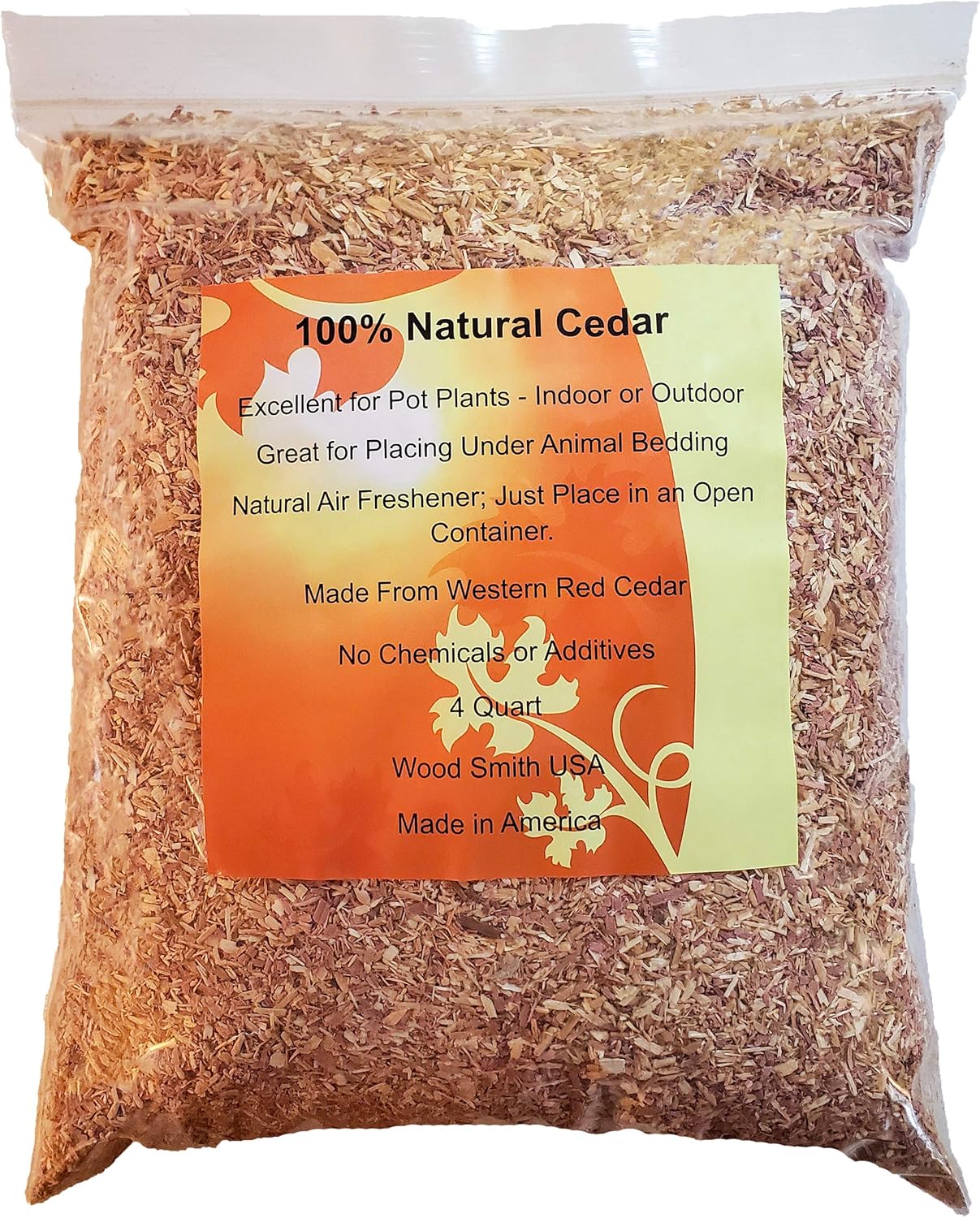
| Brand Name | Wood Smith USA |
|---|---|
| Unit Count | 148.92 Ounce |
| Number of Packs | 1 |
| Volume | 1 |
These 100% natural cedar chips are a lightweight, aromatic mulch sold in a 4-quart bag that works best as a top dressing for potted plants, hanging baskets, and small garden patches. The cedar scent helps deter some insects and can freshen indoor potting mixes, while the chips also help retain surface moisture and reduce light reaching weed seeds. Because the bags are hand sifted and packed, quality is generally consistent for small jobs, and the product is easy to spread with minimal tools. The obvious limitation is the small volume — a single 4-quart bag covers only a very small area, so multiple bags are required for beds or larger weed-control projects. The chips are also coarse compared with fine mulches, so they are better for decorative surface cover than for forming a dense, weed-suppressing mat. Handle the product carefully to avoid inhaling dust and follow guidance if using around animals.
Best for: Buyers looking for an inexpensive, small-quantity mulch to refresh pots, hanging planters, or to try cedar for insect control in limited areas.
Less Ideal for: Gardeners who need to cover large beds or who want a fine-textured mulch for dense weed-smothering should choose larger bulk bags or finer mulches instead.
- Natural cedar composition that repels some insects and adds a pleasant scent
- Small 4-quart bag useful for potted plants, hanging baskets, and spot treatments
- Helps retain surface moisture and reduces light to surface weed seeds
- Hand-sifted and hand-packed for generally consistent small-batch quality
- Very small volume so not cost-effective for large beds
- Coarse chip size offers less dense weed suppression than finer mulches
Verdict: A handy, low-cost 4-quart cedar chip bag for small-scale potting and spot weed control where you want a natural scent and insect-repellent benefits.
Choosing the Right Mulch for Sloped Yards: Key Factors to Consider
Slope Angle and Runoff Risk
Steeper slopes increase runoff velocity and the potential for soil and mulch to move downhill. On gentle inclines you can use lighter organic mulches with regular maintenance. On steeper slopes choose denser or coarser materials and consider anchoring options. Evaluate how often heavy rain events occur in your area because occasional intense storms will test any mulch's ability to stay in place.
Pay attention to how runoff channels form on the slope. Concentrated flow paths will strip mulch faster than evenly distributed sheet flow. Adjust mulch selection and placement to interrupt those pathways and slow water across the surface.
Mulch Particle Size and Cohesion
Large, coarse particles and mixed-size blends tend to interlock and resist movement better than fine materials. Bark chunks, gravel, and coarse wood chips build a more stable surface that dissipates energy from flowing water. Fine shredded mulch may compact and form a slick layer that slides or washes away when saturated.
Consider whether the mulch forms a cohesive mat once settled. Cohesive mulches reduce displacement, reduce the need for frequent top-ups, and protect underlying soil from erosion.
Water Retention Versus Drainage
Mulch must balance holding moisture for plants with allowing excess water to drain without pooling. On slopes, good drainage reduces saturation that can trigger slides or slope instability. Materials that retain moisture well are beneficial for drought-prone slopes, but if they slow drainage too much they can increase runoff during heavy downpours.
Think about the plants you are supporting. Native or drought-tolerant species may prefer a bark or rock mulch that sheds water quickly, while newly planted shrubs may benefit from mulches that hold some moisture to support root establishment.
Decomposition Rate and Maintenance Frequency
Organic mulches break down over time, changing texture and stability. Fast-decomposing materials need more frequent replenishment, which is harder on slopes. Slow-decomposing materials preserve their particle structure longer and maintain erosion resistance.
Factor in how often you are willing to reapply mulch and how accessible the slope is. For hard-to-reach areas choose longer-lasting options to minimize labor and disturbance to the slope.
Plant Health and Soil Interaction
Mulch affects soil temperature, nutrient cycling, and weed pressure. Some organic mulches can temporarily immobilize nitrogen as they break down, which matters for young plants. Others add beneficial organic matter over time. Inorganic mulches do not change soil chemistry but can alter heat retention and moisture dynamics.
Match the mulch to the planting plan. Use materials that support rooting and reduce stress for the species on the slope while avoiding choices that might inhibit establishment or encourage pests.
Installation Practicalities and Safety
Installing mulch on a slope requires safe access and techniques that minimize disturbance to the slope face. Consider how you will transport, spread, and compact or anchor material without causing erosion during installation. Some mulches can be applied by hand from the top down, while heavier materials may require equipment or extra hands.
Safety matters for steeper slopes. Choose methods that reduce slipping risk for installers and limit the chance of creating ruts or gullies that worsen runoff.
Anchoring and Placement Techniques
How you place mulch affects its ability to remain on a slope. Start with a well-shaped slope surface that directs water evenly, not concentrated into rills. Lay mulch in layers, placing coarser material on top of finer material where possible to create a stable cap that resists migration.
Consider shallow terraces or swales to interrupt long slope runs. Planting in staggered rows or using drifts of mulch around rooted plants can help hold material in place while also reducing concentrated flow.
- Apply mulch in a slightly thicker layer on the upper half of a slope and taper toward the bottom to reduce downhill shift.
- Avoid piling mulch against stems or trunks; instead leave a small exposed collar to prevent rot.
- Use biodegradable erosion-control fabric under mulch on vulnerable spots to bind soil while plants establish.
Combining Mulch Types for Best Results
A blended approach often yields the best balance of stability and plant benefits. For example, a base layer of coarse material or small gravel can form an armor layer, with an organic top layer to retain moisture and suppress weeds. Over time the organic layer will decompose and add soil benefits while the coarse layer maintains structure.
Mixing sizes also reduces the chance that rain will dislodge an entire surface. Dense patches of heavier material placed in drainage lines and around plant bases can protect vulnerable spots without covering the entire slope in rock.
- Use rock or coarse gravel along steep toe slopes and channels to prevent undercutting.
- Top-dress with compost-rich mulch in planting zones to feed roots while leaving walking or runoff channels more open.
Planting Strategies That Help Hold Mulch
Vegetation is the longest-term defense against erosion. Groundcovers, deep-rooted grasses, and shrub plantings reduce surface flow and bind soil with roots. Choose species suited to your climate and slope exposure and establish them before relying solely on mulch to control erosion.
Cluster plants to create rooted anchors, and use temporary mulch to protect young plantings until roots develop. Avoid wide bare stretches where mulch alone must resist concentrated runoff.
- Select native groundcovers adapted to slope conditions to minimize irrigation needs.
- Space plantings to balance soil coverage with access for maintenance.
Seasonal Care and Inspection
Regular inspection after heavy rain is critical on slopes. Look for signs of mulch movement, rill formation, or exposed soil. Small repairs early prevent larger erosion problems. Remove clogged gutters and downspouts that increase concentrated flow onto slope areas.
Refresh or redistribute mulch annually or after major storms, focusing on the upper slope and any channels. Spring is a good time to check decomposition levels and top up materials before the dry season.
- Check mulch depth and evenness twice a year and after major weather events.
- Re-anchor any displaced biodegradable fabric and replant exposed areas promptly.
Environmental and Regulatory Considerations
Some municipalities restrict the use of certain materials on slopes near waterways due to runoff concerns. Check local guidelines for allowed mulches and erosion-control measures. Using certified weed-free or screened materials reduces the risk of introducing invasive seeds downhill.
Consider downstream impacts; fine organic particles that wash into storm drains can carry nutrients and sediments. Choosing more stable materials and preventing wash-off protects both your slope and neighboring properties.
- Avoid very fine mulches near drainage outlets.
- Use sediment traps or planted buffer strips where runoff leaves your property.
How We Chose the Best Mulch for Sloped Yards
We prioritized performance in slope-specific conditions and selected mulches that demonstrably reduce surface runoff while supporting plant health. Key evaluation criteria included erosion resistance under rainfall and runoff, water retention to limit drying between storms, and structural stability so material does not migrate downhill. We also considered longevity and maintenance needs, since frequent top-ups on a slope are impractical, plus plant compatibility to avoid adverse effects on desired vegetation. Products were excluded if they are intended only for flat landscapes or require heavy mechanical anchoring impractical for typical garden slopes. We did not include mulches known to increase slippage or to break down into fine particles that wash away quickly. The final shortlist reflects materials that balance staying power, soil benefits, and manageable upkeep for gardeners working on inclines.
FAQ
What mulch depth works best on a slope?
A typical depth of 2 to 3 inches of organic mulch balances moisture retention and root protection without creating excess weight that could slide. In vulnerable high-runoff areas, a thinner layer over a stabilizing base may perform better. Adjust depth for coarse materials and plant needs.
Can I use landscape fabric under mulch on a slope?
Biodegradable erosion-control fabrics can help hold soil and mulch in place while plants establish. Use fabrics designed for slopes and avoid impermeable plastics that trap water and encourage runoff. Secure the fabric properly and cover it with appropriate mulch to prevent exposure.
How often should mulch be renewed on sloped beds?
Renewal depends on material decomposition and local weather. Slow-breaking materials may only need topping every few years, while fine shreddeds will require more frequent refreshes. Inspect after heavy rains and plan for at least annual checks.
Is rock or gravel better than organic mulch on a steep slope?
Rock and gravel provide excellent stability and low maintenance, especially on very steep or high-traffic slopes. However, they do not add organic matter and can change soil temperature and drainage. Many gardeners use rocks in channels or toes and organic mulches in planting areas for a balance.
Will mulch prevent erosion on newly planted slopes immediately?
Mulch reduces splash erosion and surface loss immediately but does not replace the long-term stabilizing effect of roots. Use mulch as a temporary protective layer while plants establish, and combine it with erosion-control planting and, where needed, structural measures.
Final Verdict
Choosing mulch for sloped yards is a balance between stability and horticultural benefit. Prioritize materials that resist movement and match the slope angle and runoff patterns, while also supporting the planting scheme and maintenance capacity. Expect tradeoffs between long-term soil improvement and immediate erosion control. For most situations, combining coarser, stable base layers with targeted organic top-dressing and strategic planting gives the most reliable results on an incline.
