

Note: This article contains affiliate links. If you click on these links and make a purchase, I may earn a small commission at no extra cost to you. This helps support my research and content. Read my full affiliate disclosure here.
Slopes change how mulch behaves: runoff, displacement, and limited root anchoring can undo months of work. Picking the right mulch for steep slopes matters because it can reduce erosion, help soil retain moisture, and protect newly planted groundcover and roots on angled terrain. This guide covers five shortlisted mulches that perform well on steep slopes and explains the practical tradeoffs gardeners face in the field. We evaluate each option for erosion resistance, how easy it is to install and maintain on an incline, and how it supports plant establishment. Keep reading to see which mulch types match your slope, soil, and planting plan.
Top Picks at a Glance
| Best Overall The best all-around choice for most situations | Farm Plastic Supply Erosion Control Straw Blanket (approx. 8' x 112.5') |  |
| Best Quality Built to a higher standard if you want something more solid | Sandbaggy Coconut Coir Erosion Control Blanket, 3.75 ft x 120 ft (2 Rolls) |  |
| Highest Rated A top-rated pick with lots of positive feedback | Farm Plastic Supply Coconut Erosion Control Blanket (7' x 112.5') |  |
| Most Popular A crowd favorite that many people choose with confidence | HealthiStraw GardenStraw Premium Garden Mulch, 3 cu ft |  |
| Best Seller A high-volume bestseller chosen again and again | USA PINESTRAW Long Needle Pine Straw Mulch, Square Bale |  |
Farm Plastic Supply Erosion Control Straw Blanket (approx. 8' x 112.5')

| Manufacturer | Farm Plastic Supply |
|---|---|
| Item model number | ECB75 |
| Material | Mechanically stitched straw |
| Packaged dimensions | 90 x 10 x 10 inches |
This straw erosion control blanket is built for stabilizing slopes, ditches, and other erosion-prone areas while helping new seed establish. Made from mechanically stitch-bonded agricultural straw, the blanket is laid over seeded soil to shield seed from rain impact and sheet flow, slow surface runoff, and hold moisture for better germination. Typical use is rolling the blanket out on a prepared slope, anchoring it with staples or stakes, and overlapping adjacent runs for continuous coverage. Notable features include durable stitch construction and a long roll length that covers large runs without many seams. Practical benefits are reduced soil loss after storms, improved seed survival on steep grades, and lower maintenance compared with loose mulch. Limitations are that straw blankets need proper anchoring and overlap to be effective, they are organic so they will break down over time, and they are less suitable where permanent rock or engineered armoring is required. For best results expect to pair this with proper seeding and soil preparation.
Best for: Gardeners and landscapers who need a straightforward, biodegradable solution to protect seeded steep slopes and support vegetation establishment.
Less Ideal for: Property owners seeking permanent, long-term rock or structural slope armoring or those who need an inert, non-degrading cover for high-traffic areas.
- Mechanically stitch-bonded straw construction for durability in exposed conditions.
- Long roll length suitable for covering extended slopes with fewer seams.
- Helps retain soil moisture to improve seed germination on newly seeded slopes.
- Designed specifically to reduce erosion from rainfall impact and sheet flow.
- Organic straw will decompose over time and is not a permanent stabilization solution.
- Requires correct anchoring and overlap to perform effectively on steep grades.
Verdict: Use this mechanically stitched straw blanket when you want a biodegradable, easy-to-deploy cover that protects seed and reduces erosion on steep slopes.
Sandbaggy Coconut Coir Erosion Control Blanket, 3.75 ft x 120 ft (2 Rolls)
| Unit Count | 2 Count |
|---|---|
| Item Type Name | Coconut Erosion Control Blanket |
| Material Type | Polypropylene Netting |
| Item Dimensions L x W | 1440"L x 45"W |
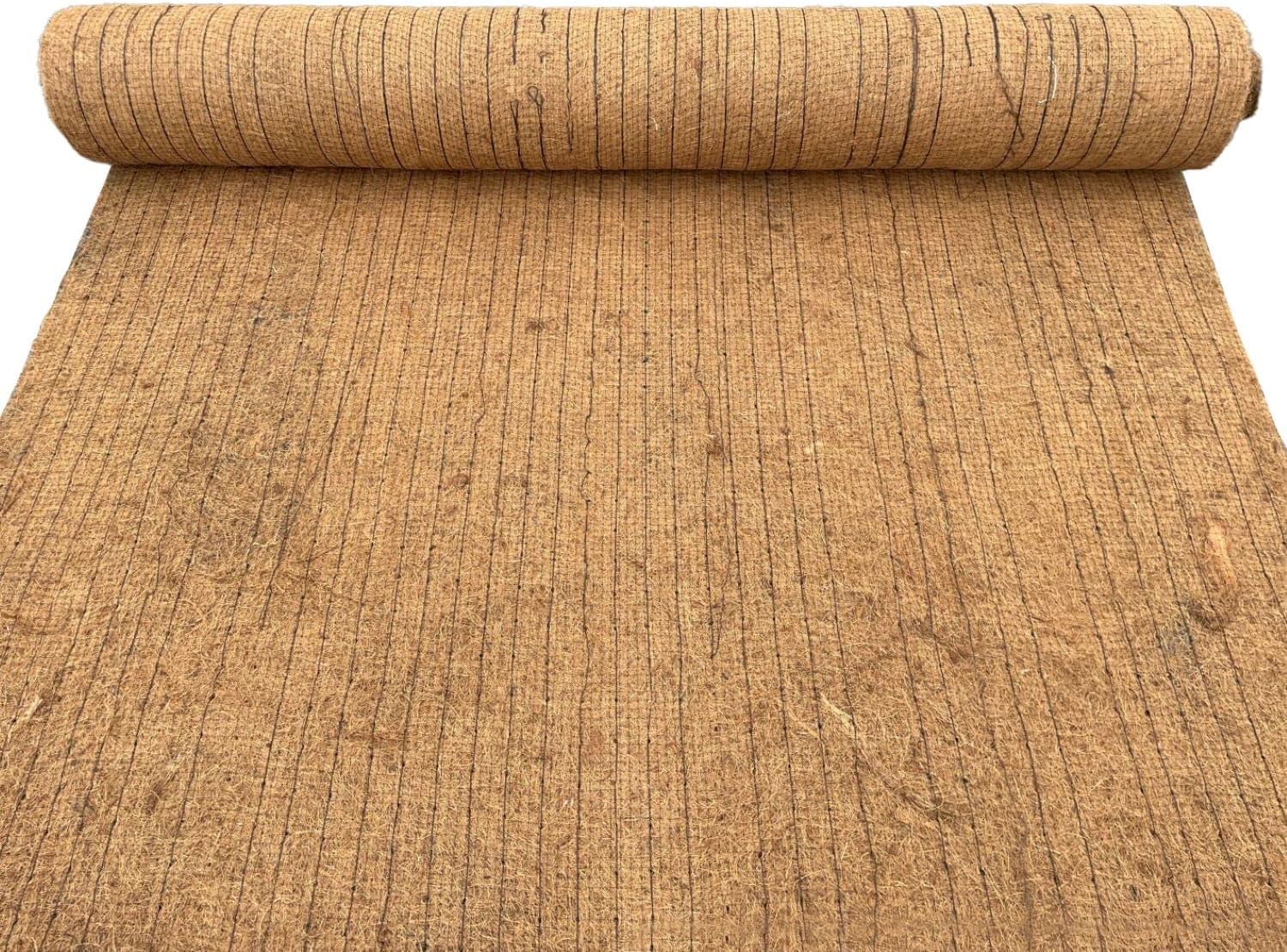
This Sandbaggy coir erosion control blanket is made from 100% coconut fiber and comes in two long rolls that are intended for steep-slope stabilization and seed establishment. Contractors and homeowners use it by laying the mat over prepared soil on hillsides, anchoring it with staples, and seeding beneath or on top so the blanket holds moisture and prevents washout while vegetation takes hold. Notable features include heavy coir fiber that resists displacement on 1:1 slopes, polypropylene netting for temporary reinforcement, and a biodegradable design that decomposes as plants colonize the area. In practice it speeds germination by reducing surface runoff and trapping sediment, while remaining easy to handle on uneven ground without heavy equipment. Limitations are that installation still requires enough anchors or staples for very windy or highly erodible sites and that the blanket biodegrades over time so long-term stabilization will depend on successful vegetation establishment.
Best for: Buyers who need a performance-focused, eco-friendly erosion control solution for steep slopes and prioritize rapid vegetation establishment and contractor-grade reliability.
Less Ideal for: People looking for a permanent, nonbiodegradable stabilization solution or those who need a product for very small decorative beds where coir is overkill.
- Made from 100% coconut fiber to retain moisture and support seed germination
- Rated for 1:1 slope stabilization suitable for steep hillsides and embankments
- Biodegradable material improves soil health as it decomposes
- Long roll length covers large areas with fewer seams, reducing installation time
- Requires staples or anchors for secure installation on windy or highly erodible sites
- Biodegrades over a few years so it is dependent on vegetation to provide permanent stabilization
Verdict: Choose this coir erosion blanket when you need a contractor-grade, biodegradable option that holds soil and accelerates seed establishment on steep 1:1 slopes.
Farm Plastic Supply Coconut Erosion Control Blanket (7' x 112.5')

| Material | 100% coconut fibers |
|---|---|
| UV Treated | Yes (implied in product comparison) |
| Use case | Farms, hills, ditches, channel and ditch linings |
This coconut erosion control blanket is a heavy-duty mat made from 100% mechanically stitched coconut fibers intended to stabilize slopes, ditches, and other erosion-prone areas. Install it over newly seeded or bare soil to protect against rainfall impact and surface runoff while holding moisture to improve germination. The natural coconut fiber construction provides a long-lasting, biodegradable cover that resists breakdown longer than loose straw and reduces weed competition during establishment. For steep slopes the blanket grips soil and vegetation roots better than lightweight covers, and the roll length makes it practical for long runs across embankments. The main limitation is that coconut blankets are best for passive stabilization and vegetation establishment rather than hard engineering fixes, so very high-flow channels or active scour may need additional anchors or structural drainage work. You should also expect biodegradable performance over seasons rather than permanent reinforcement. For routine slope seeding and long-term germination support this blanket delivers reliable, low-maintenance protection.
Best for: Gardeners, landscapers, and property managers who prioritize a dependable, natural solution for establishing vegetation on steep slopes and preventing short-to-medium term soil erosion.
Less Ideal for: Those needing a permanent, nondegradable barrier or engineered channel lining for high-flow streams should consider rigid or synthetic alternatives instead.
- 100% mechanically stitched coconut fibers for durable, natural erosion control
- Helps retain soil moisture to improve seed germination and vegetation establishment
- Long roll length suitable for covering continuous slopes, ditches, and channels
- Biodegradable material that reduces long-term environmental impact compared with synthetic mats
- Not a permanent structural solution for high-velocity water or severe scour without additional anchors or engineering
- Biodegrades over time so reinforcement may be needed for very long-term stabilization
Verdict: Choose this coconut erosion control blanket when you want a reliable, natural, biodegradable cover that holds seed and soil on steep slopes while improving germination and vegetation establishment.
HealthiStraw GardenStraw Premium Garden Mulch, 3 cu ft

| Net volume | 3 cu ft |
|---|---|
| Intended use | Garden mulch, lawn seeding, compost-friendly |
| Material | 100% wheat straw |
| Source | Sustainably sourced, non-GMO |
HealthiStraw GardenStraw is a 3 cubic foot compressed bale of cleaned wheat straw formulated for use as garden mulch and seed protection. It is designed for vegetable, herb, flower and shrub beds where you want a lightweight, compostable mulch that retains soil moisture and suppresses weeds. The straw is processed to reduce dust and stray seeds and the short, specially cut fibers interlock when watered so the mulch stays in place without chemical tackifiers. For bushes you can apply a 2 to 3 inch layer around the drip line to cut evaporation, reduce compaction and gradually add organic matter as it breaks down. Practical benefits include easy spreading from a compressed bale, fast composting into the soil, and reduced watering needs. Limitations are that straw is less decorative than bark or wood chips and will decompose faster, so it requires periodic replenishing; it also provides less long-term weed barrier than heavier mulches. For gardeners focused on soil health and moisture conservation, it is a straightforward, low-risk choice.
Best for: Gardeners who prioritize soil health and want an easy-to-apply, compostable mulch for shrubs and mixed beds that reduces watering and improves organic matter over time.
Less Ideal for: People seeking a long-lasting, decorative mulch or a heavy-duty weed barrier for high-traffic beds should consider wood chips or stone instead.
- Cleaned, non-GMO wheat straw with reduced dust and seeds
- Fibers interlock when wetted so the mulch stays in place without binders
- Helps retain soil moisture and can reduce watering needs substantially
- Composts quickly and adds organic carbon to improve soil structure
- Decomposes faster than wood mulches so it needs topping up more often
- Less decorative and provides a lighter-duty weed barrier compared with heavier bark or rock mulches
Verdict: A clean, fast-composting straw mulch that conserves moisture and improves soil health, making it a safe, practical choice for mulching bushes.
USA PINESTRAW Long Needle Pine Straw Mulch, Square Bale

| Material Type | Pine |
|---|---|
| Other Special Features of the Product | Organic |
| Package Size Name | Square Bale |
| Unit Count | 1 Count |
This product is a single premium square bale of long-needle pine straw intended for use as organic mulch around beds and shrubs. It is typically spread 2 to 4 inches deep around plants, pathways, and trees to suppress weeds, retain soil moisture, and protect roots from temperature swings. Because it is long-needle pine straw, it interlocks well and resists blowing away better than chopped mulches, and it decomposes slowly to add organic matter without dramatically altering soil texture. Practical benefits for blueberry plantings include good acidifying potential over time and excellent moisture retention, both helpful for blueberry health. Limitations are that you will need multiple bales for larger beds and periodic top-ups each season as the straw settles and decomposes. Also pine straw can be bulky to handle compared with bagged compost or wood chips, and it does not provide immediate nutrient boosts the way composted mulches do.
Best for: Gardeners seeking a low-maintenance, organic mulch for acid-loving shrubs who want better moisture retention and natural weed suppression in small to medium beds.
Less Ideal for: People who need a sterile, compacted mulch for container-grown blueberries or those wanting immediate nutrient-rich soil amendments rather than a slow-decomposing cover.
- Organic long-needle pine straw that naturally suppresses weeds
- Good moisture retention that reduces watering frequency
- Interlocking needles resist wind displacement better than loose shredded mulches
- Slow decomposition adds organic matter over time without rapid nutrient release
- Sold as single square bale so multiple purchases needed for larger beds
- Bulky to handle and store compared with bagged options
Verdict: Choose this long-needle pine straw bale if you want an organic, moisture-retaining mulch that stays put and supports acid-loving plants like blueberries.
Choosing the Right Mulch for Steep Slopes: Key Factors to Consider
Erosion Resistance
On steep slopes the primary job of mulch is to slow surface runoff and prevent soil loss. Materials that interlock or mat down can break raindrop impact and reduce sheet erosion. When a mulch resists movement it keeps topsoil in place and protects shallow roots during storms.
Assess erosion resistance by observing how the material behaves under flowing water or intense downpours. Loose, chunky materials may wash away quickly unless combined with anchoring. Choosing a mulch that reduces both splash erosion and concentrated flow is essential for slope stability.
Anchoring and Stability
Stability refers to how easily the mulch stays put on an incline and whether it can be secured with pins, netting, or biodegradable mats. Some mulches naturally interlock and form a mat that resists displacement, while others require supplemental anchoring. Consider the slope angle and exposure: steeper or highly exposed slopes need materials that accept stakes or integrate with erosion-control fabrics.
Think about how you will install the mulch safely. Materials that accept staples or that can be layered with jute netting make post-install anchoring straightforward. If repeated reapplication is impractical for your site, prioritize stability over aesthetics.
Support for Plant Establishment
Mulch on slopes should protect seeds and young plants while still allowing seedlings to root into the soil. Some materials smother tiny seedlings or form a physical barrier, while others improve soil contact for seed and roots. Look for mulches that moderate surface temperature and retain moisture without creating a barrier to germination.
If you plan to seed or plant groundcovers, choose materials that can be incorporated with seed-blankets or that break down predictably to expose soil at the right time for rooting. Consider how mulch depth will affect emerging plants and what follow-up maintenance will be required to encourage establishment.
Decomposition Rate and Longevity
How quickly mulch breaks down affects both its erosion control life and maintenance schedule. Fast-decomposing mulches can add organic matter and improve soil but may need reapplication more often, which is labor-intensive on slopes. Slow-decomposing options maintain coverage longer but may not contribute as quickly to soil improvement.
Balance the desire for long-term coverage with soil-building goals. In erosion-prone sites where frequent re-application is difficult, prefer longer-lasting materials or ones that can be combined with stabilization techniques to reduce maintenance frequency.
Impact on Drainage and Runoff
Mulch changes how water moves over a slope surface. Some mulches encourage infiltration by breaking up flow and increasing surface roughness, while dense or hydrophobic materials can channelize runoff. Consider how the material will interact with your soil type and slope pitch to avoid concentrating water in undesirable paths.
Poor drainage management can lead to rills and gullying. Choose mulch types that promote even infiltration, and pair them with contour planting, swales, or check dams when needed to slow and disperse runoff.
Safety and Installation Practicalities
Working on steep slopes affects safety and the methods you can realistically use. Lightweight loose mulch may be easier to carry but harder to keep in place. Bulky or heavy materials require more effort or mechanical help. Also think about how you will secure, maintain, and reapply mulch without risking slips or falls.
Select materials that match the scale of the slope and the tools you have available. Consider whether volunteers or contractors will install the mulch and choose options that minimize hazardous handling and simplify safe anchoring.
How Slope Angle and Exposure Change Mulch Performance
The steeper and more exposed a slope is, the more likely mulch will be displaced by water or wind. On gentle grades you may get away with looser materials, but as the angle increases you need mulches that either bind together or accept anchors. South- or west-facing slopes also dry faster, so a mulch that limits evaporation while staying in place becomes more valuable.
Evaluate the specific conditions: short, steep pitches that funnel water require different approaches than long, moderate slopes. Where runoff concentrates into channels, use contour techniques and durable mulch to avoid rill formation.
- Short, steep pitches need strong anchoring or matting
- Long, moderate slopes benefit from infiltration-enhancing mulches
- Wind-exposed slopes favor heavier or interlocking materials
Installation Techniques That Keep Mulch on the Slope
Simple installation tweaks greatly increase mulch effectiveness on inclines. Work from top to bottom in narrow strips and secure edges with biodegradable staples or pins. Where possible, use a combination of mulch and erosion-control netting or landscape fabric designed for slopes to hold material in place during initial establishment.
For seeded slopes, tackifying products or hydroseeding techniques can hold seed and mulch together until vegetation takes hold. Where machinery is unsafe, plan a multi-person approach with safe footing, proper tools, and staged placement to avoid slipping or collapsing materials downhill.
- Install in overlapping strips to prevent gaps
- Anchor the top and sides first, then secure intermediate areas
- Combine mulch with temporary netting for the first season
Combining Mulch with Plants and Structural Measures
Mulch is most effective on slopes when paired with living or structural stabilization. Groundcovers, native grasses, and shrubs with fibrous root systems help bind soil while mulch protects those roots and conserves moisture. Structural measures such as terraces, rock check dams, or contour logs reduce flow velocity and give mulch a chance to work.
Think in layers: soil-binding plants provide long-term stability, mulch provides immediate protection, and structural elements manage concentrated flow. For newly graded slopes, temporary mulching combined with fast-establishing cover crops can prevent early erosion while permanent plantings mature.
- Use quick-establishing groundcovers to complement mulch
- Add small check dams or terraces to break up concentrated flow
- Remove temporary anchors once plants are established
Seasonal Timing and Maintenance for Slope Mulching
Timing mulch application to weather patterns reduces failure. Avoid placing loose mulch right before expected heavy rains. Early spring or fall applications give seed and roots time to establish under protective cover. Monitor slopes after storms and reapply or reinforce mulch in areas that show movement.
Maintenance on slopes is more labor-intensive, so plan longer-lasting strategies if repeated reapplications are impractical. Inspect anchor points, refill low spots, and repair rills promptly to keep the system functioning.
- Apply mulch when extended dry weather or light rain is forecast
- Inspect after major storms and repair displaced areas quickly
- Plan for seasonal replenishment based on decomposition rates
Environmental and Soil-health Considerations
Choose mulches that support soil life and avoid those that introduce toxins or excessive acidity. Organic mulches add carbon as they break down, improving soil structure and water-holding capacity over time. However, rapid decomposition can temporarily immobilize nitrogen, so plan fertilization or mix with slower-decomposing materials when necessary.
Avoid materials that clog pore spaces or form impermeable layers. Consider local availability and the carbon footprint of hauling materials long distances; native or locally sourced options often fit better ecologically and economically.
- Balance soil-building benefits with short-term erosion control needs
- Monitor soil pH and nutrient availability after heavy mulch incorporation
- Prefer locally sourced organic options when feasible
How We Chose the Best Mulch for Steep Slopes
We focused on attributes that directly affect mulch performance on steep slopes rather than broad or aesthetic qualities. Primary filters included erosion resistance under intermittent and heavy rainfall, the material's tendency to bind or wash away, and how well it encourages plant establishment and root growth on an incline. Installation factors were critical: ease of securing the material, compatibility with anchoring methods, and the labor required for slope-safe placement. Longevity and decomposition rate informed our selections because a mulch that disappears too quickly exposes soil and increases maintenance. We also considered drainage behavior and whether the mulch would encourage or inhibit surface crusting or runoff concentration. We excluded materials that are intended only for flat beds, that require heavy machinery to install, or that are known to release contaminants into soil. Our evaluation relied on practical, gardener-facing specifications and field-use characteristics rather than lab-only metrics. The criteria that mattered most and guided inclusion were erosion control effectiveness, installation practicality on steep grades, how the mulch interacts with plant roots and soil moisture, resistance to displacement, and decomposition profile.
FAQ
Can I use any mulch on a very steep slope?
Often a standard loose mulch will not hold on very steep slopes. It depends on the material's tendency to bind and whether you can anchor it. For very steep or eroding sites, choose mulches that form a stable mat or that work with netting and anchors to prevent washout.
How deep should mulch be applied on a slope?
Recommended depth depends on the material and whether you are seeding or planting. Generally shallower layers help seed-to-soil contact, while slightly deeper layers protect roots and reduce evaporation. Avoid extremely deep mulch that could slip downhill or smother small seedlings.
Do I need to anchor mulch on a slope?
Usually yes on moderate to steep slopes. Staples, biodegradable netting, or tackifiers can secure mulch until vegetation establishes. The need for anchors depends on slope angle, exposure, and the mulch's natural stability.
Will mulch improve soil stability long term?
Mulch helps in the short to medium term by reducing erosion and improving moisture retention. Long-term stability usually requires vegetation with deep or fibrous roots and, in some cases, structural measures. Mulch is an important part of an overall slope-stabilization strategy, not a sole solution.
How often should I replace or replenish mulch on slopes?
Frequency depends on decomposition rate and how much displacement occurs after storms. Fast-decomposing materials may need seasonal replenishment, while more persistent options last multiple seasons. Inspect slopes annually and after major weather events to decide whether to top up.
Can mulch prevent rill and gully formation on hills?
Mulch reduces surface erosion and can prevent small rills from forming by dissipating raindrop energy and slowing sheet flow. However, in areas where concentrated runoff occurs, combine mulch with contour controls or small structural interventions to avoid gully formation.
Final Verdict
On steep slopes prioritize materials that resist displacement, can be securely anchored, and support plant establishment. Expect tradeoffs between longevity and soil-building benefits: longer-lasting mulches reduce maintenance but may add less organic matter quickly, while fast-breakdown materials improve soil sooner at the cost of more frequent reapplication. Match your choice to slope angle, exposure, and the installation methods you can safely use. Focus first on erosion control and anchoring, then select for decomposition rate and plant-friendliness to achieve stable, low-maintenance slopes.
