

Note: This article contains affiliate links. If you click on these links and make a purchase, I may earn a small commission at no extra cost to you. This helps support my research and content. Read my full affiliate disclosure here.
Pine trees create a specific planting environment: dry, acidic soil with a layer of falling needles and shade that limits understory growth. Choosing the right mulch for under pine trees matters because the wrong material can worsen acidity, hold too much moisture near shallow roots, or blow away on exposed sites. This guide covers six shortlisted mulches suited to beneath pine canopies and explains how we evaluated moisture retention, acidity effects, longevity, and installation needs. Read on to understand which mulch types match your soil, root depth, and maintenance preferences before you spread material under your pines.
Top Picks at a Glance
| Best Overall The best all-around choice for most situations | USA PINESTRAW Premium Long Needle Pine Straw Mulch |  |
| Best Quality Built to a higher standard if you want something more solid | USA PINESTRAW Long Needle Pine Straw Mulch (240 sq ft coverage) |  |
| Best Value The sweet spot between price and what you get | USA PINESTRAW Long Needle Pine Straw Mulch, Square Bale |  |
| Best Budget The cheapest option that still gets the job done reliably | Home and Country USA Pine Straw Mulch, 8 lb bale |  |
| Highest Rated A top-rated pick with lots of positive feedback | Mid-Atlantic Shredded Longleaf Pine Straw Mulch, 2 bags (2 cu ft each) |  |
| Most Popular A crowd favorite that many people choose with confidence | Rio Hamza Trading Pine Bark Mulch Nuggets, 8 Quarts (All Natural) |  |
USA PINESTRAW Premium Long Needle Pine Straw Mulch
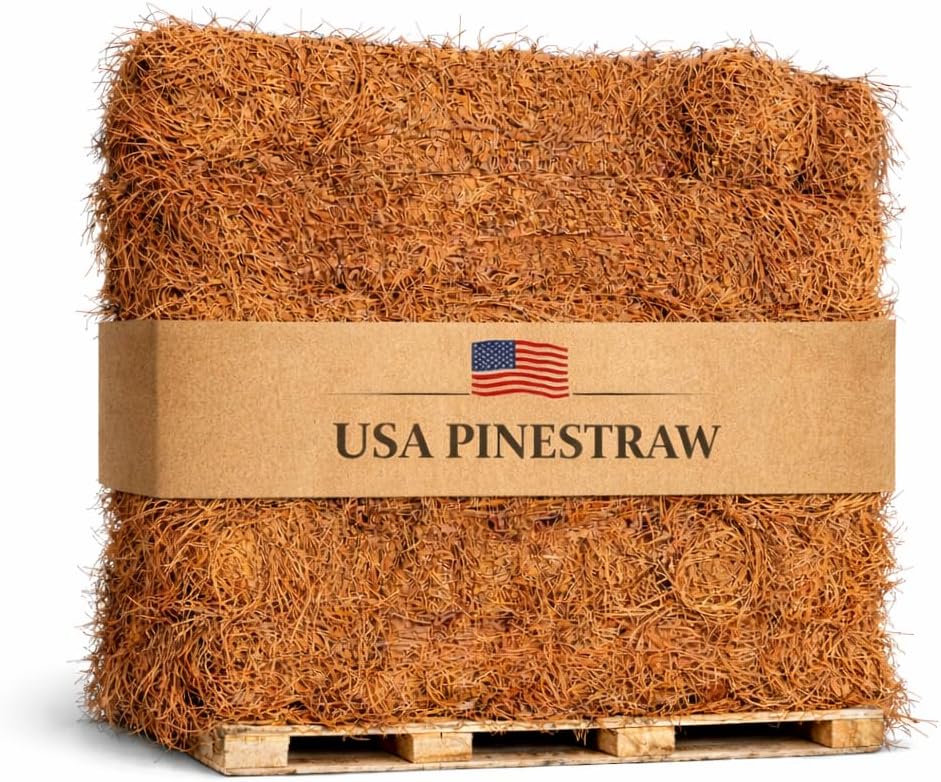
| Indoor Outdoor Usage | Outdoor |
|---|---|
| Other Special Features of the Product | organic |
| Material Features | Natural |
| Plant or Animal Product Type | Pine |
This premium long-needle pine straw is designed for use as a natural mulch layer around trees, shrubs, and garden beds. It is typically spread 2 to 4 inches deep to suppress weeds, slow evaporation, and give a rustic, finished look beneath pine trees. The product emphasizes long needles and organic, natural material which makes it biodegradable and easy to integrate into beds without introducing synthetic materials. Practical benefits include simple application by hand or rake, good moisture retention that can reduce watering frequency, and compatibility with acidic needle-loving soils common under pines. Limitations are that pine straw will break down over a season or two and needs periodic replenishing, and it does not physically prevent deep-rooted weeds as effectively as thicker mulches or landscape fabric. For landscapers who prefer a low‑maintenance, natural look that supports pine tree microclimates, this is a straightforward option; gardeners wanting a very long-lasting or decorative mulch may prefer alternatives.
Best for: Gardeners who want a natural, low‑maintenance mulch specifically suited for pine tree understories and acidic soils and who prioritize easy application and ecological compatibility.
Less Ideal for: Buyers who need a decorative, long‑lasting rubber or rock mulch or who require an impenetrable weed barrier for heavy weed pressure.
- Long needles provide good interlocking layer for erosion control on slopes.
- Organic and biodegradable so it integrates into soil and improves soil organic matter over time.
- Helps retain soil moisture and reduces surface evaporation under trees and beds.
- Easy to spread for quick coverage and creates a natural, finished appearance.
- Needs periodic replacement as it decomposes faster than wood mulches.
- Less effective at stopping deep or persistent weeds compared with thicker mulches or barrier fabrics.
Verdict: A natural, easy‑to‑apply pine straw mulch that preserves moisture and complements landscapes under pine trees.
USA PINESTRAW Long Needle Pine Straw Mulch (240 sq ft coverage)

| Unit Count | 1 Count |
|---|---|
| Number of Pieces | 1 |
| Indoor Outdoor Usage | Outdoor |
| Other Special Features of the Product | organic |
| Plant or Animal Product Type | Pine |
This long-needle pine straw comes in a bale sized to cover roughly 240 square feet and is intended for straightforward landscape use beneath trees, around beds, and on slopes. The long needles naturally interlock to form a mat that resists wind and erosion better than loose pine needles, so it stays put under pine canopies and on banks. It helps retain soil moisture and reduces surface evaporation while still allowing water and nutrients to penetrate, which is useful for established trees and shrubs. Because it is lightweight and organic, it is easy to spread by hand and can be refreshed annually without heavy labor. The material also suppresses many surface weeds and improves the look of beds with a reddish brown tone. Limitations are that pine straw breaks down faster than some wood mulches so it will require yearly replenishment in high-traffic or very wet sites, and it does not add the same bulk of organic matter as chipped hardwoods for long-term soil building.
Best for: Buyers who need an easy, erosion-resistant mulch for under pine trees and want fast installation and reliable moisture retention with minimal effort.
Less Ideal for: Gardeners seeking a long-lasting, structural mulch that builds bulk and soil over many seasons should consider hardwood chips or compost instead.
- Long-needle fibers interlock to resist displacement and erosion
- Covers up to 240 sq ft per bale for consistent coverage of beds
- Helps retain soil moisture while permitting water and nutrient infiltration
- Lightweight and easy to spread by hand for quick installation
- Made from renewable, organic pine straw so it composts naturally into the soil
- Decomposes faster than wood or bark mulch so needs more frequent top-ups
- Provides less long-term soil volume or structure compared with wood chips
Verdict: A lightweight, easy-to-spread pine straw bale that holds in place under trees and delivers reliable moisture retention and weed suppression for performance-focused landscapers.
USA PINESTRAW Long Needle Pine Straw Mulch, Square Bale
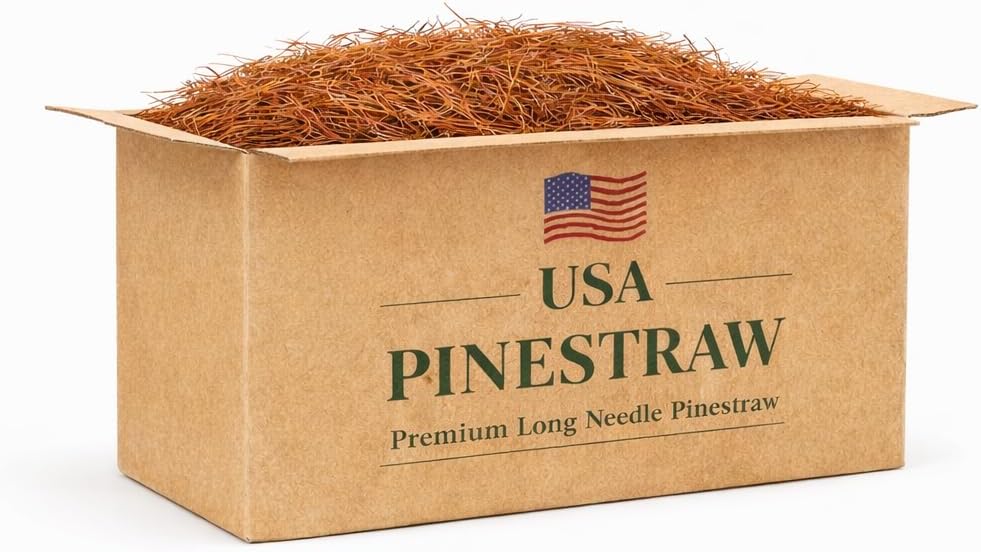
| Material Type | Pine |
|---|---|
| Other Special Features of the Product | Organic |
| Package Size Name | Square Bale |
| Unit Count | 1 Count |
This product is a single premium square bale of long-needle pine straw intended for use as organic mulch around beds and shrubs. It is typically spread 2 to 4 inches deep around plants, pathways, and trees to suppress weeds, retain soil moisture, and protect roots from temperature swings. Because it is long-needle pine straw, it interlocks well and resists blowing away better than chopped mulches, and it decomposes slowly to add organic matter without dramatically altering soil texture. Practical benefits for blueberry plantings include good acidifying potential over time and excellent moisture retention, both helpful for blueberry health. Limitations are that you will need multiple bales for larger beds and periodic top-ups each season as the straw settles and decomposes. Also pine straw can be bulky to handle compared with bagged compost or wood chips, and it does not provide immediate nutrient boosts the way composted mulches do.
Best for: Gardeners seeking a low-maintenance, organic mulch for acid-loving shrubs who want better moisture retention and natural weed suppression in small to medium beds.
Less Ideal for: People who need a sterile, compacted mulch for container-grown blueberries or those wanting immediate nutrient-rich soil amendments rather than a slow-decomposing cover.
- Organic long-needle pine straw that naturally suppresses weeds
- Good moisture retention that reduces watering frequency
- Interlocking needles resist wind displacement better than loose shredded mulches
- Slow decomposition adds organic matter over time without rapid nutrient release
- Sold as single square bale so multiple purchases needed for larger beds
- Bulky to handle and store compared with bagged options
Verdict: Choose this long-needle pine straw bale if you want an organic, moisture-retaining mulch that stays put and supports acid-loving plants like blueberries.
Home and Country USA Pine Straw Mulch, 8 lb bale
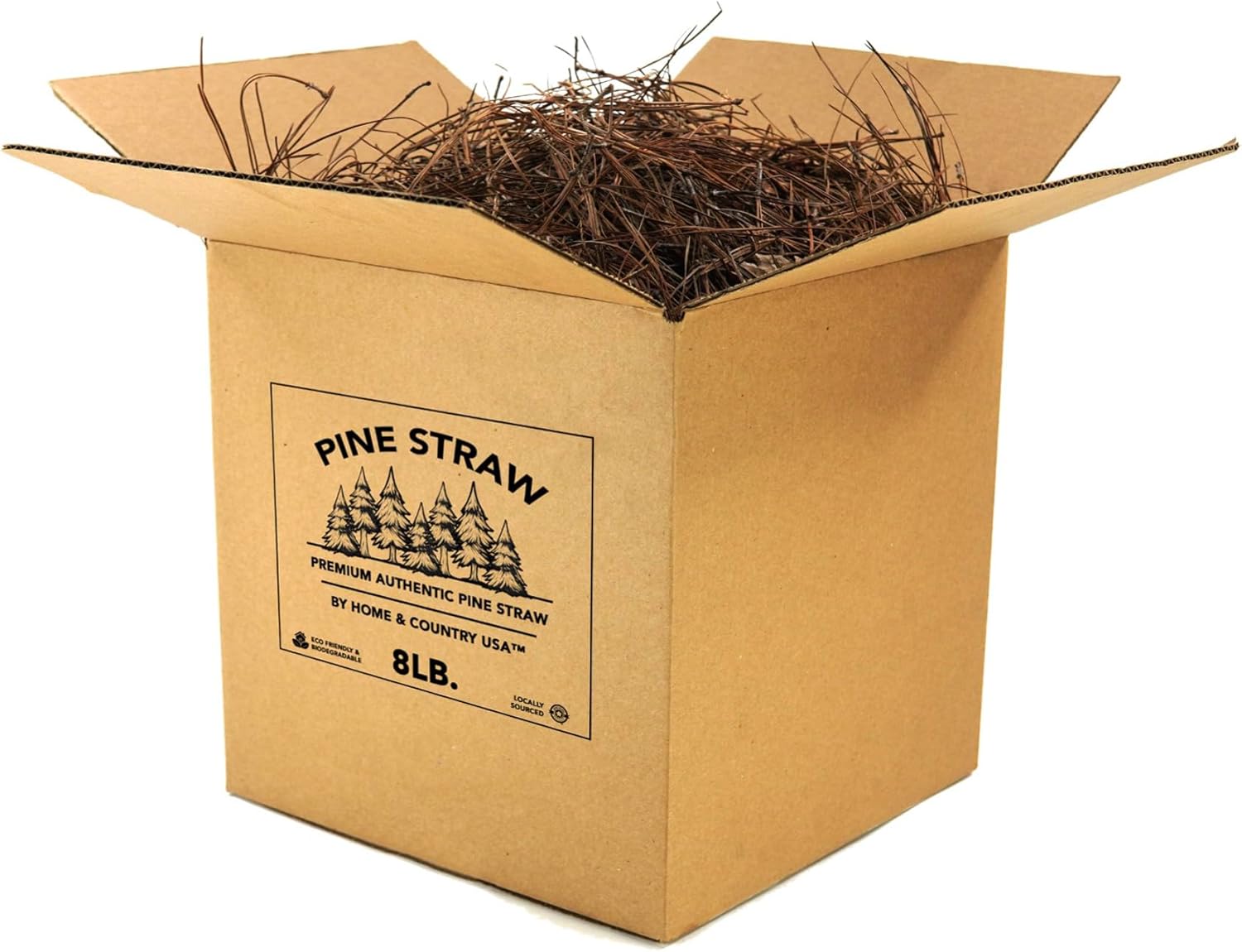
| Manufacturer | Home and Coutry USA |
|---|---|
| Item model number | PN8 |
| Net weight | 8 Pounds |
This pine straw comes in compact 8-pound bales intended for use as a natural mulch under pine trees and in landscape beds. Spread a 2–3 inch layer around trunks and over root zones to reduce weeds, slow evaporation, and help keep soil temperatures steady. The product is pure pine needles, so it breaks down slowly and adds organic matter without introducing synthetic materials. Because the bales are lightweight and manageable, they are easy to position around trees and in tighter spaces where bulk mulch or wood chips would be awkward. Expect good year-round aesthetics that blend with pine tree surroundings. The main limitation is coverage per bale: an 8-pound bale covers a relatively small area, so multiple bales are needed for larger properties, which increases handling time compared with purchasing bulk loose straw or large bags. There is no information on size coverage per bale, so plan quantity before starting larger jobs.
Best for: Gardeners looking for an affordable, natural mulch option to use specifically under pine trees or in small landscape beds who prefer manageable bales over bulky bags.
Less Ideal for: Large properties or projects where covering many square feet quickly is the priority; those users should consider bulk pine straw or larger-volume mulch options.
- Made from pure pine needles so it is natural and compostable
- Good moisture retention and weed suppression when applied at recommended depth
- Lightweight 8 lb bale is easy to handle and place around trees and beds
- Small bale size means you will need many bales to cover a large area
Verdict: A convenient, low-cost way to add natural pine-needle mulch under pine trees when you need manageable bales for small to medium areas.
Mid-Atlantic Shredded Longleaf Pine Straw Mulch, 2 bags (2 cu ft each)
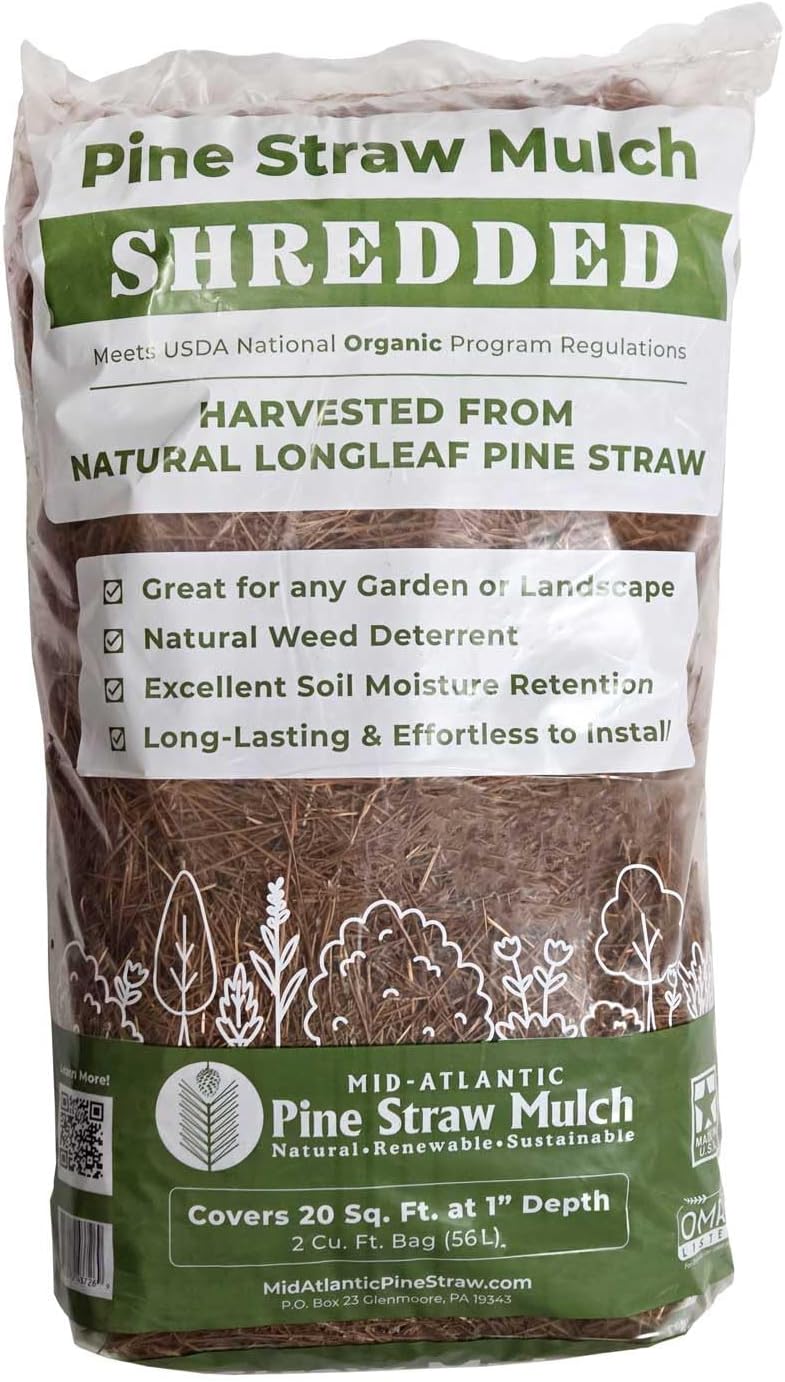
| Number of Packs | 2 |
|---|---|
| Unit Count | 2 Count |
| Volume | 6 cubic feet |
| Item Weight | 15 pounds |
This shredded longleaf pine straw is a lightweight, bagged mulch designed for easy handling and straightforward application. Gardeners spread it around beds and shrubs to form a dense mat that suppresses weeds, conserves soil moisture, and insulates roots against temperature swings. The product is OMRI listed for organic gardening and is described as clean and free of weed seeds and common hardwood debris, which makes it suitable for use around fruit bushes. Because the needles are shredded to 3–4 inches, the mulch lays flatter immediately and is easier to distribute evenly than full-length straw. It breaks down slowly to add organic matter over time, reducing how often you need to replace it. Limitations are that pine straw does not provide the same decorative look as bark in some landscapes and can shift on steep slopes if not anchored, so occasional top-ups or light anchoring may be needed in exposed sites.
Best for: Gardeners who want a low-maintenance, organic mulch that is easy to spread and supports plant health, especially those planting edible shrubs who prioritize soil moisture retention and weed suppression.
Less Ideal for: Homeowners seeking a formal, bark-style aesthetic or who need a heavy, erosion-resistant mulch for steep slopes should consider other mulch types.
- OMRI listed organic material suitable for organic gardens
- Lightweight, shredded form for easy carrying and faster laying
- Helps retain soil moisture and suppress weeds by forming a dense mat
- Slow decomposition adds organic matter and reduces replacement frequency
- Less formal decorative appearance compared with hardwood bark mulch
- Can shift on steep or very windy sites without anchoring
Verdict: Choose this shredded longleaf pine straw if you want an easy-to-spread, OMRI-listed organic mulch that conserves moisture and suppresses weeds for blueberry beds.
Rio Hamza Trading Pine Bark Mulch Nuggets, 8 Quarts (All Natural)

| Brand Name | Rio Hamza Trading |
|---|---|
| Unit Count | 256 Square Feet |
| Item Type Name | Potting Soil |
| Volume | 8 quarts |
| Ingredients | All natural pine shavings |
These 100% natural pine bark nuggets are small half-inch pieces intended as a top dressing or soil amendment for containers, bonsai, terrariums, and beds. You can sprinkle them as a decorative layer over potting mix to reduce surface evaporation and discourage pests, or blend a portion into heavy soil to increase aeration and reduce waterlogging around roots. The product emphasizes chemical-free bark with a red-brown look that tidies planters and complements evergreen plantings like arborvitae. An 8-quart bag covers modest container projects and provides enough to refresh a single large pot. Because the nuggets are coarse, they persist on the surface and do not compact quickly, which helps long-term drainage but means they will not break down fast to enrich soil. Also the bag size is small for landscape-scale mulching, so this is best for focused use around specimens rather than blanket beds. For someone managing moisture around ornamental evergreens, these nuggets work as an attractive, low-maintenance surface mulch.
Best for: A buyer who prioritizes plant safety and wants visible social validation will appreciate a chemical-free, attractive mulch for protecting root zones of specimen shrubs or container arborvitae and for tidying planters.
Less Ideal for: Not a good fit for someone needing bulk mulch for wide beds or wanting a fast-breaking organic amendment to quickly enrich soil.
- Made from 100% natural pine bark with no added chemicals
- Half-inch nuggets improve soil aeration and reduce surface compaction
- Durable, coarse texture provides long-lasting decorative top dressing
- Versatile for indoor pots, bonsai, terrariums, and small outdoor containers
- Small 8-quart bag is insufficient for mulching large landscape areas
- Coarse nuggets decompose slowly and provide limited short-term nutrient addition
Verdict: Choose these pine bark nuggets when you want a chemical-free, long-lasting decorative mulch to improve drainage and keep arborvitae planters looking tidy.
Choosing the Right Mulch for Under Pine Trees: Key Factors to Consider
Soil Acidity Effects
Pine soils are often naturally acidic and pine needles can contribute to surface acidity as they decompose. Choose mulches that do not sharply lower pH or that can be balanced with lime if needed. Organic mulches break down and influence pH over time, so consider whether the material will increase acidity, buffer it, or remain chemically neutral.
Understanding how a mulch will affect soil pH matters because root health and nutrient availability are pH-dependent. If you already have strongly acidic soil, look for neutral or slightly alkaline mulches or plan to monitor and adjust soil pH periodically.
Moisture Management Beneath Canopy
Mulch under pine trees should conserve moisture without creating persistently soggy conditions around shallow roots. Materials that hold too much water can encourage root rot, while very light, fast-draining mulches may not provide the drought-buffering benefit pine roots need.
Consider your local rainfall patterns and the tree's exposure. In dry climates or during summer droughts, denser organic mulches that retain water help maintain steady moisture. In wet climates, choose mulches with better drainage or lay thinner layers to avoid waterlogging.
Decomposition and Longevity
How quickly a mulch breaks down affects how often you need to replenish it and how it alters the soil over time. Fast-decomposing materials add organic matter more quickly, which can be good for soil structure but may tie up nitrogen temporarily. Slow-decomposing mulches provide long-term cover and require less frequent top-ups.
Match the decomposition rate to your maintenance capacity and soil goals. If you want to build organic matter under the tree, choose a material that decomposes at a moderate pace. If you prefer low-maintenance cover, select a longer-lasting option.
Physical Stability and Erosion Resistance
Mulch under pines should resist being blown away by wind or washed downslope by heavy rain. Lightweight flakes or fine particles can migrate, leaving exposed roots. Stability also affects how well mulch suppresses weeds and protects the root zone.
Look for mulches with interlocking shapes or heavier pieces on sloped sites. Where erosion is a concern, combine mulch with edging, groundcover plants, or anchoring techniques to keep material in place.
Root Zone Protection and Depth
Pine tree feeder roots are often shallow and spread beyond the dripline, so mulch depth and placement matter. Too deep a layer can suffocate roots and create moisture traps; too thin a layer fails to moderate temperature and weeds.
Aim for a modest, even depth that protects roots while allowing gas exchange. Avoid piling mulch directly against the trunk. Consider how far the roots extend when laying material so you cover the actual root zone rather than only the area beneath the trunk.
Maintenance and Practical Handling
Some mulches require frequent turning, topping up, or raking to keep a neat appearance and functional layer. Other options are virtually maintenance-free but may be heavier or harder to remove if you change plantings later.
Think about the effort you can commit each year. If you prefer low-maintenance landscapes, favor longer-lasting, stable mulches. For gardeners who want to improve soil health actively, choose materials that integrate into the soil and can be refreshed annually.
How Mulch Interacts with Pine Needles
Pine needles themselves are often used as mulch under trees, but they behave differently from shredded bark or wood chips. Needles can create a light, well-draining layer that resists compaction, but in some situations they form a dense mat that limits water infiltration. Their slow breakdown means they remain in place, which is useful for erosion control but may not add much organic matter quickly.
When mixing needles with other mulch types, the combination can offer both stability and improved moisture retention. Monitor how the layer performs after storms and during dry spells to decide if you need to thin, supplement, or replace it.
- Needles are lightweight and slow to decompose
- May form mats that affect water penetration
- Pairs well with heavier wood-based mulches for stability
Organic Versus Inorganic Options
Organic mulches such as wood chips, shredded bark, and composted materials gradually add nutrients and improve soil structure as they decompose. They also moderate soil temperature and cushion feeder roots. Inorganic options like gravel or landscape fabric do not decompose and therefore will not change soil organic matter, but they can serve as a stable weed-suppressing surface if used carefully.
Under pine trees, organic mulches are typically preferred because they support soil life and root health. However, in very dry or high-traffic sites, combining an inorganic component for surface stability with organic material below the surface can be effective.
- Organic mulches enrich soil over time
- Inorganic mulches provide long-term surface stability
- Hybrid approaches can balance benefits in challenging sites
Placement Best Practices
Keep mulch away from direct contact with the tree trunk to avoid bark moisture and pest issues. Spread mulch evenly over the root zone at an appropriate depth, typically avoiding layers thicker than a few inches for most organic materials. On sloped ground, feather the edges downhill to limit washout.
If you are adding a new layer over existing material, remove any compacted or matted debris first so the new layer can function properly. Regular visual checks after heavy rain or wind help you catch spots where mulch has shifted or thinned.
- Avoid mulch volcanoes against the trunk
- Spread evenly over the full root zone
- Inspect after storms and replenish thin areas
Timing and Seasonal Considerations
Apply or refresh mulch in spring or early fall when soil temperatures are moderate and the tree is less actively stressed. Avoid heavy fresh applications during peak wet seasons that could trap moisture against roots. In climates with cold winters, mulch can help insulate feeder roots and moderate freeze-thaw cycles.
Plan to check mulch depth annually and top up as needed rather than layering on thickly in a single application. Seasonal pruning and needle cleanup can also reduce the need for thick mulch layers.
- Best applied in spring or early fall
- Top up annually instead of piling on
- Use mulch to moderate winter freeze-thaw for roots
Combining Mulch with Groundcovers and Planting
Under mature pines, low-growing shade-tolerant groundcovers can work with mulch to stabilize soil and suppress weeds. Leave space for new plantings and choose species that tolerate acidic, drier conditions. When planting beneath pines, clear mulch from planting holes so roots make direct contact with soil, then replace a light layer around the planting.
Avoid aggressive groundcovers that compete heavily with tree roots. Aim for a balance where the mulch protects roots and groundcovers contribute to soil stability without monopolizing moisture and nutrients.
- Pair mulch with shade-tolerant groundcovers for stability
- Clear mulch from planting holes before adding transplants
- Choose groundcovers that tolerate acidic, dry conditions
How We Chose the Best Mulch for Under Pine Trees
We selected mulches that are commonly used beneath pine canopies and that address the specific challenges of acidic, often dry soils and shallow feeder roots. Editorial filters prioritized materials that resist rapid breakdown, minimize nutrient imbalances, and behave predictably in shaded, needle-covered areas. We evaluated options on acidity influence, moisture management, decomposition rate, physical stability against wind and washout, and installation practicalities such as ease of spreading and cleanup. Excluded items included decorative surfaces that block gas exchange or require impermeable liners, and materials primarily intended for high-traffic landscaping rather than root protection. We also excluded loose products that add disease or pest risk when known. The picks reflect a balance between long-lasting cover, minimal negative impact on soil chemistry, and practical handling for homeowners and landscapers working beneath pine trees.
FAQ
Will mulch increase acidity under my pine trees?
Many organic mulches have a neutral effect as they decompose, while some materials can slightly increase acidity over time. The degree of change depends on the mulch type and how fast it breaks down. If acidity is a concern, test soil pH periodically and amend with lime according to recommendations.
How deep should I put mulch under a pine tree?
A thin to moderate layer is usually best, often around 2 to 4 inches for most organic mulches. Thicker layers can suffocate shallow feeder roots and trap excess moisture. Adjust depth for mulch type and local climate: lighter materials may be slightly thicker, while dense or water-retentive mulches should be thinner.
Can I use pine needles as the only mulch under pines?
Pine needles can be effective as a light, slow-decomposing mulch that resists compaction. In some cases they form mats that reduce water infiltration, so mixing needles with other materials or periodically raking them can improve performance. They are generally a good, low-cost option when managed properly.
How often should mulch be refreshed beneath pine trees?
Refresh frequency depends on the material's decomposition rate and site exposure. Fast-breaking mulches may need annual topping, while longer-lasting options can go several years before replenishment. Inspect the layer yearly and add material where it has eroded or compacted.
Will mulch attract pests under my pine trees?
Some mulches can provide habitat for insects or rodents if piled too thickly or placed against the trunk. Avoid direct contact with bark and keep mulch layers moderate to reduce pest shelter. Regular garden hygiene and inspections help catch any pest issues early.
Final Verdict
When choosing mulch for under pine trees, prioritize materials that protect shallow roots, moderate moisture without creating soggy conditions, and behave predictably in acidic soils. Balance longevity with the desire to add organic matter and select a product that matches your climate, slope, and maintenance rhythm. With proper placement and occasional replenishment, the right mulch will suppress weeds, retain moisture, and support the long-term health of your pines.
