

Note: This article contains affiliate links. If you click on these links and make a purchase, I may earn a small commission at no extra cost to you. This helps support my research and content. Read my full affiliate disclosure here.
Picking the right mulch for a vegetable patch changes how much time you spend weeding and how productive your beds are. The right material blocks light to inhibit weed germination, moderates soil moisture through hot and dry spells, and adds organic matter gradually so your vegetables grow in healthier soil. This guide reviews six top mulches suited specifically to preventing weeds in vegetable gardens and focuses on how each option performs for suppression, soil impact, and ease of use. Below we summarize practical performance and tradeoffs across different mulches so you can match a material to your garden size, soil type, and maintenance style.
Top Picks at a Glance
| Best Overall The best all-around choice for most situations | Blue Mountain Hay Organic Garden Straw Mulch, 5 lb |  |
| Best Quality Built to a higher standard if you want something more solid | Bean Products Hemp Garden Mulch — Organic Soil Conditioner, 1 lb |  |
| Best Value The sweet spot between price and what you get | Back to the Roots Organic Coconut Husk Mulch Block (Expands to 2 cu ft) |  |
| Highest Rated A top-rated pick with lots of positive feedback | Plantonix Coco Chips Mulch Brick (10 lb) – Compressed Coconut Husk Chips |  |
| Most Popular A crowd favorite that many people choose with confidence | HealthiStraw GardenStraw Premium Garden Mulch, 3 cu ft |  |
| Best Seller A high-volume bestseller chosen again and again | USA PINESTRAW Long Needle Pine Straw Mulch, Square Bale |  |
Blue Mountain Hay Organic Garden Straw Mulch, 5 lb

| Item Weight | 5 pounds |
|---|---|
| Manufacturer | Blue Mountain Hay |
| Product Dimensions | 17 x 12 x 5 inches |
This compressed organic straw from Blue Mountain Hay is a lightweight, low-dust mulch that expands after opening and is intended for use in raised beds, vegetable rows, flower beds and over new grass seed. It spreads easily by hand or with a rake to create a loose layer that shades soil, helps block light and conserve moisture, and adds biodegradable organic matter as it breaks down. The product is seedless and described as clean and minimally processed, which reduces the chance of introducing weed seeds or excess dust into planting areas. Because it is straw rather than bark or fabric, it provides quick coverage without compacting the soil and is easy to incorporate into compost or soil later. Limitations are that a 5 pound compressed package covers only a modest area so it is best for small beds or spot coverage, and straw can shift in heavy wind or heavy rain unless anchored with pins or a heavier top layer.
Best for: Gardeners who want a natural, biodegradable mulch for small vegetable beds or raised beds and prefer an easy-to-spread, low-dust material that improves soil as it breaks down.
Less Ideal for: Those with large acreage to mulch, windy exposed sites without options to anchor mulch, or gardeners who prefer permanent, non-organic weed barriers.
- Seedless, organic straw minimizes introducing new weed seed to beds
- Compressed packaging expands for easy handling and storage
- Low-dust and minimally processed for cleaner spreading around plants
- Biodegradable material that adds organic matter as it decomposes
- Small 5 lb package covers only a limited area requiring multiple bags for larger gardens
- Lightweight straw can blow or wash away without anchoring or additional cover
Verdict: A convenient, low-dust organic straw mulch that quickly covers small vegetable beds and adds organic matter while helping suppress weeds.
Bean Products Hemp Garden Mulch — Organic Soil Conditioner, 1 lb

| Brand | Bean Products |
|---|---|
| Unit Count | 16 Ounce |
| Item Type Name | pet-litter |
| Style Name | Hemp |
This hemp-based garden mulch is a natural soil conditioner intended for flower beds and small garden areas. Spread a light layer around plants to reduce evaporation, suppress surface weeds, and moderate soil temperature while the hemp hurd slowly decomposes and returns organic matter to the soil. The product is midwest-grown hemp processed into a breathable, low-dust mulch that stays in place and supports root health by improving moisture retention and aeration. For routine bed maintenance it is easy to apply and compatible with annual refreshes as it breaks down over the season. The main limitation is the small 1 pound unit size, which makes it practical only for testing, container gardens, or spot coverage rather than covering large beds; you will need multiple bags for full-bed applications. Also because it is an organic mulch it will require periodic top-ups as it decomposes and does not provide the long-term permanence of heavier inorganic mulches.
Best for: Gardeners who prioritize a reliable, natural mulch for flower beds and want a low-dust, biodegradable option for improving soil health and moisture control in small areas or for trialing hemp mulch.
Less Ideal for: Those needing to cover large landscapes quickly or seeking a long-lasting, permanent mulch solution should consider bulk or inorganic alternatives.
- Natural hemp hurd that breaks down to enrich soil
- Helps retain moisture and reduce watering frequency
- Breathable, low-dust material suitable for sensitive gardens
- Supports weed suppression and temperature moderation in beds
- Small 1 pound bag is insufficient for covering large flower beds
- Will decompose over time and requires regular replenishment
Verdict: Choose this hemp mulch if you want an eco-friendly, low-dust organic conditioner that reliably improves moisture retention and soil health in flower beds on a small scale.
Back to the Roots Organic Coconut Husk Mulch Block (Expands to 2 cu ft)

| Item Highlight | Compressed 10 lb coco husk mulch expands to 58 qt; peat-free; OMRI Listed |
|---|---|
| Item Type Name | Mulch |
| Brand Name | Back to the Roots |
| Volume | 2 cubic feet |
This compressed coconut husk mulch block arrives as a compact 10 lb brick that expands to roughly 2 cubic feet after adding water, making it easy to store and handle compared with bulky bags. It is OMRI listed and peat free, so gardeners can use it in vegetable beds, flower borders, and raised planters without adding peat-based material. The coarse husk chips improve surface moisture retention and aeration on the soil, which helps reduce watering frequency and supports root health. Setup is simple: break the block apart, soak, let it fluff, then spread a shallow layer around plants. Because it is lightweight when dry and made from an upcycled byproduct of coconut processing, it is a sustainable alternative to some other mulches. Limitations to note are that coconut husk mulch can float or wash away on steep slopes and may need occasional top-ups as it slowly breaks down, and its coarser texture may not form as uniform a surface as shredded bark for ornamental beds.
Best for: Gardeners who want a compact, easy-to-store organic mulch that improves moisture retention and soil aeration in vegetable beds and raised planters while prioritizing sustainable materials.
Less Ideal for: People needing a heavy, erosion-resistant mulch for steep slopes or those who want a very fine, decorative mulch finish for formal ornamental beds.
- Expands from a compact 10 lb block to about 2 cubic feet, saving storage space
- OMRI listed and peat free for organic gardening use
- Improves moisture retention and soil aeration when applied to beds and raised planters
- Made from upcycled coconut husk, offering a more sustainable option than peat
- Coarse chips can be prone to washing away on steep or exposed slopes
- Breaks down over time and requires periodic replenishing in high-traffic beds
Verdict: A space-saving, OMRI-listed coconut husk mulch block that delivers sustainable moisture retention and aeration for productive garden beds.
Plantonix Coco Chips Mulch Brick (10 lb) – Compressed Coconut Husk Chips

| Unit Count | 160 Ounce |
|---|---|
| Item Type Name | Soil and Soil Amendments |
| Brand Name | plantonix |
| Volume | 15 gallons |
Plantonix Coco Chips arrive as a compact 10 pound brick that hydrates and expands into lightweight coconut husk chips for use as mulch, soil amendment, or terrarium bedding. You soak or wet the block to break it apart, then spread the chips over garden beds, containers, orchid pots, or raised beds to reduce evaporation and moderate soil temperature. The product is pre-screened, washed, and aged to remove dirt and rocks, and the low electrical conductivity and near-neutral pH make it safe to mix with potting mixes. Practical benefits include improved drainage and aeration compared with heavy wood mulches, long-lasting moisture retention that can reduce watering frequency, and an attractive tropical look. Important limitations are that you must rehydrate and break up the compressed brick before use which adds prep time, and coco chips do not supply nutrients so you will still need to fertilize regularly. Also note the safety warning about dust and keeping it away from children and pets during handling.
Best for: Buyers who prioritize reliable, consistent mulch performance and want a sustainable, low-maintenance material that retains moisture and improves soil structure for beds and containers.
Less Ideal for: Gardeners who need a nutrient-rich soil amendment or who prefer a no-prep, ready-to-spread loose mulch should consider alternatives.
- Made from 100% recycled coconut husks, a renewable alternative to peat and wood mulches
- Pre-screened and washed to remove dirt, rocks, and excess fiber
- Excellent at retaining moisture while maintaining airflow and drainage
- Lightweight and long-lasting so it does not compact like some organic mulches
- Requires soaking and manual breakup of the compressed brick before use
- Does not provide plant nutrients and should be used with a fertilizer plan
Verdict: A dependable, renewable mulch solution that holds moisture and improves aeration without compacting, ideal for gardeners who want consistent performance.
HealthiStraw GardenStraw Premium Garden Mulch, 3 cu ft

| Net volume | 3 cu ft |
|---|---|
| Intended use | Garden mulch, lawn seeding, compost-friendly |
| Material | 100% wheat straw |
| Source | Sustainably sourced, non-GMO |
HealthiStraw GardenStraw is a 3 cubic foot compressed bale of cleaned wheat straw formulated for use as garden mulch and seed protection. It is designed for vegetable, herb, flower and shrub beds where you want a lightweight, compostable mulch that retains soil moisture and suppresses weeds. The straw is processed to reduce dust and stray seeds and the short, specially cut fibers interlock when watered so the mulch stays in place without chemical tackifiers. For bushes you can apply a 2 to 3 inch layer around the drip line to cut evaporation, reduce compaction and gradually add organic matter as it breaks down. Practical benefits include easy spreading from a compressed bale, fast composting into the soil, and reduced watering needs. Limitations are that straw is less decorative than bark or wood chips and will decompose faster, so it requires periodic replenishing; it also provides less long-term weed barrier than heavier mulches. For gardeners focused on soil health and moisture conservation, it is a straightforward, low-risk choice.
Best for: Gardeners who prioritize soil health and want an easy-to-apply, compostable mulch for shrubs and mixed beds that reduces watering and improves organic matter over time.
Less Ideal for: People seeking a long-lasting, decorative mulch or a heavy-duty weed barrier for high-traffic beds should consider wood chips or stone instead.
- Cleaned, non-GMO wheat straw with reduced dust and seeds
- Fibers interlock when wetted so the mulch stays in place without binders
- Helps retain soil moisture and can reduce watering needs substantially
- Composts quickly and adds organic carbon to improve soil structure
- Decomposes faster than wood mulches so it needs topping up more often
- Less decorative and provides a lighter-duty weed barrier compared with heavier bark or rock mulches
Verdict: A clean, fast-composting straw mulch that conserves moisture and improves soil health, making it a safe, practical choice for mulching bushes.
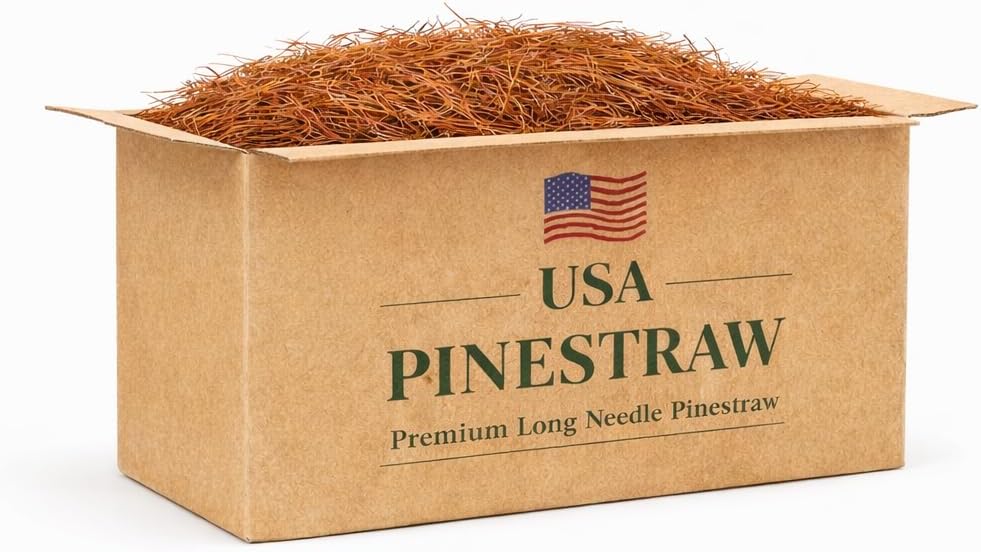
USA PINESTRAW Long Needle Pine Straw Mulch, Square Bale
| Material Type | Pine |
|---|---|
| Other Special Features of the Product | Organic |
| Package Size Name | Square Bale |
| Unit Count | 1 Count |
This product is a single premium square bale of long-needle pine straw intended for use as organic mulch around beds and shrubs. It is typically spread 2 to 4 inches deep around plants, pathways, and trees to suppress weeds, retain soil moisture, and protect roots from temperature swings. Because it is long-needle pine straw, it interlocks well and resists blowing away better than chopped mulches, and it decomposes slowly to add organic matter without dramatically altering soil texture. Practical benefits for blueberry plantings include good acidifying potential over time and excellent moisture retention, both helpful for blueberry health. Limitations are that you will need multiple bales for larger beds and periodic top-ups each season as the straw settles and decomposes. Also pine straw can be bulky to handle compared with bagged compost or wood chips, and it does not provide immediate nutrient boosts the way composted mulches do.
Best for: Gardeners seeking a low-maintenance, organic mulch for acid-loving shrubs who want better moisture retention and natural weed suppression in small to medium beds.
Less Ideal for: People who need a sterile, compacted mulch for container-grown blueberries or those wanting immediate nutrient-rich soil amendments rather than a slow-decomposing cover.
- Organic long-needle pine straw that naturally suppresses weeds
- Good moisture retention that reduces watering frequency
- Interlocking needles resist wind displacement better than loose shredded mulches
- Slow decomposition adds organic matter over time without rapid nutrient release
- Sold as single square bale so multiple purchases needed for larger beds
- Bulky to handle and store compared with bagged options
Verdict: Choose this long-needle pine straw bale if you want an organic, moisture-retaining mulch that stays put and supports acid-loving plants like blueberries.
Choosing the Right Mulch to Prevent Weeds in Vegetable Garden: Key Factors to Consider
Weed Suppression Mechanism
Different mulches suppress weeds in different ways. Thick organic layers prevent light from reaching weed seeds, while dense synthetic fabrics physically block emergence. Some mulches also smother small annuals by adding weight and reducing soil temperature fluctuations that trigger germination.
Understanding the mechanism matters because it determines how quickly weeds will reappear and what maintenance is required. A mulch that relies on thickness will need periodic topping up, while a barrier fabric may require careful edging to prevent weeds at the seams.
Effect on Soil Biology and Structure
Mulches that break down contribute organic matter and feed soil life, improving structure, nutrient cycling, and moisture-holding capacity. Fast-decomposing materials release nutrients sooner but need more frequent replacement. Slow-decomposing materials build long-term humus slowly and can reduce the need for frequent replenishment.
For vegetable gardens, choose mulches that support beneficial microbes and earthworms without introducing pathogens or allelopathic residues. Consider how the decomposition timeline matches your crop rotations and whether you plan to incorporate spent mulch into beds at season end.
Moisture and Temperature Moderation
One of mulch's biggest benefits is stabilizing soil moisture and moderating temperature swings. Organic mulches like straw and composted bark help retain moisture and keep roots cooler in summer and warmer in early spring. Conversely, dark synthetic mulches can warm soil quickly in spring, which is useful for heat-loving crops but can dry the surface faster.
Assess your local climate and crop needs. In hot, dry areas prioritize mulches with high moisture retention. In cool climates, choose mulches that allow quicker spring warming if early planting is a goal.
Application and Maintenance Needs
How easy a mulch is to lay down, secure, and replenish directly affects whether you will maintain it properly. Loose organic mulches are simple to apply but can be displaced by wind or digging and may need more frequent topping. Sheet-style mulches or woven fabrics require more upfront work to cut around plants and anchor but reduce weeding labor over time.
Also consider season-end cleanup. Some mulches can be forked into beds to build soil, while others require removal to avoid interfering with spring planting operations.
Potential for Introducing Weed Seed or Contaminants
Some organic mulches, especially those sourced from hay or poorly processed compost, can contain viable weed seed. That undermines the purpose of mulching a vegetable bed. Other materials might carry herbicide residues or contaminants that are harmful to edible crops.
Buy or source mulches with clear provenance when possible. If using on-site materials, compost fully to temperatures that kill weed seed before spreading in vegetable areas.
Cost, Availability, and Sustainability
Practical choices depend on how readily a mulch is available and whether it aligns with sustainable garden practices. Local organic materials reduce transport footprint and are often cheaper, but availability can be seasonal. Manufactured mulches may last longer but have higher embodied energy or plastic content.
Balance upfront cost against longevity and soil benefits. A low-cost mulch that needs frequent replacement can be less economical when labor is considered. Sustainable sourcing also reduces the risk of introducing unwanted contaminants.
Best Mulch Choices by Garden Situation
Different vegetable gardens need different mulch strategies. For small raised beds where ease of removal is important, lightweight organic mulches that can be forked in at season end work well. For large in-ground beds where labor is limited, longer-lasting materials or a combination of barrier fabric topped with organic matter reduce repeated work.
Consider how much time you want to spend maintaining beds. High-traffic or intensive salad beds benefit from mulches that are easy to refresh, while production rows intended for large yields benefit from mulches that minimize weed pressure for an entire season.
- Small raised beds: easy-to-handle straw or leaf mulch that can be incorporated.
- Large acreage or long rows: durable barrier plus organic top dressing to cut maintenance.
- Container or patio planters: lighter mulches that do not compact and allow good drainage.
How Mulch Interacts With Seedlings and Transplants
Mulch applied too thickly around small seedlings can smother young stems and delay emergence. When covering seeds directly, many gardeners prefer to plant first, wait for seedlings to establish, then apply a light layer of mulch. Transplants can tolerate a bit more immediate cover if the mulch is loosely applied and not piled against stems.
For direct-sown crops, use a thinner initial mulch or choose a material that permits some light and airflow until seedlings are robust enough for heavier coverage.
- Keep mulch a few inches from stems to avoid collar rot and pest hiding spots.
- Apply finer-textured mulches around small transplants to reduce shifting and contact damage.
Integrating Mulch With Irrigation and Feeding
Think about how you water and feed your vegetables when selecting mulch. Thick or impermeable mulches can block rainfall and slow surface irrigation, so drip lines and in-ground watering may need adjustment. Organic mulches generally allow water and nutrient exchanges as they decompose, while some synthetic coverings require planned entry points for fertilization.
If you use fertilizing regimes that rely on foliar feeds, ensure mulches do not trap splashed material against stems. For fertigated systems, lay drip tape above or below mulch depending on the material so roots receive consistent moisture and nutrients.
- Drip irrigation: position emitters to deliver water beneath the mulch.
- Surface watering: prefer mulches that wick water rather than repel it.
- Fertilizer application: expose small areas or use periodic side-dressing where needed.
Seasonal Timing and Mulch Management
Timing mulch application can optimize benefits. Apply a moderate layer after beds warm in spring to allow initial germination of desired plants, then increase thickness as plants mature. In fall, add a protective layer that will decompose over winter, improving soil structure by spring.
Plan for occasional topping up rather than a single permanent application. Regular inspection to repair displaced areas and to pull any weeds that emerge at edges keeps the mulch performing well.
- Spring: apply thinly after soil warms if starting seeds.
- Summer: maintain thickness to suppress weeds and conserve moisture.
- Fall: add compost-rich mulches to build soil for next season.
Environmental and Wildlife Considerations
Some mulches attract beneficial wildlife like earthworms and pollinators by improving soil habitat, while others may provide cover for pests such as slugs or voles. Organic materials tend to encourage soil life but can sometimes increase slug activity; synthetic barriers reduce ground-dwelling pest nesting but do not support soil fauna.
If local wildlife is a concern, choose mulches that balance pest reduction with encouraging beneficial organisms. Monitor and adjust as needed to deter pest populations without harming helpful species.
- Compost and leaf mulch: support earthworms and microbes.
- Straw and hay: can attract rodents if not sourced cleanly.
- Synthetic fabric: reduces ground cover habitat but limits soil fauna benefits.
How We Chose the Best Mulch to Prevent Weeds in Vegetable Garden
We shortlisted mulches that are realistic for vegetable-garden use and judged them on criteria that matter to growers. Our primary evaluation points included weed suppression effectiveness, because blocking light and preventing seed contact with soil is the main goal; impact on soil health, measuring how the mulch contributes to organic matter and microbial activity over time; moisture retention and temperature moderation, since both affect seedling establishment and root health; and ease of application and maintenance, covering how simple it is to install, replenish, and remove between seasons. We also considered longevity and breakdown rate to match different gardening rhythms, and safety for edible crops such as absence of harmful chemicals or seed content that could introduce more weeds. Exclusions included decorative-only materials that shed relevant weed-suppressing properties, and any product obviously formulated for non-edible landscapes. The final picks balance practical weed control with benefits to soil and plant health rather than purely cosmetic effects.
FAQ
When should I apply mulch in a vegetable garden?
Apply mulch after seedlings are established or transplants are set, unless using a light protective layer for seeds. In spring wait until soil has warmed if you need quicker germination. Increase thickness through summer to conserve moisture and suppress weeds.
How thick should mulch be to stop weeds without harming plants?
A typical thickness is 2 to 4 inches for organic mulches and a single layer for landscape fabric topped with organic material. Thinner layers may not suppress weeds, while excessively thick layers can interfere with air exchange and young roots.
Can mulch introduce weed seeds or chemicals to my vegetables?
Yes, poorly sourced hay or immature compost can contain viable weed seed. Also, some processed materials might carry herbicide residues. Use well-composted or certified-clean sources and avoid questionable materials in vegetable beds.
Will mulch attract pests that harm vegetables?
Some mulches can provide cover or habitat for slugs, snails, or rodents. Proper choice and management reduce risk: avoid mulches that harbor pests in your region and keep mulch a few inches from plant crowns to limit hiding spots.
Can I till mulched material into the soil?
Many organic mulches can be incorporated once they have partially decomposed, contributing to soil organic matter. Woody or large coarse materials may need composting first to avoid temporary nitrogen tie-up as they break down.
How often do I need to replenish mulch in a vegetable bed?
Replenishment depends on the material. Fast-decomposing mulches may need topping every season, while longer-lasting options or barrier systems can go multiple seasons before renewal. Inspect beds annually and top up thin areas as needed.
Final Verdict
Prioritize a mulch that balances effective weed suppression with benefits to soil and crop needs. For many vegetable gardens, that means choosing a material that blocks light, retains moisture, and feeds soil life without introducing seeds or contaminants. Consider your garden size, labor capacity, and local climate when weighing longevity against decomposition benefits. By focusing on suppression mechanism, soil impact, and maintenance requirements you can pick a mulch strategy that reduces weeding time while improving yields and soil quality over the long term.
