

Note: This article contains affiliate links. If you click on these links and make a purchase, I may earn a small commission at no extra cost to you. This helps support my research and content. Read my full affiliate disclosure here.
Keeping ticks off your dog matters both for comfort and for preventing disease. Natural dog tick repellents use plant-derived oils and non-toxic ingredients to reduce tick attachment without heavy chemicals. In this guide we shortlisted seven top options that suit regular outdoor walks, yard play, and light hiking. We evaluated formulations for real-world factors gardeners and pet owners care about, such as on-animal safety, residual protection, and ease of application. Read on to see how each option scores on those practical criteria and to learn what matters when choosing a repellent for your dog.
Top Picks at a Glance
| Best Overall The best all-around choice for most situations | TropiClean Natural Flea & Tick Home & Dog Spray, 32 fl oz |  |
| Best Quality Built to a higher standard if you want something more solid | Cedarcide Tickshield Extra-Strength Tick & Flea Repellent Spray, Quart |  |
| Best Value The sweet spot between price and what you get | Wondercide Flea, Tick & Mosquito Spray for Pets & Home, Lemongrass, 32 oz |  |
| Best Budget The cheapest option that still gets the job done reliably | Pet Life Unlimited Natural Flea & Tick Daily Spray for Dogs, 10 oz |  |
| Highest Rated A top-rated pick with lots of positive feedback | Murphy's Naturals Tick Repellent Spray, Plant-Based, 4 fl oz (2-pack) |  |
| Most Popular A crowd favorite that many people choose with confidence | Wondercide Flea, Tick & Mosquito Spray for Pets & Home, Rosemary, 16 fl oz |  |
| Best Seller A high-volume bestseller chosen again and again | Vet's Best Flea & Tick Home Spray for Dogs, Plant-Based, 14 oz |  |
TropiClean Natural Flea & Tick Home & Dog Spray, 32 fl oz

| Unit Count | 32 Fluid Ounces |
|---|---|
| Item Form | Spray |
| Target Species | Dog, Cat |
| Active Ingredients | Clove Oil 0.17%, Lemongrass Oil 1.53%, Cedarwood Oil 0.13%, Cinnamon Oil 0.18% |
TropiClean Natural Flea & Tick Home & Dog Spray is a plant-oil based spray intended to reduce fleas and ticks on pets and in living areas. You use it by lightly misting your dog or cat (older than 12 weeks) and treating home surfaces and bedding as part of a routine control plan; while fleas are present apply twice weekly, then once weekly for maintenance. The formula lists active essential oils such as lemongrass, clove, cedarwood, and cinnamon with a low level of surfactant to help spread the spray. Practical benefits include a pleasant lemongrass and cedar scent, suitability for use around families when surfaces are dry, and a single 32-ounce bottle that covers multiple treatments. Important limitations are that it is not labeled for kittens under 12 weeks, it can cause eye irritation and skin sensitivity in some pets or people, and it is not a systemic veterinary treatment so it works by contact and requires consistent reapplication and household cleaning to control all life stages of fleas and ticks.
Best for: Buyers who prefer natural, plant‑oil based pest control and want a family‑safe option to add to weekly pet and home maintenance routines.
Less Ideal for: Pet owners seeking a single prescription‑strength or systemic flea/tick solution, or those who need an option approved for very young kittens or animals with known sensitivity to essential oils.
- Naturally derived active ingredients (lemongrass, clove, cedarwood, cinnamon) rather than synthetic pesticides
- Works for both pets and home surfaces so you can treat bedding and carpets as part of control
- Pleasant lemongrass and cedarwood scent compared with medicinal chemical sprays
- Not a systemic or long‑lasting veterinary product so requires regular reapplication and household steps to fully eliminate infestations
- Not recommended for kittens under 12 weeks and can cause eye irritation or skin sensitivity in some animals or people
Verdict: Choose this spray if you want a plant‑derived, household‑safe product to add regular topical and home treatments for natural flea and tick control.
Cedarcide Tickshield Extra-Strength Tick & Flea Repellent Spray, Quart

| Ingredients | Cedarwood Oil, Mineral Oil, Sylica Hydrate |
|---|---|
| Area of Use | People, Pets, Home, Gear |
| Reapply Interval (people) | Every 5–7 hours |
| Reapply Interval (dogs) | Every 2–4 days |
Cedarcide Tickshield is a cedarwood-based, extra-strength spray intended for direct application to people, gear, indoor surfaces, and dogs over 20 pounds to both kill and repel ticks, fleas, mosquitoes, mites, ants, and several other crawling and flying pests. You typically mist clothing, exposed skin, backpacks or tents before outdoor activity and reapply every 5 to 7 hours for people or every 2 to 4 days for larger dogs; it can also be used indoors on hard surfaces or fabrics to treat problem areas. The formula relies on cedarwood oil with mineral oil and silica hydrate, which delivers a noticeably natural cedar scent and a botanical active approach rather than synthetic pesticides. Practical benefits include family- and pet-friendly labeling when used as directed, multipurpose use on gear and in the home, and third-party testing claims for a wide range of pests. Important limitations are that it is not plant safe around lawns and gardens, it is only recommended for dogs over 20 pounds, and botanical repellents generally require more frequent reapplication than long-lasting chemical alternatives.
Best for: Buyers who prioritize proven, plant-based pest control and want a multiuse spray for people, equipment, home use, and larger dogs before outdoor activity.
Less Ideal for: People seeking a lawn-wide treatment or owners of small dogs and cats who need a repellent formulated for animals under 20 pounds.
- Plant-based cedarwood formula offers a natural alternative to synthetic pesticides
- Labeled for use on people, gear, indoor surfaces, and dogs over 20 lb for versatile protection
- Third-party testing and multi-pest claims cover ticks, fleas, mosquitoes and other common biting insects
- Clear reapplication guidance makes it easy to use before outdoor activities
- Not safe for use on plants or lawns so it cannot be used for yard-wide treatment
- Not recommended for small dogs or cats under 20 lb
Verdict: Choose Tickshield when you want a lab-tested, plant-based spray that protects people, gear, indoor spaces and larger dogs from ticks and other biting pests.
Wondercide Flea, Tick & Mosquito Spray for Pets & Home, Lemongrass, 32 oz
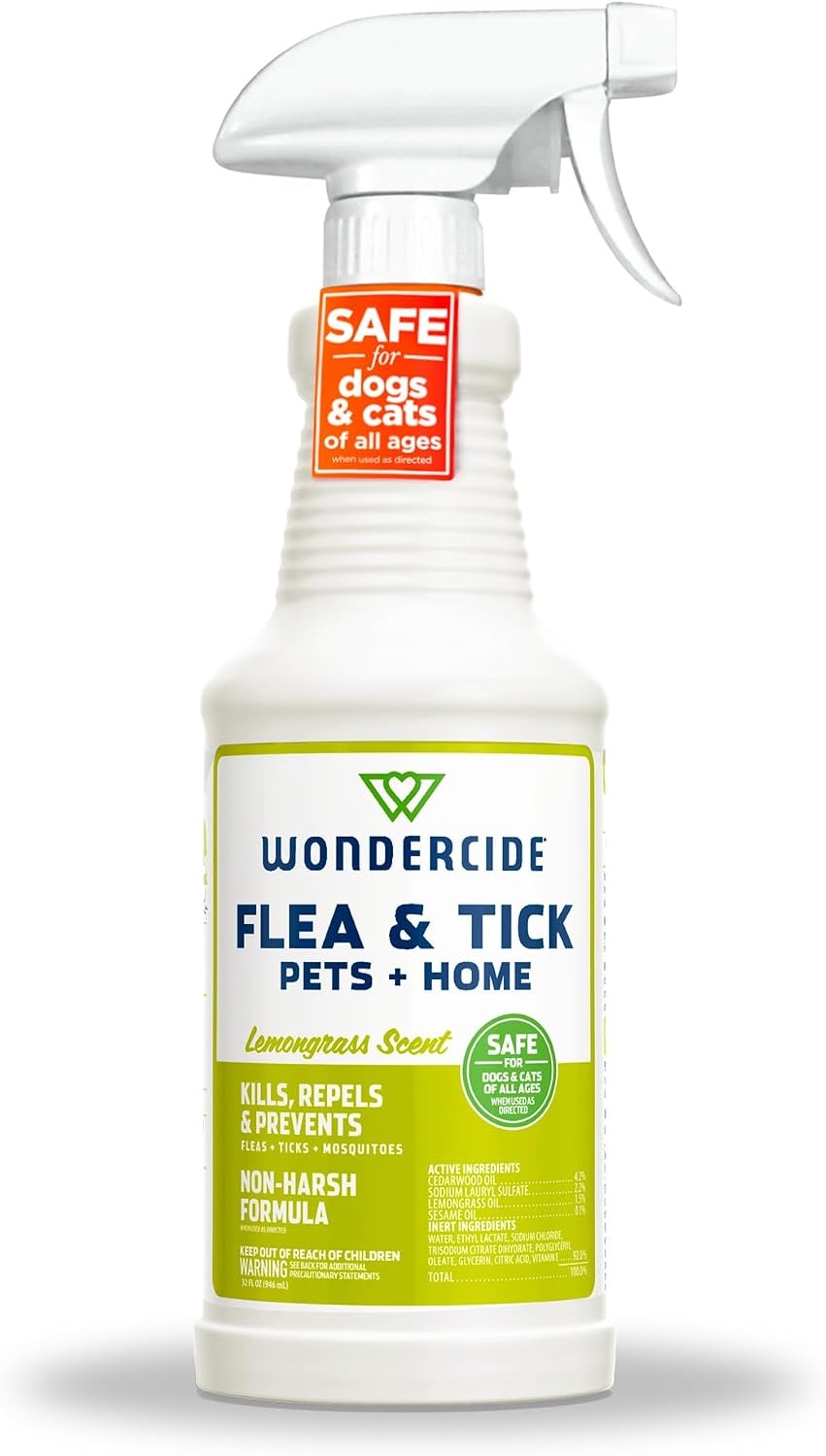
| Unit Count | 32 Ounce |
|---|---|
| Active Ingredients | Lemongrass Oil, Cedar Oil |
| Target Species | Dog |
| Age Range Description | All Life Stages |
Wondercide Lemongrass spray is a plant-powered topical and household spray designed to kill and repel fleas, ticks, and mosquitoes on pets and around the home. You can spray it directly on fur for spot treatments and on carpets, bedding, and furniture to break the flea life cycle by targeting eggs, larvae, and adults. Its active blend (cedar oil and lemongrass oil) plus mild surfactants makes daily use feasible when directions are followed, and the lemongrass scent freshens treated areas. Practical users will appreciate that it is marketed as safe for all life stages when used as directed and that the formula is free of harsh chemical insecticides. Expect straightforward application and quick coverage from the 32 oz bottle, but note this is a contact and repellent spray rather than a long-lasting systemic treatment, so reapplication is required for ongoing protection and heavy infestations may need complementary measures. Read the label for safety and spot-test before full-body use on sensitive pets.
Best for: Buyers who prioritize natural, plant-based pest control and want a multiuse spray they can apply to pets and around the home as part of a practical prevention routine.
Less Ideal for: Households needing a single monthly systemic solution or veterinary-prescribed tick prevention should consider other products designed for long residual protection.
- Plant-based active ingredients (lemongrass and cedar oils) provide natural pest control
- Labeled for use on dogs, cats, and household surfaces to break the flea life cycle
- Large 32 oz bottle offers broad coverage for spot treatments and home use
- Safe for all life stages when directions are followed, enabling use on puppies and kittens
- Provides contact kill and repellent action but is not a long‑lasting systemic treatment
- Requires regular reapplication for sustained protection in high‑infestation areas
Verdict: A practical, plant-based spray for buyers who want a natural, multiuse option to kill and repel fleas, ticks, and mosquitoes on pets and in the home.
Pet Life Unlimited Natural Flea & Tick Daily Spray for Dogs, 10 oz

| Unit Count | 10 Ounce |
|---|---|
| Age Range Description | All Life Stages |
| Item Form | Liquid |
| Scent Name | Cedarwood, rosemary, and peppermint |
| Active Ingredients | Cedarwood Oil |
The Pet Life Unlimited Natural Flea & Tick Daily Spray is a handheld, non-aerosol 10 oz spray formulated with cedarwood, rosemary, and peppermint oils to kill fleas and tick nymphs on contact and repel pests during outdoor activity. It is designed for daily, on-the-go use: shake, mist generously over the dog’s body, then rub into the coat and repeat every 2 to 4 hours as needed up to twice a day. The continuous fine mist and familiar essential-oil scent make application easy and pleasant compared with chemical sprays. The formula also includes ingredients that hydrate and soothe skin, which helps for dogs with mild irritation. Important limitations are that active protection relies on frequent reapplication rather than long residual action, and this product is labeled under FIFRA 25(b) exemption rather than EPA registration. Follow safety directions to avoid contact with eyes and to store securely. For owners wanting a plant-powered, daily-to-daily topical spray for short outdoor exposures, this is a straightforward, budget-friendly option.
Best for: Buyers who prioritize natural, plant-based pest control and want an affordable daily spray they can use before walks, hikes, or quick outdoor play sessions.
Less Ideal for: Those seeking a single monthly or long-residual veterinary-strength tick prevention or people who need an EPA-registered pesticide for heavy infestations.
- Plant-based active ingredients (cedarwood, rosemary, peppermint) that repel and kill fleas and tick nymphs on contact
- Non-aerosol continuous spray nozzle for easy, even application on the go
- Formulated to hydrate and soothe skin while treating pests
- Compact 10 oz size suitable for hikes and outdoor play dates
- Requires frequent reapplication for continued protection because it relies on contact kill rather than long-lasting residual action
- Not registered with the US EPA (listed as exempt under FIFRA 25(b))
Verdict: A budget-friendly, plant-powered daily spray that offers convenient on-the-go flea and tick nymph control for owners who prefer natural ingredients.
Murphy's Naturals Tick Repellent Spray, Plant-Based, 4 fl oz (2-pack)

| Active ingredient | Oil of Lemon Eucalyptus (30%) |
|---|---|
| Other ingredients | Water and Corn Ethanol (70%) |
| Directions | Spray skin and gear liberally; reapply after 4 hours |
| Pack | 4 fl oz, pack of 2 |
Murphy's Naturals Tick Repellent is a plant-based spray that uses oil of lemon eucalyptus as its active ingredient to repel ticks from skin and clothing. It is typically used before hikes, yard work, or outdoor time with pets nearby to reduce the chance of deer, lone star, and brown tick attachments. The formula is gear-friendly and non-DEET so it will not noticeably harm synthetic fabrics or plastic components, and it leaves a natural lemon-eucalyptus scent that fades as it dries. The label provides clear directions to spray liberally and reapply after about four hours for deer ticks and up to eight hours for some other tick species, which supports predictable coverage during day trips. Important limitations are that it is an external repellent only and must be reapplied to maintain protection, and users seeking chemical-level long-duration protection may prefer different active ingredients. For those prioritizing plant-based, straightforward protection for everyday outdoor use, this spray is a practical, reliable option.
Best for: Buyers who want a reliable, plant-based tick repellent for family outdoor activities and short to day-long trips where predictable, non-DEET protection is a priority.
Less Ideal for: People seeking a single-application, long‑duration chemical repellent or a product formulated specifically to be applied directly to dogs should consider alternative options.
- Plant-based active ingredient (Oil of Lemon Eucalyptus) effective against common tick species
- Suitable for use on both skin and clothing, making it versatile for outdoor activities
- Gear-friendly formula that does not damage synthetic fabrics or plastic components
- Clear reapplication guidance (about every 4 hours for deer ticks, up to 8 hours for some ticks)
- Requires periodic reapplication during long outings to maintain protection
- Not a veterinary product for direct use on dogs so separate pet-safe measures are needed
Verdict: A dependable plant-based spray for predictable, multi-hour tick protection on skin and clothing during everyday outdoor activities.
Wondercide Flea, Tick & Mosquito Spray for Pets & Home, Rosemary, 16 fl oz

| Unit Count | 16 Fluid Ounces |
|---|---|
| Item Form | Spray |
| Scent Name | Rosemary |
| Target Species | Dog |
| Active Ingredients | 4.2% Cedar Oil; 1.5% Rosemary Oil; 2.2% Sodium Lauryl Sulfate; 0.1% Sesame Oil |
Wondercide Rosemary Flea, Tick & Mosquito Spray is a plant‑powered topical and household spray designed to both kill pests on contact and repel them from pets and living areas. You use it by misting the pet’s coat (rubbed through the fur) or by spraying bedding, furniture, and floors from 8–12 inches away; the label also recommends testing a small area on skin or surfaces first. Key active ingredients are cedar oil and rosemary oil, and the formula is marketed as non‑harsh and safe for puppies and kittens when directions are followed. In practice this product is convenient for regular spot treatments and for freshening pet areas with a rosemary scent, and it can help break the flea life cycle by targeting eggs and larvae according to lab claims. Limitations are that it is not an EPA‑registered pesticide, so it is positioned as an exempt 25(B) botanical solution rather than a veterinary drug, and individual sensitivity can occur so a patch test is important. For heavy infestations or animals with compromised health, it should be part of an integrated control plan rather than the sole measure.
Best for: Buyers who prioritize natural, vet‑approved alternatives and want a single spray to treat pets and their living spaces while relying on social proof and lab claims for confidence.
Less Ideal for: Owners dealing with severe, established infestations or pets with compromised health should choose veterinary treatments or prescription options instead.
- Plant‑based active ingredients (cedar oil and rosemary oil) for a natural‑focused approach
- Dual use for pets and home surfaces so one product treats animals and environments
- Gentle formula pitched for all life stages when used as directed, including puppies and kittens
- Non‑staining, grease‑free spray that is easy to apply from a trigger bottle
- Not registered with the EPA as a conventional pesticide, so it is classified as an exempt botanical product
- May cause sensitivity in some animals so a prior patch test is required
Verdict: A convenient plant‑based spray that provides a gentle, dual pet‑and‑home option for prevention-minded owners seeking a natural tick and flea repellent.
Vet's Best Flea & Tick Home Spray for Dogs, Plant-Based, 14 oz

| Unit Count | 14 Fluid Ounces |
|---|---|
| Item Form | Spray |
| Scent Name | Peppermint |
| Target Species | Dog |
| Active Ingredients | eugenol, peppermint oil |
Vet's Best Flea & Tick Home Spray is a plant-based topical and surface spray designed to reduce fleas, ticks and mosquitoes around dogs and in the home. You can apply a light mist directly to dogs 12 weeks and older or spray bedding, carpets, upholstery, patio furniture and kennels to target adult pests and deter re-infestation. The formula uses peppermint oil and eugenol from clove as active, certified natural ingredients and is marketed as non-staining with a peppermint scent. For day-to-day use it is convenient: the trigger sprayer covers surfaces quickly and the scent leaves a fresher smell than many chemical treatments. Important limitations are that it is a contact kill and repellent rather than a systemic or long-acting prescription product, so repeat applications are needed for full control and it is not labeled for species or ages outside those specified. For owners seeking a gentler, home‑safe option it integrates well with environmental cleaning and regular veterinary prevention methods.
Best for: Pet owners who prefer lower‑chemical, natural pest control and want a safe‑feeling spray to use on their dog and around the home as part of routine prevention.
Less Ideal for: People dealing with severe, persistent infestations or those who need long‑lasting systemic protection should consult a veterinarian and consider prescription products instead.
- Plant-based formula using peppermint oil and eugenol rather than harsh pesticides.
- Versatile for use both directly on dogs (12 weeks+) and around the home on bedding, carpets and outdoor furniture.
- Non-staining, lightly scented formula that is designed for routine application and quick surface coverage.
- Packaged in a 14 fl oz trigger bottle that is easy to spray for spot treatments and bedding refreshes.
- Provides contact kill and repellent action but is not a long‑acting systemic treatment, so repeat applications are required.
- Not validated for species or ages outside the product label and not a replacement for veterinary prescription options in heavy infestations.
Verdict: A practical, plant‑based spray for pet owners who want a gentler, home‑safe way to kill and repel fleas and ticks on dogs and household surfaces.
Choosing the Right Natural Dog Tick Repellent: Key Factors to Consider
Active Ingredients and Mode of Action
Know which natural actives are doing the work. Essential oils such as geraniol, citronella, lemongrass, and cedar extract are commonly used because their scent and compounds can repel ticks. Another approach is barrier-forming botanicals that make the coat less hospitable to crawling ticks. Understanding the mode of action helps set expectations: repellents reduce attachment likelihood rather than instantly killing ticks, so you still need to check your dog after being outdoors.
Different natural actives vary in intensity and duration. Some oils evaporate quickly and need frequent reapplication, while others are formulated or combined to linger longer on the coat. If a product lists a single potent oil, expect stronger initial deterrence but possibly shorter residual effect compared with blended or encapsulated formulations.
Canine Skin Sensitivities and Coat Type
Dogs have different skin pH, hair density, and underlying conditions that affect tolerability. Breeds with thin coats or known atopic dermatitis may react more to topical essential oils, especially if concentrations are high. Test a new repellent on a small patch of skin and wait 24 hours to watch for redness, itching, or hair loss.
Coat length and oiliness also influence how a repellent performs. Thick or long coats may require direct application to the skin or more product to reach the undercoat, while very short-haired dogs can show skin symptoms faster. Choose formulations labeled for your dog size and coat type and follow dilution or application guidance to reduce irritation risk.
Residual Protection and Reapplication Frequency
Natural repellents rarely deliver multi-week protection the way some synthetic actives can. Expect many plant-based options to require daily to weekly reapplication depending on activity level and exposure. Consider your routine: a daily spray before walks may be manageable, while infrequent yard use might call for a product with longer persistence or higher tolerance for fading.
Environmental conditions change reapplication needs. Rain, swimming, heavy panting, and rolling in vegetation can shorten protection time. Look for products with water-resistant claims or those described as slow-release to extend intervals between applications in damp conditions.
Safety Around People and Other Pets
Natural does not always equal harmless, especially in households with children, pregnant family members, or small pets like rabbits and birds. Some essential oils are toxic to other animals or can cause respiratory irritation. Check product labeling for household safety guidance and avoid concentrated oil formulations in homes with sensitive occupants.
Also consider transfer risk. Dogs groom themselves and can transfer residues to bedding or to people who pet them. Low-concentration sprays or spot-on products designed to minimize residue transfer reduce this concern. If household members have allergies, choose unscented or minimally scented formulations when possible.
Application Method and Daily Practicality
Repellents come as sprays, wipes, shampoos, or spot-on formulas. Sprays allow quick, full-coat coverage before going outside, while wipes and shampoos can be better for targeted application or integrated grooming. Spot-on-style botanical formulations may offer longer residual protection but require precise placement to avoid licking. Consider how the product fits into your normal routine: a quick spray before a walk is easier for busy owners than a full bath or lengthy drying time.
Ease of use also affects consistency. If an application method is awkward for your dog, you may skip reapplications, reducing protection. Look for ergonomic packaging, clear directions, and dosing guidance by weight or size to ensure correct, repeatable application.
Environmental and Yard Interaction
Think about where you and your dog spend time. If your dog frequents tall-grass areas, wooded trails, or tick-prone yards, choose a repellent with stronger deterrent claims and plan to check the dog thoroughly after outings. Some natural actives degrade faster in sunlight or heat, which matters for summer use. Also consider whether the repellent will wash off into garden beds after outdoor play and whether the ingredients are safe for plants and pollinators.
If you maintain a tick-reduction strategy in the yard, coordinate pet treatments with yard management to reduce overall exposure. A repellent is one part of prevention and works best when combined with environmental controls and routine tick checks.
How Natural Repellents Work in the Yard
Natural tick repellents typically operate by altering scent cues or creating a less hospitable coat surface for ticks to latch onto. In a yard or garden setting, a repellent reduces the chance of attachment as your dog brushes through vegetation but does not remove the need for visual checks after outdoor time.
Expect varying performance depending on plant chemistry, concentration, and how the product is formulated. In practice, heavily vegetated patches with many questing ticks will still pose some risk even with a repellent, so combine product use with routine yard upkeep and tick checks.
- Repellents lower attachment risk; they do not guarantee zero ticks.
- Environmental factors like humidity and temperature affect longevity.
- Combine with regular grooming and inspection for best protection.
Application Tips for Different Coat Types
Short-haired dogs often need less product but closer attention to skin reactions because residues contact skin more directly. Spray lightly and rub through the coat to spread the product. For thick or double-coated breeds, part the fur and apply closer to the skin to reach the undercoat where ticks may crawl.
For very small or toy breeds, use smaller doses and dilute if the product guidance permits. When using wipes, work from head to tail and avoid the eyes and mouth. Always let sprays dry before allowing the dog to run through tall grass to minimize transfer to plants.
- Part long fur to apply at the skin for better coverage.
- Let sprays dry to reduce residue transfer to bedding.
- Start with a patch test on sensitive-skinned dogs.
Managing Reapplication Around Outdoor Activities
Plan reapplication around the likely exposure window. If you know a park visit lasts 45 minutes, apply the repellent shortly before departure. For longer hikes or water play, carry a small spray bottle for touch-ups. Products that advertise water resistance still lose potency after swimming, so reapply after the dog dries.
Keep a simple schedule based on your dog's routine rather than on theoretical maximum protection claims. Frequent, correct reapplications timed with activity are often more effective than a single heavy application that is not refreshed.
- Apply just before outdoor time for best initial protection.
- Reapply after heavy rain or swimming.
- Carry travel-size application tools for long outings.
Combining Repellents With Yard Tick Reduction
Using a natural dog repellent works best as part of a layered approach. Reducing tick habitat by keeping grass short, clearing leaf litter, and creating low-vegetation buffers around play areas reduces the number of ticks your dog encounters. A repellent added to that strategy decreases the chance of attachment during unavoidable exposures.
Avoid overreliance on a single measure. Regularly inspect your dog, launder bedding, and consider targeted yard treatments that are safe for pets if tick pressure is high in your area.
- Combine pet protection with habitat reduction to lower overall exposure.
- Check dogs thoroughly after activity in tick-prone areas.
- Rotate focus between personal protection and environmental controls seasonally.
Signs of Skin Reaction and What to Do
Watch for redness, increased scratching, hair loss, or localized swelling after applying a new repellent. Mild irritation may resolve after washing the area with mild pet shampoo, but persistent or spreading symptoms warrant veterinary advice. If the dog licks a freshly applied product and shows nausea, drooling, or lethargy, seek veterinary guidance immediately.
Preventive measures include patch testing new products, following dosing by weight, and avoiding high-concentration essential oil formulations on puppies, pregnant dogs, or animals with known skin issues.
- Patch-test new products and wait 24 hours for reactions.
- Rinse with mild shampoo if irritation appears.
- Contact a veterinarian for systemic or persistent symptoms.
How We Chose the Best Natural Dog Tick Repellent
We focused on products and formulations that rely on plant-derived actives or minimally processed ingredients while excluding synthetic acaricides and prescription treatments. Our selection filtered for items with clear ingredient lists and directions intended for use on dogs, plus formulations suited to routine outdoor exposure rather than single-use sprays only. Evaluation criteria emphasized measurable deterrent effect against ticks in outdoor settings, dermatological safety on canine skin and coat, length of residual protection between reapplications, and convenience of use for typical pet routines. We excluded products without transparent ingredient labeling, items intended only for indoor pest control, and any formulation that explicitly warns against application to dogs. We also prioritized options that balance efficacy with low skin irritation potential and those that can integrate into weekly grooming or pre-walk routines. The scoring labels below reflect the dimensions we weighed when building the shortlist.
FAQ
Are natural tick repellents safe for puppies?
Often they can be, but many formulations recommend waiting until a puppy reaches a certain age. Puppies have more sensitive skin and different metabolic rates, so choose products labeled for puppies or consult a veterinarian before using any new topical repellent.
How long do plant-based tick repellents usually last?
It depends on ingredients and formulation. Many require daily to weekly reapplication, especially after rain or swimming. Look for products described as slow-release or water-resistant if you need longer intervals between applications.
Can I use the same repellent on multiple dogs in the household?
Usually yes, provided the product directions specify appropriate dosing by weight and there are no known allergies among your pets. Monitor each dog for skin reactions since tolerances can vary even within the same home.
Will a natural repellent stop all ticks from attaching?
No repellent guarantees zero attachments. Natural repellents reduce the likelihood of attachment and can lower tick encounters, but routine tick checks and environmental measures are still important for comprehensive protection.
Is it safe to let my dog swim after applying a natural repellent?
Swimming can reduce the repellent's effectiveness. Some formulations claim water resistance, but repeated immersion typically shortens protection time, so reapply after the dog dries according to the product instructions.
How should I test a new repellent for allergic reactions?
Apply a small amount to a patch of skin in an inconspicuous area and wait 24 hours while observing for redness, swelling, or increased scratching. If a reaction occurs, rinse the area and avoid further use, and consult a veterinarian if symptoms persist.
Final Verdict
When choosing a natural dog tick repellent, prioritize formulations that balance proven deterrent ingredients with clear guidance for safe application on your dog's coat and skin. Match the product type to your routine: quick sprays for daily walks, longer-lasting spot treatments for frequent wooded outings, and gentle wipes for dogs with sensitive skin. Remember that repellents are one layer of protection; combine them with habitat management and regular tick checks to reduce overall risk and keep your pet comfortable and healthy.
