

Note: This article contains affiliate links. If you click on these links and make a purchase, I may earn a small commission at no extra cost to you. This helps support my research and content. Read my full affiliate disclosure here.
If you grow strawberries, the right natural fertilizer can mean bigger, sweeter berries and a healthier patch that needs less intervention year after year. Choosing a fertilizer made for strawberries matters because these plants respond to both immediate nutrients and longer-term soil biology. This guide covers five carefully shortlisted natural fertilizer options that suit a range of garden setups, from containers and small raised beds to in-ground rows. We evaluated picks using practical garden criteria like nutrient profile, ease of application, and impact on soil health so you can match a product to your site and season. Read on for what to consider and how each factor will affect fruiting and plant vigor.
Top Picks at a Glance
| Best Value The sweet spot between price and what you get | True Organic Berry Food Granular Plant Food, 4 lb |  |
| Best Budget The cheapest option that still gets the job done reliably | Bloom City Organic Berry Fertilizer, Liquid, 8 oz |  |
| Highest Rated A top-rated pick with lots of positive feedback | Espoma Berry-tone Organic Fertilizer, 4-3-4, 4 lb (2-pack) |  |
| Most Popular A crowd favorite that many people choose with confidence | Espoma Berry-Tone Organic Fertilizer for Berries, 4 lb (2-pack) |  |
| Best Seller A high-volume bestseller chosen again and again | Down To Earth Acid Mix Organic Fertilizer 4-3-6, 1 lb |  |
True Organic Berry Food Granular Plant Food, 4 lb

| Unit Count | 64 Ounce |
|---|---|
| Item Form | Granules |
| NPK | 5-4-6 |
| Coverage | Full |
True Organic Berry Food is a 4 lb granular plant food made from organic ingredients like seabird guano, shrimp and crab shell meal, and sulfur to help acid-loving plants such as strawberries, blueberries, and raspberries. You apply it monthly during the growing season to in-ground beds or containers; the granules slowly release nutrients and the added sulfur helps nudge soil pH into a more favorable range for berries. The formula includes calcium and micronutrient-rich amendments that support flowering, fruit set, and overall plant vigor while also feeding soil microbial life. Because it is fully organic and made from farm-grade inputs, it is suitable for gardeners prioritizing soil health and organic produce. Limitations to expect are the modest bag size and coverage area, so larger plantings will need multiple bags, and nutrient release from organic granules is slower and less immediately measurable than synthetic feeds.
Best for: Gardeners who want an organic, soil-friendly fertilizer to support steady berry production and who prioritize long-term soil health over immediate, high-speed feeding.
Less Ideal for: People managing large commercial beds or those who need rapid nutrient correction for severely deficient plants should consider higher‑coverage or faster‑acting alternatives.
- Organic ingredient blend (seabird guano, shell meals, poultry manure) that nourishes plants and soil microbes
- Contains sulfur to help lower soil pH for acid-loving berry plants
- Includes calcium to help reduce blossom end rot and support fruit development
- Works for both in-ground and container plantings and is applied monthly
- 4 lb bag covers a relatively small area so frequent repurchasing is needed for larger gardens
- Nutrient release is slower than synthetic fertilizers, so results take more time to appear
Verdict: Choose this product if you want a small-batch organic granular fertilizer that improves soil health while steadily supporting berry yields.
Bloom City Organic Berry Fertilizer, Liquid, 8 oz

| Item Form | Liquid |
|---|---|
| Specific Uses For Product | Berry Plants |
| Target Species | Berries |
| Liquid Volume | 8 fluid ounces |
This Bloom City liquid berry fertilizer is a small, organic-feel feed designed specifically for strawberries and blueberries in garden beds, raised patches, or containers. You apply it as a regular liquid feed during the growing season to support root strength, steady foliage growth, and more consistent fruit development. The formula is presented as balanced nutrition for berry plants and is convenient for routine use on backyard patches where space or pot culture demands a soluble feed. Its compact 8 ounce bottle makes it easy to store and handle, but it means you may need multiple bottles for larger patches or season-long feeding. The product highlights suitability for both garden and container use and emphasizes support for sweeter, higher-yielding berries. Important limitations are the small volume and lack of a detailed guaranteed analysis beyond an NPK mention, so gardeners who want exact nutrient percentages or a concentrated professional feed may prefer other options.
Best for: Gardeners growing a small strawberry patch or container berries who want a simple, plant-focused liquid feed to support steady fruiting without complicated dosing.
Less Ideal for: Large-scale growers or gardeners who need exact nutrient formulations or bulk concentrated fertilizers for season-long feeding.
- Formulated specifically for berry plants including strawberries and blueberries
- Liquid form is easy to apply to garden beds and containers
- Designed to support root development and steady fruit production
- Compact 8 oz bottle is convenient for small patches and easy storage
- Small 8 oz volume may require frequent repurchasing for larger gardens
- No detailed NPK breakdown or guaranteed analysis provided in product info
Verdict: A simple, easy-to-use liquid fertilizer tailored for small strawberry and blueberry plantings to encourage healthier roots and more consistent fruiting.
Espoma Berry-tone Organic Fertilizer, 4-3-4, 4 lb (2-pack)

| Item Form | Granules |
|---|---|
| Specific Uses For Product | Gardening,Organic,Plant Food |
| Coverage | Medium |
| Target Species | Blueberries, Strawberries, Raspberries, Blackberries |
Espoma Berry-tone is an organic granular fertilizer made specifically for blueberries, strawberries, raspberries, and blackberries. It supplies a balanced 4-3-4 N-P-K plus sulfur and organic matter that you sprinkle around the drip line of plants or incorporate into beds when planting. Typical use is twice yearly feeding for established beds in early and late spring or as a soil amendment at planting using the package rates. Notable features include ready-to-use granules, an organic certification suitable for certified organic production, and a Bio-tone formula intended to support root development. Practical benefits are easier application compared with liquid concentrates, a formulation tailored to acid-loving berries, and clear directions for both beds and individual plants. Limitations are that its nutrient analysis is moderate so heavy-feeding situations may need supplemental inputs, and the granular form requires watering in and occasional reapplication rather than providing instant foliar uptake.
Best for: Buyers who prioritize a dependable, organic fertilizer for acid-loving berry plants and want a straightforward granular product with clear application guidance.
Less Ideal for: Growers needing rapid foliar correction or high immediate nutrient boosts for very large or nutrient-poor plantings should consider concentrated liquids or targeted supplements instead.
- Formulated specifically for berry crops including blueberries and strawberries
- Ready-to-use granules require no mixing and are simple to apply
- Organic certified ingredients suitable for organic gardening and certified production
- Includes sulfur and Bio-tone components to support acid-loving berries and root health
- Moderate N-P-K (4-3-4) may be insufficient alone for heavy-producing or nutrient-depleted soils
Verdict: A reliable, ready-to-use organic granular fertilizer tailored to berry plants for gardeners who want simple, certified organic feeding.
Espoma Berry-Tone Organic Fertilizer for Berries, 4 lb (2-pack)

| Item Form | Granules |
|---|---|
| Specific Uses For Product | Gardening |
| Coverage | Medium |
| Target Species | Berries |
| Mixing Ratio | 4:3:4 |
Espoma Berry-Tone is an organic granular fertilizer designed for blueberries, strawberries, raspberries and blackberries. It supplies a balanced 4-3-4 N-P-K blend with added sulfur and Espoma’s Bio-tone formula to support root establishment and steady growth. Typical use is mixing a cup into amended planting holes at transplanting and applying twice yearly to established plants in early and late spring. The granules are ready-to-use and labeled for organic production, so it fits into certified organic gardening and home berry patches. Practical benefits include gentle nutrient release that lowers burn risk, added sulfur which helps acid-loving berries, and straightforward directions for planting and feeding. Limitations are that the analysis is low compared with synthetic feeds so you may need supplemental applications for heavy feeders, and the product is sold in modest 4 lb bags so larger plantings will require multiple bags.
Best for: Home gardeners who grow a small to medium patch of blackberries or raspberries and prioritize organic, low-risk feeding and straightforward application.
Less Ideal for: Growers with large commercial beds or those who need high-concentration quick fixes for nutrient-deficient soils should consider higher-analysis or bulk options.
- Formulated specifically for berries with a balanced 4-3-4 N-P-K ratio
- Organic ingredients and approved for organic gardening
- Includes sulfur and Bio-tone to support root health and soil microbes
- Granular, ready-to-use formula with clear planting and feeding directions
- Lower nutrient concentration than many synthetic fertilizers so larger or high-yield patches may need more frequent feeding
- Bag size is small for extensive plantings requiring multiple purchases
Verdict: Choose this product when you want an organic, berry-specific fertilizer that supports root development and steady seasonal feeding.
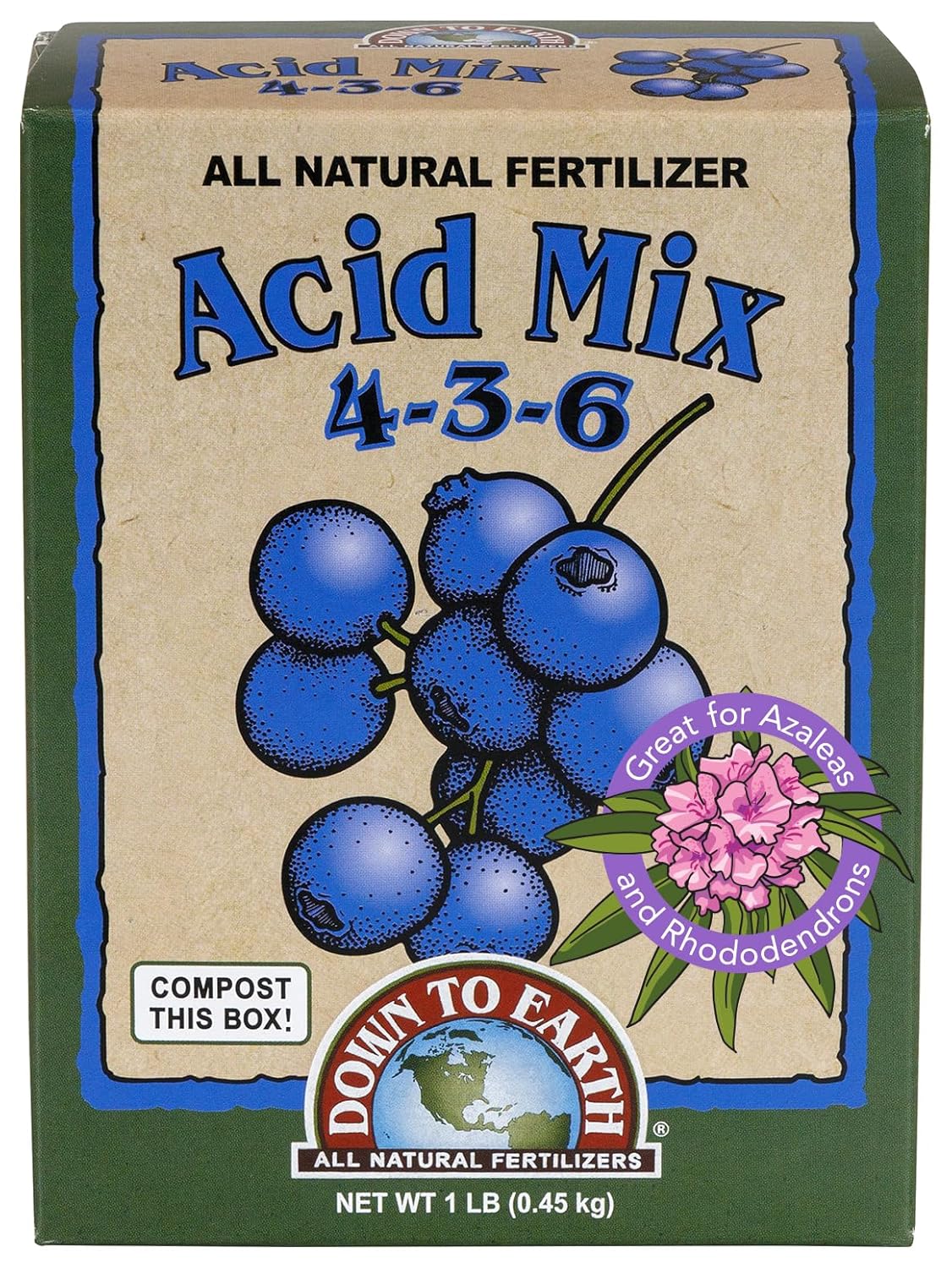
Down To Earth Acid Mix Organic Fertilizer 4-3-6, 1 lb
| Item Form | Granules |
|---|---|
| Specific Uses For Product | Acid-loving plants |
| Target Species | rhododendrons, azaleas, hydrangeas, evergreen trees and shrubs, blueberries, raspberries |
| Mixing Ratio | 4:3:6 |
Down To Earth Acid Mix is an organic granular fertilizer designed to feed acid-loving plants such as blueberries, azaleas, rhododendrons and other shrubs. You can broadcast it on the soil surface or mix it into planting holes, then water it in; the manufacturer recommends applications in early spring, at bloom and again in fall to support vegetative growth, flowering and root development. The 4-3-6 formula delivers a higher potassium ratio to help fruiting and overall plant vigor, while slow-release materials like feather meal, fish bone meal and kelp provide longer-lasting nutrition so you do not need to feed frequently. It is shelf stable and OMRI-listed ingredients support organic gardening practices. Limitations to note are the small 1 lb unit size, which means frequent repurchase for larger beds, and that this product is a fertilizer rather than a soil pH fixer so you will still need sulfur or lime to significantly change soil acidity. For gardeners feeding a few blueberry plants or refreshening planting holes, it is an effective, low-fuss organic option.
Best for: Gardeners with a few blueberry plants or small acid-loving beds who want an easy-to-use organic fertilizer and prefer low-maintenance, sustained feeding.
Less Ideal for: Large-scale blueberry plantings or growers who need to change soil pH significantly without using separate amendments.
- Formulated specifically for acid-loving plants including blueberries and azaleas
- Slow-release organic ingredients provide sustained feeding and reduce application frequency
- Can be applied on the soil surface or mixed into planting holes for flexible use
- OMRI-friendly ingredient sources support organic gardening practices
- Small 1 lb package limits coverage for larger beds or multiple bushes
Verdict: A compact, slow-release organic fertilizer tailored for small blueberry plantings and other acid-loving plants to provide steady, low-maintenance nutrition.
Choosing the Right Natural Fertilizer for Strawberries: Key Factors to Consider
Nutrient Balance and Timing
Strawberries need a steady supply of the right nutrients to set flowers and fill fruit without producing excessive foliage. A fertilizer that leans too heavily on nitrogen early in the season will encourage leaf growth at the expense of blooms. Look for natural fertilizers that provide usable phosphorus and potassium during bloom and fruiting, and that supply modest nitrogen levels to maintain plant vigor.
Timing matters because strawberries are shallow rooted and respond quickly to available nutrients. Slow-release organic sources or those that require light breakdown by soil organisms often provide a steadier feed across the flowering and fruiting window, reducing the risk of spikes that can stress crowns or alter flavor.
Soil Structure and Biological Health
A fertilizer that also contributes organic matter will improve soil structure, water retention, and long-term fertility-important in beds and containers where strawberries thrive. Ingredients such as composted manures, kelp, alfalfa meal, or compost add carbon and food for microbes that cycle nutrients to plant roots.
Healthy soil biology helps buffer nutrient availability so plants get a more consistent supply over the season. For gardeners aiming at flavor and yield, choose fertilizers that support microbial life rather than only supplying soluble salts, since those can disrupt microbial balance and soil aggregation.
Release Profile and Longevity
Different natural fertilizers break down at different rates. Fast-acting liquid or water-extractable products show results quickly but may need more frequent reapplication. Granular organics and high-quality composts release nutrients more slowly as microbes decompose them, offering longer coverage with fewer feeds.
Consider how often you want to feed and whether you can irrigate promptly after application. In containers, faster-release formulas can be useful when combined with regular watering, while in beds, a slow-release granular or sidedress approach often works better for season-long fruiting.
Application Method and Practicality
Ease of use matters for backyard growers. Some fertilizers are simple to sprinkle around crowns, others are designed as foliar feeds, and some are best worked into soil before planting. Choose a form that fits your garden routine and planting style: powders and pellets are convenient for quick sidedressing, while liquid concentrates need dilution but let you target feeding times precisely.
Also consider how the product interacts with mulch and irrigation. Mulches can slow nutrient movement to roots, so granular products may need closer placement to crowns. If you use drip irrigation, water-soluble or foliar options can be efficient for delivering nutrients with minimal waste.
Safety for Crowns and Roots
Strawberry crowns sit close to the soil surface and are vulnerable to burn from high-salt or high-nitrogen feeds. Natural fertilizers vary in salt index and concentration, so selecting products and rates that avoid crown contact and root scorch is important. When applying, keep materials slightly to the side of crowns and water in gently unless the product is a foliar spray.
Also factor in seedling and transplant sensitivity. Newly planted strawberries tolerate only light feeding until roots establish. A conservative approach in year one will protect crowns and support healthy long-term production.
Compatibility with Organic Practices
If you follow an organic regimen, confirm that the fertilizer's ingredients align with your standards. Some natural-labeled products still contain processed extracts or additives that may not be acceptable in certified organic systems. Look for clear ingredient lists and, when needed, third-party organic certification.
Compatibility also includes interactions with other soil amendments such as lime, sulfur, or pest control products. Some organic fertilizers work best when combined with compost teas or microbial inoculants; others are effective alone. Plan feeds around other cultural practices like soil tests and pH adjustments.
When to Feed Strawberries During the Season
Timing feeds to strawberry growth stages improves fruit set and reduces excess foliage. Apply a light pre-plant soil amendment or worked-in compost in early spring before growth resumes to give plants a slow baseline of nutrients.
Use a targeted feed at first flower to support bloom development and again during peak fruiting as needed. Avoid heavy late-season nitrogen applications that push late vegetative growth and reduce crown hardening for winter. In containers, shorter feeding intervals are often necessary because pots lose nutrients more quickly.
- Pre-plant: incorporate compost or balanced granular organics.
- First bloom: apply phosphorus- and potassium-friendly feeds.
- Midseason: light sidedress if plants show deficiency signs.
- Late season: cut back high-nitrogen feeds to prepare crowns for dormancy.
Feeding Strawberries in Containers Versus In-Ground Beds
Containers have shallower root zones and tighter nutrient cycles, so they often need smaller, more frequent feeds. Use soluble organics or diluted liquid feeds for quicker uptake and monitor runoff and salt buildup.
In-ground beds buffer nutrients better and benefit more from one or two season-long applications of compost or granular organic fertilizer. Mulched beds will retain moisture and nutrients, but placing amendments close to roots and shallowly incorporating them improves efficiency.
- Containers: feed every 2 to 4 weeks during active growth with diluted formulas.
- Beds: apply compost or a slow-release organic once in spring and sidedress if necessary.
- Always avoid direct contact with crowns when applying any fertilizer.
Simple Soil Tests and Reading Plant Signals
A soil test is the most reliable way to tailor fertilization. Test for pH and the major nutrients before making major changes. Strawberries prefer slightly acidic soil, and pH adjustments alter nutrient availability.
Absent tests, observe plants: pale leaves or reduced vigor can indicate nitrogen shortage, while poor flowering may point to low phosphorus. Excessive tall, lush foliage often signals too much nitrogen. Also watch fruit flavor and size; consistent small or bland berries are a sign to re-evaluate nutrient supply and soil health.
- Test soil pH and basic N-P-K before planting.
- Use foliar color and bloom counts as field indicators between tests.
- Check for salt buildup in containers by monitoring runoff conductivity or leaf scorch.
Using Compost and Organic Matter Effectively
Compost is the backbone of a sustainable strawberry fertilizer plan. Well-aged compost supplies a broad spectrum of nutrients and improves moisture retention. Apply a thin layer as mulch and work a modest amount into the topsoil when preparing beds.
Avoid over-applying fresh manure or uncomposted materials, which can burn crowns or introduce pathogens. Combine compost with targeted amendments-like kelp for micronutrients or bone meal for phosphorus-when tests show specific deficiencies.
- Topdress beds with 1 to 2 inches of finished compost in early spring.
- Keep fresh manures away from crowns and avoid heavy applications close to harvest.
- Supplement compost with specific amendments only when a deficiency is identified.
Environmental Considerations and Neighboring Plants
Think about runoff and the proximity of strawberries to water sources. Natural fertilizers reduce synthetic runoff risk, but concentrated applications can still leach nutrients. Use appropriate rates and avoid heavy feeding before heavy rain.
Also consider companion plants and rotation. Some fertilizers benefit following crops and soil microbes differently; choose amendments that fit your broader vegetable or fruiting plan to maintain balanced soil over several seasons.
- Avoid heavy applications before forecasted rain to reduce leaching.
- Rotate planting sites where possible to prevent disease and nutrient depletion.
- Select amendments that support the overall garden ecosystem, not just single-season production.
How We Chose the Best Natural Fertilizer for Strawberries
We prioritized fertilizers that support fruit production while building or preserving soil biology appropriate for strawberries. Key evaluation criteria included nutrient balance and timing, measured by whether the product supplies the right ratios of nitrogen, phosphorus, and potassium at strawberry-friendly levels; soil health impact, focusing on organic matter contribution and support for beneficial microbes; application practicality, assessing whether gardeners can apply it easily in beds, rows, or containers; release profile, preferring formulas that avoid rapid nitrogen spikes that favor leafy growth over fruit; plant safety, looking for products and rates that reduce burn risk and are safe around shallow-rooted strawberry crowns; and provenance and labeling clarity, ensuring ingredients and guaranteed analysis are transparent. We excluded synthetic-only fertilizers and any products with unclear ingredient lists or risky salt indices. We also filtered out amendments that only supply one micro-ingredient without addressing the primary needs of fruiting strawberries. The final short list balances immediate nutrient needs for fruit set with longer-term soil building and ease of use for home gardeners.
FAQ
How often should I feed strawberries with a natural fertilizer?
It depends on the product form and planting method. In-ground beds often perform well with a spring application and a possible light sidedress at first bloom. Containers usually need smaller, more frequent feeds every 2 to 4 weeks during active growth.
Can I use compost alone as a fertilizer for strawberries?
Compost can supply a broad base of nutrients and improve soil structure, but it may not provide sufficient phosphorus or potassium for peak fruiting in every garden. Complement compost with targeted amendments if soil tests indicate specific shortfalls.
Are liquid organic feeds better than granular organics for strawberries?
Each has advantages. Liquids act faster and suit containers or quick corrections, while granular organics and compost release nutrients slowly and provide longer-term soil-building benefits. Choose based on how quickly you need results and how often you can apply.
Will natural fertilizers attract pests to my strawberry patch?
Some high-organic amendments, like fresh manures or sugary extracts, can attract pests if left on the surface. Well-composted materials and properly applied granular or liquid organics are less likely to cause pest issues. Keep materials away from crowns and clean up spilled granules.
How do I avoid burning crowns when applying fertilizer?
Avoid placing high-concentration materials directly on the crown. Keep granular and powdered fertilizers slightly to the side and water them in gently. Use lower rates for newly planted strawberries and favor slow-release or compost-based options to reduce burn risk.
Final Verdict
Choosing the right natural fertilizer for strawberries comes down to matching nutrient timing, soil-building benefits, and application practicality to your planting situation. Prioritize products that supply balanced nutrients for bloom and fruit while contributing organic matter and supporting soil biology. Consider container needs separately from in-ground beds and avoid high immediate nitrogen at critical fruiting stages. Focus on steady, moderate feeding and building long-term soil health rather than chasing quick greening. That approach produces better yields, richer flavor, and a strawberry patch that performs year after year.
