

Note: This article contains affiliate links. If you click on these links and make a purchase, I may earn a small commission at no extra cost to you. This helps support my research and content. Read my full affiliate disclosure here.
If you want stronger roots, bigger blooms, and soils that stay healthy season after season, choosing the right natural potash fertilizer matters. Potash supplies potassium, a key nutrient that helps plants move water and sugars, improves drought tolerance, and supports flowering and fruit set. But not every potassium source behaves the same in a garden setting. This guide covers seven top natural potash fertilizer options ideal for a range of garden uses, from container plants and vegetable beds to established trees. We shortlisted products that offer reliable potassium content, low salt impact, and practical application methods. Below you will find the criteria we used to evaluate them and clear guidance to match a potash source to your soil and plants.
Top Picks at a Glance
| Best Overall The best all-around choice for most situations | Espoma Potash 0-0-60 Granular Potassium Fertilizer, 6 lb |  |
| Best Quality Built to a higher standard if you want something more solid | Cz Garden Supply Organic Sulfate of Potash (0-0-50), Water Soluble 3 lb |  |
| Best Value The sweet spot between price and what you get | Supply Solutions Muriate of Potash (0-0-60) Granular Potassium Fertilizer, 50 lb |  |
| Best Budget The cheapest option that still gets the job done reliably | OULLYY Muriate of Potash (60% Potassium) Granular Fertilizer, 1.9 lb |  |
| Highest Rated A top-rated pick with lots of positive feedback | My Garden Pool Potash 0-0-60 Granular Potassium Fertilizer 6 lb (bundle with pH Strips, Gloves, Garden-IQ) |  |
| Most Popular A crowd favorite that many people choose with confidence | Cz Garden Muriate of Potash (0-0-60) Potassium Fertilizer, Granules, Resealable Pouch |  |
| Best Seller A high-volume bestseller chosen again and again | Easy Peasy All-Natural Muriate of Potash (0-0-60) Granular Potassium Fertilizer |  |
Espoma Potash 0-0-60 Granular Potassium Fertilizer, 6 lb

| Analysis | 0-0-60 |
|---|---|
| Item Form | Granules |
| Application Method | Granular |
| Unit Count | 96 Ounce |
This granular potash supplies a concentrated potassium boost (analysis 0-0-60) intended to improve plant vigor and help disease resistance for a wide range of garden plants. It is typically applied by sprinkling around the drip line of trees, shrubs, flowers or vegetables and then watered in; the product is ready to use and requires no mixing. The 6 pound resealable bag makes it convenient for small- to medium-size gardens and spot applications, and the high potassium content means you need less product to raise soil potassium than lower-analysis mixes. Because it is a single-nutrient amendment, it is best used when a soil test or plant symptoms show a potassium deficiency rather than as a general all-purpose fertilizer. Also, it does not supply nitrogen or phosphorus, so plan to pair it with a balanced feed when other nutrients are needed. For gardeners seeking a simple, concentrated natural-source potassium supplement, this is an easy-to-use option with straightforward application.
Best for: Gardeners who want a simple, reliable potassium supplement to correct or prevent K deficiencies and prefer straightforward, low-risk application methods.
Less Ideal for: Gardeners looking for an all-in-one balanced fertilizer or those managing large-scale lawns or commercial plantings where bulk or multi-nutrient feeds are required.
- High potassium concentration (0-0-60) delivers a strong, targeted potash dose
- Granular, ready-to-use form requires no mixing and is easy to apply
- Resealable 6 lb bag is convenient for small to medium garden use and storage
- Promotes vigor and disease resistance in trees, shrubs, vegetables and flowers
- Supplies only potassium and does not address nitrogen or phosphorus needs
- Not suitable as a complete fertilizer for routine feeding without additional products
Verdict: Choose this granular potash if you need a concentrated, easy-to-apply potassium supplement to correct deficiencies and boost plant vigor.
Cz Garden Supply Organic Sulfate of Potash (0-0-50), Water Soluble 3 lb

| Item Form | Powder |
|---|---|
| Specific Uses For Product | Hydroponics, Organic Gardening, Plant Growth, Root Development, Seed Development |
| Application Method | Water Soluble |
| Target Species | plants and flowers |
This Cz Garden Supply Sulfate of Potash is a concentrated, water-soluble potassium fertilizer intended to correct potassium deficiencies and promote stronger stems, fuller blooms, and improved fruit quality. Sold in a resealable 3 lb pouch, the fine pH-neutral powder dissolves for use in hydroponic reservoirs, fertigation, drip lines, foliar sprays, or hand-mixed soil drenches. Notable features include OMRI listing for organic production, low chlorine content (under 0.5%), and a high 0-0-50 potassium formulation that supplies potassium and sulfur without added nitrogen. In practice it is useful as a focused potassium boost during fruiting and blooming stages or when leaf margins show potassium deficiency. Practical benefits are efficient uptake when dissolved, reduced risk of chloride-sensitive burn, and flexible application methods for greenhouse or outdoor beds. Limitations are that it supplies only potassium and sulfur so it must be combined with a balanced N-P-K plan, and concentrated dosing requires care to avoid overapplication in small containers or young plants.
Best for: Gardeners and growers who prioritize consistent, certified organic potassium supplementation for flowering and fruiting stages and who want a product that fits into greenhouse, hydroponic, or field routines.
Less Ideal for: Beginners seeking an all-in-one fertilizer or growers who need complete N-P-K feedings without mixing separate products.
- OMRI listed for use in organic production
- High 0-0-50 potassium concentration for effective bloom and fruit support
- Water-soluble, pH-neutral powder suitable for hydroponics, fertigation, and foliar use
- Low chlorine content reduces risk to chloride-sensitive crops
- Resealable pouch keeps product dry and easy to store
- Provides only potassium and sulfur so additional nutrients are required for balanced fertilization
- Concentrated formula demands careful measuring to avoid overfeeding
Verdict: Choose this OMRI-listed, low-chlorine sulfate of potash when you need a reliable, high-strength potassium boost for blooms and fruiting.
Supply Solutions Muriate of Potash (0-0-60) Granular Potassium Fertilizer, 50 lb

| Item Form | Granules |
|---|---|
| Coverage | 1000 square feet |
| Mixing Ratio | 0:0:1 |
| Unit Count | 800 Ounce |
This granular muriate of potash (0-0-60) supplies a concentrated dose of potassium to strengthen plant stems, improve drought tolerance and support flowering and tuber development. Typical use is as a soil amendment applied according to soil test results or the recommended coverage — it is intended to correct potassium deficiencies rather than serve as an all-in-one fertilizer. The product is packaged as granules that are easy to broadcast or incorporate into the soil and the label lists coverage suited to garden-scale areas. For growers of Irish potatoes, the high potassium content can enhance tuber set and starch development when applied at the correct time in the growing cycle. Important limitations are that it contains only potassium so you must plan complementary nitrogen and phosphorus applications and watch rates to avoid over-fertilization or salt buildup. This is a straightforward, reliable source of potash for gardeners who monitor soil nutrients and want to supply targeted potassium to crops or ornamentals.
Best for: Gardeners and small-scale potato growers who prioritize consistent, test-driven nutrient management and need a dependable source of potassium to support tuber quality and stress resilience.
Less Ideal for: Those seeking an all-purpose or complete NPK fertilizer or beginners who prefer premixed blends that require no additional nutrient planning.
- Very high potassium analysis (0-0-60) for correcting deficiencies and supporting tuber development
- Granular form is easy to broadcast or incorporate into seedbeds and potato hills
- Designed coverage information suitable for garden-scale applications
- Helps improve drought tolerance and stem strength when used as directed
- Contains only potassium so additional N and P must be applied separately
- Risk of over-application or salt buildup if soil tests or rates are ignored
Verdict: Buy this if you want a reliable, high-concentration potassium source to correct deficiencies and improve potato tuber development when used with a proper fertility plan.
OULLYY Muriate of Potash (60% Potassium) Granular Fertilizer, 1.9 lb

| Form | Granules |
|---|---|
| Potassium content | 60% |
| Coverage | ½ lb per 100 sq. ft. |
| Unit count | 30.4 Ounce |
| Mixing ratio | 1:0:0 |
This granular muriate of potash supplies a high concentration of potassium (60%) intended for soil application to support flowering, fruiting, and overall plant vigor. It is sprinkled into the top 4 to 8 inches of soil at the recommended rate (about 0.5 lb per 100 sq ft) and watered in, typically applied a couple of weeks before harvest or during key fruiting stages. The product is simple to use and effective where potassium deficiency is the issue because a little goes a long way thanks to the concentration. Important safety notes: it should not contact leaves or roots directly and is not recommended for container plants. For gardeners on a budget, the small 1.9 pound bag is convenient for spot treatments or small beds, but frequent or large-area applications will require buying multiple bags. If you need a balanced N-P-K or an organic potassium source, this single-nutrient, inorganic option will not provide that, so plan to use it alongside other fertilizers as needed.
Best for: Gardeners who need an inexpensive, concentrated potassium source to correct or prevent potassium deficiency in beds or field-grown crops and who prioritize low upfront cost per treatment.
Less Ideal for: People who want an all-in-one or organic fertilizer solution or who primarily grow in containers or small pots should consider different products tailored to those needs.
- High potassium concentration (60%) delivers strong potassium boost with small application amounts
- Granular form is easy to apply into soil and water in
- Clear application rate provided for straightforward dosing (0.5 lb per 100 sq ft)
- Not suitable for container plants and can damage foliage or roots if contacted directly
- Single-nutrient inorganic fertilizer so it does not supply nitrogen or phosphorus
- Small 1.9 lb bag may be insufficient for larger gardens without repeat purchases
Verdict: A low-cost, high-strength potassium fertilizer for gardeners who need a targeted potassium boost in garden beds or field crops.
My Garden Pool Potash 0-0-60 Granular Potassium Fertilizer 6 lb (bundle with pH Strips, Gloves, Garden-IQ)

| Item Form | Granules |
|---|---|
| Specific Uses For Product | Vegetable gardening |
| Application Method | Granular |
| Target Species | Vegetables |
| Unit Count | 96 Ounce |
This bundle centers on a ready-to-use granular potash (0-0-60) designed to correct low soil potassium and strengthen stems, roots, and overall plant vigor for vegetables and ornamental plantings. Apply by broadcasting the granules around established plants or in planting holes according to a soil test; the included pH strips help you check soil conditions before treating. The product is handy for raised beds, containers, and landscape beds because the granular form spreads easily without mixing. The additions of claw gloves and a soil test kit make it practical for routine garden maintenance, while the Garden-IQ tips help gardeners time applications and care tasks. Limitations to note are that this is a single-nutrient product so it will not supply nitrogen or phosphorus, and careful dosing is important because of the high potassium concentration. For gardeners seeking a straightforward way to raise potassium based on test results, this bundle simplifies the process but should be used as part of a balanced fertility plan.
Best for: Gardeners who prioritize reliable, test-driven nutrient corrections and want a simple, no-mix potassium source with useful accessories for routine garden maintenance.
Less Ideal for: People looking for an all-in-one complete fertilizer or those who prefer liquid feeds or slow-release multi-nutrient formulas.
- High concentration of potassium (0-0-60) for quickly correcting low soil K levels.
- Granular ready-to-use form that is easy to broadcast without mixing.
- Includes pH test strips to verify soil needs before application.
- Bundle includes gardening gloves and a digital assistant to support routine care.
- Provides only potassium so additional fertilizers are needed for N and P balance.
- Requires accurate soil testing and careful application due to its concentrated formula.
Verdict: Use this concentrated granular potash bundle when you need a dependable, test-guided potassium boost to strengthen vegetable and ornamental plantings.
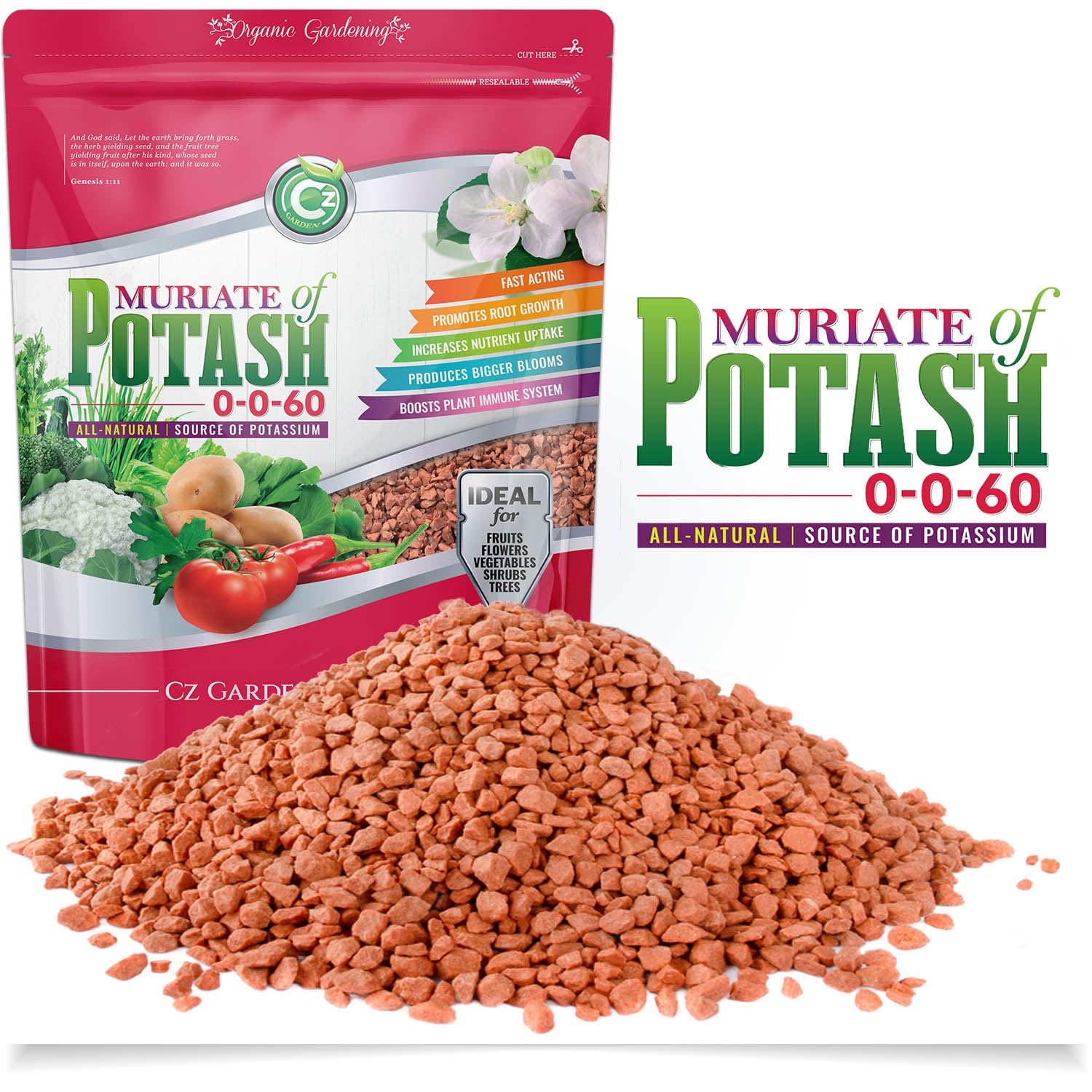
Cz Garden Muriate of Potash (0-0-60) Potassium Fertilizer, Granules, Resealable Pouch
| Item Form | Granules |
|---|---|
| Specific Uses For Product | Plant Food |
| Coverage | Resealable |
| Mixing Ratio | 0-0-60 |
| Unit Count | 80 Ounce |
This Cz Garden Muriate of Potash is a straight potassium source (0-0-60) sold as water-soluble granules in a resealable pouch. It is used as a supplemental feed when crops need a strong potassium boost to improve tuber development, fruiting, and stress tolerance. For Irish potatoes growers it is typically applied as a sidedress or soil amendment according to recommended rates, supplying potassium to support starch formation and overall tuber quality. Notable features include its high concentration, water solubility for easy mixing, and consumer-friendly resealable packaging for repeated small applications. Practical benefits are focused potassium delivery without added nitrogen or phosphorus, which helps correct K deficiencies without upsetting N:P balance, and straightforward handling when following safety guidance. Important limitations are that it is a single-nutrient product so it should be used alongside a balanced fertilizer program and soil test results; incorrect rates can harm plants or soil salinity, and users must wear gloves and eyewear to avoid irritation.
Best for: Buyers who prioritize proven, concentrated potassium for improving potato tuber size and quality and who will follow soil test guidance and application rates.
Less Ideal for: Gardeners seeking an all-in-one fertilizer or those unwilling to test soil or manage application rates should consider multi-nutrient blends or complete fertilizers instead.
- High potassium concentration (0-0-60) delivers a strong, targeted K boost.
- Water-soluble granules that mix easily for sidedressing or foliar solutions.
- Resealable pouch for convenient storage and repeated small applications.
- Made in the USA, produced for consistent ingredient sourcing.
- Single-nutrient product so it cannot replace a balanced complete fertilizer.
- Can increase soil salinity if overapplied or used without monitoring soil tests.
Verdict: Use this high-strength potassium concentrate when your potatoes need a direct, tested K boost to improve tuber size and quality.
Easy Peasy All-Natural Muriate of Potash (0-0-60) Granular Potassium Fertilizer

| Item Form | Granules |
|---|---|
| Specific Uses For Product | Plant Food,Plant Growth |
| Coverage | Full |
| Target Species | most plants, trees, gardens, and turf |
| Mixing Ratio | 1:0:0 |
This Easy Peasy muriate of potash is a straightforward, high-potassium granular fertilizer with a 0-0-60 analysis designed to boost root strength, fruit set, and overall plant vigor where potassium is the limiting nutrient. It is typically applied by broadcasting the granules over soil in gardens, lawns, or around trees and watering them in, or following label rates for potted plants. Notable features include a single-nutrient formulation that makes it easy to target potassium deficiencies without adding nitrogen or phosphorus and a granular form that is simple to store and spread. Practical benefits are clearer fruit and tuber development for vegetables, improved stalk strength for ornamentals, and a predictable input when you need to raise soil potassium quickly. Important limitations are that it only supplies potassium so it must be used alongside a balanced fertility plan and that handling requires care because the product is concentrated and labeled as harmful if ingested or contacted with eyes. This product is best used by gardeners who have identified a potassium need and want a focused, easy-to-apply solution.
Best for: Gardeners who have confirmed low potassium or want a targeted potassium boost for fruiting vegetables, tubers, lawns, or trees and who value straightforward, single-ingredient inputs backed by customer experience.
Less Ideal for: Beginner gardeners seeking an all-in-one fertilizer or anyone who prefers liquid feeds or slow-release multi-nutrient formulas for routine maintenance.
- High potassium concentration (0-0-60) lets you correct K deficiencies without adding other nutrients
- Granular form is easy to spread and store for seasonal applications
- Labeled for use on a wide range of plants, including lawns, trees, vegetables, and potted plants
- Single-nutrient product requires pairing with other fertilizers for balanced feeding
Verdict: Buy this if you need a simple, high-strength potassium fertilizer to quickly correct K deficiencies and improve fruiting and root development.
Choosing the Right Natural Potash Fertilizer: Key Factors to Consider
Potash Concentration and Release Profile
Potassium concentration determines how much material you need to supply recommended rates. High-concentration sources deliver more potassium per pound, which can be useful for limited storage space or heavy feeders.
Release profile matters because fast-soluble potash will produce a rapid response but can spike soil salts, while slow-release sources provide a steadier supply over weeks or months. Consider the crop: a quick boost helps flowering or fruit set, whereas maintenance feeding for perennials benefits from a gentler release.
Salt Level and Chloride Content
Many potassium sources carry salts that increase a soil's electrical conductivity and can harm roots, especially in containers, raised beds, or sandy soils. Chloride in particular can be detrimental to chloride-sensitive crops like some fruits, vegetables, and ornamentals.
If you grow in containers or irrigate with low-quality water, prioritize low-salt, chloride-free options. In established in-ground beds with good drainage, moderate salt levels may be tolerated, but watch for leaf margin burn and reduced germination in seedlings.
Application Method and Timing
Different potash fertilizers suit different application methods: broadcast, side-dress, top-dress, soil incorporation, or foliar feed. Granular, slow-release materials are easier to broadcast and mix into soil, while soluble powders or crude ashes can be made into liquid feeds for quick uptake.
Timing is crucial. Apply most potassium treatments during active root growth, before bloom, or at early fruit set to support sugar translocation. Avoid heavy late-season applications on woody plants that could delay hardening off before frost.
Compatibility With Soil Biology and Organic Practices
Natural potash choices vary in how they interact with soil life. Materials that supply potassium along with trace minerals and organic matter can feed microbes and improve long-term soil structure. Some raw sources are allowed under organic standards, which matters for certified gardeners and those aiming for low-input fertility.
If you maintain a living soil or use compost-tea programs, choose potash sources that do not inhibit beneficial organisms. Also consider whether the product can be blended with compost, mulches, or other amendments without causing nutrient lockups.
Handling, Storage, and Safety
Ease of handling affects how readily you will apply the fertilizer. Fine dusty materials can be messy and require respiratory protection, while coarse granules are simpler to spread. Some natural potash sources may be alkaline or caustic and need gloves for safe handling.
Storage stability is also important. Hygroscopic or clumping products can be hard to measure and may attract moisture in humid climates. Look for packaging and form factors that suit your storage space and safety preferences.
Crop Specific Needs and Sensitivities
Different plants have different potassium demands and sensitivities to salt and chloride. Root crops, leafy greens, and container ornamentals often respond differently to the same application rate. Fruiting crops and bulbs usually benefit from potassium during flowering and fruit set, while newly seeded lawns and seedlings can be harmed by high salt doses.
Match the potash choice to the crop. If you manage a mixed garden, favor moderate-release, low-salt options that are broadly safe, or plan targeted applications to high-demand beds while protecting seedlings and salt-sensitive species.
How Natural Potash Works in Garden Soils
Potash supplies the potassium ions plants use to move water and sugars, regulate stomata, and build tissues that resist stress. In soils, potassium exists in mineral forms, adsorbed to clay and organic particles, or dissolved in soil water where roots can take it up.
Natural potash sources differ in solubility. Some release potassium quickly into the soil solution, offering a fast response, while others weather slowly and act more like a multi-season amendment. Understanding how the material releases potassium helps you match it to plant timing and irrigation practices.
- Soluble sources work well as a foliar or liquid feed for quick needs.
- Slow-release mineral sources reduce the risk of salt shock and supply extended nutrition.
- Soil texture influences availability: sandy soils may need more frequent, smaller applications.
Matching Potash to Garden Types
Container gardens and raised beds are more sensitive to salts and require low-chloride, low-salt potash sources or diluted liquid feeds. Frequent watering and limited soil volume can concentrate salts quickly, so choose forms that allow precise dosing.
For large in-ground beds, orchard borders, or established landscape trees, heavier materials and slower-release options are often acceptable. These settings tolerate a broader range of sources because root systems are extensive and there is more buffering by native soil.
- Containers: low-salt, water-soluble or foliar-applied potassium.
- Vegetable beds: balanced options timed before flowering and fruit set.
- Trees and shrubs: deeper, slow-release applications that avoid surface salt buildup.
Integrating Potash With Compost and Organic Amendments
Natural potash can complement compost by supplying a focused dose of potassium while compost provides nitrogen, organic matter, and beneficial microbes. When mixing, account for the release rate of the potash source so that nutrients become available in the same window plants need them.
If you use cover crops or green manures, plan potash applications to follow green matter decomposition. Incorporating potash at the same time as tilling in amendments helps distribute the nutrient through the rooting zone.
- Top-dress and lightly fork in potash products when adding compost to vegetable beds.
- Avoid high-salt potash on newly applied manures or immature compost that already concentrate soluble salts.
Application Tips and Common Mistakes
Measure carefully. Over-application is a common error that leads to salt stress and poor germination. Use soil test results or recommended rates for the crop and soil type as your baseline and apply proportionally across the bed.
Water after application for granular and powdered potash to move potassium into the root zone, but do not flood. For foliar sprays, use recommended dilutions and apply at cooler times of day to reduce leaf burn risk.
- Test soil before large-scale potash use to confirm potassium deficiency.
- Split applications for heavy feeders to reduce salt buildup.
- Avoid applying high rates to newly sown seedbeds or recently transplanted seedlings.
Environmental and Safety Considerations
Natural potash products vary in their environmental footprint. Sourced mineral potash can be low-impact in terms of application but may come with mining-associated concerns. Plant- and ash-based materials recycle nutrients but can vary in consistency and potential contaminants.
Consider runoff risk in sloped beds and near water features. Even natural potassium can change water chemistry if carried into ponds or streams. Store materials dry and out of reach of children and pets, and wear gloves and a mask when handling dusty amendments.
- Avoid applying near storm drains or watercourses.
- Follow local guidelines for spreading materials that may contain alkaline ash.
How We Chose the Best Natural Potash Fertilizer
We focused on attributes that matter in real gardens when selecting natural potash fertilizers. First, we evaluated potash concentration and solubility to judge how readily potassium becomes available to plants and whether the product suits foliar, soil drench, or soil incorporation use. Second, we assessed salt index and chloride content because high salts can stress roots, especially in containers and compacted soils. Third, we looked at application flexibility and ease of use, including granule size, compatibility with compost, and whether the product can be used in organic systems. Fourth, persistence and release profile were considered so gardeners know if the potassium is quick-acting or slow-release. Finally, we examined source sustainability and handling safety, favoring materials that integrate well into organic fertility plans and avoid toxic contaminants. We excluded synthetic, high-chloride potassium salts and materials unsuitable for edible gardens or container culture. Listings that lacked clear composition data or had obvious contamination risks were omitted. The result is a set of natural potash fertilizer choices that balance plant response, salt management, and real-world application needs.
FAQ
How can I tell if my garden needs potash?
Soil testing is the most reliable method to detect potassium deficiency. Visual signs include weak stems, poor fruit development, and marginal leaf scorch on some species, but these can also indicate other problems. Use a test and consider crop history before applying potash.
Is wood ash a good source of potassium for my vegetable beds?
Wood ash can supply potassium and small amounts of other minerals, but it is alkaline and can raise soil pH. Use it sparingly, avoid applying to acid-loving plants, and do not use it on newly seeded beds where salts could harm germination.
Can I use natural potash on potted plants?
Yes, but select low-salt, chloride-free sources and apply at reduced rates. Containers have limited buffering capacity, so dilute liquid feeds or small, frequent applications of mild granular sources are safer for potted plants.
When is the best time to apply potash?
Apply potassium during periods of active root growth and before or during flowering and fruit set for best results. For maintenance, a lighter application in spring and another midseason for heavy feeders can be effective.
Will adding potash correct other nutrient problems?
Potassium addresses specific physiological needs and will not correct deficiencies of nitrogen, phosphorus, or micronutrients. Balanced fertility and soil biology management are necessary to avoid shifting limitations to other nutrients.
How should I store natural potash fertilizers?
Keep products dry and in sealed containers to prevent clumping and moisture uptake. Store away from children, pets, and foodstuffs. For dusty or caustic materials, use gloves and a mask when moving or measuring.
Final Verdict
Choose a natural potash fertilizer by balancing potassium concentration, salt risk, and how you plan to apply it. Low-salt, chloride-free sources are safest for containers and sensitive crops, while slower-release mineral or bulk options work well for in-ground beds and trees. Match the release profile to plant timing and always base applications on soil tests when possible. Prioritize safety, storage, and compatibility with your compost and organic practices. With the right potash choice and sensible application, you can support stronger roots, better drought tolerance, and more reliable flowering and fruiting across your garden.
