

Note: This article contains affiliate links. If you click on these links and make a purchase, I may earn a small commission at no extra cost to you. This helps support my research and content. Read my full affiliate disclosure here.
Choosing the right natural soil fertilizer changes how your garden grows and how the soil behaves season after season. The right product feeds plants while restoring microbial life, improving structure, and retaining moisture so you spend less time rescuing stressed plants and more time harvesting. This guide covers seven shortlisted, top-rated natural soil fertilizers suited to garden beds, containers, and established lawns. We evaluated each option on nutrient composition, soil-building impact, ease of application, and long-term benefits so you can pick an approach that fits your growing style and goals.
Top Picks at a Glance
| Best Overall The best all-around choice for most situations | Wiggle Worm Pure Worm Castings Organic Fertilizer, 30 lb |  |
| Best Quality Built to a higher standard if you want something more solid | Brut Organic Worm Castings, 5 lb |  |
| Best Value The sweet spot between price and what you get | True Organic Worm Castings Natural Fertilizer, 64 oz |  |
| Best Budget The cheapest option that still gets the job done reliably | Back to the Roots 3-in-1 Seed Starting Mix, 6 Quart, Organic Peat-Free |  |
| Highest Rated A top-rated pick with lots of positive feedback | Herrdemia Rhizophagus irregularis Mycorrhizal Fungi Granules, 4 oz |  |
| Most Popular A crowd favorite that many people choose with confidence | Miracle-Gro Organic Outdoor Potting Mix, 16 qt. |  |
| Best Seller A high-volume bestseller chosen again and again | TPS NUTRIENTS Indoor Plant Food Liquid Fertilizer, 8 fl oz |  |
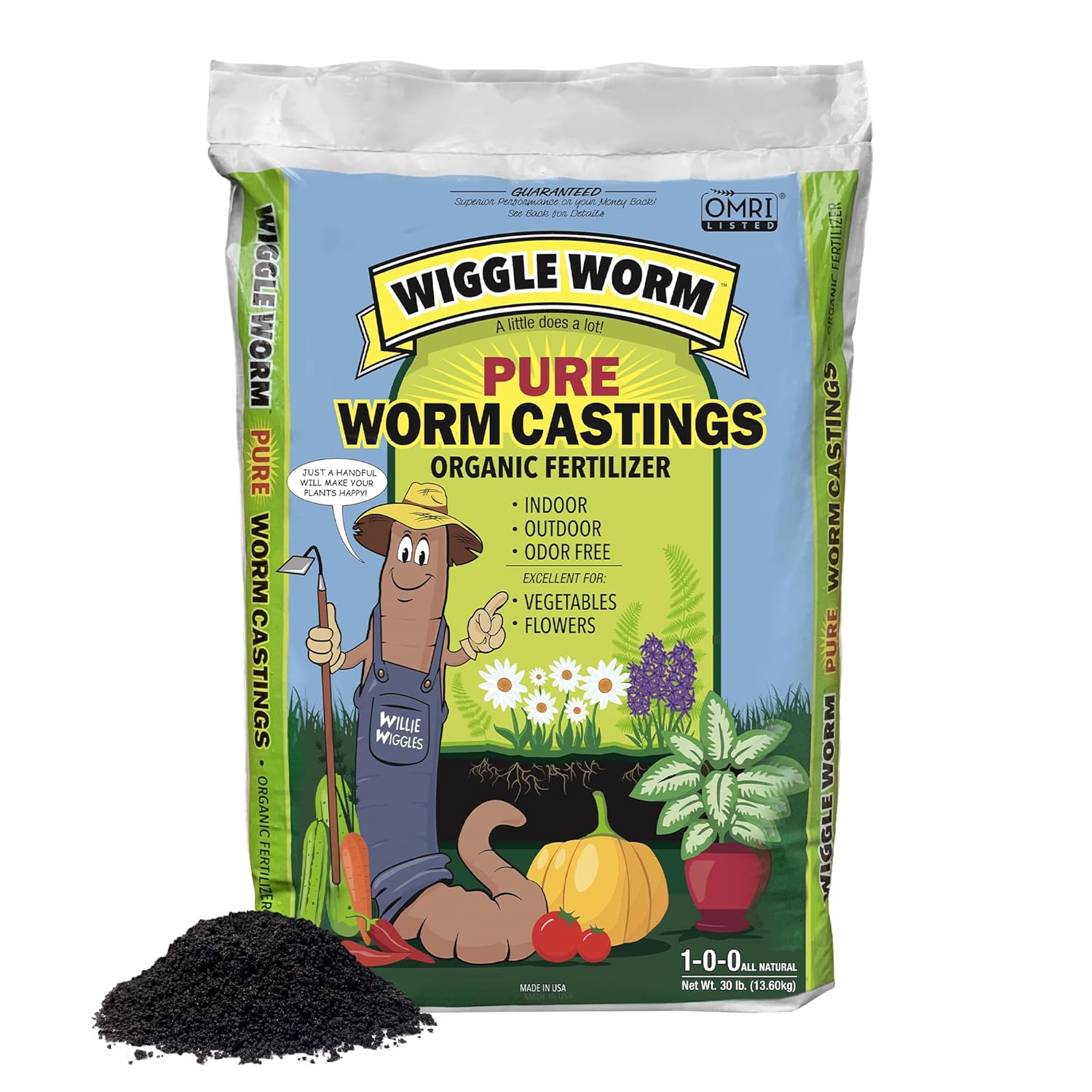
Wiggle Worm Pure Worm Castings Organic Fertilizer, 30 lb
| Item Form | Granules |
|---|---|
| Specific Uses For Product | Soil Conditioning |
| Application Method | Apply to soil |
| Unit Count | 480 Ounce |
Wiggle Worm Pure Worm Castings are a ready-to-use organic soil amendment made from concentrated earthworm castings. Gardeners typically mix a portion into potting mixes, top-dress established plants, work it into transplant holes, or brew it as a nutrient tea; the product page includes specific dosing for vegetables, containers, lawns, and roses. The castings are odorless, non-burning, and OMRI listed for organic use, so they supply water-soluble nutrients plus microbes that improve aeration, water retention, and root development without synthetic chemicals. Practical benefits include easy application, safe use on seedlings and mature plants, and versatility across raised beds, container gardens, and lawns. The main limitation is that this is a concentrated soil builder rather than an all-in-one fertilizer with NPK labels, so users seeking precise, fast-acting nutrient ratios may need to supplement for specific deficiencies; also a 30 lb bag is bulky to handle for small-space gardeners. For gardeners focused on long-term soil health and organic production, it functions as a low-risk, effective amendment.
Best for: Gardeners who prioritize building long-term soil health and want a safe, organic amendment for vegetables, ornamentals, and containers; buyers who value proven, low-risk inputs backed by strong user feedback.
Less Ideal for: Gardeners who need targeted, rapid nutrient correction based on precise NPK values or those who only want a lightweight product for very small balconies or indoor micro-gardens.
- OMRI listed organic and made from 100% worm castings
- Provides beneficial microbes that improve soil structure and water retention
- Odorless and non-burning so safe for seedlings and established plants
- Versatile dosing for containers, raised beds, lawns, and making worm casting tea
- No standard NPK nutrient label so not a precise standalone fertilizer for targeted feeding
- Large 30 lb bag can be heavy and awkward for gardeners with limited storage or mobility
Verdict: Choose this product when you want a proven, OMRI-listed worm casting that builds soil biology and improves plant health across beds and containers.
Brut Organic Worm Castings, 5 lb

| Item Form | Granules |
|---|---|
| Specific Uses For Product | Gardening,Organic |
| Target Species | All plants |
| Mixing Ratio | 1:5 |
Brut Organic Worm Castings function as a concentrated, natural soil amendment you mix into potting mixes or top-dress garden beds and raised beds. Typical use is mixing at the recommended 1:5 ratio for new indoor plants, sprinkling a cup around established houseplants, or working into outdoor planting holes and beds according to the brand directions. The product is OMRI/CDFA listed and produced in controlled conditions, which supports consistent nutrient content and beneficial microbial life that help roots establish, improve soil structure, and increase moisture retention without burning plants. Practical benefits for raised garden beds include improved aeration, slow-release nutrients, and a boost in microbial activity that supports long-term fertility. Limitations are that it is not a complete NPK fertilizer for immediate heavy feeding needs and larger beds require significant quantities to hit the suggested per-square-foot rates, so frequent applications or bulk purchases may be needed for big projects.
Best for: Gardeners who prioritize dependable, organic soil improvement for raised beds and container gardens and prefer predictable, low-risk amendments that support long-term soil health.
Less Ideal for: Those needing immediate, high-NPK feeding for heavy-feeding crops or gardeners who want to amend very large beds without buying supplemental bulk material.
- Certified organic and produced indoors for consistent purity
- Rich in beneficial microbes that improve soil structure and plant vigor
- Easy-to-use granular form suitable for mixing or top-dressing
- Not a standalone high-NPK fertilizer for rapid nutrient correction
- Five-pound bag may be small for large raised beds and repeated seasonal use
Verdict: Use this OMRI/CDFA-listed worm castings product to reliably build long-term fertility and microbial health in raised beds and containers.
True Organic Worm Castings Natural Fertilizer, 64 oz

| Unit Count | 64 Ounce |
|---|---|
| Item Form | Granules |
| Application Method | Mix into soil, use for seeding and transplants |
| Specific Uses For Product | Agriculture, Gardening, Root Development, Seed Development |
| Included Components | 100% Made in the USA with Organic Inputs |
True Organic Worm Castings is a straightforward, all-natural soil amendment for gardeners who want healthier soil biology without synthetic inputs. The product is sold as granular worm castings that you mix into potting mixes, garden beds, or use when seeding and transplanting. Its key benefits are increased microbial activity and improved soil structure, which help with aeration and moisture retention and support stronger root development. With 1% total nitrogen and 0.95% slow-release nitrogen it provides a gentle, steady nutrient boost rather than a quick, foliar-style feed. Practical uses include blending into vegetable beds, top-dressing established containers, and adding to seed-starting mixes to reduce transplant shock. Limitations to note are the modest nutrient numbers compared with concentrated synthetic fertilizers and the need to use a meaningful quantity for measurable N supply, so gardeners wanting fast greening or precise N dosing may need to supplement. For everyday organic soil improvement and long-term plant health this is an easy, low-risk choice.
Best for: Gardeners who prioritize improving long-term soil health with natural amendments and who prefer a low-risk, organic approach to feeding vegetables, flowers, and container plants.
Less Ideal for: Growers who need rapid, high-strength nutrient corrections or those who require precise, concentrated fertilizer dosing for commercial production.
- Supports soil microbial activity for improved nutrient availability
- Improves soil structure, aeration, and water retention
- Contains slow-release nitrogen for steady nutrient supply
- Versatile application for mixing into soil, seeding, and transplants
- Low percentage of nitrogen so it is not a strong, fast-acting fertilizer
- Requires larger quantities to noticeably change soil nutrient levels
Verdict: Choose these worm castings if you want a simple, all-natural way to build soil biology and improve long-term garden health.
Back to the Roots 3-in-1 Seed Starting Mix, 6 Quart, Organic Peat-Free

| Unit Count | 192 Fluid Ounces |
|---|---|
| Style Name | 3-in-1 Seed Starting Mix |
| Brand Name | Back to the Roots |
| UPC | 810667035822 |
This 6-quart Back to the Roots 3-in-1 Seed Starting Mix is a peat-free, organic blend aimed at making seed starting and early potting simple. You use it straight from the bag to fill trays, small pots, or starter cells; the mix includes coconut coir for water retention, dolomitic limestone to balance pH, mycorrhizae to support root uptake, and yucca extract for moisture control. Practically, that means fewer extra amendments for a new gardener and a more forgiving environment for delicate seedlings. The formula is designed to drain well while retaining enough moisture for even watering, and the included nutrients and worm castings can reduce early feeding. Limits to note are the small 6-quart volume, which is best for hobby-scale starting rather than large beds, and a lighter texture that may dry faster in very hot, exposed conditions. For budget growers who want an all-in-one starter mix without experimenting with multiple additives, this is a convenient choice.
Best for: Great for budget-minded home gardeners who want a single, ready-to-use seed starting mix that reduces extra amendments and simplifies starting herbs, vegetables, and flowers.
Less Ideal for: Not the best fit for landscapers or gardeners starting large numbers of plants or filling large containers where bulk bagged mixes would be more economical.
- Peat-free organic formula with coconut coir for moisture retention and aeration
- Includes mycorrhizae and worm castings to support early root development and nutrient uptake
- pH balancing with dolomitic limestone reduces the need for corrective amendments
- Ready-to-use blend suitable for seed trays, small pots, and indoor container starts
- Only 6 quarts per bag, so multiple bags are needed for larger projects
- Light, fast-draining texture can require more frequent watering in hot or windy conditions
Verdict: A convenient, peat-free all-in-one starter mix that saves time and extra purchases for home gardeners starting small batches of seeds.
Herrdemia Rhizophagus irregularis Mycorrhizal Fungi Granules, 4 oz

| Item Form | Granules |
|---|---|
| Specific Uses For Product | Indoor House Plants, Root Development, Soil Conditioning |
| Application Method | Soluble Granules |
| Target Species | Houseplants |
| Ingredients | Rhizophagus irregularis |
This product supplies a lab‑grade strain of Arbuscular Mycorrhizal Fungi (Rhizophagus irregularis) in soluble granule form to boost root growth and nutrient absorption for houseplants and small indoor systems. You use it by dissolving the granules in water and applying via hand‑watering, drip lines, or hydroponic reservoirs; the brand emphasizes a low‑temperature cold‑press process and added fulvic acid and fructose to help colonization. Practical benefits include broader root absorption area that can reduce transplant shock and improve drought resilience, and a soluble formula that will not clog irrigation lines. The 4 oz package is concentrated so a small dose treats many plants, which suits steady maintenance routines. Limitations are that this is a single‑strain biological amendment, so results depend on plant species and existing soil life, and benefits usually appear over weeks rather than immediately; it is not a complete fertilizer so you still need to supply macro nutrients separately. For indoor growers seeking a reliable biological root booster this is straightforward to use, but expect gradual improvement rather than instant greening or growth spurts.
Best for: Indoor plant owners who prioritize reliable, science‑based biological amendments and want a low‑maintenance way to strengthen roots and reduce transplant shock.
Less Ideal for: People seeking an all‑in‑one fast‑acting fertilizer or immediate visual results, or growers who prefer chemical fertilizers over biological soil amendments.
- Contains a well‑documented AMF species (Rhizophagus irregularis) known to improve nutrient uptake
- Water‑soluble granules suitable for hand watering, drip irrigation, and hydroponics without clogging lines
- Concentrated formula where small amounts treat many plants, economical for regular use
- Includes fulvic acid and other carriers to aid fungal colonization and root establishment
- Not a complete fertilizer so additional NPK feeding is required
- Effects are biological and develop over weeks so benefits are not immediate
Verdict: A dependable, concentrated mycorrhizal granule designed to strengthen roots and improve nutrient uptake for indoor plant care.
Miracle-Gro Organic Outdoor Potting Mix, 16 qt.

| Volume | 16 qt. |
|---|---|
| Item Highlight | Plant Soil For Outdoor Container Plants, Contains Quick-Release Natural Fertilizer, OMRI Listed |
| Manufacturer | Scotts Miracle Gro |
This 16 qt. Miracle-Gro Organic Outdoor Potting Mix is designed specifically for outdoor container plants and is useful for planting strawberries in pots. The mix contains responsibly sourced peat and upcycled green waste and includes a quick-release natural fertilizer that feeds for up to two months, which helps young strawberry plants establish and start producing. It is OMRI listed so it fits an organic container-gardening approach. Typical use is to partially fill a 12-inch pot, set the plant with a loosened root ball, add more mix, and water thoroughly; a single bag is sized to fill about one 12-inch container. Practical benefits include moisture retention suitable for exposed pots and a built-in starter nutrient charge so you may not need immediate additional feeding. Important limitations are that nutrients last about two months so plan a feeding schedule for fruiting plants and that peat-based mixes can compact over time, so repotting or refreshing the soil biannually is recommended for continued vigor.
Best for: Gardeners who want an organic-ready potting mix for outdoor container strawberries and prefer a product that gives an initial nutrient boost while simplifying first-season care.
Less Ideal for: Growers who need a long-term, self-sustaining soil blend for mature strawberry beds or those who avoid peat entirely should consider alternatives.
- OMRI listed and made with responsibly sourced peat suitable for organic container gardening
- Includes quick-release natural fertilizer that feeds plants for up to two months
- Formulated to retain moisture for outdoor containers exposed to sun and wind
- Contains upcycled green waste and is locally crafted to reduce transport distance
- Fertilizer effect is limited to about two months so additional feeding is needed for ongoing fruiting
- Peat-based mix can compact over time and requires bi-annual repotting to refresh structure
Verdict: A convenient OMRI-listed container potting mix that gives outdoor strawberry starters an organic nutrient boost and good moisture retention for the first months.
TPS NUTRIENTS Indoor Plant Food Liquid Fertilizer, 8 fl oz

| Item Form | Liquid |
|---|---|
| Specific Uses For Product | Plant Food |
| Application Method | Watering can |
| Mixing Ratio | 2:1 (oz/gallon) or 1:64 (tbsp/gallon) |
TPS NUTRIENTS Indoor Plant Food is a concentrated liquid fertilizer made for regular use with houseplants. You mix the measured dose into water and apply it with your usual watering can; the label gives an easy mixing ratio for household use. Its kelp-enriched formula is pitched at improving leaf color, encouraging steady new growth, and supporting root health, so expect glossier foliage and more frequent leaf production when plants are fed consistently. The 8 fl oz bottle is portable and fits on a plant shelf or utility area, and the liquid form dissolves readily for even application. It is intended for medium coverage and labeled as gentle for weekly feeding, which simplifies care for busy owners. Important limitations are that this is a small bottle meant for regular top-up feedings rather than long-term bulk use, and it assumes you will follow dilution directions to avoid overfeeding. Keep it away from children and pets and avoid skin or eye contact when handling.
Best for: Plant owners who want a simple, low-effort weekly fertilizer to keep indoor foliage vibrant and encourage steady new leaf growth. Good for people who prefer an easy liquid mix applied during regular watering routines.
Less Ideal for: Gardeners needing a bulk or multi-season fertilizer for outdoor beds or large collections should consider larger-capacity or specialized products instead.
- Liquid concentrate mixes easily for even application with a watering can
- Kelp-enriched formula aimed at improving foliage color and encouraging new growth
- Gentle enough for weekly feedings according to product guidance
- Clear mixing instructions for home use
- Small 8 fl oz volume limits how many plants you can feed before repurchasing
- Not formulated or labeled for outdoor or large-scale garden use
Verdict: A convenient kelp-enriched liquid concentrate that makes weekly feeding easy for anyone who wants healthier, more vibrant indoor foliage.
Choosing the Right Natural Soil Fertilizer: Key Factors to Consider
Nutrient Profile And Release Pattern
Natural soil fertilizers vary between fast‑release and slow‑release nutrient sources. A balanced nutrient profile supplies nitrogen, phosphorus, and potassium along with secondary nutrients like calcium and magnesium and trace elements. Fast‑acting ingredients are useful for quick green‑up, but relying solely on them can create short-lived growth spurts and increased watering needs.
Slow‑release organic materials such as composted manures, rock powders, and feather meal feed plants over weeks to months and help sustain growth while minimizing nutrient runoff. When picking a product, check whether the fertilizer lists guaranteed nutrient analysis and whether those nutrients come from natural, stable sources.
Soil Organic Matter And Structure Improvement
One of the biggest long‑term benefits of natural soil fertilizers is the addition of organic matter. Materials that decompose and integrate into soil improve aggregation, water retention, and aeration, which benefits roots and reduces compaction in heavy soils.
Products that contribute meaningful carbon and humus-building material are more than nutrient sources; they change how the soil functions. Consider whether a product will actually add persistent organic matter or whether it provides mainly soluble nutrients with little structural benefit.
Support For Soil Biology
Healthy soil is alive, and fertilizers that feed the soil food web produce better plant health over time. Look for products that carry microbes, mycorrhizal inoculants, or ingredients that stimulate microbial activity such as kelp, fish hydrolysate, or compost teas.
Even fertilizers without live inoculants can support biology if they supply diverse organic substrates. Products that are sterile or heavily processed may provide nutrients but will not rebuild microbial communities on their own.
Suitability For Edible Gardens And Safety
If you grow vegetables, herbs, or fruit, safety matters. Natural does not automatically mean food‑safe. Avoid products that contain raw biosolids or unspecified animal byproducts unless the manufacturer certifies they are processed to safe standards.
Consider odor, salt content, and any withholding periods. Organic fertilizers intended for edible use will list appropriate application timing and safe handling instructions. Choose a product that fits your crop rotation and harvest timeline.
Application Method And Labor
Application practicality affects whether a gardener will use a product consistently. Granular fertilizers that broadcast or topdress are quick for large beds, while liquid feeds suit container growers and fast corrections. Some natural fertilizers require pre‑mixing, composting in place, or incorporation into soil prior to planting.
Think about available tools, how accessible bed areas are, and whether you prefer a low‑maintenance topdress approach or periodic soil incorporation. Labor and equipment needs should influence your choice as much as nutrient content.
Environmental Impact And Leaching Risk
Natural fertilizers are often marketed as safer for the environment, but some sources can still leach or run off if overapplied. Concentrated organic amendments with high solubility can move with irrigation, contributing to local nutrient pollution.
Prefer materials with slow nutrient release and those that increase soil water holding capacity to reduce runoff. Check suitability for your climate and rainfall patterns, and plan application timing to avoid heavy storms after feeding.
When To Apply Natural Fertilizer
Timing affects effectiveness. Apply slow‑release natural fertilizers in early spring as soil temperatures rise so microbial activity can mobilize nutrients when plants begin active growth. For perennial beds and lawns, a second light feeding in late summer helps recovery before dormancy in many climates.
For containers, feed at planting and then supplement with lighter liquid feeds every 4 to 6 weeks during the growing season. Avoid heavy applications right before heavy rain to minimize nutrient loss.
- Spring: main feeding for new growth
- Midseason: light boost for high‑demand crops
- Late season: maintenance feeding for root development
How To Incorporate Fertilizer Into Different Soil Types
Sandy soils benefit from fertilizers that add organic matter and retain moisture. Choose amendments that increase water holding capacity and release nutrients slowly to minimize leaching. In clay soils focus on products that improve structure and increase porosity while supplying nutrients without compacting the profile.
For raised beds and containers, mix amendments into the root zone or use topdress products formulated to break down quickly. For established perennial beds, topdress and fork in lightly to avoid disturbing roots.
- Sandy: prioritize organic matter and slow release
- Clay: prioritize structure and drainage improvement
- Containers: use mixes suited to confined volumes
Combining Natural Fertilizers With Compost And Mulch
Natural fertilizers work best as part of an overall soil management plan. Use compost as a baseline organic amendment to supply broad nutrition and improve structure; then add targeted natural fertilizers to correct specific deficiencies or to meet high nutrient demands of heavy feeders like tomatoes and corn.
Mulch preserves moisture and reduces nutrient runoff; applied mulch also moderates soil temperature and encourages microbial activity that helps released nutrients become plant‑available. Schedule fertilizer applications so fresh feeds are not buried under a thick, impermeable layer of mulch.
- Compost as foundation, fertilizers for targeted feeding
- Mulch to retain moisture and protect soil biology
- Space applications to allow microbial activity to mobilize nutrients
Using Natural Fertilizer In Containers And Small Spaces
Containers require careful feeding because volume is limited and nutrient drawdown happens faster. Use measured, lighter applications or liquid feeds to avoid salt buildup. Choose formulations intended for container use or dilute granular sources according to label guidance.
Rotate container media over seasons and refresh potting mixes with compost and organic amendments to maintain a healthy root zone. Monitor plants for signs of deficiency and flush containers occasionally to prevent salt accumulation.
- Prefer liquid or low‑salt slow release for small volumes
- Topdress and refresh potting mix between seasons
- Flush pots periodically to reduce salt buildup
Managing Smell, Handling, And Storage
Natural fertilizers can vary in odor and handling needs. Compost and some manures may have stronger smells, so store them away from living spaces and follow safe handling instructions. Keep dry products sealed and stored in a cool, dry place to preserve biological activity and prevent nutrient loss.
Use gloves when handling high‑nitrogen or composted manures, and avoid applying fresh raw manure close to harvest. Check storage stability for products containing microbes, since live inoculants often need refrigeration or rapid use.
- Seal and store dry amendments in cool, dry places
- Follow handling guidance for manures and biological products
- Check storage instructions for live microbial products
How We Chose the Best Natural Soil Fertilizer
Our selection process focused on attributes that matter when gardeners choose a natural soil fertilizer for regular use in beds, containers, and lawns. We prioritized nutrient profile transparency, looking for balanced macro- and micronutrient sources derived from natural materials rather than synthetic salts. Supporting soil biology was essential, so we favored products that contribute organic matter, feed microbes, or include beneficial microbes or enzymes. Application practicality was another filter: products had to be safe and straightforward to apply at common garden scales with clear instructions. Longevity of effect influenced inclusion, with preference for fertilizers that release nutrients steadily or build soil organic matter rather than causing brief spikes. Environmental compatibility was considered, including low leaching potential, minimal odor, and suitability for edible gardens. We excluded formulations that rely primarily on synthetic fertilizers, unclear ingredient lists, or that are designed only for industrial/agricultural use rather than small-scale gardens. The final list reflects a balance of nutrient delivery, soil-structure improvement, gardener usability, and ecological safety.
FAQ
Can natural soil fertilizers provide all nutrients my garden needs?
Often they can supply a broad range of nutrients, but it depends on the product and your soil. Soil testing helps identify specific deficiencies so you can choose a natural fertilizer or combine materials to meet those needs.
How often should I reapply natural fertilizer?
It usually depends on the product type. Slow‑release organic amendments may only need seasonal application, while light liquid feeds or high‑demand crops may require feeding every 4 to 8 weeks during the growing season.
Will natural fertilizers attract pests or rodents?
Some organic materials like blood meal or fresh manures can attract animals. Choosing well‑composted, processed products and applying them according to instructions reduces attraction risk. Use physical barriers if pest pressure is high.
Can I use natural soil fertilizer on newly planted seedlings?
Yes, but choose gentle, low‑salt starters or dilute liquids for young roots. Heavy or concentrated feeds can burn tender seedlings, so incorporate small amounts of compost or weak liquid feeds until plants establish.
Do I need to test my soil before applying a natural fertilizer?
Soil testing is recommended. Tests reveal pH and nutrient levels so you can match fertilizer type and application rate to actual needs instead of guessing and risking imbalance or runoff.
Final Verdict
Prioritize soil‑building and nutrient balance when choosing a natural soil fertilizer. Focus on amendments that add organic matter, support microbial life, and supply a balanced mix of macro and micronutrients suited to your soil type and crops. Balance convenience against long‑term benefits: slow‑release, biology‑friendly products often require less frequent feeding but need planning. Decide based on your garden scale and labor preferences. For long‑term soil health choose materials that improve structure and biology; for quick corrections use gentler, plant‑safe liquid feeds. That approach will help you create resilient, productive beds over multiple seasons.
