

Note: This article contains affiliate links. If you click on these links and make a purchase, I may earn a small commission at no extra cost to you. This helps support my research and content. Read my full affiliate disclosure here.
Indoor plants react differently to pesticides than outdoor specimens. The right Neem Oil for houseplants controls common pests, suppresses fungal issues, and avoids leaf damage or residue that can stress sensitive foliage. This guide covers a shortlist of top-rated options selected for indoor use and explains the practical traits that matter when you treat potted plants, hanging baskets, and terrariums. You will find clear evaluation criteria and safety notes so you can pick a product that matches your plant mix and care routine. Below are the shortlisted products followed by guidance on choosing and using Neem Oil safely with houseplants.
Top Picks at a Glance
| Best Overall The best all-around choice for most situations | Bonide Captain Jack's NeemMax Concentrated Cold Pressed Neem Oil, 16 oz |  |
| Best Quality Built to a higher standard if you want something more solid | Verdana Organic Neem Oil, 32 fl oz — Cold-Pressed 100% Pure Neem Seed Oil |  |
| Best Value The sweet spot between price and what you get | Botanical Tradesman Pure Neem Oil Concentrate with Trigger Spray (3.4 fl oz) |  |
| Best Budget The cheapest option that still gets the job done reliably | BioAdvanced Organics Neem Oil Spray, Ready-to-Use, 24 fl oz |  |
| Highest Rated A top-rated pick with lots of positive feedback | Southern Ag Neem Oil 8 fl oz |  |
| Most Popular A crowd favorite that many people choose with confidence | Bonide Captain Jack's Ready-to-Use Neem Oil Spray, 32 oz |  |
| Best Seller A high-volume bestseller chosen again and again | Best Naturals 100% Pure Cold-Pressed Neem Oil, 16 oz |  |
Bonide Captain Jack's NeemMax Concentrated Cold Pressed Neem Oil, 16 oz

| Item Form | Concentrate |
|---|---|
| Target Species | Multi-Purpose |
| Liquid Volume | 16 fluid ounces |
| Active Ingredients | Cold Pressed Neem |
Bonide Captain Jack's NeemMax is a concentrated neem oil designed for gardeners who want a single, plant-based product to tackle insects, fungal diseases, mites, and nematodes. Supplied as a concentrate, it is mixed into water and applied as a foliar spray for pests and diseases or as a soil drench to reduce nematode pressure. The formula includes a built-in surfactant so it disperses evenly and does not require adding dish soap. In practice NeemMax treats eggs through adults, helps prevent powdery mildew and botrytis, and can be used across ornamentals, vegetables, herbs and houseplants. Practical benefits include organic-compatible active ingredient, multi-target control, and flexibility of spray or drench applications. Limitations are that it must be mixed correctly and applied according to label directions, repeat treatments are typically needed for heavy infestations, and it is less selective than some insecticidal soaps so care around beneficial insects is advisable.
Best for: Gardeners who prioritize a practical, all-purpose organic treatment and want one concentrated product to manage multiple pest and disease problems across ornamentals and edibles.
Less Ideal for: Those seeking a single-application, fast-acting synthetic pesticide or growers who need products that spare beneficial insects in integrated pest management programs.
- Concentrated cold-pressed neem provides broad-spectrum botanical control of insects, fungi, mites, and nematodes.
- Built-in surfactant improves dispersal so it mixes and sprays evenly without adding soap.
- Can be applied as spray or soil drench for above- and below-ground pest control.
- Suitable for use on a wide range of plants including vegetables, ornamentals, and houseplants.
- Requires correct mixing and regular reapplication for effective control in heavy infestations.
- Non-selective action can impact beneficial insects if applied indiscriminately.
Verdict: Buy this if you want a single concentrated, cold-pressed neem product that handles insects, fungi, mites, and nematodes for organic gardening.
Verdana Organic Neem Oil, 32 fl oz — Cold-Pressed 100% Pure Neem Seed Oil

| Volume | 32 fl oz |
|---|---|
| Processing | Cold pressed |
| Purity | 100% pure neem seed oil |
| Certification | USDA Certified Organic |
Verdana Organic Neem Oil is a cold-pressed, unrefined neem seed oil sold as a concentrated, multi-purpose carrier oil for skin, hair, pet care, and garden use when diluted. For plant applications you mix a small measured amount with water and mild soap to make a foliar spray that wets both leaf surfaces; the concentrate means a little product treats many gallons. The oil’s cold-pressed processing preserves natural constituents and aroma, which is useful when you want an untreated botanical rather than an extracted solvent product. Practical benefits include versatility across cosmetic and horticultural tasks, USDA organic sourcing, and availability in a larger 32 oz size for repeated garden treatments. Important limitations are that it must be diluted before applying to plants or pets and its strong scent may be noticeable when used indoors; users should follow dilution ratios and test a small area first. The package is straightforward and concentrated dosing rewards careful measuring rather than freehand pouring.
Best for: Gardeners and plant hobbyists who prioritize an organic, high‑potency botanical treatment and want a product that doubles for personal-care formulations.
Less Ideal for: People who need a ready-to-use spray or want a fragrance-free option out of the bottle should consider pre-diluted products or odor-masked alternatives.
- Cold-pressed and unrefined preserving natural neem constituents
- USDA certified organic, no additives or solvents listed
- Concentrated formulation so small amounts treat large volumes
- Versatile for plants, skin, hair, and pet shampoo dilution
- Strong natural odor that can be noticeable indoors
- Requires dilution and precise measuring before plant or topical use
Verdict: Choose this concentrated cold-pressed neem oil if you want an organic, high-strength botanical that stretches across garden and personal-care uses.
Botanical Tradesman Pure Neem Oil Concentrate with Trigger Spray (3.4 fl oz)

| Item Volume | 3.4 fluid ounces |
|---|---|
| Item Form | Liquid |
| Material Features | Organic |
| Makes | Approximately 30 refills of 16 oz spray |
This neem oil concentrate is a straightforward, no-frills option for gardeners who prefer an organic approach to plant care. The 3.4 fl oz bottle is pure cold-pressed neem oil meant to be mixed with water and a mild liquid soap in the included 16 oz trigger sprayer; one bottle claims to make roughly 30 refills, which keeps supply runs infrequent. It is typically used as a foliar spray in the early morning or late evening to control pests and add leaf shine on houseplants, ornamentals, herbs, and vegetables. Notable features include the cold-pressed, single-ingredient formula and the adjustable nozzle sprayer that lets you vary coverage from mist to stream. Practical benefits are concentrated value per ounce, predictable dilution instructions, and suitability for both indoor and balcony plants. Important limitations are that the concentrate requires proper mixing (and a surfactant) before use, it is labeled for ornamental plants only, and like all oils it can cause leaf burn if applied in direct midday sun or on sensitive species without a spot test.
Best for: Buyers who prioritize practical, low-waste plant care and want a concentrated, organic pest-control spray they can make on demand for houseplants, patios, and small vegetable beds.
Less Ideal for: Gardeners who need a ready-to-use product without any mixing or those managing large-scale agricultural plots where commercial formulation and coverage rates differ.
- 100% cold-pressed organic neem oil with no added diluents or synthetic additives
- Concentrated size that dilutes into many refills for lower per-spray cost
- Includes a 16 oz adjustable trigger spray bottle for ready mixing and application
- Clear dilution and timing guidance for safe use on indoor and outdoor ornamental plants
- Requires mixing with water and mild soap before use rather than being ready-to-spray
- Not labeled for non-ornamental or non-plant uses such as livestock or broad agricultural application
Verdict: A concentrated, cold-pressed neem oil kit that delivers organic pest control and many refills for houseplant and small-garden maintenance.
BioAdvanced Organics Neem Oil Spray, Ready-to-Use, 24 fl oz

| Unit Count | 24 Fluid Ounces |
|---|---|
| Item Form | Oil |
| Target Species | Spider |
| Specification Met | OMRI |
| Active Ingredients | Clarified Hydrophobic Extract of Neem Oil 0.9% |
This BioAdvanced Organics Neem Oil spray is a ready-to-use 3-in-1 treatment for home gardeners who need broad protection from both pests and common fungal diseases. The trigger bottle applies neem oil in a clarified hydrophobic extract formulation that kills eggs, larvae, and adults of listed insects such as aphids, whiteflies, and spider mites on contact while also helping prevent and control fungal problems like black spot, powdery mildew, and rust when used on a 7 to 14 day schedule. It is labeled for roses, flowers, vegetables, fruits and shrubs and can be used up to the day of harvest, making it suitable for edible gardens. Practical benefits include convenience of a pre-mixed spray, multi-target control in one treatment, and OMRI recognition for organic gardening. Limits to expect are that it is a contact-based product so full coverage is required for effectiveness and repeated applications are needed for prevention, and results can be slower than synthetic pesticides for heavy infestations. The bottle is best for small to medium gardens and spot treatments rather than large-scale applications.
Best for: Gardeners who want a single, organic-friendly spray to manage common insects and fungal issues on roses, ornamentals, and edible plants without mixing concentrates.
Less Ideal for: Those managing very large beds or commercial plantings who need high-volume coverage or fast knockdown from systemic synthetic products should consider concentrate or professional options.
- Ready-to-use trigger spray for easy application
- Combines insecticide, miticide, and fungicide action in one product
- Labeled for use on edible plants and permitted up to day of harvest
- OMRI listed formulation suitable for organic gardening
- Effectiveness depends on thorough coverage because it works primarily on contact
- Requires repeated applications on a regular schedule for disease prevention
Verdict: A convenient ready-to-use organic neem spray that gives home gardeners broad, multi-purpose protection against common insects and fungal diseases.
Southern Ag Neem Oil 8 fl oz

| Item Form | Oil, Spray |
|---|---|
| Target Species | Spider |
| Liquid Volume | 8 fluid ounces |
Southern Ag Neem Oil is a ready-to-mix neem oil concentrate designed for broad garden use. It is applied as a spray to foliage to prevent and control powdery mildew and black spot and to manage pests such as aphids, spider mites, scale, whiteflies and beetles. The product kills eggs, larvae and adults and is labelled for use on fruits, nuts, vegetables, herbs and ornamentals, so it works across vegetable beds and ornamental plantings. As an oil-based, contact and residual treatment it can reduce reliance on harsher insecticides and help with integrated pest management. Users should follow dilution and timing instructions to avoid plant burn, and repeat applications are typically required for persistent infestations. It is not a systemic product, so protection comes from regular coverage rather than uptake into the plant. For gardeners seeking a reliable, multi-purpose botanical option for routine preventive and curative treatments, this is a practical choice.
Best for: Gardeners who prioritize dependable, proven botanical controls and want a single product they can use across edible and ornamental plantings for routine preventive and curative treatments.
Less Ideal for: Users who need a systemic systemic insecticide or a one-time, long‑lasting cure for severe infestations should consider other chemistries or professional options.
- Effective against a wide range of common pests and fungal issues
- Labelled for use on fruits, vegetables, herbs and ornamentals for versatile garden coverage
- Kills multiple life stages including eggs, larvae and adults
- Oil formulation provides contact and residual activity
- Requires proper dilution and coverage to avoid phytotoxicity
- Not systemic so repeat applications are needed for ongoing protection
Verdict: A versatile, reliable neem oil concentrate for gardeners who want a botanical spray they can use across edible and ornamental plants.
Bonide Captain Jack's Ready-to-Use Neem Oil Spray, 32 oz

| Item Form | Liquid |
|---|---|
| Target Species | Insects |
| Liquid Volume | 32 fluid ounces |
| Active Ingredients | Clarified Hydrophobic Extract of Neem Oil |
This ready-to-use neem oil spray is a multipurpose garden treatment that kills insects at all life stages while also serving as a miticide and preventative fungicide. Packaged in a 32-ounce trigger bottle, it is applied by shaking and thoroughly spraying plant surfaces, including leaf undersides, at the first sign of pests or disease and reapplying every 7 to 14 days as needed. The active ingredient is a clarified hydrophobic extract of neem oil, which is approved for organic gardening and labeled safe to use on vegetables up to the day of harvest. Practical benefits include broad pest coverage (aphids, whiteflies, spider mites and others), disease suppression such as powdery mildew, and convenience from a ready-to-use sprayer. Important limitations are that results are slower than synthetic contact insecticides and application timing matters to avoid leaf burn in full sun; repeated applications may be needed for heavy infestations. Follow label safety directions and keep the product away from children and pets.
Best for: Gardeners who want a single, organic-approved product to manage common vegetable garden pests and fungal problems and who prefer products with strong user feedback.
Less Ideal for: Growers needing rapid knockdown of severe infestations or commercial producers who require fast-acting, high-throughput treatments.
- Kills multiple pest stages including eggs, larvae and adults for more complete control.
- Also acts as a fungicide and miticide so one product covers pests and common fungal issues.
- Ready-to-use trigger bottle requires no mixing and is easy to apply to leaves and undersides.
- Approved for organic gardening and can be used on vegetables up to day of harvest.
- Slower-acting than many synthetic contact insecticides, so it may take several applications to see control.
- Must avoid spraying in peak sunlight to reduce risk of leaf burn.
Verdict: A convenient, organic-approved all-in-one neem spray that controls common vegetable garden pests and fungal issues with minimal fuss.
Best Naturals 100% Pure Cold-Pressed Neem Oil, 16 oz
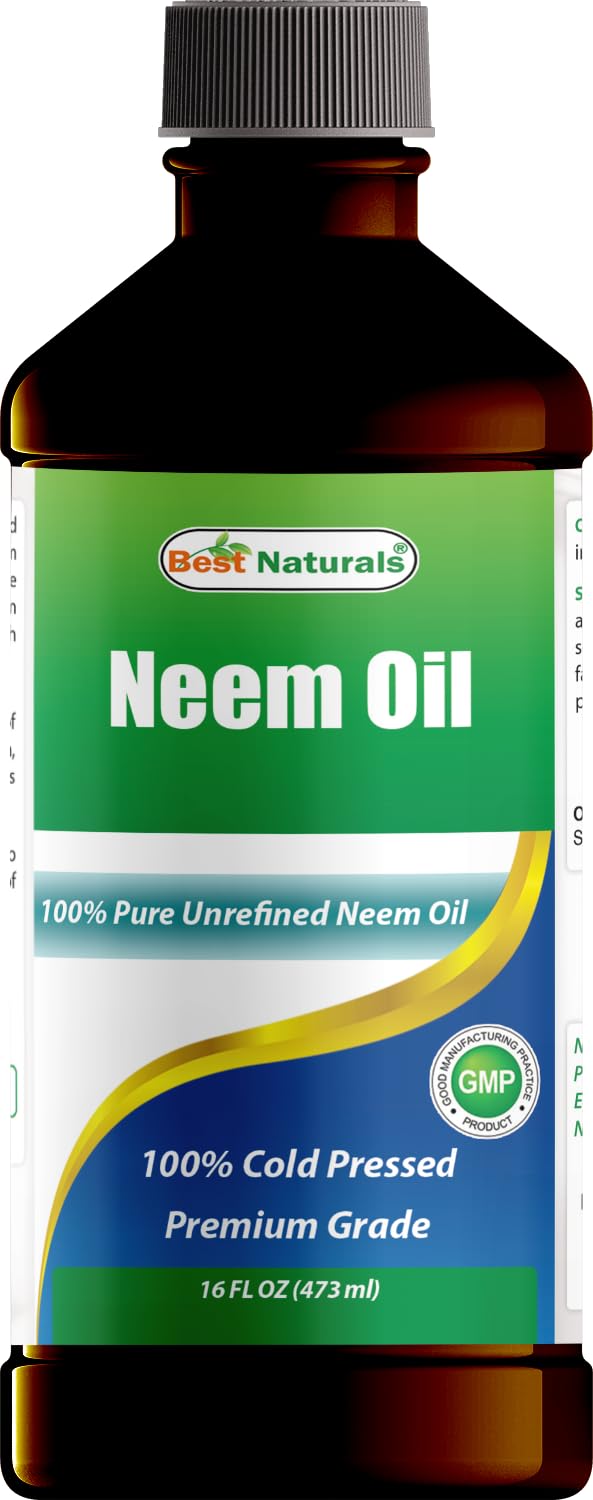
| Ingredients | 100% Pure Neem Oil |
|---|---|
| Extraction | Cold Pressed |
| Form | Unrefined oil |
| Application | Gardening |
Best Naturals 100% Pure Neem Oil is a cold-pressed, unrefined botanical oil sold in a 16-ounce bottle and commonly used as a garden treatment or topical ingredient. For plants it is typically diluted in water with an emulsifier and applied as a foliar spray or soil drench to help manage common pests and fungal issues. The product is single-ingredient neem oil, which keeps the formulation simple and predictable for mixing and routine applications. Practical benefits include a large 16 oz supply that reduces the need for frequent repurchase and an unrefined extraction that preserves the oil’s active components. Important limitations are that it must be mixed correctly before use, can leave an odor, and may irritate skin or sensitive plants if used undiluted; the label advises patch testing and keeping out of reach of children. Overall this is a straightforward, no-frills neem oil for gardeners who want a pure source to dilute and apply themselves rather than a pre-mixed concentrate or multi-ingredient spray.
Best for: Gardeners who prefer a simple, pure botanical product to mix and apply themselves and who prioritize predictable ingredient lists and safety instructions.
Less Ideal for: Users who want ready-to-use sprays, scent-sensitive gardeners, or people unwilling to follow dilution and safety precautions should consider pre-mixed alternatives.
- 100% pure, single-ingredient neem oil makes dilution and mixing predictable
- Cold-pressed and unrefined to retain natural active compounds
- Generous 16 oz volume suitable for multiple garden treatments
- Labeled for gardening application so intended use is clear
- Requires correct dilution and emulsifier before spraying
- Strong natural odor that some users may find unpleasant
- Can cause skin irritation if handled without gloves
Verdict: A pure, cold-pressed neem oil in a 16 oz bottle that gives cautious gardeners a dependable base to dilute and use for pest and fungal control.
Choosing the Right Neem Oil for Houseplants: Key Factors to Consider
Formulation Concentration and Clarity
Neem oil is available in different concentrations and finishes, from raw cold-pressed oils to emulsified concentrates. For houseplants, a clear, consistent formulation matters because it mixes more evenly with water and reduces the chance of oil streaks or uneven coverage that can cause localized leaf burn.
Concentration determines the dilution rate and the strength of active compounds per application. Lower concentrations are easier to dose safely on sensitive species, while higher concentrations require precise measuring and more cautious testing on a few leaves before whole-plant treatment.
Dilution Instructions and Application Rate
Accurate dilution instructions on the label are essential for indoor use. Houseplants live in a confined space and often have thinner leaves than outdoor garden plants, so follow the recommended water-to-oil ratio or err on the more dilute side when trying a product for the first time.
Look for products that state measurements in teaspoons or milliliters and recommend application intervals. Clear guidance on how much to use per liter or gallon reduces guesswork and lowers the chance of over-application, which can cause foliage stress and lingering odor in living spaces.
Plant Safety and Phytotoxicity Risk
Some houseplant species have sensitive epidermis or fine hairs that trap oil, increasing the risk of scorch. Labels that include leaf-safety warnings, recommended test procedures, and temperature or light restrictions (for example, avoid applying in direct sun) are more useful for indoor growers.
A practical safety measure is to test diluted Neem Oil on a small, inconspicuous leaf and wait 48 hours to check for damage. Products with documented lower phytotoxicity or explicit instructions for delicate foliage are preferable for mixed-plant collections.
Mixing and Emulsification Ease
Pure oil separates from water and must be mixed with a mild soap or an included emulsifier. For indoor use, products that either come pre-emulsified or pair cleanly with common, gentle household emulsifiers reduce mixing errors and residue.
If mixing yourself, choose a small measuring system and mix thoroughly in a spray bottle to produce a stable emulsion. Ease of mixing affects how evenly the product spreads on leaves and whether you end up with oily droplets that can drip or coat soil surfaces.
Smell, Residue, and Indoor Comfort
Neem oil has a characteristic odor that can linger in enclosed rooms. For people who are sensitive to smells or who keep plants in living areas, selecting lower-odor formulations or using lighter dilutions can improve indoor comfort.
Residue on leaves and nearby surfaces also matters. Heavy residue can attract dust or alter leaf transpiration. Products that rinse cleanly with a gentle wipe or that leave minimal film help keep foliage looking vibrant and reduce household maintenance.
Pest and Pathogen Spectrum
Houseplants are commonly affected by aphids, mealybugs, spider mites, whiteflies, fungus gnats, and occasional fungal pathogens like powdery mildew. Choose Neem Oil products that explicitly list efficacy against the pests you see most often.
A broader label claim does not guarantee field success indoors, but it does indicate that the formulation contains relevant active constituents. For fungal issues, some Neem Oil formulations perform better when used as part of an integrated approach that includes improved airflow and reduced humidity.
Preparing Houseplants Before Treatment
Inspect plants for signs of stress, new growth, and infestation. Remove heavily damaged leaves and isolate severely infested pots to avoid spreading pests while you treat the rest of your collection.
- Wipe dusty leaves with a damp cloth before spraying to improve coverage.
- Test diluted solution on an inconspicuous leaf and wait 48 hours to watch for burning.
- Move plants away from direct heat or strong sunlight for 24 hours after treatment.
Safe Mixing and Application Tips
Always follow dilution directions and use a small, labeled spray bottle for accurate dosing. Shake the spray bottle thoroughly between uses to keep the emulsion uniform and re-mix before each application if needed.
- Use room-temperature water and add a drop of mild liquid soap if an emulsifier is required.
- Spray both top and underside of leaves, but avoid saturating soil to reduce excess moisture.
- Apply in the evening or early morning when stomata are less active and light intensity is lower.
Managing Reinfestation and Long-Term Use
Neem Oil works as a contact and growth-disrupting treatment, so repeated applications are often required to catch new hatchlings. Establish a schedule based on label intervals and continue monitoring plants weekly for survivors.
- Rotate treatments with non-chemical controls like sticky traps and beneficial insects when practical.
- Reduce indoor humidity and improve airflow around pots to limit fungal growth and discourage pests.
- Record application dates so you can correlate plant responses and plan follow-ups.
Compatibility With Other Indoor Practices
Avoid combining Neem Oil with strong chemical pesticides, concentrated fertilizers, or aggressive foliar feeds within a short window. These interactions can increase phytotoxicity or reduce effectiveness. If you need to use another foliar product, allow several days between applications and do a compatibility test.
- Do not mix with products containing petroleum-based solvents for indoor treatments.
- If repotting after treatment, wait a few days so the oil residue on foliage has diminished.
- Wear gloves and ventilate the room briefly after spraying to limit inhalation of odor.
How We Chose the Best Neem Oil for Houseplants
We focused on products that are formulated or commonly recommended for indoor use and then applied practical gardener filters to create this shortlist. Key evaluation criteria included formulation concentration and clarity, because a clear, consistent oil mixes predictably with water and surfactant. We assessed labeled directions for dilution rates and application frequency to judge how easy it is to use safely on diverse houseplants. Safety on foliage was evaluated via recommended exposure times and explicit leaf-burn warnings for sensitive species. We also checked ingredient transparency and the presence of inert additives that can increase phytotoxicity on delicate leaves. Ease of mixing and the compatibility with mild soap or approved emulsifiers was another selection factor, because poor mixing leads to streaks or residue. Finally, we considered the range of pests and pathogens claimed on labels, prioritizing products that target both common insects and soft fungal issues often found indoors. Excluded from consideration were formulations intended only for broad agricultural use, products with unclear ingredient lists, and concentrated solvent blends that increase risk of damage to indoor foliage.
FAQ
How long should I wait to water a plant after applying Neem Oil?
Water the soil as needed but avoid soaking the foliage immediately after an application. Waiting a few hours lets the oil settle on the leaves. If you must water sooner, aim to water at the pot base and avoid splashing the treated foliage.
Will Neem Oil harm succulents and cacti?
Many succulents and cacti have delicate epidermis that can be sensitive to oils. Use a very dilute solution and test on a small section first. Some growers avoid foliar sprays on succulents and instead use targeted spot treatments.
How often can I safely apply Neem Oil indoors?
Follow label directions for intervals, which often recommend applications every 7 to 14 days for active infestations. For preventative use, longer intervals are typical. Always monitor plants for signs of stress and reduce frequency if you see leaf discoloration.
Can Neem Oil be used on plants with new growth or buds?
New growth and buds are often more sensitive. Test on a small area before treating buds or fresh leaves and avoid spraying during rapid bud development to reduce the chance of deformity or burn.
Is it safe to use Neem Oil around pets or children inside the home?
Neem Oil is generally low in toxicity, but avoid direct contact and misting while pets or children are in the room. Keep treated plants out of reach until the spray has dried and ventilate the room to disperse any strong odor.
Final Verdict
Choose Neem Oil formulations that match the sensitivity of your indoor plants and follow dilution and application instructions carefully. Prioritize clear mixing guidance, foliage safety, and the listed pest spectrum when deciding which product to use. Test any new product on a small area first and schedule follow-ups based on label intervals and what you observe on your plants. When in doubt, start more dilute and increase concentration only if necessary. That cautious approach keeps plants healthy while managing pests effectively, giving you a practical balance between control and plant safety.
