

Note: This article contains affiliate links. If you click on these links and make a purchase, I may earn a small commission at no extra cost to you. This helps support my research and content. Read my full affiliate disclosure here.
When you work around stinging nettle, keeping your hands protected changes routine tasks into confident garden work. The right nettle proof gardening gloves stop stings and small punctures while still letting you grasp stems, tie knots, and handle soil. This guide looks at a short list of top-performing options chosen for durability, fit, and everyday garden practicality. Each pick here represents a strong balance of protective material, dexterity, and breathability for backyard beds, allotments, or containers. Below we explain what we tested editorially and which features matter most, then present the shortlist of the best nettle-resistant gloves for common gardening tasks.
Top Picks at a Glance
| Best Overall The best all-around choice for most situations | WOHEER Long Cowhide Leather Gardening Gloves with Reinforced Palm |  |
| Best Quality Built to a higher standard if you want something more solid | Acdyion Thorn-Proof Cowhide Leather Gardening Gloves with Long Gauntlet |  |
| Best Value The sweet spot between price and what you get | YRTSH Medium Women's Microfiber Leather Gardening Gloves |  |
| Best Budget The cheapest option that still gets the job done reliably | CYRUS Nitrile Thorn‑Proof Gardening Gloves (2 Pairs) |  |
| Highest Rated A top-rated pick with lots of positive feedback | WZQH Leather Work Gloves — Reinforced Palm, Cotton Lining (Large) |  |
| Best Seller A high-volume bestseller chosen again and again | HANDLANDY Women's Leather Gardening Gloves with Touchscreen Tip |  |
WOHEER Long Cowhide Leather Gardening Gloves with Reinforced Palm

| Material | Cowhide |
|---|---|
| Thorn Proof | Yes |
| Waterproof | No |
| Touchscreen | No |
These WOHEER long gardening gloves are built from thick cowhide leather with extra cowhide patches on the palm and fingertips to resist punctures, abrasion, and thorn pricks. They extend to the elbow to protect forearms when pruning roses, handling cacti, or working through brambles, and an elastic wrist helps keep the gauntlet in place during active tasks. The leather is described as soft and flexible so you can still grip tools and tend plants without feeling overly stiff, and the breathable construction reduces sweat during longer sessions. Practical benefits include robust protection for thorny work, reinforced contact points that prolong wear, and a comfortable fit that supports dexterity for pruning and weeding. Limitations are that these gloves are leather so they will require occasional cleaning and will not be waterproof or touchscreen compatible, and thicker leather can feel warm in very hot conditions.
Best for: Gardeners who regularly handle thorny plants and need reliable forearm protection while retaining enough flexibility to prune, weed, and use hand tools.
Less Ideal for: People who need lightweight, fully waterproof gloves for frequent wet work or those who prefer synthetic gloves that require no leather maintenance.
- Thick cowhide leather construction offers strong puncture and abrasion resistance against thorns
- Reinforced palm and fingertip patches where wear and punctures are most likely
- Elbow-length gauntlet protects forearms from scratches when pruning or handling brambles
- Elastic wrist keeps the glove secure and prevents debris from entering
- Not waterproof, so hands can get wet during damp tasks
- Leather requires care and can stiffen if not maintained
- No touchscreen capability for working with a phone without removing gloves
Verdict: Choose these gloves if you want heavyweight leather protection and elbow-length coverage for safe, confident work with nettles, roses, and other thorny plants.
Acdyion Thorn-Proof Cowhide Leather Gardening Gloves with Long Gauntlet

| Material | Leather |
|---|---|
| Glove Or Mitt | Glove |
| Sleeve Length Description | Long Sleeve |
| Is Waterproof | True |
| Stitching Type | Reinforced Stitching |
These Acdyion gloves are built for heavy-duty thorn protection during pruning, bramble clearing, and cactus or rose work. Constructed from thick cowhide with reinforced palms and fingertips and an elbow-length gauntlet, they block thorns and scratches from reaching hands and forearms while still allowing a reasonable degree of dexterity for shears and small tools. Breathable leather and an anatomically shaped thumb improve grip and comfort for longer sessions, and reinforced stitching increases durability for repeated outdoor use. They are pull-on style with a loose fit that slips on quickly but may require sizing attention for a snug feel. New pairs can have a leather odor that fades with airing. These gloves trade some fingertip sensitivity and snugness for significantly better puncture resistance and forearm coverage, making them a durable option for gardeners who tackle thorny plants frequently.
Best for: Gardeners who prioritize maximum thorn and forearm protection during frequent pruning, bramble or cactus work and who accept a bit less fingertip finesse for durable safety.
Less Ideal for: People who need very fine fingertip sensitivity for tasks like delicate transplanting or frequent seed work or those who prefer a tight, form-fitting glove for precision handling.
- Elbow-length gauntlet protects forearms from thorns and scratches
- Thick cowhide leather with reinforced palms and fingertips for puncture resistance
- Breathable leather and anatomical thumb design for improved grip and reduced fatigue
- Reinforced stitching increases durability for repeated outdoor tasks
- Loose pull-on fit may feel bulky and reduce fingertip sensitivity for fine tasks
- New leather smell that requires airing before regular use
Verdict: If your priority is heavy-duty thorn and forearm protection during pruning and bramble work, these thick cowhide gauntlet gloves deliver durable, reliable defense.
YRTSH Medium Women's Microfiber Leather Gardening Gloves

| Material | Microfiber Leather |
|---|---|
| Closure Type | Elastic, Pull On |
| Reusability | Reusable |
| Water Resistance Level | Water Resistant |
| Fit Type | Regular |
These YRTSH gardening gloves combine a microfiber leather palm with a breathable stretch back to offer a balance of protection and feel for everyday garden work. They are typically used for weeding, planting, digging and light pruning where abrasion and thorn protection matter. Reinforced stitching and a reinforced thumb add durability in high-wear areas while the elastic pull-on closure keeps dirt out and makes them quick to put on. The lightly textured leather palm helps with grip on hand tools and the back-of-hand nylon provides breathability so hands stay cooler during longer sessions. They are machine washable for easy care and marketed as water resistant rather than fully waterproof, so they handle damp soil but will not keep hands dry in heavy wet conditions. Touchscreen-capable finger tips are a convenience for quick phone use without removing the gloves. If you need heavy-duty puncture resistance for thick thorny shrubs or waterproof protection for long wet tasks, these gloves are less suited to those extremes.
Best for: A frugal gardener who wants a reliable, reusable everyday glove for planting, weeding and light pruning without paying for heavy-duty specialty gloves.
Less Ideal for: People who routinely work with very thorny plants, heavy briars, or who need fully waterproof gloves for extended wet tasks should choose a more specialized heavy-duty glove.
- Microfiber leather palm for good grip and abrasion resistance
- Reinforced thumb and stitching increase durability in high-wear areas
- Breathable stretch back improves comfort during extended use
- Elastic pull-on closure is easy to use and helps keep out dirt
- Machine washable for simple cleaning and reuse
- Not fully waterproof so hands can get wet in heavy rain or when submerged
- May not provide enough puncture resistance for handling very thorny plants
Verdict: A budget-friendly, durable everyday gardening glove that balances protection, grip and breathability for most routine garden tasks.
CYRUS Nitrile Thorn‑Proof Gardening Gloves (2 Pairs)

| Material | Nitrile-dipped with knit fabric back |
|---|---|
| Pair count | 2 pairs |
| Breathability | Breathable knit fibers |
| Design | Ergonomic elastic fit |
These CYRUS nitrile-dipped gloves are built for everyday garden tasks where thorn protection and grip matter. The nitrile coating is thickened on the palm and fingers to resist punctures from thorns and brambles, while the knit fabric back keeps hands breathable for longer wear. Their elastic, ergonomic fit conforms to the hand to improve dexterity for pruning, weeding, planting, and handling pots. Practical benefits include improved puncture resistance compared with thin fabric gloves and a textured coated surface that helps with gripping wet soil and tools. Because they are sold as two pairs, they are a practical choice to rotate and wash without losing protection. Limitations are that they are not heavy-duty cut-resistant gloves for handling very sharp metal or large rose canes, and nitrile coating can wear faster with abrasive use, so they are best for light to moderate thorny work rather than industrial tasks.
Best for: Budget-minded gardeners who need everyday thorn protection for pruning, weeding, and potting and who prefer breathable, dextrous gloves they can replace or rotate often.
Less Ideal for: Do not choose these gloves for heavy industrial cutting, frequent handling of sharp metal, or jobs that require certified cut-resistant protection.
- Nitrile-dipped palm and fingers for improved puncture resistance against thorns
- Breathable knit back keeps hands drier during extended wear
- Ergonomic, elastic fit improves dexterity for pruning and planting
- Textured coated surface enhances grip on tools and wet surfaces
- Includes two pairs so you can rotate and launder without loss of protection
- Not rated or designed for heavy-duty cut resistance against very sharp blades or thick rose canes
- Nitrile coating may wear sooner with frequent abrasive tasks
Verdict: If you want inexpensive, breathable gloves that protect against nettles and thorns for routine garden work, these two-pair nitrile-dipped gloves are a practical choice.
WZQH Leather Work Gloves — Reinforced Palm, Cotton Lining (Large)

| Material | Leather |
|---|---|
| Glove Liner Material | Cotton |
| Protective Glove Temperature Rating | 350°F |
| Closure Type | Adjustable |
| Reusability | Reusable |
These WZQH leather work gloves are built for tough outdoor tasks where hand protection matters. Made from split cowhide with a reinforced palm and keystone thumb, they deliver abrasion, puncture, thorn, cut, oil, flame, and heat resistance up to 350°F while a soft cotton lining improves comfort and reduces sweat. The adjustable wrist drawstring keeps debris out during digging, pruning, and brush clearing, and the ergonomic cuff helps with dexterity for tasks like planting, using a weed wacker, or handling thorny shrubs. They are reusable and machine washable, so maintenance is straightforward after muddy jobs. Limits to note are the lack of water resistance and no stretch in the fabric, so wet gardening or tasks requiring a snug, glove-like fit for fine handwork may feel bulky. Also sizing advice in the listing suggests sizing up for broad hands, so pick accordingly if you have narrow hands. For gardeners who prioritize durable protection over a thin tactile fit, these gloves offer dependable coverage in heavy-duty outdoor use.
Best for: Gardeners who do heavy-duty outdoor work and want robust hand protection from thorns, abrasion, heat, and punctures while still retaining reasonable comfort for prolonged use.
Less Ideal for: People who need thin, highly tactile gloves for delicate seed starting, transplanting, or frequent wet-weather gardening should consider thinner waterproof or touchscreen-capable alternatives.
- Durable split cowhide construction with reinforced palm for strong abrasion and puncture resistance
- Cotton inner lining that improves comfort and reduces sweat during extended wear
- Adjustable wrist drawstring and ergonomic cuff that keep debris out and allow reasonable wrist movement
- Rated for high temperatures (350°F) and flame resistant for grilling, fireplace or light welding tasks
- Not water resistant, so hands can get wet during watering or wet weather
- No fabric stretch which can reduce fine dexterity for delicate planting or seed work
Verdict: Choose these gloves if you need tough, heat- and puncture-resistant hand protection for heavy gardening and outdoor chores.
HANDLANDY Women's Leather Gardening Gloves with Touchscreen Tip
| Brand | HANDLANDY |
|---|---|
| Touchscreen | Yes |
| Material (palm) | Leather |
| Gender | Women |
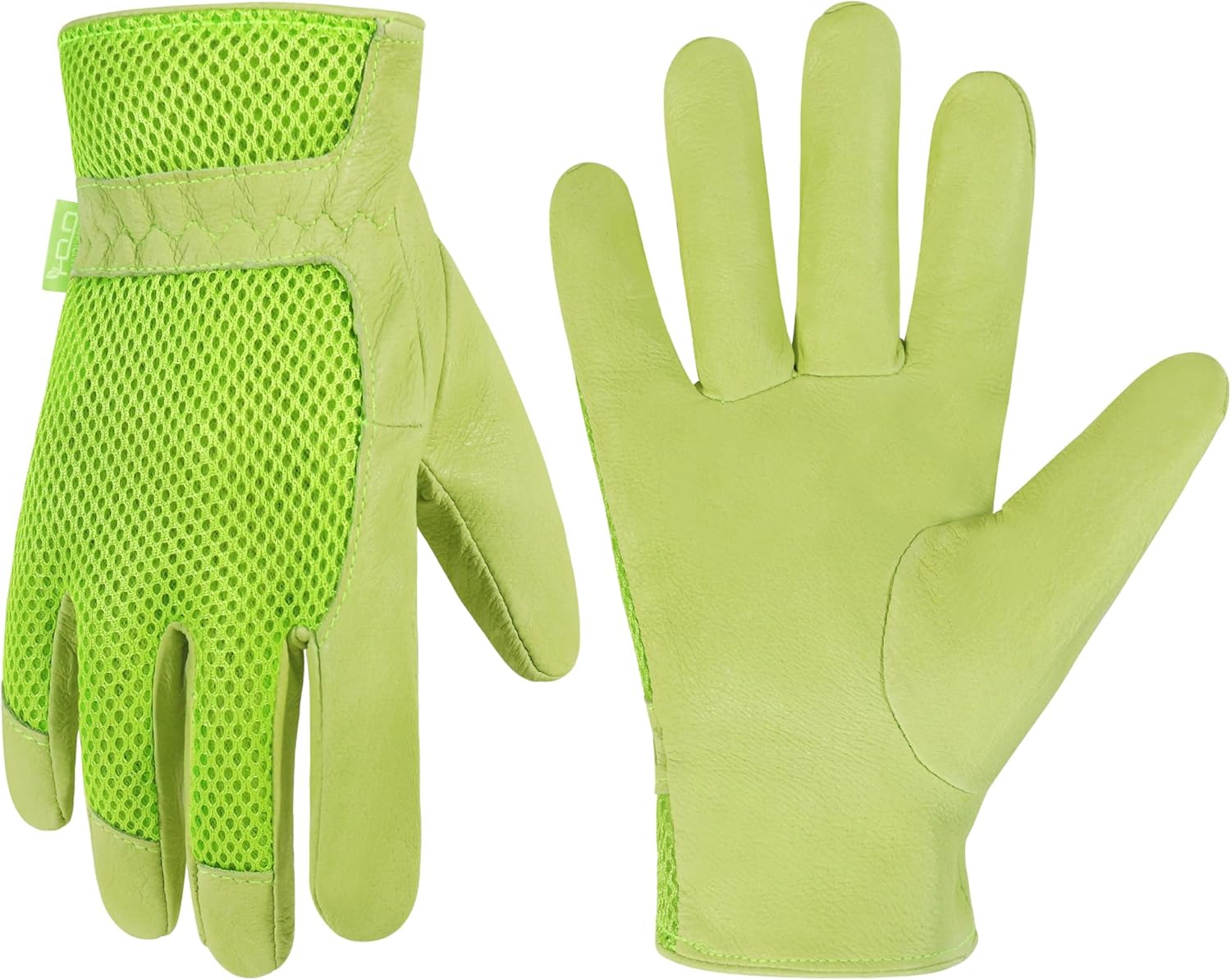
These HANDLANDY gloves combine a leather palm and reinforced fingertips with breathable fabric on the back to protect hands during common gardening tasks like pruning, planting, and pulling weeds. The leather offers good abrasion resistance for handling tools and thorny stems while the breathable mesh helps limit sweating during warmer work sessions. A touchscreen-capable fingertip lets you check a phone without removing the glove and the snug cuff keeps dirt out for routine yard maintenance. They are best for light-to-medium tasks rather than heavy-duty landscaping since leather on smaller gloves can wear where hands repeatedly rub tools. Fit can vary by hand shape, so buyers should expect to try a couple sizes for a comfortable, dexterous fit. For someone who wants dependable hand protection for everyday gardening chores these gloves balance protection, breathability, and fingertip sensitivity, but they are not built for heavy mechanical work or prolonged immersion in wet conditions.
Best for: Buyers who prioritize reliable everyday hand protection for gardening and yard maintenance and want breathable gloves that still allow dexterous work and phone use.
Less Ideal for: People who need gauntlet-length or heavy-duty puncture-proof gloves for bramble clearing, handling heavy thorns, or prolonged wet work should consider more specialized options.
- Leather palm and reinforced fingertips provide solid abrasion and puncture resistance for common gardening tasks
- Breathable fabric on the back reduces hand sweat during prolonged use
- Touchscreen-capable fingertip lets you use phones without removing gloves
- Snug cuff helps keep dirt and debris out during weeding and planting
- Not intended for heavy landscaping or continuous heavy-duty use where thicker gauntlets are needed
- Leather can stiffen if repeatedly exposed to moisture and may require occasional conditioning
Verdict: A practical, breathable leather glove that protects hands during routine gardening while keeping fingertip sensitivity for phone use.
Choosing the Right Nettle Proof Gardening Gloves: Key Factors to Consider
Material Construction and Protective Layering
The materials used determine whether a glove actually blocks nettle hairs and small punctures. Multiple layers that mix a tough outer fabric with a denser internal layer or coating provide the best barrier. Thicker leather, tightly woven synthetic fabrics, or specialized coatings resist penetration better than single-layer knits.
Look for clear information about the fabric weight and layering rather than marketing buzzwords. How the layers are joined also matters because stitched seams can be weak points if not reinforced. A glove that lists abrasion-resistant outer textiles and a separate inner liner usually performs better against nettles.
Fingertip Feel and Task Dexterity
Even protective gloves must allow you to grip twine, handle small seedlings, and use pruning tools safely. Fingertip dexterity depends on material flexibility at the fingertips, seam placement, and how much padding is used. Too much bulk at the tips reduces tactile feedback and makes fine tasks awkward.
Choose gloves that preserve fingertip movement with reinforced pads rather than thick molded tips. Stretch panels, pre-curved fingers, and thin but protective fingertip layers help you work without repeatedly removing the gloves to complete small tasks.
Fit, Size Options, and Closure System
A proper fit keeps the glove from bunching and exposing skin when you grip or reach into dense foliage. Gloves that come in multiple sizes and include adjustable wrist closures or cuffs reduce the chance nettles slip inside. A snug wrist closure also prevents debris from entering the glove and improves overall protection.
Consider whether the cuff is short for quick tasks or longer for pulling hands through brambles. Adjustable closures such as hook-and-loop straps or elastic wrists are useful for adapting fit across different activities and hand shapes.
Breathability and Moisture Management
Working in warm weather or for long periods makes breathability a practical concern. Non-breathable materials trap sweat and cause discomfort, which leads gardeners to remove gloves more frequently and risk exposure to nettles. Fabrics with mesh panels, moisture-wicking liners, or perforations balance protection and airflow.
Check care instructions since repeated washing can change breathability and fit. Gloves that maintain structure after regular laundering are preferable for seasonal gardeners who need reliable protection over time.
Durability, Reinforcement, and Seams
Seams, reinforcements at high-wear zones, and overall construction quality dictate how long gloves will resist repeated contact with gritty soil, rough stems, and nettles. Reinforced palms, double-stitched seams, and abrasion-resistant patches at the thumb and fingertips extend service life.
Inspect how edges are finished and whether the glove has sacrificial overlays on the palm. Features that reduce wear at common friction points preserve protective performance and reduce the need for frequent replacement.
Care, Cleanability, and Maintenance
Garden gloves pick up sap, soil, and pollen, so they must be cleanable without losing protection. Some protective coatings degrade with harsh detergents or high heat. Understand whether a glove is machine-washable, hand-wash only, or requires spot cleaning, and factor in how easy it is to dry and reuse.
Gloves that retain fit and material integrity after cleaning are more dependable across seasons. Also think about interior liners that can trap moisture and lead to odors; removable liners or quick-dry materials improve long-term comfort.
When to Choose Heavier Protective Layers
Heavier gloves with multiple protective layers make sense when you will spend time clearing dense nettle patches, pruning overgrown borders, or working with thorny shrubs nearby. These situations increase the likelihood of direct contact with skin-irritating hairs and small punctures, so a thicker outer layer and a secure cuff reduce recurring stings.
- Best for tasks involving lot of pulling or grabbing through vegetation
- Tradeoff: reduced finger sensitivity for more reliable protection
- Prefer longer cuffs to stop nettles from slipping inside
Balancing Protection and Dexterity for Seedlings and Repotting
If most of your work is transplanting, seed starting, or potting where handling small trays and delicate roots matters, prioritize gloves that emphasize fingertip control. Look for protective materials that are thin at the fingers but reinforced on the palm and back of hand to keep nettle hairs out without sacrificing feel.
- Stretch panels and pre-curved fingers help reduce hand fatigue
- Minimal padding at the fingertips preserves tactile feedback
- Shorter cuffs improve maneuverability in tight spaces
Sizing Tips for Better Protection
Measure across the widest part of your hand excluding the thumb and compare to the manufacturer size chart. A glove that is too large bunches and exposes gaps at the wrist, while a glove that is too tight will stress seams and reduce circulation, increasing hand fatigue. If your hands fall between sizes, sizing up is often safer because you can use adjustable wrist closures to tighten fit.
- Try gloves on with the types of tools and plants you use most
- Consider wider sizes for gardeners who wear wrist supports or bandages
- Check for return-friendly sizing policies if uncertain
Caring for Protective Gloves to Maintain Performance
Rinse mud and sap promptly and follow the cleaning instructions to avoid degrading protective layers. Air-dry gloves out of direct sun to prevent some synthetics from becoming brittle. Rotate between pairs for heavy-duty tasks so materials have time to recover between uses.
- Avoid bleach and high heat that can weaken coatings
- Inspect seams and reinforcements regularly for wear
- Store dry gloves in a cool place to prevent mildew
Using Gloves with Pruning Tools and Hand Tools
A good fit plus thin fingertip protection keeps you safe while using pruners, trowels, and hand saws. When working with cutting tools, make sure gloves do not interfere with your ability to sense blade position or apply appropriate pressure. Gloves with strategic palm reinforcement protect against slip injuries without adding bulk at the fingers.
- Test tool handling in a safe setting before tackling complex cuts
- Replace gloves with frayed fingers before heavy cutting tasks
- Pair gloves with eye protection when pruning dense growth
How We Chose the Best Nettle Proof Gardening Gloves
We narrowed the field by focusing on features that matter most when you need protection from stinging nettles and similar plants. Primary evaluation criteria included material puncture and sting resistance, how the glove affects fingertip dexterity, overall fit and size range, durability under frequent pruning and weeding, and breathability for extended wear. We also considered cuff length and closure systems to reduce nettles entering the glove and evaluated washability and care instructions for realistic garden maintenance. Products were excluded if they relied solely on thin knit layers without a protective coating, lacked clear sizing options, or were clearly meant for light household tasks rather than outdoor thorn or nettle protection. We prioritized gloves that deliver repeatable protection in real garden conditions and that list materials and construction methods relevant to nettle stings and punctures. The final selections balance protection, comfort, and longevity for typical backyard and allotment use.
FAQ
Can nettle proof gloves prevent all skin irritation from stinging nettles?
They greatly reduce contact with nettle hairs and most small punctures, but no glove is completely infallible. Proper fit, cuff coverage, and avoiding ripped or badly worn areas are important for reliable protection.
Are leather gloves better than synthetics for nettle protection?
Leather can be excellent for abrasion and puncture resistance but may reduce fingertip sensitivity. Modern synthetics with dense weaves or protective coatings can match leather in sting resistance while offering lighter weight and better breathability.
How do I know what size nettle proof glove to buy?
Measure the width of your palm across the knuckles and check the maker's size chart. If between sizes, sizing up usually preserves protection because you can secure the wrist, whereas a too-tight glove stresses seams and restricts movement.
Can I wash nettle proof gloves in a washing machine?
It depends on materials and manufacturer guidance. Many synthetics are machine-washable on a gentle cycle, but leather and some coated gloves require spot cleaning or hand washing to maintain protective properties.
How long should protective gardening gloves last?
Lifespan varies by material and use. With regular heavy use expect visible wear at high-friction areas within a season or two, while careful use and maintenance can extend service life. Replace gloves when punctures or worn seams appear.
Are longer cuffs necessary for nettle protection?
Longer cuffs add a layer of security by reducing the chance stinging hairs reach exposed skin when reaching into tall patches. For light potting work, shorter cuffs improve mobility, but for clearing or pulling nettles, longer cuffs are usually better.
Final Verdict
Choose glove features that match the tasks you do most. Prioritize puncture and sting resistance for clearing and pruning, while selecting thin, flexible fingertip protection for transplanting and delicate work. Ensure you can get a good fit with adjustable closures and that the glove construction includes reinforced seams and palms. Accept the tradeoff that the most protective gloves will limit fingertip sensitivity. If you alternate between heavy clearing and fine tasks, keep two pairs on hand: one for protection and one for dexterity. That approach keeps you safe and productive across common garden jobs.
