

Note: This article contains affiliate links. If you click on these links and make a purchase, I may earn a small commission at no extra cost to you. This helps support my research and content. Read my full affiliate disclosure here.
Getting nitrogen right is one of the simplest ways to push sweet corn toward bigger ears and sturdier stalks. The wrong type or poor timing can waste fertilizer, increase disease risk, or cause uneven growth. This guide looks at seven shortlisted nitrogen fertilizers chosen for common garden and small-farm situations where sweet corn is grown. We focus on how nitrogen form, application timing, and ease of use affect plant vigor and harvest results. Use the evaluation notes to match a fertilizer's strengths to your planting schedule, soil texture, and watering setup.
Top Picks at a Glance
| Best Overall The best all-around choice for most situations | True Organic Blood Meal — High‑Nitrogen Organic Fertilizer, 3 lb |  |
| Best Quality Built to a higher standard if you want something more solid | Gardenera Liquid Power Corn Fertilizer, 32 oz Concentrate |  |
| Best Value The sweet spot between price and what you get | Leaves & Soul Liquid Corn Fertilizer 5-1-5, 8 oz |  |
| Best Budget The cheapest option that still gets the job done reliably | Cz Garden Supply Urea 46-0-0 Granular Fertilizer, 5 lb Resealable Pouch |  |
| Highest Rated A top-rated pick with lots of positive feedback | HyR BRIX Slow‑Release Sweet Corn Fertilizer, 16-7-10, 45 lb |  |
| Most Popular A crowd favorite that many people choose with confidence | Easy Peasy Urea 46-0-0 Granular Nitrogen Fertilizer |  |
| Best Seller A high-volume bestseller chosen again and again | RAW Nitrogen Fertilizer 2 oz — Water-Soluble High-N Nitrogen for Vegetative Growth |  |
True Organic Blood Meal — High‑Nitrogen Organic Fertilizer, 3 lb

| Item Form | Granules |
|---|---|
| Unit Count | 48 Ounce |
| Mixing Ratio | 12-0-0 |
| Specific Uses For Product | Agriculture, Gardening |
True Organic Blood Meal is a simple, single-ingredient granular fertilizer that supplies a concentrated source of nitrogen for leafy, heavy-feeding vegetables and ornamentals. It is typically applied to soil in spring and fall or worked into potting mixes for container crops to encourage rapid green growth. The product is made from blood meal and labeled with a 12-0-0 analysis, so it delivers mostly nitrogen without added phosphorus or potassium. Practical benefits include easy application, suitability for both beds and containers, and an organic input that supports soil microbial activity rather than introducing synthetic chemicals. The 3 lb bag is sized for small to medium gardens and the stated coverage gives a clear guideline for treating around 100 sq ft. Important limitations are that it only supplies nitrogen so it should be paired with a balanced fertility plan for blooms or root development, and like all high-nitrogen amendments it can burn plants if overapplied or placed in direct contact with roots. For risk-averse gardeners, following the mixing ratio and recommended timing will help get vigorous foliage without surprises.
Best for: Gardeners who prioritize predictable, organic nitrogen boosts for leafy crops and want a straightforward product with established application timing and coverage guidance.
Less Ideal for: Growers seeking an all-in-one fertilizer for blooms, fruits, or complete feeding regimes should choose a balanced or blended product instead.
- High nitrogen content (12-0-0) that rapidly promotes leafy growth
- Single-ingredient blood meal with no synthetic additives
- Suitable for both in-ground beds and container plants
- Clear coverage guidance for planning applications
- Provides only nitrogen so additional nutrients are needed for flowering and fruiting
- Risk of root burn if overapplied or placed in direct contact with plant roots
Verdict: Use this concentrated organic blood meal when you need a reliable, high-nitrogen boost to rapidly green up heavy-feeding vegetables and leafy plants.
Gardenera Liquid Power Corn Fertilizer, 32 oz Concentrate

| Item Form | Liquid |
|---|---|
| Coverage | Corn plants |
| Target Species | Corn |
| Mixing Ratio | 1:64 |
| Unit Count | 32 Fluid Ounces |
Gardenera Liquid Power is a 32-ounce liquid concentrate designed specifically for corn growers who want rapid, performance-oriented results. Mixed at 1:64, the concentrate supplies a balanced NPK profile plus chelated micronutrients and organic acids to promote vigorous stalk growth, deeper roots, and fuller ears. Its acidic formulation helps unlock iron and other tied-up nutrients in alkaline soils, which can improve greening and pollination when applied during vegetative and reproductive stages. Typical use is as a foliar or soil drench throughout the season following the stated mixing ratio, making it easy to dose for pots or garden rows. Practical benefits include faster nutrient uptake, improved root depth that aids drought resistance, and a formula tailored to corn rather than a generic vegetable feed. Important limitations: the product is a concentrate that requires careful measuring and mixing, and the acidic pH means you should avoid overuse on sensitive seedlings or recently limed soils without testing. Expect better results when combined with good planting practices and soil moisture management.
Best for: Growers focused on maximizing sweet corn yield and plant vigor who are comfortable using a nutrient concentrate and monitoring applications across the season.
Less Ideal for: Casual gardeners who prefer slow-release granular fertilizers or those who do not want to manage measuring and repeated liquid applications.
- Corn-specific NPK blend aimed at promoting taller stalks and fuller ears
- Acidic formula and chelated micronutrients that improve nutrient availability in alkaline soils
- Fast-acting liquid concentrate that is easy to apply as foliar feed or soil drench
- Mixing ratio (1:64) simplifies dosing for both containers and garden plots
- Concentrate requires precise measuring and dilution to avoid overfeeding
- Low pH may be too strong for very young seedlings or recently amended alkaline beds
Verdict: Choose this concentrate if you want a corn-tailored, fast-acting liquid feed designed to drive bigger stalks and fuller ears when properly mixed and applied.
Leaves & Soul Liquid Corn Fertilizer 5-1-5, 8 oz
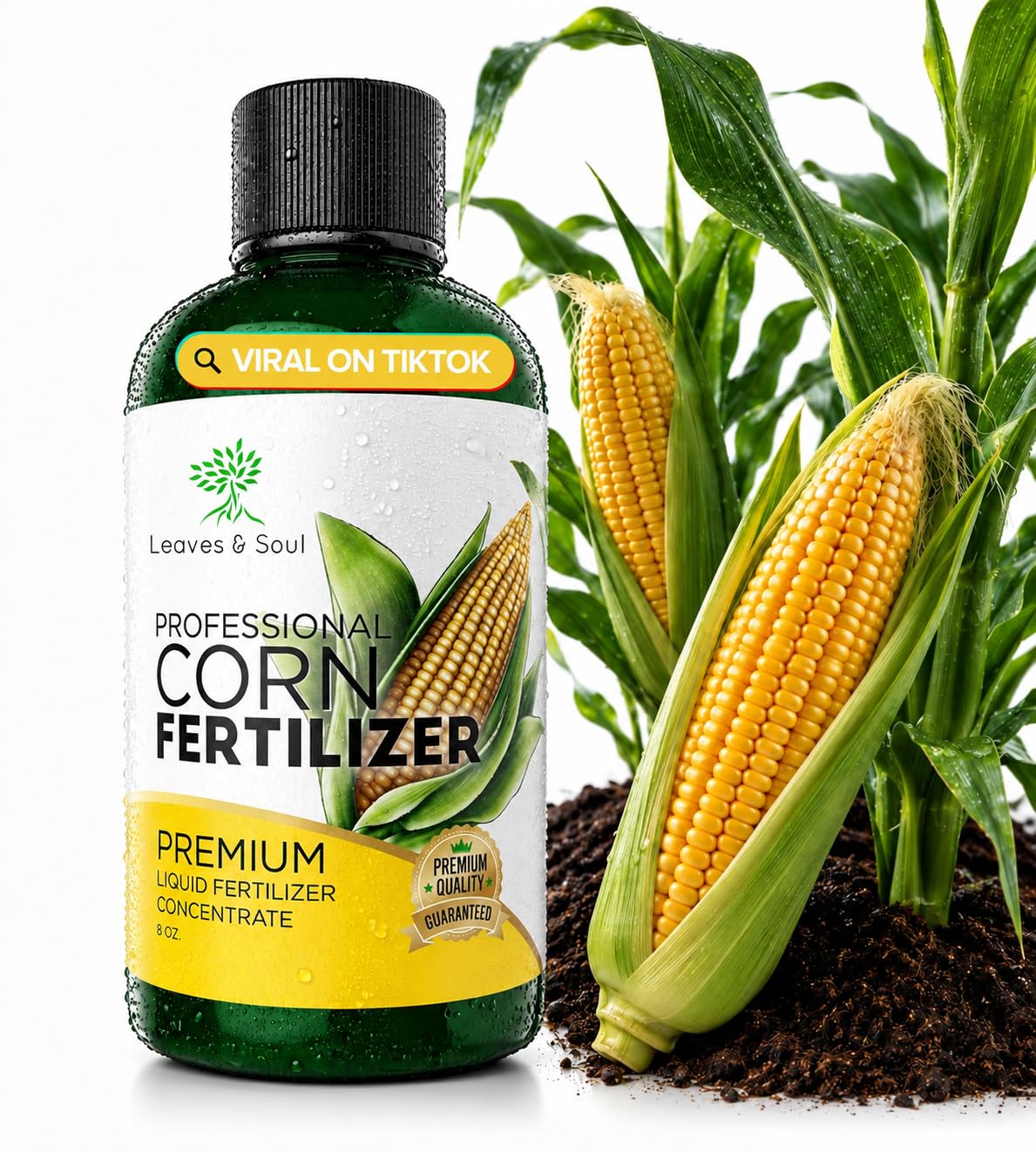
| NPK | 5-1-5 |
|---|---|
| Unit Count | 8 Ounce |
| Application Method | Watering |
| Target Species | corn |
| Mixing Ratio | 2 tbsp per gallon (recommended) |
This concentrated liquid corn fertilizer supplies a balanced 5-1-5 NPK plus micronutrients in an 8 oz bottle intended for routine feedings of sweet corn and other corn varieties. It mixes at a recommended rate of 2 tablespoons per gallon, delivering nutrients directly to the root zone via watering. Typical use is every 2–4 weeks during active growth and every 4 weeks in cooler or dormant periods, so it fits into standard feeding schedules from vegetative growth through tasseling and ear development. The liquid format dissolves easily and is fast-absorbing, which makes it convenient for small plots, raised beds, or container-grown dwarf varieties where targeted feedings matter. Because it is concentrated, a small bottle covers multiple applications for a few plants, but gardeners should follow the dilution guidance carefully since overconcentrating can harm roots. This product is focused on supplemental feeding rather than replacing soil amendments or compost, so combine it with good soil management, watering, and spacing for best results.
Best for: Gardeners growing sweet corn in backyard plots, raised beds, or containers who want an easy-to-mix, stage-appropriate supplemental feed and value products with positive user feedback.
Less Ideal for: Large-scale or commercial corn producers who need bulk fertilizer supplies or a complete soil amendment program should choose larger-capacity or soil-specific products.
- Balanced 5-1-5 formula tailored for corn growth stages
- Concentrated 8 oz bottle provides multiple feedings for small plantings
- Liquid form mixes easily and is fast-absorbing for quicker nutrient uptake
- Small 8 oz volume may be limiting for large plots or field-scale plantings
- No specific soil pH or nutrient analysis guidance included
Verdict: A convenient concentrated liquid feed that gives backyard sweet corn straightforward, stage-appropriate nutrition in small plantings.
Cz Garden Supply Urea 46-0-0 Granular Fertilizer, 5 lb Resealable Pouch

| Item Form | Granules |
|---|---|
| Specific Uses For Product | gardening, lawn care, tie-dye projects |
| Coverage | Resealable |
| Mixing Ratio | 46:0:0 |
This Cz Garden Supply urea is a straightforward, high-concentration nitrogen fertilizer for gardeners who need a fast, cost-effective nitrogen boost. In practice it is spread or dissolved and applied to soil around established plants such as lawns, leafy vegetables and corn to encourage vigorous green growth and larger foliage. The product arrives as prilled granules in a heavy-duty resealable pouch that makes measuring and storage simple. Because it is nearly pure nitrogen (46-0-0) it delivers rapid greening and can be mixed for foliar or soil drench applications, but it offers no phosphorus or potassium so it is best used as a targeted topdress or sidedress rather than an all-purpose feed. Users should follow rate directions carefully and apply to wet or dry soil as recommended to avoid leaf burn or excess nitrogen runoff. Safety precautions for handling concentrated fertilizers apply. For gardeners focused on quick nitrogen response, this product is an effective, no-frills option.
Best for: Experienced home gardeners who want a fast, controllable nitrogen boost for established corn, lawns, and leafy crops and who follow application rates carefully.
Less Ideal for: Beginners wanting an all-in-one fertilizer or gardeners seeking balanced N-P-K feeds for flowering and fruiting without supplementing other nutrients.
- High 46-0-0 nitrogen concentration for rapid greening
- Resealable heavy-duty pouch for easier storage and measuring
- Versatile use for soil application or dissolving for foliar/soil drench
- Suitable for lawns, leafy vegetables and sidedressing corn
- Contains only nitrogen so additional fertilizers are needed for balanced nutrition
- Concentrated formula requires careful measuring to avoid burn
Verdict: Buy this if you need a powerful, easy-to-store nitrogen-only fertilizer to quickly green and boost corn after planting.
HyR BRIX Slow‑Release Sweet Corn Fertilizer, 16-7-10, 45 lb

| NPK Analysis | 16-7-10 |
|---|---|
| Form | Granules |
| Specific Uses For Product | Nutrition for Sweet Corn |
| Coverage | 4,000 Square Feet |
This 45 lb HyR BRIX fertilizer is designed specifically for corn and supplies a balanced 16-7-10 NPK in slow‑release granules so one application can feed a patch through the season. Typical use is preplant or early season application broadcast across the bed or field and watered in; the bag claims coverage up to 4,000 sq ft and includes humic acids and earthworm castings to improve nutrient uptake. Multiple nitrogen sources aim to support steady vegetative growth and help develop large, uniform ears while added calcium and sulfur support kernel quality. Practical benefits include fewer repeat feedings, simplified spring prep, and a formula focused on soil health rather than quick foliar boosts. Important limitations are that it is a broad granular feed rather than a starter or foliar product so it should not be placed in seed holes or used as a seed starter, and gardeners who need precise, small‑scale dosing for containers may find the 45 lb size excessive. Follow label spacing recommendations to avoid root or seed contact when applying.
Best for: Home gardeners and small‑scale growers who want a single, season‑long granular fertilizer that simplifies corn feeding and focuses on soil health for bigger, sweeter ears.
Less Ideal for: Container growers, very small raised beds, or those who need a specialized starter or foliar feed for seedlings should consider smaller or different formulations.
- Balanced 16-7-10 slow‑release formula tailored for corn
- One application feeds plants all season, reducing repeat applications
- Includes humic acids and earthworm castings to improve soil nutrient uptake
- Multiple nitrogen sources for steady growth and ear development
- Large 45 lb bag may be more than needed for very small gardens or container setups
- Granular, non‑starter formula should not be placed directly in seed holes or used on seedlings
Verdict: If you want one reliable, soil‑focused granular feed to simplify corn care and support bigger, sweeter ears, this slow‑release 16-7-10 formula is a strong choice.
Easy Peasy Urea 46-0-0 Granular Nitrogen Fertilizer

| Item Form | Granules |
|---|---|
| Specific Uses For Product | plants, lawns, food plots |
| Application Method | spreaders, spray applications |
| Mixing Ratio | 1:0:0 |
This 46-0-0 urea fertilizer supplies a concentrated source of nitrogen designed to produce quick green-up and vigorous leaf growth across lawns, ornamentals, and food plots. It is sold as granules that can be applied with a standard broadcast spreader or dissolved for spray applications, so you can use it for both routine turf feeding and targeted foliar or soil sprays. The product’s nitrogen-only formulation gives precise control when you want to raise nitrogen without adding phosphorus or potassium, useful for maintenance programs or correcting nitrogen deficiency. Practical benefits include rapid availability to plants, broad usability across turf and garden beds, and straightforward directions for spreading and watering in. Important limitations are that it only supplies nitrogen so it will not correct other nutrient imbalances, and as a concentrated urea it requires careful handling to avoid leaf burn if applied too heavily or placed in direct contact with foliage.
Best for: Gardeners and homeowners who want a straightforward, high-nitrogen product to quickly green up lawns and support leafy growth across mixed landscape beds while retaining control over other nutrient inputs.
Less Ideal for: People seeking an all-in-one fertilizer that supplies balanced NPK and micronutrients or those who prefer slow-release, low-handling options for sensitive plantings.
- High 46-0-0 nitrogen concentration for fast, noticeable greening
- Granular form compatible with broadcast spreaders or dissolvable for spray applications
- Nitrogen-only formula allows precise feeding without adding phosphorus or potassium
- Suitable for a wide range of uses including lawns, ornamentals, trees, shrubs, and food plots
- Provides only nitrogen so other nutrient deficiencies require separate products
- Concentrated urea can cause leaf burn or root damage if overapplied or applied in direct contact with foliage
Verdict: Choose this concentrated 46-0-0 urea if you need fast, controllable nitrogen feeding to green up lawns and boost leafy growth while managing other nutrients separately.
RAW Nitrogen Fertilizer 2 oz — Water-Soluble High-N Nitrogen for Vegetative Growth

| Item Form | Powder |
|---|---|
| Application Method | Water Soluble |
| Specific Uses For Product | Gardening |
| Target Species | plants |
| Unit Count | 2 Ounce |
RAW Nitrogen is a water-soluble, powder fertilizer formulated with 20% ammoniacal nitrogen to correct or maintain nitrogen levels during vegetative growth. It dissolves easily for use in soil, containers, raised beds and hydroponic systems and can be applied via irrigation or foliar feed for faster uptake. For pumpkins this product is useful early in the season to build vigorous vine and leaf growth that supports later fruit set. The concentrated formula gives growers fine control when mixing into custom feeding programs, but it is a pure ammonium source so it needs careful dosing to avoid overapplication and potential leaf burn. Packaged in small sizes, it is convenient for hobby and small-scale growers testing rates, though frequent applications or large plantings will require larger quantities. Clear labeling of form and application method makes it straightforward to integrate with other nutrients, but users should monitor soil or tissue nitrogen to avoid excessive vegetative growth at the expense of flowering.
Best for: Gardeners who want precise, controllable nitrogen supplementation for early-season vine and leaf development and who adjust fertilization based on observations or tests.
Less Ideal for: Growers looking for an all-in-one NPK blend or large-scale pumpkin producers who need bulk quantities and broader nutrient balance without mixing separate products.
- High concentration of ammoniacal nitrogen (20%) for effective vegetative growth
- Water-soluble powder mixes quickly for use in soil, containers and hydroponics
- Versatile application options including root drench and foliar feeding
- Small pack sizes ideal for trialing rates or feeding small gardens
- Pure ammonium nitrogen requires careful dosing to avoid leaf burn or nutrient imbalance
- Small unit sizes mean frequent repurchase for larger pumpkin patches
Verdict: Use this concentrated, water-soluble ammonium nitrogen to reliably boost early vegetative growth and build strong pumpkin vines when you need precise control over nitrogen feeding.
Choosing the Right Nitrogen Fertilizer for Sweet Corn: Key Factors to Consider
Nitrogen Form
Nitrogen is sold in several chemical forms that act differently in soil. Nitrate is immediately available for plant uptake but can leach quickly in sandy soils or with heavy rain. Ammonium binds to soil particles more readily and releases nitrogen more slowly through microbial conversion. Urea is concentrated and convenient but can lose nitrogen to the air if not incorporated or watered in.
Understanding these differences helps you match a fertilizer to your soil type and irrigation. For quick early growth, a nitrate-rich option may be useful, while ammonium-dominant products reduce short-term leaching risk. Urea-based fertilizers work well when you can incorporate or follow with irrigation to minimize volatilization.
Application Timing and Method
Sweet corn has defined uptake windows: early vegetative growth and the rapid growth period before and during tasseling. Applying too much nitrogen too early can push excessive foliage at the expense of ears, while late shortages reduce kernel set and ear fill. Sidedressing during the 6- to 8-leaf stage is common because it supplies nitrogen when plants ramp up demand.
Choose a fertilizer that matches how you can apply it. Granular products that can be banded or broadcast and then watered in are convenient for many gardeners. Liquid or soluble fertilizers are better for fertigation or quick corrections, and collar or foliar applications can target uptake when soil conditions limit root activity.
Soil Texture and Drainage
Soil texture strongly affects nitrogen retention. Sandy soils drain rapidly and do not hold nitrate, so split applications using forms less prone to leaching are often necessary. Clay and loam soils retain nutrients better but can tie up ammonium under cool conditions, slowing availability.
Assess your garden bed or field drainage before selecting a fertilizer and schedule. In free-draining soils, plan for multiple smaller applications or use stabilized nitrogen forms to reduce losses. In heavier soils, a single well-timed sidedress may suffice but watch soil temperature and moisture, which affect microbial conversion of ammonium and urea.
Rate Control and Concentration
Knowing the nitrogen concentration on the product label makes it possible to apply consistent, correct rates. Highly concentrated fertilizers reduce bulk handling but increase the risk of localized burn if placed too close to seed or young roots. Lower-concentration blends are more forgiving for casual gardeners but require higher volumes for the same nitrogen amount.
Choose a concentration that matches your application equipment and comfort level. For banded applications, err on the conservative side to avoid root damage. For fertigated beds or drip systems, soluble concentrates that blend predictably are preferable.
Environmental Loss Risk
Losses from leaching and volatilization waste fertilizer and can harm nearby waterways or plant health. Volatilization is a particular concern with surface-applied urea on dry soils. Leaching is more likely with nitrate in coarse-textured soils or heavy rainfall events after application.
Mitigate loss by matching nitrogen form to conditions, incorporating or watering in surface-applied materials, and timing applications to avoid heavy rain forecasts. Consider split applications to match uptake and reduce the single-event loss risk.
Ease of Handling and Safety
Gardening-friendly fertilizers should be simple to store, measure, and apply. Dusty granules or strong odors complicate backyard use, while liquids and soluble powders may require measuring tools and mixing space. Safety also includes how the material contacts skin and pets and whether special protective gear is needed.
Prioritize products that fit your comfort with handling and storage. If you lack mixing equipment, pre-formulated granular or coated options may be easier. Always follow label instructions to minimize risks to people, pets, and nearby plants.
Matching Fertilizer Strategy to Planting Scale
Your application approach should fit the size of the planting. A single kitchen-garden row can be managed with hand-banded granular fertilizer or a small soluble feed, while larger plots benefit from bulk granular spread evenly and sidedressing with a hoe or spreader. For raised beds and container-grown corn, use soluble or low-odor options that rinse into the root zone without leaving residues.
For community gardens or small-acre plots, consider ease of repeat applications. Products that dissolve predictably for fertigation or that come in manageable bags for repeated sidedressing keep labor predictable and reduce application errors.
- Hand-banded granular for single rows or small beds
- Soluble fertilizers for drip irrigation or quick corrections
- Bulk granular for larger plantings with mechanical spreaders
Timing a Sidedress for Best Ear Development
Sidedressing is the most effective time to supply the bulk of nitrogen for ear development. Aim to apply a significant portion of the season's nitrogen when plants are around six to eight leaves and again if growth lags before tassel. If you expect heavy rains soon after application, delay or use a form less likely to leach.
Watch plant color and vigor as practical indicators. Pale leaves midseason often point to nitrogen stress and justify a quick soluble application if soil conditions permit.
- First major sidedress at 6 to 8 leaf stage
- Monitor leaf color for midseason needs
- Avoid large single applications before heavy rain
Stabilizers and Additives: When They Help
Some fertilizers include stabilizers to slow microbial conversion or to reduce volatilization. These additives can be useful in warm, wet climates where nitrogen can be lost quickly, or when you must apply a large dose at once. They are less important where you can split applications and incorporate materials promptly.
Decide whether a stabilizer makes sense based on your soil type, weather patterns, and application frequency. For many backyard situations, timing and incorporation are sufficient to control losses without extra chemistry.
- Use stabilizers in warm, rainy regions or for single large applications
- Split applications can reduce need for additives
- Read handling guidance for any additive-containing product
Practical Tips for Application and Calibration
Calibrate spreaders and measure soluble mixes before you treat a crop. Small miscalculations scale up quickly across multiple rows. For granular banding, keep fertilizer away from seed and young stems to prevent burn. For liquids, mix to the labeled concentration and apply evenly with garden-scale equipment.
Record what you applied and when. Noting rates and dates helps you correlate plant response to applications and refine timing in future seasons. Also check weather forecasts and soil moisture before applying to avoid immediate loss from heavy rain or evaporation.
- Calibrate equipment and measure mixes
- Keep granular fertilizer off seed rows
- Record application details for future adjustments
Soil Testing and Adjusting Nitrogen Plans
Soil tests give baseline information on organic matter and residual nitrogen and help avoid over-application. A test will not predict short-term mineralization but can prevent unnecessary additions where residual nitrate is already adequate. Use tests to adjust planned sidedress rates rather than relying solely on calendar timing.
If a soil test shows high residual nitrate, reduce early season nitrogen and reserve more of the season's allocation for later sidedressings. Conversely, low organic matter soils usually need more frequent supplementation to meet corn demands.
- Use soil tests to set baseline nitrogen needs
- Adjust sidedress rates based on residual nitrate
- Account for organic matter when planning frequency
How We Chose the Best Nitrogen Fertilizer for Sweet Corn
We selected products that offer clear, practical advantages for growing sweet corn rather than general-purpose blends. Key evaluation criteria included nitrogen form because ammonium, nitrate, and urea behave differently in soil and influence early growth and leaching risk. Application method and timing were judged because sidedressing, preplant incorporation, and foliar options determine how easily a gardener can supply nitrogen at critical stages. Nitrogen concentration and predictability were considered so gardeners can plan rates without frequent calibration. Ease of handling and safety mattered for backyard and small-scale use, including dust, odor, and mixing needs. Environmental loss potential was evaluated, focusing on leaching and volatilization risk in typical garden soils. We excluded products that are primarily multi-nutrient blends with negligible nitrogen concentration or those formulated only for large-scale commercial fertilizer rigs. The final shortlist reflects fertilizers that match common sweet corn timelines and small-plot application methods.
FAQ
When should I apply nitrogen to sweet corn?
Apply most nitrogen during sidedressing at around the 6- to 8-leaf stage, with follow-up applications if growth is poor before tassel. Avoid applying large amounts just before heavy rain to reduce leaching.
Is urea a good option for backyard sweet corn?
Urea can be convenient and concentrated, but it needs to be incorporated or watered in to reduce volatilization losses. If you cannot water it in promptly, consider an alternative form or a stabilized product.
How does soil type change my nitrogen plan?
Sandy soils require split applications or forms less likely to leach because nitrate moves quickly. Heavier soils hold nitrogen better but may slow conversion of ammonium in cool conditions, so monitor plant vigor and temperature.
Can I rely on a single preplant nitrogen application?
A single preplant application can work on heavier soils with good organic matter, but split applications are safer for light soils or unpredictable weather. Sidedressing supplies nitrogen when plants need it most.
Do stabilizers make a big difference for home gardens?
Stabilizers can help in warm, wet climates or when a large single dose is unavoidable. For many home gardens, careful timing and incorporation are sufficient to limit losses without additives.
Final Verdict
Choose a nitrogen strategy that matches your soil, scale, and timing. Prioritize the right nitrogen form for your drainage and climate, and favor sidedressing to meet peak crop demand. Balance concentration and handling ease against loss risks to pick an approach you can apply accurately and repeatably. Focusing on application timing and matching fertilizer form to your conditions will deliver the most consistent ear development and yield improvements across seasons.
