

Note: This article contains affiliate links. If you click on these links and make a purchase, I may earn a small commission at no extra cost to you. This helps support my research and content. Read my full affiliate disclosure here.
If pests are hiding in wall voids, mulch, or dense plantings, a non repellent insecticide can stop infestations without sending bugs running and spreading. You want an option that reaches concealed insects, holds an effective residual, and is straightforward to apply around landscape plantings and home exteriors. This guide shortlists five top-rated non repellent insecticides chosen for real-world use in gardens, yards, and around foundations. We evaluate formulations for residual effectiveness, safety considerations for outdoor use, and how easy they are to apply so you can pick the product that fits your situation. Read on for a concise look at what to expect from these top picks and the decision factors that matter for gardeners.
Top Picks at a Glance
| Best Quality Built to a higher standard if you want something more solid | BASF PT Phantom II Pressurized Non-Repellent Insecticide Spray, 14 oz |  |
| Best Value The sweet spot between price and what you get | Atticus Antapex WSG Water-Soluble Insecticide, 10 g Packet |  |
| Best Budget The cheapest option that still gets the job done reliably | Envu Temprid FX Insecticide Concentrate, 8 ml |  |
| Highest Rated A top-rated pick with lots of positive feedback | BASF Alpine WSG Water Soluble Granules Insecticide, 200 g |  |
| Most Popular A crowd favorite that many people choose with confidence | BASF Alpine WSG Water-Soluble Insecticide Granules (Dinotefuran 40%) |  |
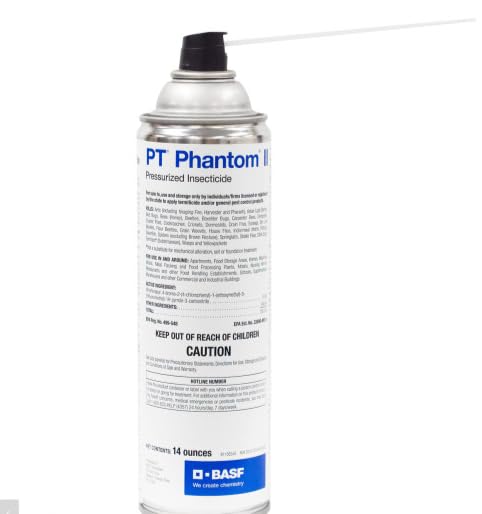
BASF PT Phantom II Pressurized Non-Repellent Insecticide Spray, 14 oz
| Item Form | Spray |
|---|---|
| Target Species | Ants, Cockroach, Spiders, Bed Bug, Wasps, Flies |
| Liquid Volume | 14 fluid ounces |
| Active Ingredients | Chlorfenapyr 0.5% |
| Special Features | Fast-Acting, Long-Lasting, Non-Staining |
BASF PT Phantom II is a ready-to-use, pressurized insecticide that delivers non-repellent control of a broad range of pests including ants, cockroaches, bed bugs, spiders, wasps, and flies. In practice it is sprayed into cracks, voids, and around perimeters or applied in accessible treatment areas where a stealth approach is desired so pests do not detect and avoid the product. Its active ingredient chlorfenapyr is designed to reduce resistance, which makes Phantom II useful in locations with persistent or tolerant infestations such as kitchens or multiunit housing. Notable features are its EPA specification, non-staining formula, and claims of fast and long-lasting activity. Because it is pressurized and ready to use, it is convenient for spot treatments and professional-style applications without mixing. Important limitations are that label instructions and PPE requirements must be followed closely and some state restrictions may apply, so check local regulations before use; this product is intended for targeted treatments rather than broadcast outdoor lawn spraying.
Best for: Best for homeowners or pest pros focused on effective control of persistent indoor crawling pests who prioritize performance against resistant populations and need a ready-to-use, targeted solution.
Less Ideal for: Not a good choice for gardeners needing broad outdoor turf or landscape treatments or for users seeking an all-purpose perimeter granule or hose-end product.
- Non-repellent formulation reduces pest avoidance and improves effectiveness on hidden infestations
- Contains chlorfenapyr, which works differently from many common actives to help manage resistance
- Ready-to-use pressurized can requires no mixing for quick spot or perimeter treatments
- EPA-specified product with a non-staining formulation suitable for sensitive indoor areas
- Not intended for large-area broadcast lawn or landscape applications
- Requires PPE and careful adherence to label instructions and local restrictions
Verdict: Choose this product when you need a ready-to-use, non-repellent spray that delivers professional-grade control against resistant and hard-to-find indoor pests.
Atticus Antapex WSG Water-Soluble Insecticide, 10 g Packet

| Item Form | Water Soluble Granule |
|---|---|
| Target Species | Insects |
| Special Features | Non-repellent Active Ingredient |
| Active Ingredients | Dinotefuran |
| Specification Met | EPA |
Antapex WSG is a pre-measured, water-soluble granule insecticide designed for indoor and outdoor pest control. Each 10 g packet mixes into water to produce a low-odor, colorless spray for treating cracks, crevices, perimeters, landscapes, and animal housing without leaving visible residue. The non-repellent dinotefuran formulation is intended for delayed kill and transfer among ants, which helps reduce entire colonies rather than just driving foragers away. Labeled for a broad list of pests including ants, roaches, bed bugs, fleas, and spiders, it is useful for both residential and commercial settings. Practical benefits include easy measuring, flexible application rates (1–3 packets per gallon to cover up to 1,000 sq ft), and relatively short reapplication intervals for spot or general treatments. Important limitations are regulatory restrictions in several states and the need to follow label directions carefully around pollinators and animal areas; it is not for direct application to pets. Users should also be prepared to mix and apply the solution safely with appropriate protective equipment.
Best for: Buyers who want a practical, easy-to-mix non-repellent insecticide to target ants and other common pests and who prioritize colony-level control and low-odor applications around buildings and animal housing.
Less Ideal for: People who cannot use pesticides due to local regulatory bans, who prefer non-chemical methods, or who need a product approved for direct application to animals should look elsewhere.
- Pre-measured 10 g packets simplify mixing and reduce measuring errors.
- Non-repellent dinotefuran formulation allows delayed kill and colony transfer for better ant control.
- Low-odor, colorless solution suitable for use in and around homes without obvious staining or smell.
- Label supports a wide range of use sites including indoor spaces, perimeters, landscapes, and animal housing.
- Not registered for use in multiple U.S. states, limiting where it can be applied.
- Contains a potent neonicotinoid active ingredient that requires careful handling and adherence to label restrictions around pollinators and sensitive sites.
Verdict: Choose Antapex WSG if you want a simple pre-measured, non-repellent insecticide that targets ants and a broad set of pests while enabling colony-level control.
Envu Temprid FX Insecticide Concentrate, 8 ml

| Item Form | Spray (concentrate) |
|---|---|
| Target Species | Insects, Spiders |
| Liquid Volume | 8 ml |
| Specification Met | EPA |
Temprid FX is a small 8 ml insecticide concentrate designed for crack-and-crevice, spot and perimeter treatments indoors and outdoors. As a non-repellent formula it lets exposed pests contact treated surfaces and carry the active ingredients back into harborage areas for broader control rather than immediately repelling them. The product pairs two active ingredients to provide fast knockdown plus residual protection, and its label covers common invaders such as ants, cockroaches, spiders, fleas, ticks and mosquitoes plus tougher targets like scorpions. Because it is a concentrate, you dilute before use which keeps the bottle compact and reduces how often you need to replace product for small jobs. The flexible label and EPA registration make it suitable for targeted home treatments and for larger perimeter or foundation work when mixed at the correct rate. Limitations are the small 8 ml volume which suits spot jobs but means frequent reorders for heavier use and the need to follow label directions carefully when applying near plants or occupied spaces.
Best for: Buyers who need an effective, non-repellent concentrate for targeted indoor or perimeter spot treatments and who prioritize product efficacy over large-volume coverage.
Less Ideal for: People who need a ready-to-use, high-volume solution for continuous or large-area spraying should consider larger containers or different product formats.
- Non-repellent formula promotes transfer of active ingredients to hidden pests for more complete control
- Dual active ingredients provide both fast knockdown and lasting residual control
- Label permits indoor crack-and-crevice and outdoor perimeter applications for flexible use
- Concentrated 8 ml bottle is compact and economical for occasional spot treatments
- Very small liquid volume limits how many treatments you can mix from one bottle
- Requires proper dilution and careful reading of the label before use
Verdict: Choose Temprid FX when you want a compact, non-repellent concentrate that delivers fast knockdown and residual control for targeted indoor and perimeter pest treatments.
BASF Alpine WSG Water Soluble Granules Insecticide, 200 g

| Item Form | Granule |
|---|---|
| Indoor Outdoor Usage | Indoor |
| Target Species | Ants, cockroaches, bed bugs, fleas, house flies, mosquitoes |
| Material Features | Water soluble granules, non-staining, odorless |
| Active Ingredient | Dinotefuran 40% |
BASF Alpine WSG is a concentrated water‑soluble granule insecticide designed for professional and homeowner use where reliable spot and perimeter control is needed. The granules dissolve to produce a clear spray that can be applied indoors, outdoors, and off‑structure areas such as patios and garbage zones to reach pest harborage sites. Its active ingredient, dinotefuran 40%, provides fast knockdown and has transfer properties that help control social insects like ants and German cockroaches beyond the treated surface. The product is odorless and non‑staining when used as directed, and one diluted gallon treats roughly 1,000 square feet which makes it efficient for larger problem areas. Important limitations are that it is a concentrated pesticide requiring careful mixing and label‑directed application to avoid non‑target exposure, and some state or use restrictions may apply. For anyone prioritizing dependable, professional‑grade control of cockroaches and other household pests, Alpine WSG delivers a potent, versatile option when handled responsibly.
Best for: Buyers who need a dependable, professional‑grade solution to eliminate German cockroaches and other common household pests and who are comfortable following label directions for mixing and application.
Less Ideal for: Homeowners seeking ready‑to‑use, do‑not‑mix products or those unwilling to follow pesticide safety and application rules should consider simpler consumer formulations instead.
- Contains dinotefuran 40% for rapid knockdown and transfer control of social insects
- Water‑soluble granules dilute to a clear, non‑staining, odorless spray
- Label permits indoor, outdoor, and off‑structure applications for flexible placement
- Efficient coverage where one gallon of finished dilution treats about 1,000 square feet
- Concentrated formula requires precise mixing and careful handling
- Use may be subject to state or site restrictions and requires following label safety directions
Verdict: If you want a reliable, professional‑strength insecticide for fast, transferable control of German cockroaches and other household pests, Alpine WSG is a strong choice when mixed and applied per label directions.
BASF Alpine WSG Water-Soluble Insecticide Granules (Dinotefuran 40%)

| Item Form | Granules |
|---|---|
| Target Species | Ants, cockroaches, bed bugs, beetles, fleas, flies, mosquitoes |
| Active Ingredients | Dinotefuran 40% |
| Specification Met | EPA |
BASF Alpine WSG is a concentrated water-soluble granule insecticide designed for fast, broad-spectrum control of ants, cockroaches, bed bugs, flies, mosquitoes and other common pests. The granules dissolve into a clear spray solution for targeted treatments around foundations, garages, attics, eaves, patios and other indoor or outdoor sites. Notable features include a high concentration of dinotefuran (40%) and reduced-risk EPA status for public health and food-handling settings. In practical use one gallon of finished dilution treats about 1,000 square feet, so small sachets can cover multiple spot treatments when mixed properly. Benefits include quick knockdown, non-repellent action that helps insects pick up and transfer the active ingredient, and an odorless, nonstaining finished solution when used as directed. Important limitations are that it is a pesticide requiring careful adherence to label directions, attention to pollinator safety and potential state restrictions, and it is not a ready-to-use spray so users need proper measuring and sprayer equipment.
Best for: Best for homeowners or pros who prioritize fast, effective chemical control of a broad range of pests and are comfortable mixing and applying concentrated formulations safely.
Less Ideal for: Not a good choice for gardeners seeking organic or nonchemical options or for casual users who prefer ready-to-use sprays without measuring and mixing.
- High-concentration active ingredient (Dinotefuran 40%) for rapid pest knockdown
- Water-soluble granules mix into a clear, nonstaining spray for versatile indoor and outdoor use
- Reduced-risk EPA designation suitable for public health and food-handling areas
- Effective against a wide range of pests including ants, cockroaches, bed bugs and mosquitoes
- Requires mixing and application equipment rather than being ready-to-use
- Must follow label restrictions to protect pollinators and comply with state rules
Verdict: Choose Alpine WSG when you need a concentrated, fast-acting professional-grade solution for broad indoor and outdoor pest control.
Choosing the Right Non Repellent Insecticide: Key Factors to Consider
Residual Effectiveness
How long the active ingredient continues to control pests after application matters because gardeners often rely on a single treatment to protect vulnerable plantings and perimeter areas. Residual times vary with formulation, rate, and environmental exposure. Expect reduced persistence in high-UV, heavy-rain, or frequently irrigated sites, and consider applications timed to dry weather windows.
Longer residuals can reduce how often you need to reapply, but they also increase the period when non-target organisms may be exposed. Balance the desired control interval with site-specific risks when choosing a product.
Formulation and Application Versatility
Non repellent insecticides come as concentrates, ready-to-use sprays, granules, or baits. Concentrates that dilute for multiple uses are flexible for treating mulch, turf edges, foundation crevices, and localized soil drenching. Granules can be easier for turf and large bed areas but may not penetrate voids as well.
Choose a formulation that matches how you plan to treat the infestation. If you need to treat cracks and hidden galleries, a liquid formulation applied with a handheld sprayer or injector will usually reach those spots better than granules.
Labeled Safety for Garden Use
Read label directions carefully for outdoor ornamentals, edible crops, and proximity to water. Labels specify buffer distances, re-entry intervals, pre-harvest intervals, and approved application sites. These restrictions determine whether a product is appropriate for flower beds, vegetable gardens, or simply around a building perimeter.
Products with clearer and more permissive garden-use language offer practical advantages for homeowners. If a label requires extended re-entry or prohibits use on certain ornamentals, that can limit where and when you can apply.
Impact on Pollinators and Beneficials
Non repellent treatments can contact non-target insects if applied directly to blooms or when residues persist on flowering plants. Time applications to avoid bloom periods, apply to non-flowering parts of plants when possible, and consider physical barriers or spot treatments in high-pollinator areas.
Some formulations break down faster on foliage yet retain activity in soil; others remain active on treated surfaces. Understanding these differences helps reduce unintended harm to bees and predatory insects.
Compatibility With Garden Practices
Consider how a chosen insecticide fits your normal irrigation, mulching, and planting schedule. Products that require dry foliage for a period after application may conflict with regular watering. Likewise, mulching or soil cultivation can bury or remove surface residues.
Pick a product whose use pattern matches your garden maintenance. If you plan to mulch or dig after treatment, choose an approach that maintains target-site contact or schedule applications after those activities.
When Non Repellent Formulations Are the Right Choice
Non repellent insecticides are most useful when pests shelter in hidden spaces where repellents just push them deeper. Use these formulations for issues like ants nesting in mulch, hidden cockroach harborage, or subterranean pests approaching foundations. They work by exposing insects to residues that they do not detect, allowing the material to spread back into the colony or nest.
These products are not a universal solution. They are best for targeted perimeter treatments, baiting strategies, and surface or soil applications that reach galleries and tunnels. For active pests visible on open foliage, pairing non repellent perimeter work with targeted contact controls may give more immediate knockdown.
- Ideal for perimeter and void treatments where insects hide
- Useful when colony-level control is the goal
- Less effective as a standalone for heavy, exposed infestations
Application Tips for Gardeners
Follow label mixing and application rates exactly and calibrate sprayers to deliver the right coverage. Overdiluting may reduce residual carryback; overconcentrating increases non-target risk. For crack-and-crevice work, use a low-pressure, coarse spray or specialized injector to place small volumes directly where insects travel.
When treating mulch or soil, apply to the surface and avoid deep incorporation unless the label allows soil drenching. Avoid spraying open flowers and water treated areas only after the specified dry time to maintain activity. Use spot treatments rather than broad broadcast applications when possible to limit exposure.
- Calibrate sprayer and measure product accurately
- Spot treat nests and foraging trails to limit non-target exposure
- Time applications for dry weather and away from pollinator activity
Integrating With Cultural and Physical Controls
Combine non repellent insecticide use with cultural practices to reduce reinfestation. Removing excess mulch, trimming back plant material from foundations, and eliminating moisture sources reduce habitat suitability for many pests. Physical exclusion such as sealing cracks and installing door sweeps helps prevent reentry.
Use insecticides as one layer in an integrated approach. For example, treating a perimeter while correcting site conditions reduces reliance on repeated chemical treatments and improves long-term outcomes.
- Reduce shelter and moisture to complement chemical control
- Seal entry points to limit new infestations
- Use insecticides strategically rather than as constant maintenance
Safe Storage and Handling in a Garden Setting
Store concentrates in their original containers, locked away from children and pets, and out of direct sunlight. Keep products in a dry, cool place and do not transfer them into food or drink containers. Dispose of rinse water according to label guidance and local regulations.
When mixing or applying, wear the personal protective equipment specified on the label. Even low-concentration non repellent products can pose inhalation or skin risks during mixing and application, so use gloves and eye protection and avoid applying on windy days.
- Store in original container in a secure, ventilated location
- Use label-prescribed protective equipment during mixing and application
- Follow disposal instructions for containers and rinsewater
Monitoring Effectiveness and When To Reapply
Set expectations: non repellent products may not produce immediate visible die-off because pests do not detect the material. Monitor treated areas for reduced activity over days to weeks, and check for new trails or nesting. If activity persists after the labeled retreatment interval, reapply only as directed.
Document application dates, weather conditions, and pest observations to inform future treatments. This record helps identify whether reduced performance is due to environmental wash-off, improper application, or pest pressure requiring integrated measures.
- Expect gradual reduction in activity rather than instant knockdown
- Reapply only according to label-specified intervals
- Keep treatment records and observe non-target impacts
How We Chose the Best Non Repellent Insecticide
We prioritized products that perform in the specific situations gardeners encounter when managing concealed or hard-to-reach pests. Our selection criteria focused on measurable, product-specific dimensions: residual effectiveness against common garden and structural pests; formulation versatility for soil, mulch, and crack-and-crevice use; labeled application safety and restrictions for outdoor areas and ornamentals; clarity and practicality of application instructions; and compatibility with typical garden tools and watering schedules. We reviewed technical label data and usage guidance to determine which products are appropriate for planting beds, turf edges, and around foundations. We excluded broad general-purpose insecticides that rely primarily on repellent action or are intended only for indoor aerosol use. Products without clear outdoor use directions, inadequate residual data, or labels that prohibit typical garden applications were removed. The result is a focused set of non repellent insecticides that suit common gardener needs without promising claims that require independent lab testing.
FAQ
Are non repellent insecticides safe to use around flowering plants?
Often they can be used near non-flowering parts of plants, but safety depends on the product label. Avoid applying to open blooms and time treatments for periods when pollinators are not active. The label will give specific restrictions and re-entry guidance.
How long before I should expect to see reduced pest activity?
It usually takes days to weeks to see colony-level reductions because pests do not detect the material and do not die immediately. Monitor activity and follow label retreatment intervals if control is insufficient.
Can I use non repellent products in vegetable gardens?
It depends on the label. Some formulations are labeled for use in edible gardens with specified pre-harvest intervals, while others are restricted to ornamental or perimeter use. Always follow the label for crop-specific instructions.
Will rain wash away treatments and reduce effectiveness?
Heavy rain soon after application can reduce surface residues and shorten residual life. Many labels specify a rainfast period; schedule treatments for a forecasted dry window when possible and follow irrigation guidance.
Do non repellent insecticides harm beneficial insects?
They can if beneficials contact treated surfaces or residues, especially on blooms. Minimizing broadcast applications, treating non-flowering areas, and timing applications for low pollinator activity helps reduce non-target impacts.
Final Verdict
Choose a non repellent insecticide that matches the infestation site and your garden practices. Prioritize formulations and labeled uses that reach hidden nests or voids, offer the residual length you need, and have clear outdoor safety directions. Balance effectiveness with pollinator and plant protections by using targeted, timed applications and integrating cultural controls. With the right product and proper technique, you can reduce hidden pest pressure while limiting unintended impacts.
