

Note: This article contains affiliate links. If you click on these links and make a purchase, I may earn a small commission at no extra cost to you. This helps support my research and content. Read my full affiliate disclosure here.
If you want to keep biting insects and household pests away without harsh chemicals, choosing the right non toxic bug spray for home matters. Indoor use raises different concerns than outdoor products: you need low odor, minimal residue, and ingredients that are safe around children, pets, and food prep areas. This guide shortlists five top options suited to home use and evaluates them on practical gardener- and homeowner-focused criteria like ingredient transparency, indoor safety, and lingering effectiveness. Read on to see the factors we weighed and why those dimensions matter when protecting living spaces.
Top Picks at a Glance
| Best Overall The best all-around choice for most situations | EcoVenger All Purpose Insect Spray, Plant-Based 16 oz |  |
| Best Quality Built to a higher standard if you want something more solid | EcoVenger Bed Bug Killer Spray, Plant-Based 16 oz (EcoRaider) |  |
| Best Value The sweet spot between price and what you get | Wondercide Indoor Pest Control Spray, Peppermint, 16 fl oz |  |
| Best Budget The cheapest option that still gets the job done reliably | STEM Plant-Based Bug Spray for Ants, Roaches & Spiders, 10 oz |  |
| Best Seller A high-volume bestseller chosen again and again | Mighty Mint Peppermint Oil Insect Repellent Spray, 16 oz |  |
EcoVenger All Purpose Insect Spray, Plant-Based 16 oz

| Volume | 16 oz |
|---|---|
| Active ingredients | Geraniol, Cedarwood Oil, Citronella Oil, Sodium Lauryl Sulfate |
| Use | Indoor & outdoor |
EcoVenger All Purpose Insect Spray is a plant-based, ready-to-use spray intended for both indoor and outdoor pest control. It is typically used along baseboards, entryways, cracks and crevices, patios, window frames, and foundation perimeters to kill insects on contact and to leave a short-term residual barrier. The formula lists botanical active ingredients such as geraniol, cedarwood oil and citronella and claims to target ants, roaches, spiders, fleas, moths, silverfish, ticks and even eggs, which helps interrupt infestations. Practical benefits include a non-staining, mild scent from essential oils and a pet- and child-friendly profile compared with conventional pesticides. Limitations to keep in mind are that efficacy and residual duration can vary with environmental conditions and heavy infestations may still require supplemental treatments, and the spray nozzle is noted as a delicate part that can be damaged if mishandled. For routine home spot treatments and perimeter defense, EcoVenger offers an eco-friendlier, easy-to-apply alternative to harsh chemical sprays.
Best for: Homeowners who want an effective, lower-toxicity spray for routine indoor and perimeter pest control and who prioritize a product that is easier on people and pets than traditional pesticides.
Less Ideal for: People facing large or persistent infestations that likely require professional-grade pesticides or integrated pest management programs.
- Plant-based active ingredients (geraniol, cedarwood oil, citronella) for reduced reliance on synthetic pesticides
- Kills on contact and claims residual protection that continues to deter pests for days to weeks
- Safe for use indoors and outdoors and marketed as safe around children and pets when used as directed
- Non-staining formula with a mild, natural scent instead of a harsh chemical odor
- Residual effectiveness depends on conditions and may be shorter in high-traffic or wet areas
- Nozzle is described as delicate and can be damaged if mishandled
Verdict: A practical, plant-based spray for everyday home spot treatments and perimeter defense when you want a safer alternative to conventional insecticides.
EcoVenger Bed Bug Killer Spray, Plant-Based 16 oz (EcoRaider)

| Volume | 16 oz |
|---|---|
| Active ingredients | Geraniol, Cedarwood oil, Sodium Lauryl Sulfate |
| Residual protection | Up to 14 days |
| Target pests | Bed bugs, eggs, nymphs, resistant strains |
EcoVenger Bed Bug Killer is a ready-to-use, plant-derived spray designed to eliminate all life stages of bed bugs, including pesticide-resistant adults and eggs. In typical use you shake the bottle, spray mattress seams, box springs, bed frames, cracks, and crevices, then repeat weekly until activity stops. The formula lists botanical actives such as geraniol and cedarwood oil and claims rapid knockdown with proven ovicidal activity; independent field studies cited by the brand report high efficacy and roughly two weeks of dry residual protection. Practical benefits include a non-staining, mild woody scent and a safety profile that allows use around bedding and in occupied spaces where children and pets are present. Important limitations are that it is a topical spray only and may require repeated treatments for heavy infestations or hidden harborage sites; nozzle parts are noted as delicate and could need replacement if mishandled. For best results pair targeted spray applications with laundering, vacuuming, and monitoring to break infestations completely.
Best for: Buyers who prioritize proven, high-efficacy solutions that are safe to use in occupied bedrooms and sensitive settings and who plan to apply focused, repeated treatments where bed bugs hide.
Less Ideal for: Users seeking a single-treatment, whole-house remediation service or those who prefer professional fumigation or non-spray control methods.
- Plant-based formula effective against adults, nymphs, and eggs according to studies
- Provides up to two weeks of residual protection after drying
- Safe for use on mattresses and around children and pets when used as directed
- Mild, non-staining formula with a pleasant natural scent
- Not a whole-home solution; repeated spot treatments and integrated housekeeping are needed for severe infestations
- Spray nozzle contains delicate parts that may break with rough handling
Verdict: Choose EcoVenger when you want a research-backed, plant-based spray that kills all bed bug life stages and gives up to two weeks of residual protection for in-room treatments.
Wondercide Indoor Pest Control Spray, Peppermint, 16 fl oz

| Unit Count | 16 Fluid Ounces |
|---|---|
| Item Form | Spray |
| Target Species | Ants, Roaches, Spiders, Flies, Fleas, Ticks, Mosquitoes, Silverfish, Moths, Gnats |
| Active Ingredients | 4.2% Cedar Oil; 1.5% Peppermint Oil; 2.2% Sodium Lauryl Sulfate; 0.1% Sesame Oil |
Wondercide Indoor Pest Control is a ready-to-use peppermint-scented spray designed to kill and repel flying and crawling household pests including ants, roaches, spiders, flies, fleas, ticks, mosquitoes, moths, and gnats. It is typically used around baseboards, windows, doors, under sinks, in cabinets, on furniture and carpets, or sprayed directly on visible insects from 8 to 12 inches. Key features include a plant-derived active blend led by cedarwood and peppermint oils, a multi-surface sprayer with adjustable nozzle, and labeling that emphasizes safe use around people and pets when directions are followed. In practical terms this makes it a straightforward option for spot treatments and routine preventative spraying in kitchens, bathrooms, pet areas and living spaces. Limitations to keep in mind are that it must contact flying insects to kill them, surfaces can be slippery when wet, and some people may experience mild skin or eye irritation if misused. For someone looking to reduce reliance on synthetic pesticides while keeping indoor pest problems under control, this product delivers an easy, plant-based approach.
Best for: Buyers who prioritize practical, lower-toxicity solutions and want a versatile, easy-to-use indoor spray for routine spot treatment and prevention around the home and pet areas.
Less Ideal for: People who need long-duration residual control or professional-grade pesticide strength for large infestations should consider stronger or specialized treatments.
- Plant-powered formula with cedarwood and peppermint oils as primary active ingredients
- Kills and repels a broad list of common indoor pests including fleas, ants, roaches and flies
- Ready-to-use spray with adjustable nozzle for targeted or mist application
- Labeled safe for use around people and pets when directions are followed
- Must directly contact flying insects to be effective against them
- Can cause mild skin or eye irritation and surfaces may be slippery when wet
Verdict: A practical, plant-based indoor spray for homeowners who want an easy, lower-toxicity way to kill and repel common household pests while using a product safe for family and pets when used as directed.
STEM Plant-Based Bug Spray for Ants, Roaches & Spiders, 10 oz

| Item Form | Aerosol |
|---|---|
| Target Species | Ants, Roaches, Spiders |
| Unit Count | 10 Ounce |
| Active Ingredients | Geraniol 6.0%, Lemongrass Oil 0.5% |
STEM Plant-Based Bug Spray is an aerosol insecticide formulated with botanical actives like geraniol and lemongrass oil to kill ants, roaches and spiders in and around the home. You use it like a conventional spray: target visible insects, spray entry points, baseboards or outdoor hiding spots and allow treated areas to dry. Notable features include a plant-based active ingredient mix, no added dyes or strong chemical fragrances, and formulation the brand says is safe around people and pets when directions are followed. In practice it provides a low-odor alternative to harsh chemical sprays and is suitable for quick spot treatments and perimeter use. Limitations are that it is a contact/knockdown spray rather than a long-lasting residual treatment and effectiveness depends on correct placement and repeat applications for heavy infestations. For buyers wanting fewer synthetic chemicals, it balances ease of use and reasonable efficacy, but you may need follow-up treatments or complementary controls for persistent problems.
Best for: Homeowners who prioritize a less-chemical, easy-to-use spray for occasional indoor or outdoor bug problems and want a straightforward, lower-odor option for spot treatments.
Less Ideal for: People facing large or recurring infestations who need long-lasting residual control or professional-strength products should consider alternative solutions.
- Plant-based active ingredients (geraniol and lemongrass oil) offer a lower-odor alternative to conventional insecticides
- Clear intended use for indoor and outdoor spot treatments and perimeter spraying
- Aerosol form is easy to apply to cracks, crevices and visible insects
- Provides contact knockdown but not a long-lasting residual barrier
- May require repeat applications or supplemental methods for heavy or established infestations
Verdict: Choose this spray if you want an easy, plant-based knockdown option for occasional indoor or outdoor ant, roach, and spider problems.
Mighty Mint Peppermint Oil Insect Repellent Spray, 16 oz
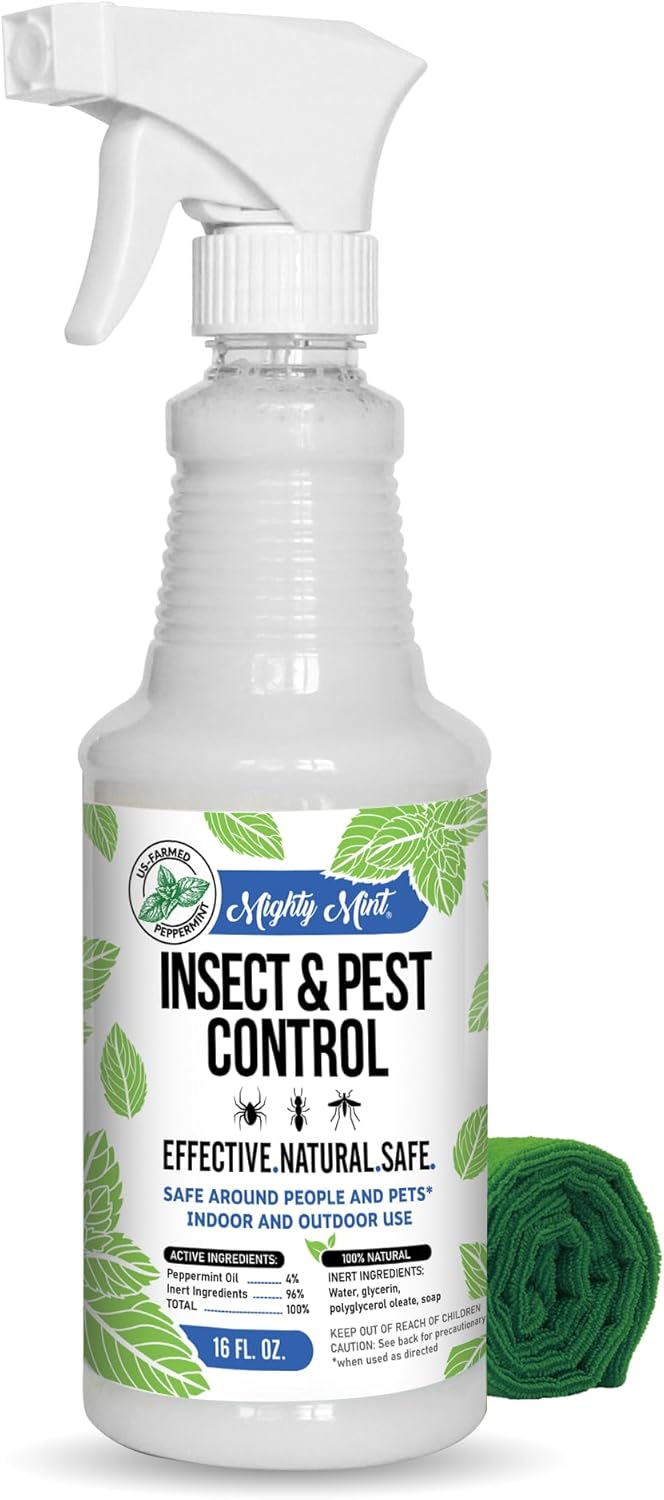
| Ingredients | Water, Glycerine, Polyglycerol oleate, Soap, Peppermint oil |
|---|---|
| Volume | 16 oz |
| Use | Indoor / Outdoor |
| Pests | Spiders, ants, roaches and other common insects |
Mighty Mint Peppermint Oil Insect Repellent is a plant-based, ready-to-use 16 oz spray designed for targeted indoor and outdoor pest control. You use it by shaking and spraying around baseboards, entryways, patios, garages, and other problem areas to discourage spiders, ants, roaches, and similar pests; the directions recommend reapplying a couple of times per week for best results. The formula lists water, glycerine, soap, polyglycerol oleate, and concentrated peppermint oil, so it relies on scent and surface coverage rather than synthetic insecticides. Practical benefits include a fresh mint scent instead of harsh chemical fumes and a formula marketed as safe for homes with pets and children when used as directed. Important limitations are that it must be kept away from pollinators and not applied to skin, and effectiveness depends on frequent reapplication and thorough coverage rather than a one-time residual kill. For someone seeking a nonchemical option for routine perimeter and spot treatments, this spray is an easy, low-odor choice, but it is not a replacement for professional treatments during heavy infestations.
Best for: Homeowners who prefer low-toxicity, scent-based pest control for routine spot treatments and perimeter maintenance and who prioritize safety around family and pets when used as directed.
Less Ideal for: People facing an active, large-scale infestation or those needing a long-lasting residual insecticide should consider professional services or stronger chemical treatments instead.
- Plant-based peppermint oil formula avoids synthetic pesticides
- Ready-to-use 16 oz spray for quick targeted application
- Fresh mint scent that is milder than chemical repellents
- Designed for both indoor and outdoor use on entryways and baseboards
- Requires frequent reapplication for ongoing protection
- Not labeled for direct skin application and must be kept away from pollinators
Verdict: A gentle, ready-to-use peppermint spray that offers a low-toxicity, odor-friendly way to repel common household bugs for everyday perimeter and spot treatments.
Choosing the Right Non Toxic Bug Spray for Home: Key Factors to Consider
Ingredient Safety and Transparency
Knowing what is in a bottle is the first step to choosing a non toxic bug spray for home. Clear labeling of active and inert components helps you judge acute toxicity, allergic potential, and whether ingredients are derived from botanical sources or synthetics.
Transparent formulations let you cross-check ingredient safety with independent resources and follow any precautions for people with asthma, skin sensitivities, or chemical allergies. Lack of transparency is a red flag for indoor use because you cannot confidently assess long-term exposure risks.
Indoor Safety Around People and Pets
A spray that is safe outdoors can still cause problems indoors if it generates fumes or leaves residues that children or pets contact. Look for products explicitly labeled for household or indoor use and for guidance on re-entry times after application.
Consider whether the formula requires removing food, bedding, or toys during treatment, and whether it lists any contraindications for aquarium or reptile rooms. Indoor safety also includes evaluating whether a product needs ventilation or will dissipate quickly enough not to trigger respiratory irritation.
Effectiveness Against Common Household Pests
Non toxic options vary in what they control. Some target mosquitoes and flies, others are better for ants, cockroaches, or spiders. Check which pests are listed on the product label and whether efficacy claims are supported by method-of-action descriptions.
Match the spray to your typical indoor pests rather than assuming a single product handles everything. A product that repels flying insects may not eliminate crawling pests, so understanding target pests prevents mismatched expectations.
Residual Odor and Surface Residue
In the home, lingering smells and sticky residues are major annoyances and potential irritants. Products that evaporate cleanly or leave minimal visible residue are preferable, especially in kitchens, bedrooms, and play areas.
Consider how a spray behaves on common indoor surfaces like upholstery, countertops, and painted walls. If a product leaves a film, it may attract dust or require extra cleaning, which undermines the convenience benefit of an easy indoor spray.
Application Method and Convenience
How you apply a spray affects safety and effectiveness. Fine-mist aerosol-style pumps offer broad coverage but can linger in the air longer. Trigger sprays give more control for spot treatments but may be slower for larger areas.
Also consider bottle ergonomics, reach of the spray stream, and whether the product can be used directly on fabrics or bedding. A formula that is easy to apply in tight indoor spaces reduces the temptation to overapply and increases safe use.
Cleaning and Re-Treatment Requirements
Some non toxic sprays require more frequent reapplication because they do not persist, while others claim longer residual action. Balance the convenience of a longer-lasting treatment against any concerns about surface buildup or long-term exposure.
Understand whether the product needs to be wiped off after a set time in food-prep areas or children's rooms. A realistic maintenance plan helps you keep pests at bay without increasing exposure or household chores.
How Non Toxic Active Ingredients Work
Non toxic bug sprays often rely on botanical extracts, mineral-based actives, or physical modes of action rather than traditional synthetic neurotoxicants. Botanical actives can repel or disrupt insect behavior, while mineral-based products may abrade or desiccate small arthropods.
Understanding the mode of action helps set expectations for speed and durability. Repellents tend to provide immediate protection but wear off sooner, while products that affect insect physiology may need contact and repeated applications to reduce pest numbers indoors.
- Botanical repellents give short-term protection; reapply as directed.
- Mineral or physical actives can reduce pest survivability on contact.
- Behavioral disruptors lower the chance of bites without killing pests.
Safe Use Tips for Indoor Applications
Always read the label for room-specific guidance and re-entry times. Ventilate the treated area if the label recommends it, and keep children and pets out of the space until any specified wait period has passed.
For spot treatments, aim sprays at baseboards, window sills, and entry points rather than spraying broad swathes of occupied surfaces. Wipe treated food-prep counters if the product label advises, and wash hands after handling treated fabrics or bedding.
- Ventilate briefly after spraying if recommended.
- Target cracks and entry points for crawling pests.
- Avoid spraying directly onto bedding, dishes, or food.
When to Choose Residual Action Versus Repellency
If you need immediate relief from biting insects in living areas, a repellent-style spray that dissipates cleanly may be the best choice. These products often prioritize low odor and low residue over long residual control.
If you are managing persistent crawling pests or long-term infestations, a product with some residual action may reduce reapplication frequency. Weigh that convenience against the potential for surface buildup and any extra cleaning steps recommended by the label.
- Repellents for transient flying insects and immediate protection.
- Residual options for repeated crawling pest pressure.
- Plan reapplication intervals into your cleaning routine.
Storing and Disposing Indoor Bug Sprays
Store sprays in a cool, dry place out of reach of children and pets. Avoid leaving bottles in direct sunlight or hot garages, which can degrade active ingredients and containers.
Dispose of empty or unwanted spray bottles according to local household hazardous waste guidance even if the product is labeled non toxic. Some labels recommend triple-rinsing containers before recycling; follow label instructions to reduce environmental impact.
- Keep products in original containers with labels intact.
- Follow local rules for disposal or recycling.
- Do not pour leftover product down drains unless label permits.
Integrating Non Toxic Sprays with Non-Chemical Controls
Non toxic sprays work best when combined with exclusion and sanitation. Seal cracks, install door sweeps, and reduce standing water or food crumbs that attract insects. Using traps and physical barriers reduces the need for repeated applications.
Routine cleaning, proper food storage, and moisture control address the underlying drivers of many indoor pest problems. Sprays should be one part of a layered approach, not the sole solution.
- Seal entry points to reduce reinfestation.
- Keep kitchens and pet areas clean to deny pests food sources.
- Use traps or monitoring to track whether treatments are working.
How We Chose the Best Non Toxic Bug Spray for Home
We focused on sprays formulated and labeled for indoor or household use and prioritized transparency about active and inert ingredients. Key evaluation criteria included ingredient safety profiles, documented indoor efficacy against common household pests, and potential for residue or odor that affects living spaces. We also assessed application convenience for indoor routines, such as spray type and surface compatibility, and considered pet- and child-safety guidance on manufacturer literature. Products were excluded if they were designed only for outdoor use, required equipment beyond simple household spray bottles, or lacked clear ingredient information. We favored options that balance reasonable short-term effectiveness with low persistence of residues and minimal volatile smells. The filters applied reflect real decisions homeowners make: is the formula documented as safe for indoor use, does it leave residues that require extra cleaning, is it effective against the pests commonly found indoors, and how easy is it to apply safely around people and pets.
FAQ
Are non toxic bug sprays safe around pets?
Often yes, but it depends on the specific formulation. Look for products labeled safe for use around pets, follow re-entry times, and keep animals out of treated areas until the label indicates it is safe. For sensitive species or rooms with aquariums, take extra precautions.
How long do indoor non toxic sprays usually last?
It usually depends on the active ingredients and whether the product is labeled as a repellent or residual treatment. Repellents often last a few hours to a day, while residual options may provide control for several days to weeks and require reapplication as directed.
Can I use non toxic bug spray on upholstery and bedding?
Some formulas are safe for fabrics but many are not. Check the label for surface compatibility and test a small hidden area first. If the label recommends avoiding bedding or direct contact with fabrics, follow those directions and launder items if necessary after treatment.
Will non toxic sprays prevent bites from mosquitoes indoors?
They can reduce biting if the product is designed as a repellent for flying insects and applied appropriately. For enclosed spaces, combining spray use with screens, fans, and removal of standing water increases protection against mosquitoes.
Do non toxic sprays eliminate cockroaches and ants?
Some non toxic sprays can kill or repel crawling pests on contact, but many are better used as part of a broader plan including baiting, sanitation, and sealing entry points. Expect that persistent infestations may require multiple tactics.
Final Verdict
When choosing a non toxic bug spray for home, prioritize ingredient transparency and explicit indoor-safety labeling. Decide whether your primary need is short-term repellency or longer residual control and balance that with concerns about odor, residue, and pet or child exposure. A layered approach that combines targeted spray use with exclusion, sanitation, and monitoring will give the best results while minimizing indoor chemical exposure. Focus on the criteria discussed here to pick the option that matches your living spaces and routine.
