

Note: This article contains affiliate links. If you click on these links and make a purchase, I may earn a small commission at no extra cost to you. This helps support my research and content. Read my full affiliate disclosure here.
Bougainvillea responds best to steady feeding that encourages abundant bracts without leaving excess foliage or salty buildup. Choosing the right organic fertilizer for bougainvillea matters because these vining shrubs prefer balanced nutrition, slightly acidic conditions, and feeding schedules that match their active growth and bloom cycles. Poor choices can mean fewer flowers, leggier growth, or soil that becomes too alkaline over time. This guide covers five shortlisted organic fertilizers suited to bougainvillea and similar acid-tolerant ornamentals. We evaluated candidates on practical garden measures like nutrient ratios, release profile, and ease of application so you can pick an option that fits your pot, patio, or landscape. Read on for the criteria we used and what to consider before buying.
Top Picks at a Glance
| Best Overall The best all-around choice for most situations | Espoma Rose-tone Organic Rose and Flower Fertilizer, 4 lb |  |
| Best Value The sweet spot between price and what you get | Espoma Organic Bloom! Liquid Concentrate Plant Food (16 fl oz) |  |
| Best Budget The cheapest option that still gets the job done reliably | Jobe's Organics Granular Fertilizer for Annuals and Perennials, 4 lb |  |
| Highest Rated A top-rated pick with lots of positive feedback | Espoma Organic Rose-tone 4-3-2 Granular Fertilizer for Roses and Flowering Plants, 18 lb (2-Pack) |  |
| Most Popular A crowd favorite that many people choose with confidence | FoxFarm Big Bloom Liquid Plant Food, 16 fl oz |  |
Espoma Rose-tone Organic Rose and Flower Fertilizer, 4 lb

| Item Form | Granules |
|---|---|
| Specific Uses For Product | Gardening, Organic, Plant Food |
| Coverage | Medium |
| Target Species | Roses, Flowering Plants |
| Unit Count | 64 Ounce |
Espoma Rose-tone is an organic granular fertilizer formulated specifically for roses and other flowering ornamentals. It is applied around the plant drip line and watered in, and is intended for monthly use through the growing season to support leaf vigor and more prolific blooms. The 4-3-2 N-P-K formula with added calcium and Espoma’s Bio-tone mix uses natural ingredients and requires no mixing, so it is straightforward for routine maintenance feeding. Because it is an organic registered input, it fits gardeners who prefer natural fertility and steady nutrient release rather than fast-release synthetic boosts. Expect gradual improvements in color, flower set, and overall plant health over several weeks rather than instant greening. The product comes in a manageable 4 lb bag suited to medium coverage and is labeled for roses and other flowering shrubs. If you need a quick corrective for a specific deficiency or want a high-phosphorus bloom booster, this steady-release organic option may not replace targeted treatments.
Best for: Gardeners who prioritize organic, low-maintenance feeding schedules for roses and flowering shrubs and want a reliable monthly fertilizer during the growing season.
Less Ideal for: Growers who need fast-acting corrections, concentrated bloom boosters, or who manage very large rose plantings where bulk packaging would be more economical.
- Organic formulation approved for organic gardening
- Ready-to-use granular form requires no mixing and is easy to apply
- Balanced 4-3-2 N-P-K with added calcium supports foliage and bloom development
- Designed specifically for roses and other flowering plants
- Provides slow, steady nutrient release rather than rapid correction of deficiencies
- Sold in a single 4 lb bag which may be small for large rose gardens
Verdict: A dependable organic monthly fertilizer that steadily improves rose vigor and bloom production without mixing or synthetic inputs.
Espoma Organic Bloom! Liquid Concentrate Plant Food (16 fl oz)

| Item Form | Liquid |
|---|---|
| Specific Uses For Product | Organic,Plant Food |
| Application Method | water |
| Target Species | flowering plants, annuals & perennials |
| Liquid Volume | 16 fluid ounces |
Espoma Organic Bloom! is a low-analysis liquid concentrate designed specifically to encourage prolific flowering in ornamentals, hanging baskets and garden beds. It mixes with water for routine feedings every 2 to 4 weeks and contains natural proteins, kelp extracts and humic acids in a 1-3-1 NPK balance to support bloom development rather than leafy growth. Because it is a concentrated liquid, small measured doses make it easy to apply through a watering can or hose-end applicator for medium coverage areas. The organic certification means it can be used in certified organic production and avoids synthetic fertilizers, but its low nitrogen content means it will not drive rapid vegetative growth if that is desired. Practical benefits include simple dilution instructions, suitability for containers and in-ground plantings, and a formulation aimed at improving flower size and frequency. Expect steady improvements in bloom performance over the season rather than an immediate dramatic change.
Best for: Gardeners focused on boosting flower production in containers, hanging baskets, and garden beds who prefer an organic, easy-to-mix liquid feed applied on a regular schedule.
Less Ideal for: Growers who need a high-nitrogen feed for rapid leafy growth or those managing very large landscapes where bulk granular fertilizers are more economical.
- Organic certified formulation suitable for organic gardening
- Concentrated liquid mixes with water for convenient routine feedings
- 1-3-1 formulation targets flowering and bud development
- Contains kelp extracts and humic acids to support overall plant vigor
- Low nitrogen ratio so it will not significantly increase leafy growth
- 16 fl oz bottle is best for small to medium gardens and may require repurchasing for larger areas
Verdict: Use this organic liquid concentrate every few weeks to reliably increase bloom size and frequency on flowers and container plants.
Jobe's Organics Granular Fertilizer for Annuals and Perennials, 4 lb

| NPK | 3-5-4 |
|---|---|
| Form | Granules |
| Coverage | Resealable |
| Unit Count | 64 Ounce |
This granular fertilizer is designed to feed flowering annuals and perennials throughout the season using an organic 3-5-4 NPK formula. You sprinkle the granules around the root zone every 4 to 8 weeks during the growing season; the slow-release nature of the ingredients such as feather meal and bone meal helps provide steady nutrients for more blooms without frequent reapplication. The bag is resealable and sized for small beds, containers, or starter perennial plantings, and the OMRI listing makes it a fit for organic gardens and those who want pet- and people-safe products. Because it is a balanced, general-purpose flower formula, it works well as a low-effort fertilizer for mixed beds rather than for correcting specific nutrient deficiencies. It does not include concentrated quick-release nutrients for an instant green-up, so gardeners who need rapid correction or large-scale feeding may prefer a different product or a larger format for economy.
Best for: Gardeners who want an affordable, low-effort organic fertilizer for flower beds, mixed borders, or container perennials and prefer steady seasonal feeding over quick fixes.
Less Ideal for: Large-scale landscapers or growers who need fast-acting fertilizers or large-volume packaging for frequent heavy applications.
- OMRI-listed organic formula safe for use around people and pets
- Balanced 3-5-4 NPK tailored for bloom production in annuals and perennials
- Slow-release granulars provide steady feeding every 4 to 8 weeks
- Resealable 4 lb bag is convenient for small beds and container gardening
- Small 4 lb size may not be economical for large gardens
- Not formulated for rapid correction of specific nutrient deficiencies
Verdict: A budget-friendly organic granular fertilizer that reliably boosts blooms in small perennial and annual plantings with low maintenance feeding.
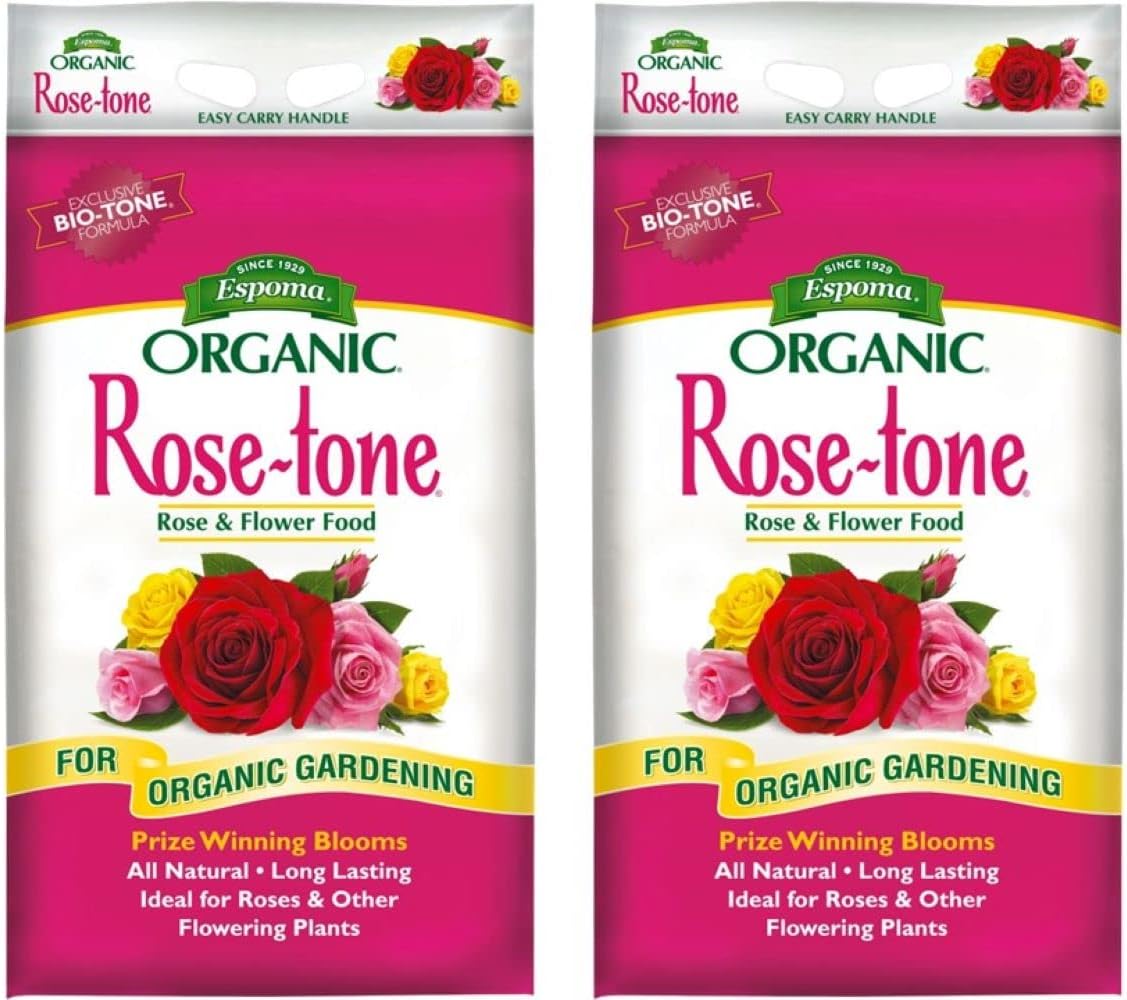
Espoma Organic Rose-tone 4-3-2 Granular Fertilizer for Roses and Flowering Plants, 18 lb (2-Pack)
| Item Form | Granules |
|---|---|
| Specific Uses For Product | Gardening,Organic,Plant Food |
| Coverage | Medium |
| Target Species | roses, viburnum, bougainvillea, clematis |
| Mixing Ratio | 4-3-2 |
Espoma Rose-tone is a ready-to-use granular organic fertilizer designed for monthly application to roses and flowering shrubs such as bougainvillea. You spread it around the plant drip line and water it in; the 4-3-2 nutrient analysis with added calcium and Espoma's Bio-tone formula supplies steady nitrogen for green growth plus phosphorus and potassium to support flowering. It is approved for organic gardening and contains natural ingredients rather than synthetic salts, which makes it a conservative choice for long-term soil health. Practical benefits include straightforward application, coverage labeled as medium for an 18 lb bag, and suitability for established shrubs that need regular feeding through the growing season. Limitations are that it is a seasonal, slow-release granular product so it is not a quick foliar fix for acute deficiencies and monthly applications are recommended from spring through early fall. For gardeners prioritizing consistent, organic feeding and soil biology, this product performs reliably when used as directed.
Best for: Gardeners who want a dependable, organic monthly fertilizer to maintain healthy flowering shrubs and prioritize soil biology over fast-acting chemical feeds.
Less Ideal for: People needing fast corrective feeding or quick foliar results for severely nutrient-deficient plants should choose a fast-acting fertilizer or foliar feed instead.
- Organic formula approved for organic gardening and free of synthetic fillers
- Includes Bio-tone microbes and 5% calcium to support soil biology and plant health
- Ready-to-use granules applied at the drip line make monthly feeding simple
- Suitable for a range of flowering shrubs listed including bougainvillea
- Slow-release granular format does not correct nutrient deficiencies immediately
- Coverage listed as medium so multiple bags may be needed for large plantings
Verdict: A reliable organic granular fertilizer that provides steady, season-long feeding and soil-friendly microbes to keep bougainvillea and other flowering shrubs healthy.
FoxFarm Big Bloom Liquid Plant Food, 16 fl oz

| Item Form | Liquid |
|---|---|
| Specific Uses For Product | Organic |
| Application Method | watering can, sprayer, or drip system |
| Liquid Volume | 16 fluid ounces |
| Mixing Ratio | 4 |
Big Bloom is a concentrated liquid bloom fertilizer aimed at boosting flowers and fruit by supplying readily available organic nutrients. It mixes into water (manufacturer recommends 4 tablespoons per gallon) and can be applied with a watering can, sprayer, hose-end siphon, or through drip systems, so you can feed potted plants, beds, or containers without changing your routine. Notable features are its OMRI listing for organic use and the inclusion of bat guano and earthworm castings, which provide phosphorus and organic matter to encourage blooms and seed set. Because it is liquid and fast-acting, you can expect visible perk-up within a short time after feeding, and it is suitable for regular use at watering times to extend flowering. Limitations to consider are the small 16 fl oz size for larger gardens and the presence of phosphorus, which may be restricted in some locales and requires careful application to avoid runoff.
Best for: Gardeners focused on maximizing blooms and fruit who want an organic, fast-acting feed they can add to routine watering for container and bed-grown flowering plants.
Less Ideal for: Large-scale landscapers or very large perennial beds who need bulk fertilizer solutions or want to avoid phosphorus-based products due to local regulations.
- OMRI-listed organic formula with natural inputs like bat guano and earthworm castings
- Liquid concentrate allows fast nutrient uptake and flexible application methods
- Works with watering cans, sprayers, hose-end siphons, and drip systems for easy integration
- Small 16 fl oz bottle may require frequent repurchasing for larger flower beds
- Contains phosphorus so local restrictions on phosphorus fertilizers may apply
Verdict: Choose Big Bloom when you want an OMRI-listed, easy-to-apply liquid fertilizer that delivers fast organic nutrients to boost flowering and fruiting.
Choosing the Right Organic Fertilizer for Bougainvillea: Key Factors to Consider
Nutrient Ratio and Bloom Support
Bougainvillea usually benefits from a fertilizer that favors bloom production over leafy growth. A formulation with balanced nitrogen but relatively higher phosphorus helps stimulate bract set and flowering. Overly high nitrogen encourages excessive foliage at the expense of blooms, while too little nitrogen can weaken overall vigor.
When selecting an organic option, look at the advertised N-P-K balance and consider supplemental feeding during peak bloom periods. Organic sources release nutrients differently than synthetics, so the immediate impact may be subtler but longer lasting; planning a feeding schedule that matches the plant's bloom cycles will give more consistent results.
Release Profile and Timing
Organic fertilizers vary from fast-acting liquid concentrates to slow-release granules and pellets. Fast-acting liquids and water-soluble organics can be useful for a quick boost when buds are forming. Slow-release granules or coated organics provide steady nutrition over weeks to months, reducing the need for frequent applications and lowering the risk of accidental overfeeding.
Consider whether your bougainvillea is in a container or in-ground. Containers often need more frequent feeding because potting mix drains and leaches nutrients faster. In-ground plants can benefit more from slow-release formats that integrate into the root zone and feed gradually.
Soil pH and Compatibility
Bougainvillea performs best in slightly acidic to neutral soils. Some organic amendments can alter pH over time, so it is important to choose fertilizers that are compatible with acid-loving ornamentals. Ingredients like sulfate-based compounds can lower pH, while some alkaline rock dusts can push pH upward.
If you are unsure about your soil's pH, test it before committing to a long-term amendment. Matching the fertilizer to your soil conditions helps nutrient uptake and prevents trace nutrient lockout that can mimic deficiency symptoms.
Form and Ease of Application
Fertilizers come as powders, granules, spikes, pellets, or liquid concentrates. For bougainvillea in containers, liquids or water-soluble organics allow precise control and even feeding. Granules and pellets are convenient for landscape beds and larger specimens where broad distribution is acceptable.
Also consider how easy the product is to measure and apply at the correct rate. Granular formulas that scatter evenly and water-in well are less likely to cause localized salt buildup. For small gardens or balcony growers, a liquid concentrate with clear dosing instructions reduces guesswork.
Salt Content and Long-Term Soil Health
Organic fertilizers generally have lower soluble salt levels than synthetics, but formulations can still vary. High salt concentrations can damage roots and cause leaf browning, especially in containers where salts accumulate. Choosing low-salt organics or products designed for container use helps protect root systems.
Look for fertilizers that promote microbial activity and organic matter incorporation rather than relying on highly soluble salts. Over time, healthy microbial activity improves nutrient availability and soil structure, which benefits bougainvillea's deep-rooting habit.
Ingredient Transparency and Source
Knowing what is in an organic fertilizer matters because some organic-labeled products include processed or recycled inputs with variable nutrient availability. Clear ingredient lists and percent nutrient guarantees help you predict how the product will behave in your garden.
Prefer fertilizers that state primary ingredients and their sources, such as composted plant material, fish or kelp extracts, bone meal, or rock phosphate. Transparency makes it easier to plan supplemental feeding and anticipate how quickly nutrients will become available to the plant.
Feeding Schedule for Bougainvillea
Bougainvillea has distinct growth and flowering phases, and timing your feedings to those stages gets the best results. During spring and early summer ramp-up, a balanced organic feed every 4 to 6 weeks supports new shoots and sets the stage for blooms. When you see bud formation, switch to a bloom-focused feed or a higher-phosphorus application for a couple of cycles to encourage bract production.
Containers and hanging baskets need more frequent attention because watering leaches nutrients faster than in-ground plantings. If you use a slow-release granule, apply it at the start of the growing season and top-dress midseason if needed. Liquids are best for targeted quick boosts but require a consistent schedule.
- Apply a balanced organic feed every 4 to 6 weeks during active growth.
- Use higher-phosphorus feeding when buds first appear for 2 to 3 cycles.
- Water in granular products thoroughly to move nutrients into the root zone.
Adjusting Fertilizer for Containers Vs In-ground
Container-grown bougainvillea benefit from frequent, lighter feedings because potting mixes dry and lose nutrients quickly. Choose water-soluble organics or dilute liquid feeds every 2 to 4 weeks. Slow-release granules designed for pots can work if you reduce the labeled rate to avoid over-accumulation of salts.
In-ground plants have more buffering from surrounding soil and organic matter. A single early-season application of slow-release organic fertilizer, followed by a midseason top-dress if bloom performance wanes, is usually sufficient. Apply granular products evenly across the root zone and lightly incorporate into the topsoil to encourage root uptake.
- Reduce slow-release rates for containers to prevent salt buildup.
- Top-dress in-ground plants once midseason if blooms decline.
Combining Fertilizer with Mulch and Soil Amendments
Mulch and organic soil amendments work together with fertilizer to support long-term plant health. A layer of organic mulch helps retain moisture, moderates soil temperature, and slowly breaks down to add nutrients. Pairing fertilizer with compost or well-rotted manure improves microbial activity and nutrient retention.
Avoid mixing high-phosphorus fertilizers directly with fresh uncomposted manures or strong alkaline amendments that can interfere with nutrient uptake. Instead, space amendments and fertilizers so each component can integrate into the soil without creating temporary imbalances.
- Use a 1-2 inch layer of organic mulch and replenish annually.
- Incorporate compost before planting and use fertilizer as a targeted nutrient source.
Signs of Overfeeding and Nutrient Deficiencies
Too much fertilizer often shows as leaf scorch, brown leaf margins, or reduced flowering. In containers, overfeeding can quickly cause salt stress because there is limited leaching. If you see leaf burn or wilting after feeding, flush the potting mix with ample water to remove excess salts.
Nutrient deficiencies can present as pale leaves, reduced growth, or poor bract development. Iron or manganese deficiencies are more likely if soil pH drifts too high; regular pH checks help diagnose these issues. Correcting the underlying soil condition and adjusting the feeding regimen generally resolves deficiency symptoms within a few weeks.
- Flush container soil if you suspect salt buildup.
- Test soil pH if yellowing or poor flowering persists.
How We Chose the Best Organic Fertilizer for Bougainvillea
We narrowed contenders by focusing on attributes that reliably affect bougainvillea performance in real gardens. First, nutrient balance mattered: we prioritized products with higher phosphorus relative to nitrogen to favor flowering without excessive leafy growth. Second, release profile was evaluated to match common bougainvillea schedules-fast-acting supplements for bloom onset and steady slow-release formulas for maintenance. Third, soil compatibility was tested conceptually by selecting fertilizers formulated for slightly acidic to neutral soils or that are pH-neutral in use. Application practicality was another filter: granular vs liquid vs pellet formats were assessed for ease of use in containers and landscape plantings. Organic sourcing and ingredient transparency were considered to reduce risk of salt buildup and long-term soil harm. We excluded synthetic-only formulations, products with unclear ingredient lists, and fertilizers designed exclusively for vegetables or lawns. The final shortlist reflects a balance of bloom support, gardener convenience, and soil health considerations aligned with common bougainvillea care practices.
FAQ
How often should I feed bougainvillea with an organic fertilizer?
It depends on the product form. Liquids and water-soluble organics are typically applied every 2 to 6 weeks during the growing season. Slow-release granular organics are often applied once at the start of the season with a midseason top-dress if needed.
Can I use compost instead of an organic fertilizer?
Compost improves soil structure and provides slow nutrient release but usually does not supply concentrated phosphorus needed for abundant flowering. Use compost as a base amendment and add a targeted organic fertilizer for bloom support.
Will organic fertilizer change soil pH for bougainvillea?
Some organic inputs can influence pH over time, but most labeled organic fertilizers have minimal immediate pH effect. If your soil is already alkaline, choose amendments that are compatible with slightly acidic-loving plants or correct pH before planting.
Are liquid organics better than granules for potted bougainvillea?
Liquids offer precise control and quick nutrient availability, which is helpful in containers that drain frequently. Granules can work if they are low-salt and applied at reduced rates for pots. Both forms are effective when matched to your watering and maintenance routine.
How can I tell if my bougainvillea needs more phosphorus?
Reduced or sparse bract production despite normal foliage growth suggests insufficient phosphorus. A soil test can confirm available phosphorus levels. Applying a bloom-focused organic feed during bud set usually improves bract formation.
Final Verdict
Choose an organic fertilizer for bougainvillea based on how you grow the plant and the results you want. Prioritize bloom-supporting nutrient ratios, an appropriate release profile for your planting situation, and low-salt, transparent ingredients. Containers usually need more frequent, milder feedings while in-ground specimens benefit from slow-release applications. Weigh tradeoffs between convenience and control: liquids give immediacy, granules give steadiness. Focus on matching feed timing to bloom cycles and on monitoring soil pH and salt accumulation to keep your bougainvillea flowering vigorously.
