

Note: This article contains affiliate links. If you click on these links and make a purchase, I may earn a small commission at no extra cost to you. This helps support my research and content. Read my full affiliate disclosure here.
Choosing the right organic fertilizer changes how your garden looks and performs across a season. The right product feeds soil life as well as plants, reduces risk of nutrient burn, and fits the way you garden whether you grow vegetables, ornamentals, or container plants. This guide presents six top organic options shortlisted for common garden situations and explains how we judged them. We evaluated each pick for nutrient profile, ease of use, and suitability for different planting situations so you can match an organic fertilizer to soil tests, planting schedules, and crop types. Read on for practical notes that make selecting the best fit straightforward.
Top Picks at a Glance
| Best Overall The best all-around choice for most situations | FoxFarm Big Bloom Liquid Plant Food, 1 Quart |  |
| Best Quality Built to a higher standard if you want something more solid | MicroLife Multi-Purpose Organic Granular Fertilizer (6-2-4), 7 lb |  |
| Best Value The sweet spot between price and what you get | Neptune's Harvest Fish & Seaweed Liquid Fertilizer (2-3-1) – 36 oz |  |
| Best Budget The cheapest option that still gets the job done reliably | Miracle-Gro Organic Liquid Plant Food, 32 fl. oz. |  |
| Highest Rated A top-rated pick with lots of positive feedback | Wiggle Worm 100% Pure Organic Worm Castings, 30 lb |  |
| Most Popular A crowd favorite that many people choose with confidence | FoxFarm Soil Liquid Trio Pack (Tiger Bloom, Grow Big, Big Bloom) – 48 fl oz |  |
FoxFarm Big Bloom Liquid Plant Food, 1 Quart

| Item Form | Liquid |
|---|---|
| Specific Uses For Product | Plant Food |
| Coverage | Medium |
| Target Species | Plants |
| Mixing Ratio | 4 tbsp per gallon of water |
FoxFarm Big Bloom is a liquid concentrate designed to feed flowering and fruiting plants through the growing season. Mixed at 4 tablespoons per gallon, it is used every other watering or as a periodic boost to encourage more blooms, bigger buds, and improved fruit flavor. The formula emphasizes organic ingredients such as earthworm castings and bat guano, which promote quick nutrient uptake when applied as a soil drench or via hose-end sprayer or drip systems. In practice it works well for container plants, garden beds, and fruiting ornamentals where you want a gentle, repeatable feed that favors bloom and fruit development over heavy vegetative growth. Practical benefits include easy mixing, compatibility with irrigation appliances, and a formulation suited to continuous use. Important limitations are that it contains phosphorus, which may be restricted in some localities and could pose runoff concerns, and the concentrate requires regular measuring and dilution rather than a granular slow-release convenience.
Best for: Gardeners who want an organic, bloom-focused liquid feed for flowering and fruiting plants and who plan to feed regularly and manage application carefully.
Less Ideal for: People who prefer a set-and-forget granular fertilizer or who must avoid phosphorus use due to local restrictions should consider alternatives.
- Organic-based formula with earthworm castings and bat guano to support blooms and fruit
- Liquid concentrate mixes easily for fast nutrient uptake and flexible application
- Works with hose-end sprayers, siphon mixers, or drip irrigation for convenient feeding
- Suitable for regular use to promote continuous flowering and improved fruit flavor
- Contains phosphorus which may be restricted by local regulations and can risk runoff
- Requires measuring and dilution each use rather than hands-off slow-release feeding
Verdict: Choose Big Bloom when you want an easy-to-mix organic liquid that reliably boosts flowering and fruit flavor throughout the season.
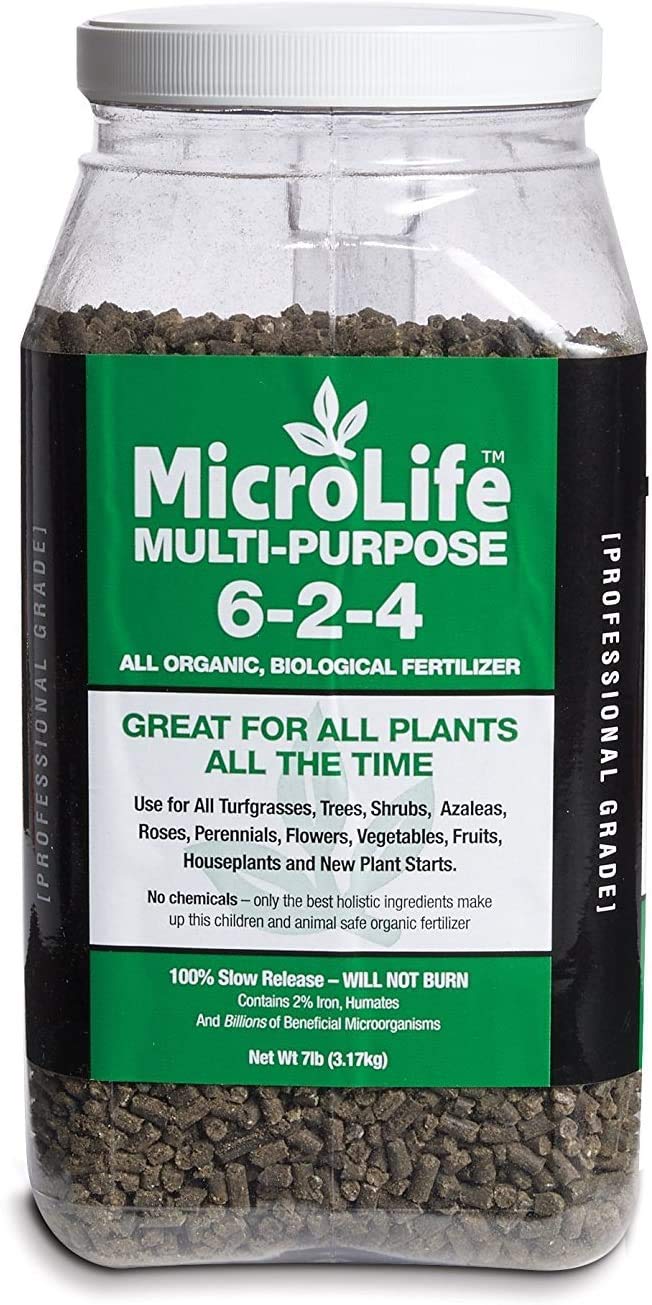
MicroLife Multi-Purpose Organic Granular Fertilizer (6-2-4), 7 lb
| Item Form | Granules |
|---|---|
| Specific Uses For Product | Organic |
| Target Species | vegetables, flowers, ornamentals, perennials, trees, bushes |
| Mixing Ratio | 6-2-4 |
MicroLife Multi-Purpose 6-2-4 is a biological, slow-release granular fertilizer designed for broad use in vegetable beds, flower borders, containers and new plantings. It combines organic feedstocks such as fish, kelp, meals and rock phosphate with humates, sugars, vitamins and a bio-inoculant package that includes mycorrhizal organisms. Typical use is broadcast or worked into beds on a 3-to-4 month schedule at the recommended rates for turf, beds or containers. The practical benefits are stronger root systems, improved soil microbial activity and steady nutrient release that reduces burn risk and watering needs. Because it is concentrated and organic, you can expect longer-lasting feeding compared with quick-release synthetic fertilizers and visible improvements in plant vigor and resilience. Limitations to note are the need to follow weight-based application rates for different uses and the slower nutrient uptake, so you should not expect immediate green-up the way fast-release products deliver.
Best for: Gardeners and small-scale landscapers who prioritize long-term plant performance and soil health and who want an organic, microbe-rich fertilizer to support stronger roots and sustained growth.
Less Ideal for: Those who need rapid, short-term greening or instant nutrient correction for a specific deficiency should choose a fast-release or targeted supplement instead.
- Contains a broad mix of organic inputs plus billions of beneficial microbes including mycorrhizae
- Slow-release formulation reduces burn risk and provides steady feeding for 3 to 4 months
- Formulation promotes larger root systems and improved soil biology for long-term soil health
- Versatile for vegetables, flowers, ornamentals, perennials, trees and containers
- Slower to show aboveground greening compared with synthetic quick-release fertilizers
- Requires careful weight-based application rates for different uses to avoid under- or over-application
Verdict: Choose this product when you want a proven organic granular fertilizer that builds soil biology and root strength for lasting plant performance.
Neptune's Harvest Fish & Seaweed Liquid Fertilizer (2-3-1) – 36 oz

| Item Form | Liquid |
|---|---|
| Application Method | Dilute and water |
| Specific Uses For Product | Plant Growth |
| Mixing Ratio | 2:3 |
| Unit Count | 36 Fluid Ounces |
Neptune's Harvest Fish & Seaweed is a concentrated organic liquid fertilizer that mixes with water for use as a soil drench or foliar feed. Typical use is dilute-and-water applications: small houseplants get a tablespoon per gallon weekly, while outdoor beds and transplants are fed every 1 to 2 weeks at the recommended dilution. The 2-3-1 NPK ratio and the 75/25 fish-to-seaweed formulation deliver readily available nitrogen and a range of micronutrients, which helps green-up foliage, boost flowering color, and improve produce flavor. Because it is a liquid concentrate it is easy to measure, applies evenly, and can be used across containers, raised beds, and lawns. It also supports soil biology over time, helping soil structure and moisture retention. Limitations are the characteristic fish odor and the need to follow dilution directions carefully since it is a concentrated product not meant to be applied full strength.
Best for: Gardeners who want a single, organic liquid feed to maintain steady growth across vegetables, flowers, trees, and houseplants and who prefer convenient dilute-and-apply products.
Less Ideal for: Users who need an odorless fertilizer solution or who want a one-time slow-release granular feed that requires less frequent attention.
- Organic concentrate that feeds via soil drench or foliar spray
- Balanced fish and seaweed blend provides macro and micronutrients
- Easy to measure dilutions for indoor and outdoor routines
- Supports soil biology and improves soil structure over time
- Noticeable fish smell during and shortly after application
- Requires careful dilution and regular reapplication to see benefits
Verdict: Choose this organic fish-and-seaweed concentrate if you want a versatile, regularly applied liquid feed that boosts plant vigor and improves soil health over time.
Miracle-Gro Organic Liquid Plant Food, 32 fl. oz.

| Item Form | Liquid |
|---|---|
| Application Method | Soak the soil around each plant |
| Liquid Volume | 32 |
| Mixing Ratio | 2:1 |
| Ingredients | 1(N)-0.5(P)-1(K) |
Miracle-Gro Organic Liquid Plant Food is a ready-to-mix, plant-based fertilizer designed for regular feeding of houseplants, container plants and in-ground garden beds. The concentrate is diluted with water (manufacturer directions call for 2 capfuls per gallon for outdoor use and 1 capful per gallon for some indoor uses) and applied by soaking the soil around each plant. It is OMRI listed and made from about 94% plant-based ingredients, which makes it suitable for gardeners looking for an organic option that acts quickly. Practical benefits include easy mixing, clear dosing lines on the cap, and broad compatibility with flowers, vegetables, herbs and potted plants. Because it is a liquid feed you can see effects faster than slow-release granules and it is convenient for regular fortnightly or weekly feedings during the growing season. Limitations are that you must mix and apply frequently to maintain results and a single 32 fl. oz. bottle yields a finite amount of diluted solution, so heavier feeders or larger plots may need multiple bottles over a season.
Best for: Gardeners who want an affordable, certified organic liquid fertilizer that is simple to mix and use regularly on houseplants, containers, and small vegetable or flower beds.
Less Ideal for: People managing large landscape areas or heavy-feeding vegetable plots who prefer low-maintenance, slow-release options that require fewer applications.
- OMRI listed and made with about 94% plant-based ingredients
- Liquid concentrate mixes easily and feeds plants quickly when watered in
- Clear dosing instructions and cap markings simplify dilution
- Suitable for indoor and outdoor use across flowers, vegetables, herbs and shrubs
- Requires frequent reapplication compared with slow-release fertilizers
- A single 32 fl. oz. bottle may not be economical for large gardens
Verdict: A practical, OMRI-listed liquid concentrate that delivers plant-based nutrition quickly and is best for gardeners who will feed regularly on containers and small beds.
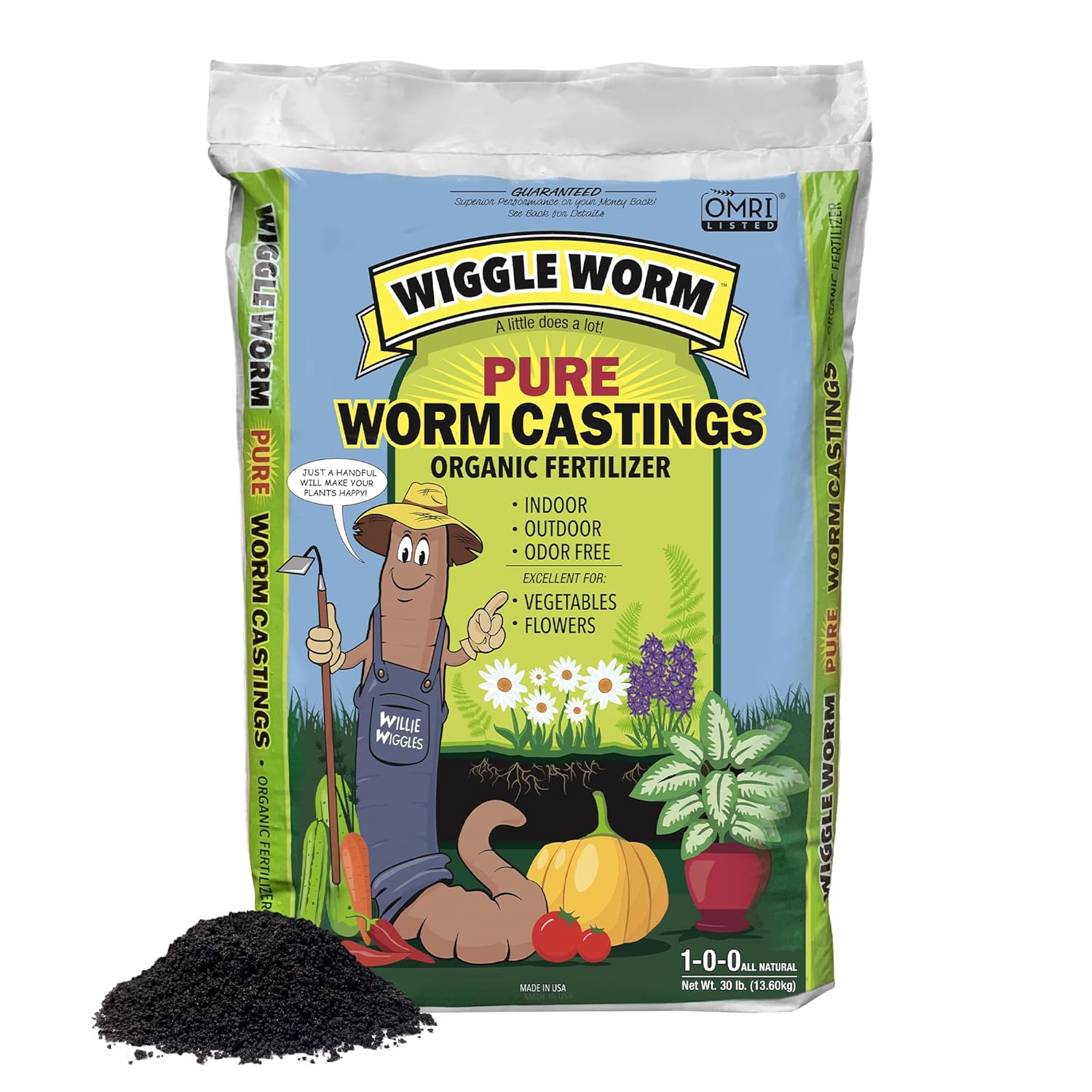
Wiggle Worm 100% Pure Organic Worm Castings, 30 lb
| Item Form | Granules |
|---|---|
| Specific Uses For Product | Soil Conditioning |
| Unit Count | 480 Ounce |
| OMRI Listed | Yes |
Wiggle Worm Pure Worm Castings is a straightforward organic soil amendment that supplies plant-ready nutrients while improving soil structure and microbial activity. Typical uses include mixing into potting soil (1:4 ratio), top-dressing established plants, lining planting holes for vegetables and flowers, and making worm-casting tea for liquid feeding. Notable features are its 100 percent castings formula with a multi-screened process to remove impurities, OMRI listing for organic use, and guidance for timed applications across lawns, perennials, potted plants, and transplants. Practical benefits include safe, non-burning nutrition that boosts root health and water retention and a product that supports long-term soil biology rather than temporary nutrient spikes. Limitations are that it is a low-analysis amendment rather than a high-NPK quick-fix, so expect gradual improvement rather than rapid green-up for nitrogen-hungry lawns, and you will need to follow recommended application rates to get measurable results over seasons.
Best for: Buyers who prioritize reliable, long-term soil improvement and organic certification for vegetables, ornamentals, and container plants will appreciate this product.
Less Ideal for: Gardeners seeking an immediate high-nitrogen boost for rapid lawn greening or fast vegetative growth should consider a supplemental quick-release fertilizer.
- 100% pure worm castings with multi-screening to remove impurities
- OMRI listed and suitable for certified organic gardening
- Versatile application: top-dress, mix into potting soil, amend planting holes, or brew tea
- Improves soil aeration, water retention, and microbial activity for long-term soil health
- Low soluble nutrient analysis so not a fast-acting chemical fertilizer
- Requires repeated applications or mixing ratios for best results across different crops
Verdict: Choose this product when you want a dependable, OMRI-listed organic amendment that builds soil health and delivers gentle, plant-ready nutrition over time.
FoxFarm Soil Liquid Trio Pack (Tiger Bloom, Grow Big, Big Bloom) – 48 fl oz

| Brand | FoxFarm |
|---|---|
| Item Form | Liquid |
| Unit Count | 48 Fluid Ounces |
| Specific Uses For Product | Plant Food |
The FoxFarm Soil Liquid Trio combines Big Bloom, Grow Big, and Tiger Bloom into a single feeding program that covers plants from early growth through bloom and fruit set. In practice you use Grow Big during the vegetative stage to encourage leafy growth, Big Bloom as a general-purpose tonic across cycles, and Tiger Bloom to push bud and fruit development once flowering begins. The concentrates are liquid so they mix quickly into water for container, raised-bed, or in-ground use and are suitable for ornamentals, vegetables and houseplants. Notable features include greenhouse-tested formulas, an emphasis on accessible micronutrients, and instructions that stage each product for specific plant phases. Because the set is concentrated, small doses treat many plants but require careful measuring and storage. This trio leans toward gardeners who prefer a reliable, staged nutrient program rather than a single all-in-one organic granular feed, and it is not an instant fix for nutrient-deficient soils without complementary soil management.
Best for: Gardeners who want a proven, phase-based liquid feeding system and prefer products with strong user feedback and testing; good for those managing mixed container and garden plantings who will follow a staged feeding schedule.
Less Ideal for: People seeking a single granular organic soil builder or those who prefer low-maintenance, infrequent feeding programs for large landscape beds.
- Complete three-step program covering vegetative growth, general feeding, and bloom support
- Liquid concentrates mix easily for quick application to pots, raised beds, and gardens
- Formulas include micronutrients and are greenhouse tested for consistency
- Versatile for a wide range of plants including vegetables, roses, and houseplants
- Requires careful measuring because concentrates can be strong if overapplied
- Not a granular soil amendment so it does not improve soil structure or long-term organic matter content
Verdict: Buy this trio if you want a tested, stage-specific liquid nutrient program to support vigorous growth and bigger blooms across vegetables, ornamentals, and houseplants.
Choosing the Right Organic Fertilizer: Key Factors to Consider
Nutrient Profile and Guaranteed Analysis
Knowing the guaranteed analysis or a clear listing of constituent ingredients matters because it tells you how much nitrogen, phosphorus, and potassium the product contributes and whether other nutrients like calcium, magnesium, or micronutrients are present. For organic sources these numbers can be lower than synthetics, so understanding the profile helps you plan complementary feeds or soil amendments.
For gardeners with vegetables or heavy feeders, aim for a balanced feed or supplement key elements based on a soil test. For ornamentals and lawns, different ratios and timing will be appropriate. Labels that list source materials such as composted manures, bone meal, or kelp let you anticipate release speed and secondary benefits like trace minerals.
Release Pattern and Timing
Organic fertilizers release nutrients through microbial activity and physical breakdown; that means temperature, moisture, and soil biology affect when plants actually see nutrients. Slow-release organics provide steady feeding and reduce the chance of scorch, while faster-acting organics are useful for quick green-up or transplant recovery.
Consider your planting calendar. If you need immediate nitrogen for leafy growth, choose a faster-release amendment applied appropriately. For long-season crops or sustained soil building, favor materials that feed over weeks to months so blossoms and fruit get steady support.
Application Method and Ease
Fertilizers come as granules, powders, liquids, or pellets, and each form fits different workflows. Granular products are easy to spread and work well for beds and lawns. Powders can be mixed into potting mixes or side-dressed. Liquids are convenient for foliar feeding or container plants but require mixing equipment or sprayers.
Choose a form that matches how you garden. If you have many containers, liquid concentrates or soluble powders save time. For larger in-ground areas, a granular or pelletized option that spreads cleanly will be more practical and accurate.
Soil-Building Benefits and Microbial Support
Beyond immediate nutrient numbers, many organic fertilizers contribute organic matter or compounds that feed soil biology. Materials like compost, worm castings, or well-composted manures improve soil structure, water retention, and microbial diversity, which in turn improves nutrient cycling and long-term fertility.
If your priority is rebuilding tired soil, prioritize products that add carbon and biological stimulants even if their NPK is modest. For short-term production goals, pair a soil-building amendment with a feed targeted to plant needs.
Suitability for Plant Types and Garden Situations
Different plants and settings have varied nutrient needs. Vegetables and fruiting plants often benefit from higher phosphorus and potassium during bloom and fruiting, while leafy greens prioritize nitrogen. Containers dry out faster and need more frequent feeding; in-ground shrubs and trees need deeper, slower-release nutrition.
Match the fertilizer choice to plant type and planting situation. Consider the product's salt content and soluble nutrient levels when using in containers or on young transplants to avoid stress.
Physical Characteristics and Storage
Practical physical traits influence how easy a fertilizer is to use and store. Some organics are dusty or odorous, which affects handling and nearby living spaces. Granule size impacts spreader compatibility. Pellets or coated granules may resist caking in humid storage.
Check storage stability and shelf life for your climate. Products that cake or attract pests will be harder to keep on hand, so consider packaging and the need for airtight containers or cool, dry storage.
Matching Fertilizer Form to Your Garden Routine
Think about how you actually work in the garden when choosing a fertilizer format. If you maintain many pots and hanging baskets, soluble or liquid concentrates that mix quickly will reduce time spent watering and feeding. For beds and lawns, granular products that spread evenly save effort and make seasonal top-dressing straightforward.
Also consider the tools you already own. A handheld spreader, watering can with a solution chamber, or a pump sprayer will dictate which formats are easiest to apply. Small-scale growers may prefer measured sachets or concentrated liquids, while larger plots benefit from bulk granules.
- Granules and pellets: durable and easy to spread for in-ground areas
- Powders: good for mixing into potting media and soil blends
- Liquids: fast uptake for containers and foliar feeding
Reading Labels and Ingredient Sources
Labels on organic fertilizers vary in transparency. Look for clear identification of source materials such as composted poultry manure, rock phosphate, bone meal, kelp, or alfalfa meal. Those ingredients give clues about nutrient availability and secondary benefits like micronutrients or organic matter.
Beware of vague phrases that do not list constituent sources. A clear label helps align the product with soil test results and planting goals, and it reduces surprises during application.
- Identify both guaranteed analysis and ingredient list when present
- Note any mention of composting or microbial inoculants for soil health
Timing Feeds Through the Season
Plan fertilizer timing around plant growth stages. Early season applications that favor nitrogen support leafy growth, while mid- to late-season applications emphasizing phosphorus and potassium aid flowering and fruit development. With organics, plan for lag time between application and uptake since materials must break down.
Staggered or split applications are useful. Apply a base soil-building amendment in spring and follow with lighter, targeted feeds during peak production rather than a single heavy application. This approach keeps nutrient availability steady and reduces leaching risks.
- Base application: soil-building organics in early spring
- Top dress or side dress: targeted feeding during active growth
- Liquid or foliar feeds: quick correction during stress or transplanting
Combining Organic Fertilizers With Soil Tests
A soil test guides which nutrients are missing and prevents unnecessary applications. Use test results to choose an organic fertilizer that addresses deficiencies without oversupplying other elements. For example, low phosphorus calls for a phosphate-rich amendment, while low organic matter suggests compost or castings.
When mixing multiple amendments, calculate cumulative nutrient additions so you do not inadvertently exceed plant tolerance, especially in containers. Organic products vary widely in concentration, so use label analyses and test numbers to plan applications.
- Match product NPK to soil test deficiencies
- Adjust application rates for containers versus in-ground beds
Environmental and Safety Considerations
Organic fertilizers reduce reliance on synthetic chemicals, but they are not free of environmental impacts. Excessive applications can contribute to runoff and nutrient loading in waterways. Choose products with slow-release properties and follow recommended rates to minimize leaching.
Store organic materials securely to avoid attracting pests, and follow handling instructions to reduce odor or dust exposure. For home gardeners, smaller packages or resealable bags make safe storage easier.
- Follow label rates to reduce runoff risk
- Avoid applications before heavy rain
- Store in sealed containers in a cool, dry place
How We Chose the Best Organic Fertilizer
We focused on attributes gardeners can verify and use when selecting an organic fertilizer. We prioritized products with clear guaranteed analysis or constituent listings so nutrient contributions are predictable. Source materials were considered to assess nutrient release patterns, with emphasis on slow-release organics that support soil microbes. Application methods and instructions were included as a usability filter because a product that is difficult to apply correctly often leads to under- or over-feeding. We also evaluated versatility across garden situations including raised beds, in-ground borders, and containers, plus suitability for vegetables, perennials, and lawns. Environmental impact and compatibility with organic gardening practices were considered by checking ingredient origin and absence of prohibited synthetic additives. Physical form and odor were included since granular, powdered, and liquid formats behave differently in garden workflows. Exclusions: we excluded formulations lacking clear ingredient information or those with synthetic nutrient carriers. We also excluded specialty blends intended only for a single crop unless they offered clear cross-use benefits. The final list balances nutrient clarity, application practicality, compatibility with organic systems, and reliable release behavior.
FAQ
How often should I apply organic fertilizer to vegetable beds?
Frequency depends on the product and soil fertility. Slow-release organics are commonly applied once in spring with lighter side-dressings midseason. Faster-acting organics or liquids may be used every 3 to 6 weeks during active production.
Can I use one organic fertilizer for both containers and in-ground beds?
Often you can, but application rates differ. Containers need less total nutrient mass and more frequent feeding. Choose a product with clear mixing instructions and reduce concentration for pots to avoid root stress.
Will organic fertilizers improve soil structure quickly?
Some organic amendments add organic matter that improves structure over time, but significant change is gradual. Repeated applications of compost, castings, or other carbon-rich materials across seasons deliver the best long-term gains.
Are liquid organic feeds safe for seedlings?
Liquid organics can be safe if diluted appropriately. Seedlings are sensitive to strong nutrient solutions, so use reduced-strength mixes and apply sparingly until plants establish stronger root systems.
Do organic fertilizers attract pests or wildlife?
Certain organic materials, particularly fresh manures or fish-based products, can attract wildlife due to odor. Well-composted materials have less odor and lower attraction risk. Store products securely and apply when pests are less active.
How do I avoid nutrient imbalances when using multiple organic amendments?
Combine soil testing with label analyses to calculate cumulative contributions. Stagger different products over the season rather than applying many at once, and prioritize soil-building amendments first with targeted feeds as needed.
Final Verdict
Choosing the right organic fertilizer comes down to matching nutrient profiles, release patterns, and application forms to your plants and gardening routine. Prioritize products that support soil biology if long-term fertility matters, and choose faster-acting organics when you need quick results. Balance convenience with soil-building goals, follow label rates, and use soil tests to avoid unnecessary applications. With those priorities in mind, you can select an organic fertilizer that fits your garden and delivers steady, healthy growth.
