

Note: This article contains affiliate links. If you click on these links and make a purchase, I may earn a small commission at no extra cost to you. This helps support my research and content. Read my full affiliate disclosure here.
A lawn treated with the right organic liquid fertilizer will green up evenly, build a healthier soil food web, and avoid the quick-burn problems of high-salt synthetic feeds. If you want steady results that support long-term turf vigor rather than a single flashy flush of color, choosing the right liquid formula matters. This guide shortlists seven top organic liquid fertilizers for lawns and explains the practical differences that matter in everyday use. We evaluate nutrient balance, application ease, and how each option performs in common lawn situations so you can find the right fit for your mowing routine and soil type.
Top Picks at a Glance
| Best Overall The best all-around choice for most situations | GS Plant Foods Liquid Fish Fertilizer (1 Gallon) | 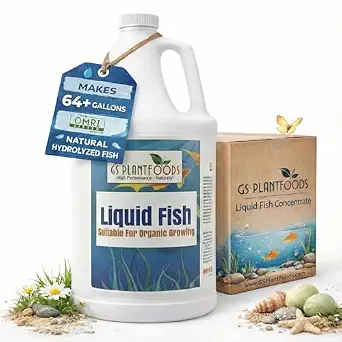 |
| Best Quality Built to a higher standard if you want something more solid | GS Plant Foods Liquid Kelp Fertilizer (1 Gallon) |  |
| Best Value The sweet spot between price and what you get | Farmer's Secret Soil Revitalizer Organic Liquid Compost (32 oz) |  |
| Best Budget The cheapest option that still gets the job done reliably | Miracle-Gro Organic Liquid Plant Food, 32 fl. oz. |  |
| Highest Rated A top-rated pick with lots of positive feedback | GroSuccess PlantWonder Organic Liquid Fertilizer Concentrate, 16 oz |  |
| Most Popular A crowd favorite that many people choose with confidence | Neptune's Harvest Fish & Seaweed Liquid Fertilizer (2-3-1) 36 oz |  |
| Best Seller A high-volume bestseller chosen again and again | GS Plant Foods Liquid Fish & Kelp Fertilizer (1 Gallon) |  |
GS Plant Foods Liquid Fish Fertilizer (1 Gallon)

| Item Form | Liquid |
|---|---|
| Specific Uses For Product | Plant Growth, Root Development |
| Application Method | watering can, sprayer, or hose-end applicator |
| Mixing Ratio | 1:32 |
GS Plant Foods Liquid Fish Fertilizer is a concentrated, hydrolyzed fish emulsion designed for routine feeding of gardens, container plants, and landscape beds. It supplies a 2-3-1 balance of nitrogen, phosphorus, and potassium plus organic compounds that help soil biology and steady plant nutrition across the season. You mix at the recommended 1:32 ratio (about 4 oz per gallon) and apply with a watering can, sprayer, or hose-end applicator, which makes it easy to use on everything from vegetables and herbs to shrubs and houseplants. The product is OMRI-listed for organic growing and made in the USA, so it fits gardeners who prefer organic inputs. Because it is a liquid concentrate, it works quickly compared with dry fertilizers, but it does require regular applications and careful mixing to avoid smell and potential foliar spotting if overapplied. This gallon size balances economy and convenience for small to medium gardens, though users who want an odorless or synthetic option may look elsewhere.
Best for: Gardeners who prioritize straightforward, organic feeding and want a flexible concentrate that works across vegetables, ornamentals, containers, and beds while supporting soil life.
Less Ideal for: Users seeking a completely odor-free fertilizer or those who prefer slow-release granular products that require less frequent application.
- OMRI-listed for organic production, suitable for certified organic gardens
- Concentrated hydrolyzed fish formula (2-3-1) that supports balanced nutrition and soil biology
- Flexible application methods: watering can, sprayer, or hose-end applicator
- Made in the USA by a dedicated plant-food manufacturer
- Strong natural fish odor typical of fish emulsions
- Requires regular mixing and repeated applications to maintain results
Verdict: A reliable OMRI-listed fish emulsion concentrate that gives practical, organic nutrition for a wide range of garden plants when you want flexible, repeatable liquid feeding.
GS Plant Foods Liquid Kelp Fertilizer (1 Gallon)

| Unit Count | 128 Fluid Ounces |
|---|---|
| Item Form | Liquid |
| Application Method | Spray |
| Mixing Ratio | 2 ounces: 1 gallon |
| Specific Uses For Product | Lawns,Organic,Plant Food |
GS Plant Foods Liquid Kelp is a concentrated seaweed extract made from Ascophyllum nodosum that gardeners mix into water and apply by spray to lawns, shrubs, vegetables, and ornamentals. Designed for organic growing, the product is mixed at 2 ounces per gallon and the one-gallon jug claims enough concentrate to make hundreds of gallons of feed solution, which makes it practical for regular turf and landscape applications. Users will notice the fertilizer is low in synthetic nutrients and instead delivers trace minerals and carbohydrates that support root development, nutrient uptake, and stress resilience during heat or drought. Because it is a foliar and soil drench-compatible liquid, it can be used as part of a regular maintenance program or to revive stressed areas. Limitations are that it is not a complete NPK fertilizer so it should be paired with a balanced feed when plants need significant nitrogen or phosphorus for rapid growth, and application requires measuring and mixing rather than a ready-to-use spray.
Best for: Buyers who prioritize plant performance and resilience using organic inputs and who want a concentrated seaweed feed to support root health and stress tolerance across lawns and landscape plants.
Less Ideal for: Gardeners seeking a single-product, high-nitrogen fertilizer for rapid greening or heavy feeding needs should choose a balanced NPK product instead.
- OMRI listed and suitable for certified organic production
- Concentrated formula with a 2 oz per gallon mixing ratio for long-lasting supply
- Contains Ascophyllum nodosum seaweed extract plus trace minerals to support roots and stress tolerance
- Versatile application by foliar spray or soil drench for lawns, vegetables, and ornamentals
- Low macronutrient content so it is not a standalone NPK solution for aggressive growth
Verdict: Choose this concentrated, OMRI-listed kelp extract if you want an organic performance boost that strengthens roots and improves lawn and plant stress resilience.
Farmer's Secret Soil Revitalizer Organic Liquid Compost (32 oz)

| Item Form | Liquid |
|---|---|
| Specific Uses For Product | Organic |
| Application Method | spray/pour |
| Coverage | 32,000 square feet |
| Mixing Ratio | 1:128 |
Farmer's Secret Soil Revitalizer is a concentrated liquid amendment that uses activated humics to improve soil structure, stimulate microbial activity, and make nutrients more available to plants. It is mixed at 1 ounce per gallon of water and can be applied with a watering can, sprayer, irrigation system, or as a foliar feed for houseplants. For clay soils the product's humic-rich formula helps loosen compacted particles over time and supports biological activity that improves drainage and root penetration. It is OMRI listed and made from organic sources, so it is suitable for edible gardens and safe around children and pets when used as directed. The effects are gradual rather than immediate because it works by rebuilding soil biology rather than supplying fast-release NPK, so gardeners should expect cumulative improvement after several applications every 2 to 4 weeks. Coverage claims are high for the bottle size, so plan dosing carefully if treating a large lawn or landscape.
Best for: Gardeners who want a low-risk, soil-first approach to improve compacted or nutrient-poor soils and are willing to use a repeat feeding schedule to build long-term soil health.
Less Ideal for: People seeking rapid green-up or instant high-amount nutrient feeds for heavy-feeding annuals or lawns should consider a supplemental synthetic fertilizer instead.
- OMRI listed organic formula safe for edible gardens when diluted as directed
- Activated humics increase microbial activity and long-term soil structure improvement
- Versatile application options: watering can, sprayer, hose-end or irrigation
- Concentrated mixing ratio (1:128) stretches one bottle over many applications
- Not a fast-acting synthetic fertilizer so visible results take multiple applications
- Coverage per bottle may be optimistic for large yards, requiring multiple bottles for whole-lawn use
Verdict: Use this organic, humic-rich liquid if you want to rebuild clay soil biology and structure over time rather than chase quick fertilizer results.
Miracle-Gro Organic Liquid Plant Food, 32 fl. oz.

| Item Form | Liquid |
|---|---|
| Application Method | Soak the soil around each plant |
| Liquid Volume | 32 |
| Mixing Ratio | 2:1 |
| Ingredients | 1(N)-0.5(P)-1(K) |
Miracle-Gro Organic Liquid Plant Food is a ready-to-mix, plant-based fertilizer designed for regular feeding of houseplants, container plants and in-ground garden beds. The concentrate is diluted with water (manufacturer directions call for 2 capfuls per gallon for outdoor use and 1 capful per gallon for some indoor uses) and applied by soaking the soil around each plant. It is OMRI listed and made from about 94% plant-based ingredients, which makes it suitable for gardeners looking for an organic option that acts quickly. Practical benefits include easy mixing, clear dosing lines on the cap, and broad compatibility with flowers, vegetables, herbs and potted plants. Because it is a liquid feed you can see effects faster than slow-release granules and it is convenient for regular fortnightly or weekly feedings during the growing season. Limitations are that you must mix and apply frequently to maintain results and a single 32 fl. oz. bottle yields a finite amount of diluted solution, so heavier feeders or larger plots may need multiple bottles over a season.
Best for: Gardeners who want an affordable, certified organic liquid fertilizer that is simple to mix and use regularly on houseplants, containers, and small vegetable or flower beds.
Less Ideal for: People managing large landscape areas or heavy-feeding vegetable plots who prefer low-maintenance, slow-release options that require fewer applications.
- OMRI listed and made with about 94% plant-based ingredients
- Liquid concentrate mixes easily and feeds plants quickly when watered in
- Clear dosing instructions and cap markings simplify dilution
- Suitable for indoor and outdoor use across flowers, vegetables, herbs and shrubs
- Requires frequent reapplication compared with slow-release fertilizers
- A single 32 fl. oz. bottle may not be economical for large gardens
Verdict: A practical, OMRI-listed liquid concentrate that delivers plant-based nutrition quickly and is best for gardeners who will feed regularly on containers and small beds.
GroSuccess PlantWonder Organic Liquid Fertilizer Concentrate, 16 oz

| Item Form | Liquid |
|---|---|
| Specific Uses For Product | Nutrient absorption, Plant Growth, Root Development, Soil Conditioning |
| Application Method | Mix with water for foliar spray or soil drench |
| Mixing Ratio | 1 tablespoon per gallon of water |
GroSuccess PlantWonder is a 16 oz concentrated organic liquid fertilizer designed to be mixed with water for weekly foliar spray or soil drench applications. It uses natural black peat with humic and fulvic acids to improve nutrient uptake and promote faster visible improvements in color, growth, and root development. Typical use is simple: mix the recommended tablespoon-per-gallon ratio and apply to lawns, flower beds, vegetable gardens, houseplants, or seedlings; the concentrate makes dozens of gallons so one bottle covers repeated treatments. Notable features include a fully soluble formula for quick absorption and flexible application methods that suit both soil and hydroponic setups. Practical benefits are faster green-up on lawns and stronger, healthier plants without synthetic chemicals. Limitations are the small bottle size for very large lawns and the need for regular weekly applications to maintain results, so ongoing use is required rather than a one-time treatment.
Best for: Gardeners who prioritize consistent, natural results and want a reliable, fast-acting liquid feed for weekly lawn and plant maintenance.
Less Ideal for: People looking for a one-off, long-term granular lawn treatment or those managing very large turf areas who prefer low-frequency applications.
- Concentrated formula yields many gallons from a single 16 oz bottle
- Contains humic and fulvic acids to improve nutrient absorption
- Versatile application as foliar spray or soil drench including hydroponics
- Small 16 oz volume may require frequent repurchasing for large lawns
Verdict: A dependable concentrated organic liquid feed that delivers faster nutrient uptake and reliable weekly results for lawns and mixed garden plantings.
Neptune's Harvest Fish & Seaweed Liquid Fertilizer (2-3-1) 36 oz

| Item Form | Liquid |
|---|---|
| Mixing Ratio | 2:3 |
| Specific Uses For Product | Plant Growth |
| Liquid Volume | 946 ml |
Neptune's Harvest Fish & Seaweed Liquid Fertilizer is a concentrated organic plant food that mixes with water for use as a soil drench or foliar feed. It is typically diluted (manufacturer directions give roughly 1 fl oz per gallon for outdoor use and 1 tablespoon per gallon for houseplants) and applied every 1 to 3 weeks depending on the crop. The formula combines hydrolyzed fish and seaweed to deliver nitrogen, micronutrients, and seaweed-derived growth compounds in a plant-ready form, which helps green growth, flowering color, and vegetable flavor. Because it is a liquid concentrate it is easy to measure and applies evenly, and regular use can improve soil biology and structure over time. Limitations are that it is low in phosphorus and potassium relative to some specialty bloom or fruit formulas and it has an odor typical of fish-based fertilizers that some users may find strong. This product suits gardeners who want an effective, organic regular feed that supports both potted houseplants and garden beds.
Best for: Gardeners seeking a reliable, organic everyday fertilizer that simplifies feeding for a mixture of houseplants, vegetables, flowers and shrubs and who value soil health as well as plant vigor.
Less Ideal for: Growers who need a high-phosphorus bloom booster or a fertilizer formulated specifically for fruit set or lawns should look for a targeted specialty product instead.
- Organic concentrate blending hydrolyzed fish and seaweed for plant-ready nutrients
- Versatile application as soil drench or foliar feed for indoor and outdoor plants
- Supports soil biology and structure with regular use
- Easy-to-measure mixing ratios for routine feeding
- Has a strong fish odor that some users may find unpleasant
- Lower phosphorus and potassium compared with specialized bloom or fruit formulas
Verdict: A dependable organic liquid concentrate that provides balanced, plant-ready nutrients and improves soil health for routine feeding of mixed garden and houseplants.
GS Plant Foods Liquid Fish & Kelp Fertilizer (1 Gallon)

| Item Form | Liquid |
|---|---|
| Application Method | foliar spray or soil drench |
| Liquid Volume | 128 fluid ounces |
| Mixing Ratio | 1:128 (Indoor), 1:64 (Outdoor) |
GS Plant Foods Liquid Fish & Kelp is an organic, cold-processed concentrate intended to feed garden plants via soil drenches or foliar sprays. It mixes at recommended rates (about 2 fl oz per gallon for outdoor use) and supplies natural compounds from fresh fish hydrolysate and Ascophyllum nodosum kelp that support root strength, microbial activity, and nutrient uptake. Typical use is every 2–4 weeks on vegetables, flowers, shrubs, lawns, and even houseplants at a weaker indoor dilution. Notable features are its OMRI listing for organic growing, dual application method (foliar or drench), and a large 1 gallon volume that covers multiple feedings. Because it is a biological product, results accumulate over weeks as soil life and plant physiology respond rather than giving an immediate synthetic nutrient spike. Some gardeners may notice an initial odor and will need to follow mixing and application rates carefully to avoid overapplication. The product is straightforward to handle and pairs well with a regular feeding schedule for growers focused on improving soil biology and long-term plant performance.
Best for: Gardeners who prioritize plant performance through soil biology and want an organic, repeatable feeding program for vegetables, ornamentals, and turf.
Less Ideal for: People seeking rapid, high-analysis synthetic nutrient boosts or immediate visible change after a single application should consider a different product.
- OMRI-listed organic formula suitable for certified organic gardens
- Dual application as foliar spray or soil drench for flexible use
- Made from fish hydrolysate and North Atlantic kelp to support soil biology and root development
- Large 1 gallon concentrate provides many feedings for home gardens and hobby farms
- Biological, slow-acting nutrition that does not provide immediate synthetic nutrient spikes
- May have a noticeable fishy odor on mixing
Verdict: Buy this if you want an OMRI-listed, kelp-and-fish concentrate that builds soil biology and long-term plant performance rather than quick synthetic results.
Choosing the Right Organic Liquid Fertilizer for Lawns: Key Factors to Consider
Nutrient Ratio and Release
Nutrient ratio determines what the fertilizer primarily supports: quick leaf growth, root development, or overall vigor. For lawns, a mild-to-moderate nitrogen level promotes green-up without forcing excessive shoot growth. Organic liquid fertilizers often supply nitrogen in slower, biologically mediated forms that reduce burn risk. Understanding how quickly nutrients become available will affect how soon you see results and how often you need to reapply.
Release characteristics are especially important if you mow frequently or need quick recovery after stress. A product that relies on microbial breakdown will feed turf over days to weeks, so plan feed intervals around mowing and irrigation practices.
Application Method and Compatibility
Consider how you will apply the liquid feed. Some organic liquids are ready-to-use and pour directly into a hose-end sprayer or pump sprayer. Others come as concentrates that require dilution at precise rates. Compatibility with common yard equipment matters for even coverage and safety.
Also check whether the product mixes well with fertilizers, wetting agents, or biological amendments you already use. Mixing incompatibilities can cause clumping, foaming, or loss of efficacy. Ease of measuring and clear dilution instructions reduce the chance of over-application.
Turf Safety and Burn Risk
Burn risk is lower with organic liquids that have low soluble salt content and gentler nitrogen forms. High-concentration nitrogen liquids, even if organic-derived, can scorch leaf blades if misapplied. Turf species differ in tolerance, so safer, lower-concentration options allow more flexible timing and fewer mistakes.
Look for products with explicit application rates by turf type and clear precautions about mowing, irrigation, and peak heat periods. Following label guidance reduces the risk of visible leaf damage and patchy recovery.
Soil Biology and Long-Term Health
A key advantage of many organic liquid fertilizers is support for microbial communities and soil structure. Ingredients such as seaweed extract, fish hydrolysate, humic substances, or compost extracts feed bacteria and fungi that help cycle nutrients and improve root access to minerals. Over time, this can reduce reliance on frequent feeding and enhance drought resilience.
When selecting a product, consider whether it lists beneficial biologicals or carbon sources and whether feeding schedules include maintenance applications to sustain soil life rather than only immediate greening.
Odor, Residue, and Lawn Useability
Liquid organics vary in smell and potential for surface residue. Fish- or manures-based liquids often have stronger odors and may leave temporary surface marks, which matters if the lawn is used by children or pets shortly after application. Lighter kelp- or plant-extract blends usually have milder scents and cleaner appearance.
Plan application timing based on expected odor and residue. Early morning or evening treatments with a quick irrigation can help disperse smells and prevent any visible residue on grass blades.
Longevity and Feeding Frequency
Different organic liquids provide benefits over varying timeframes. Some supply an immediate nutrient boost with effects lasting a week or two, while others focus on soil biology and build benefits that compound over months. Consider how often you want to treat the lawn and whether you prefer a maintenance schedule of monthly, every two to four weeks, or seasonal build-up programs.
Feeding frequency also affects cost and labor. A product that requires weekly applications may deliver consistent color but demands more time, while a product with a longer residual effect reduces application cadence.
When to Use Liquid Organics on Lawns
Liquid organic fertilizers are most useful when you need even, controlled greening without overstimulating shoot growth. They work well for spring green-up, late-season recovery, and midseason maintenance when root health is as important as surface color.
Apply liquid organics after aeration or light dethatching to help nutrients reach soil microbes and roots. Use gentler formulas during hot weather and reserve stronger feeds for cooler, active-growth periods.
- Spring green-up to jump-start growth after dormancy
- Post-stress recovery following drought, pest damage, or heavy foot traffic
- Maintenance feedings to support soil biology between granular applications
How to Apply Safely and Evenly
Read dilution instructions carefully and calibrate sprayers before treating the entire lawn. Apply in overlapping passes at a steady pace to avoid streaks and missed spots.
Avoid applying during the heat of the day to minimize stress and potential burn. Lightly irrigate after application if label directions recommend it to move nutrients into the soil and reduce any surface residue.
- Calibrate equipment on a small test area first
- Maintain consistent walking speed and spray overlap
- Rinse sprayer thoroughly after use to prevent clogging
Using Liquid Organics with Other Lawn Practices
Integrate liquid organics into a broader lawn program that includes proper mowing height, aeration, and soil testing. Liquids complement core aeration by delivering soluble feed to loosened soil.
If you use lime, topdressings, or granular amendments, time liquid applications to avoid immediate mixing unless the product label confirms compatibility. Sequencing treatments can improve uptake and reduce interactions that limit effectiveness.
- Apply after aeration for best root uptake
- Space applications away from heavy granular treatments unless compatible
- Use soil test results to tailor nutrient choices rather than guessing
Common Misconceptions About Organic Liquids
Organic liquid does not always mean slow-acting. Some organic-derived liquids can produce quick visual greening because they supply plant-available nitrogen or stimulate microbial activity rapidly. Expect a range of response times depending on the formulation.
Organic formulas are not universally odor-free. Performance and user comfort are distinct factors. Choosing a product that balances efficacy with manageable odor is important for household lawns.
- Not all organic liquids are equally slow-release
- Smell and residue vary by source material
Testing and Adjusting Application Rates
Start with the lowest recommended rate on a small section of lawn and observe results for one to two weeks. Check for scorch, color improvement, and any change in thatch or soil feel.
If results are mild, increase dose gradually on the next application cycle rather than making a large jump. Over-application can create thatch or stimulate excessive top growth at the expense of roots.
- Trial a small area first
- Increase rates gradually if needed
How We Chose the Best Organic Liquid Fertilizer for Lawns
We focused on attributes that affect real-world lawn performance and the gardener's experience. Important evaluation criteria included nutrient ratio and bioavailability, because correct amounts of nitrogen, phosphorus, and potassium delivered in plant-available forms determine green-up and root support. Application method and mixing flexibility were assessed to reflect how easily the product works with hose-end sprayers, broadcast spreaders, or handheld sprayers. Safety for turf and burn risk was measured by formulation concentration and salt index to prefer gentler options for frequent use. Soil health impact considered inputs that feed microbial life, such as fish, kelp, or compost tea extracts, rather than only soluble salts. Residue and odor were reviewed because strong smells or surface residue matter for homeowner use. Finally, longevity and feeding frequency were weighed to show whether a product supports weekly maintenance or less frequent treatments. We excluded granular-only products and concentrated synthetic formulas that rely solely on quick-release salts. We also filtered out options with unclear ingredient lists or lacking basic use instructions. The resulting list focuses on organic liquid fertilizers that match common lawn care scenarios and provide clear labeling for safe application.
FAQ
How often should I apply organic liquid fertilizer to my lawn?
Frequency depends on the product and your lawn goals. Many organic liquids work on cycles of two to four weeks for maintenance, while some concentrated formulas may be used weekly. Start with label guidance and adjust based on turf response and soil testing.
Will an organic liquid fertilizer prevent turf diseases?
Organic liquids can improve turf health by supporting soil biology and root vigor, which may reduce disease susceptibility over time. They are not direct disease treatments, so severe disease outbreaks usually require targeted interventions.
Can I use organic liquid fertilizer on newly seeded lawns?
Gentle, low-strength organic liquids can be used on new seedings to support seedlings and microbial activity. Avoid strong, high-nitrogen applications that force shoot growth before a robust root system develops. Follow seed supplier and product label guidance for timing.
Do organic liquid fertilizers work in clay or sandy soils?
Yes, but results differ by soil type. In sandy soils, liquids can leach faster and may require more frequent, lighter applications. In clay soils, liquids can help feed microbes that improve structure and nutrient availability. Adjust frequency and consider combining with soil amendments based on soil tests.
Are there any safety concerns for pets or children after application?
Most organic liquid fertilizers are low in toxic ingredients, but products vary. Keep pets and children off treated areas until the product has dried or as recommended on the label. Rinse equipment and store concentrates safely out of reach.
Final Verdict
Choose an organic liquid fertilizer for lawns based on how quickly you need results, how often you want to apply, and whether supporting soil biology is a priority. Prioritize products with clear dilution instructions, low burn potential, and ingredients that feed microbial life when long-term turf health matters. Balance immediate green-up needs against ongoing soil benefits to select a feeding schedule that fits your mowing and irrigation routine. With the right choice and careful application, organic liquid fertilizers can keep lawns healthy, resilient, and visually appealing.
