

Note: This article contains affiliate links. If you click on these links and make a purchase, I may earn a small commission at no extra cost to you. This helps support my research and content. Read my full affiliate disclosure here.
If you grow in containers, hanging baskets, or small raised planters, the potting mix you choose changes how quickly plants establish and how reliably they survive dry spells. A peat free potting mix keeps your garden sustainable while delivering the physical structure and feeding capacity container-grown plants need. This guide covers seven shortlisted peat-free potting mixes suitable for a range of container and patio uses. We evaluated each option on how it behaves in real gardening: drainage, water retention, nutrient availability, and physical stability. Read on to understand the practical strengths and tradeoffs before you pick the right mix for your pots and tubs.
Top Picks at a Glance
| Best Overall The best all-around choice for most situations | Grow Queen Craft Houseplant Potting Mix, 2 Quart |  |
| Best Quality Built to a higher standard if you want something more solid | Grow Queen Craft Aroid Potting Mix, Chunky Soil for Monstera, Alocasia & Tropical Houseplants, Peat-Free, 4 qt |  |
| Best Value The sweet spot between price and what you get | Burpee Premium Organic Potting Mix with Coco Coir (9 Quart) |  |
| Best Budget The cheapest option that still gets the job done reliably | PLANTMEW Coconut Coir Potting Mix Bricks (12 Count) |  |
| Highest Rated A top-rated pick with lots of positive feedback | circle soil Houseplant Potting Mix (Peat-Free, 4 Qt) |  |
| Most Popular A crowd favorite that many people choose with confidence | Back to the Roots Premium Organic Potting Mix, 6 Quart |  |
| Best Seller A high-volume bestseller chosen again and again | Rosy Soil Organic Houseplant Potting Mix, Peat-Free, 4 Quart |  |
Grow Queen Craft Houseplant Potting Mix, 2 Quart

| Unit Count | 64 Ounce |
|---|---|
| Item Type Name | Potting Mix |
| Volume | 2 quarts |
| Ingredients | Douglas Fir Bark, Lava Rock, Pumice, Coco Coir, Organic Worm Castings, Charged Biochar |
This Grow Queen craft houseplant mix is a chunky, peat-free potting soil made for repotting and ongoing care of indoor plants like peace lily. The blend uses Douglas fir bark, lava rock and pumice to create permanent air pockets so the mix drains quickly and resists compaction, which helps prevent root rot while still allowing the soil to dry evenly between waterings. It arrives slightly moist and ready to use, which makes repotting new plants or rooting cuttings faster and less messy. Organic worm castings and charged biochar supply steady micronutrients and help retain water and nutrients at the root zone without synthetic fertilizer burn. The formula excludes peat and perlite and is designed to stay structured for multiple seasons, so you repot less often. Note that the bag is small at 2 quarts, so you will need larger sizes for bigger plants or multiple repots and should confirm quantity before starting a project.
Best for: Buyers who want a low-maintenance, sustainable indoor potting mix that prevents soggy roots and feeds plants gradually while minimizing repotting frequency.
Less Ideal for: People who need large volumes of soil for many plants or very large containers should choose bigger bag sizes or bulk potting mix alternatives.
- Chunky mix with bark, lava rock and pumice for lasting aeration and fast drainage
- Contains organic worm castings and charged biochar for slow-release nutrition and improved moisture retention at roots
- Peat-free and perlite-free formula reduces compaction and uses renewable ingredients
- Arrives pre-moistened and ready to use for immediate repotting or rooting cuttings
- Small 2 quart bag may not be enough for larger peace lilies or multiple plants
Verdict: A sustainable, chunky houseplant mix that keeps peace lilies healthy by combining fast drainage with bioactive nutrition.
Grow Queen Craft Aroid Potting Mix, Chunky Soil for Monstera, Alocasia & Tropical Houseplants, Peat-Free, 4 qt

| Brand Name | Grow Queen |
|---|---|
| Item Type Name | Potting Mix |
| Volume | 4 quarts |
| Ingredients | Coco Coir, Pumice, Lava Rock, Earthworm Castings, Alfalfa Meal, Gypsum, Tree Fern Fiber, Fir Bark |
This Grow Queen Craft Aroid Mix is a ready-to-use, chunky potting soil made for aroids and other tropical houseplants such as Anthurium. The blend uses fir bark, pumice, lava rock and tree fern fiber to create large pore spaces so water drains quickly and roots get oxygen, while coco coir and charged biochar hold modest moisture between waterings. It also contains earthworm castings, alfalfa meal and gypsum to support soil biology and gentle feeding. In practice the mix makes overwatering less likely and is easy to work with when repotting smaller collectors or standard houseplants. Because it arrives pre-moistened you can pot right away, and the manufacturer notes the pH is tuned toward slightly acidic conditions favored by many aroids. Limitations are the small 4 quart volume for larger plants or multiple repots and the absence of perlite if you prefer that specific material. For someone wanting a sustainable, peat-free alternative that mimics a tropical forest substrate, this mix performs as advertised.
Best for: Buyers who want an easy, botanist-crafted potting mix for Anthurium and other tropical houseplants that reduces the risk of overwatering while supporting soil life.
Less Ideal for: Growers repotting large specimens or outfitting many plants at once who need bulk volumes or a heavier, moisture-retentive substrate.
- Chunky blend of fir bark, pumice and lava rock for excellent drainage and aeration
- Includes charged biochar and earthworm castings to support microbes and provide starter nutrition
- Peat-free, perlite-free formula using washed coco coir and tree fern fiber for more sustainable sourcing
- Pre-moistened and pH balanced toward slightly acidic conditions favored by aroids
- Small 4 quart volume so multiple bags are needed for larger plants or several repots
- Does not contain perlite, which some growers prefer for specific drainage characteristics
Verdict: A peat-free, chunky aroid mix that gives Anthurium and similar tropical houseplants excellent drainage and living soil nutrition in an easy, ready-to-use bag.
Burpee Premium Organic Potting Mix with Coco Coir (9 Quart)

| Item Form | Powder |
|---|---|
| Specific Uses For Product | Plant Growth, Root Development, Seed Development, Soil Conditioning |
| Coverage | 9 Qt Container |
| Liquid Volume | 9 quarts |
Burpee Premium Organic Potting Mix is a ready-to-use container soil designed for indoor and outdoor pots, seed starting, and raised bed containers. The mix combines coco coir for improved aeration and moisture retention with a nutrient blend that feeds plants for up to three months, making it useful for establishing seedlings or repotting established vegetables, herbs, and ornamentals. It is OMRI listed, which suits organic growers, and the bag is sold in a convenient 9-quart size that fits most small to medium containers. Practical benefits include reduced watering frequency thanks to the coir component and a balanced medium that promotes root development and germination. Limitations are the small bag size for larger projects and that it supplies nutrients for only a limited period, so longer-term containers will need supplemental fertilizer. The mix is powdery and light, so it is easy to handle but may compress over time in deep pots and benefit from occasional loosening.
Best for: Gardeners who want a compact, ready-made organic potting mix that reduces maintenance and supports reliable seed starting and container growth.
Less Ideal for: Those establishing large beds or filling many large containers at once should choose bulk soil or larger bags instead.
- OMRI listed organic blend suitable for organic container gardening
- Coco coir improves moisture retention while maintaining good aeration
- Includes slow-release nutrients that feed plants for up to three months
- Light, easy-to-handle texture ideal for seed starting and repotting
- 9-quart bag is small for larger containers or multiple pots
- Nutrient supply is temporary so additional fertilizer is required for long-season crops
Verdict: A compact OMRI-listed potting mix with coco coir that simplifies seed starting and short-term container growing by improving moisture balance and early root development.
PLANTMEW Coconut Coir Potting Mix Bricks (12 Count)

| Brand Name | PLANTMEW |
|---|---|
| Number of Packs | 1 |
| Unit Count | 12 Count |
| Style Name | Nutrient-rich |
| Volume | 1 cubic inches |
This PLANTMEW product is compressed coconut husk fiber sold as expand-to-use bricks designed as a peat-free potting alternative. You hydrate each brick to reconstitute a loose, airy coir that improves aeration and water retention when used alone or mixed with other media. The bricks are heat-treated to reduce weed seeds and contaminants, have low electrical conductivity and a balanced pH, and are marketed for indoor seedlings, succulents, orchids, and vegetable containers. Practical benefits include compact storage for small spaces, lighter handling compared with bags of loose soil, and reduced watering frequency because the coir holds moisture while draining excess. Limitations are that coir contains few nutrients by itself so you will need to add fertilizer or mix with nutrient-rich potting soil for long-term container growth, and volume claims can be confusing if you expect a finished bag of potting mix rather than bricks that expand with water.
Best for: Best for gardeners who prioritize an affordable, peat-free base medium and need compact, easy-to-store material for seed starting, small containers, or to blend with nutrient-rich potting soil.
Less Ideal for: Not a good standalone solution for gardeners who want a ready-to-use, nutrient-rich potting mix without adding fertilizer or other amendments.
- Peat-free coconut coir provides good aeration and water retention for seed starting and containers.
- Compact compressed bricks save storage space and are easy to transport.
- Heat-treated to reduce weed seeds and contaminants for a cleaner starting medium.
- Low electrical conductivity and balanced pH make it versatile across many plant types.
- Minimal inherent nutrients so fertilizer or mixing with enriched soil is required for sustained plant growth.
Verdict: A compact, budget-friendly peat-free coconut coir option for gardeners who want an easy-to-store base medium to expand and mix into potting mixes.
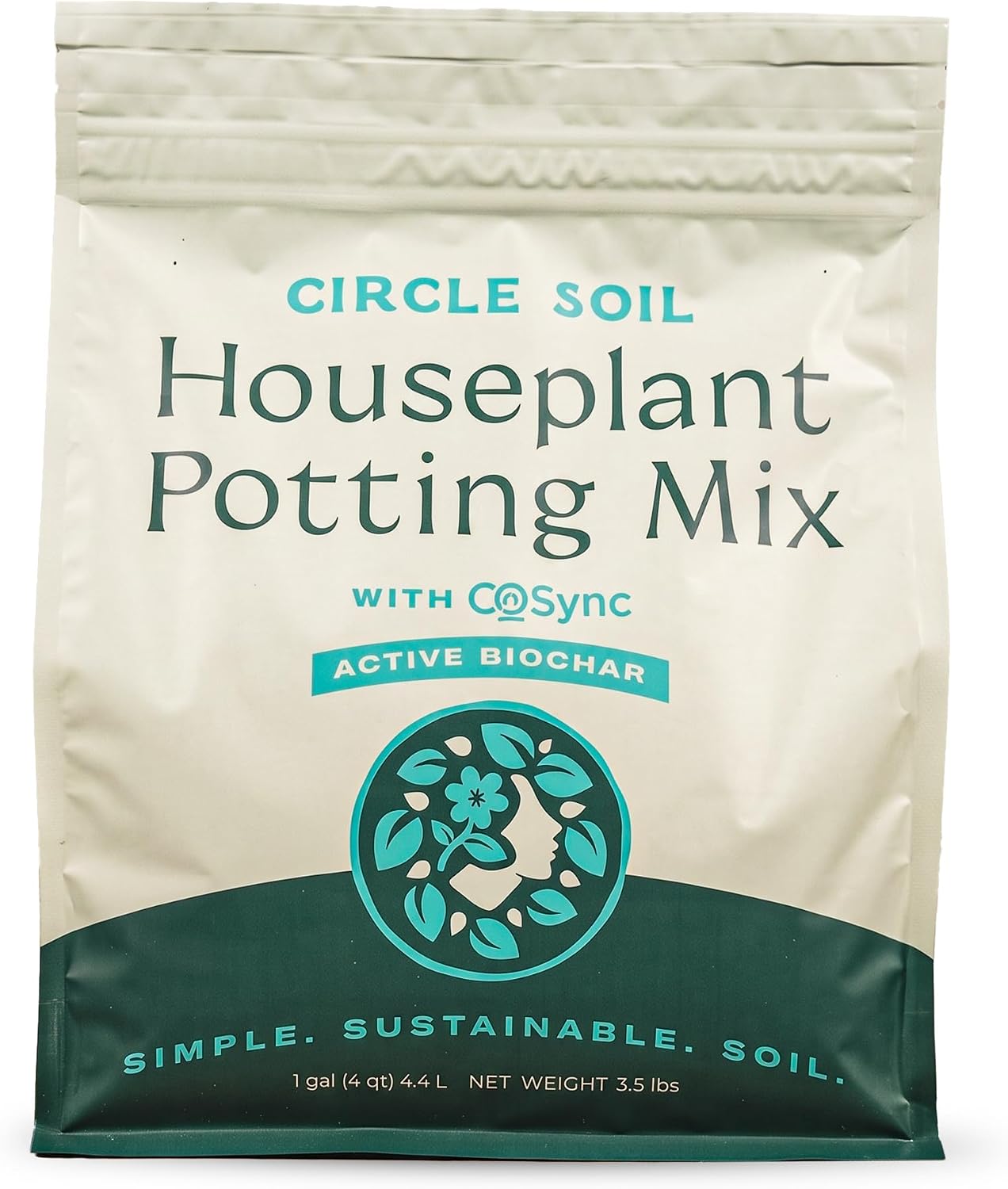
circle soil Houseplant Potting Mix (Peat-Free, 4 Qt)
| Unit Count | 56 Ounce |
|---|---|
| Item Highlight | Active Biochar, Worm Castings, Expanded Shale, Peat-Free, Organic, for Indoor Plants and Herbs |
| Brand Name | circle soil |
| Number of Packs | 1 |
This peat-free houseplant potting mix is built around active biochar, coconut coir and expanded shale to give a light, well-aerated medium that holds moisture without waterlogging. Typical uses include repotting potted herbs and common houseplants or topping up container soil for more even moisture retention. Notable features are the biochar that helps retain nutrients and support microbial life, worm castings and local compost for organic feeding, and expanded shale for natural drainage. In practice the mix should reduce the risk of root rot and encourage healthy root development by balancing air and water in small pots. Because it is designed for everyday indoor use, gardeners will appreciate the resealable packaging and the peat-free composition if they prefer sustainable ingredients. Limitations are that the bag is a modest 4 quart size, so frequent purchases are likely for multiple or larger containers, and gardeners needing a gritty, fast-draining cactus mix or a heavy-duty outdoor planting soil will want a different formula.
Best for: Gardeners who prioritize consistent, reliable results for potted herbs and common indoor plants and prefer sustainable, peat-free mixes for routine repotting and container care.
Less Ideal for: Growers who need large volumes of soil for outdoor beds or a very gritty, cactus-specific mix for drought-tolerant plants should consider other products.
- Peat-free formula with active biochar to improve nutrient retention and microbial activity
- Balanced aeration and drainage from expanded shale and coconut coir to prevent waterlogging
- Contains organic amendments like worm castings and compost for gentle, ongoing nutrition
- Resealable packaging helps keep the small bag usable between repottings
- Small 4 quart unit requires buying multiple bags for more than a few pots
- Not formulated specifically for succulents or heavy outdoor soils so drainage profile is moderate rather than very fast
Verdict: Choose this peat-free, biochar-enriched potting mix when you want a reliable, sustainable medium that keeps potted cilantro and other herbs evenly moist without soggy roots.
Back to the Roots Premium Organic Potting Mix, 6 Quart

| Unit Count | 192 Fluid Ounces |
|---|---|
| Volume | 6 quarts |
| Item Highlight | Peat-free potting soil for outdoor plants, indoor plants, vegetables, herbs and flowers |
| Made in | USA |
Back to the Roots Premium Organic Potting Mix is a small-batch, all-purpose soil designed for indoor and outdoor container plants, including flowers, herbs, and vegetables. The 6 quart bag contains a peat-free blend made from upcycled plant matter and wood fines, with added organic plant food, yucca extract to help retain and regulate moisture, and dolomitic limestone to stabilize pH. In practice this mix is easy to use straight from the bag for potting annuals and bedding plants or for refreshing topsoil in containers. Its light, well-draining texture helps roots establish without becoming waterlogged while still holding enough moisture for frequent flowering plants. Because it is organic and made in the USA, it suits growers who want a lower-carbon-footprint option. Limitations are the small bag size for larger projects and that very heavy feeders or long-term container plantings may need periodic fertilization or larger volumes of soil to maintain vigor.
Best for: Buyers who want a safe, organic, ready-to-use potting mix for potted flowers and small container gardens and prefer products with predictable performance and lower environmental impact.
Less Ideal for: Gardeners planning large-scale repotting, heavy-feeding perennials, or long-term container plantings that require bulk soil or extended nutrient release.
- Peat-free organic formula made from upcycled plant matter and wood fines
- Includes yucca extract for improved moisture retention and control
- Dolomitic limestone added to help balance soil pH for flowering plants
- Light, well-draining texture suitable for container-grown flowers and annuals
- Small 6 quart bag is not economical for large pots or multiple containers
- Does not include slow-release fertilizer strong enough for long-term heavy feeders
Verdict: A reliable, peat-free organic potting mix that delivers predictable moisture control and pH balance for potted flowers and small container gardens.
Rosy Soil Organic Houseplant Potting Mix, Peat-Free, 4 Quart

| Unit Count | 128 Ounce |
|---|---|
| Style Name | Houseplant |
| Ingredients | Biochar, Bark Fines, Compost, Worm Castings, Mycorrhizae |
| Volume | 4 quarts |
Rosy Soil Houseplant Potting Mix is an organic, peat-free potting medium designed to boost root health and keep containers well drained. It combines biochar, worm castings, mycorrhizal fungi and compost in a chunky texture that resists compaction, so pots stay aerated and water moves through instead of pooling. You would use this as a straight potting mix for tropical houseplants or blend it into existing soil when repotting; the manufacturer says 4 quarts fills two to three medium pots. The inclusion of mycorrhizae and beneficial microbes supports stronger root establishment and better nutrient uptake, which is useful if you are prioritizing vigorous growth. Practical benefits include reduced need for frequent repotting because biochar holds structure, and improved foliage health from the added micronutrients in worm castings. Limitations are the small bag size for larger shrubs or multiple jasmines and the need to monitor water for plants that prefer very dry conditions, since organic components still retain some moisture. Always wear gloves when handling and follow safety guidance to avoid inhaling dust.
Best for: A grower focused on maximizing root performance and steady vegetative growth who wants a ready-to-use, organic peat-free mix for container-grown tropicals and flowering houseplants.
Less Ideal for: Not the best choice for someone planting large outdoor jasmine beds or managing many plants on a tight budget who needs bulk soil; also avoid if you need an ultra-sandy, cactus-specific mix.
- Peat-free organic formula with biochar and worm castings for lasting structure and micronutrients
- Contains mycorrhizal fungi and beneficial microbes to improve root colonization and nutrient uptake
- Chunky, well-draining texture reduces compaction and helps prevent root rot
- Resealable bag and stable biochar mean mix stays usable longer between repots
- Small 4 quart volume may be insufficient for multiple plants or large pots
- Not formulated specifically for very dry-loving plants so some adjustment to watering may be needed
Verdict: Choose this mix if you want an organic, peat-free potting soil that promotes stronger roots and reliable drainage for container-grown jasmine and other tropical houseplants.
Choosing the Right Peat Free Potting Mix: Key Factors to Consider
Drainage and Percolation
Good drainage prevents waterlogging in containers and reduces root rot risk. Peat-free mixes rely on alternatives such as coir, bark, or wood fibre to create pore space. Examine how quickly excess water passes through the root zone and whether the mix holds a balance of air and moisture after several watering cycles.
In practice, you want a mix that moves free water away from the root ball while still leaving film moisture in contact with fine roots. Poorly draining peat-free blends will compact and hold too much water, especially in cold weather, while overly fast-draining mixes leave plants thirsty between waterings. Choose based on your watering habits and the moisture needs of the plants you plan to grow.
Water-Holding Capacity
Water-holding capacity affects how long a pot remains hydrated between waterings. Materials like coir and fibrous composts retain water differently than peat, and many peat-free mixes combine water-retentive particles with bigger aeration components.
Consider the microclimate of your site: hot, windy patios demand higher holding capacity, while shaded areas with less evaporation can use leaner mixes. A balance is important for containers because roots access only the volume inside the pot; a mix that drains well but retains enough moisture will lower maintenance without sacrificing root oxygenation.
Nutrient Retention and Release
Peat-free mixes vary widely in nutrient content and in their ability to hold applied fertilizer. Organic components supply slow-release nutrients, while inert components require regular feeding. Think about how often you can top-dress or liquid-feed and whether you prefer a pre-fortified mix or one that acts as a neutral medium.
Good nutrient retention reduces fertilizer leaching from frequent watering. For long-season containers, choose mixes with organic matter or additives that bind nutrients. If you plan repeated plantings or seasonal rotations, a mix that holds and releases nutrients steadily will support steady growth with fewer feedings.
Structural Stability and Compaction Resistance
A stable physical structure keeps drainage channels open and roots distributed throughout the container. Peat-free mixes must resist compaction during watering and over multiple wet-dry cycles. Materials like coarse bark, wood fibre, and perlite help maintain porosity.
If a mix collapses and compacts after a few waterings, roots will become crowded near the surface and drainage will slow. For small pots or shallow planters, structural stability is especially important because there is less volume to buffer compaction. Choose mixes tested for repeated use in containers to avoid rapid breakdown.
pH and Compatibility with Plants
Different plants prefer different pH ranges; peat alternatives can shift substrate pH compared with traditional peat mixes. Knowing the expected pH range helps you decide whether the mix suits acid-loving plants or needs adjustment with lime or sulfur.
Compatibility also covers how the mix responds to common soil amendments and feeds. Some mixes buffer pH well and accept fertilizers predictably, while others show larger swings. Match the mix to your plant selection or be prepared to monitor pH and adjust fertilization.
Ease of Handling and Rehydration
How a peat-free mix behaves out of the bag affects the gardener experience. Some mixes are very dry and dusty; others are compressed and need rehydration. Ease of handling includes how quickly a mix absorbs water, whether it forms clumps, and how cleanly it fills small containers and hanging baskets.
If you rely on fast planting sessions, choose a mix that rehydrates quickly and spreads easily. For balcony or indoor gardeners, low-dust, ready-to-use blends are preferable. Consider bag weight and bagging format if you need to carry multiple sacks to higher floors or into greenhouses.
How Peat Alternatives Change Potting Behavior
Peat alternatives like coconut coir, bark, wood fibre, and composted green materials each affect potting mix behavior differently. Coir holds water well and provides a neutral pH, while bark contributes macroporosity for improved aeration. Understanding these traits helps you predict how a peat-free mix will handle watering, feeding, and root development.
In practical terms, mixes with a higher proportion of coarse components need more frequent feeding but resist waterlogging. Finer, more compost-rich mixes hold nutrients and moisture but can compact if not balanced with structure-providing elements.
- Coir: good water retention, neutral pH
- Bark and wood fibre: improve aeration and structure
- Composted green matter: adds nutrients but may compress
- Inert fillers: stabilize volume and reduce weight
Best Mix Profiles for Common Container Uses
Different containers have different needs. Small terracotta pots and hanging baskets benefit from mixes with higher water-holding capacity and stable structure because they dry quickly. Larger tubs and half-barrels can use slightly leaner mixes that emphasize drainage since they hold more total moisture, but they still require good nutrient retention for season-long growth.
Plan mixes around plant type. Vegetables and annuals often do better with mixes richer in nutrients, while succulents and Mediterranean herbs need gritty, fast-draining blends. A single gardener may keep two mix profiles on hand-one for moisture-loving bedding and another for drought-tolerant specimens.
- Small pots: higher water retention, anti-compaction
- Large tubs: balanced drainage and nutrient holding
- Edibles: nutrient-rich but well-aerated
- Drought-tolerant plants: chunky, fast-draining mix
Adapting Peat Free Mixes with Amendments
You can tailor peat-free mixes with inexpensive amendments to match plant needs. Add perlite or coarse sand to increase drainage, or fold in compost or well-rotted leaf mould to boost nutrient content. Slow-release granular feeds and liquid fertilizers compensate for mixes that are intentionally low in initial nutrients.
When amending, make small test batches for a single pot before scaling up. Over-amending can create extremes: too much compost reduces aeration, too much grit lowers water retention. Carefully balance amendments with the base mix to achieve the desired watering cadence and fertility.
- Use coarse perlite for better aeration
- Fold in compost for added nutrients
- Top-dress with slow-release feed for long containers
- Test small batches before treating many pots
Seasonal Care and Reusing Potting Mix
Peat-free mixes can be reused if they retain structure and are free from disease. For seasonal reuse, refresh the mix with compost and a balanced feed, and remove any diseased root material. Screen out large broken-down pieces and replace the top layer to restore fertility and texture.
Watch for compaction and reduced drainage after a season. If the mix has collapsed notably, it is better used as a soil conditioner mixed into beds rather than reused in containers. Regular top-ups and occasional repotting help maintain a healthy root environment.
- Refresh reused mix with compost and feed
- Replace top layer annually for heavy-feeding containers
- Discard or repurpose compacted mix into beds
- Inspect for pests and disease before reusing
Storing and Handling Bulk Peat-Free Mix
Proper storage keeps bagged mixes ready to use. Keep bags in a cool, dry place and avoid prolonged exposure to sunlight which can dry out and degrade organic components. If rewetting compressed bales or bricks, slowly hydrate them to allow even expansion and avoid creating dense clumps.
When moving multiple bags, check weight and bag condition to prevent tears and spills. For balcony gardeners, smaller tubs or rebagging into manageable containers makes transport easier without compromising the mix quality.
- Store in a dry, cool area away from direct sun
- Rehydrate compressed mixes slowly to avoid lumps
- Use smaller bags or tubs for upper-floor gardens
- Keep mixes off bare ground to reduce contamination
How We Chose the Best Peat Free Potting Mix
We focused on practical, garden-tested qualities that matter when using peat-free mixes in containers and patio planters. Primary evaluation criteria included drainage behavior under repeated watering, water-holding capacity during dry spells, and nutrient retention and release to support seedling establishment and ongoing growth. Structural stability under repeated wet-dry cycles was assessed so mixes do not compact and choke roots. We also considered organic content and inert filler ratios because these affect microbiome support and long-term fertility in pots. Finally, we checked ease of use for typical gardeners including dust levels, rehydration speed, and compatibility with common fertilizers. We excluded mixes formulated solely for in-ground bed preparation, straight soil toppers, and heavily amended blends meant only for professional nurseries. The shortlisted options all aim at container or patio use and were filtered for realistic bag sizes and common planting scenarios. The criteria above align with the scoring labels used in the product scorecards so readers can compare drainage, moisture retention, nutrient support, structure, and ease of handling at a glance.
FAQ
Will peat-free potting mix hold enough water for hanging baskets?
Often it depends on the mix composition. Peat-free blends with higher coir or compost content retain moisture well and are suitable for hanging baskets, while those heavy in bark or grit will dry faster. Choose a mix formulated for baskets or increase water-holding amendments if you need longer intervals between watering.
Can I use peat-free mix for starting seeds and cuttings?
Yes, you can use peat-free mixes for seeds and cuttings if they are fine-textured and free-draining. Look for mixes described as seed or propagation grade, or blend a fine peat-free medium with a small amount of coarse material to ensure aeration and moisture balance.
How often should I fertilize plants in peat-free potting mix?
That usually depends on the initial nutrient content of the mix and plant type. Pre-fortified mixes may only need light feeding after a few weeks, while inert mixes require regular liquid feeds every one to two weeks or a granular slow-release feed applied at potting.
Is peat-free potting mix good for vegetables grown in containers?
Often peat-free mixes are well suited to container vegetables when they supply adequate nutrients and retain moisture. Select a mix with good nutrient retention or plan regular feeding, and ensure the mix offers enough structure so roots can access oxygen as plants grow.
How can I tell if a peat-free mix has compacted and needs replacing?
Signs include slow drainage, water pooling on the surface, and roots circling near the surface rather than penetrating the pot. If repotting reveals a dense, heavy mass that refuses to break apart, it is time to refresh the mix or replace it entirely.
Final Verdict
Picking the right peat-free potting mix means weighing drainage, water retention, nutrient behavior, and structural stability against your planting style and microclimate. For fast-evaporating sites, favor mixes with higher water-holding components; for heavy feeders, choose mixes that retain nutrients or plan for regular fertilizing. Prioritize the attributes that match your containers and the plants you grow, and expect to adjust with small amendments rather than seeking one perfect universal mix. With the right balance you can achieve sustainable, healthy container gardens without peat while keeping planting and care straightforward.
