

Note: This article contains affiliate links. If you click on these links and make a purchase, I may earn a small commission at no extra cost to you. This helps support my research and content. Read my full affiliate disclosure here.
Picking the right perlite matters when you care for houseplants because it directly affects drainage, aeration, and potting mix weight. The right perlite keeps roots oxygenated, helps avoid overwatering problems, and makes repotting easier by reducing compaction. This guide covers six shortlisted options for perlite for houseplants and explains the practical differences you will notice in a windowsill or indoor collection. We evaluated particle size, dust control, and how perlite behaves in fresh and established potting mixes to help you choose the best fit for your indoor plants.
Top Picks at a Glance
| Best Quality Built to a higher standard if you want something more solid | Plantonix Perlite Bliss (16 Qt) Horticultural Perlite |  |
| Best Value The sweet spot between price and what you get | PVP Industries Organic Coarse Perlite, 102 Qt (4 cu ft) |  |
| Best Budget The cheapest option that still gets the job done reliably | POLIUMB Organic Horticultural Perlite 1 qt |  |
| Highest Rated A top-rated pick with lots of positive feedback | Espoma Organic Perlite, 8-Quart |  |
| Most Popular A crowd favorite that many people choose with confidence | Miracle-Gro Perlite, 8 qt. (2-Pack) |  |
| Best Seller A high-volume bestseller chosen again and again | Legigo Horticultural Perlite, 4 Quarts |  |
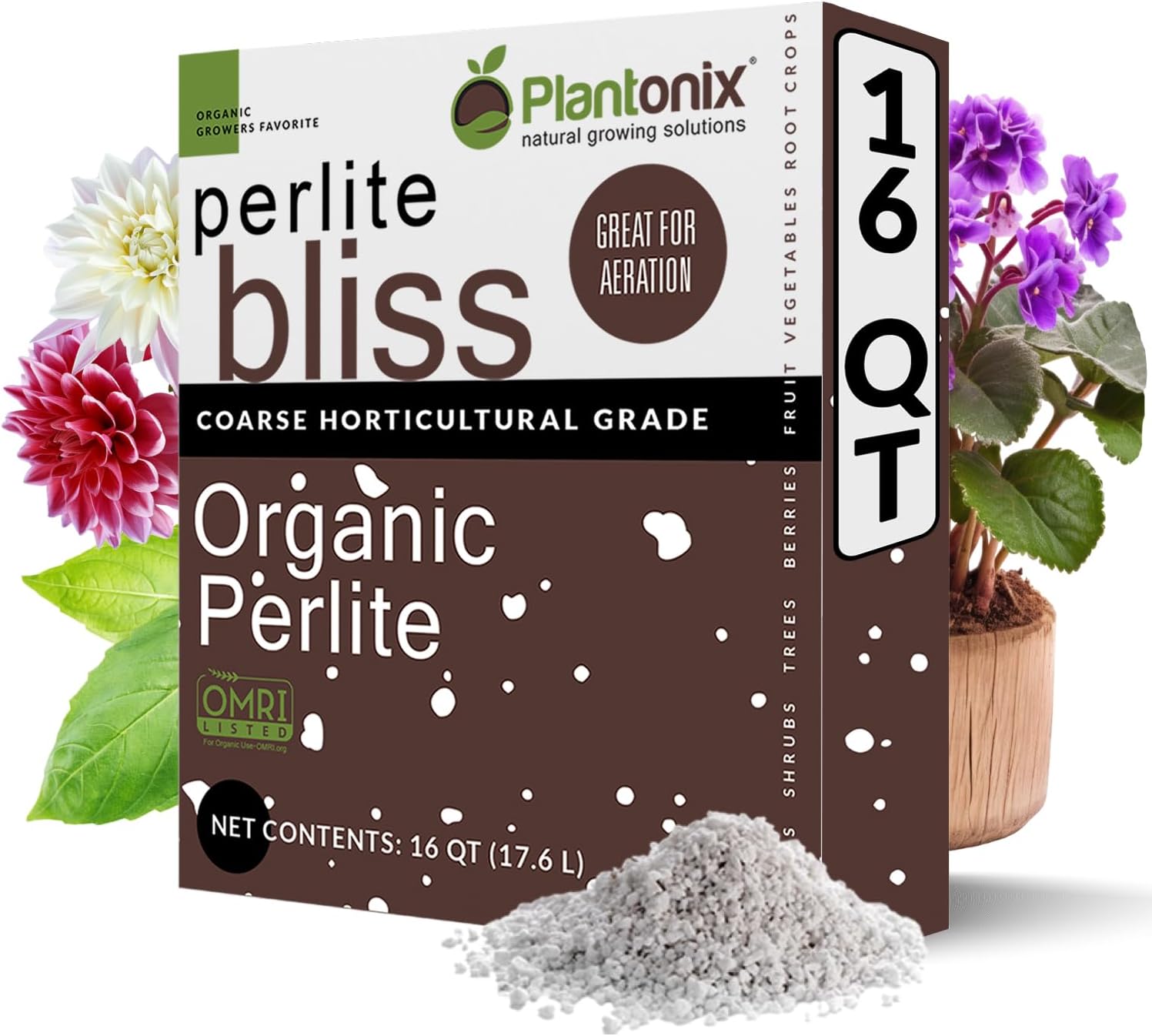
Plantonix Perlite Bliss (16 Qt) Horticultural Perlite
| Unit Count | 56 Ounce |
|---|---|
| Manufacturer | Plantonix |
| Model Number | Perlite Bliss |
| Style Name | Organic Perlite for Indoor Plants & Outdoor Plants |
| Volume | 16 quarts |
Plantonix Perlite Bliss is a medium-coarse horticultural perlite intended as a soil amendment to boost aeration, drainage, and water holding in potting mixes. Typical use is mixing into potting soil or coco coir at transplanting, in seed starting mixes, or as a top dressing to improve oxygen access to roots. The product is described as neutral pH, lightweight, and sterile, so it will not alter nutrient balance and helps prevent compaction over time. For houseplant growers this means easier root development, fewer waterlogged pots, and more consistent moisture between waterings. The medium-coarse grade works well for larger-rooted houseplants and mixed container media but can be dusty on first use so handle in a ventilated area or dampen slightly when mixing. Packaging is a 16 quart volume which is convenient for multiple repots, though frequent heavy use may require larger quantities. Safety notes warn against inhaling dust and potential eye irritation when pouring or scooping.
Best for: Houseplant owners focused on improving root health and drainage who repot regularly and want a reliable amendment to optimize potting mixes for performance.
Less Ideal for: People who need a very fine-grade soil additive for seed starting or growers who prefer a no-dust option for indoor mixing should consider alternative grades or products.
- Medium-coarse grade improves aeration and reduces soil compaction
- Neutral pH and sterile material that will not affect soil chemistry
- Lightweight and mixes easily with potting soil, coco coir, or vermiculite
- Holds moisture in its porous structure to smooth out watering frequency
- Can produce dust during handling so ventilation or a mask is recommended
Verdict: Choose this medium-coarse perlite when you want a sterile, neutral-pH amendment that reliably improves aeration and drainage for healthier houseplant roots.
PVP Industries Organic Coarse Perlite, 102 Qt (4 cu ft)

| Item Type | Horticultural Coarse Perlite – 4 Cubic Feet |
|---|---|
| Unit Count | 1 Count |
| Volume | 1 gallons |
| Style Name | Potting |
This PVP Industries perlite is a straightforward, no-frills horticultural amendment designed to improve drainage and aeration in potting mixes for houseplants. Typical use is mixing a portion (commonly 10–30 percent) into potting soil to reduce compaction and prevent waterlogged roots, or combining with vermiculite for a balance of drainage and moisture retention for seedlings and cuttings. The product is described as clean, sterile and pH neutral, which is useful for sensitive indoor plants and propagation where disease-free media matters. It is lightweight compared with sand and easy to blend into mixes or use in hydroponic systems. Because this is coarse perlite in a large volume, it is best suited to gardeners who rework soil frequently or pot many plants rather than someone needing a small bag for a single pot. There is no dosing guidance beyond general use, and handling produces dust so a mask and gentle pouring are recommended for indoor use.
Best for: Houseplant owners who manage many pots or regularly repot and want a sterile, reliable amendment to improve drainage and support propagation.
Less Ideal for: Casual plant owners with just a few pots or those who prefer pre-mixed commercial potting soils, since the bulk volume and raw product require measuring and blending.
- Clean, sterile and pH neutral so it reduces contamination risk for seedlings and cuttings
- Improves drainage and aeration when mixed into potting soil, helping prevent root rot
- Large 102 quart (4 cu ft) volume reduces need for frequent reorders for multiple houseplants
- Lightweight substitute for sand that is easy to mix and use in hydroponic setups
- Generates dust during handling which can be messy indoors and may require a mask
- Large bulk size is cumbersome to store or move for small-space growers
Verdict: Buy this if you need a high-volume, sterile perlite to reliably boost drainage and aeration across many houseplants and propagation projects.
POLIUMB Organic Horticultural Perlite 1 qt

| Unit Count | 32 Ounce |
|---|---|
| Volume | 1 quarts |
| Item Type Name | soil-and-soil-amendments |
This 1-quart POLIUMB perlite is a straightforward soil amendment for houseplants that improves drainage and root aeration. It is lightweight, pH neutral, and resists compaction so mixed into potting soil it helps prevent waterlogging and encourages healthier root systems for succulents, orchids, and other indoor plants. The resealable pouch keeps unused perlite clean and dry between repottings, which is convenient for casual indoor gardeners who only need small amounts. Usage is simple: mix about one part perlite with three parts potting mix, or use alone for seed starting or hydroponic propagation. The product emphasizes safety — avoid inhaling dust and keep away from children and pets. The main limitation is the small 1-quart quantity, which is ideal for spot repots but means frequent repurchases for those with many plants or larger potting projects. Expect good performance for individual houseplants but plan accordingly if you manage a larger indoor collection.
Best for: Houseplant owners on a tight budget who need a small, easy-to-store supply of perlite for occasional repotting or to improve drainage in individual pots.
Less Ideal for: Enthusiasts with large collections or those doing bulk potting mixes should choose larger bags to avoid frequent repurchases.
- pH-neutral and inert so it will not alter soil chemistry
- Improves drainage and root aeration by resisting compaction
- Resealable pouch keeps product clean and easy to store
- Suitable for a wide range of indoor plants including succulents and orchids
- Small 1-quart volume means it runs out quickly for multi-plant collections
Verdict: A compact, budget-friendly 1-quart perlite that reliably improves drainage for a few houseplants without changing soil pH.
Espoma Organic Perlite, 8-Quart

| Included Components | 8-Quart Organic Perlite |
|---|---|
| Brand Name | Espoma |
| Unit Count | 1 Count |
| Volume | 8 quarts |
Espoma Organic Perlite is a straightforward, single-ingredient soil amendment designed to increase pore space in potting mixes for better aeration and drainage. You mix it into potting soil or use it for seed starting, rooting cuttings, and overwintering bulbs to reduce compaction and help roots access oxygen. This product contains only perlite with a neutral pH and no additives, and it carries organic input approval for use in certified organic systems. The lightweight, inert nature of perlite means it will not decompose or alter soil chemistry, so its benefits for houseplants are long lasting. Practical limitations are that perlite does not provide nutrients or water retention like peat or coir, so it works best blended with a moisture-holding component rather than used alone. Also, the dusty lightweight particles can scatter when pouring, so gentle mixing and a damping step can reduce mess. For indoor growers seeking a reliable, inert ingredient to improve drainage and root health, this is a dependable option.
Best for: Houseplant owners who prioritize consistent, low-maintenance root environments and want an inert, reliable amendment to improve drainage and prevent soil compaction.
Less Ideal for: Growers who need a single amendment that increases water retention or supplies nutrients should consider mixes with peat, coir, or compost instead.
- 100% perlite with no additives, so it is inert and won’t change soil pH
- Improves aeration and drainage to prevent root rot in potted plants
- Approved for organic gardening as a registered organic input material
- Lightweight and long-lasting since it does not decompose
- Does not retain nutrients or significant moisture and needs pairing with a water-holding medium
- Can produce dust and scatter when pouring, requiring careful handling
Verdict: A dependable, organic-approved perlite that reliably improves aeration and drainage for houseplant potting mixes.
Miracle-Gro Perlite, 8 qt. (2-Pack)

| Item Type Name | Perlite |
|---|---|
| Number of Packs | 2 |
| Volume | 8 quarts |
| Included Components | Soil |
| Brand Name | Scotts |
Miracle-Gro Perlite is a lightweight volcanic glass amendment sold in a two-pack of 8-quart bags and intended for improving potting mixes for houseplants. It is typically blended with potting soil or sphagnum peat moss (common ratio 1:3) to keep mixes airy, speed drainage, and reduce compaction, which helps roots spread and prevents waterlogging. The product is also useful for rooting cuttings and for dry bulb or tuber storage. Notable features are the pre-enrichment with Miracle-Gro plant food and the convenient small-bag format that is easy to handle for indoor repotting. Practical benefits for houseplant owners include better root health, fewer soggy pots, and an easy propagation medium. Limitations are standard for perlite: it can be dusty when poured so you should avoid inhaling and consider dampening before mixing, and it does not retain nutrients or water like peat or coco coir so it must be used with an appropriate potting mix and feeding schedule.
Best for: Houseplant owners who prioritize healthy root systems and reliable drainage and who repot or propagate plants regularly.
Less Ideal for: Gardeners who need a water-retentive single media or who prefer organic-only amendments for sensitive plant regimes.
- Lightweight, airy particles that improve drainage and prevent soil compaction
- Sold in two manageable 8 qt. bags suitable for indoor repotting tasks
- Enriched with Miracle-Gro plant food to give potted plants an initial nutrient boost
- Versatile uses include mixing into potting soil, rooting cuttings, and dry bulb storage
- Produces dust when handled so care is needed to avoid inhalation and eye irritation
- Does not retain moisture or nutrients on its own and must be combined with potting mix and regular feeding
Verdict: A simple, small-bag perlite blend that reliably improves aeration and drainage for houseplants and propagation.
Legigo Horticultural Perlite, 4 Quarts

| Unit Count | 128 Ounce |
|---|---|
| Item Type Name | LG-Garden Perlite |
| Material | Perlite |
Legigo's 4-quart horticultural perlite is a lightweight, coarse mineral amendment you mix into potting soil to increase aeration and improve drainage for indoor plants. Typical uses are blending it into mixes for succulents, orchids, cacti, carnivorous plants, and general houseplant repots where faster drainage and looser structure are needed. The product is described as pH neutral and 100 percent mineral, which means it will not change soil chemistry and is suitable for organic growing. Practical benefits include reduced soil compaction, better root oxygenation, and lower risk of overwatering problems because excess moisture drains away more readily. The resealable heavy-duty pouch makes storage and measured pouring easier between projects. Limitations are inherent to perlite itself: it does not provide nutrients or long-term water retention and may float or blow away if used on top of pots without a stabilizing layer. For growers who prefer minimal fuss and predictable results, it works well as a reliable, neutral soil improver.
Best for: Buyers who prioritize reliable, low-risk results when potting or repotting houseplants and want a neutral amendment that improves drainage and root health with minimal fuss.
Less Ideal for: Those seeking a soil additive that adds nutrients or long-term moisture retention should consider alternatives like coco coir or compost-based mixes instead.
- Improves soil aeration and reduces compaction for healthier root growth
- pH neutral mineral that does not alter soil chemistry
- Coarse granules ideal for cactus, succulent, orchid, and carnivorous plant mixes
- Resealable heavy-duty pouch for convenient storage and measured use
- Does not supply nutrients or fertilizing benefits
- Can be dusty when poured and may scatter or float if left exposed on top of soil
Verdict: A simple, pH-neutral perlite that reliably improves potting mix drainage and aeration for healthier houseplant roots.
Choosing the Right Perlite for Houseplants: Key Factors to Consider
Particle Size
Particle size determines how quickly water moves through the potting mix and how much air remains around roots. Coarser perlite increases macroporosity and improves drainage, which suits plants that prefer dry surface conditions or are potted in deeper containers.
Finer grades hold a bit more moisture at the surface and create denser mixes that can be useful for small pots and seedlings where too-rapid drainage would stress young roots. When selecting perlite, match particle size to pot diameter, plant type, and your watering routine to avoid soggy root zones or overly quick drying.
Dust and Cleanliness
Perlite dust is common, especially in finer grades, and can coat foliage, stick to hands, and create an airborne nuisance indoors. Dust also interferes with accurate mixing ratios when you are measuring by volume.
Look for products described as washed, screened, or low-dust if indoor air quality and cleanliness matter. Reduced dust is especially important for households with allergies or respiratory sensitivity and when repotting near finished floors or textiles.
Drainage and Aeration Performance
The core purpose of adding perlite is to increase drainage and maintain air pockets in the root zone. How much perlite you add and the grade you choose directly change how quickly pots dry and how oxygenated the root mass stays.
For succulents and roots that dislike sitting water, high-percentage mixes with coarse perlite are effective. For moisture-loving tropicals, smaller amounts of fine perlite keep mixes light without over-drying. Decide on a target balance between moisture retention and aeration before selecting a perlite grade.
Longevity in Potting Mix
Perlite is inert and does not break down like organic amendments, but finer particles can slowly migrate and compact over time, especially in frequently watered pots. Compaction reduces aeration and recreates the very problem perlite was meant to prevent.
Consider how often you repot and whether you use plants in self-watering containers or mixes that include heavy organics. Choosing a coarser grade or refreshing top layers during repotting helps maintain the life of your mixes for several seasons.
Packaging and Handling
Bag size, resealable packaging, and the ease of pouring matter for indoor gardeners. Smaller resealable bags are easier to store in cupboards and make measured mixing simpler, while large bulk bags can be messy and impractical for apartment growers.
Also check whether the product lumps or settles in shipping. Even distribution in the bag and clear labeling of grade and recommended use make mixing and portioning quicker and reduce accidental overuse.
How Perlite Changes Potting Mix Texture
Perlite adds grit and air space to a potting mix without adding nutrients. Even small additions alter the soil's pore size distribution, which affects how water flows and where roots grow. In practice, adding perlite makes a dense soil feel lighter and speeds drainage, which reduces the chance of root rot in most indoor plants.
When adjusting mixes, change only one variable at a time. Swap a portion of existing potting soil for perlite and observe how watering frequency changes over a few weeks. That measured approach prevents sudden drying or moisture swings that stress established plants.
- Coarse perlite increases macropores for faster drainage
- Fine perlite improves surface moisture control in small pots
- Adjust watering schedule after repotting to match the new mix
Mix Ratios for Common Houseplants
Mix proportions vary by plant type. A standard indoor potting mix might be adjusted by volume with 10 to 30 percent perlite for general houseplants. For succulents and cacti, mixes often reach 30 to 50 percent perlite to recreate a fast-draining, low-retention substrate.
For seed starting or propagation, use a fine grade and lower percentage so the medium retains enough moisture for small roots. Always consider pot size: the same mix will dry faster in a shallow dish planter than in a deep ceramic pot.
- General houseplants: 10-30% perlite by volume
- Succulents/cacti: 30-50% perlite by volume
- Seedlings/propagation: fine grade, lower percentage
Safe Indoor Repotting Practices
Repot in a well-ventilated area and use a sheet or tray to catch loose granules. Wearing a dust mask or pausing to lightly dampen the perlite before mixing reduces airborne dust. Rinse hands and sweep floors after work to avoid scattering particles around the home.
When adding perlite to established pots, gently fluff the root ball and work the perlite into the mix rather than dumping it on top. This distributes aeration where roots need it most and avoids creating a dry cap that sheds water.
- Work in a ventilated space and protect surfaces
- Dampen dusty perlite slightly to reduce airborne particles
- Incorporate perlite into the root zone rather than layering on top
Storage and Shelf Life
Perlite stores indefinitely if kept dry. Moisture exposure can cause light clumping that makes portioning harder but does not render the product unusable. Keep bags sealed and stored off damp floors to preserve free-flowing texture.
Label opened bags with the grade if you keep multiple types. That prevents accidental mixing of coarse and fine grades when you are preparing mixes for different plants.
- Store in a dry, cool area away from dampness
- Seal bags to prevent settling and contamination
- Label open bags with grade and opening date
Alternatives and When to Use Them
Perlite is not the only way to increase aeration. Pumice, coarse sand, and small bark chips can perform similar roles, and each has different weight and water-holding characteristics. Pumice is heavier and stays put better in large pots, while perlite is lighter and easier to lift.
Choose alternatives when you need different longevity or weight characteristics. For tall planters or outdoor containers exposed to wind, a heavier aggregate can prevent soil blowout and reduce surface floatation when watered.
- Pumice: heavier, long-lasting aeration
- Coarse sand: increases drainage but adds weight
- Bark chips: add structure and slow organic breakdown
How We Chose the Best Perlite for Houseplants
We shortlisted perlite options based on characteristics that matter in indoor potting mixes and routine houseplant care. Key evaluation criteria included particle size distribution because it determines drainage speed and aeration; dust and purity since indoor air and respiratory safety are important; and how the material holds up in mixes over time, including resistance to compaction and breakdown. We also considered particle cleanliness and absence of contaminants because potting materials used indoors should be sterile and inert. Packaging and particle consistency were assessed for ease of use and accurate portioning during repotting. Exclusions included perlite blends that contain fertilizers, wetting agents, or other additives that change basic physical behavior, plus products intended solely for commercial greenhouse use where bag sizes or raw format make them impractical for typical houseplant growers. The guiding principle was practical indoor performance: how the perlite affects watering frequency, root oxygenation, and handling during planting or repotting. These filters produce a set of usable, garden-ready options appropriate for a range of common houseplants.
FAQ
How much perlite should I add to general-purpose potting mix?
A common starting point is 10 to 30 percent perlite by volume for general houseplants. Adjust up for plants that need faster drainage and down for those that prefer more consistent moisture.
Is perlite safe to use around pets and people indoors?
Perlite is an inert mineral and not toxic, but fine dust can be an irritant if inhaled. Use low-dust grades, work in ventilation, and clean up thoroughly after repotting to minimize exposure.
Can I reuse perlite from old potting mixes?
Perlite can be reused after rinsing and removing attached soil, but finer particles may have broken down and compacted. Reused perlite may perform differently, so mix it with fresh material and monitor drying behavior.
What grade of perlite is best for seed starting?
Finer grades are typically better for seed starting because they retain enough surface moisture for germination while still improving drainage compared with pure peat or coco fiber alone.
Will perlite float out of pots when I water heavily?
Fine particles can migrate toward the surface with vigorous watering, especially in shallow pots. Using coarser perlite, mixing it into the root zone, and topdressing with a layer of compost or bark reduces floatation.
Final Verdict
When choosing perlite for houseplants, prioritize particle size and dust control to match your plant types and indoor conditions. Coarser grades give better long-term aeration and resist compaction, while finer grades suit small pots and seed starting. Balance drainage needs against moisture retention and choose packaging that fits your storage and handling preferences. With the right grade and mix ratio you can reduce root rot risk and make watering and repotting simpler, helping indoor plants thrive.
