

Note: This article contains affiliate links. If you click on these links and make a purchase, I may earn a small commission at no extra cost to you. This helps support my research and content. Read my full affiliate disclosure here.
Picking a chainsaw matters because the right tool changes how fast and how safely you handle pruning, limbing, or felling. Whether you work around a small yard, a larger property with mature trees, or need an occasional storm-cleanup saw, choosing the proper chainsaw affects cut quality, user fatigue, and long-term maintenance. This guide shortlists the top options in the category and explains the practical tradeoffs you should weigh. We evaluate cutting power, bar length suitability, safety features, and ease of maintenance to help you decide which model fits your routine. Read on for a clear, gardener-focused view of what to consider before buying.
Top Picks at a Glance
| Best Overall The best all-around choice for most situations | Husqvarna 120 Mark III 14" Gas Chainsaw |  |
| Best Quality Built to a higher standard if you want something more solid | Makita XCU07Z 18V X2 (36V) LXT Brushless Cordless 14" Chain Saw (Tool Only) |  |
| Best Value The sweet spot between price and what you get | Supstable Mini Cordless Chainsaw with 6" and 8" Bars, Brushless 1000W |  |
| Best Budget The cheapest option that still gets the job done reliably | Bilijamy 6" Cordless Mini Chainsaw with 2000mAh Battery |  |
| Highest Rated A top-rated pick with lots of positive feedback | NEO-TEC 25cc 12" Top-Handle Small Gas Chainsaw |  |
| Most Popular A crowd favorite that many people choose with confidence | Seesii M6 Lite 6" Cordless Mini Chainsaw with Two Batteries |  |
| Best Seller A high-volume bestseller chosen again and again | SEESII 12-Inch Cordless Brushless Chainsaw |  |
Husqvarna 120 Mark III 14" Gas Chainsaw

| Power Source | Gas Powered |
|---|---|
| Horsepower | 1.88 hp |
| Chain Length | 14 inches |
The Husqvarna 120 Mark III is a straightforward gas chainsaw that delivers solid cutting performance for pruning, limb work, and small tree felling. Powered by a 38-cc X-Torq two-cycle engine and a 14-inch bar, it provides enough torque and cleaner combustion for efficient cuts without complicated features. Notable design elements include Air Injection to keep debris away from the air filter, LowVib vibration damping for more comfortable handling during extended use, an inertia-activated chain brake for safety, and an automatic oiler for continuous chain lubrication. It is typically used by homeowners tackling yard cleanup, firewood prep, and occasional property maintenance where portability and raw power matter more than pro-level features. Limitations are its 14-inch bar which constrains maximum log diameter and the inherent maintenance needs of a gas engine compared with battery models. For buyers seeking a simple, durable gas saw that emphasizes cutting performance and fuel efficiency, this model is a practical choice under $300.
Best for: Buyers who prioritize cutting performance and dependable gas power for regular homeowner tasks like pruning, small tree work, and firewood prep.
Less Ideal for: If you need to cut large-diameter trees frequently or prefer low-maintenance, emissions-free operation, a larger gas saw or a battery/electric model would be a better fit.
- Efficient 38-cc X-Torq engine for good power and improved fuel economy
- Air Injection system reduces debris reaching the air filter to extend engine life
- LowVib technology reduces vibration for more comfortable handling
- Inertia-activated chain brake and automatic oiler add practical safety and convenience
- 14-inch bar limits cutting capacity for larger trees or thick logs
- Requires regular gas engine maintenance and fuel handling
Verdict: A capable, fuel-efficient 14-inch gas saw that delivers reliable cutting performance for homeowners who want straightforward, power-focused results.
Makita XCU07Z 18V X2 (36V) LXT Brushless Cordless 14" Chain Saw (Tool Only)

| Power Source | Battery Powered |
|---|---|
| Horsepower | 3.2 hp |
| Chain Speed | 3,940 FPM |
| Chain Length | 14 inches |
The Makita XCU07Z is a cordless 14" chain saw designed to give gas-like cutting power without the noise and routine maintenance of a petrol engine. It uses two 18V LXT batteries (sold separately) to produce 36V output and a high chain speed up to 3,940 FPM driven by Makita’s outer-rotor brushless motor and direct-drive system. Typical use is trimming limbs, pruning, and light-to-medium felling where portability and lower emissions matter. Practical benefits include captured bar nuts and lateral chain tensioning for faster on-site adjustments, a front hand guard that actuates the chain brake, and an LED on/off switch with auto power-off to preserve battery life. Because it is tool-only, buyers must factor in the cost and runtime of batteries and charger; heavy continuous cutting will be limited by battery endurance compared with a gas saw. The saw’s 14" bar balances maneuverability and bite for property maintenance and contractor tasks that favor quieter cordless operation over extended fueling and tuning chores.
Best for: Buyers who prioritize cutting performance and cordless convenience and who already use or plan to invest in Makita 18V LXT batteries for professional or heavy-duty property maintenance.
Less Ideal for: Casual users who need long uninterrupted runtimes without buying multiple batteries or those who prefer the unlimited runtime and refueling speed of gas-powered saws.
- Brushless outer-rotor motor with direct drive for high power efficiency and fast cutting.
- Runs on two 18V LXT batteries to deliver 36V performance while staying within Makita’s battery platform.
- Captured bar nuts and lateral chain tensioning simplify field maintenance.
- Variable speed trigger with high chain speed for responsive cutting control.
- Built-in safety features including a front hand guard that actuates the chain brake and a lock lever to prevent accidental engagement.
- Batteries and charger are not included so runtime depends on separately purchased batteries.
- Tool-only configuration adds upfront cost for users who do not already own compatible LXT batteries.
Verdict: Choose this Makita if you want near-gas power and fast cutting in a quieter, low-maintenance cordless saw that integrates with the 18V LXT battery system.
Supstable Mini Cordless Chainsaw with 6" and 8" Bars, Brushless 1000W
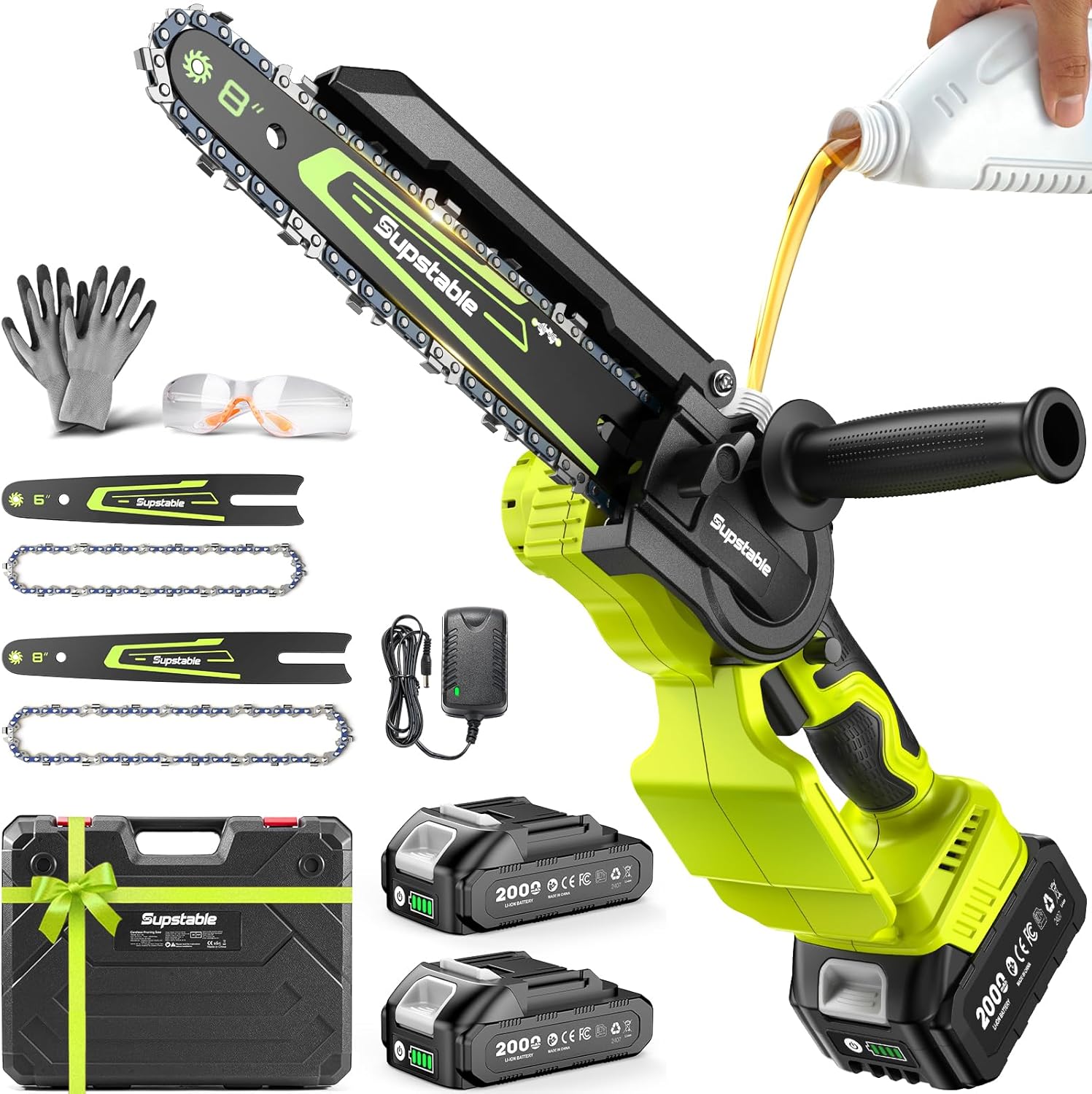
| Power Source | Battery Powered |
|---|---|
| Horsepower | 1000 watts |
| Chain Speed | 32ft/s |
| Included Components | 2 batteries and charger, 6" & 8" guide bars, case, gloves, goggles |
| Manufacturer Warranty Description | 2 Year Manufacturer Warranty |
This Supstable mini cordless chainsaw is a lightweight, two-size kit aimed at routine pruning, branch trimming, and small firewood cutting around the yard. It uses a 1000W brushless motor and offers quick switching between the included 6" and 8" guide bars so you can choose a shorter bar for precision pruning or the longer bar for slightly larger cuts. The kit includes two 2.0Ah batteries, a charger, a hard case, gloves, goggles, and an auto-oiler system to keep the chain lubricated during extended sessions. In practice the tool is easy to handle for users who want to avoid full-size gas or corded saws: it is light, has a non-slip auxiliary handle, and features a safety lock and debris baffle. Expect cordless convenience for small- to medium-duty yard work but not for heavy logging; runtime depends on task intensity and the 2.0Ah batteries are best for shorter jobs or swapping with a charged spare. The included safety kit and auto-oiler reduce maintenance and make it a practical choice for hobbyist gardeners and weekend DIYers.
Best for: Buyers who prioritize a compact, easy-to-use cordless saw for routine yard maintenance and occasional firewood or DIY cuts, and who value convenience and low maintenance over industrial cutting power.
Less Ideal for: Contractors or users who need long continuous runtime or to fell large trees should choose a full-size or higher-capacity professional chainsaw instead.
- Two interchangeable guide bars (6" and 8") for both precise pruning and larger branch cuts
- 1000W brushless motor for smoother power delivery and lower vibration
- Includes two batteries and a fast charger for extended runtime between charges
- Auto-oiler system reduces chain maintenance and keeps cutting consistent
- Comes with a hard case and basic safety gear for immediate, safer use out of the box
- 2.0Ah batteries provide limited runtime under heavy load compared with larger-capacity packs
- Not intended for heavy logging or very large-diameter trees due to bar length and battery capacity
Verdict: If you want a lightweight, low-maintenance cordless saw for regular pruning and small firewood jobs, this two-bar Supstable mini chainsaw is a practical, ready-to-use option.
Bilijamy 6" Cordless Mini Chainsaw with 2000mAh Battery

| Power Source | Battery Powered |
|---|---|
| Horsepower | 440 watts |
| Included Components | Battery, Chain, Guide Bar, Charger, Protective Cover |
This compact Bilijamy cordless chainsaw is built for homeowners who need a portable tool for pruning, cutting small logs, and light yard work. Its 440W motor and 6-inch bar let it slice through branches up to about 5 inches thick quickly, and the kit includes a 2000mAh battery, fast charger, spare chains, protective goggles, and gloves so you can start using it right away. The automatic chain lubrication and tool-free tensioning simplify maintenance in the yard, and the safety lock, front guard, and non-slip handles help reduce common hazards for casual users. Because it is lightweight and designed for one-handed use, it is easier to handle than a full-size chainsaw for trimming and reaching higher limbs. Limitations are that runtime is modest—roughly 30 to 40 minutes per charge—so heavier cutting or long sessions will need spare batteries or breaks to recharge, and the small 6-inch bar is not suitable for large-diameter logs or professional logging work.
Best for: Homeowners who want an affordable, easy-to-handle cordless saw for routine pruning, trimming, and small DIY woodcutting around the yard.
Less Ideal for: Landowners or contractors who need long runtime, larger bar lengths, or a saw built for sustained heavy-duty cutting should choose a full-size gas or professional cordless model.
- Compact 6-inch bar and lightweight design make it easy to maneuver for pruning and small jobs
- Includes battery, fast charger, spare chains, protective goggles, and gloves so it is ready to use out of the box
- Automatic chain lubrication and tool-free tensioning reduce maintenance time and keep cutting smooth
- Safety features such as a lock switch, front guard, and non-slip handles increase user protection
- Short single-battery runtime of about 30–40 minutes limits continuous heavy use
- Small bar length and power are not suitable for large logs or professional cutting tasks
Verdict: A lightweight, ready-to-use cordless mini chainsaw that offers quick pruning and small‑log cutting for budget-focused homeowners.
NEO-TEC 25cc 12" Top-Handle Small Gas Chainsaw

| Power Source | Gas Powered |
|---|---|
| Horsepower | 1.2 hp |
| Chain Length | 12 inches |
The NEO-TEC 25cc top-handle chainsaw is a compact gas-powered saw built for pruning, limbing, and light felling where portability and quick starts matter. It pairs a 1.2 hp 2-stroke engine with a 12-inch bar to deliver high-revving performance up to 12,000 RPM, while a spring-assisted ignition and quick-start system make it easy to get running in the field. The wrap-around ergonomic handle and low vibration design support comfortable single-handed operation for tree climbing and tight cuts, and a metal lanyard ring improves safety when working at height. The carburetor tuning and claimed fuel-efficiency mean longer run times between refills compared with less refined small saws. Important limitations are its small bar length and top-handle layout, which restrict it to lighter-duty work and users comfortable operating a saw with one hand; heavier cutting or prolonged felling of large trees will require a full-size rear-handle saw. Routine 2-stroke maintenance and correct fuel mix are necessary to keep the engine reliable over time.
Best for: Buyers who prioritize a reliable, easy-to-start small gas saw for pruning, limbing, and climbing tasks and who value portability and consistent field performance.
Less Ideal for: Do not choose this if you need a saw for heavy felling, prolonged multi-day lumber work, or prefer a two-handed rear-handle saw for maximum control.
- Compact, lightweight top-handle design for easy single-handed use and climbing
- Spring-assisted ignition provides fast, consistent one-pull starts in the field
- 1.2 hp 2-stroke engine with high RPM delivers strong cutting power for a small saw
- Ergonomic wrap-around handle and reduced vibration for more comfortable extended use
- Precision carburetor and tuned combustion for improved fuel efficiency
- 12-inch bar limits capacity for large-diameter felling and deep cuts
- Top-handle configuration is less stable for two-handed heavy cutting and better suited to experienced climbers
Verdict: Choose this compact top-handle chainsaw when you need a dependable, easy-starting gas saw for pruning, limbing, and climbing jobs.
Seesii M6 Lite 6" Cordless Mini Chainsaw with Two Batteries

| Power Source | Battery Powered |
|---|---|
| Horsepower | 900 watts |
| Chain Speed | 29ft/s |
| Chain Length | 6 inches |
The Seesii M6 Lite is a lightweight cordless mini chainsaw built for pruning, branch trimming, and small timber cuts around the yard. It pairs a 900 W motor with a 6-inch chain and claims chain speeds near 29–30 ft/s, which helps it slice through small logs and thick branches quickly. The kit includes two 21V 2000 mAh batteries, so you can swap batteries for extended work sessions without long downtime. Safety features include a double lock to prevent accidental starts, a chain guard to reduce flying debris, and a low-recoil ergonomic body that makes one-handed use comfortable for many users. Practical benefits are quick setup out of the box, included spare chain and basic tools, and a relatively quiet operation that is less intrusive than gas saws. Limitations are the short bar length, which restricts reach and large-log capability, and the unit uses a smaller chain pitch that is suited to light to medium yard tasks rather than heavy felling. For buyers focused on occasional pruning and portability, its balance of power and low weight is convenient, but it is not a replacement for larger professional saws when cutting large-diameter wood.
Best for: Buyers who want a compact, easy-to-use electric saw for routine yard pruning and small wood projects and who prioritize portability and convenience over industrial power.
Less Ideal for: People who need a chainsaw for heavy felling, professional logging, or cutting large firewood rounds should choose a larger bar length and higher-power model instead.
- Lightweight ergonomic design for easier one-handed pruning
- Includes two batteries and charger for extended run time
- Powerful 900 W motor and high chain speed for fast cuts on small branches
- Arrives ready to use with spare chain and basic tools included
- 6-inch bar limits reach and is unsuitable for large-diameter logs
- No automatic oiling system noted, so chain lubrication may require manual attention
Verdict: Choose the Seesii M6 Lite if you want a portable, one-handed electric chainsaw that makes quick work of pruning and small yard jobs with the convenience of two included batteries.
SEESII 12-Inch Cordless Brushless Chainsaw

| Power Source | Battery Powered |
|---|---|
| Horsepower | 1200 watts |
| Chain Length | 12 inches |
| Included Components | chainsaw |
The SEESII 12-inch cordless chainsaw is designed for homeowners and pros who need portable, high-power cutting without a generator. It pairs a 1200W brushless motor with two 4.0Ah batteries to deliver sustained cutting power for pruning, cutting storm debris, and working on small to medium logs. The tool-free chain tension system and automatic lubrication reduce downtime and routine maintenance, and the 60 mL oil tank helps keep the chain running smoothly during longer sessions. Because it is cordless and relatively lightweight for its class, it is easy to move around the yard or use at remote sites where cords are impractical. Important limits to note are the 12-inch bar, which constrains maximum log diameter compared with full-size saws, and battery reliance for very long jobs where alternating charged packs or a backup power source is needed. For straightforward woodcutting tasks this model balances cutting performance, convenience, and low maintenance.
Best for: Buyers who prioritize efficient, portable wood cutting for yard cleanup, pruning, and medium DIY projects and want a low-maintenance cordless saw they can move around the property easily.
Less Ideal for: Contractors or users who regularly need to fell large trees or process large-diameter logs should choose a full-size gas or professional electric chainsaw instead.
- 1200W brushless motor provides strong, efficient cutting power for hardwood and storm debris
- Two 4.0Ah batteries extend runtime for longer jobs and include a built-in charge indicator
- Automatic oiling with a 60 mL tank reduces frequent stops for lubrication
- Tool-free chain tensioning simplifies on-the-job adjustments
- Cordless, relatively lightweight design improves portability and use at remote sites
- 12-inch bar limits the maximum log diameter compared with larger professional chainsaws
- Runtime depends on battery swapping for extended heavy-duty cutting sessions
Verdict: A powerful, low-maintenance cordless 12-inch saw that maximizes portable cutting performance for homeowners and weekend woodworkers.
Choosing the Right Picking a Chainsaw: Key Factors to Consider
Cutting Power and Engine Type
Cutting power determines what diameter and type of wood you can cut efficiently. Gas engines deliver sustained torque for larger limbs and occasional felling, while battery-electric motors offer quieter operation and lower ongoing maintenance suited to smaller yards. Power also influences how quickly you can make repeated cuts without bogging down.
Consider the typical diameter of branches and trunks you will cut. For regular work on thick hardwoods, choose a higher-power specification. For light pruning and small logs, a lighter electric or lower-displacement gas saw will save weight and reduce fatigue.
Bar Length and Cutting Capacity
Bar length directly limits the maximum cutting diameter and affects balance and maneuverability. Shorter bars, usually 12 to 14 inches, are easier to handle for pruning and working in tight spaces. Longer bars, 18 inches and above, let you tackle larger logs but increase weight and the risk of kickback.
Think about where you will use the saw most. Taller trees or large-fall jobs may justify a longer bar for reach, while garden trimming and small-diameter firewood benefit from a compact bar that is easier to control.
Safety Features and Operator Protection
Safety features reduce the chance of injury during common incidents such as kickback or accidental contact. Look for active chain brakes, inertia or hand-lever-activated systems, effective chain catchers, and low-kickback chain designs. Clear, reachable stop controls and a good front handguard make it easier to react under stress.
Also consider vibration damping, which lessens hand fatigue and helps you maintain secure grip. A saw that is easier to control is safer because the operator can position the bar and chain more predictably during cuts.
Start-Up, Weight, and Handling
How a saw starts and how it feels in your hands affects how likely you are to use it safely and consistently. Electric models typically offer one-button or trigger-start convenience, while gas saws vary widely in pull-start effort. Weight distribution affects balance: a lighter saw reduces fatigue during extended pruning but may transmit more vibration.
Pick a saw with ergonomics that match your body size and the type of work. If you frequently work above shoulder height or in awkward positions, prioritize a lower weight and comfortable handle geometry to keep control throughout the cut.
Maintenance, Serviceability, and Running Costs
Regular maintenance keeps a chainsaw safe and reliable. Easy access to the air filter, spark plug, chain tensioner, and bar nuts speeds routine tasks and reduces time spent in the shop. Electric models simplify maintenance by removing carburetor and fuel system care, while gas saws require periodic carburetor tune-ups and fuel system attention.
Also consider the availability of replacement chains, bars, and common service parts. A model that is straightforward to maintain will have lower long-term running costs and less downtime between seasons.
Noise, Emissions, and Storage
Noise and emissions matter for neighborhood settings and enclosed garden areas. Battery-electric chainsaws run quieter and produce no on-site exhaust, which can be important for early-morning work or confined spaces. Gas saws are louder and emit fumes that require ventilation and careful fuel handling.
Storage needs differ too. Electric batteries need cool, dry storage and occasional charging cycles. Gas saws require fuel stabilization if stored for long periods to avoid carburetor problems. Think about where you will store and service the saw between uses.
Matching Saw Type to Garden Tasks
Different cutting jobs call for different saw characteristics. For light trimming, small-diameter pruning, and occasional limb work, battery-electric saws offer quiet operation, low maintenance, and enough power for most homeowners. For more frequent cutting of larger logs or storm cleanup, a gas-powered saw provides the torque and run time needed for heavier tasks.
Consider also how often you will use the saw and how accessible charging or fuel will be. If you live near neighbors or need to work in noise-sensitive hours, the reduced sound of an electric option is a real advantage.
- Electric saws: quieter, lower maintenance, best for light to medium tasks
- Gas saws: higher sustained power, better for heavy cutting and long sessions
- Corded saws: steady power but limited by cable reach and outdoor practicality
Proper Bar Length Selection and Cutting Technique
Choose a bar length that slightly exceeds the diameter of the largest logs you expect to cut. Using an excessively long bar for small jobs makes the saw harder to control and increases the chance of pinching or kickback. Practice proper cutting technique: support logs, cut in stages for wide trunks, and avoid twisting the bar while the chain is running.
If you regularly process firewood, a mid-length bar paired with adequate power hits a good balance between reach and control. For pruning high branches, combine a shorter bar saw with a pole saw attachment or consider a pruning saw instead of overreaching with a long bar.
- Match bar length to typical work, not maximum possible need
- Use wedges or supports on large cuts to prevent pinching
- Keep chains sharp to reduce required force and improve safety
Reducing Kickback and Staying Safe
Kickback is the most common serious hazard when using a chainsaw. Use reduced-kickback chains, and always maintain a firm two-handed grip with thumbs wrapped around the handles. Stand to one side of the cut path, never directly behind the bar line, and avoid contact between the nose of the bar and hard surfaces or green wood tension points.
Regular chain sharpening and correct chain tension lower the risk of unpredictable reactions. Wear appropriate personal protective equipment including eye protection, hearing protection, gloves, and cut-resistant chaps when doing any significant cutting.
- Avoid cutting with the bar tip and keep nose clear of obstructions
- Inspect chain and tension before each session
- Use a chain brake and keep the front handguard functional
Routine Maintenance to Extend Service Life
Inspect the chain for wear, maintain proper tension, and sharpen often. A sharp chain cuts cleaner and reduces strain on the engine or motor. Clean the air filter and cooling fins on gas models and check battery health on electrics to maintain peak performance.
Lubrication is essential. Keep the bar nose sprocket and chain adequately oiled and use the correct bar oil. Replace worn bars or chains before they become safety hazards. Simple seasonal maintenance prevents most field failures and keeps the saw ready when you need it.
- Sharpen chain regularly and check tension before use
- Keep the bar and chain well-lubricated
- Service air filters and cooling systems to avoid overheating
Transporting and Storing Your Chainsaw Safely
Transport saws in a locked case or with a fitted scabbard over the bar and chain to prevent accidental contact. Secure the saw in your vehicle to prevent movement and fuel spills for gas models. When storing, drain or stabilize fuel and keep batteries charged at recommended levels to avoid long-term degradation.
Store the saw in a dry, ventilated place away from children and pets. Regularly inspect stored equipment for signs of corrosion, rodent damage to cables, or fuel deterioration before returning it to service.
- Use a scabbard or case for the bar and chain during transport
- Stabilize or drain fuel when storing gas saws long term
- Store batteries in a cool, dry area at partial charge
How We Chose the Best Picking a Chainsaw
We focused on attributes that matter most to gardeners and property owners who will actually use a chainsaw in yards, small acreage, or garden maintenance. Selection criteria emphasized cutting capability appropriate to common tasks, operator safety systems, and features that reduce everyday effort and upkeep. We favored saws with reliable starting systems, reasonable vibration control, and accessible maintenance points for chain tension and air filter cleaning. Contributions from field reports and user experiences guided filters for durability under seasonal use and for component access during routine service. We excluded heavy forestry-only machines and purpose-built arborist tools because those require specialized training and different safety expectations. We also excluded compact hedge trimmers and saws lacking a true chain and bar suited for woody cutting. Editorial choices weighed bar length versus engine or motor power to ensure each pick suits typical homeowner jobs. We prioritized safety features such as active chain brakes, adequate chain guards, and clear operator controls. Finally, we considered serviceability and parts availability as practical factors for long-term ownership.
FAQ
What bar length is right for common yard work?
For common yard work, bars between 12 and 16 inches cover most pruning and small log jobs. Shorter bars are easier to handle in tight spaces while mid-length bars give more capacity without excessive weight.
Are battery chainsaws powerful enough for storm cleanup?
Battery chainsaws can handle light to moderate storm cleanup, especially newer high-voltage models. For heavy, continuous cutting of large-diameter trunks, gas saws still offer longer runtimes and more sustained torque.
How often should I sharpen the chain?
Sharpen the chain whenever you notice reduced cutting speed, increased tear-out, or the need to apply more pressure. For regular seasonal use, a quick sharpening every few hours of cutting keeps performance consistent.
What safety gear is essential when using a chainsaw?
Essential safety gear includes eye protection, hearing protection, gloves, and cut-resistant chaps. A helmet with face protection and sturdy boots add important protection during larger jobs or when working around falling limbs.
How do I reduce vibration and hand fatigue?
Choose a saw with built-in vibration dampening and ergonomic handles. Keep the chain sharp and the chain tension correct, since a dull or loose chain increases vibration. Take regular breaks during long cutting sessions to reduce fatigue.
Can I store a gas chainsaw without draining fuel?
Storing a gas chainsaw with fuel for short periods is usually fine, but for seasonal storage you should drain the fuel or add a fuel stabilizer and run the engine briefly to circulate it. This helps prevent carburetor gumming and starting issues.
Final Verdict
Choosing the right chainsaw is about matching power, bar length, and safety features to the types of cutting you do most often. Prioritize reliable starting, manageable weight and vibration, and easy maintenance for a tool you will actually use and keep in good condition. Balance tradeoffs between raw power and everyday practicality. If you need quiet, low-maintenance operation for pruning and small logs, electric options make sense. If you expect heavy duty cutting or long sessions, prioritize sustained torque and a serviceable design. Use the criteria above to pick a saw that fits your workload and skill level.
