

Note: This article contains affiliate links. If you click on these links and make a purchase, I may earn a small commission at no extra cost to you. This helps support my research and content. Read my full affiliate disclosure here.
If you want to reduce fleas without heavy synthetic insecticides, plant based flea spray can be a practical option around pets and people. The right formula will control adult fleas, repel biting larvae, and leave minimal residue on carpets, upholstery, and pet bedding. This guide shortlists seven top plant based flea sprays and explains the traits that matter in real home and yard use. We evaluate safety for animals and humans, practical efficacy against fleas at different life stages, ease of application, and surface compatibility so you can pick the product that fits your household routine.
Top Picks at a Glance
| Best Overall The best all-around choice for most situations | Vet's Best Flea & Tick Home Spray for Cats, Cotton Spice (32 fl oz) |  |
| Best Quality Built to a higher standard if you want something more solid | Wondercide Flea & Tick Yard Spray, Ready-to-Use, 32 oz |  |
| Best Value The sweet spot between price and what you get | Pet Life Unlimited Natural Flea & Tick Daily Spray for Dogs, 10 oz |  |
| Best Budget The cheapest option that still gets the job done reliably | Vet's Best Flea & Tick Spray for Dogs, Plant-Based, 8 oz |  |
| Highest Rated A top-rated pick with lots of positive feedback | Migdracy Plant-Based Flea & Tick Spray for Home and Fabrics, 16 oz |  |
| Most Popular A crowd favorite that many people choose with confidence | Mighty Mint Peppermint Oil Insect Repellent Spray, 16 oz |  |
| Best Seller A high-volume bestseller chosen again and again | Vet's Best Flea & Tick Home Spray for Dogs, Cotton Spice, 32 fl oz |  |
Vet's Best Flea & Tick Home Spray for Cats, Cotton Spice (32 fl oz)

| Unit Count | 32 Fluid Ounces |
|---|---|
| Item Form | Spray |
| Target Species | Cat |
| Scent Name | Cotton Spice |
| Active Ingredients | Clove Oil 0.05%, Cottonseed Oil 0.05% |
Vet's Best Flea & Tick Home Spray is a plant-powered spray designed to treat cats 12 weeks and older and to sanitize pet bedding, carpets and furniture. You can use it directly on a small area of a cat to test sensitivity, then spray lightly and brush so active oils reach the skin, or apply to household fabrics and rugs to reduce flea eggs and larvae. The formula lists cottonseed oil and clove oil as active ingredients and is intended to kill fleas, flea eggs, ticks and mosquitoes on contact while leaving a mild cotton spice scent. Practical benefits include a non-chemical alternative for multi-cat homes, a 32 fl oz bottle for repeated treatments, and instructions for weekly maintenance or twice-weekly use during active infestations. Important limitations are that the active ingredients are low-percentage essential oils so severe infestations may require veterinary treatments or combination with other control methods, and some cats or household members may experience skin or eye irritation if used improperly. Follow label directions closely and monitor pets after application.
Best for: Pet owners who prefer natural, plant-based pest control and want a spray that can be used both on cats and around the home for routine prevention and light infestations.
Less Ideal for: People dealing with severe or widespread infestations who need fast, high-efficacy chemical treatments or veterinary-prescribed solutions.
- Plant-based formula using cottonseed and clove oils rather than harsh pesticides
- Can be used on cats (12 weeks and older) and on bedding, carpets and furniture for environmental control
- Large 32 fl oz bottle supports weekly maintenance and spot treatments
- Mild cotton spice scent that leaves the home smelling fresh after drying
- Active botanical ingredients are present at low concentrations and may be less effective alone against heavy infestations
- Not validated for species other than cats and not recommended for kittens under 12 weeks or pregnant/nursing animals
Verdict: Choose this spray if you want a large, plant-based indoor treatment that doubles as a pet-safe spot treatment and environmental control for light to moderate flea and tick problems.
Wondercide Flea & Tick Yard Spray, Ready-to-Use, 32 oz

| Liquid Volume | 946 ml |
|---|---|
| Item Form | Spray |
| Active Ingredient | Cedarwood Oil 12.63% |
Wondercide Flea & Tick Yard Spray is a pre-mixed, hose-end garden spray that uses cedarwood and other plant-derived ingredients to kill and repel fleas, ticks, and mosquitoes across outdoor spaces. You attach the bottle to a garden hose, turn the sprayer on, and walk the yard with a sweeping motion for full coverage; the manufacturer says one bottle treats up to 5,000 square feet for fleas and mosquitoes and up to 2,500 square feet for ticks. Notable features include a ready-to-use hose connector, a plant-powered active (cedarwood oil), and instructions to avoid spraying in high heat to prevent phytotoxicity. In practice this product gives a convenient, no-mixing option for homeowners who want a less toxic alternative to conventional pesticides while still addressing active pest pressure. It is safe to use around pets and people when directions are followed and is designed to leave residues that are compatible with pollinators. Limitations to plan for are reduced persistence compared with some synthetic pesticides, potential need for repeat applications after heavy rain, and the risk of leaf burn if applied in full sun or above 90 degrees.
Best for: Buyers who prioritize effective, plant-based pest control and want a convenient, ready-to-use yard spray to reduce fleas, ticks, and mosquitoes without resorting to harsher synthetic chemicals.
Less Ideal for: Property owners who need a long-lasting, single-application knockdown or who require an aquatic-safe registered pesticide for use near ponds or large bodies of water.
- Ready-to-use hose-end sprayer for fast backyard coverage without mixing
- Plant-based active ingredients (cedarwood oil) that target fleas, ticks, and mosquitoes
- Manufacturer-stated coverage up to 5,000 sq ft for fleas and mosquitoes
- Formulated to be safe around people, pets, and pollinators when used as directed
- May require repeated applications for heavy pest pressure or after heavy rain
- Can cause phytotoxic burn on plants if applied in high heat or direct sun
Verdict: If you want a ready-to-use, plant-powered yard spray that balances real pest control with pet- and pollinator-friendly ingredients, this is a strong performance-oriented choice.
Pet Life Unlimited Natural Flea & Tick Daily Spray for Dogs, 10 oz

| Unit Count | 10 Ounce |
|---|---|
| Item Form | Liquid |
| Scent Name | Cedarwood, rosemary, and peppermint |
| Pet Type | Dog |
| Active Ingredients | Cedarwood Oil |
This 10 oz Pet Life Unlimited spray is a plant-powered, daily-use flea and tick treatment designed for easy on-the-go application. The non-aerosol trigger delivers a continuous fine mist you can spray on a dog before hikes or after outdoor play; directions recommend shaking and rubbing into the coat and reapplying every 2 to 4 hours up to twice daily. The formula centers on cedarwood oil with rosemary and peppermint for insect-repelling and contact-kill effects while also hydrating skin. Practical benefits include a pleasant herbal scent, portability for outdoor use, and a simple routine that avoids harsher synthetic pesticides. Important limitations are that it is marketed as a contact kill for fleas and tick nymphs rather than a systemic or long-duration prescription product, and the manufacturer notes it is exempt from EPA registration which may concern buyers seeking EPA-reviewed pesticides. Expect to reapply during extended outings and combine with veterinary-recommended prevention for heavy infestations.
Best for: Buyers who want a convenient, plant-based daily spray to add immediate protection during outdoor outings and prefer gentler, non-chemical alternatives as part of a practical pest-control routine.
Less Ideal for: Owners dealing with severe flea or tick infestations or those who need long-lasting, veterinarian-prescribed systemic protection should choose a clinical treatment instead.
- Plant-based formula with cedarwood, rosemary, and peppermint oils for repelling and contact-killing fleas and tick nymphs
- Non-aerosol continuous spray nozzle for controlled, portable application during walks or outdoor activities
- Formulation designed to hydrate and soothe the dog’s skin and coat
- Suitable for all dog sizes and all life stages according to product labeling
- Provides contact kill and short-term protection rather than systemic or long-lasting treatment
- Not registered with the EPA which may concern buyers seeking regulator-reviewed pesticides
Verdict: Choose this spray if you want a portable, plant-based daily repellent that soothes the coat and is easy to apply before outdoor activities.
Vet's Best Flea & Tick Spray for Dogs, Plant-Based, 8 oz

| Unit Count | 8 Fluid Ounces |
|---|---|
| Item Form | Oil |
| Scent Name | Peppermint |
| Target Species | Dog |
| Active Ingredients | Peppermint Oil 0.30%, Eugenol 0.70%, Sodium Lauryl Sulfate 2.70% |
Vet's Best Flea & Tick Spray is a small, convenient plant-based spray that provides quick-contact control for fleas, ticks, flea eggs, and mosquitoes on dogs 12 weeks and older and in pet areas around the home. You use it by lightly misting the dog’s coat until damp and massaging to the skin or by spraying bedding, crates, and other surfaces where pests hide. The formula centers on peppermint oil and clove-derived eugenol with a plant-derived surfactant, so it acts fast without synthetic pesticides and leaves a fresh peppermint scent. Practical benefits include easy spot treatments, safe indoor use on fabrics and pet areas, and suitability for regular use as part of a prevention routine. Limitations to consider are that the active ingredients are essential oils at low percentages, so protection is short-lived compared with prescription systemic products and repeated applications are required for ongoing control. For owners seeking a chemical-free option for intermittent use or to complement other prevention methods this delivers an accessible, low-toxicity choice.
Best for: Buyers who want a low-cost, chemical-free flea and tick option to treat pets and their immediate environment and who plan to use it regularly or alongside other prevention methods.
Less Ideal for: Households dealing with a heavy, established infestation or owners who need long-lasting, single-application protection should consider veterinary-prescribed systemic products instead.
- Plant-based formula using peppermint oil and eugenol for on-contact knockdown
- Safe for use on dogs 12 weeks and older and on bedding, crates, and furniture
- Non-staining formula with a fresh peppermint scent
- Small 8 oz bottle is portable and convenient for spot treatments
- Active ingredients are low-percentage essential oils so effects are shorter than systemic or chemical treatments
- Requires reapplication and integration with other control measures for severe infestations
Verdict: A budget-friendly, plant-powered spray that gives quick, low-toxicity on-contact control for occasional use and environmental spot treatments.
Migdracy Plant-Based Flea & Tick Spray for Home and Fabrics, 16 oz

| Unit Count | 16 Fluid Ounces |
|---|---|
| Item Form | Spray |
| Scent Name | Peppermint |
| Active Ingredients | Cedarwood Oil, Peppermint Oil, Geraniol |
This Migdracy spray is a plant-based flea and tick repellent formulated for routine use on fabrics and around living spaces. It delivers a fine peppermint-scented mist designed to treat pet bedding, carpets, upholstery, rugs and outdoor entry areas without leaving sticky residue. The active botanical ingredients listed are cedarwood oil, peppermint oil and geraniol, which provide a natural insect-repellent profile while leaving a fresh aroma rather than a chemical smell. The 16 ounce trigger bottle is intended for multiple treatments across rooms or outdoor seating areas and the fine mist helps cover fabric surfaces evenly. Limitations to note are that the formula is botanical rather than insecticidal, so it is best suited for preventive use or light infestations rather than heavy active outbreaks, and specific application directions and safety precautions for pets and children should be followed. For homeowners seeking a cleaner-scent, routine fabric treatment, this spray makes repeat application simple and unobtrusive.
Best for: Buyers who prioritize a gentler, botanical approach to managing fleas and ticks on fabrics and want a product that is simple to apply regularly around pet areas and living spaces.
Less Ideal for: Homes facing severe or established infestations or buyers who need a product with an EPA-registered adulticide for immediate pest knockdown.
- Plant-based active ingredients (cedarwood, peppermint, geraniol) for a natural repellent approach
- Fine mist spray that applies evenly to fabrics without leaving a sticky residue
- Fresh peppermint scent that avoids harsh chemical odors
- Ready-to-use 16 fl oz bottle suitable for treating multiple areas indoors and outdoors
- Botanical formula is oriented toward prevention and light infestations rather than guaranteed elimination of heavy pest problems
- No EPA-registered insecticide listed, so effectiveness may vary by pest pressure
Verdict: A convenient, plant-based fabric spray that keeps pet areas and living spaces smelling fresh while helping prevent fleas and ticks through regular use.
Mighty Mint Peppermint Oil Insect Repellent Spray, 16 oz
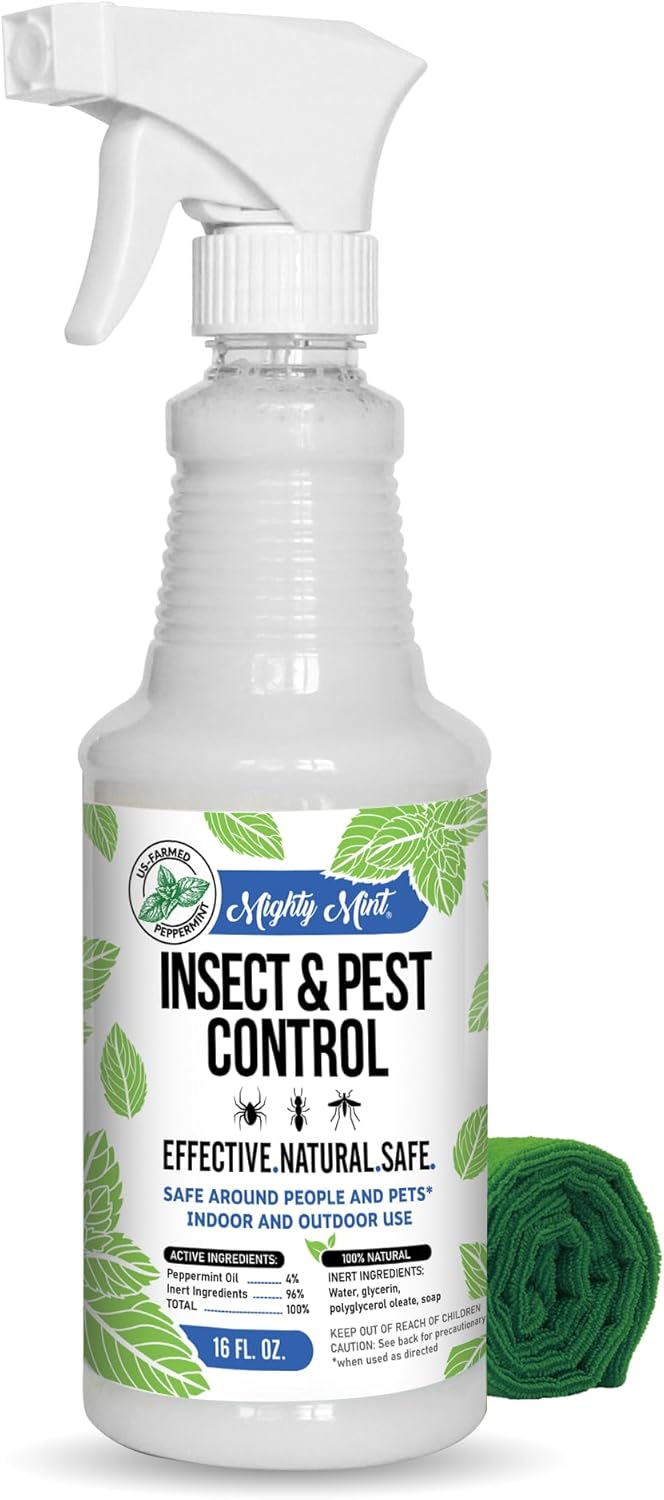
| Ingredients | Water, Glycerine, Polyglycerol oleate, Soap, Peppermint oil |
|---|---|
| Directions | Spray problem areas and repeat at least twice per week for best results |
| Use Areas | Indoor / Outdoor |
| Size | 16 oz |
Mighty Mint Peppermint Oil Spray is a plant-based ready-to-use repellent that uses concentrated peppermint oil to deter spiders, ants, roaches and similar pests around the home and yard. You use it like a household spray: shake, then spray problem areas such as baseboards, entryways, patios and garages until surfaces are covered and repeat a few times per week for continued protection. The formula is water-based with glycerine and soap so it will not usually stain surfaces and it leaves a fresh mint scent rather than harsh chemicals. Practical benefits include fast targeted application from the 16 oz spray bottle, suitability for both indoor and outdoor spot treatments, and a relatively gentle profile for households with scent sensitivity when applied and dried as directed. Important limitations are that it is a repellent rather than a poison so results depend on thorough, repeated application and it should not be applied when pollinators are present or to skin; users sensitive to strong peppermint scent may experience irritation.
Best for: Buyers who prioritize natural, plant-based pest control and want a ready-to-use spray for targeted indoor and outdoor spot treatments with a gentler scent profile.
Less Ideal for: People who need a fast-killing insecticide for severe infestations or who prefer long-lasting residual chemical treatments should choose a different product.
- Plant-based peppermint oil formula effective as a natural deterrent for common indoor and outdoor pests
- Ready-to-use 16 oz spray allows targeted spot treatments without mixing
- Water-based blend that is unlikely to stain and leaves a fresh mint scent
- Suitable for both indoor and outdoor use on baseboards, entryways, patios and garages
- Not an insecticide so requires repeated applications and careful coverage to maintain effectiveness
- Contains a strong concentration of peppermint oil that can irritate sensitive people or pets if applied improperly
Verdict: Choose this peppermint oil spray if you want an easy, plant-based spot treatment to repel common household pests without harsh chemical odors.
Vet's Best Flea & Tick Home Spray for Dogs, Cotton Spice, 32 fl oz

| Unit Count | 32 Fluid Ounces |
|---|---|
| Item Form | Spray |
| Target Species | Dog |
| Active Ingredients | Clove Oil 0.05%, Cottonseed Oil 0.05% |
This Vet's Best Home Spray is a plant-powered flea and tick spray intended for both direct application to dogs (12 weeks and older) and for treating bedding, carpets, crates and other household surfaces. The formula uses low concentrations of clove oil and cottonseed oil to kill fleas, flea eggs, ticks and mosquitoes on contact, and the cotton spice scent is milder than strong peppermint or citrus alternatives. Typical use is spot-testing fabrics, then applying a light spray to infested areas one to two times per week or using twice weekly on pets when treating an active problem; for maintenance the label recommends weekly applications. Practical benefits include a multipurpose product that can interrupt the flea life cycle in the home and be used alongside other pet prevention methods. Important limitations are that it contains essential oils that can irritate sensitive animals or people, it is not labeled for animals under 12 weeks or for many other species, and effectiveness on heavy infestations may require veterinary guidance or additional treatments.
Best for: Buyers who want a gentler, plant-derived flea control they can use around the home and directly on dogs while prioritizing safety and straightforward label instructions.
Less Ideal for: People dealing with severe, widespread infestations that likely require stronger veterinary treatments or users seeking a product safe for very young animals or multiple non-dog species.
- Plant-based formula that targets fleas, flea eggs, ticks and mosquitoes on contact
- Versatile for use on dogs 12 weeks+ and household items like bedding, carpets and crates
- Cotton spice scent is milder and more home-friendly than strong citrus or peppermint options
- Clear label directions for treatment and weekly maintenance that simplify safe use
- Contains essential oils that can cause skin or eye irritation in sensitive pets or people
- Not suitable for animals younger than 12 weeks and not validated for species other than dogs
Verdict: A user-friendly, plant-based indoor flea and tick spray that offers safe, multipurpose home and dog treatment for owners who prioritize gentler, vet-formulated options.
Choosing the Right Plant Based Flea Spray: Key Factors to Consider
Active Plant Ingredients and Their Mechanisms
Different botanical actives work in different ways. Pyrethrins from chrysanthemum flowers are fast-acting neurotoxins of insect origin, while essential oils like geraniol, peppermint, clove, and cedar often act as repellents or disrupt insect respiration and behavior. Know whether a spray aims to kill adult fleas on contact, repel them from treated areas, or disrupt development by targeting larvae. This affects how quickly you will see results and which life stages of the flea population will be controlled.
Also consider concentration and delivery. Essential oils are volatile and may need repeated applications to maintain effect. Some formulations combine plant actives with inert botanical carriers or mild surfactants to improve residual presence on fabrics and carpets. Understanding the mechanism helps set realistic expectations for how a plant based spray will perform in a typical home infestation versus preventative use.
Safety Around Pets, Children, and Plants
Plant derived does not always mean harmless. Cats, in particular, can be sensitive to certain essential oils and concentrated botanical extracts. Evaluate labels for explicit statements about use on or around dogs, cats, and other companion animals, plus any recommended wait times before allowing pets back into treated areas. Consider whether the spray is intended for direct application to pet fur or only for environmental use on fabrics and floors.
Also factor in household sensitivities. Strong botanical scents can trigger respiratory irritation in people or pets with allergies. If you plan to use sprays on garden plants or near edible crops, check that the formulation is safe for foliage and will not harm pollinators. A cautious approach is to start with a small test area and observe pets for signs of discomfort after treatment.
Efficacy Against Different Flea Life Stages
A successful control plan often targets more than just adult fleas. Adulticides reduce biting immediately, but eggs and larvae in carpets and yard soil can repopulate quickly. Some plant based sprays include insect growth regulators or botanical ingredients that interfere with egg viability and larval development, while others primarily repel or kill adults on contact. Choose a product that aligns with your infestation level: heavy infestations usually need an approach that reduces immature stages as well as adults.
Practical use also matters. For indoor infestations, treating carpets, pet bedding, baseboards, and upholstery is critical. For outdoor hotspots, treating shaded soil and areas pets frequent will reduce reinfestation risks. Expect to reapply according to the product's stated residual duration and life-cycle timelines.
Surface Compatibility and Residue
Not all sprays are safe for every surface. Some botanical formulations can leave oily residues or react with upholstery dyes and wood finishes. Check whether the product is labeled for fabrics, carpets, pet bedding, outdoor furniture, and lawns. For indoor use, prioritize sprays that are nonstaining and designed to dry quickly to avoid attracting dirt or leaving slick patches that pets might slip on.
For outdoor use, consider UV stability and rainfastness. Botanical actives can break down faster in sunlight, and rain can wash treatments away. Look for guidance on how long the spray lasts outdoors and whether multiple applications are needed after rain or heavy dew.
Application Method and Coverage
The delivery system influences how much area you can treat efficiently. Trigger-spray bottles offer control for spot treatments on bedding and furniture, while pump or hose-end sprayers provide broader coverage for yards. Consider the ergonomics of repeated applications if you will be treating a large home or extensive outdoor areas. Also check nozzle types; a fine mist is useful for fabrics and under furniture, whereas a wide spray is better for lawns and patios.
Packaging that reduces waste, such as concentrated refills or recyclable containers, can be beneficial for frequent users. Clear instructions for dilution, dwell time, and reentry intervals are important so you apply the correct amount safely and effectively.
Scent, Residual Comfort, and Human Acceptability
Scent matters in indoor environments. Strong essential oil odors can be pleasant for some but overwhelming for others. Choose a formulation with a scent profile you and your household can tolerate, particularly if you have children or people with respiratory sensitivities. Fragrance intensity often correlates with concentration of botanical oils, so milder formulations may require more frequent application.
Residual comfort also ties to how a product leaves surfaces feeling. Oily residues can attract dust and make treated areas feel sticky or appear darker on light fabrics. Look for products that state they dry clear and leave minimal odor if indoor acceptability is a priority.
When to Use Plant Based Flea Spray Versus Other Options
Plant based sprays fit well for light to moderate flea pressure, preventive maintenance in households with young pets, or when you want to minimize synthetic chemical use in living spaces. They can reduce adult flea activity and provide a repellent barrier when used regularly.
For severe infestations or when rapid, long-lasting knockdown is required, integrated measures may be needed alongside botanical sprays. Combining environmental treatments, mechanical cleaning, and veterinary parasite control creates a practical, multi-pronged strategy.
- Best for prevention and light infestations
- Works well as part of an integrated control program
- May require more frequent reapplication than synthetic adulticides
How to Apply Spray Indoors Safely
Ventilate rooms during and after application, and move curious pets and children out of the treated area until surfaces are dry. Apply in short bursts rather than heavy saturation to reduce residue build-up. Focus on pet bedding, baseboards, carpet edges, and any crevices where fleas hide.
Use a test patch on upholstery or delicate fabrics to check for staining or color change before treating a full surface. Follow label guidance on reentry times and whether the spray is safe for direct use on pets or only for environmental control.
- Ventilate and keep people and pets away until dry
- Spot-test fabrics for staining
- Treat pet bedding and carpet edges thoroughly
Outdoor Treatment Tips for Yards and Patios
Target shaded, moist areas where fleas breed, such as under decks, around compost piles, and in dense groundcover. Treat only areas your pets frequent to minimize environmental exposure. Reapply after heavy rain and during peak flea season according to label instructions.
For lawn applications, use a spray pattern that wets the vegetation and soil surface without creating runoff. If you have a vegetable garden or pollinator plantings nearby, avoid direct application to blooms and edible foliage.
- Focus on shaded, moist hotspots
- Reapply after rain and during high flea activity
- Avoid spraying blooms and edible plants
Combining Plant Based Sprays with Cleaning and Mechanical Control
No spray is fully effective without addressing flea habitat. Regular vacuuming removes eggs and larvae from carpets and upholstery; empty vacuum bags or canisters outdoors after use. Wash pet bedding in hot water and dry thoroughly to kill immature fleas.
For heavy indoor infestations, steam cleaning carpets and furniture can complement botanical sprays by physically removing fleas and providing high heat that kills life stages. Use mechanical control to reduce population size and let sprays maintain lower levels over time.
- Vacuum frequently and wash bedding in hot water
- Steam cleaning adds an effective nonchemical step
- Mechanical measures reduce reliance on repeated spraying
Interpreting Labels and Ingredient Lists
Look for clear statements about which flea life stages the product affects and whether the formulation is intended for direct pet contact or only for environmental surfaces. Ingredient lists should name active botanicals and their concentrations when possible.
Be cautious of vague marketing terms that emphasize natural origin without specifying active components. Labels that include first-aid instructions, animal safety notes, and reapplication intervals demonstrate clearer regulatory compliance and safer user guidance.
- Check for life-stage efficacy claims
- Confirm whether product is pet-safe for direct contact
- Prefer clear ingredient concentrations and safety instructions
How We Chose the Best Plant Based Flea Spray
We focused on sprays that rely primarily on plant-derived active ingredients and supporting botanicals rather than synthetic neurotoxic insecticides. Selection emphasized formulations intended for indoor and outdoor household use around dogs, cats, and garden pets. Key evaluation criteria included documented insecticidal or repellency efficacy against adult fleas, ingredient safety profiles for common companion animals, and real-world application features such as spray coverage and reapplication interval. We also considered surface compatibility and residue, scent and acceptability for pets and owners, and packaging that supports precise application without excessive waste. Excluded items included broad-spectrum pest control concentrates intended for agricultural use, products that list synthetic adulticides as primary ingredients, and remedies with no substantive data on flea control or unclear labeling for pet safety. Our short list reflects sprays that balance measurable flea knockdown or repellency with low-risk botanical chemistries and practical household use features.
FAQ
Are plant based flea sprays safe to use around cats?
It depends. Some essential oils and botanical concentrates can be harmful to cats. Always read the label for explicit cat safety guidance and avoid direct application to cats unless the product states it is safe. When in doubt, use sprays only in the environment and keep cats away until treated surfaces are dry.
How often should I reapply a plant based flea spray?
Reapplication intervals vary by formulation and exposure conditions. Many botanical sprays require weekly or biweekly reapplication to maintain repellency. Expect to reapply more frequently after cleaning, heavy foot traffic, or rain outdoors.
Can plant based sprays eliminate a severe flea infestation on their own?
Usually they are less likely to fully resolve severe infestations alone. Plant based sprays are most effective as part of an integrated approach including vacuuming, washing bedding, environmental cleaning, and veterinary parasite control for pets.
Is it safe to spray plant based flea products on pet bedding and furniture?
Many are labeled for use on bedding and upholstery, but check for specific surface compatibility and pet reentry instructions. Perform a spot test for staining and follow drying time recommendations before allowing pets back on treated items.
Will plant based sprays harm beneficial insects in my yard?
Some botanical actives can affect non-target insects when applied directly to blooms or nesting sites. To protect pollinators, avoid spraying flowering plants and apply only to the areas where pets frequent. Time treatments for early morning or evening when pollinator activity is lower.
Final Verdict
Plant based flea sprays can be a useful tool when you want lower-toxicity environmental control, especially for prevention and light infestations. Prioritize products with clear safety labeling for your household pets, documented activity against the flea life stages you need to control, and application methods that fit the spaces you will treat. Balance expectations around residual duration and reapplication needs against the advantage of reduced synthetic insecticide exposure. For persistent or heavy infestations, integrate botanical sprays with cleaning, mechanical measures, and veterinary parasite control to achieve reliable, long-term results.
