

Note: This article contains affiliate links. If you click on these links and make a purchase, I may earn a small commission at no extra cost to you. This helps support my research and content. Read my full affiliate disclosure here.
Petunias respond quickly to the right nutrients, with brighter color, fuller habit, and more continuous flowering when fed properly. Choosing the right plant food matters because petunias are heavy bloom producers that need a steady supply of phosphorus and balanced nitrogen to avoid leggy growth or reduced flower set. This guide covers seven shortlisted plant foods for petunias across common garden and container situations. We explain the feeding styles, nutrient balances, and practical application factors gardeners should weigh when picking a feed program. Read on to see the criteria used to evaluate options and what to expect when you start feeding petunias.
Top Picks at a Glance
| Best Overall The best all-around choice for most situations | TPS NUTRIENTS Petunia Fertilizer Liquid Plant Food, 8 oz |  |
| Best Quality Built to a higher standard if you want something more solid | JR Peters Jack's Classic 10-30-20 Blossom Booster Water-Soluble Fertilizer, 1.5 lb |  |
| Best Value The sweet spot between price and what you get | Miracle-Gro Water Soluble Bloom Booster Flower Food, 5.5 lb |  |
| Best Budget The cheapest option that still gets the job done reliably | RAINFLOW 10-30-20 Blossom Booster Water-Soluble Fertilizer (11.28 oz) |  |
| Highest Rated A top-rated pick with lots of positive feedback | JACKS Classic Petunia Feed 20-6-22 Liquid, 64 oz |  |
| Most Popular A crowd favorite that many people choose with confidence | Miracle-Gro Water Soluble All Purpose Plant Food, 1.5 lb |  |
| Best Seller A high-volume bestseller chosen again and again | Miracle-Gro Pour & Feed Liquid Plant Food, 32 fl. oz. | 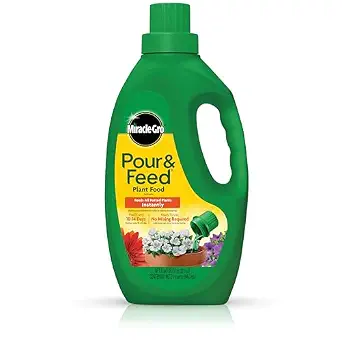 |
TPS NUTRIENTS Petunia Fertilizer Liquid Plant Food, 8 oz

| Brand Name | TPS NUTRIENTS |
|---|---|
| Unit Count | 8 Fluid Ounces |
| Ideal Use | Beds, Baskets & Containers |
| Made in | USA |
This 8 oz liquid plant food from TPS NUTRIENTS is a targeted fertilizer for petunias and other flowering containers that aims to encourage repeat flowering and stronger roots. It is water-soluble and designed for regular feeding of beds, hanging baskets, and patio pots to maintain steady bloom production and color intensity. The formula emphasizes balanced nutrition for flowering plants, which makes application straightforward: dilute per directions and feed on a consistent schedule to keep plants from fading between flushes. Practical benefits include easy mixing, suitability for container and in-ground use, and ingredients tuned to flowering performance rather than general foliage growth. Limitations are the small bottle size, which means frequent repurchasing or buying multiple units for larger gardens, and the lack of detailed N-P-K values on the label information provided here, so users who prefer exact nutrient ratios may find that lacking. For gardeners focused on keeping petunias blooming through the season, this is a simple, purpose-built option.
Best for: Gardeners who want a simple, flower-focused fertilizer to keep petunias and other annuals blooming reliably in containers and garden beds.
Less Ideal for: Large-scale vegetable or landscape gardeners who need bulk fertilizer or exact nutrient formulations for diverse plant needs.
- Formulated specifically to encourage repeat flowering and vibrant color in petunias
- Water-soluble liquid that is easy to mix and apply to beds, hanging baskets, and containers
- Promotes stronger root growth to support healthier plants and sustained blooms
- Small 8 fl oz bottle may not last long for multiple containers or larger gardens
- Product details do not list explicit N-P-K values on the provided information
Verdict: Choose this liquid petunia fertilizer if you want an easy-to-use, bloom-focused feed to keep containers and hanging baskets flowering throughout the season.
JR Peters Jack's Classic 10-30-20 Blossom Booster Water-Soluble Fertilizer, 1.5 lb

| Item Form | Powder |
|---|---|
| Application Method | Water-Soluble |
| Specific Uses For Product | Blend |
| Target Species | Flowers |
This Jack's Classic 10-30-20 Blossom Booster is a concentrated water-soluble powder designed to increase bloom production in flowering plants. You dissolve measured amounts in water to make multiple gallons of feed solution, which makes it easy to apply through a watering can or a hose-end sprayer for container-grown mandevilla and garden beds. The 10-30-20 N-P-K balance prioritizes phosphorus to encourage brighter, more plentiful flowers while included micronutrients support overall plant health. Because it is a powdered concentrate, a little goes a long way and storage life is typically longer than premixed liquids. Limitations are that you must measure and mix correctly to avoid overfeeding, and it is tailored to flowering performance rather than overall foliage growth. For gardeners who want consistent, bloom-focused feeding and predictable results, this formula is reliable and straightforward to use on mandevilla during the active flowering season.
Best for: Gardeners who prioritize dependable, bloom-focused feeding for flowering ornamentals and want a concentrated product that makes predictable, repeatable feed solutions.
Less Ideal for: People seeking an all-purpose fertilizer for vigorous leaf growth or those who prefer ready-to-use liquid feeds rather than mixing powder concentrates.
- High phosphorus ratio (10-30-20) to encourage abundant flowering
- Water-soluble powder concentrates make multiple gallons of feed from a small package
- Includes micronutrients to support balanced plant health
- Simple application compatible with watering cans and hose-end feeders
- Requires careful measuring and mixing to prevent nutrient burn
- Focused on bloom production so it may not address nitrogen-driven foliage needs
Verdict: A dependable, concentrated blossom booster that reliably promotes bigger, more plentiful flowers when mixed and applied correctly.
Miracle-Gro Water Soluble Bloom Booster Flower Food, 5.5 lb

| Item Form | Powder |
|---|---|
| Application Method | Mix with water |
| Target Species | Flower |
| Mixing Ratio | 1:Water |
Miracle‑Gro Water Soluble Bloom Booster is a powdered, water‑mix fertilizer designed to be dissolved and applied every 7 to 14 days to flowering plants. It carries a high middle number NPK (10‑52‑10) so it delivers an extra boost of phosphorus to encourage bud set and larger blooms, and it can be used for in‑ground beds, containers and indoor flowering plants when diluted to the package directions. The included mixing guidance and scoop make it straightforward to dose for small containers or larger garden areas, and one 5.5 lb container covers a substantial area. Practical benefits include fast uptake when watered in at the base of plants and compatibility with common feeders or a watering can. Limitations are that the concentrated phosphorus focus is for flowering performance rather than overall foliage growth and it requires regular reapplication through the blooming season rather than a single slow‑release feed. Also users should follow safety directions when handling and avoid overfeeding sensitive or newly transplanted plants.
Best for: Gardeners who prioritize showy, frequent blooms and want a product they can apply regularly to flower beds and containers during the flowering season.
Less Ideal for: People looking for an all‑season, low‑maintenance slow‑release fertilizer or those who need a balanced feed for foliage and establishment of new transplants.
- High phosphorus NPK (10-52-10) targets bud set and bloom production
- Water‑soluble powder mixes quickly for fast feeding and easy use in a watering can or garden feeder
- Suitable for both in‑ground beds and container flowering plants including roses and hydrangeas
- Covers a large area from a single 5.5 lb container when used to label directions
- Requires frequent applications during bloom period rather than providing long‑term slow release
- Formulation focuses on flowering so it is less balanced for leafy growth or general maintenance
Verdict: Choose this bloom booster if your goal is bigger, more frequent flowers by feeding a high‑phosphorus, fast‑acting soluble fertilizer during bloom season.
RAINFLOW 10-30-20 Blossom Booster Water-Soluble Fertilizer (11.28 oz)

| Item Form | Granules |
|---|---|
| Application Method | Water-soluble |
| Target Species | Flowers |
| Unit Count | 11.28 Ounce |
This RAINFLOW 10-30-20 Blossom Booster is a small, water-soluble granule fertilizer formulated to push bloom production and enhance flower color for azaleas, hydrangeas, bougainvillea and similar ornamentals. You mix measured granules into water and apply to soil or potted plants, where the high phosphorus ratio supports bud set and visible flowering without complex application. The blue granules dissolve quickly for fast absorption, making it handy for seasonal feeding or targeted bloom boosts before shows or heavy flowering periods. Its compact 11.28 ounce package is convenient for home gardeners and greenhouse users who need a single-season supply or want to test a bloom-specific feed. Expect noticeably stronger bloom development when used during the flowering stage, but you will need to reapply according to plant needs since the small unit covers limited area compared with larger commercial bags. Also it is focused on flowering benefits rather than balanced all-season nutrition, so pair it with general-purpose feeds for vegetative growth if needed.
Best for: Home gardeners on a budget who want an easy-to-mix bloom booster for potted plants, beds, or seasonal flowering displays and who prioritize visible flower production over all-purpose feeding.
Less Ideal for: Large-scale gardeners or those seeking a single all-purpose feed for both foliage and long-term soil building should consider bulk or balanced fertilizers instead.
- High phosphorus NPK (10-30-20) targets bud set and stronger blooms
- Water-soluble granules dissolve quickly for fast nutrient uptake
- Compact 11.28 oz package is easy to store and carry for home gardeners
- Blue granules make measuring and mixing more straightforward
- Small unit size provides limited coverage for larger gardens
- Formulation emphasizes flowering so it is not a complete all-season fertilizer
Verdict: Choose this compact 10-30-20 water-soluble booster when you want an inexpensive, easy-to-apply feed that quickly increases bloom size and color.
JACKS Classic Petunia Feed 20-6-22 Liquid, 64 oz

| Item Form | Liquid |
|---|---|
| Specific Uses For Product | Plant Growth |
| Coverage | Full |
| Target Species | Flowers |
| Unit Count | 64 Ounce |
JACKS Classic Petunia Feed 20-6-22 is a liquid fertilizer made for flowers that struggle to take up iron, with a micronutrient package designed to correct iron chlorosis and keep foliage green. It is typically mixed into watering for hanging baskets, containers, and other flower beds that are watered frequently or located in hard water areas. The 20-6-22 ratio provides a higher nitrogen and potassium balance with low phosphorus to encourage fuller plants without excessive bloom-forcing, and the added iron makes it especially useful for petunia, calibrachoa, bacopa, verbena, vinca and salvia. Practical benefits include visible improvement in leaf color, suitability for regular feedings, and convenience as a liquid that disperses quickly in pots and baskets. Limitations are that it is a general feed rather than a bloom-enhancing bloom booster and it requires regular application to maintain results; users should follow dilution instructions to avoid overfeeding. For gardeners focused on consistent, reliable foliage health in containers, this is a purposeful option.
Best for: Gardeners who prioritize consistent, dependable foliage health for petunias and similar container flowers and want a targeted feed to correct iron-related yellowing.
Less Ideal for: Growers seeking a one-time slow-release solution or those who want a fertilizer optimized exclusively for maximum bloom size and count.
- Formulated with added iron and micronutrients to correct iron deficiency and improve leaf color
- Liquid form mixes easily for regular feedings in hanging baskets and containers
- Low phosphorus formula encourages fuller plants rather than unnecessary bloom forcing
- Suitable for hard water areas where micronutrient availability can be reduced
- Requires ongoing regular applications rather than a single long-term treatment
- Not specifically formulated as a high-bloom booster for maximum flower production
Verdict: Choose this liquid feed when you want a reliable, iron-enhancing fertilizer to keep petunias and other container flowers consistently green and healthy.
Miracle-Gro Water Soluble All Purpose Plant Food, 1.5 lb

| Item Form | Powder |
|---|---|
| Application Method | Watering Can |
| Target Species | For all flowers, vegetables, trees, shrubs and houseplants |
| Mixing Ratio | 24-8-16 |
Miracle-Gro Water Soluble All Purpose Plant Food is a powder concentrate you mix with water to give a quick nutrient boost to flowers, vegetables, houseplants, shrubs and trees. It is typically dissolved in a watering can or used with a compatible garden feeder to soak soil at the base of plants, delivering nitrogen-heavy nutrition that shows effects faster than granular fertilizers. Notable features include an easy scooping method for indoor and outdoor dosing, compatibility with containers and in-ground planting, and clear directions for feeding every one to two weeks. In practice this makes the product a convenient option when you want visible growth and greener foliage quickly, and the 1.5 lb container covers roughly 600 sq. ft. Important limitations are that it is a fast-release, high-nitrogen formula best used as a regular quick feed rather than a long-term slow-release solution, and it requires careful measuring to avoid overfeeding. For routine maintenance combine with good watering and follow the label to avoid nutrient imbalance.
Best for: Buyers who prefer proven, easy-to-use feeding routines and want noticeable growth quickly for a variety of garden and houseplants, guided by established usage directions and broad user experience.
Less Ideal for: Gardeners seeking a single, long-term slow-release solution or those who prefer organic or low-nitrogen fertilizers for sensitive plantings should consider alternative products.
- Water-soluble powder starts working quickly at the roots when mixed and applied
- Clear, simple dosing for indoor and outdoor use with included scoop guidance
- Suitable for a wide range of plants including vegetables, flowers, shrubs and houseplants
- Covers a large area from a small container (about 600 sq. ft. per 1.5 lb)
- Fast-release formula means benefits are short-term compared with slow-release granular fertilizers
- Requires precise measuring and regular reapplication to avoid overfeeding
Verdict: A reliable, fast-acting water-soluble plant food for gardeners who want easy, repeatable feeding and quick visible results.
Miracle-Gro Pour & Feed Liquid Plant Food, 32 fl. oz.

| Item Form | Liquid |
|---|---|
| Application Method | Directly to the soil |
| Target Species | potted plants |
| Unit Count | 32 Fluid Ounces |
Miracle-Gro Pour & Feed is a ready-to-use liquid fertilizer designed for container plants and houseplants. You apply it by measuring with the bottle cap and pouring the recommended amount directly onto the soil around each pot, so no mixing or watering-can prep is required. Its convenience makes it easy to maintain a regular 10–14 day feeding schedule for bedding plants like petunias in containers. The product is formulated for potted plants only, and the liquid form gives fairly quick nutrient availability compared with slow-release granules. Practical benefits include simple dosing with the cap, suitability for indoor and outdoor use, and a clearly stated application rhythm that helps keep flowering plants vigorous. Important limitations are that it is not intended for in-ground beds and that frequent applications mean you need to remember regular feedings; it is also a general all-purpose formula rather than a petunia-specific bloom booster.
Best for: A plant owner who prefers simple, low-effort care for container flowers and wants a dependable, easy-to-measure fertilizer to keep petunias and other potted ornamentals blooming.
Less Ideal for: Gardeners seeking a long-term, in-ground soil amendment or those who prefer an infrequent, slow-release feeding schedule should consider other products.
- Ready-to-use liquid requires no mixing so application is fast and low-effort
- Cap-measure dosing makes it easy to apply the correct amount for each container
- Suitable for both indoor and outdoor container plants so one product covers many uses
- Feeds on a 10–14 day schedule for consistent nutrient supply to flowering containers
- Not formulated for in-ground planting so unsuitable for garden beds
- Requires frequent application compared with slow-release fertilizers
Verdict: Use this if you want a no-mix, easy-to-measure liquid fertilizer to keep container petunias fed and blooming on a regular schedule.
Choosing the Right Plant Food for Petunias: Key Factors to Consider
Nutrient Ratio and Bloom Support
Petunias benefit from a fertilizer ratio that supports flower development without encouraging excessive leafy growth. A higher middle number for phosphorus encourages bud set and larger blooms, while moderate nitrogen helps maintain foliage that supports flowering. Excessive nitrogen usually produces lush green growth at the expense of flowers.
When evaluating a plant food, check the N-P-K numbers and how those translate to feeding frequency. Some formulations aimed at flowering annuals will advertise bloom support or higher phosphorus. For container plantings, the actual amount delivered per watering matters more than the label ratio alone because concentration and dosing determine how much phosphorus reaches the roots.
Release Type: Water-Soluble Versus Slow-Release
Water-soluble feeds deliver nutrients quickly and are useful when you need fast correction for pale foliage or weak bud set. They work well for frequent watering schedules and allow precise control of feeding strength. Slow-release granules or coated pellets provide a steady background supply and reduce the need for weekly feeding, which can be convenient for hanging baskets.
Consider how often you water and how much maintenance you want. In high-heat conditions where petunias flush rapidly, soluble feeds let you boost nutrition during bloom peaks. For low-maintenance plantings, a well-matched slow-release product can maintain flowering without the risk of overfeeding from repeated soluble applications.
Salt Index and Container Safety
Many container problems stem from accumulated salts when concentrated feeds are used too often. Petunias in pots and hanging baskets are especially vulnerable because root volume is limited and salts concentrate quickly. A plant food with a lower salt index or one recommended at dilute strengths reduces the chance of leaf-tip burn and root stress.
When choosing a product for containers, look for clear dosing instructions and guidance on leaching frequency. Regular flushing with water and occasional lower-strength feedings help manage salt buildup. Some fertilizers include added salts for micronutrient delivery but also provide explicit dilution rates to prevent damage in small-volume pots.
Micronutrients and pH Considerations
While macronutrients drive bloom production, micronutrients like iron, magnesium, and manganese influence leaf color and photosynthetic efficiency. Petunias showing pale veins, yellowing between veins, or slow growth may need a feed that supplies those trace elements. Some formulations chelate micronutrients to keep them plant-available across a range of soil pH levels.
Assess the planting medium pH and the common water quality in your area. Hard water can lead to micronutrient lockup, so a plant food that includes chelated iron or magnesium can prevent deficiencies. For in-ground plantings where pH is stable, micronutrients are less urgent but still useful for container-grown petunias.
Feeding Schedule and Seasonal Timing
Petunias typically flower from spring through fall, and feeding needs change with the season. Early in the season a balanced feed helps establish strong plants; during peak bloom a slightly higher bloom-support formulation can maximize flower production. Toward the end of the season, reduce feeding to allow plants to wind down naturally.
Consider how the product's recommended schedule fits into your gardening routine. Some feeds are meant for weekly use, others monthly, and a few are applied only at potting. Matching the product guidance to how often you check and water your plants will improve results and reduce the risk of missed or excessive feedings.
Application Method and Garden Workflow
The practical way you apply fertilizer influences whether you will stick to a feeding plan. Water-soluble feeds are mixed and poured at watering, foliar feeds are sprayed directly on leaves, and granules or spikes are placed in potting mix. Each method has tradeoffs in speed, coverage, and convenience.
If you manage many hanging baskets, a quick-dissolve soluble concentrate that mixes into a watering can may be easiest. For mixed beds, a spread-and-water slow-release product can service multiple plants with minimal effort. Choose a product that aligns with how you prefer to work in the garden to ensure consistent feeding.
Feeding Petunias in Hanging Baskets
Hanging baskets dry faster and have smaller root zones, so feeding choices must balance concentrated nutrition with container safety. Use lower-strength soluble feedings more frequently rather than strong, infrequent doses to avoid stress and imbalanced growth.
Also plan for periodic flushing with plain water to prevent salt accumulation. If you prefer a low-maintenance approach, choose a slow-release product designed for containers and supplement with a light soluble feed during peak bloom.
- Mix soluble feeds at half strength for baskets in hot weather
- Flush baskets monthly to control salt buildup
- Top-dress or add slow-release granules at potting for longer intervals
Best Practices for Garden Bed Plantings
In-ground petunias have more root volume and generally tolerate stronger feedings than containers. A balanced granular feed applied at planting and a mid-season soluble boost can sustain continuous blooms. Pay attention to soil fertility and organic matter levels, which affect how long a granular feed lasts.
Avoid excessive nitrogen in beds to prevent sprawling, weak-stemmed plants. Mulching helps retain moisture and moderate the frequency of soluble applications.
- Apply granular feed according to label and water in well
- Supplement with soluble feed during extended bloom periods
- Improve soil with compost to extend fertilizer effectiveness
When to Use Foliar Feeding
Foliar feeding can quickly correct nutrient deficiencies and give a short-term boost to bud set. It is most effective for micronutrient delivery or when roots are stressed from heat or drought. Use foliar sprays sparingly and on calm, cool mornings to maximize uptake and reduce leaf burn risk.
Foliar feeds do not replace regular root-zone feeding for sustained bloom production. Think of foliar sprays as a corrective tool or a bloom stimulant rather than a standalone program.
- Apply foliar sprays early morning or late afternoon
- Use foliar feeding for quick correction of deficiencies
- Limit foliar sprays to occasional use, not weekly replacement
Adjusting Feed Strength for Heat and Watering Patterns
Hot, sunny conditions speed petunia growth and nutrient uptake, so reduce feed concentration while increasing frequency to prevent overfertilization. Conversely, in cooler or cloudy periods, cut back feeding frequency since plant uptake slows.
Match feed strength to how often you water. Frequent, light watering pairs best with dilute soluble feeds; infrequent deep watering favors slow-release products or stronger-dosed applications at longer intervals.
- Reduce concentration in extreme heat and raise frequency
- Follow label guidance but adapt to observed plant response
- Keep records of application rates to avoid overfeeding
Pairing Plant Food with Potting Mix and Soil
The baseline fertility of your potting mix or garden soil changes how much supplemental fertilizer petunias need. Fresh potting mixes often contain starter nutrients that can last several weeks, so postpone heavy feeding until those initial nutrients are depleted. In contrast, recycled or depleted mixes need earlier intervention.
Consider mixes with good drainage for petunias, since soggy conditions reduce nutrient uptake and increase root disease risk. Tailor your feeding schedule to the mix's drainage and organic content to keep plants vigorous.
- Delay feeding new potting mixes until starter nutrients fade
- Choose well-draining mixes to support healthy root function
- Top-up with soluble feeds in lightweight mixes that leach quickly
How We Chose the Best Plant Food for Petunias
We focused on fertilizer attributes that directly affect petunia performance in garden beds, hanging baskets, and containers. Key evaluation criteria included nutrient ratio and phosphorus level to support bud formation, release type to match watering and maintenance habits, concentration and application rate for predictable dosing, and salt index or salt management to avoid root scorch in pots. We also assessed ease of application because many petunia plantings are in hanging baskets or mixed containers where convenient foliar or water-soluble options matter. Products were excluded if they were general-purpose mixes without clear N-P-K labeling or if they required specialty equipment most home gardeners do not use. We prioritized formulations designed for flowering annuals, straightforward instructions, and clear guidance on frequency. The listed criteria reflect both lab-analyzable specs and real-garden handling traits so gardeners can choose a plant food that matches their planting style and maintenance schedule.
FAQ
How often should I feed petunias in containers?
Often depends on the product. Water-soluble feeds are commonly applied every one to two weeks at recommended strength, while slow-release granules can last several weeks to months. In hot weather, increase frequency with diluted solutions to match faster growth.
Can I use a general-purpose fertilizer for petunias?
You can, but formulations targeted to flowering annuals often provide a better phosphorus balance for bud set. If using a general fertilizer, follow conservative dosing and monitor bloom production to ensure it meets flowering needs.
Will feeding more frequently always increase blooms?
Not always. Overfeeding, especially with high nitrogen, can cause lush foliage and fewer flowers. Frequent, dilute feedings timed to bloom cycles usually work better than stronger, more frequent doses that risk salt buildup.
Should I stop feeding petunias later in the season?
Typically reduce feeding as temperatures cool and plants naturally slow down. Scaling back in late season helps plants finish gracefully and avoids forcing tender growth that could be damaged by cool weather.
Are foliar feeds necessary for petunias?
Foliar feeds are useful for quick correction of micronutrient deficiencies or to deliver a short-term boost, but they do not replace root-zone feeding for sustained bloom production. Use them sparingly as a supplement.
Final Verdict
Choose a plant food for petunias by balancing bloom-focused nutrients with an application style that fits your containers and routine. Prioritize a formulation that supports bud set without excessive nitrogen, manages salts for container plantings, and provides clear dosing guidance. Decide between water-soluble feeds for precise, seasonal boosts and slow-release options for lower maintenance. Match the feed to your watering habits and potting mix so you get bigger, longer-lasting displays without risking root stress.
