

Note: This article contains affiliate links. If you click on these links and make a purchase, I may earn a small commission at no extra cost to you. This helps support my research and content. Read my full affiliate disclosure here.
When you want plants that establish quickly and survive stress, feeding for root development makes a real difference. Good plant food for root growth helps seedlings, transplants, and container plants develop denser, deeper root systems so they take up water and nutrients more effectively. This guide highlights seven shortlisted options that gardeners commonly use for root stimulation, and explains the criteria we used to assess them. You will get practical notes on nutrient mix, application method, and timing so you can match a root-focused feed to your garden situation. Read on for the specific decision points that matter when choosing plant food for stronger roots.
Top Picks at a Glance
| Best Overall The best all-around choice for most situations | General Organics BioRoot Root Booster, 1 qt. |  |
| Best Quality Built to a higher standard if you want something more solid | Clonex Rooting Gel High-Performance Rooting Compound, 100 ml |  |
| Best Value The sweet spot between price and what you get | Grow Queen Organic Liquid Indoor Plant Food 5-5-5 with Sea Kelp, 8 oz | 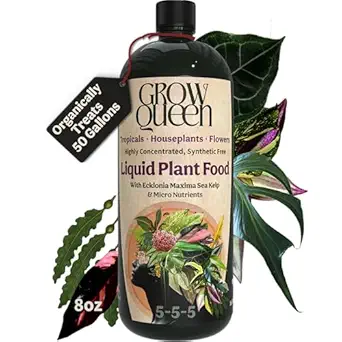 |
| Best Budget The cheapest option that still gets the job done reliably | Miracle-Gro Indoor Plant Food Spikes, 48 Count |  |
| Highest Rated A top-rated pick with lots of positive feedback | Herrdemia Concentrated Mycorrhizal Fungi Granules, 8 oz |  |
| Most Popular A crowd favorite that many people choose with confidence | SUPERthrive Plant Vitamin Solution with Kelp, Liquid Concentrate, 4 fl oz |  |
| Best Seller A high-volume bestseller chosen again and again | TPS NUTRIENTS Monstera Liquid Plant Food, 8 oz |  |
General Organics BioRoot Root Booster, 1 qt.

| Item Form | Liquid |
|---|---|
| Specific Uses For Product | Potting |
| Target Species | All types of plants in garden soils and potting mixes |
| Liquid Volume | 946 ml |
| Mixing Ratio | 0-1-1 |
BioRoot is a liquid root enhancer designed to help plants establish vigorous root systems and improve nutrient uptake throughout the plant life cycle. You use it diluted according to the 0-1-1 mixing ratio and apply it with seedlings, cuttings, potted plants, or garden-planted specimens in soil or potting mixes. The formula combines plant-derived nutrients, sea kelp, mined minerals, vitamins, enzymes, and humic acids to encourage root branching and faster establishment, which is especially useful after transplanting or when starting cuttings. Practical benefits include stronger early growth, better long-term nutrient absorption, and compatibility with a wide range of ornamental and edible plants. Limitations are that it is a targeted root treatment rather than an all-purpose NPK fertilizer so you will still need balanced feeding for foliage and flowering stages, and handling precautions are required since it can irritate skin or eyes.
Best for: Gardeners who want a reliable root-focused supplement to help seedlings, cuttings, and recently transplanted plants establish faster and absorb nutrients more effectively.
Less Ideal for: Buyers looking for a single product to cover all feeding stages or those who prefer granular or slow-release fertilizers for low-maintenance feeding.
- Formulated specifically to promote root growth for seedlings, cuttings, and transplants
- Liquid concentrate with a clear mixing ratio for easy application
- Contains sea kelp, humic acids, vitamins and enzymes to improve root vigor and nutrient uptake
- Suitable for use in garden soils and potting mixes across many plant types
- Not a complete NPK fertilizer so additional feeding is needed for vegetative and flowering stages
- Contains concentrated ingredients that require careful handling to avoid skin or eye irritation
Verdict: Choose BioRoot when you need a dedicated, easy-to-use liquid booster to jump-start root systems for seedlings, cuttings, and transplants.
Clonex Rooting Gel High-Performance Rooting Compound, 100 ml

| Item Form | Gel |
|---|---|
| Application Method | Dip |
| Specific Uses For Product | Gardening, Propagation |
| Liquid Volume | 100 ml |
Clonex Rooting Gel is a tenacious, water-based rooting compound designed for dipping cuttings to speed root initiation. You apply it by dipping the cut end into the gel, then place the treated cutting into your chosen rooting medium and keep it warm and moist. The gel formula adheres to tissue so it stays in contact longer than powders or liquids, delivering a measured dose of IBA and nutrients that encourage consistent root development across many soft-tissue plant types. For growers focused on reliable, repeatable propagation results the product is easy to use, stores compactly, and is widely trusted by nurseries. Important limitations are that root timing still depends on species and environment, and a 100 ml bottle suits moderate use but may be small for large-scale commercial propagation. It is best paired with good sanitation, a stable humidity environment, and appropriate rooting media to get the strongest results.
Best for: Growers who prioritize predictable, high-performance propagation and want a proven rooting compound that gives repeatable results for soft-tissue cuttings.
Less Ideal for: Casual gardeners who rarely propagate and prefer single-use powders or non-hormonal methods, or operations that need bulk quantities for very large-scale propagation.
- Gel formulation adheres to cuttings for prolonged contact and effective delivery of rooting hormones
- Contains IBA and additional nutrients formulated to encourage root initiation and development
- Simple dip application that integrates easily into standard propagation workflows
- Trusted formulation used by hobbyists and commercial growers for consistent results
- 100 ml bottle may be insufficient for very large propagation runs
- Effectiveness still depends on plant species and environmental conditions
Verdict: Choose Clonex Rooting Gel when you want a proven, professional-grade gel that reliably accelerates rooting for soft-tissue cuttings.
Grow Queen Organic Liquid Indoor Plant Food 5-5-5 with Sea Kelp, 8 oz

| Item Form | Liquid |
|---|---|
| Mixing Ratio | 1:1 |
| Specific Uses For Product | Plant Growth |
| Application Method | Watering |
| Target Species | Plants |
Grow Queen's 8 oz concentrated liquid plant food is a balanced 5-5-5 organic fertilizer designed for regular use on houseplants, tropicals and container gardens. You mix one capful (about 4 ml) per gallon of water and either drench the soil or apply as a foliar mist every one to three weeks, which makes it straightforward to fold into a weekly watering routine. The formula includes Ecklonia maxima sea kelp and trace micronutrients, which help support greener foliage, stronger stems and root development without the burning risk of high-strength synthetic feeds. At the stated dilution the bottle treats up to 50 gallons so it will last a small collection for months. It is also labeled safe for aerated hydroponic systems when reservoirs are changed regularly, though it can form a film in stagnant water so fresh mixes are recommended. The product has an earthy ocean scent from real kelp and excludes perfumes and dyes, but that natural smell may bother some users. Directions are simple and the fertilizer pairs well with slow-release feeds for longer-term nutrition.
Best for: Buyers who want a simple, one-bottle solution to feed a mixed collection of houseplants regularly and prefer organic ingredients and seaweed benefits.
Less Ideal for: Growers who need precision nutrient formulas for specific flowering or high-yield vegetable crops or those who require ready-to-use sprays without mixing.
- Balanced 5-5-5 NPK suitable for general indoor plant feeding
- Concentrated formula stretches up to 50 gallons from an 8 oz bottle
- Contains sea kelp and micronutrients to promote foliage color and root strength
- Safe for regular use at recommended dilution with low burn risk
- Natural kelp scent may be noticeable indoors
- Can form a film in standing water so not ideal for non-aerated reservoirs
Verdict: A concentrated, easy-to-use organic 5-5-5 liquid fertilizer with sea kelp that provides straightforward, all-purpose nutrition for indoor plant collections.
Miracle-Gro Indoor Plant Food Spikes, 48 Count

| Item Form | Sticks |
|---|---|
| Application Method | Insert spike into soil |
| Coverage | Full |
| Target Species | Houseplants |
| Unit Count | 48 Count |
These Miracle-Gro indoor plant food spikes are sticks of slow-release NPK fertilizer designed for low-effort feeding of houseplants, including peace lilies. You use the included aerator to make a small hole, press a spike into the soil, and water as normal; each spike delivers nutrients for up to two months so you do not need frequent dosing. The pack of 48 covers many pots and the dosing guidance scales with pot size, which makes it simple to treat multiple plants on a budget. Practical benefits include tidy, mess-free application and predictable feeding that reduces the risk of over- or under-fertilizing compared with liquid mixes. Limitations are that spikes are a fixed NPK formulation so you cannot tailor ratios to a specific plant need, and they are intended for routine maintenance rather than correcting major nutrient deficiencies. Also coverage varies by pot size so very large containers require multiple spikes.
Best for: Budget-minded houseplant owners who want an easy, low-maintenance fertilizer for regular feeding of peace lilies and other indoor plants without measuring liquids.
Less Ideal for: People who prefer to tailor fertilizer formulas to specific deficits or who need a concentrated corrective treatment for severely deficient plants.
- Feeds houseplants for up to two months per spike for low-maintenance care
- Pack of 48 provides enough spikes to treat many pots without frequent repurchase
- Simple, mess-free application using an aerator reduces fiddly measuring
- Clear coverage guidance by pot size makes dosing straightforward for multiple plants
- Fixed NPK formulation cannot be adjusted for specific nutrient imbalances
- Not designed to correct serious deficiencies or replace targeted treatments
Verdict: A cost-effective, no-fuss way to keep peace lilies fed on a regular schedule without measuring or mixing plant food.
Herrdemia Concentrated Mycorrhizal Fungi Granules, 8 oz

| Item Form | Granules |
|---|---|
| Specific Uses For Product | Indoor House Plants, Plant Growth, Root Development, Seed Development, Soil Conditioning |
| Application Method | Soluble Granules |
| Target Species | Houseplants |
| Ingredients | Rhizophagus irregularis |
This 8 oz granular mycorrhizal inoculant supplies a high-concentration blend of Rhizophagus irregularis plus supporting microbes (Bacillus subtilis and Trichoderma) designed to colonize roots and improve uptake of water and nutrients. It is used by mixing the soluble granules into potting mix, applying at transplant, or adding to irrigation in small doses; the product claims 2 g treats one plant. Notable features are the multi-strain formula, added fulvic acid and fructose to encourage establishment, and a production process intended to preserve viability. In practice those elements mean faster root establishment after transplant, thicker feeder roots, and improved drought tolerance for ornamentals, vegetables, and indoor plants. Limitations to consider are the small container size relative to repeated applications for many plants and the product description excludes brassicas and chenopods. This is a biological soil amendment rather than an immediate-release fertilizer, so benefits accrue over weeks rather than delivering a quick nutrient spike.
Best for: Gardeners who prioritize reliable, science-backed biological solutions to strengthen roots and reduce transplant stress and who want a product that supports steady plant establishment rather than instant feeding.
Less Ideal for: Growers seeking an immediate liquid fertilizer or a bulk soil amendment for large acreage should consider higher-volume or fast-release nutrient products instead.
- High-concentration inoculant with multiple beneficial strains to support root colonization.
- Formulated as soluble granules that can be mixed into media or used with irrigation.
- Includes fulvic acid and prebiotics to help microbes establish and remain active.
- Claims lab-controlled production and coating to preserve viability and shelf life.
- Small 8 oz unit may not be cost-effective for large gardens or repeated use.
- Benefits are gradual and depend on correct application and compatible growing conditions.
Verdict: Buy this if you want a compact, high-concentration microbial inoculant that reliably promotes stronger roots and steadier establishment over time.
SUPERthrive Plant Vitamin Solution with Kelp, Liquid Concentrate, 4 fl oz

| Item Form | Liquid |
|---|---|
| Specific Uses For Product | Root Development |
| Application Method | Dilute in water |
| Target Species | All Variety of Greenery for Home Gardeners and Professionals Alike |
SUPERthrive is a small, concentrated liquid vitamin solution formulated to support root development and reduce transplant shock when added to water or fertilizer. You dilute it into irrigation or transplant mixes and apply it at the recommended low dosage; the product is marketed for use with both outdoor and indoor plants, trees, and seedlings. Notable features include its kelp-enriched formula and non-toxic, plant-focused ingredients that aim to restore vigor and encourage stronger roots. In practical use it is easy to mix and very economical because a little goes a long way, making it convenient for routine maintenance, transplanting, or seed starting. Important limitations are that it is a vitamin solution rather than a complete fertilizer so it should be used alongside regular fertilization when feeding established outdoor beds; also the small 4 fl oz bottle is concentrated but will require careful measuring and storage to keep potency. For risk-averse gardeners it offers a familiar, widely used option to support young or stressed plants without harsh chemicals.
Best for: Gardeners who prioritize safe, gentle support for transplants and young outdoor plants and want an easy-to-use additive that reduces shock and encourages root development.
Less Ideal for: Gardeners wanting an all-in-one granular or liquid fertilizer to meet macro nutrient needs for large established beds should look for a balanced fertilizer instead.
- Concentrated formula yields many treatments from a small bottle
- Kelp-enriched vitamin solution supports root vigor and reduces transplant shock
- Non-toxic ingredients suitable for use around ornamental beds and young plants
- Simple to apply by diluting into water or adding to fertilizer mixes
- Not a complete fertilizer so it must be paired with regular nutrient feeding for mature outdoor plants
- Small bottle size may require frequent replacement for large gardens
Verdict: Use SUPERthrive when transplanting or starting plants outdoors to reduce shock and strengthen roots with a safe, concentrated kelp vitamin solution.
TPS NUTRIENTS Monstera Liquid Plant Food, 8 oz
| Item Form | Liquid |
|---|---|
| Application Method | Mix with water and apply to plant |
| Target Species | Monstera |
| Mixing Ratio | 1:32 |
| Unit Count | 8 Fluid Ounces |
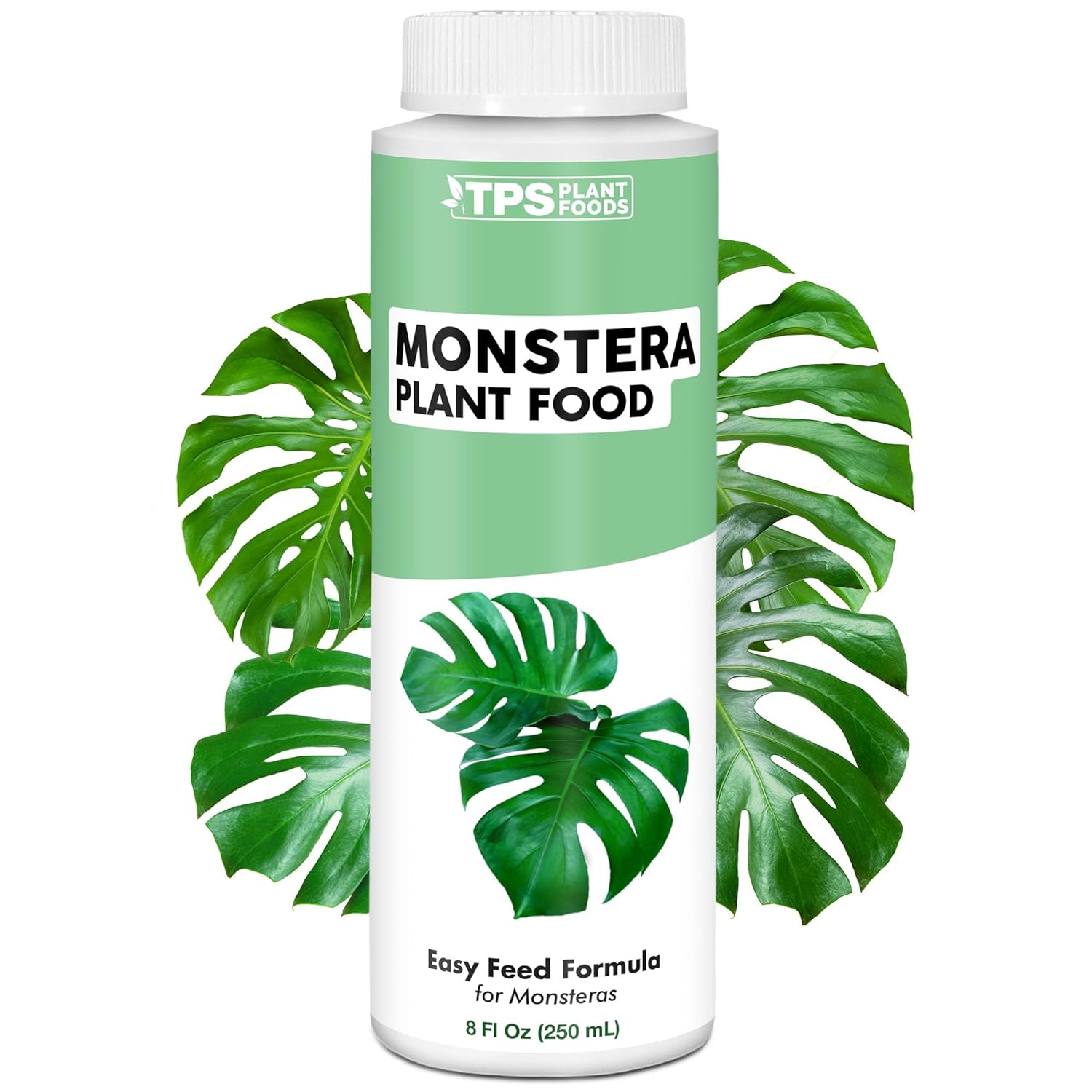
This liquid Monstera fertilizer is a concentrated, kelp-enriched formula designed to be mixed with water at a 1:32 ratio and applied to container-grown tropical houseplants. In everyday use you dilute the 8 ounce bottle to make multiple feedings, which makes it convenient for regular maintenance of foliage and root health. The label highlights faster absorption, support for new leaf and stem growth, and ingredients aimed at stronger roots and deeper leaf color. Practical benefits include targeted nutrition for Monstera varieties, easy mixing and application, and a small bottle that stores easily for apartment or desk plants. Limitations are its small unit size if you have many plants and the need to follow the mixing ratio precisely to avoid overfeeding. There is no detailed N-P-K breakdown visible, so buyers who want exact macronutrient numbers or a granular feeding schedule may need to contact the brand or compare products with full nutrient labels.
Best for: Buyers who prioritize reliable, plant-specific nutrition for indoor Monsteras and want an easy-to-mix liquid feed to support fuller foliage and healthier roots.
Less Ideal for: Growers who need detailed N-P-K analytics, professional growers with large numbers of plants, or those who prefer slow-release granular fertilizers.
- Formulated specifically for Monstera and tropical houseplants
- Kelp-enriched, fast-absorbing liquid that supports foliage and root development
- Concentrated 1:32 mixing ratio lets a small bottle treat multiple feedings
- Easy to store and apply for indoor pots and decorative planters
- No explicit N-P-K or full nutrient breakdown provided on the listing
- 8 fl oz size may require frequent repurchasing for larger collections
Verdict: A compact, easy-to-mix liquid fertilizer tailored for Monstera owners who want faster-absorbing, kelp-enriched nutrition for healthier leaves and roots.
Choosing the Right Plant Food for Root Growth: Key Factors to Consider
Nutrient Ratio and Phosphorus Content
Phosphorus plays a central role in root initiation and development. When choosing a plant food for root growth, check the N-P-K numbers and look for a relatively higher middle number compared with foliage-focused feeds. That does not mean phosphorus should be extreme, but the ratio helps predict whether a product pushes roots or shoots.
Also consider secondary nutrients and trace elements that support root cell division and energy transfer. Clear labeling of guaranteed analysis is important so you can dose accurately and avoid excess that can inhibit root establishment.
Formulation and Delivery Method
Liquids and soluble concentrates deliver nutrients to roots quickly and are easier to apply to seedlings and small containers. Granules and slow-release pellets provide low-level feeding over weeks and can reduce the risk of overfeeding in transplant beds.
Think about the practical side: mixing, measuring, and how uniform the application will be across a bed or series of pots. For indoor starters or small trays, a gentle water-soluble feed is often safest. For larger beds where you want sustained root stimulation, a controlled-release granular may be preferable.
Dosing Clarity and Safety
Young roots are vulnerable to salt burn and overfeeding. A product with clear dilution rates and seedling-safe recommendations lowers the risk of damage. Labels that list ppm ranges, teaspoons per gallon, or explicit instructions for transplants make it easier to follow safe practices.
Also check whether the product advises withholding feed for a specific period after transplanting or recommends a starter application at planting. Safety for seedlings should be weighed against potency: stronger concentrates can be used if instructions include safe microdoses.
Compatibility with Soil and Amendments
Some root-focused feeds work best in light soilless mixes, others are tailored for mineral soils. Consider how a feed interacts with existing amendments such as compost, mycorrhizae, or lime. Highly acidic or alkaline soils can change nutrient availability, so a gardener should match feed chemistry to their soil pH and organic matter level.
If you use biological amendments like beneficial fungi or bacteria, look for products that are labeled compatible with or at least not harmful to those organisms, since a healthy soil biology often multiplies the benefit of root-focused feeding.
Timing and Growth Stage
Root feeding is most effective when timed to active root formation. For many plants this means a starter feed at transplanting, then lighter follow-up applications while roots expand. Avoid heavy nitrogen-rich feeds early, as they can shift energy to shoots instead of roots.
Plan a feeding schedule that aligns with your plant type and season. Cool-season transplants and spring plantings may need different timing than warm-season crops or fall planting schedules.
Ease of Application in Your Garden Setup
Practical considerations such as whether you water with a hose, use a watering can, or have a fertigation setup determine which product form is most convenient. Hose-end applicators and inline fertigation require different solubility characteristics than manual watering.
Also consider storage, mixing space, and whether you need a child- and pet-safe formulation if you garden in shared outdoor spaces. Products that are simple to measure and store reduce user error and improve consistent application.
When Root-Focused Feeding Helps Most
Root-targeted plant food is most useful at specific moments: during seedling establishment, immediately after transplanting, when repotting container plants, and when recovering from stress. These are times when stimulating root growth yields outsized benefits in water and nutrient uptake.
If your plants are already mature and well-rooted, root-focused feeds can still help during root pruning or when planting in poor substrate. For quick establishment in new beds or containers, a root-supportive feed reduces transplant shock and speeds early growth.
- Use at planting and transplanting to speed establishment
- Apply after repotting to encourage roots to explore new soil
- Consider foliar vs. soil application depending on urgency
Applying Root-Boosting Feeds Safely
Always follow label dilution rates and start at half strength for seedlings and newly transplanted plants. Overconcentrated solutions can cause root burn and set back establishment more than no feeding at all.
Water the root zone first to settle soil, then apply the feed so nutrients reach root tips. For granular feeds, incorporate lightly into the topsoil rather than burying near crowns. For liquids, avoid direct contact with tender stems and leaves when applying concentrated mixes.
- Begin with a mild dose and increase gradually as roots establish
- Avoid feeding immediately after heavy frost or drought stress; rehydrate first
- Rinse mixing tools and store concentrates out of direct sun
Combining Feeds with Beneficial Microbes
Beneficial fungi and bacteria can amplify nutrient uptake and help roots explore soil more effectively. When pairing plant food with microbial inoculants, choose feeds that are labeled compatible or that have low soluble salt content to avoid harming microbes.
Apply microbial inoculants at planting or as a separate treatment, and space concentrated fertilizer applications away from the moment of inoculation if labels advise. A balanced approach that supports both chemistry and biology typically yields better long-term root health than fertilizer alone.
- Use low-salt fertilizers when using live microbial products
- Time microbial inoculation at planting or repotting for best contact with roots
- Monitor plant response and adjust feeding frequency rather than dose
Choosing Between Quick-Acting and Slow-Release Options
Quick-acting soluble feeds deliver nutrients fast and are useful for rescue feeding or when seedlings need a rapid boost. Slow-release granules provide steady nutrition over weeks and reduce the risk of overapplication in landscape beds.
Consider the maintenance profile of your site: containers and small beds often benefit from frequent light liquid feeding, while large border beds may be easier to maintain with a single granular application at planting.
- Liquids for immediate uptake and precise control
- Granules for low-maintenance, steady feeding
- Match frequency to plant growth rate and watering routine
Monitoring Root Health Without Digging Up Plants
You can infer root vigor from aboveground signs: steady growth, even leaf color, and quicker recovery after watering usually indicate a healthy root system. Slow growth, wilting between waterings, or poor establishment can signal weak roots.
For container plants, check for roots circling the pot at repotting time. For in-ground plants, probing with a trowel near the drip line to sample a small soil plug can reveal root density without major disturbance.
- Look for consistent shoot growth and responsiveness to water
- Repotting is a good moment to inspect root mass
- Adjust feed type and frequency based on observable signs
How We Chose the Best Plant Food for Root Growth
We focused on formulations and delivery methods known to support root formation and early establishment. Selection prioritized products with clear N-P-K ratios or ingredient lists that indicate root-targeted nutrients such as higher phosphorus or added root-promoting compounds. We also considered physical form and how it affects application: liquids, concentrates, granules, and soluble powders differ in speed of action and ease of use. Editorial filters included documented suitability for seedlings, transplants, or container plants; compatibility with common soil types; and safety notes for sensitive plants. Exclusions covered ambiguous products without clear nutrient information, feeds labeled only for foliage without root claims, and mixes designed solely for flowering or fruiting where root support is incidental. Final choices were based on four to six concrete dimensions that gardeners can check on packaging or labels: nutrient balance for root growth, concentration and dosing clarity, application convenience, soil and plant compatibility, and evidence of root-targeting ingredients. These criteria guided which products made the shortlist and which were left out.
FAQ
How often should I apply plant food focused on root growth?
Frequency depends on formulation. Liquid root feeds are often applied every one to two weeks at reduced strength, while slow-release granules may only need one application at planting. Start with label recommendations and reduce frequency for seedlings.
Can I use root-targeted feed on established shrubs or trees?
Yes, but established woody plants usually need less frequent feeding. Use granular starter feeds at planting or targeted liquid applications after pruning or transplanting. For mature trees, soil tests and deep-root feeding techniques are often more effective than surface applications.
Will a higher phosphorus number always boost roots?
Not always. While phosphorus supports root initiation, excessive phosphorus can create imbalances and reduce uptake of other nutrients. Look for balanced formulations and follow recommended doses rather than assuming higher phosphorus is better.
Are organic root stimulants better than synthetic feeds?
Organic and synthetic options each have tradeoffs. Organic amendments often improve soil biology and release nutrients slowly, while synthetic feeds provide precise, fast-acting nutrients. The best choice depends on your gardening goals and whether you prioritize biological activity or rapid establishment.
Can I apply root feed through a drip irrigation or fertigation system?
Many water-soluble feeds are compatible with fertigation systems, but check solubility and label guidance. Avoid products with insoluble particles that can clog lines and always flush the system after use.
Should I stop feeding after roots establish?
No. Once roots are established, maintain a maintenance feeding schedule appropriate for the plant type. Reduce intensity compared with starter feeding and shift to balanced feeds aimed at overall growth or the next development stage.
Final Verdict
When selecting plant food for root growth, prioritize nutrient balance that favors root development, clear dosing instructions, and a formulation that matches your watering and planting habits. Consider whether you need fast uptake or sustained release and whether the feed will work with soil biology and your potting mix. Tradeoffs are inevitable: faster-acting liquids offer speed and control but demand more attention, while granular options are lower maintenance but slower to affect roots. Focus on safety for seedlings and compatibility with your garden setup to choose confidently.
