

Note: This article contains affiliate links. If you click on these links and make a purchase, I may earn a small commission at no extra cost to you. This helps support my research and content. Read my full affiliate disclosure here.
Getting the first true leaves and a sturdy root ball depends heavily on what you feed young plants. Seedlings have different nutrient needs than established plants: they need low, balanced fertilizer and a delivery method that will not burn delicate roots. This guide covers the top shortlisted plant foods for seedlings and explains how each option meets the demands of early growth in pots, flats, or seed trays. We evaluate mixes based on nutrient balance, application method, and safety for young roots so you can pick the right approach for your setup.
Top Picks at a Glance
| Best Overall The best all-around choice for most situations | TPS Nutrients Seedling Fertilizer Liquid Plant Food, 8 oz |  |
| Best Quality Built to a higher standard if you want something more solid | Miracle-Gro Quick Start Planting & Transplant Starting Solution, 48 fl. oz. |  |
| Best Value The sweet spot between price and what you get | Miracle-Gro Liquid All Purpose Plant Food Concentrate, 32 oz |  |
| Best Budget The cheapest option that still gets the job done reliably | Bonide Root & Grow Concentrate 32 oz |  |
| Highest Rated A top-rated pick with lots of positive feedback | FoxFarm Happy Frog Jump Start Fertilizer (4 lb) |  |
| Most Popular A crowd favorite that many people choose with confidence | SUPERthrive Plant Vitamin Solution with Kelp, Liquid Concentrate, 4 fl oz |  |
| Best Seller A high-volume bestseller chosen again and again | TPS Nutrients Liquid Plant Food for AeroGarden & Hydroponic Systems, 8 oz | 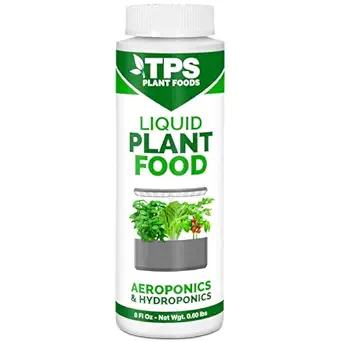 |
TPS Nutrients Seedling Fertilizer Liquid Plant Food, 8 oz

| Item Form | Liquid |
|---|---|
| Specific Uses For Product | Vegetables, Herbs, Flowers, Houseplants |
| Coverage | Medium |
| Liquid Volume | 8 fluid ounces |
TPS Nutrients Seedling Fertilizer is a concentrated liquid plant food designed for the delicate first weeks of growth. It supplies a mild nutrient boost that encourages root development and steadier shoot growth, making it useful when starting seeds in trays or pots and when transplanting young plants. The product is intended for weekly use and is labeled safe for both indoor and outdoor seedlings including vegetables, herbs, flowers, and houseplants. Its liquid form makes dosing and mixing with water straightforward for small-scale seed-starting setups, and the 8 ounce bottle is easy to store. Practical benefits include reduced transplant shock and a formula that is gentle enough for tender sprouts. Important limitations are the small unit size if you start large numbers of seedlings and the lack of detailed N-P-K analysis on the listing, which means users seeking precise nutrient ratios will need to look elsewhere or contact the manufacturer.
Best for: Buyers who start seeds or raise small batches of transplants and want a mild, easy-to-use fertilizer to reduce transplant shock and support early root growth.
Less Ideal for: Growers who start seeds at large scale or who need exact N-P-K formulations for strict nutrient management should consider larger-volume or fully specified alternatives.
- Gentle liquid formula suited to fragile seedlings and transplants
- Promotes root establishment and early shoot development
- Labeled for indoor and outdoor use across vegetables, herbs, flowers and houseplants
- Easy to measure and mix for weekly feedings
- Small 8 fl oz bottle may not be cost-effective for large seed-starting operations
- Product listing does not show specific N-P-K numbers for precise nutrient control
Verdict: A gentle, easy-to-use liquid feed that helps seedlings establish strong roots and recover from transplanting.
Miracle-Gro Quick Start Planting & Transplant Starting Solution, 48 fl. oz.

| Item Form | Liquid |
|---|---|
| Application Method | Mix with water and pour around new plantings |
| Target Species | For all flowers, vegetables, trees, shrubs, transplants and seedlings |
| Mixing Ratio | Fill cap to 1st line and mix with 1 gallon of water |
| Unit Count | 48 Fluid Ounces |
Miracle-Gro Quick Start is a liquid transplant starter designed to give seedlings and newly moved plants a nutrient boost right after planting. The 4-12-4 NPK concentrate is measured with the bottle cap and mixed into a gallon of water, then poured around new transplants to settle soil and feed roots. Typical use is at planting and again seven days later before switching to a regular feeding schedule. In practice the higher phosphorus content targets root development, which can translate to faster establishment and earlier blooms compared with unfed plants. The product is easy to use with a watering can and works across flowers, vegetables, shrubs and trees. Limitations are that it is a short-term starter solution rather than an ongoing feed so you need a follow-up fertilizer for sustained growth, and it requires careful dilution and application frequency to avoid overfeeding sensitive seedlings. For growers focused on quick, reliable establishment, this is a straightforward, performance-focused way to reduce transplant shock.
Best for: Growers who prioritize fast, reliable establishment of seedlings and transplants and want a targeted starter feed to reduce transplant shock before switching to regular fertilization.
Less Ideal for: People seeking an all-in-one, long-term fertilizer or those who prefer organic-only products should consider other options.
- High-phosphorus 4-12-4 formula aimed at promoting root development
- Liquid concentrate that mixes quickly with water for fast application
- Simple measuring cap makes dilution straightforward for repeatable results
- Works across a wide range of plants including seedlings, vegetables and ornamentals
- Intended as a short-term starter rather than a sustained feed solution
- Requires careful dilution and timing to avoid stressing very young seedlings
Verdict: Use this concentrated starter solution when planting or transplanting to speed root development and give seedlings a strong, performance-focused head start.
Miracle-Gro Liquid All Purpose Plant Food Concentrate, 32 oz

| Item Form | Liquid |
|---|---|
| Specific Uses For Product | Plant Growth, Root Development |
| Application Method | Mix with water in a watering can |
| Target Species | flowers, and trees, and houseplants |
| Mixing Ratio | 1:10 (concentrate to water, estimate) |
Miracle‑Gro Liquid All Purpose Plant Food is a simple, ready‑to‑mix concentrate that supplies soluble nutrients to container and in‑ground plants. You dilute the concentrate into a watering can (manufacturer guidance: 1:10 estimate or cap measures for garden and teaspoon for houseplants) and apply every 1 to 2 weeks. In practice it is quick to use for regular maintenance feeding of flowers, vegetables, shrubs and houseplants and helps plants show faster green‑up and visible growth because nutrients are immediately available in the soil. Key features are the liquid form for even distribution, clear mixing directions for both garden beds and potted plants, and broad compatibility across plant types. Limitations for the seedling stage are that it is a general all‑purpose formula rather than a specifically low‑strength starter feed, so you must follow the diluted houseplant/seedling guidance carefully to avoid overfeeding delicate young roots. It also requires regular reapplication rather than providing slow release nutrition. For someone keeping a predictable feeding schedule this is an efficient, low‑effort option to maintain vigorous early growth.
Best for: Best for gardeners who want a straightforward, fast‑acting feed to maintain seedlings after they are established and who follow a regular, measured feeding routine.
Less Ideal for: Not the right choice for growers who prefer a specialized low‑strength starter fertilizer for very young seedlings or who want a hands‑off slow‑release option.
- Concentrated liquid mixes easily with water for quick application
- Clear dosing guidance for containers and garden beds
- Suitable for a wide range of plants including vegetables, flowers and houseplants
- Provides fast, soluble nutrients that produce visible growth quickly
- Not formulated specifically as a seedling starter so requires careful dilution for young plants
- Needs frequent reapplication every 1 to 2 weeks rather than offering slow release feeding
Verdict: A reliable, easy‑to‑use liquid concentrate that delivers quick, visible feeding for a wide range of plants when you follow the recommended dilution schedule.
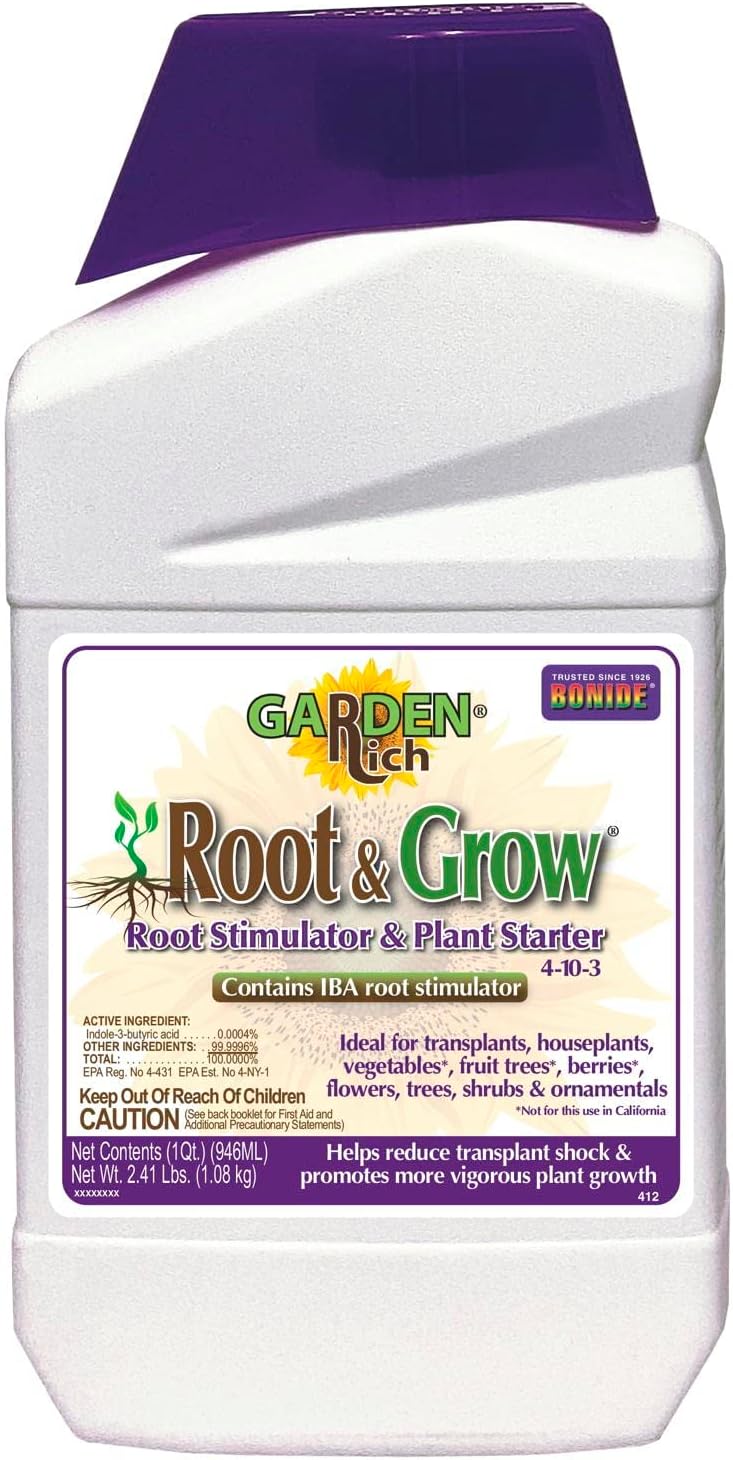
Bonide Root & Grow Concentrate 32 oz
| Item Form | Liquid |
|---|---|
| Specific Uses For Product | Root Development |
| Application Method | Pouring directly onto the soil and roots |
| Target Species | fruit, vegetables, flowers, trees, and bedding plants |
| Mixing Ratio | 4:10:3 |
Bonide Root & Grow is a liquid concentrate designed for use when seeding or transplanting to speed early root formation and help plants establish. You dilute the concentrate per label instructions and pour the solution onto soil and roots when potting seedlings, transplanting plugs, or setting out young vegetables and ornamentals. Notable features include an active IBA rooting hormone and a 4-10-3 nutrient ratio that supplies extra phosphorus to support root growth. In practice it can reduce transplant shock and promote quicker, stronger root systems, which is useful for both container-grown seedlings and recently set out bedding plants. Because it is a concentrate, a single 32 oz bottle yields multiple applications, which stretches a limited budget. Important limitations are that it is a specialized root stimulator rather than an all-purpose feed for ongoing growth and it requires careful dilution and label compliance to avoid overapplication.
Best for: Buyers wanting an affordable, concentrated product to give seedlings and recent transplants a stronger start and who prioritize preventing transplant shock over routine feeding.
Less Ideal for: Gardeners looking for a general weekly fertilizer or a balanced feed for mature plants should choose a different product.
- Contains IBA rooting hormone to stimulate root initiation
- 4-10-3 fertilizer ratio provides extra phosphorus for root development
- Concentrated 32 oz bottle yields many applications, good for tight budgets
- Easy to apply by diluting and pouring directly onto soil and roots
- Formulated mainly for root stimulation so not ideal as a regular all-purpose feed
- Requires careful mixing and label reading to use safely and effectively
Verdict: A budget-friendly concentrated root stimulator that helps seedlings and transplants establish faster by combining IBA with a phosphorus‑rich fertilizer.
FoxFarm Happy Frog Jump Start Fertilizer (4 lb)

| Item Form | Granules |
|---|---|
| Specific Uses For Product | Root Development |
| Mixing Ratio | 3-4-3 |
| Unit Count | 64 Ounce |
| Ingredients | NPK 3-4-3 with Actice Soil and Microbes |
FoxFarm Happy Frog Jump Start is a granular starter fertilizer designed to help seedlings and recently transplanted young plants establish quickly. You mix the granules into potting soil or the planting hole at transplant time to supply a mild 3-4-3 nutrient ratio that emphasizes phosphorus for early growth and root formation. Notable features include added mycorrhizal fungi to improve root efficiency and calcium to support healthy cell development, and the formula is OMRI-listed for organic gardening. In practice it is straightforward to use for containerized seedlings, in-ground transplants, and row plantings — follow the mixing ratio and water in well after planting. Because it is a low-nutrient starter blend rather than an all-purpose feed, you will still need to follow up with a regular feeding schedule as plants grow. The granular form makes storage and measured application easy, but it is not a soluble concentrate for quick foliar feeds and requires incorporation into medium or soil to be effective.
Best for: Gardeners who prioritize consistent, reliable transplant establishment and want an easy-to-use organic starter fertilizer for seedlings and recently potted plants.
Less Ideal for: Growers seeking a concentrated liquid or foliar feed for quick nutrient correction or those who want a single product to serve all growth stages.
- Balanced starter NPK (3-4-3) tailored for early growth
- Contains mycorrhizal fungi to boost root uptake
- Includes calcium to support seedling cell and root health
- Granular form is easy to store and measure for transplant use
- Not formulated as a complete, ongoing fertilizer so requires later feedings
- Granules must be mixed into soil and are not suitable for foliar or quick soluble feeding
Verdict: Choose this product when you want a dependable, organic granular starter fertilizer that improves seedling root establishment and transplant success.
SUPERthrive Plant Vitamin Solution with Kelp, Liquid Concentrate, 4 fl oz

| Item Form | Liquid |
|---|---|
| Specific Uses For Product | Root Development |
| Application Method | Dilute in water |
| Unit Count | 4 Fluid Ounces |
SUPERthrive is a concentrated liquid vitamin solution formulated to support root growth and reduce transplant shock for seedlings and established plants. It is typically diluted in water and added at transplanting, seed starting, or regular maintenance; directions list small doses such as 1 tablespoon per 15 gallons or 1/4 teaspoon per gallon depending on use. Notable features include a kelp-enhanced formula, non-toxic ingredients, and a very concentrated mix that stretches a little bottle a long way. In practice it can help fragile seedlings establish stronger roots after potting up or transplanting and can be mixed with fertilizer to encourage steady early growth. Important limitations are that it is a supplemental vitamin solution rather than a complete fertilizer so it should be used alongside appropriate nutrient feeds and media for seedlings, and the small bottle requires careful measuring because it is highly concentrated. Users should follow dilution guidance to avoid overapplication.
Best for: Buyers who prioritize proven, widely used supplements to protect seedlings during potting and transplanting and who prefer products with strong customer acceptance.
Less Ideal for: Gardeners seeking an all-in-one balanced fertilizer or those who prefer granular feeds that do not require dilution should consider alternatives.
- Kelp-enhanced, non-toxic vitamin formula that supports root vigor
- Highly concentrated so small amounts treat large volumes of water
- Works well when mixed with fertilizer for transplanting and seed starting
- Suitable for indoor and outdoor seedlings and a wide variety of plants
- Not a standalone fertilizer so additional nutrient source is needed for complete feeding
- Small 4 fl oz bottle requires precise measuring due to concentration
Verdict: A concentrated kelp-based vitamin solution that reliably supports seedling root development and reduces transplant shock.
TPS Nutrients Liquid Plant Food for AeroGarden & Hydroponic Systems, 8 oz

| Brand | TPS NUTRIENTS |
|---|---|
| Item Form | Liquid |
| Specific Uses For Product | Plant Growth, Root Development |
| Target Species | Herb, Vegetable |
| Mixing Ratio | 5 mL per quart of feedwater |
This 8 oz TPS Nutrients Liquid Plant Food is a water‑soluble feed designed for small indoor hydroponic units such as AeroGarden. You mix the recommended dose (5 mL per quart) into the reservoir and feed plants on the system's regular schedule. The formula is intended to provide balanced macro and micro nutrients to support steady vegetative growth and root development, which helps herbs and leafy greens establish more predictably than with no fertilizer. The liquid format dissolves easily and is reservoir safe so it integrates into routine maintenance without clogging pumps or emitters. Because the bottle is compact, it is convenient for hobbyists and fits in small storage, though the 8 oz size means active growers will need to repurchase more often. Safety guidance recommends keeping the concentrate away from children and pets. For cautious gardeners looking for straightforward, compatible nutrition for seedlings and small edible plants in indoor hydro setups, this delivers an easy-to-use option; heavy feeders or large hydroponic systems may prefer larger-volume concentrates or nutrient lines formulated specifically for heavier fruiting crops.
Best for: Careful indoor gardeners using AeroGarden-style units who want a simple, compatible liquid nutrient to support seedlings and young edible plants without complicated feeding regimens.
Less Ideal for: Growers running larger hydroponic systems, commercial setups, or those needing specialized bloom/fruit formulas should choose a higher-volume or crop-specific nutrient instead.
- Formulated for AeroGarden and similar indoor hydroponic systems for straightforward compatibility
- Liquid concentrate mixes easily into the reservoir using the provided mixing ratio
- Supports root development and steady vegetative growth for herbs and leafy greens
- Compact 8 oz bottle is easy to store and handle
- Only 8 oz volume may require frequent repurchasing for regular users
- Not specifically labeled for heavy fruiting or large-scale hydroponic crops
Verdict: A compact, easy-to-use liquid nutrient made to give seedlings and small indoor herb gardens consistent, reservoir-safe feeding in AeroGarden-style systems.
Choosing the Right Plant Food for Seedlings: Key Factors to Consider
Nutrient Concentration and Ratio
Seedlings need lower total nutrient strength than established plants because their root systems are small and less able to tolerate high soluble salts. A nutrient solution that is too concentrated can cause root burn, stunted growth, or leaf tip necrosis. Look for plant food that either lists a low-ppm recommendation for seedlings or allows dilution to a fraction of the full-strength rate.
The balance between nitrogen, phosphorus, and potassium also matters. Young plants benefit from a mild, balanced ratio that supports leaf and root development without forcing excessive top growth. Avoid high-nitrogen formulations intended for mature foliage-heavy crops when feeding seedlings.
Formulation and Delivery Method
How the nutrients are delivered influences both convenience and safety. Water-soluble concentrates let you make very dilute feeds but require accurate measuring. Ready-to-use sprays remove measuring errors but may be less economical. Slow-release granules can be gentle over time, but many are formulated for longer-term pots and may not release predictably in the short window when seedlings need careful attention.
Consider whether you will use hand watering, misting systems, or bottom-watering trays. Some formulations perform better when applied as a foliar mist for immediate uptake, whereas others are designed for root-zone feeding and should be applied to the substrate.
Application Volume and Ease of Dosing
Seed-starting containers hold small volumes of media, so the absolute amount of nutrient delivered matters as much as the concentration. Products that provide clear, small-volume dosing instructions or measuring tools reduce the chance of overfeeding. If you are starting many trays, look for concentrates with consistent dilution rates to simplify mixing.
Ease of dosing also affects repeatability. Frequent, very dilute feedings are a common strategy for seedlings; pick a product that supports that rhythm without complex conversions or specialized equipment.
Compatibility With Seed-Starting Media
Seed-starting mixes are often low in organic content and designed to wick moisture; some have buffering or added wetting agents. Certain fertilizer salts bind differently depending on media composition. For example, coco coir and peat mixes can hold nutrients differently than compost-rich potting soil, affecting how quickly seedlings take up fertilizer.
Choose plant food that lists compatibility with common seed media or that provides guidance for use in inert substrates. This reduces the risk of nutrient lock-up or unpredictable release that could stress young roots.
Root Safety and Salt Index
The soluble salt concentration, often called the salt index, determines how likely a product is to cause osmotic stress. Products formulated for seedlings will either have inherently low salt levels or be intended for heavy dilution. High salt products increase the danger of drying out roots or drawing moisture away from delicate root tips.
When selecting plant food, prioritize options with explicit low-salt recommendations for seedlings or those that advise starting at a fraction of the adult feed rate and working up only if plants show healthy growth.
Frequency of Application
How often you can apply a given feed without harming seedlings affects workload and results. Some products are safe for very frequent, light applications, which suits continuous-feeding strategies in indoor propagation. Others are intended for less frequent use because they release nutrients over time.
Consider how much time you want to spend feeding and whether your setup favors daily dilute feeds or weekly applications. The right cadence reduces stress during crucial early development stages.
Preparing a Dilute Feeding Schedule
Create a simple feeding schedule that starts with very dilute solutions. Begin feeding when seedlings show their first true leaves rather than at the cotyledon stage. A common approach is to use 25 to 33 percent of the label rate for the first one to two weeks and then gradually increase if plants respond with steady green growth and no leaf scorch.
Keep records of concentration and frequency so you can repeat what works. If seedlings are in small cells, reduce both volume and frequency to avoid saturating the media and causing damping-off.
- Start at low dilution and increase slowly.
- Feed after the first true leaves appear, not immediately after germination.
- Adjust frequency based on media moisture and plant response.
Feeding for Different Propagation Environments
Indoor fluorescent or LED setups often create lower transpiration rates compared with greenhouse conditions, which affects how quickly seedlings move nutrients. In lower-light indoor setups, cut back on concentration and frequency to match slower uptake. Greenhouse or high-light conditions allow slightly stronger or more frequent feedings because plants will use nutrients faster.
For outdoor cold frames or unheated greenhouses, weather can influence uptake. Cooler temperatures slow root activity, so reduce feeding intensity during cool spells and resume regular schedules as temperatures rise.
- Match feed strength to light and temperature conditions.
- Use lower doses in low-light or cool conditions.
- Monitor foliage color and growth rate to guide adjustments.
Recognizing and Correcting Overfeeding
Signs of overfeeding include brown leaf edges, slowed growth, and a white crust on the media surface from soluble salts. If you suspect overfeeding, flush the media gently with clean water to leach excess salts and hold off on further fertilizer until plants recover. Reduce concentration and frequency after flushing.
Prevention is easier than recovery, so adopt low initial concentrations and increase only when plants show vigorous, healthy development. Maintaining good hygiene in trays and avoiding standing water also reduces stress that can worsen nutrient burn symptoms.
- Look for brown tips, slowed growth, or salt crusts as warning signs.
- Flush the media with clean water before resuming lighter feeding.
- Pause feeding and allow seedlings to recover if symptoms appear.
Organic Versus Synthetic Options for Young Plants
Organic feeds often supply nutrients more slowly as microbes break down materials, which can reduce the risk of sudden salt spikes. That steady release can be ideal for hobbyists and home growers who prefer gentle nutrition. However, variability in nutrient availability can make precise dosing harder in inert seed mixes.
Synthetic, water-soluble feeds give immediate, predictable nutrient availability and are easier to dilute accurately for tiny containers. They require careful measurement to avoid overapplication but are often preferred when precise control is needed.
- Organic feeds offer gentler, slower release but less precision.
- Synthetic concentrates are predictable and easily diluted for small volumes.
- Choose based on the level of control you want and your comfort with timing.
Tools and Accessories That Make Feeding Easier
Small measuring syringes, graduated pipettes, or a kitchen scale can vastly improve accuracy when mixing concentrates for seedlings. Using a reservoir or mixing jug with clear volume markings speeds up repeated mixes for multiple trays.
Consider a pH meter or test strips if you are using soft water or adjusting pH, since nutrient availability depends on substrate pH. A hand mister is useful for foliar feeds and for lightly wetting delicate seedlings without disturbing roots.
- Use small-volume measuring tools for accurate dilutions.
- A pH meter helps when using sensitive media or soft water.
- Misters are useful for foliar feeding and gentle hydration.
How We Chose the Best Plant Food for Seedlings
We shortlisted plant food options that are formulated or suitable specifically for newly germinated plants and young transplants. The editorial filters prioritized nutrient profiles appropriate for seedlings, meaning lower nitrogen concentration or slow-release forms that reduce burn risk, plus clear application instructions for small containers and seed flats. We also assessed delivery methods such as water-soluble concentrates, dilute liquid feeds, and gentle slow-release granules for how they affect dosing control and consistency. Practical handling was another filter: products had to be safe for use in close quarters like indoors or greenhouses, easy to measure for tiny volumes, and compatible with common media such as seed-starting mix and coco coir. We excluded formulations intended only for mature, heavy-feeding plants or those with very high salt indices. Our evaluation emphasized nutrient balance and application ease, along with root safety, concentration options, and suitability across propagation environments.
FAQ
When should I start feeding seedlings?
Begin feeding after seedlings develop their first true leaves. Cotyledons supply initial nutrients from the seed, so early feeding is unnecessary and can harm tiny roots.
How dilute should a seedling feed be?
A common recommendation is 25 to 33 percent of the adult label rate to start. Always follow product guidance for seedlings when provided and err on the side of weaker solutions.
Can I use the same fertilizer for seedlings and mature plants?
You can use the same product if it allows for heavy dilution, but avoid using full-strength adult rates. Some products are formulated specifically for seedlings and are safer and easier to dose for young plants.
Is foliar feeding safe for seedlings?
Foliar feeding can be safe and effective when done lightly and on cool, low-light parts of the day. Use very dilute mixes to avoid leaf burn and limit applications to when plants can dry quickly to reduce disease risk.
How often should I feed seedlings?
Frequency depends on product and conditions. Many growers feed lightly every one to two weeks or use very dilute feeds every watering. Adjust cadence based on growth rate and media moisture.
What should I do if seedlings show nutrient burn?
Flush the media with clean water to leach out excess salts, stop feeding, and let seedlings recover. Resume at a much-reduced concentration once growth resumes and symptoms subside.
Final Verdict
Choosing the right plant food for seedlings means prioritizing low-strength, controllable nutrition and a delivery method that matches your propagation setup. Focus on nutrient balance, ease of dosing, and a low salt index to protect delicate roots. Tradeoffs include precision versus convenience and organic versus synthetic release patterns. Start weak, watch plant response, and adjust gradually to encourage steady, healthy development.
