

Note: This article contains affiliate links. If you click on these links and make a purchase, I may earn a small commission at no extra cost to you. This helps support my research and content. Read my full affiliate disclosure here.
North-facing window boxes get limited direct sun, so choosing plants built for shade or indirect light makes the difference between a lush display and a string of replacements. In this guide we narrowed the choices to five strong options suited to north-facing window boxes, emphasizing durable foliage, compact habits, and tolerance for cooler, lower-light conditions. Each shortlisted plant is described with practical notes on light, watering, and container habits so you can pick what fits your window, microclimate, and maintenance rhythm. Read on for simple, real-garden guidance that prepares you to plant and keep a thriving shaded-box display.
Top Picks at a Glance
| Best Overall The best all-around choice for most situations | American Plant Exchange Holly Fern — 6-Inch Live Shade-Loving Fern |  |
| Best Value The sweet spot between price and what you get | Sow Right Seeds Rainbow Coleus Seeds (800 Count) |  |
| Best Budget The cheapest option that still gets the job done reliably | Groundio Coleus Rainbow Mix Seeds (Heirloom, Non-GMO) |  |
| Highest Rated A top-rated pick with lots of positive feedback | Sarcococca humilis 'Fragrant Valley' (Sweet Box) Live Shrub, #1 Container |  |
| Most Popular A crowd favorite that many people choose with confidence | HOME GROWN Rainbow Mix Coleus Seeds (approx. 400) |  |
American Plant Exchange Holly Fern — 6-Inch Live Shade-Loving Fern

| Indoor Outdoor Usage | Indoor, Outdoor |
|---|---|
| Sunlight Exposure | Partial Shade |
| Moisture Needs | Moderate Watering |
| Material Features | Live Plant, Nursery Pot, Potting Soil |
| USDA Hardiness Zone | 11, 6 |
The American Plant Exchange Holly Fern is a shade-tolerant houseplant sold in a 6-inch nursery pot that brings glossy, holly-like fronds to window boxes, tabletops, or shaded garden beds. It is typically used as a low-maintenance accent where bright direct sun is limited, such as a north-facing window box or a shaded patio. Notable features include glossy, point-tipped fronds that provide textural contrast, pet-safe foliage, and moderate water needs that make it forgiving for busy owners. Practical benefits are straightforward: it tolerates low light, helps freshen indoor air, and can serve as border planting or compact groundcover in layered shade plantings. Important limitations are that it prefers shaded conditions and will not perform well in prolonged direct sun, and like most nursery-potted plants it may need an acclimation period after delivery and eventual replanting as it grows. Overall it is a reliable, attractive choice for someone who wants a modest, low-fuss fern for shaded spaces.
Best for: Buyers who want an attractive, low-effort fern for shady spots like north-facing window boxes or patios and prefer plants that are pet friendly and forgiving of occasional care lapses.
Less Ideal for: Gardeners seeking sun-loving or drought-tolerant plants for bright windows or exposed planters should look for alternatives better suited to high light and dry conditions.
- Thrives in partial to full shade, making it suitable for north-facing windows and shaded boxes
- Pet safe and non-toxic, appropriate for homes with animals
- Low-maintenance watering: tolerates moderate watering and allows top soil to dry between waterings
- Glossy, textured foliage provides year-round visual interest and works well in layered plantings
- Not tolerant of prolonged direct sun and can scorch if placed in bright, hot exposures
Verdict: A compact, pet-safe fern that reliably brightens north-facing window boxes and other shady spots with minimal fuss.
Sow Right Seeds Rainbow Coleus Seeds (800 Count)

| Unit Count | 800 Count |
|---|---|
| Plant or Animal Product Type | Plectranthus scutellarioides |
| Sunlight Exposure | Partial Sun |
| Expected Blooming Period | Spring to Summer |
| Material Features | GMO Free, Heirloom |
These Rainbow Coleus seeds come in a large packet (about 800 seeds) and are aimed at gardeners who want bright, foliage-focused plants for containers or shaded beds. Coleus is grown for its colorful leaves rather than flowers and this mix produces a wide range of yellow, pink, green, red and maroon patterns that show well in pots and hanging baskets. The packet lists a high germination rate and seedlings typically emerge in 10 to 14 days at soil temperatures around 70 to 75°F. Directions call for shallow planting and spacing appropriate for container culture; mature plants reach roughly 18 to 30 inches tall so they make a substantial potted specimen or companion plant. Because these are non-GMO heirloom seeds sold in a bulk packet, you get many plants for your investment which is useful when filling multiple containers. Limits to expect are typical for coleus: they prefer partial shade and warm conditions and are tender in cold weather, so they need protection or to be brought indoors in cool climates.
Best for: Gardeners who want an affordable way to mass-fill outside pots with colorful, shade-friendly foliage and who prefer growing many plants from seed rather than buying individual transplants.
Less Ideal for: Someone who needs uniform, predictable single-color plants from the start or who wants immediate mature plants without waiting for seed-grown development.
- Very large seed count (about 800) gives good value for filling multiple pots or containers
- Non-GMO heirloom seeds suitable for saving and replanting
- High germination rate and clear planting instructions for quick establishment
- Shade-tolerant foliage plant that performs well in partial sun pots and hanging baskets
- Tender to cold and not suitable for frost-prone outdoor locations without protection
- Packet contains a mix so you cannot predict exact colors or patterns for each plant
Verdict: A budget-friendly way to fill outside pots with vibrant, shade-tolerant coleus foliage by growing many plants from a single large packet of heirloom seeds.
Groundio Coleus Rainbow Mix Seeds (Heirloom, Non-GMO)

| Indoor Outdoor Usage | Indoor, Outdoor |
|---|---|
| Expected Blooming Period | Spring to Summer |
| Sunlight Exposure | Full Sun |
| USDA Hardiness Zone | 4-10 |
| Moisture Needs | Moderate Watering |
These Groundio Coleus Rainbow Mix seeds supply a high number of non-GMO heirloom seeds for gardeners who want bold foliage in small or shaded containers. The mix is focused on leaf color rather than flowers, producing yellow, green, pink, red and maroon tones that deepen as plants mature. Seeds are described as easy to grow with a high germination rate and come with basic growing guidance, so they work well for first-time planters sowing indoors for transplanting or direct sowing in shaded pots and borders. Coleus performs best in part sun to part shade, making this packet a practical choice for balconies, patios and indoor spots with scattered light. Limitations include that coleus is grown for foliage not blooms and the packet warns the seeds and plants are not edible and may be harmful to pets, so placement matters in homes with animals. Also the listing emphasizes quantity over cultivar detail, so exact leaf patterns and sizes will vary across seedlings.
Best for: Budget-conscious gardeners who need an affordable way to add dramatic foliage to shaded pots, small balconies and container borders and who prefer easy-to-grow plants that establish from seed.
Less Ideal for: People seeking specific named coleus cultivars, detailed leaf patterns, or edible/child-and-pet-safe plantings should look at alternatives or nursery-grown plants.
- Large seed count suitable for filling multiple pots or repeating plantings
- Heirloom non-GMO seeds with a stated high germination rate
- Designed for shade or part-sun locations common for container gardening
- Vivid mixed foliage colors that add instant interest without relying on flowers
- Packet lists mixed varieties with limited detail on specific cultivars or mature plant size
- Not edible and may be harmful to pets, requiring cautious placement indoors or around animals
Verdict: An economical choice to fill shaded pots and small containers with vibrant, easy-to-grow coleus foliage from seed.
Sarcococca humilis 'Fragrant Valley' (Sweet Box) Live Shrub, #1 Container

| Expected Blooming Period | late winter to early spring |
|---|---|
| Sunlight Exposure | Full Sun |
| USDA Hardiness Zone | 5-8 |
| Moisture Needs | moist |
| Material Features | Live Plant |
Sarcococca humilis 'Fragrant Valley' is a compact evergreen shrub grown for its highly fragrant late-winter to early-spring flowers and tidy 18-inch mature height. It is typically used as a low groundcover or planted along the front of a shady bed and does best in moist, organically rich soil. Notable features include its dependable fragrance, evergreen foliage that provides winter interest, and slow, steady habit that makes it low-maintenance once established. Because it arrives in a #1 container with a developed root system it transplants easily into a window box or small garden bed. Expect slow establishment the first season, so plan for initial protection from drought while roots develop. It tolerates full sun to part shade but performs best in sheltered, moist spots where its scent can be enjoyed in late winter. This is a practical choice when you want a reliable, low-height evergreen that adds fragrance and year-round structure to a north-facing window box or shaded location.
Best for: Buyers who prioritize a low-maintenance, reliable evergreen that provides winter fragrance and fits small or shaded planting spots like a north-facing window box.
Less Ideal for: Gardeners wanting fast groundcover or immediate dense screening should consider faster-spreading species or larger specimens.
- Strong, sweet fragrance from late-winter to early-spring blooms
- Compact evergreen habit suitable for small beds or window boxes
- Arrives in a #1 container with an established root system for easier transplanting
- Tolerant of full sun to part shade and hardy in zones 5–8
- Slow to establish, requiring patience and consistent moisture the first season
Verdict: A compact, fragrant evergreen that reliably adds winter scent and year-round structure to small shaded spots like north-facing window boxes.
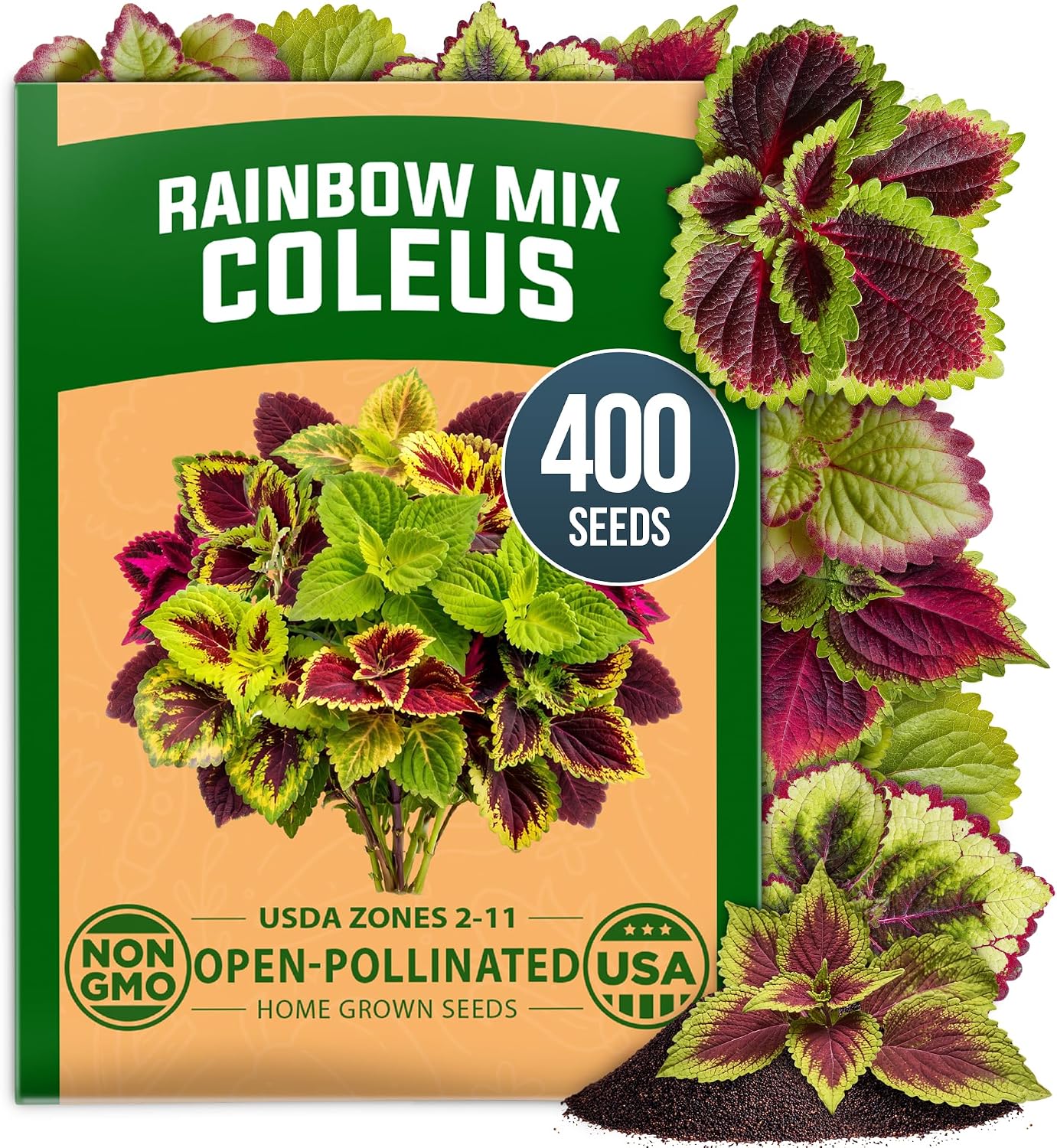
HOME GROWN Rainbow Mix Coleus Seeds (approx. 400)
| Sunlight Exposure | Part Shade to Shade |
|---|---|
| USDA Hardiness Zone | 2-11 |
| Expected Blooming Period | Spring through Frost |
| Material Features | GMO Free, Heirloom |
| Unit Count | 1 Count |
These Rainbow Mix coleus seeds produce compact, colorful foliage plants that are well suited to containers and shaded patio spots. Surface-sow the tiny seeds (do not cover), keep the medium warm and consistently moist, and seedlings typically appear in 10–14 days; pinch growing tips to encourage bushy, mounded plants. The mix is valued for season-long leaf color in shades of rose, green, bronze, cream, and scarlet, so you get visual impact without relying on flowers. Coleus grows indoors near bright north or east windows and outdoors in part shade to shade, making it a flexible choice for window boxes, mixed planters, and small pots. Important limitations are that coleus is a tender annual in most regions and needs protection from frost and prolonged drought, and it prefers warm temperatures for best germination and growth. For container gardeners who want low-maintenance, high-impact foliage, this seed mix is an easy way to produce many plants from one packet.
Best for: Gardeners who want easy-to-grow, high-impact foliage for containers and shaded patios and prefer predictable, low-fuss plants they can start from seed.
Less Ideal for: People seeking long-lived perennial landscaping or plants that tolerate full sun and drought without extra care.
- High seed count (about 400) gives many starts for containers or massing
- Open-pollinated non-GMO seeds from a mix that yields varied, colorful foliage
- Specifically suited to part shade and shade where many flowering plants struggle
- Compact, mounded habit that performs well in pots, window boxes, and mixed planters
- Tender annual in most zones and requires frost protection or indoor overwintering
- Requires consistent moisture and will suffer if soil dries out or remains waterlogged
Verdict: A high-count, non-GMO coleus seed mix that reliably produces compact, colorful foliage perfect for containers and shaded patios.
Choosing the Right Plants for North Facing Window Box: Key Factors to Consider
Light Requirements
Not all low-light plants are equal. Some species will tolerate deep, cool shade while others need bright indirect light even on a north-facing exposure. Understand whether your window box receives morning or late afternoon reflected light and how many hours of indirect daylight the site gets. Plants that need bright indirect light often develop leggy growth if placed in dim corners, while true shade-tolerant varieties keep compact form and stronger leaf color.
Matching a plant's preferred light level to the microclimate reduces stress and the need for corrective pruning or fertilizing.
Container Depth and Root Space
Window boxes vary widely in soil depth. Many perennial and woody plants require deeper containers to establish a stable root system, while others like bulbs, small ferns, and compact perennials do fine in shallower troughs. Measure the usable soil depth before choosing plants and plan for root expansion over a growing season.
Choosing plants with compatible root habits prevents early crowding, reduces frequent repotting, and helps maintain consistent moisture levels across the box.
Watering and Drainage Needs
Shaded window boxes dry more slowly than sun-exposed ones, which affects watering frequency and disease risk. Pick plants with similar moisture needs so you can water consistently without overwatering some and underwatering others. Ensure the box has adequate drainage holes and a fast-draining potting medium to avoid root rot in cool, damp conditions.
Using a moisture meter or checking soil by hand helps establish a reliable watering routine tailored to shaded microclimates.
Temperature and Seasonal Durability
North-facing exposures are often cooler and may stay damp longer into fall and spring. Some annuals will struggle with cool, wet feet and late-season chill, while many shade-adapted perennials and evergreen foliage plants maintain interest through cooler months. Consider whether you want a display that persists into winter or a seasonal rotation, and select plants that match the local winter lows and your willingness to overwinter containers indoors.
Plan for insulating the box or moving containers if severe cold risks damaging roots.
Size, Habit, and Aesthetic Role
Decide whether the box is primarily for foliage texture, seasonal bloom, or a mixed composition. Compact mounding plants create a neat, low-maintenance look, while trailing species soften the box edge and add motion. Tall or upright plants should be used sparingly so they do not overshadow neighbors or block light from the window.
Visual balance affects plant selection: combine contrasting leaf textures and heights while keeping mature sizes in mind to avoid overcrowding.
Maintenance and Pest Susceptibility
Shade and dampness can favor slugs, snails, and fungal leaf issues. Choose plants that resist common pests in shaded gardens or that tolerate occasional damage without collapse. Factor in time for deadheading, occasional division, and winter cleanup when selecting varieties – low-maintenance foliage plants reduce seasonal tasks, while flowering choices often need more hands-on care.
Selecting complementary species with similar maintenance needs simplifies care and reduces stress on the planting overall.
Designing a North-Facing Window Box
Start by sketching the box layout based on plant heights and habits. Place upright or architectural foliage toward the back or center, mounded plants in the middle, and trailing forms at the front to cascade over the edge. Keep proportions tight so the composition looks full without immediate overcrowding.
- Measure the box depth and length before buying plants
- Group plants with similar water and light needs together
- Leave space for growth; aim for plants to fill the box in one growing season rather than immediately
Soil Mix and Drainage Tips for Shaded Boxes
Use a light, well-draining potting mix with added organic matter to retain moisture while preventing waterlogging. Incorporate coarse perlite or bark for extra drainage if the box is shallow. Avoid heavy garden soil that compacts and holds too much water in cool shade, increasing root rot risk.
- Use an all-purpose potting mix amended with compost
- Add grit or perlite in shallow boxes to improve drainage
- Ensure multiple drainage holes and elevate the box slightly to let water escape
Watering Strategy in Low Light
Water deeply but less frequently to encourage roots to explore the container profile. In shady conditions the surface may stay moist longer, so check soil moisture a few inches down before adding water. Morning watering helps foliage dry during daylight hours and reduces fungal pressure compared with evening waterings.
- Check moisture with a finger or small probe before watering
- Mulch lightly with shredded bark to regulate moisture without trapping too much dampness
- Adjust frequency in cool, wet weather to avoid soggy soil
Seasonal Care and Overwintering
Decide whether the window box will stay outdoors year-round. If you plan to overwinter containers outside, choose hardy plants and add extra insulation around the box. For tender perennials or tropical foliage, consider bringing containers indoors before the first hard freeze and placing them in a bright, cool location.
- Cut back spent foliage in late fall to reduce disease carryover
- Top up potting mix in spring to replace settled material
- Move sensitive plants to sheltered microclimates if prolonged cold or wet weather is forecast
Companion Planting and Color Planning
Balance texture and seasonal interest by pairing evergreen leaf plants with occasional bloomers that tolerate shade. Use leaf color and form to create contrast – variegated leaves brighten dim exposures, while deep greens provide a backdrop for lighter foliage or flowers. Repeat colors or textures in a sequence across multiple boxes for a cohesive look.
- Use variegated foliage to lift a shaded display
- Place bloomers where they can receive any incidental reflected light
- Consider repeating one element across the box for unity
How We Chose the Best Plants for North Facing Window Box
We focused on plants that perform reliably in north-facing light levels and small container conditions. Evaluation emphasized measurable, gardener-relevant traits: true low-light tolerance, compact growth habit for window boxes, moisture and humidity preferences, winter hardiness or indoor survivability, and susceptibility to common pests or fungal problems in shaded conditions. We prioritized species and cultivars known for resilient foliage or bloom in shade and that establish quickly in shallow soil. Plants that require long hours of direct sun, extensive pruning cycles, or very deep root space were excluded. Final selections reflect a balance of visual interest, predictable growth in limited light, and straightforward seasonal care. Recommendations avoid varieties that need specialized greenhouse conditions or excessive heat to thrive.
FAQ
Can flowering plants bloom in a north-facing window box?
Yes, some shade-tolerant perennials and annuals will produce flowers in north-facing boxes, especially if they receive bright indirect light or reflected light. Expect fewer or smaller blooms than in sun-exposed sites, and choose varieties known for shade flowering for the best results.
How often should I water plants in a shaded window box?
Shaded boxes usually need less frequent watering than sunny ones, but frequency depends on container depth, soil mix, and plant type. Check moisture a few inches down before watering and adjust based on weather; watering deeply and less often encourages stronger roots.
Do I need special soil for north-facing containers?
A lightweight, well-draining potting mix with organic matter is ideal. Avoid heavy garden soil that compacts and holds too much water in cool, shaded conditions. Adding perlite or bark improves drainage in shallow boxes.
How do I protect plants from cold in a north-facing box?
Choose hardy species if you plan to leave containers outdoors and add insulation around the box in winter. For tender plants, move containers indoors to a cool bright spot before hard freezes or group boxes near a sheltered wall to benefit from retained heat.
Will variegated plants do well in low light?
Some variegated plants tolerate shade, but many variegated varieties need brighter indirect light to maintain crisp leaf contrast. In very low light, variegation can fade and plants may become leggy, so pick variegated selections specifically noted for shade performance.
Final Verdict
For north-facing window boxes prioritize true shade tolerance, compact root and top growth, and matched moisture needs. Decide whether you want mostly foliage interest or some shade-blooming selections, then choose plants whose size and maintenance needs suit your box depth and schedule. The best results come from grouping compatible plants, using a free-draining mix, and adjusting care for the cooler, damper conditions of shaded exposures. With the right choices you can achieve a long-lasting, attractive window display even in limited light.
