

Note: This article contains affiliate links. If you click on these links and make a purchase, I may earn a small commission at no extra cost to you. This helps support my research and content. Read my full affiliate disclosure here.
A well-chosen plastic garden fence keeps beds tidy, protects plants from small pests, and gives a finished look to borders without ongoing upkeep. For small yards and compact garden plots a plastic fence can be a practical alternative to wood or metal because it resists rot and rarely needs repainting. This guide presents six shortlisted options that suit typical backyard and patio settings. We evaluated these picks for how they hold up in outdoor conditions, how quickly you can install them, and how they perform as a functional boundary. Read on to understand the decision factors and how each fence type fits common garden needs.
Top Picks at a Glance
| Best Overall The best all-around choice for most situations | PotatoLife 4' x 100' Reusable HDPE Plastic Mesh Garden Fence with 100 Zip Ties |  |
| Best Value The sweet spot between price and what you get | ORIVOGAS Heavy-Duty HDPE Temporary Garden Fence, 4 x 75 ft |  |
| Best Budget The cheapest option that still gets the job done reliably | Quobiad 4 x 30 ft Plastic Garden Fence (0.4" Mesh) – Deer Netting Roll |  |
| Highest Rated A top-rated pick with lots of positive feedback | GENNIZZ Plastic Wire Mesh Fence Roll, 15.7 in x 50 ft |  |
| Most Popular A crowd favorite that many people choose with confidence | Feitore 7 x 100 ft Polypropylene Garden Netting with Reinforced Edges |  |
PotatoLife 4' x 100' Reusable HDPE Plastic Mesh Garden Fence with 100 Zip Ties

| Material Type | High Density Polyethylene (HDPE), Plastic |
|---|---|
| Size | 4' x 100' roll |
| Zip Ties Included | 100 |
| Unit Count | 1 Count |
This PotatoLife mesh fence is a simple, temporary barrier intended to keep deer and other animals out of garden beds or to mark off work areas. The 4' height and 100' length make it suitable for enclosing small to medium vegetable or flower plots, and the UV-resistant HDPE material is designed to stand up to sun exposure so you can reuse the roll season after season. Installation is straightforward: wrap or staple the mesh to posts or stakes, secure with the 100 included zip ties, and trim with scissors for a custom fit. Practical benefits include low weight for easy handling, smooth cut edges, and the ability to roll the fence away for winter storage. Important limitations are that posts are not included so you must provide sturdy stakes for deer-prone areas, and a 4' height may be marginal against determined larger deer or during heavy browsing pressure. Expect this fence to work best as a visible, economical deterrent rather than an impenetrable permanent barrier.
Best for: Gardeners who want a low-effort, reusable temporary barrier to protect small to medium beds and prefer a straightforward install and storage routine.
Less Ideal for: Those needing a permanent, heavy-duty deer barrier for large acreage or sites with aggressive deer that require taller, wire-based fencing and posts.
- Long 100-foot roll covers multiple small garden plots without seams
- UV-resistant HDPE material intended for outdoor reuse
- Includes 100 zip ties and gloves for quick initial installation
- Can be cut to fit irregular layouts with smooth edges after trimming
- Does not include posts or stakes, so additional hardware is required
- Four-foot height may not fully deter larger or persistent deer
Verdict: A practical, easy-to-install reusable mesh fence that gives risk-averse gardeners a visible, economical first line of defense against deer for small to medium gardens.
ORIVOGAS Heavy-Duty HDPE Temporary Garden Fence, 4 x 75 ft

| Material Type | High Density Polyethylene (HDPE) |
|---|---|
| Mesh Size | 5/8 inch |
| Weight | 55gsm |
| Included Components | zip tie, U shaped nail |
This ORIVOGAS temporary fence is a practical, lightweight barrier for protecting vegetable beds, fruit patches, and small livestock areas. Made from 55gsm high-density polyethylene with reinforced edges and rope, the mesh resists tearing and UV damage so it holds up through a season of outdoor use. Typical installation uses T-posts, stakes, or trees with the included zip ties and U-shaped nails to create a quick perimeter; the net can be cut with household scissors for custom lengths and rolls up compactly for storage. It works well as a deer or poultry deterrent and also doubles as a safety or pool barrier for short-term projects. Expect lower rigidity than metal fencing and less longevity under heavy, constant pressure or chewing animals, so it is best for temporary or low-impact applications rather than a permanent, high-security solution.
Best for: Gardeners and small-scale growers who want an affordable, easy-to-install barrier to protect beds from deer and small animals and prefer solutions that are portable and quick to set up.
Less Ideal for: Those needing a permanent, high-security fence for large livestock or determined predators should consider metal or welded wire alternatives.
- Durable HDPE weave with 55gsm weight for improved tear and UV resistance
- Reinforced edges with rope for easier fastening and reduced fraying
- Simple installation that can be cut to size and attached to posts with included zip ties and stakes
- Rolls up compactly for seasonal storage and portability
- Less rigid than metal or welded wire fencing so it can sag without frequent post support
- Not intended for long-term containment of strong chewers or large persistent climbers
Verdict: A cost-effective, portable HDPE netting solution for quickly protecting gardens and poultry from deer and small animals.
Quobiad 4 x 30 ft Plastic Garden Fence (0.4" Mesh) – Deer Netting Roll

| Material Type | Plastic |
|---|---|
| Unit Count | 1 Count |
| Number of Packs | 1 |
| Item Highlight | Temporary Fence for Deer and Snow, Safety Barrier, 50 Zip Ties |
The Quobiad plastic garden fence is a budget-friendly, temporary deer and animal barrier sold as a 4 x 30 foot roll with 0.4 inch mesh. It is designed to be unrolled, cut to length, and attached to stakes, posts, trees, or existing fences using the included zip ties. The reinforced edges help keep the mesh taut and simplify fastening, while the plastic material resists rust and rot compared with metal or wood. In practice it works well for protecting small beds, creating quick partitions, shielding young plants from pets, and marking off construction or safety zones. Because it is lightweight and flexible you can shape it around beds or roll it up for winter storage. Important limitations are that it is a temporary barrier best for deterring rather than stopping determined large deer and it needs solid attachment points or multiple layers for higher security. For gardeners on a tight budget who need a simple, low-maintenance exclusion barrier, this fence delivers straightforward protection and easy handling.
Best for: Gardeners who need an inexpensive, easy-to-install exclusion fence to protect small beds, young plants, or pets and who prioritize low cost and simple seasonal use.
Less Ideal for: Homeowners seeking a permanent, high-security deer barrier for large properties or for stopping large ungulates should look at sturdier metal or woven wire fencing solutions.
- Lightweight, flexible roll that is easy to cut and shape around beds
- Reinforced edges improve fastening and help keep the fence taut
- Plastic material will not rust or rot and stores compactly when not in use
- Includes 50 zip ties for quick installation out of the box
- Designed as a temporary deterrent and may not stop large, persistent deer
- Requires strong attachment points or multiple layers for higher security
Verdict: A cost-conscious, easy-to-install temporary plastic fence that provides practical garden protection from deer and pets for small areas.
GENNIZZ Plastic Wire Mesh Fence Roll, 15.7 in x 50 ft

| Netting Hole | 0.63 inch (1.6cm) |
|---|---|
| Material Type | ABS Plastic |
| Unit Count | 65.42 Square Feet |
| Included Components | 50FT Plastic Wire Mesh, Zip ties |
The GENNIZZ plastic wire mesh is a lightweight, rigid ABS fencing roll meant for short- to medium-term outdoor barriers. You unroll it and fasten it with the included zip ties to T-posts or stakes to create enclosures for pets, poultry, seedlings or garden beds. Its hexagonal 0.63 inch openings keep small birds and mammals out while allowing light and airflow through, and the supplied ties simplify installation. Because it is plastic rather than metal, the mesh resists rust and is easier to cut and handle, but it relies on posts and correct tension to stay upright in wind or under animal pressure. The material is durable and non-toxic but will flex more than wire under heavy loads or persistent chewing. The roll is convenient to store and reusable for seasonal projects, yet it is not structural fencing for large livestock or permanent installations where high strength or vandal resistance is required.
Best for: Buyers who prioritize a dependable, low-maintenance barrier for pets, poultry, or garden protection and want a rustproof, easy-to-handle solution they can install and reuse seasonally.
Less Ideal for: Not a good choice for people needing permanent, heavy-duty livestock fencing or theft/vandalism-resistant perimeter barriers.
- Rigid ABS plastic resists rust and is lightweight for easier handling
- Includes zip ties so you can install immediately with standard posts
- Small hexagonal openings deter small pests while allowing light and airflow
- Long 50 ft roll supports large runs or multiple small enclosures
- Not as strong as metal wire for grazing livestock or heavy impact
- Can sag or deform without proper post spacing and tension
Verdict: A rustproof, easy-to-install plastic mesh roll that reliably protects gardens and small animals for seasonal or temporary fencing needs.
Feitore 7 x 100 ft Polypropylene Garden Netting with Reinforced Edges
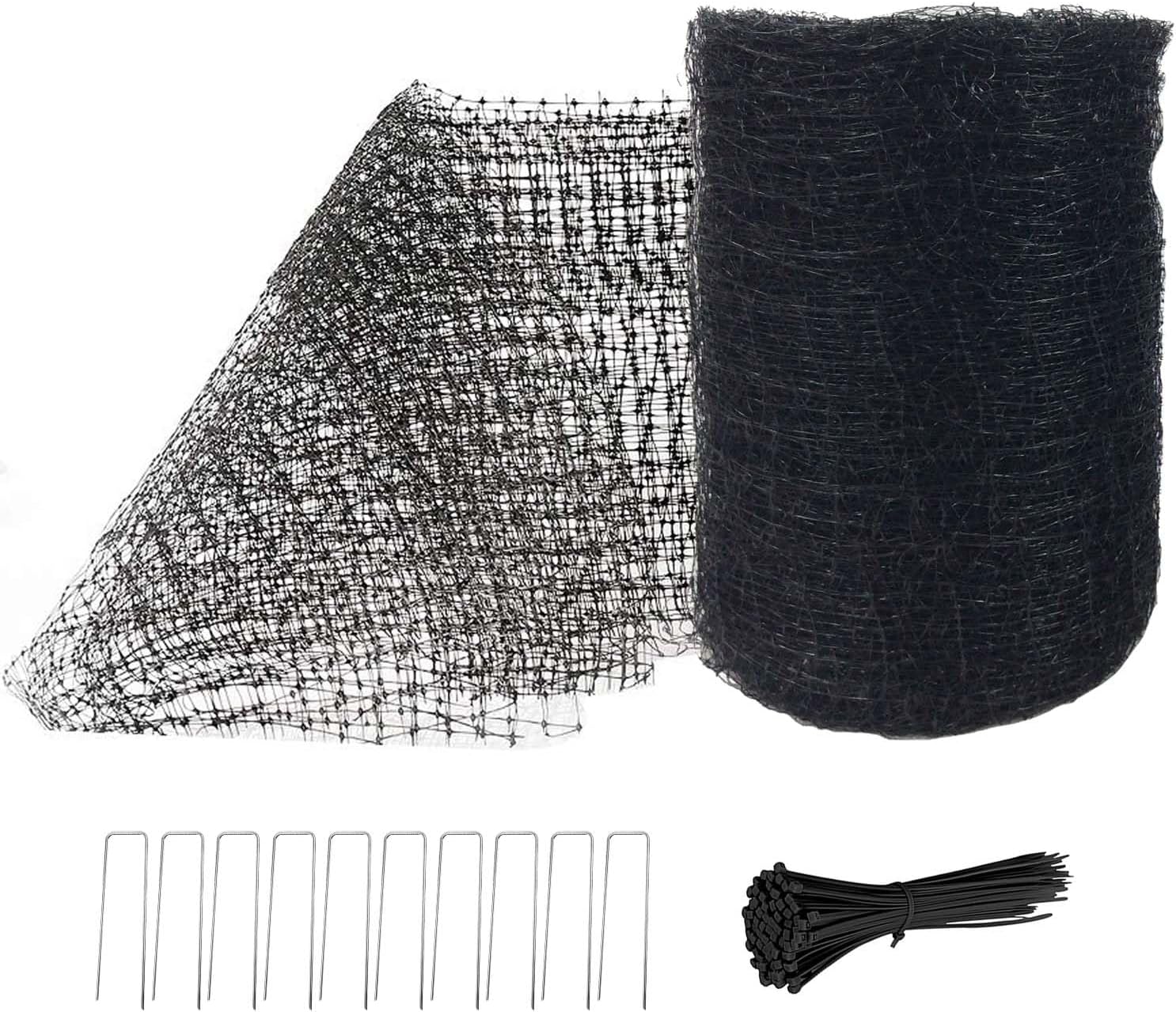
| Unit Count | 100 Feet |
|---|---|
| Mesh Opening | 3/4" square mesh |
| Material Type | Polypropylene |
| Included Accessories | 10 stakes and 50 zip ties |
This polypropylene garden netting unrolls to cover a large area and is intended to keep birds, rabbits and other small animals away from fruiting plants and raised beds. Typical use is to drape or surround plants and secure the top and bottom edges with stakes, U-shaped staples or zip ties; the package includes 10 staples and 50 cable ties to simplify installation. The 3/4 inch square mesh stops pecking on berries and small fruit without tightly restricting plant growth, while the reinforced edge bands make it easier to anchor the net and reduce tearing. Because the material is UV-stabilized and rot resistant it can be reused season after season, and it is easy to cut to fit irregular beds or individual shrubs. Limitations are that the net is lightweight so very determined larger animals can push through unless supported by stakes or a frame, and it requires some effort to tension neatly over tall or heavily branched plants.
Best for: Buyers who want a low-maintenance, reusable way to protect fruits and vegetables from birds and small mammals and prefer a straightforward install with included accessories.
Less Ideal for: People who need a heavy-duty physical barrier against deer or large wildlife or who want a permanent, self-supporting fencing solution.
- Large 7 x 100 ft coverage suitable for protecting multiple beds or a small orchard area
- 3/4" square mesh that prevents bird pecking while allowing light and water through
- Reinforced top and bottom edges for easier anchoring and reduced tearing
- Made from UV-stabilized, rot-resistant polypropylene for seasonal reuse
- Includes installation accessories (U-staples and cable ties) to get started immediately
- Lightweight construction needs stakes or a frame to stop larger browsing animals
- Black color can absorb heat in full sun which may be noticeable on very hot days
Verdict: A simple, reusable large-roll net that reliably keeps birds and small animals off fruit and vegetable plantings when tensioned and anchored properly.
Choosing the Right Plastic Garden Fence: Key Factors to Consider
Material and UV Stability
Plastic fences vary from hollow extruded panels to solid vinyl and recycled composite blends. UV-stabilized formulations resist sun damage and prevent brittle failure and color loss over time. When a fence is exposed to full sun daily expect accelerated degradation if the material lacks UV inhibitors.
Check whether the material is rated for outdoor use and if color is molded through rather than surface-painted. Molded color will hide scuffs and wear better. For small yards where the fence is a visual element as well as a barrier, material that keeps its structural integrity and appearance for many seasons reduces replacement frequency.
Installation Method and Flexibility
Some plastic garden fences are freestanding panels that slot into ground stakes, while others are roll-up designs that attach to posts or existing structures. How the system installs affects how closely you can fit it to curves, corners, and existing planting beds. Systems that allow overlapping, butt-joining, or cutting to length give the most flexibility for irregular borders.
Also consider the tools and time required. Snap-fit or stake-driven systems can be installed by one person with minimal tools. Where digging or post-setting is necessary, plan for extra effort, especially in compact yards where maneuvering larger tools may be awkward.
Height and Barrier Effectiveness
The fence height defines which pests you deter and how the garden is visually framed. Low edging under a foot is primarily decorative and may stop small ground-level intruders. Taller panels in the 2 to 3 foot range create a more effective barrier against rabbits and small dogs. If you need to keep deer out, plastic fences alone are seldom sufficient, but a taller configuration can reduce casual incursions.
Measure the most likely pest or traffic source in your yard and choose height accordingly. Remember that a fence that is too tall for the scale of a small garden can feel intrusive, so balance effectiveness with proportion.
Attachment and Ground Conditions
Soil type and ground slope affect how a plastic fence sits and stays put. Sandy or loose soils require deeper stakes or auxiliary anchors, while compacted clay or rocky ground can make stake insertion difficult and may need posts set in small holes. For patios or gravel beds you may need surface-mount brackets rather than driven stakes.
Consider whether the fence system offers corner pieces, end caps, and splice hardware so you can create continuous runs or short segments without gaps. Properly attached panels reduce sagging and minimize gaps animals can squeeze through.
Aesthetics and Garden Style
Plastic fences come in a range of textures and finishes from smooth modern panels to simulated picket profiles. Choose a style that complements your planting scheme and overall yard design. Neutral colors and low-profile profiles are easier to blend into perennial beds, while white or classic picket shapes suit cottage-style gardens.
Also think about scale: in tight urban plots a low, understated fence keeps sightlines open, whereas on a larger suburban border a more substantial profile can create a deliberate framed edge.
Maintenance and Longevity
One of the main appeals of plastic fencing is low upkeep, but maintenance needs still vary. Some finishes simply need an occasional rinse with a hose to remove dirt and pollen. Others may accumulate algae or mildew in shaded, damp locations and require periodic washing. Check whether the surface can withstand mild bleach or detergent cleaning without losing color.
Consider warranty claims and expected service life, but also the ease of replacing individual sections if damage occurs. Modular systems that permit swapping panels or stakes save time and reduce waste compared with one-piece runs that must be fully replaced.
Best Uses by Garden Size and Layout
Small front-yard borders and compact vegetable plots benefit from low to mid-height plastic fences that define space without overwhelming scale. Use short runs around raised beds to keep mulch in place and to create crisp edges that simplify mowing and weeding.
Longer runs along property lines need systems that join neatly and offer mid-run support to avoid bowing. In curved beds choose flexible roll-style fences or panels that can be trimmed and refitted to follow the contour.
- Raised beds: short panels or edging that clip to bed frames
- Curved borders: flexible roll fencing or cut-to-fit slat systems
- Path edges: low-profile styles that prevent soil spillover
Installing on Different Surfaces
Soil, turf, gravel, and hardscapes each require a different mounting approach. In turf and soft soil driven stakes work well, but you may need to pre-dig pilot holes in compact ground. For gravel or paver areas choose surface-mount brackets that bolt to edging or posts anchored into solid bases.
When working on slopes stagger the panels or use stepped mounting so the fence follows elevation changes without large gaps that animals could exploit.
- Soft soil: direct stake insertion with consideration for depth
- Rocky ground: use short posts set into drilled holes
- Hard surfaces: surface-mount brackets or freestanding planters
Seasonal Care and Winter Storage
Plastic fences are less vulnerable to moisture than wood, but freeze-thaw cycles and snow loads can stress connections. Inspect splice points and stakes before winter to ensure panels are secure. Remove accumulated snow from horizontal rails when possible to prevent bending.
If you use lightweight roll fencing in winter for temporary protection, consider removing and storing it in a dry place if winds are strong. Storing modular pieces indoors prolongs life and keeps fasteners from corroding in wet climates.
- Inspect joins and stakes each season
- Remove or brace panels before heavy snow or wind events
- Store modular components in a dry location for longevity
Customizing and Repairing Plastic Fence Runs
Plastic fence systems are typically easy to cut with standard tools and rejoin with clips, screws, or zip ties. When planning a run, measure and leave room for corner pieces and end termination. Use UV-resistant fasteners where possible to keep repair points durable.
For small tears or broken slats a replacement section can often be swapped without disassembling the entire border. Keep spare stakes and clips on hand so minor damage does not create a maintenance headache during the growing season.
- Cutting: use a fine-tooth saw for clean edges
- Connecting: prefer purpose-made clips or brackets
- Spare parts: store extra stakes and connectors for quick fixes
Design Tips to Make Plastic Fencing Look Natural
Soften the appearance by planting low, dense edging plants in front of the fence. Groundcovers, low grasses, and perennial spillers help hide the base and create a layered look. Choosing a muted color for the fence reduces visual contrast with soil and plants.
Pair the fence with complementary elements like mulch, stone edging, or low trellises so it reads as part of a planned border rather than a standalone barrier.
- Plant low perennials in front to soften sightlines
- Use matching mulch color to integrate the fence base
- Add short decorative posts at intervals for rhythm
How We Chose the Best Plastic Garden Fence
We focused on features that matter in real garden use: material durability in outdoor exposure, ease and flexibility of installation in common yard conditions, resistance to pests and decay, and visual design that fits small borders and beds. Each product was assessed for expected lifespan under sun and rain, how straightforward assembly and attachment are for a homeowner, and how the fence performs as a physical barrier against rabbits, dogs, and foot traffic. We also considered maintenance needs such as cleaning and whether the finish resists fading or chalking. We excluded heavy landscape fencing intended for permanent security, ornamental metal gates, and temporary construction barriers. Lightweight garden edging meant only for purely decorative use without any meaningful barrier function was also excluded. The final shortlist prioritizes solutions that balance durability, easy DIY installation, and functional garden protection while remaining visually compatible with small yards and raised beds.
FAQ
How high should a plastic garden fence be to keep rabbits out?
Rabbits are best deterred by fences at least 18 to 24 inches tall. A close-spaced profile without large gaps at the base prevents them from squeezing through. Burying the bottom edge a few inches helps stop digging under the fence.
Can plastic garden fences be painted if I want a different color?
Some plastic materials accept exterior-grade paint if they are cleaned and lightly abraded first, but many molded colors are more durable than painted finishes. Use paints formulated for plastics and test a small area to check adhesion and appearance.
Will plastic fencing warp in hot weather?
Lower-grade plastics can soften and warp under prolonged high heat, especially if panels are thin or unsupported. UV-stabilized and thicker profiles resist warping better. Provide mid-span supports on long runs to reduce sag.
Is a plastic fence a good option for raised beds?
Yes. Plastic fencing can neatly contain soil and mulch, protect plantings from foot traffic, and simplify bed edges. Choose profiles that clip to or sit inside bed frames for a tidy installation.
How do I anchor a plastic garden fence on a slope?
Step the panels to match the slope, or use longer stakes and angle them into the ground for better holding power. Overlap and secure panels at each step to avoid gaps that pests could exploit.
Can I use plastic fence sections year-round in cold climates?
Many plastic fences handle cold climates fine, but extreme freeze-thaw cycles can stress connectors and brittle plastics. Inspect hardware in spring and replace any components that show cracking or fatigue.
Final Verdict
Plastic garden fences are a practical choice when you want a low-maintenance border that still performs as a barrier. Prioritize UV-stabilized materials, an installation method that fits your ground conditions, and a height appropriate for the pests you need to deter. Balance aesthetics with functionality so the fence complements planting scale and garden layout. Focus on systems that are modular and easy to repair; that makes adapting or extending runs straightforward and reduces long-term effort. With the right material and mounting approach you can gain a neat, durable edge that simplifies seasonal care and keeps beds well defined.
