

Note: This article contains affiliate links. If you click on these links and make a purchase, I may earn a small commission at no extra cost to you. This helps support my research and content. Read my full affiliate disclosure here.
Pole loppers let you prune high branches without climbing ladders or overstretching. The right tool combines reach, cutting power, and maneuverability so you can remove deadwood, thin crowded limbs, and shape trees from the ground. This guide shortlists six top pole loppers that suit different pruning heights, branch diameters, and budgets. We focus on reach, cutting mechanism, shaft stability, and user comfort to help you pick the best option for your yard or orchard. Read on for practical buying guidance and clear evaluation criteria before the product list.
Top Picks at a Glance
| Best Overall The best all-around choice for most situations | Jameson FG-Series Manual Pole Saw and Tree Pruner Kit (6' + 6' Fiberglass Poles, 16" Tri‑Cut Blade) | 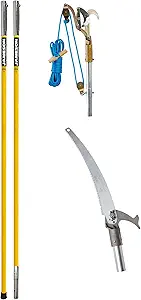 |
| Best Quality Built to a higher standard if you want something more solid | Kebtek KT940 40mm Cordless Electric Pruner with Extension Pole |  |
| Best Value The sweet spot between price and what you get | Fiskars XtendControl 16 ft Extendable Modular Pole Saw & Tree Trimmer |  |
| Best Budget The cheapest option that still gets the job done reliably | FLORA GUARD 16.5 ft Manual Pole Saw with SK5 Blade and 4-Pulley System |  |
| Highest Rated A top-rated pick with lots of positive feedback | Milwaukee M18 Telescoping Pole Pruning Shears (Bare Tool) |  |
| Most Popular A crowd favorite that many people choose with confidence | Fiskars Extendable 2-in-1 Tree Pruner & Pole Saw (7.9–12 ft) with Rotating Head |  |
Jameson FG-Series Manual Pole Saw and Tree Pruner Kit (6' + 6' Fiberglass Poles, 16" Tri‑Cut Blade)

| Power Source | hand_powered |
|---|---|
| Blade Material | High Carbon Steel |
| Blade Length | 16 inches |
| Other Special Features of the Product | Big Mouth double-pulley pruner, Barracuda Tri-Cut saw blade, FG Series fiberglass poles |
| Specification Met | OSHA |
The Jameson FG-Series kit is a performance-focused manual pole saw and tree pruner bundle built for cutting higher branches without a ladder. It pairs a Big Mouth double-pulley bypass pruner that reduces hand effort with a 16-inch Barracuda Tri-Cut saw blade designed for aggressive cutting and longer blade life. The kit includes a 6-foot base pole and a 6-foot extension pole to reach roughly twice the single-pole length, and FG-series fiberglass construction is batch-tested to meet OSHA insulation standards for work near energized lines. In practice this tool is used by standing on the ground to prune limbs and saw through larger branches; the pulley pruner makes precise pruning easier while the tri-cut blade handles tougher, thicker wood. Practical benefits include lower physical strain when cutting and a durable saw blade that resists wear. Limits to expect are the manual power requirement for very large limbs and the need to manage rope control and blade maintenance; users seeking motorized speed or extreme reach may prefer a powered pole saw or longer telescoping systems.
Best for: Gardeners and pros who prioritize cutting performance and durability while working from the ground and want a reliable manual system for pruning medium to large branches.
Less Ideal for: People who need powered cutting speed, very long reach beyond two poles, or those unwilling to handle pulley rope control and regular blade maintenance.
- Double‑pulley Big Mouth pruner reduces hand force for cleaner bypass cuts
- 16" Barracuda Tri‑Cut saw blade with impulse‑hardened teeth for durable, efficient sawing
- Includes a 6' base pole plus 6' FG extension to increase reach without a ladder
- FG-series fiberglass poles batch-tested to OSHA insulation standards for safer work near lines
- Manual operation requires significant physical effort on very large branches
- Plastic handle components may feel less robust than all‑metal alternatives
Verdict: Choose this kit if you want a high‑performance manual pole pruner with a durable tri‑cut saw blade and OSHA‑tested fiberglass poles for efficient, ground‑level tree work.
Kebtek KT940 40mm Cordless Electric Pruner with Extension Pole
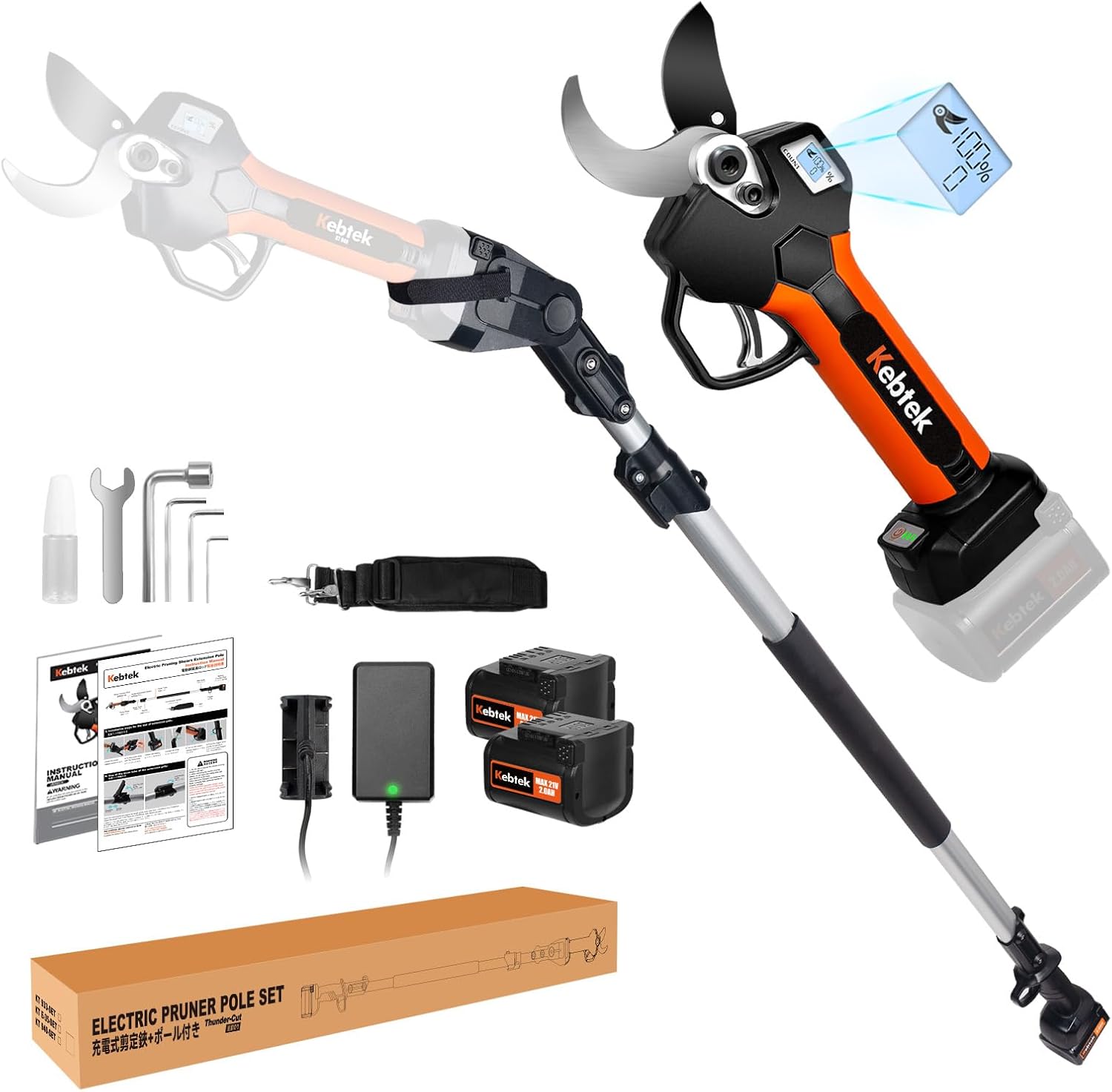
| Rated Voltage | 18V (max 21V) |
|---|---|
| Maximum power | 700W |
| Battery Capacity | 2000mAh ×2 |
| Shear diameter | 40 millimeters |
| Blade Material | SK5 Teflon high carbon steel |
The Kebtek KT940 is a battery-powered pruning system built for heavier pruning tasks and reach work thanks to its 40mm cutting diameter and included extension pole. It uses an SK5 Teflon-coated high carbon steel bypass blade and a brushless motor that delivers higher torque and longer motor life than brushed designs. The pole set is supplied with two 2000mAh batteries so you can swap cells for extended run time and the manufacturer quotes 3–4 hours per battery or roughly double with both. Progressive cutting control lets you stop the blade opening for more precise cuts, and the serrated edge helps hold stems during cutting. Practical benefits include faster, less tiring pruning of small branches and the ability to trim higher limbs without a ladder. Limits to expect are the plastic handle components and midweight battery capacity that may struggle on consistently larger-diameter wood beyond the 40mm maximum, and the kit lacks a hard carrying case unless purchased separately. Regular blade lubrication and occasional sharpening will keep performance consistent.
Best for: A buyer who prioritizes performance and efficiency when pruning trees and shrubs and wants a cordless pole solution to handle frequent mid-size branch work without using a ladder.
Less Ideal for: Not the best choice for professionals who need to cut very large limbs repeatedly or for users seeking an all-metal industrial tool; also avoid if you need a supplied hard carrying case.
- 40mm cutting diameter suitable for most small branches and routine tree pruning
- Brushless motor for higher torque, lower energy use, and longer motor life
- Two included rechargeable batteries for extended run time during long jobs
- Progressive cutting control for precise, controlled cuts
- Teflon-coated SK5 high carbon steel blade resists sticking and delivers clean cuts
- Maximum cutting diameter limited to 40mm so not for large limb removal
- Handle and some components are plastic rather than metal, which may affect long-term ruggedness
Verdict: Choose the Kebtek KT940 pole pruner when you want a cordless, performance-focused tool that delivers clean 40mm cuts and extended run time for regular mid-size branch pruning.
Fiskars XtendControl 16 ft Extendable Modular Pole Saw & Tree Trimmer

| Power Source | Hand Powered |
|---|---|
| Blade Material | Stainless Steel |
| Other Special Features of the Product | Weight-Balanced for Control |
| Blade Shape | Rectangular |
The Fiskars XtendControl is a modular pole pruner that gives three pruning configurations from one compact kit: a 15-inch X3 double-hooked saw and two aluminum extension poles that combine to reach up to 16 feet. It is hand powered and designed to shift weight closer to your hands for better balance and reduced fatigue during extended trimming sessions. The saw’s triple-grind profile and sawdust reliefs speed cutting and help the blade track smoothly through limbs, while metal locking points and a double-locking snap-fit system keep connections secure under heavy pull. The poles extend from 4 to 8 feet each and include metal inserts to prevent overextension, making the tool easy to maneuver for trimming high branches without a ladder. Trade-offs are its bulk and assembly compared with a single-piece pole saw and the need for manual sawing on thicker wood, but the durable aluminum poles and stainless-steel blade make it a long-lasting option for regular garden maintenance.
Best for: Gardeners who want a versatile, long-reach manual pruning system that minimizes fatigue and covers a range of pruning tasks without buying separate tools.
Less Ideal for: Homeowners who prefer motorized cutting or need to remove very large-diameter limbs frequently should consider a powered saw or dedicated lopper instead.
- Modular design provides three pruning configurations from one kit
- Lightweight aluminum poles that extend to a combined 16 ft for high-reach trimming
- X3 double-hooked 15 in saw with triple-grind and sawdust reliefs for faster, smoother cuts
- Secure metal locking points and double-locking snap-fit system for reliable connections
- Weight-balanced design reduces top-heaviness and user fatigue
- Requires manual sawing, so cutting very large limbs takes more effort than powered options
- Assembly and multiple components add storage bulk compared with single-piece tools
Verdict: Choose this modular Fiskars pole pruner if you want a well-balanced, extendable manual system that reaches up to 16 feet and handles most routine tree pruning tasks.
FLORA GUARD 16.5 ft Manual Pole Saw with SK5 Blade and 4-Pulley System

| Power Source | Manual Power |
|---|---|
| Blade Length | 18.5 inches |
| Blade Material | High Carbon Steel |
| Handle Material | Stainless Steel |
This FLORA GUARD pole saw combines a curved 18.5-inch SK5 high-carbon steel blade with a separate lopper head so you can saw and shear from the ground. The tool telescopes to 16.5 feet using 12 detachable stainless steel poles, letting you tackle high limbs without a ladder. A 4-pulley rope setup multiplies force and is claimed to cut pulling effort by about 30 percent, which makes repeated cuts less tiring. The aluminum-alloy head keeps the unit relatively lightweight while providing a stable mounting point for the blade and rope. For routine yard pruning and trimming small to medium branches this is a practical, all-in-one tool that saves trips up and down a ladder. Expect the blade to need occasional sharpening for heavy or very frequent use and the manual system requires some physical pulling compared with powered alternatives. Also the maximum cutting diameter for the lopper is limited to thin-to-moderate branches rather than very large limbs.
Best for: Homeowners or gardeners who need an affordable, ladder-free solution for seasonal pruning and routine branch trimming and who prioritize reach and manual reliability over power.
Less Ideal for: Arborists or users who frequently cut large-diameter limbs or who prefer faster, motorized cutting tools for heavy-duty work should consider a powered pole saw instead.
- Long 16.5 ft reach with detachable poles for ladder-free pruning
- 18.5-inch SK5 high-carbon steel blade for cleaner, longer-lasting cuts
- 4-pulley rope system reduces pulling force and lowers arm fatigue
- Lightweight aluminum-alloy head and stainless steel poles make handling easier
- Manual operation requires steady pulling and is slower than powered saws
- Lopper capacity is limited to thin-to-moderate branches, not large limbs
Verdict: A budget-friendly, extendable manual pole saw that gives long reach and easier pulling for homeowners who want ladder-free pruning.
Milwaukee M18 Telescoping Pole Pruning Shears (Bare Tool)

| Blade Type | Parrot Beak |
|---|---|
| Hand Orientation | Ambidextrous |
| Blade Material | Alloy Steel |
| Included Components | Milwaukee Electric – M18 PRUNING SHEAR TELESCOPING |
| Item Weight | 12 pounds |
The Milwaukee M18 Telescoping Pole Pruning Shears are a professional-grade pole pruner built to reach high branches without ladders. It combines a telescoping shaft with an ergonomic adjustment collar for quick length changes and an ambidextrous parrot-beak alloy steel blade that holds a sharp edge for clean cuts. As a bare tool it fits into the M18 battery ecosystem so users with existing Milwaukee batteries can expect powerful, brushless motor performance and long run times relative to single-purpose battery tools. In practice this tool is used for pruning limbs and shaping trees where reach and clean tearing-free cuts matter; the parrot-beak profile helps hold stems while the ambidextrous operation suits left- or right-handed users. Trade-offs are that it is sold without a battery or charger and the plastic/nylon handle construction prioritizes weight and ergonomics over heavy-duty impact resistance. For performance-focused users who already own M18 batteries this is a convenient, reach-extending pruner that speeds overhead work and improves cut quality compared with manual loppers.
Best for: Practical, performance-minded gardeners and professionals who already use Milwaukee M18 batteries and want a powered pole pruner to speed overhead pruning and improve cut quality.
Less Ideal for: Casual gardeners who do not own M18 batteries or who prefer a fully included kit with battery and charger should consider simpler manual pruners or complete battery kits.
- Telescoping shaft with ergonomic adjustment collar for fast, secure length changes
- Parrot-beak alloy steel blade designed to hold material for clean cuts
- Ambidextrous design fits left- and right-handed users
- Works on the M18 platform so existing Milwaukee batteries deliver immediate power
- Sold as a bare tool so battery and charger are required to operate
- Handle materials are plastic/nylon which may be less impact-resistant than metal alternatives
Verdict: If you already own Milwaukee M18 batteries and need a powerful, reach-extending pole pruner for fast overhead work, this telescoping M18 shears delivers professional-level performance.
Fiskars Extendable 2-in-1 Tree Pruner & Pole Saw (7.9–12 ft) with Rotating Head

| Power Source | Manual |
|---|---|
| Blade Length | 15 inches |
| Blade Material | Aluminum |
| Handle Material | Steel,Wood |
The Fiskars Extendable Tree Pruner is a manual 2-in-1 pole tool that lets you prune high or low branches without using a ladder. The aluminum pole extends from about 7.9 to 12 feet and locks in place, while a rope-free sliding handle and actuating ball control the cutting blade for more precise, two-handed cuts. A 15-inch double-grind saw is included for thicker limbs and the head rotates up to 230 degrees to reach awkward angles. The pole is lightweight so extended use causes less fatigue and the low-friction coating on the blade reduces sap buildup. The chain-drive gearing boosts cutting power compared with simple lever pruners, but as a manual tool it still requires physical effort on larger, dense branches. The extendable pole and rotating head make it versatile for most home-yard pruning tasks, and the durable steel blades plus lifetime warranty give confidence for regular maintenance use. Expect the best performance on small to medium branches and occasional sawing rather than frequent heavy-duty cutting.
Best for: Buyers who prioritize reliable, proven tools and want a versatile pole pruner for routine tree and shrub maintenance without using a ladder.
Less Ideal for: People who need frequent heavy-duty cutting of large-diameter limbs or who prefer motorized tools for minimal physical effort.
- Lightweight extendable aluminum pole reduces user fatigue during extended pruning
- Rope-free sliding handle with actuating ball allows two-handed, controlled cutting
- Includes 15-inch double-grind saw for cutting thicker branches
- 230-degree rotating head improves access to awkward angles and tight spots
- Manual operation requires significant physical effort on large or very dense branches
Verdict: A lightweight, well-built manual pole pruner that delivers reach, control, and a saw option for most home pruning tasks.
Choosing the Right Pole Loppers: Key Factors to Consider
Reach and Extension Options
Reach determines which branches you can prune safely from the ground. Longer telescoping tubes let you avoid ladders but add weight and can reduce rigidity. Consider both the maximum extended length and the minimum collapsed length to fit storage needs.
Telescoping mechanisms vary in locking strength and durability. Twist-locks and lever clamps differ in ease of adjustment and long-term reliability. If you frequently prune taller trees, prioritize a solid extension system that resists slipping under load.
Cutting Mechanism and Capacity
Pole loppers use bypass or anvil cutting actions, and some add compound gearing to multiply hand force. Bypass blades slice cleanly and are better for live pruning because they shear fibers rather than crush them. Anvil cutters work well on dead wood and thicker branches but can crush green stems.
Cutting capacity, measured as maximum branch diameter, should match the largest limbs you plan to remove. Many gardeners prefer models rated for 1 to 2 inches for routine maintenance and up to 3 inches for more aggressive limb removal. Remember that harder wood requires stronger blades and gearing.
Blade Quality and Edge Maintenance
Blade steel, heat treatment, and coating all affect how long the edge stays sharp and how resistant it is to sap and rust. Hardened steel with a corrosion-resistant finish reduces maintenance and keeps cuts clean longer.
Look for blades that can be resharpened or replaced easily. Tools with accessible pivot bolts and user-friendly blade parts save time and extend the tool's usable life. Regular cleaning and a light coating of oil after use will preserve blade performance.
Shaft Construction and Rigidity
A rigid shaft makes it possible to control the cut, especially at full extension. Aluminum shafts are light and resist corrosion but may flex more than heavier alloy options. Fiberglass and reinforced composites trade a bit more weight for less vibration and greater stiffness.
Check how the pole sections lock together and whether the shaft has anti-slip textures. Shaft wobble reduces cutting accuracy and increases strain on your arms and shoulders, so prioritize construction that resists twisting when the blade engages a limb.
Ergonomics and User Comfort
Comfort matters when you are making a series of cuts overhead or working for extended periods. Handle shape, grip material, and overall weight influence fatigue and control. Padded grips and longer handles provide leverage and reduce pressure points.
Also consider balance. A tool that feels head-heavy when extended will tire your wrists and shoulders faster. If you will be pruning frequently, choose a lighter model with comfortable grips and a well-balanced feel at typical working lengths.
Maintenance, Repairs, and Parts Availability
Longevity is influenced by how easy it is to service the tool. Look for models with replaceable blades, accessible pivot nuts, and available spare parts. A tool that can be disassembled for sharpening or part replacement will last far longer than one with sealed or welded components.
Consider warranty coverage and whether the manufacturer supplies replacement ropes, pulleys, or locking collars. Simple maintenance routines like tightening bolts and lubricating moving parts should be possible with common household tools.
Choosing the Right Length for Your Yard
Measure the height of the branches you typically need to reach and add a safe working buffer so you do not overreach. For many suburban trees, a pole that extends 10 to 14 feet from the ground covers most pruning needs. For taller specimen trees or orchard work, look for models that extend further but remember the trade-off in stability and weight.
- Shorter poles are easier to control and store.
- Longer poles reduce ladder use but require stronger shafts to avoid flex.
When to Use Bypass Versus Anvil Cutters
Use bypass-style loppers for live branches and precise shaping because they make cleaner cuts that heal faster. Anvil cutters suit dead wood removal where a blunt crushing action is acceptable, or when you need maximum cutting force for thicker, dry branches.
- Bypass for live wood and clean pruning wounds.
- Anvil for dead branches and thicker material.
Maintaining Clean Cuts and Tree Health
Sharp blades reduce tearing and the risk of disease entry at the wound site. After pruning, remove sap and debris from blades, dry them, and apply a thin film of oil to prevent corrosion. For larger pruning jobs, alternate cutting positions so you do not repeatedly stress the same branch collar area.
- Sharpen blades regularly for cleaner cuts.
- Disinfect blades between tasks when trimming diseased or pest-affected branches.
Working Safely at Height From the Ground
Even when using pole loppers, maintain a stable stance and keep both feet planted. Side steps or footstools increase reach but also the risk of losing balance. Wear eye protection and a hard hat if working under brittle branches or in crowded canopies.
Use steady, controlled motions instead of jerking the pole. If a cut releases tensioned wood, step back immediately to avoid falling debris hitting you or others.
- Always check the drop zone before cutting.
- Keep bystanders and pets well clear of the work area.
Storage and Winter Care
Store pole loppers indoors or in a dry shed to protect metal parts and prevent corrosion. Collapse telescoping poles and clean all moving parts before long-term storage. A light coat of oil on the blade and a loose cover prevents moisture buildup and keeps the tool ready for spring.
- Loosen locks slightly during storage to relieve stress on locking mechanisms.
- Inspect ropes and pulleys seasonally and replace if frayed.
How We Chose the Best Pole Loppers
We selected pole loppers by prioritizing features that matter in real-world pruning tasks. Our evaluation emphasized reach and maximum cutting diameter to ensure each tool handles the common heights and branch sizes gardeners face. We assessed cutting mechanism reliability, comparing bypass and anvil-style actions and inspecting blade steel and hardening that affect edge retention. Shaft construction and telescoping stability were key filters because shaft flex and wobble make precise cuts harder and increase fatigue. We included ergonomics measures such as grip comfort, weight distribution, and ease of using compound gearing or rope-and-pulley systems. Maintenance needs like access to replaceable blades and lubrication points influenced inclusion. We excluded specialty rigs intended strictly for arborists, motorized powered pole saws, and low-quality garden tools with poor materials or no replacement parts. Final selection balanced reachable height, dependable cutting for live and dead wood, shaft rigidity, and straightforward user controls.
FAQ
What maximum branch diameter should pole loppers handle?
It depends on your needs. Many pole loppers handle 1 to 2 inches comfortably, while heavier compound-gear models can cut up to about 2.5 to 3 inches. For anything thicker, a pruning saw is usually a better choice.
Are telescoping poles better than fixed-length poles?
Telescoping poles are versatile for varying heights and storage, but the locking mechanism quality matters. Fixed-length poles are often stiffer and sometimes lighter for the same strength, so choose based on the balance of reach and rigidity you need.
How often should I sharpen my pole lopper blades?
Sharpening frequency depends on use. For regular seasonal pruning, sharpen at least once per season. If you cut a lot of gritty, dirty wood or frozen branches, sharpen more often to maintain clean cuts.
Can I replace the rope or pulley on a pole lopper?
Often yes. Many models use standard ropes and pulleys that are replaceable, but ease of replacement varies. Inspect the mechanism and check that the rope is accessible without specialized tools before buying.
Is weight more important than cutting capacity?
Both matter. If you prune overhead frequently, lower weight reduces fatigue. If you need to cut thicker branches, cutting capacity and gearing become more important. Balance these priorities based on typical tasks.
How do I prevent the pole from twisting while cutting?
Choose a shaft with an anti-rotation profile or textured finish and ensure sections lock tightly. Keep your hands spaced for leverage and use a slow, controlled pull on ropes or levers to avoid sudden torque.
Final Verdict
Prioritize the combination of reach, cutting capacity, and shaft rigidity for most gardeners. If you mainly trim small to medium live branches, a lightweight bypass-style pole lopper with good extension locks and comfortable grips is usually the best balance. For heavier deadwood, stronger gearing and anvil-style cutting may be preferable. Decide which tradeoffs matter most for your yard: maximum extension versus control, lighter weight versus higher cutting capacity. Focusing on those dimensions will help you choose a pole lopper that stays comfortable to use and performs reliably over seasons.
