

Note: This article contains affiliate links. If you click on these links and make a purchase, I may earn a small commission at no extra cost to you. This helps support my research and content. Read my full affiliate disclosure here.
Keeping a pond clear of invasive weeds and filamentous algae matters for water quality, wildlife habitat, and the look of your yard. The right pond herbicide treats problem plants effectively while limiting harm to fish, native plants, and downstream waters. In this guide we narrowed the field to the top shortlisted options for ponds and water gardens and evaluated them against practical gardener concerns like speed of control, aquatic safety, and ease of application. Read on for a practical overview of how different products behave and which control characteristics matter most before you pick a treatment.
Top Picks at a Glance
| Best Overall The best all-around choice for most situations | ALLIGARE Diquat Dibromide Aquatic Herbicide, 32 fl oz |  |
| Best Quality Built to a higher standard if you want something more solid | Crystal Blue Tsunami DQ Aquatic Herbicide, 1 Gallon |  |
| Best Value The sweet spot between price and what you get | Crystal Blue Tsunami DQ Aquatic Herbicide, 1 Quart (37.3% Diquat Dibromide) |  |
| Best Budget The cheapest option that still gets the job done reliably | Hi-Yield Killzall Aquatic Herbicide concentrate (32 oz) |  |
| Highest Rated A top-rated pick with lots of positive feedback | Sonar A.S. Liquid Aquatic Herbicide, 8 oz |  |
| Most Popular A crowd favorite that many people choose with confidence | ALLIGARE Diquat Aquatic Herbicide, 1 Gallon |  |
ALLIGARE Diquat Dibromide Aquatic Herbicide, 32 fl oz

| Unit Count | 32 Fluid Ounces |
|---|---|
| Item Form | Liquid |
| Coverage | weed and moss control |
| Active Ingredients | Diquat dibromide, Herbicide |
| Liquid Volume | 1 quarts |
This 32-ounce ALLIGARE Diquat aquatic herbicide is a fast‑acting, non-glyphosate option for treating weeds in ponds, drainage areas and along shorelines. Applied as a surface spray or sprayed under the water with a nozzle, the diquat dibromide formulation begins killing green plant tissue on contact so you can see visible decline within hours. It is labeled for common aquatic pests including duckweed, hydrilla and water hyacinth and is usable on both standing water and overgrown ground areas, making it a versatile tool for pond cleanup and shoreline maintenance. The product is concentrated and intended for targeted spot treatments rather than blanket municipal use, so you get strong control without long soil residues and can replant treated areas after the label waiting period. Important limitations are that it is a non-selective herbicide that will affect desirable plants it contacts and requires careful handling and adherence to safety directions around people, pets and aquatic life.
Best for: Gardeners and pond stewards who need a reliable, fast-acting herbicide to control invasive aquatic weeds and restore pond edges, and who are comfortable following label safety and application instructions.
Less Ideal for: People seeking a selective treatment that spares desirable aquatic plants or those who need a ready-to-use, low-risk product for heavy residential use should consider alternatives or professional services.
- Fast contact action with visible results within hours
- Formulated specifically for aquatic and shoreline use including duckweed and hydrilla control
- Glyphosate-free option for users avoiding that chemistry
- Concentrated 32 fl oz bottle suitable for multiple spot treatments
- Non-selective so it will damage any green plants it contacts
- Requires careful application and safety precautions around water and non-target organisms
Verdict: Choose this concentrated diquat aquatic herbicide when you need fast, broad-spectrum control of tough pond weeds and shoreline infestations.
Crystal Blue Tsunami DQ Aquatic Herbicide, 1 Gallon

| Unit Count | 128 Ounce |
|---|---|
| Liquid Volume | 1 gallons |
| Item Form | Liquid |
| Coverage | Up to 1 acre per gallon (varies by rate) |
Tsunami DQ is a concentrated aquatic herbicide formulated for fast, targeted control of pond and lake weeds including duckweed, watermeal, pondweeds and filamentous algae. It is a contact herbicide applied by spraying directly over growth; recommended rates are 2 to 8 quarts per surface acre depending on infestation and species. In practice you treat actively growing weeds when water temperatures exceed about 60F and apply to sections of a pond rather than the whole surface to avoid oxygen depletion. The formula is intended for use around fish and wildlife when label directions are followed, and the product lists coverage of roughly 1 acre per gallon at certain rates. Practical advantages include quick visual dieback of problem plants and the ability to target specific areas, while limitations are the need for careful dosing, possible repeat treatments spaced about 14 days apart, and precautions to protect bystanders and non-target animals. Users should plan for staged treatments and post-application monitoring of oxygen levels in heavily infested waters.
Best for: Serious pond owners and managers who prioritize rapid, effective control of aquatic weeds and are prepared to follow label directions and staged treatments to protect water quality.
Less Ideal for: Casual backyard pond owners who prefer non-chemical methods or who cannot monitor oxygen and wildlife after treatment should consider alternative approaches.
- Fast-acting contact herbicide that produces visible dieback of weeds
- Concentrated gallon formulation with coverage up to about 1 acre at recommended rates
- Designed and labeled for use in ponds and lakes with instructions to protect fish when used correctly
- Requires careful, measured application and sectional treatments to avoid oxygen depletion
- May need repeat applications within two weeks for full control of heavy infestations
Verdict: Choose Tsunami DQ when you need a fast, concentrated aquatic herbicide for professional-strength control of pond weeds and algae.
Crystal Blue Tsunami DQ Aquatic Herbicide, 1 Quart (37.3% Diquat Dibromide)

| Unit Count | 32 Fluid Ounces |
|---|---|
| Item Form | Liquid |
| Coverage | 2-8 quarts per surface acre |
| Active Ingredients | Herbicide |
Tsunami DQ is a concentrated liquid aquatic herbicide designed for targeted pond and lake weed control. It is typically mixed and applied by sprayer to visibly growing weeds and algae, with recommended rates of 2 to 8 quarts per surface acre depending on infestation and species. As a contact herbicide it produces fast visible dieback of duckweed, watermeal, pondweeds and similar growth when applied during active growth and water temperatures above 60 F. The product information emphasizes treating ponds in sections and allowing time between applications to avoid oxygen depletion and protect fish. Practical benefits include broad efficacy across floating and submerged weeds, a ready-to-mix concentrate for spot or acreage treatment, and label guidance for safe use around fish and irrigation when directions are followed. Important limitations are that repeat or heavy treatments require careful staging to prevent water quality issues and it is not approved for sale in some states, so local regulations and label instructions must be checked before use.
Best for: Buyers who want an effective, fast-acting pond herbicide to control visible aquatic weeds and who plan treatments carefully to protect fish and water quality.
Less Ideal for: Those looking for an all-season preventative algicide or users in states where this formulation is restricted should consider alternative products or local options.
- Concentrated formula effective against a wide range of floating and submerged aquatic weeds
- Fast-acting contact action gives visible control quickly when weeds are actively growing
- Ready-to-mix liquid suitable for spot treatments or larger surface-acre applications
- Label guidance for staged treatments to reduce risk to fish and water oxygen levels
- Requires careful sectional treatment and timing to avoid oxygen depletion in heavily infested water
- Not available for sale in several states which limits where it can be used
Verdict: Choose Tsunami DQ when you need a concentrated, fast-acting aquatic herbicide for targeted control of pond weeds while following staged applications to protect fish and water quality.
Hi-Yield Killzall Aquatic Herbicide concentrate (32 oz)
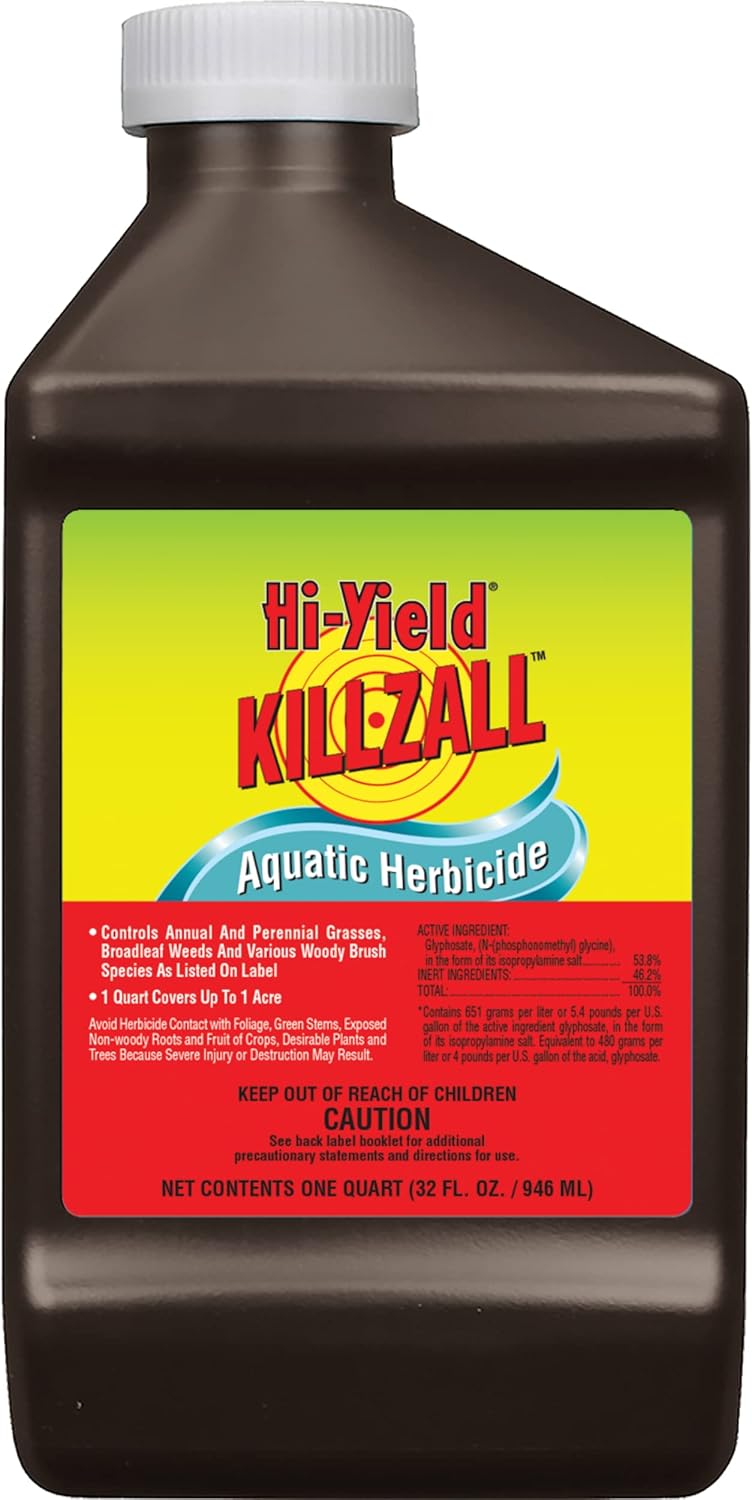
| Unit Count | 32 Ounce |
|---|---|
| Item Form | Liquid |
| Active Ingredients | Glyphosate, Herbicide |
| Included Components | Hi-Yield (33700) Killzall Aquatic Herbicide (32 oz) |
| Coverage | Full |
Hi-Yield Killzall is a concentrated aquatic herbicide based on glyphosate designed for spot and larger-area control of grasses, broadleaf weeds, and woody brush on non-crop sites and aquatic edges. You mix the 32-ounce bottle with water to the label rates and spray foliage thoroughly; the label says this quantity can treat up to about one acre depending on dilution. In practice it works as a straightforward, no-frills systemic herbicide that kills foliage so regrowth is reduced when applied correctly. Notable features include its liquid concentrate format for flexible mixing and a label that permits use around certain aquatic sites and habitat restoration areas when directions are followed. Practical benefits are cost efficiency for treating broad areas and predictable performance on many common weeds. Important limitations are that glyphosate is non-selective so it will injure desirable aquatic plants if contacted, it requires careful mixing and application per the label, and it is intended only for non-crop uses so check site-specific restrictions before use.
Best for: Gardeners or land managers who need an economical, concentrated herbicide to control invasive or nuisance weeds along pond edges and other non-crop aquatic areas and prioritize coverage per dollar.
Less Ideal for: Those who need a selective product for preserving desirable aquatic plants or who prefer an organic or contact-only option should consider different treatments.
- Concentrated liquid allows flexible dilution for spot treatment or larger areas
- Label permits use on certain aquatic and non-crop sites when directions are followed
- Covers up to one acre from a single 32 oz bottle at recommended rates
- Systemic glyphosate active ingredient provides effective control of many grasses, broadleaf weeds, and woody brush
- Non-selective active ingredient will damage desirable plants if contacted
- Requires strict adherence to mixing, application, and site-use restrictions for aquatic areas
Verdict: A budget-friendly concentrated glyphosate formula for treating weeds around ponds and non-crop aquatic sites when used carefully to avoid desirable plants.
Sonar A.S. Liquid Aquatic Herbicide, 8 oz

| EPA status | EPA approved |
|---|---|
| Treats | Up to 1/4 acre pond |
| Application | Pour into pond mixed in 5 gal water |
Sonar A.S. is a concentrated systemic herbicide designed for DIY treatment of small ponds and water gardens. The product is mixed in a 5 gallon bucket of water and poured directly into the pond, which eliminates the need for spraying equipment and makes application straightforward. It targets a broad range of aquatic weeds including duckweed, watermeal, milfoil, hydrilla, and coontail and works systemically to reduce the risk of rapid oxygen depletion that can occur with quick-kill products. The 8 oz bottle is labeled to treat up to a quarter acre pond to 6 feet deep, so it is sized for homeowners and small properties. It is EPA approved and labeled as non-toxic to fish, pets, and wildlife when used as directed, which supports safer use in stocked ponds and ornamental water features. The main limitations are that the bottle volume suits only small-to-midsize ponds and some state shipping restrictions may limit availability in certain jurisdictions.
Best for: Homeowners or property stewards who need a reliable, fish-safe solution to control invasive aquatic weeds in small ponds and value a simple, equipment-free application.
Less Ideal for: Owners of large lakes or commercial water bodies who require higher-volume treatments or frequent repeated dosing should choose a product sized for larger acreage.
- Systemic action reduces rapid die-off and sudden oxygen loss in treated ponds
- Simple pour-in application with no spray equipment required
- EPA approved and labeled as safe for fish, pets, and wildlife when used as directed
- Covers up to 1/4 acre pond to 6 feet deep from a single 8 oz bottle
- Small bottle size limits suitability for larger ponds or repeated treatments
- State-specific shipping restrictions may prevent purchase in some areas
Verdict: A dependable, fish-safe liquid herbicide for homeowners who need an easy pour-in solution to control invasive pond weeds in small ponds.
ALLIGARE Diquat Aquatic Herbicide, 1 Gallon

| Unit Count | 128 Fluid Ounces |
|---|---|
| Item Form | Liquid |
| Coverage | Various aquatic environments |
| Active Ingredients | Herbicide |
This 1 gallon Diquat concentrate is a fast‑acting, non‑glyphosate herbicide intended for ponds, drainage areas and overgrown landscape patches. Mixed with water and applied to green plant tissue, it produces visible weed decline within hours, which makes it useful when you need quick knockdown of aggressive aquatic species like hydrilla and duckweed. The product is labeled for both aquatic and terrestrial use, and the manufacturer highlights that it leaves no long‑lasting residue so replanting is possible after treatment. Practical benefits include broad-spectrum control across water and land and a concentrated formulation that covers larger areas with a single bottle. Important limitations are that it is non‑selective so desirable plants will be harmed on contact and it requires careful handling and correct mixing rates for safe, effective application. Users should follow the safety directions closely to avoid exposure to skin or eyes and to protect non‑target organisms in and around treated water.
Best for: Practical pond and waterway stewards who need rapid, reliable control of invasive aquatic weeds and who prioritize products with documented effectiveness and safety directions.
Less Ideal for: People managing delicate aquatic habitats with many desirable plants or sensitive wildlife where selective control or minimal ecosystem impact is the priority.
- Fast visible control on contact with green tissue, often within hours
- Formulated for both aquatic and landscape use for flexible applications
- Non‑glyphosate option that targets a broad range of tough weeds including hydrilla and duckweed
- Concentrated 1 gallon volume provides coverage for larger treatment areas
- Non‑selective action can damage desirable plants and aquatic life if misapplied
- Requires careful mixing and safety precautions to avoid exposure
Verdict: Choose this Diquat concentrate when you need a fast, broad‑spectrum aquatic herbicide that clears aggressive pond weeds and allows replanting after treatment.
Choosing the Right Pond Herbicide: Key Factors to Consider
Target Species and Coverage
Identify which pond weeds or algae you need to control before choosing a product. Some herbicides are formulated for filamentous algae, others for floating duckweed, and others for broadleaf aquatic plants or submerged pondweeds. Knowing the dominant pest helps you pick a chemistry with the right mode of action.
Coverage matters because dense mats or deep infestations need different dosing and possibly multiple treatments. Consider whether the product treats surface only or can penetrate to submerged growth. Accurate identification avoids wasted treatments and reduces stress to desirable plants and animals.
Aquatic Safety for Fish and Beneficial Plants
Pond treatments interact directly with aquatic life, so safety labeling is critical. Look for products with clear instructions about fish exposure, required water aeration, and any holding periods before stocking or adding new plants. Some chemistries are low risk to fish at labeled rates, while others require temporary fish relocation or aeration to prevent oxygen depletion from decaying vegetation.
Also consider impacts on beneficial submerged plants and marginal planting zones. A selective product can remove nuisance species while preserving desirable oxygenators and shoreline perennials that support pond ecology.
Application Method and Dosing Precision
How you apply a pond herbicide affects both effectiveness and safety. Granules, liquid concentrates, and algaecide tablets each have pros and cons for distribution and dose control. Liquid treatments allow precise measurement and quicker mixing, granules can be easier for spot treatment, and slow-release tablets provide longer-term control for targeted areas.
Check whether the product requires broadcast application, spot treatment, or treatment via a pump or spray. Ease of measuring and the clarity of label instructions reduce the chance of over- or under-dosing, which both create problems in aquatic systems.
Environmental Persistence and Breakdown
Persistence determines how long active ingredients remain in the water and sediments. Shorter persistence typically reduces downstream exposure and allows faster recovery of non-target plants, but may require repeat applications. Longer-lasting chemistries can control regrowth for extended periods but raise concerns about accumulation and impacts to invertebrates.
Consider the compound's breakdown products and whether they are biologically active. Also evaluate how sunlight, temperature, and organic matter in your pond influence degradation rate so you can plan timing and follow-up treatments responsibly.
Risk of Oxygen Depletion After Treatment
Killing large amounts of plant material can create oxygen demand as vegetation decays, which can stress or kill fish. Products that achieve rapid, large-scale die-off require planning for aeration and staged treatment to avoid oxygen crashes.
Think about pond size, stocking density, and season when planning treatment. In small or heavily stocked ponds, split applications or mechanical removal of biomass before treatment may be the safer option to protect aquatic life.
Regulatory Labeling and Local Water Rules
Label instructions and local regulations determine what is legal and safe to use in your water body. Always follow label directions precisely; they reflect tested rates and required safeguards. In some areas, local agencies restrict certain aquatic-use chemistries or require notification for treatments affecting streams or downstream wetlands.
Confirm any permits or reporting requirements for larger treatments, and check for guidance on buffer zones or treated-water use for irrigation. Proper compliance protects wildlife and neighbors while avoiding penalties.
Identifying the Problem Before You Treat
Take time to diagnose what is growing in your pond. Filamentous algae looks like green strings or mats on the surface and along margins. Floating plants like duckweed form a mat of small leaves. Submerged pondweeds have stems and leaves under the surface and can choke out oxygenators. Different problems respond to different chemistries and application styles.
Collect a small sample or take clear photos and compare them to trusted aquatic plant guides. Understanding whether the issue is nutrient-driven algae or an invasive aquatic plant changes both the timing of treatment and whether you should combine chemical control with physical removal and nutrient management.
- Inspect margins, shallow zones, and deeper beds to map infestation.
- Note water clarity, odor, and whether fish are gasping at the surface.
- Document recent inputs like lawn runoff or leaf litter that might fuel regrowth.
Timing Treatments for Best Results
Treat when plants are actively growing so herbicide uptake is maximized. Late spring through mid-summer is often the window for effective control because warm temperatures and active metabolism increase herbicide absorption. Treating in very hot weather can increase decomposition rates and oxygen stress, so adjust timing accordingly.
Avoid treating just before heavy rain to reduce runoff risk. For seasonal or recurrent problems, plan follow-up inspections and spot treatments rather than a single large application when possible.
- Target active growth periods for maximum uptake.
- Split treatments to limit mass die-off and oxygen demand.
- Avoid immediate pre-storm applications to prevent downstream movement.
Combining Physical and Chemical Control
Mechanical removal of thick mats or dense floating weeds reduces the amount of material that will decompose and lower the chance of oxygen depletion. Raking, skimming, or netting out bulk biomass before treating reduces chemical needs and speeds recovery.
Pairing moderate herbicide doses with habitat fixes like nutrient reduction, shoreline planting, and sediment control provides longer-lasting results than chemical treatment alone. Think of herbicide use as one tool in an integrated pond management plan.
- Remove large surface mats before applying treatments.
- Address nutrient sources like lawn runoff and fertilizer.
- Use native shoreline plants to stabilize banks and compete with weeds.
Practical Safety Steps and Post-Treatment Care
Always follow label directions for application rates, mixing, and personal protective equipment. After treatment monitor dissolved oxygen and fish behavior, especially during the first few days when decomposition peaks. Aeration or circulation can help maintain safe oxygen levels and speed breakdown of dying plants.
Plan for repeat inspections. Some treatments require a second dose after a set interval to catch missed growth. Keep records of dates, rates, and observed results so you can refine timing and dose for your pond.
- Have a plan for aeration if large die-off is likely.
- Wear appropriate protective gear and keep pets away from treated water until label allows re-entry.
- Record treatment details to guide future management.
How We Chose the Best Pond Herbicide
We focused on criteria that matter to gardeners dealing with pond weeds and algae. Uptake and speed of action were prioritized because rapid control reduces oxygen swings and organic load. Aquatic safety was a central filter: we only considered formulations with clear guidance on fish and plant impacts, labeled use for ornamental ponds, and predictable residual activity. Application method and dosing flexibility were used to evaluate real-world manageability in small ponds, larger ornamental water features, and water gardens. Environmental persistence and breakdown pathways were factored because shorter persistence lowers downstream risk. We excluded products lacking aquatic-label directions or those intended solely for terrestrial weeds where runoff risk is unknown. The resulting shortlist emphasizes fast, labeled control options with transparent safety profiles and practical application instructions.
FAQ
Can I use a pond herbicide if I have fish?
Often yes, but it depends on the product and the rate. Some aquatic herbicides are labeled for use in ornamental ponds with fish when applied at recommended doses and with precautions like aeration. Read label directions carefully and plan for oxygen support if large amounts of vegetation will be killed.
How long until I see results after treating a pond?
Response time varies by target species and active ingredient. Filamentous algae often shows bleaching or collapse within days, while rooted submerged plants may take one to several weeks as herbicide translocates through the plant. Expect follow-up checks and possible retreatment for dense infestations.
Will a pond herbicide harm native plants I want to keep?
Some chemistries are selective and spare certain oxygenating or marginal plants, but many broad-spectrum aquatic herbicides will damage non-target species. Use spot treatments, selective products, or mechanical removal when preserving specific plants is important.
Do pond herbicides affect downstream waters or wells?
They can if applied incorrectly or before heavy rain. Persistence and mobility vary by compound, so follow label setbacks, avoid pre-storm applications, and check local regulations. Proper dosing and timing minimize downstream exposure.
How often should I retreat a pond after initial control?
It depends on residual activity and recolonization pressure. Some products offer weeks of control and need only occasional spot treatments, while others require scheduled follow-ups. Monitor plant regrowth and treat small patches early to prevent larger outbreaks.
Are there non-chemical alternatives I should try first?
Yes. Reducing nutrient input, improving circulation, installing aeration, manual removal, and establishing shoreline plants all reduce weed and algae problems. Chemical control is most effective when used as part of this integrated approach.
Final Verdict
Choosing a pond herbicide is about balancing fast, effective control with protection for fish, beneficial plants, and downstream waters. Prioritize products with clear aquatic labeling, dosing precision, and a mode of action suited to the species you face. Plan treatments with oxygen management and habitat improvements to reduce repeat problems. With careful selection and responsible use you can restore pond clarity while protecting the broader pond ecosystem.
