

Note: This article contains affiliate links. If you click on these links and make a purchase, I may earn a small commission at no extra cost to you. This helps support my research and content. Read my full affiliate disclosure here.
If you want clearer water and a healthier pond ecosystem, choosing the right plants for filtration makes a big difference. Pond plants act as living filters by absorbing nutrients that fuel algae, stabilizing banks, and providing oxygen and habitat for aquatic life. This guide focuses on the top pond plants for filtration across a range of garden ponds and water features. We shortlisted seven reliable pond plants and evaluated them on how well they remove nutrients, their growth habit, ease of maintenance, and suitability for different pond sizes and depths. Use this guide to match plant behavior and placement to your pond's conditions before you pick individual varieties.
Top Picks at a Glance
| Best Overall The best all-around choice for most situations | Aquarium Plant Center Giant Duckweed (Spirodela polyrhiza) — Live Floating Aquarium/Pond Plants, 30 Plants |  |
| Best Quality Built to a higher standard if you want something more solid | Water Spangles (Salvinia minima) Floating Live Aquarium Plants — 60+ Leaves |  |
| Best Value The sweet spot between price and what you get | Aqualeaf Aquatics Water Lettuce and Water Hyacinth Bundle (4 live plants) |  |
| Best Budget The cheapest option that still gets the job done reliably | AquaLeaf Aquatics Water Lettuce (live floating pond plant) |  |
| Highest Rated A top-rated pick with lots of positive feedback | CZ Grain Acorus americanus Live Plant Plug (Sweet Flag) for Ponds & Rain Gardens |  |
| Most Popular A crowd favorite that many people choose with confidence | Aqualeaf Aquatics Common Water Hyacinth (1 count) |  |
| Best Seller A high-volume bestseller chosen again and again | Water Hyacinths live floating plants (12 count) |  |
Aquarium Plant Center Giant Duckweed (Spirodela polyrhiza) — Live Floating Aquarium/Pond Plants, 30 Plants

| Sunlight Exposure | Partial Shade |
|---|---|
| Other Special Features of the Product | Fast Growing, Easy Care, Low Maintenance, Natural Surface Cover, Nutrient Absorption |
| USDA Hardiness Zone | 3 |
| Unit Count | 30 Count |
Giant Duckweed (Spirodela polyrhiza) is a fast‑growing floating plant intended to provide surface cover, shade, and nutrient uptake in freshwater tanks and ponds. It is typically used as a free‑floating mat over the water where its larger fronds and dangling roots shelter fry and shrimp while absorbing excess nitrates and phosphates. This variety is low maintenance, tolerates low to medium light without CO2, and ships in counted bundles (30 plants) so you can scale coverage. Practical features include quick establishment, organic material, and suitability for indoor or outdoor use within the recommended temperature and pH ranges. Important limitations are that duckweed multiplies rapidly and can overwhelm small systems without regular thinning, it requires monitoring of surface coverage to maintain gas exchange and light for submerged plants, and it is sensitive to extreme shipping temperatures so timing matters when ordering. For a bog filter application it works well as a surface nutrient sink but must be managed to avoid clogging inlets or blocking intended plantings below the surface.
Best for: Practical pond or aquarium keepers who want an inexpensive, low‑maintenance surface plant to reduce nutrient loads and provide shelter without complex care routines.
Less Ideal for: Those who prefer a hands‑off system in very small tanks or in setups with fragile surface‑feeding equipment, or buyers unwilling to manage plant spread should consider different plants or containment methods.
- Fast growing and establishes a dense surface cover that absorbs excess nutrients
- Works under low to medium light without CO2 making it easy to keep indoors
- Provides natural shade and shelter for fry, shrimp, and small fish
- Sold in counted quantities so you can add plants incrementally
- Can reproduce quickly and require regular thinning to prevent complete surface coverage
- Sensitive to extreme temperatures during transit and needs prompt attention on arrival
Verdict: Choose Giant Duckweed when you need a fast, low‑maintenance floating plant to quickly soak up nutrients and provide surface cover for bog filter setups.
Water Spangles (Salvinia minima) Floating Live Aquarium Plants — 60+ Leaves

| Plant or Animal Product Type | Salvinia minima |
|---|---|
| Indoor Outdoor Usage | Indoor, Outdoor |
| Sunlight Exposure | Partial Sun |
| Moisture Needs | Moderate Watering |
Salvinia minima (Water Spangles) are tiny floating plants that create a dense green mat across the water surface and are commonly used to shade water, provide cover for fish, and host beneficial microbes. They arrive as live plants and are best used in indoor tanks, outdoor ponds, or bog filters where partial sun and moderate moisture are available. The product is low-maintenance in steady conditions and tolerates a range of freshwater and mildly brackish setups, making it useful for natural filtration by trapping debris and supporting biofilm growth. Notable features are the compact floating habit and year-round planting window, which allow quick coverage without planting substrate. Important limitations are vulnerability to extreme temperatures during shipping and a tendency to reproduce rapidly, which means regular removal is needed to prevent surface overgrowth and light blocking. For best results monitor coverage, keep water movement gentle, and avoid ordering during very hot or cold weather to protect plant health.
Best for: Buyers who want a low-effort floating plant to improve water clarity and provide surface cover in tanks, bog filters, or small ponds, and who will actively manage surface density.
Less Ideal for: People who prefer completely hands-off systems or who cannot inspect and thin surface plants regularly.
- Forms a dense floating mat that shades water and reduces algae growth
- Low maintenance in stable aquarium or pond conditions
- Works in both freshwater and mildly brackish environments
- Useful year-round for providing cover and supporting beneficial biofilms
- Sensitive to extreme temperatures during shipping and arrival
- Can reproduce quickly and require regular thinning to avoid overgrowth
Verdict: A fast-covering, low-maintenance floating plant that helps shade water and support natural filtration when actively managed.
Aqualeaf Aquatics Water Lettuce and Water Hyacinth Bundle (4 live plants)
| Indoor Outdoor Usage | Outdoor |
|---|---|
| Sunlight Exposure | Full Sun |
| Moisture Needs | Moderate Watering |
| Material Features | 100% chemical free |
| Number of Pieces | 4 |
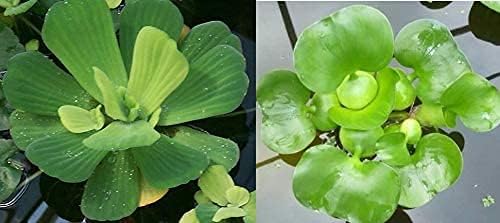
This four-plant bundle pairs water lettuce and water hyacinth to provide fast-growing floating cover and biological filtration for ponds and water features. The plants float on the surface with long dangling roots that absorb excess nutrients, shade the water and help reduce algae while offering shelter for fish and smaller pond inhabitants. They are intended for calm waters and full sun and are typically added directly to ponds or water gardens where they re-establish roots after transit. Practical benefits include quick nutrient uptake, natural biofiltration and improved oxygenation around roots. Important limitations are that these are tropical perennials in warm climates but must be treated as annuals or overwintered indoors in cold regions, and some states restrict sale of water hyacinth so local rules must be checked. Also the plants prefer still water and can be harmed by strong currents or waterfalls, and roots are sometimes trimmed for shipping which may slow initial establishment.
Best for: Gardeners who want a low-effort, natural filtration boost for outdoor ponds and water gardens and who prioritize biological control of algae and habitat for fish.
Less Ideal for: People with high-flow water features or those in climates with prolonged freezing winters who cannot provide indoor overwintering or comply with local aquatic plant regulations.
- Effective natural biofiltration that absorbs nutrients and helps control algae
- Provides shade and shelter for fish with floating rosettes and long roots
- Fast growth under full sun accelerates coverage and filtration benefits
- Sold chemical-free and safe for fish and shrimp
- Not suitable for cold climates unless brought indoors to overwinter
- Prefers calm water and can perish in strong currents or near waterfalls
- Sales restricted in certain states due to invasive species regulations
Verdict: Choose this bundle if you want fast-establishing floating plants that provide natural nutrient uptake and shade to help filter and control algae in calm outdoor ponds.
AquaLeaf Aquatics Water Lettuce (live floating pond plant)

| Indoor Outdoor Usage | Indoor |
|---|---|
| Sunlight Exposure | Full Sun |
| Moisture Needs | Moderate Watering |
| Unit Count | 1 Count |
This live water lettuce arrives as a ready‑to‑use floating rosette that quickly forms dense clumps across calm pond surfaces. Typically placed in small ponds or backyard water gardens, it shades the water, gives fish cover, and its dangling roots help absorb excess nutrients to improve water clarity. The plant is tropical by nature so it grows rapidly in full sun and warm conditions and can be treated as an annual or brought indoors to overwinter in colder climates. Practical benefits include easy placement—no planting media needed—fish‑safe, chemical‑free growth, and the ability to reproduce so a single purchase can supply more coverage over the season. Important limitations are that it prefers calm water away from strong currents or waterfalls, it can be eaten by koi if you do not want it grazed, and it may require thinning because of fast growth in high light. Also avoid ordering during extreme temperatures since live plants are sensitive in transit.
Best for: Gardeners on a budget who want an inexpensive, low‑effort way to add shade, natural filtration, and fish shelter to small backyard ponds or water features.
Less Ideal for: Owners of large, fast‑moving water features or pond keepers who need plants resistant to heavy fish grazing should consider sturdier, anchored species instead.
- Provides quick shade and cover for fish and reduces algae by absorbing pond nutrients
- Ready to float with no planting required and reproduces to expand coverage
- Fish safe and chemical free so it can be used with wildlife and pond fish
- Works well in small, calm ponds and water features where it can form dense mats
- Sensitive to extreme temperatures during shipping and needs protection to overwinter in cold climates
- Will perish in strong currents or near waterfalls and needs calm water to thrive
- Koi and some fish species may eat or uproot the plants if left unchecked
Verdict: A fast‑growing, low‑cost floating plant that quickly shades and helps clean small, calm ponds while providing fish shelter.
CZ Grain Acorus americanus Live Plant Plug (Sweet Flag) for Ponds & Rain Gardens

| Unit Count | 1 Count |
|---|---|
| Other Special Features of the Product | Low Maintenance |
| Sunlight Exposure | Partial Sun |
| Brand Name | CZ Grain |
This live Acorus americanus plug is a straightforward way to add hardy marginal planting to a pond, rain garden, or wetland edge. Sold as a single established plug, it arrives with roots ready to transplant into shallow water or consistently moist soil. Sweet flag is noted for vertical, sword-like foliage that gives structure around pond margins and tolerates full sun to partial shade once established. Its low-maintenance habit and cold hardiness mean it needs little ongoing care beyond keeping the planting area wet while roots take hold. The plant also provides habitat value for aquatic wildlife and beneficial insects, which is useful in naturalized water features. Expect a simple planting process but remember this is one starter plug only, so creating a filled-in border will require multiple purchases and time for spread. If you want quick, dense coverage right away or a pre-grown container specimen, this plug will be slower to deliver that look.
Best for: Gardeners who want a reliable, low-maintenance marginal plant for pond edges or rain gardens and prefer established starter plugs they can transplant themselves.
Less Ideal for: Buyers seeking instant, full coverage or large, mature pond plants should look for larger container specimens or pre-established planting mats instead.
- Live, rooted plug ready for transplanting into ponds or wet soil
- Low-maintenance perennial that tolerates full sun to partial shade
- Cold hardy and dependable once established
- Adds vertical texture and supports aquatic wildlife and pollinators
- Sold as a single plug so achieving dense planting requires multiple purchases
- Not a mature specimen so it takes time to fill in and establish
Verdict: A dependable, low-maintenance starter plug for adding hardy marginal planting and wildlife value to ponds and rain gardens.
Aqualeaf Aquatics Common Water Hyacinth (1 count)

| Indoor Outdoor Usage | Outdoor |
|---|---|
| Expected Blooming Period | Summer |
| Sunlight Exposure | High |
| Product Care Instructions | Float in freshwater; full sun to partial shade; remove excess growth regularly |
The Aqualeaf Aquatics common water hyacinth is a single, ready-to-float plant for freshwater ponds and water gardens that rapidly produces broad leaves and purple blooms in summer. You place it directly on the water surface—no substrate needed—and it shades the pond, reduces evaporation, and uptakes nitrates and ammonia to help control algae. Its rapid growth makes it useful for quick surface coverage and creating shelter for fish and invertebrates, but you will need to thin plants regularly to prevent overcrowding and to keep water flow and light balanced. It prefers full sun to partial shade and warm conditions, so it performs best in summer and in temperate to warm climates. Note that this species is regulated or banned in several U.S. states because it can become invasive in open waterways, so check local restrictions before using it in outdoor ponds. For small ponds and controlled water gardens it provides low-effort filtration and fast visual impact when managed properly.
Best for: Buyers who want a low-effort, fast-acting floating plant to improve water quality and provide shade in small, managed ponds or water gardens.
Less Ideal for: People with open natural waterways, large unmanaged ponds, or those in states where this species is restricted should avoid this plant and choose sterile or noninvasive alternatives.
- Provides natural filtration by absorbing excess nutrients
- Fast surface coverage for shade and shelter
- No planting or substrate required so setup is immediate
- Low maintenance once established if regularly thinned
- Very fast growth requires frequent removal to avoid overcrowding and reduced water circulation
- Restricted or prohibited in multiple U.S. states due to invasive risk
Verdict: A fast, low-effort floating plant that quickly improves pond water quality and shade when kept under active management.
Water Hyacinths live floating plants (12 count)

| Indoor Outdoor Usage | Outdoor |
|---|---|
| Expected Blooming Period | Summer |
| Sunlight Exposure | Full Sun |
| USDA Hardiness Zone | 3 |
| Moisture Needs | Moderate Watering |
These water hyacinths arrive as a group of floating aquatic plants intended to sit on pond or water garden surfaces where they shade water and take up nutrients. Typical use is to place the plants gently on still or slow-moving water near the pond edge or in a containment area so their roots hang into the water column. Notable features from the listing include nursery propagation, pet-friendly status, full-sun preference, summer bloom timing, and suitability for USDA Zone 3. In practice hyacinths help reduce algae by competing for nutrients and providing surface cover that lowers light penetration, and the provided extras in the pack help if a few plants fail to establish. Important limitations are that these are outdoor-only plants and require moderate watering and full sun to thrive; they are not appropriate for flowing water or small indoor containers, and some regions restrict sale or transport of live aquatic species so check local regulations before buying.
Best for: Buyers who want a low-effort floating plant to quickly shade and help filter nutrient-rich garden ponds and value nursery-grown stock for reliable establishment.
Less Ideal for: Do not choose this if you need plants for indoor tanks, heavy-flow streams, or if local regulations prohibit sale or introduction of nonlocal aquatic species.
- Provides rapid surface cover to shade water and reduce sunlight-driven algae growth
- Sold as nursery-grown live plants with extras to improve establishment success
- Full-sun summer bloom adds seasonal flowers and visual interest
- Listed as pet friendly and organic nursery-grown
- Unsuitable for fast-flowing water or very small indoor containers
- Subject to regional sale and transport restrictions for live aquatic plants
Verdict: A quick-establishing, nursery-grown floating plant that shades water and helps reduce nutrients in outdoor ponds, making it a practical choice for cautious pond owners seeking natural filtration.
Choosing the Right Pond Plants for Filtration: Key Factors to Consider
Nutrient Uptake and Filtration Capacity
Plants vary widely in how quickly and how much nitrogen and phosphorus they remove from pond water. Fast-growing emergent and floating plants can pull nutrients from the water column rapidly, reducing the fertilizer available for algae. Submerged plants oxygenate the water and absorb dissolved nutrients through their leaves, which helps balance chemistry.
When assessing filtration capacity, consider both the rate of uptake and the biomass you can reasonably sustain in your pond. Massive nutrient removal often comes from plants that reproduce quickly, so plan for regular thinning and disposal of cut material to actually remove the nutrients from the system.
Growth Habit and Spread
Growth habit determines where a plant belongs in the pond and how much area it will occupy. Emergent plants form dense stands at the margins and are excellent at intercepting runoff and nutrients from shallow zones. Floating plants cover the surface and shade the water, cutting light for algae, but too much coverage can reduce oxygen exchange.
Consider how a species spreads via runners, rhizomes, or seed. Some species create tight clumps you can confine to baskets, while others can quickly colonize open water. Choose plants whose growth you can control given your pond size and plan for regular thinning if you select vigorous spreaders.
Preferred Depth Range and Light Needs
Different pond plants have distinct depth and light preferences. Shallow marginal plants need only a few inches of water at the edge, whereas true submerged species require several feet of water to thrive. Light availability changes seasonally and under tree cover, so pick plants suited to the available brightness and the depth band where you plan to place them.
Matching depth range to the plant's habit reduces maintenance and improves filtration performance. Plants placed too deep will fail to establish and offer little nutrient uptake, while those too shallow can suffer drought or temperature stress.
Maintenance Requirements and Ease of Control
All filtration plants require some maintenance. Fast growers deliver strong nutrient removal but need regular harvesting to keep nutrients out of the pond. Consider whether you can access planting baskets, remove excess biomass, and replace plantings as needed. Some plants are best kept in containers to limit spread and make harvesting easier.
Also factor in seasonal chores such as cutting back dead foliage, lifting sensitive species before freeze-up, and removing decayed material that can release nutrients back into the water. Choose plants that match the time you are willing to spend on upkeep.
Wildlife Value and Ecosystem Benefits
Besides filtration, plants provide habitat, food, and shelter for invertebrates, amphibians, and fish. Dense root masses and foliar cover help support beneficial insect life and give spawning or hiding spaces for pond animals. Plants that offer both filtration and habitat create a more resilient pond ecosystem.
Keep in mind that very dense surface coverage can reduce oxygen and shade out submerged plants, so balance habitat goals with oxygenation and light penetration needs to support a full aquatic community.
Cold Climate Behavior and Seasonal Dynamics
In temperate climates, many pond plants die back or go dormant in winter. Understand whether your chosen species will reshoot in spring, whether it will survive ice cover, and if it requires lifting and overwintering indoors. Some plants retain roots that continue providing filtration benefits even when top growth is gone, while others must be treated as annuals.
Seasonal dynamics also affect nutrient cycling: decaying plant material in autumn can temporarily raise nutrient levels, so plan removals before dieback or use species that retain stems through winter to slow decomposition.
Where to Place Filtration Plants in the Pond
Placement depends on plant type and the filtration role you want it to play. Use marginal emergent beds in shallow zones to intercept runoff and capture nutrients before they enter the main basin. Floating plants belong in calmer, open water where they can shade and take up nutrients from the surface layer. Submerged plants should be distributed across deeper areas to oxygenate and filter the water column.
- Create a shallow gravel shelf or tiers around the edge for emergents.
- Use planting baskets to contain spreaders and make harvesting easier.
- Place floating plants near inflow points to capture nutrients early.
Managing Plant Biomass and Nutrient Export
Plants trap nutrients, but that benefit only becomes permanent when you physically remove the harvested material from the pond. Schedule regular cutting and raking to harvest excess growth during the peak season. Compost or dispose of removed material away from the pond to prevent nutrients returning via runoff.
- Harvest fast-growing plants every 4 to 8 weeks in summer as needed.
- Leave a modest amount of foliage for habitat when trimming, but avoid leaving large piles in shallow water.
- Use mesh baskets to lift dense marginal plants without disturbing the bottom.
Balancing Surface Coverage and Oxygen Needs
Covering too much of the surface with floating plants can reduce oxygen transfer and shade submerged vegetation, harming fish and beneficial invertebrates. Aim for partial coverage that limits light enough to suppress algae but still allows gas exchange and enough light for submerged plants to survive.
- Keep roughly 30 to 60 percent surface coverage as a general starting point, adjusting for pond depth and stocking.
- Monitor dissolved oxygen on hot summer days and reduce surface cover if oxygen levels drop.
- Mix floating and submerged plant types to maintain oxygenation and filtration simultaneously.
Using Containers and Planting Media
Planting in baskets or containers simplifies maintenance and controls spread. Use heavy aquatic planting media or gravel so soil does not cloud the water. Containers also let you position plants at the correct depth without regrading the pond edge.
- Choose wide, shallow baskets for marginal species and deeper pots for submerged plants.
- Secure baskets on benches or shelves at the designed depth band.
- Avoid loose topsoil that can wash out and contribute nutrients.
Integrating Plants with Mechanical Filtration and Aeration
Plants complement mechanical filtration and aeration but rarely replace pumps, filters, or aerators entirely in ornamental ponds with fish. Use plants to reduce nutrient loads and stabilize water quality, while maintaining mechanical systems for circulation, debris removal, and oxygen during peak activity periods.
- Position plants to work with return flows from pumps so nutrients hit plant zones first.
- Use aeration in deep ponds or during hot weather when biological oxygen demand rises.
- Combine physical skimming of debris with plant-based nutrient removal for best results.
How We Chose the Best Pond Plants for Filtration
We prioritized plants that demonstrably reduce dissolved nutrients, tolerate typical garden pond conditions, and provide ecological benefits without requiring intensive care. Selection started with species known for high nutrient uptake and fast growth in standing water, then filtered by adaptability to common pond depths, cold-hardiness for temperate gardens, and manageable spread to prevent invasive dominance. We also weighed ease of planting and ongoing maintenance for gardeners who want reliable filtration with minimal fuss. Evaluation criteria included nutrient absorption capacity, appropriate depth and growth habit, winter hardiness and seasonal behavior, maintenance needs and ease of control, and habitat value for pond wildlife. Plants were excluded if they are widely recognized as aggressive invasives in garden settings or require specialized aquarium-style care. The final shortlist reflects species and plant types that balance filtration performance with safe, practical use in yard ponds and backyard water features.
FAQ
How many plants do I need to keep a small backyard pond clear?
It depends on pond volume, stocking, and nutrient inputs. A good rule is to include a mix of emergent, submerged, and floating plants that together cover a significant portion of the pond's nutrient uptake needs. Start with several marginal clumps, a patch of submerged plants, and some floating coverage, then increase planting if algae returns.
Can filtration plants completely stop algae?
Plants reduce the nutrients algae need and can greatly lower algal pressure, but they rarely eliminate algae entirely. Other factors such as sunlight, temperature, and external nutrient inputs also drive algal blooms, so combine plantings with good pond hygiene and runoff control for best results.
Should I plant everything in baskets or directly in the pond bottom?
Baskets provide better control for spreaders and make harvesting easier, which helps nutrient export. Planting directly can work for stable, noninvasive species in larger ponds, but it increases the risk of uncontrolled spread and makes removals harder.
When is the best time to harvest filtration plants?
Harvest during the active growing season before plants become overly woody or start to die back in autumn. Regular summer harvests remove a large share of assimilated nutrients. Lift and remove excess growth when it reaches the point of shading other plants or contributing to dense surface mats.
Can I rely on floating plants alone for filtration?
Floating plants are effective at nutrient uptake and shading, but using only floating plants can reduce oxygen and limit habitat complexity. For robust filtration, combine floating species with submerged and marginal plants so each depth zone contributes to water quality.
How do I prevent filtration plants from becoming invasive?
Choose species appropriate to your region and avoid known aggressive invaders. Keep vigorous plants in containers, thin them regularly, and remove seedheads or runners when you see rapid spread. Local extension services can advise on species with invasive tendencies in your area.
Final Verdict
When choosing pond plants for filtration, prioritize the plant types and placement that address the specific nutrient sources and depth zones of your pond. Fast-growing emergents and floating plants remove nutrients quickly but require regular harvesting to export those nutrients. Submerged plants help oxygenate and filter the water column but need appropriate depth and light to thrive. Balance rapid nutrient uptake with controllability and habitat goals. Aim for a mix of plant types, contained planting methods, and a maintenance plan that includes seasonal harvesting. That approach will deliver clearer water and a healthier, more resilient pond ecosystem.
