

Note: This article contains affiliate links. If you click on these links and make a purchase, I may earn a small commission at no extra cost to you. This helps support my research and content. Read my full affiliate disclosure here.
When you need clean, consistent holes for fence posts, deck supports, or mailbox poles, the right post hole digger makes the work faster and reduces strain. The best tools in this roundup are suited for homeowners, small-acreage properties, and DIY landscapers who need dependable hole depth, stable handling, and materials that stand up to rocky or compacted soil. This guide covers the top shortlisted post hole diggers and explains how each was evaluated for digging effectiveness, ease of use, and long-term durability. Read on to understand what matters for your yard so you can pick the digger that fits the soil conditions and job frequency you expect.
Top Picks at a Glance
| Best Overall The best all-around choice for most situations | WORKIT 72CC Gas Post Hole Digger with 4", 6" and 12" Auger Bits |  |
| Best Quality Built to a higher standard if you want something more solid | NEO-TEC 72cc Gas-Powered Post Hole Digger with 6" and 10" Bits plus Extension |  |
| Best Value The sweet spot between price and what you get | Nohovu 58" Heavy-Duty Post Hole Digger with Fiberglass Handle and Carbon Steel Blades |  |
| Best Budget The cheapest option that still gets the job done reliably | DAKEPOLE Heavy-Duty Post Hole Digger with 55" Metal Handle and Dual Sharp Blades |  |
| Highest Rated A top-rated pick with lots of positive feedback | Wild Badger Power 40V Cordless Electric Earth Auger Post Hole Digger Kit |  |
| Most Popular A crowd favorite that many people choose with confidence | XtremepowerUS 1500W Electric Post Hole Digger with 6" Auger Bit |  |
| Best Seller A high-volume bestseller chosen again and again | VEVOR 43CC Gas-Powered Post Hole Digger with 8" Auger |  |
WORKIT 72CC Gas Post Hole Digger with 4", 6" and 12" Auger Bits
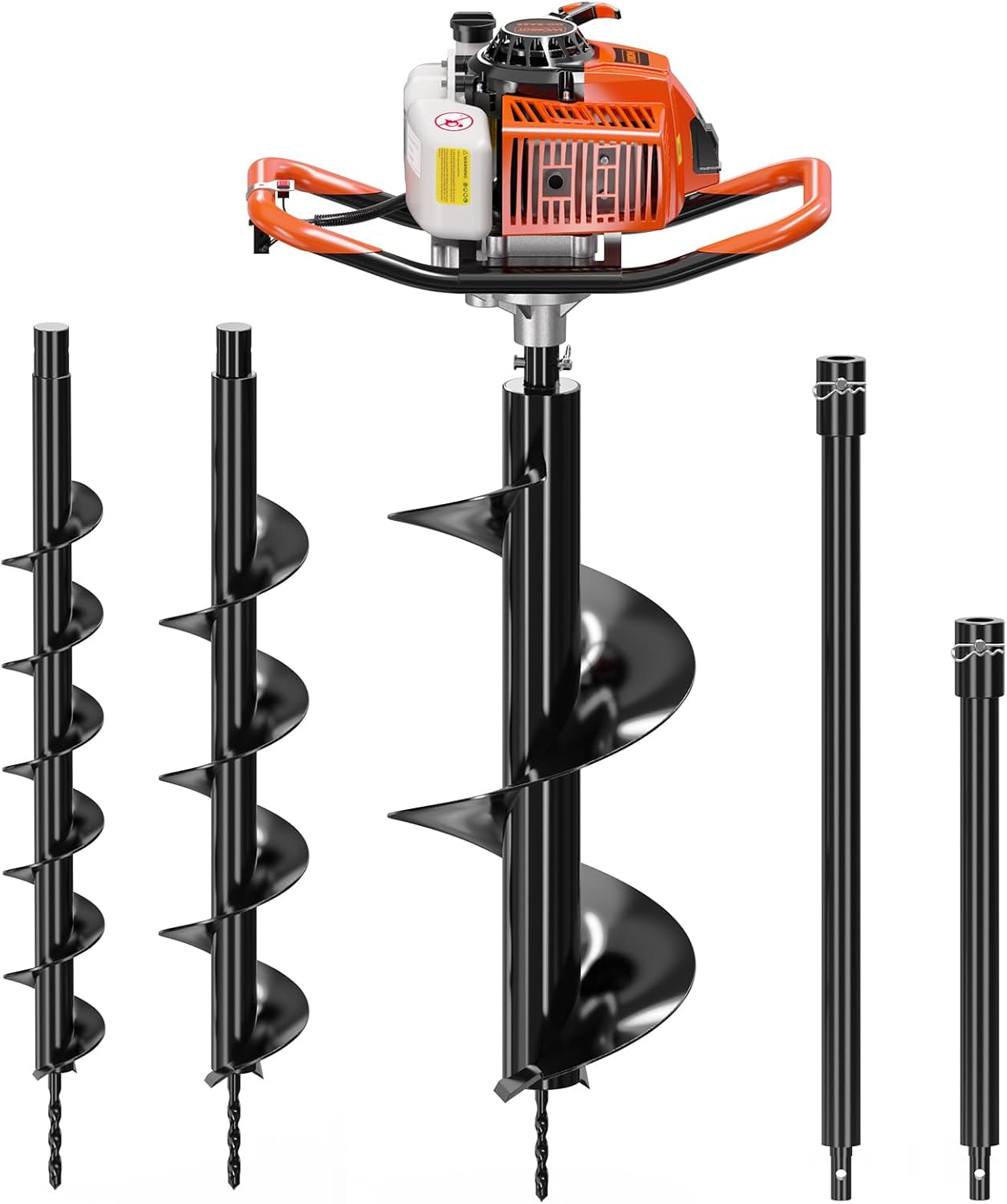
| Engine | 72CC 2-cycle Xtreme Engine |
|---|---|
| Fuel ratio | 50:1 gasoline to oil |
| Fuel tank capacity | 1.4L |
| Included bits | 4", 6", 12" auger bits |
| Extensions | 20" and 30" rods |
The WORKIT 72CC post hole digger is a gasoline-powered earth auger built for heavy-duty residential and light commercial work. It comes with 4, 6 and 12 inch auger bits plus 20 and 30 inch extension rods so you can drill a variety of hole diameters and reach deeper depths without multiple machines. The Xtreme 72cc two-cycle engine and OptiSpark ignition aim to make starting reliable and deliver the torque needed to break through compacted soil, while the reinforced body and powder-coated alloy-steel bits improve durability and corrosion resistance for regular outdoor use. Ergonomic anti-vibration handles and a conveniently placed emergency stop enhance operator comfort and safety during extended jobs. Practical additions such as a premix jug, spare spark plug, and basic assembly tools mean you can get started quickly. Downsides are the inherent noise, emissions, and maintenance needs of a 2-cycle gas engine, and the unit is heavier and bulkier than battery or manual alternatives, which affects storage and transport.
Best for: Gardeners and property owners who need a robust, time-saving powered auger for regular fence posts, small tree plantings, or utility holes and who prioritize consistent digging performance over low-noise or emission-free operation.
Less Ideal for: Those with only occasional light-use needs, strict noise or emissions restrictions, or who prefer lightweight, cordless equipment for small yards.
- Powerful 72cc two-cycle engine suited for drilling through compacted soil and frequent use
- Includes three auger bit sizes and two extension rods for flexible hole diameters and depths
- Reinforced body and powder-coated alloy-steel bits for improved durability and corrosion resistance
- OptiSpark ignition and included premix jug and spare spark plug make starting and maintenance easier
- Ergonomic anti-vibration handles and an emergency stop switch improve control and safety
- Two-cycle gas engine requires fuel mixing, regular maintenance, and produces noise and emissions
- Heavier and bulkier than cordless or manual diggers, making transport and storage more demanding
Verdict: Choose the WORKIT 72CC if you want a durable, high-power gas auger kit that handles a wide range of post hole sizes and regular heavy-use jobs.
NEO-TEC 72cc Gas-Powered Post Hole Digger with 6" and 10" Bits plus Extension

| Engine | 72CC 2-stroke |
|---|---|
| Included bits | 6" and 10" auger bits |
| Extension | 8" extension rod |
| Use cases | Earth auger and ice auger |
The NEO-TEC 72cc gas post hole digger is built for heavy-duty hole digging where power and speed matter. Its 72cc two-stroke engine delivers strong low-end torque to punch through compacted soils, hardpan clay, roots, and frozen ground, making it suitable for fence posts, deck footings, and tree planting. The kit includes both a 6" and 10" auger bit plus an 8" extension so you can switch between planting-sized holes and standard post holes without buying separate tools. Anti-vibration handles, a side-mounted throttle with safety lock, and a translucent fuel tank improve control and run-time awareness during longer jobs. Because it is gas powered it offers mobility on large properties and can double as an ice auger in winter. Important limitations are the 2-stroke fuel mix requirement and the lack of CARB compliance, which rules it out for use in California. Expect typical gas-engine maintenance such as mixing oil, spark plug checks, and seasonal tuning if you want reliable long-term performance.
Best for: Buyers who need a powerful, portable earth auger for frequent heavy digging on farms, ranches, or large properties and who prioritize torque and job speed over quiet operation.
Less Ideal for: Urban homeowners with small yards who prefer low-maintenance electric or manual tools and anyone who needs equipment that meets California emissions rules.
- 72cc two-stroke engine provides strong low-end torque for compacted soil and frozen ground
- Comes with 6" and 10" auger bits plus an 8" extension for versatile hole sizes and depths
- Anti-vibration handles and side-mounted throttle with safety lock improve comfort and control
- Dual-purpose design works as both an earth auger and an ice auger for year-round use
- Requires 2-stroke gas/oil mix and regular engine maintenance
- Not CARB compliant so it cannot be used or sold in California
Verdict: Choose this unit when you need a high-torque, gas-powered auger that handles tough soils and doubles as an ice auger for year-round heavy-duty digging.
Nohovu 58" Heavy-Duty Post Hole Digger with Fiberglass Handle and Carbon Steel Blades

| Material Type | Fiberglass, High Carbon Steel |
|---|---|
| Handle Material | Fiberglass |
| Blade Material | Carbon Steel |
| Grip Type | Ergonomic |
The Nohovu 58-inch post hole digger is a straightforward, manual tool built for repeated digging tasks like fence post holes, planting, and installing mailboxes. Its curved, high-carbon steel blades are sharpened to cut into hard or clay soils, and they bolt to the head with four screws for a secure connection. Thickened fiberglass handles add strength and reduce breakage risk while the ergonomic non-slip grips improve control and comfort during extended use. At 58 inches the handles let you dig with less bending, which helps protect the lower back on heavier jobs. This model is best for users who prefer a durable hand tool rather than powered equipment. Expect reliable performance in compacted soils, but digging in large rocky ground or very dense subsoil will still require extra effort or a powered auger. The build emphasizes durability and serviceability, so worn blades can be maintained or replaced without replacing the whole tool.
Best for: Gardeners and homeowners who want a dependable, no-frills hand tool for regular fence, planting, and mailbox holes and who prioritize durability and low maintenance over powered alternatives.
Less Ideal for: Users who need to dig many deep or large-diameter holes in rocky ground or who prefer faster, less physical methods should consider a powered auger or hire equipment.
- High-carbon steel curved blades are sharp and effective at cutting into compacted and clay soils
- Thickened fiberglass handles offer strong impact resistance and reduced risk of breakage
- Four-screw reinforced head connection improves durability and keeps the blades securely attached
- Ergonomic non-slip grips increase comfort and control during extended digging
- 58-inch length reduces bending and lowers strain on the back during use
- Manual operation requires significant physical effort in very rocky or heavy soils
- Heavier weight may be tiring for some users when used for extended periods
Verdict: A rugged, maintenance-friendly manual digger that delivers effective performance for common fence and planting holes while minimizing breakage risk.
DAKEPOLE Heavy-Duty Post Hole Digger with 55" Metal Handle and Dual Sharp Blades

| Material Type | Metal |
|---|---|
| Blade Material | Alloy Steel |
| Handle Material | Metal |
| Grip Type | Contoured |
| Item Weight | 3.55 kg |
This post hole digger is a simple, sturdy tool aimed at loosening soil, opening planting holes, removing roots, and pulling tough weeds without power equipment. Its opposing pre-sharpened alloy-steel blades cut into compacted soil and slice roots as you drive the halves together, while the long 55-inch metal handle gives leverage and reduces bending for longer sessions. The all-metal construction and reinforced connection minimize wobble in firm ground and the contoured grip helps control the tool during heavy use. Because it is detachable and has a hang hole, storage is straightforward in a shed or garage. The main limitations are its all-metal handle, which transmits vibration and can feel heavier than fiberglass, and the fixed blade width that may require extra effort in very rocky ground. For small to medium garden tasks it replaces several single-purpose tools and performs reliably when used with proper safety precautions.
Best for: Buyers who need a durable, no-frills digging tool for regular garden tasks and prioritize a low-cost, long-lasting implement over lightweight materials.
Less Ideal for: Gardeners who need ultra-light tools for frequent long-duration use or who work primarily in very rocky conditions should consider lighter or specialized alternatives.
- Dual pre-sharpened alloy-steel blades that cut roots and dig clean plugs
- Long 55-inch handle provides leverage and reduces bending during use
- All-metal, reinforced construction for a no-wobble feel in firm soil
- Detachable design with hang hole for compact storage
- Metal handle can be heavier and transmit more vibration compared with fiberglass alternatives
- Blade width is fixed and may be less effective in very rocky or root-dense soil
Verdict: A tough, budget-friendly all-metal post hole digger that delivers reliable digging and root-cutting performance for typical home garden jobs.
Wild Badger Power 40V Cordless Electric Earth Auger Post Hole Digger Kit

| Motor power | 1,600W brushless |
|---|---|
| Torque | Up to 66 ft-lb |
| Auger bit | 8-inch by 31-inch cast-steel |
| Battery | 40V 4.0Ah lithium-ion (included) |
| Warranty | 3-year limited |
The Wild Badger 40V cordless earth auger is a compact, cordless post-hole digger kit built for residential fence, mailbox and planting work. It uses a 1,600W brushless motor delivering up to 66 ft-lb of torque and comes with an 8-inch by 31-inch cast-steel auger bit, a 40V 4.0Ah lithium battery and a fast charger, so you can dig multiple 8-inch holes on a single charge depending on soil conditions. Two-hand ergonomic controls, high and low speeds, reverse and an anti-kickback feature make it straightforward to operate and free a bound bit if it stalls. The cordless design removes fuel mixing and extension cords, and the brushless motor promises longer life and less maintenance than brushed alternatives. Limitations are typical for cordless augers: it is meant for loose-to-moderate soil and will struggle with large rocks, heavy clay, frozen ground or concrete. The unit is fairly heavy for handheld use, so longer jobs may be tiring despite the ergonomic grips. Overall it is a reliable, low-maintenance choice for homeowners and landscapers needing frequent post holes in suitable ground.
Best for: Buyers who prioritize a durable, low-maintenance tool for regular post and planting holes in yard or garden sites and who prefer cordless convenience over gas or corded machines.
Less Ideal for: People who need to dig in rock-filled, heavy clay, frozen ground or concrete, or those who expect to do very long continuous digging without breaks.
- Brushless 1,600W motor gives strong torque and lower maintenance than brushed motors
- Includes 40V 4.0Ah battery and fast charger for cordless, ready-to-use operation
- Cast-steel 8" x 31" auger bit produces consistent holes for posts and planting
- Two-speed control plus reverse and anti-kickback improve control and safety
- Not suitable for rocky, frozen, or concrete surfaces
- Relatively heavy handheld weight can cause fatigue during extended use
Verdict: A dependable cordless auger kit that delivers strong brushless power and practical controls for routine post and planting holes in loose to moderate soil.
XtremepowerUS 1500W Electric Post Hole Digger with 6" Auger Bit

| Rated Watt | 1500W |
|---|---|
| Max Torque | 90ft/lb |
| Horsepower | 1.6HP |
| No Load Speed | 200RPM |
| Auger Bit Diameter | 6" |
The XtremepowerUS electric post hole digger is a one-person powerhead kit built for digging consistent holes for fence posts, planting trees, and other yard projects. It pairs a 1500W motor rated at roughly 90 ft-lb of torque with a single 6-inch manganese steel auger that is meant to reach about 28 inches deep, letting you bore holes faster and with less physical strain than manual digging. The unit includes anti-vibration, anti-slip handles and a safety lock on the trigger to reduce accidental starts, which helps during repetitive work. Its spiral two-flute bit is designed to cut and eject soil effectively and the metal construction is treated to resist rust. Limitations are that it is an electric powerhead so it needs mains power and is best for moderate holes rather than heavy industrial use, and only one auger bit is included by default so wider or deeper holes require buying additional bits or extensions. For homeowners and landscapers wanting quicker, more consistent holes, it delivers solid, practical performance.
Best for: Buyers who want a faster, less physical way to dig consistent post or planting holes around the yard and who prioritize safety features and proven performance when choosing tools.
Less Ideal for: Users who need fully cordless mobility for remote jobs or who regularly need a wide range of bit diameters and depths without buying extras.
- Powerful 1500W motor delivering up to 90 ft-lb torque for efficient digging
- Includes a durable 6-inch manganese steel auger bit that reaches about 28 inches deep
- Anti-vibration, anti-slip handles and a safety lock reduce user fatigue and accidental engagement
- Spiral two-flute design helps cut soil cleanly and eject spoil while digging
- Requires mains power so not suitable for remote sites without an outlet
- Only the 6-inch auger bit is included, so different hole sizes need separate purchases
Verdict: A powerful, safety-minded electric post hole digger that speeds up fence and planting work for homeowners and landscapers who can use mains power.
VEVOR 43CC Gas-Powered Post Hole Digger with 8" Auger

| Maximum Power | 1250 watts |
|---|---|
| Maximum Rotational Speed | 9350 rpm |
| Drill Type | Earth Drill |
| Included Components | 8" Auger, Oil Mixing Bottle, Spark Plug, Tool Kit |
| Material Type | Aluminum |
The VEVOR 43CC post hole digger is a petrol-powered auger built to speed up fence posts, planting, and small farm digging tasks. It pairs a 43cc engine and ball-bearing gearbox with a 30-inch alloy steel auger so you can drill deeper holes without stooping. Typical use is straightforward: fill the 1.2L fuel tank with the recommended gas-oil mix, prime and pull the thicker 1.2m cord, then guide the unit by its foam-wrapped handles while the auger bores into soil. Notable features include a shock-absorbing handle, emergency stop switch on the grip, and a corrosion-resistant powder-coated drill bit. Practical benefits are faster hole completion versus manual digging and fewer interruptions thanks to the large fuel tank and included basic tool kit and spare spark plug. Important limitations are that it is a gas engine tool so it requires fuel mixing, periodic maintenance, and suitable outdoor ventilation; it will also be heavier and louder than electric alternatives and may struggle in extremely rocky ground. For routine post and planting jobs in typical garden and small-acreage soils it delivers solid, reliable performance.
Best for: Buyers who prioritize reliable, gas-powered digging for routine fence posts, planting, or small farm work and want a turnkey tool that handles common garden soils with minimal fuss.
Less Ideal for: People needing a low-noise, zero-emission tool for confined or city yards or those who prefer electric convenience and minimal maintenance.
- Powerful 43cc engine with ball-bearing gearbox for steady drilling in compact and loamy soils
- Includes 8" alloy steel auger (30-inch length) that allows deeper holes without bending
- 1.2L fuel tank and longer 1.2m pull cord reduce interruptions and make starting easier
- Safety and comfort features such as an emergency stop switch and foam anti-vibration handle
- Ships with a basic tool kit, spare spark plug, and oil mixing bottle for first-use readiness
- Gas engine requires fuel-oil mixing and routine maintenance
- Heavier and louder than electric or manual options, and not ideal for indoor or low-noise needs
Verdict: A robust gas-powered auger that reliably speeds up post and planting work for gardeners and small-acreage owners who want proven engine power and ready-to-use accessories.
Choosing the Right Post Hole Digger: Key Factors to Consider
Digging Efficiency and Soil Type
Different soils change how quickly and easily you can sink a hole. Loose, sandy soils require less leverage and can be cleared quickly, while heavy clay and compacted loam demand sharper edges and more user force. A digger that bites cleanly and ejects loosened soil with each lift reduces repetitive thrusting, so you make progress with fewer lifts and less fatigue.
Account for roots, gravel, and pockets of rock. Some hand diggers have narrower blades for initial penetration and wider scoops for removal; others are all-purpose. Choosing a design matched to the dominant soil on your site will directly affect the time and energy required for each hole.
Handle Design and User Comfort
Handle length, grip shape, and leverage determine how much force you can apply without overtaxing your back and shoulders. Longer handles give more mechanical advantage for breaking into dense soil, while shorter handles offer better control in tight spots. Comfortable non-slip grips reduce hand strain, especially when you are working damp or cold outside.
Also consider handle attachment: welded or bolted connections change the tool's durability. A well-made socket or ferrule where the handle meets the blade minimizes wobble and the chance of loosening with repeated use.
Blade Construction and Edge Durability
Blade material and thickness affect both initial digging capability and how long the edge stays serviceable. Thicker, forged or heat-treated steel holds an edge longer when encountering roots and small stones. Thin stamped blades may deform or chip under similar conditions. Reinforcement along stress points where the blade meets the handle can prevent cracking when levering out frozen or compacted soil.
Maintaining a sharp, clean edge helps the digger penetrate easier and reduces jamming. Consider whether the blade is simple to sharpen and whether its shape suits the hole diameter you need for standard fence and deck posts.
Corrosion Protection and Finish
Exposure to damp soil, fertilizers, and seasonal storage creates corrosion risks. Protective finishes such as powder coating, plating, or quality paint slow rust formation and extend service life. Stainless or higher-grade alloyed steels offer better inherent corrosion resistance but may come at added weight.
Regular cleaning and light oiling after use will prolong life, but starting with a tool that has a robust finish reduces the maintenance burden. Pay attention to seams, bolts, and joints where coatings are prone to wear.
Portability and Storage
If you move between sites or carry a digger in a truck or trailer, weight and overall length matter. Lighter tools are easier to transport but sometimes sacrifice durability. Some designs feature removable or two-piece handles that make storage and shipping simpler while keeping useful leverage when assembled.
Consider how and where you will store the digger. Tools that resist moisture and have compact profiles are easier to tuck into a shed or lean against a wall without taking much room.
Maintenance and Repairability
Expect occasional sharpening, bolt tightening, and touch-up of protective coatings. Designs that use common hardware for fasteners are easier to repair in the field. Welded joints reduce the need for routine tightening but can be harder to fix if a failure occurs. Replaceable blades or handles extend service life because you can swap a worn component rather than replacing the whole tool.
Consider availability of spare parts and the simplicity of routine maintenance tasks when selecting a digger for regular use.
Matching Digger Diameter to Post Size
Choose a digger with a blade width that closely matches the post diameter and any recommended concrete sleeve. A blade that is too narrow makes backfilling and tamping harder because the hole must be widened later. A blade that is too wide removes excess soil and increases the amount of backfill and tamping needed.
For common fence posts, a medium-width scoop balances penetration and hole volume. For larger structural posts, a wider or deeper scoop can save time by cutting a hole that needs minimal edge trimming.
- Narrow blades: easier to penetrate compact soils but require more finishing
- Wider scoops: remove more soil per lift, useful for larger posts
- Match hole width to post plus any concrete collar needs
Techniques to Minimize Effort and Improve Hole Quality
Use a steady rhythm: sink the blades with deliberate pressure, twist slightly, then lift and eject. Avoid jerky motions that waste energy. In clay soils, work when the soil is slightly moist rather than bone dry to reduce dust and increase bite.
If you hit roots or gravel, break them free with controlled levering and remove small obstacles by hand before continuing. For very deep holes, pull soil out frequently rather than forcing a large mass up in one lift to maintain consistent depth and avoid jamming.
- Pre-soak hard ground if possible to soften compacted layers
- Clean blades after each lift to keep cuts efficient
- Take short breaks to avoid fatigue and maintain form
Using a Post Hole Digger Safely
Protective gear reduces injury risk. Wear sturdy gloves to prevent blisters and a long-sleeve shirt and eye protection when digging in rocky soils. Keep a clear stance with feet shoulder-width apart and use leg and core strength rather than relying only on the back.
Be mindful of buried utilities. Before any deep digging on a property, follow local marking procedures to avoid contact with utility lines. When levering near obstacles, ensure the blade path is clear so the tool does not kick or bind unpredictably.
- Maintain a stable stance and avoid overreaching
- Keep hands away from the blade edges when clearing soil
- Check for utilities before you dig
When to Consider Alternatives to Manual Diggers
For long runs of closely spaced posts or very deep holes, a powered earth auger or drill attachment can save hours of manual labor. Manual post hole diggers remain preferable for single posts, tight access, or where power availability is limited.
If you frequently encounter large rocks or tree roots, consider combining hand digging with small mechanical assistance to reduce wear on the tool and stress on your body. The decision depends on job scale, terrain, and how often you will repeat the task.
- Manual digger best for occasional jobs and tight spaces
- Mechanical help can be worth it for many holes or very tough ground
- Combine approaches: start with hand digger, use powered help for final shaping
Storing and Caring for Your Digger Between Jobs
After each use, knock loose soil from the blades and wipe the metal with an oily rag to shed moisture. Store the tool in a dry spot and, if possible, hang it to keep the blade off the ground. Address chips or bends early to prevent small issues from becoming failures.
For longer-term care, touch up paint chips with rust-inhibiting coatings and replace worn handles or grips when they begin to splinter. These small actions prolong service life and keep the digger performing smoothly when you need it.
- Clean and oil metal parts after use
- Store dry and hang to prevent blade contact with damp surfaces
- Repair or replace worn handles and grips promptly
How We Chose the Best Post Hole Digger
We screened tools for real-world digging performance and dependability in typical yard and small-farm conditions. Primary evaluation criteria included digging efficiency in different soils, handle ergonomics and leverage, build materials and corrosion resistance, and ease of maintenance. We favored designs that let users reach consistent hole depths, resist bending or warping under side loads, and maintain edge geometry for clean soil removal. Safety features such as grips, locking handles, and predictable bite were counted. We excluded specialty earth augers and motorized drills because this roundup focuses on hand-operated or manual-assist post hole diggers used where power access is limited. Our final list reflects tools that balance digging speed, operator comfort, and long-term durability for homeowners and small acreage users. Reports from experienced gardeners and installers about repeated use, blade integrity, and handle wear informed inclusion. Spec sheets and material descriptions were checked to verify steel grades and protective coatings where available. Items that failed to offer adequate warranty information or that relied solely on thin stamped steel without reinforcement were not included.
FAQ
What is the proper depth for post holes?
Depth depends on post function and local frost line. Generally, a third of the post length should be below grade for fences, and deeper for load-bearing deck posts. Check local codes for frost depth and adjust hole depth accordingly.
Can a hand post hole digger handle rocky soil?
Hand diggers can work in rocky soil but may require more effort and risk blade damage. Use controlled levering, clear rocks by hand when possible, and choose a digger with reinforced blades if you expect frequent rock encounters.
How do I keep a post hole digger from getting stuck?
Prevent jamming by removing soil in smaller lifts and cleaning the blade before each re-entry. Wetting very dry soil slightly can reduce suction, and easing the blade with a slight twisting motion helps free it when packed soil or roots bind the scoop.
Should I sharpen the blades on a post hole digger?
Occasional sharpening improves penetration, especially in compacted soils and soils with roots. Use a file or grinder carefully to maintain the blade shape and avoid removing too much material, which could weaken the blade edge.
Are two-piece handles worth it?
Two-piece handles improve portability and storage and can still provide adequate leverage when well-made. For heavy frequent use, a single-piece handle tends to be stiffer and more durable, while two-piece designs are best when transport or compact storage matters.
Final Verdict
Choose a post hole digger that matches your soil type and the frequency of use you expect. Prioritize digging efficiency and blade construction for hard or root-filled soils, and focus on handle ergonomics and corrosion resistance if you will use the tool often or store it outdoors. Remember the tradeoff between portability and durability when considering handle design. With the right balance of these factors, you can reduce fatigue, finish holes faster, and achieve consistent results for fences, decks, and other outdoor posts.
