

Note: This article contains affiliate links. If you click on these links and make a purchase, I may earn a small commission at no extra cost to you. This helps support my research and content. Read my full affiliate disclosure here.
Choosing the right potting mix for cacti matters more than container style or fertilizer. Cacti need a substrate that sheds excess water quickly, resists compaction, and still supplies modest nutrients so roots can breathe and establish. The wrong soil leads to slow growth, waterlogged roots, and frequent repotting. This guide covers seven shortlisted potting mixes for cacti suited to indoor and container gardens. We focus on how each blend handles drainage, water retention, and root support so you can pick a mix matched to your watering routine and pot choice. Read on for the evaluation criteria used and practical notes to help you pick the best mix for your plants.
Top Picks at a Glance
| Best Overall The best all-around choice for most situations | Miracle-Gro Cactus, Palm & Citrus Potting Mix, 8 qt. |  |
| Best Quality Built to a higher standard if you want something more solid | Molly's Succulent Potting Mix — Cactus & Bonsai Gritty Blend, 5 Dry Quarts |  |
| Best Value The sweet spot between price and what you get | Miracle-Gro Succulent Potting Mix, 4 qt. |  |
| Best Budget The cheapest option that still gets the job done reliably | Doter Christmas Cactus Potting Soil Mix, 1 qt |  |
| Highest Rated A top-rated pick with lots of positive feedback | Happy Trees Premium Cactus & Succulent Potting Soil Mix, 8 qt |  |
| Most Popular A crowd favorite that many people choose with confidence | Miracle-Gro Indoor Potting Mix for Cactus & Succulent, 8 qt. (2-Pack) |  |
| Best Seller A high-volume bestseller chosen again and again | Back to the Roots Succulent & Cacti Mix, 12 Quart (100% Organic) |  |
Miracle-Gro Cactus, Palm & Citrus Potting Mix, 8 qt.
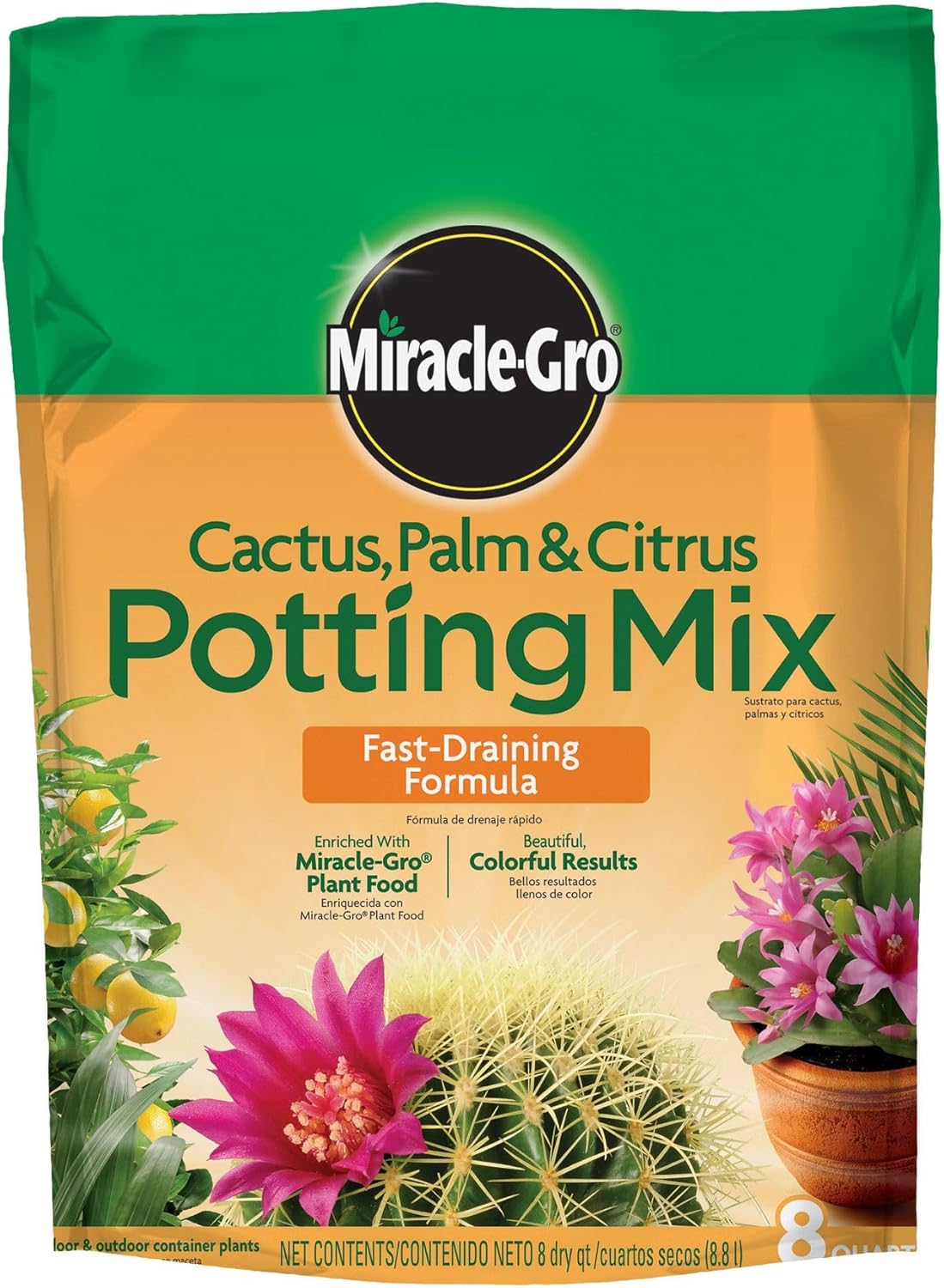
| Brand Name | Miracle-Gro |
|---|---|
| Volume | 8 quarts |
| Unit Count | 1 Count |
This 8-quart Miracle-Gro potting mix is designed for container-grown cacti, palms, and citrus and combines peat moss, sand, perlite, and forest products for faster drainage and reduced compaction. It arrives ready to use and is enriched with Miracle-Gro plant food so newly potted citrus get an initial nutrient boost without immediate fertilizing. Typical use is straightforward: choose a pot with drainage, fill about one third, set the root ball and top up, then water and allow to drain. The formula helps soil dry between waterings, which is important for citrus root health in containers, and one bag is enough for two 8-inch pots. Limitations are the small volume for larger trees and the presence of peat moss if you prefer peat-free mixes; heavier or older citrus will need larger volumes and eventual repotting. For growers wanting a quick, reliable container medium that balances moisture retention with drainage, this mix performs as expected.
Best for: Growers who repot or maintain container citrus and want a ready-to-use mix that balances drainage and initial feeding for healthier root development.
Less Ideal for: Gardeners potting mature or large citrus specimens that need large volumes of soil or those seeking a peat-free or custom mineral-heavy citrus bonsai substrate.
- Fast-draining blend reduces risk of waterlogged roots for container citrus
- Pre-enriched with plant food to give newly potted plants an initial nutrient boost
- Contains perlite and sand to resist compaction and maintain aeration
- Formulated for indoor or outdoor containers so it works across sites
- 8-quart bag is small for larger or multiple citrus containers
- Contains peat moss which some buyers avoid for sustainability reasons
Verdict: A convenient, fast-draining, plant-food–enriched container mix that makes repotting small to medium citrus trees quick and reliable.
Molly's Succulent Potting Mix — Cactus & Bonsai Gritty Blend, 5 Dry Quarts

| Unit Count | 1 Count |
|---|---|
| Item Highlight | Chunky Mix for Desert Plants; includes Akadama, Pumice, Hyuga & Lava Rock |
| Style Name | Succulents & Cacti |
| Volume | 5.5 liters |
Molly's Succulent Potting Mix is a chunky, soilless blend designed to keep container cacti and succulents dry at the root zone while still retaining a bit of moisture for steady growth. It combines akadama, pumice, Hyuga, and lava rock with orchid bark and a mycorrhizal carrier to create a free-draining, non-compacting medium you can use straight from the bag for repotting, top-ups, or bonsai work. Practical benefits include reduced risk of overwatering, less frequent repotting because the mix holds structure longer than peat-based soils, and cleaner handling compared with garden soil. The included mycorrhizae can help recently repotted plants establish roots faster. Limits to be aware of are that this is a soilless mineral-heavy mix so it provides minimal inherent nutrients and will require a feeding plan for long-term container growth, and the gritty components make it heavier than pure bark mixes for large shipments or manual lifting. Use it when you want consistent drainage and structural stability for desert plants in pots.
Best for: Buyers who prioritize reliable drainage and long-term pot structure for cacti, succulents, or bonsai and want a ready-to-use, performance-focused mix for container plants.
Less Ideal for: People who prefer an all-in-one fertilized potting soil or who need an ultra-lightweight mix for large-volume transport should consider alternatives.
- Designed for fast drainage to lower overwatering risk
- Chunky, non-compacting particle mix that preserves aeration and structure
- Includes mycorrhizal carrier to support root establishment
- Packaged resealable and recyclable to keep the mix fresh between uses
- Contains little to no inherent fertilizer so regular feeding is required
- Mineral-heavy blend can be heavier to lift than bark-only mixes
Verdict: Choose this gritty, soilless mix when you need fast, reliable drainage and long-lasting structure for container cacti and succulents.
Miracle-Gro Succulent Potting Mix, 4 qt.

| Brand Name | Miracle-Gro |
|---|---|
| Unit Count | 128 Ounce |
| Volume | 4 quarts |
| Style Name | Succulent |
This 4-quart Miracle-Gro Succulent Potting Mix is formulated for indoor succulent and cactus container gardening and is intended to make repotting simple for hobbyists and casual plant owners. The blend of sphagnum peat moss, processed forest products, and built-in Miracle-Gro plant food gives seedlings and established succulents a loose, moisture-moderating medium that drains more quickly than standard potting soil. Use it to fill an 8-inch pot (one bag typically fills that size), position your plant with a loosened root ball, and water lightly so excess drains from the pot. Notable features include the pre-mixed fertilizer for initial nutrition and a composition that reduces compaction compared with all-purpose mixes. The practical benefits are easier watering management for shallow-rooted succulents and less frequent repotting thanks to recommended two-year refreshes. Limitations are the small bag size for larger collections and that it is peat-based, which some gardeners avoid for sustainability reasons; very arid growers may still prefer coarser, mineral-heavy mixes for maximum drainage.
Best for: Buyers who want an easy, ready-to-use potting mix tailored to indoor succulents and prefer a balanced product that simplifies repotting and early care.
Less Ideal for: Collectors with many large pots or growers who require a coarser, grit-heavy or completely peat-free medium should look for larger or mineral-focused mixes.
- Formulated specifically for succulents and cacti to improve drainage compared with general potting soils
- Includes Miracle-Gro plant food for initial nutrition after potting
- Loose peat-based blend resists compaction and eases root placement when repotting
- One 4 qt. bag fills an 8-inch container, convenient for single-plant repots
- Small 4 qt. volume is insufficient for multiple or larger pots
- Peat-based composition may be undesirable for gardeners seeking peat-free or more mineral-heavy mixes
Verdict: A convenient, plant-food–boosted potting mix that makes repotting and establishing indoor succulents quick and low-effort.
Doter Christmas Cactus Potting Soil Mix, 1 qt

| Brand | Doter |
|---|---|
| Unit Count | 32 Ounce |
| Item Type Name | Garden soil |
| Volume | 1 quarts |
This 1 qt Doter potting mix is tailored for Christmas cactus and similar indoor succulents, combining coconut coir, perlite, bark, and organic amendments to balance water retention with airflow. Gardeners typically use it for repotting or topping up small containers and for starting potted Christmas cactus that need slightly more moisture-holding capacity than gritty cactus mixes. Notable features include chunky perlite and pine bark for improved drainage, horticultural charcoal for freshness, and added organic nutrients and worm castings to support root development and blooming. In practice the mix holds enough moisture to prevent rapid drying while still letting excess water pass through, which helps prevent root rot in periodically watered indoor plants. The 1 qt size is convenient for small pots and trial repots but means you may need multiple bags for several plants. This is a straightforward, plant-focused mix that saves time compared with blending your own components, though it is sold in a small volume so larger collections will want to buy multiple units or mix with coarser additives for extra grit.
Best for: Buyers who want an inexpensive, ready-made soil that supports healthy flowering Christmas cactus and who have a small number of pots to maintain.
Less Ideal for: Large-scale growers, collectors with many plants, or gardeners who prefer to custom-blend exact component ratios should look for larger or more specialized mixes.
- Formulated for Christmas cactus and similar indoor succulents, so plant needs are considered
- Contains perlite and bark for improved drainage and aeration
- Includes organic amendments like worm castings and charcoal to support root health and reduce odors
- Ready-to-use mix that saves time compared with assembling individual components
- Small 1 qt volume means frequent purchases for multiple plants or full repots
- No detailed ingredient percentages or pH provided for precision mixing
Verdict: A practical, ready-to-use small-batch potting mix that balances moisture retention and drainage for budget-minded Christmas cactus owners.
Happy Trees Premium Cactus & Succulent Potting Soil Mix, 8 qt

| Brand Name | Happy Trees Hemp |
|---|---|
| Item Highlight | Professional Mix for Agaves, Aloes, Echeverias, Euphorbias and cacti |
| Volume | 8 quarts |
This is a purpose-built potting mix for succulents and cacti that prioritizes drainage and root aeration. The blend uses pumice, lava rock, coarse sand, fir bark fines, and biochar to create a coarse, mineral-based texture that keeps water moving away from roots while holding minimal moisture for hydration. It is ready to use straight from the bag for repotting indoor succulents or filling outdoor containers and rock gardens, and it is peat-free and organic-friendly for growers concerned about media composition. Practical benefits include reduced risk of root rot, improved oxygen to the root zone, and a stable structure that supports both shallow and deeper-rooted desert plants. The main limitations are the small 8 quart volume, which makes it better suited for individual pots or small projects rather than large beds, and the coarse texture may require mixing with finer medium if you prefer a softer feel for tiny seedlings.
Best for: Buyers who want a dependable, grower-formulated soil that reduces watering risk and supports healthy roots in individual pots or small succulent collections.
Less Ideal for: Gardeners building large outdoor beds or those needing a fine-textured seed starting mix should consider bulk or specialty blends instead.
- Formulated for fast drainage to prevent root rot in cacti and succulents
- Contains pumice, lava rock, coarse sand and biochar for good aeration and stable structure
- Ready-to-use out of the bag for repotting and container projects
- Peat-free and organic-friendly composition
- Small 8 quart volume may require multiple bags for larger collections or big pots
- Coarse texture may be too abrasive for very small seedlings without blending
Verdict: Choose this mix when you need a reliable, fast-draining soil that keeps succulent roots healthy during repotting and container growing.
Miracle-Gro Indoor Potting Mix for Cactus & Succulent, 8 qt. (2-Pack)

| Item Highlight | Fast-Draining Cactus and Succulent Potting Mix with Plant Food |
|---|---|
| Number of Packs | 2 |
| Included Components | 2 bags |
| Item Type Name | Soil |
| Ingredients | Sphagnum Peat Moss, Sand, Perlite |
This two-pack of Miracle-Gro Indoor Potting Mix is designed for repotting indoor cacti, succulents and other desert-loving container plants like Thanksgiving cactus. The mix combines sphagnum peat moss, sand, perlite and other forest products to promote fast drainage and reduce water retention that can cause root rot. Each bag is pre-mixed and ready to use, so you simply fill a pot with drainage, add the plant and firm the soil around the root ball. It also contains a measured amount of plant food to support early growth so you may not need extra fertilizer right away. Practical benefits include easier watering schedules for moisture-sensitive plants and a light, airy texture that helps roots establish after repotting. Limitations are that the bags are small for larger specimens and the formula is focused on drainage rather than long-term nutrient reserve, so plan to feed or repot periodically for established or heavy-feeding plants.
Best for: Buyers who prioritize protecting moisture-sensitive indoor succulents and want a trusted, ready-to-use mix that reduces the chance of overwatering issues when repotting.
Less Ideal for: Gardeners who prefer to custom-blend potting mixes for long-term nutrient delivery or who need large-volume soil for many or large containers.
- Formulated for cacti and succulents with fast-draining components like sand and perlite
- Pre-mixed and ready to use so no additional amendments are required at potting
- Includes plant food to give new repots an initial nutrient boost
- Light texture helps roots establish and reduces risk of overwatering-related rot
- 8 qt. bag size is limited for repotting larger plants or multiple sizable pots
Verdict: A convenient, fast-draining potting mix that makes repotting Thanksgiving cactus and other succulents safer and simpler.
Back to the Roots Succulent & Cacti Mix, 12 Quart (100% Organic)

| Brand | Back to the Roots |
|---|---|
| Item Type | Potting Mix |
| Style Name | Succulent & Cacti Mix |
| Volume | 12 quarts |
This 12-quart Back to the Roots Succulent & Cacti Mix is a purpose-made potting soil for potted desert plants that combines aged bark, perlite, and sand to promote fast drainage and airy root zones. In practice it is used as a direct potting medium for repotting or top-dressing indoor and patio succulents and cacti; the coarse components reduce standing moisture so plants are less prone to root rot. The mix is enriched with organic nutrients and includes root-supporting ingredients mentioned by the brand, which can help young plants establish without immediate fertilizer. Its organic formulation and US manufacture make it appealing to buyers who prefer natural inputs. Limitations: for long-term container culture you will likely need to re-fertilize after a few weeks because lightweight mixes release nutrients faster than heavier soils, and particularly large specimens may prefer a coarser custom blend. Also the bagged volume is moderate, so multiple purchases are needed for several pots.
Best for: Buyers who want a low-risk, ready-made potting mix that minimizes overwatering problems and works straight from the bag for indoor or patio succulents and cacti.
Less Ideal for: Growers who want a custom, very coarse cactus blend for large specimen plants or those preferring to control exact mineral ratios should look to specialized professional mixes or DIY recipes.
- Formulated specifically for succulents and cacti with perlite, aged bark, and sand for improved drainage
- Organic nutrient content helps seedlings and newly repotted plants get established
- Lightweight, airy texture reduces risk of waterlogged roots in containers
- Made in the USA with an established brand and clear product focus
- Nutrient levels may decline quickly so follow-up fertilizing is recommended
- 12-quart bag is modest for multiple pots or large plants
Verdict: A dependable, ready-to-use organic mix that reduces watering mistakes and gets potted cacti and succulents off to a strong start.
Choosing the Right Potting Mix for Cacti: Key Factors to Consider
Drainage Speed
How quickly water moves through the mix determines how often you need to water and whether roots sit in moisture. Fast drainage reduces the risk of root rot and fungal problems because excess water leaves the pot before it can saturate the root zone. In a practical sense, look for coarse particles such as grit, pumice, or coarse sand in the top layers of the mix to keep channels open.
Drainage speed also interacts with pot choice and watering habits. Unglazed terracotta pots draw moisture from the mix and can compensate for slower-draining blends, while glazed or plastic pots retain more moisture. Match mix drainage to your container and how often you realistically will water.
Particle Size and Texture
Particle size governs root aeration and structural stability. Cacti prefer a gritty, open texture that resists compaction; fine, peat-heavy soils collapse after a few wet-dry cycles and reduce oxygen availability to roots. Coarse components like pumice, perlite, and coarse sand create pore space and keep the medium light.
Texture also affects repotting frequency. Stable, coarse mixes can be reused or refreshed less often because they do not break down quickly. When choosing a mix, consider whether it contains a dominant coarse fraction rather than being just a small additive to a potting base.
Organic Content and Nutrient Level
Cacti need some nutrients but not the high organic loading that many general potting soils provide. Too much compost or peat holds water and elevates microbial activity, which can harm slow-growing succulent roots. A good cactus mix includes low to moderate organic matter to supply slow-release nutrients while maintaining fast drainage.
For ongoing feeding, gardeners commonly supplement with light liquid fertilizer during the growing season rather than relying on a nutrient-rich base. Consider whether the mix is designed for long-term feeding or expects supplementary fertilization.
Water Retention Balance
Water retention balance is about holding enough moisture for root uptake between waterings without creating a persistently wet environment. Materials such as fine pumice, calcined clay, and coarse coconut coir fragments can offer modest retention while keeping pores open. Avoid mixes that rely on peat or vermiculite for retention if you struggle with overwatering.
Think about your microclimate. In hot, dry rooms a blend with slightly higher retention may reduce stress between waterings. In humid or cooler spaces choose leaner mixes that dry quickly.
pH and Mineral Compatibility
Cacti generally tolerate a neutral to slightly acidic pH, but certain additives like lime or high-ash components can push the mix alkaline. The mineral balance affects nutrient availability, especially for iron and manganese. For plants grown on windowsills or under supplemental light, nutrient uptake can be limited by an inappropriate pH.
When selecting a mix, consider whether you will grow species with specific requirements, such as columnar cacti that prefer slightly different mineral conditions than desert succulents. Testing the mix with a pH meter or watching plant leaf color after repotting can help identify issues early.
Longevity and Stability Over Time
A mix that holds up over multiple seasons reduces repotting and the need to rebuild soil structure. Organic fibers and fine peat break down and compress, while volcanic aggregates and crushed rock remain intact. Stability matters particularly for larger pots and older specimens where disturbance is difficult.
Consider how often you want to refresh the root zone. If you plan to keep plants long-term in the same container, prioritize mixes with a high proportion of inert, long-lasting components.
Compatibility With Pots And Watering Routine
Some mixes pair better with certain pot materials and watering frequencies. For example, a very coarse, fast-draining mix works well in a small pot where you water frequently, while a blend with modest retention suits larger pots and less frequent watering. Unglazed clay pots increase evaporation and usually let you get away with a slightly richer mix.
Evaluate the match between your typical pot, how often you visit your plants, and the mix water behavior to avoid repeated mistakes like under- or over-watering.
Adjusting Mixes For Specific Cactus Types
Not all cacti have identical substrate needs. Desert cacti that store water in stems and ribs usually prefer grittier blends that dry quickly. Mountain or forest cacti, which experience cooler, moister summers, may tolerate a bit more organic matter and slower drying.
You can modify a base cactus mix by adding or removing coarse components. Increase pumice or coarse sand for faster drainage, or add a small portion of composted pine bark for slightly more moisture retention where appropriate.
- Desert species: boost coarse grit and pumice.
- Forest species: allow modest organic content and avoid prolonged saturation.
- Columnar or large-rooted cacti: use stable larger particles to support root mass.
Repotting Tips For Healthy Roots
Repotting is the best time to renew a cactus substrate because old mixes often compact. Let newly potted plants rest in bright shade for a week before watering to let any disturbed roots callus.
When removing an old mix, gently free the roots and trim only visibly dead tissue. Avoid packing the new mix; leave it light around the roots so air can circulate.
- Wait a few days to a week before first watering after repotting.
- Use gloves and tongs for spiny species to reduce damage to both plant and handler.
DIY Cactus Mix Recipes
You can make effective cactus mixes from simple components. A common base is one part coarse pine bark or composted bark, one part coarse horticultural sand, and one part pumice or crushed lava rock. Adjust ratios for climate and pot size.
For a leaner desert-style blend increase the inorganic fraction to two parts pumice or grit to one part bark. For a slightly more moisture-retentive mix, add a small fraction of coconut coir or fine bark, but keep the overall texture open.
- Basic desert mix: 1 part bark, 1 part sand, 1 part pumice.
- Lean grit mix: 1 part bark, 2 parts pumice, 1 part coarse sand.
- Moisture-moderate mix: 1 part bark, 1 part pumice, 1 part sand, 0.25 part coir.
Watering Strategy With Fast-Draining Mixes
Fast-draining mixes let you water more freely between drying cycles but require watching for drought stress. Water deeply and allow the pot to drain fully, then wait until the top inch or two of mix is dry before the next watering for most species.
In winter many cacti enter dormancy and require infrequent or no watering. A well-draining mix reduces winter rot risk because it dries faster even in cooler indoor conditions.
- Water thoroughly until excess runs from drainage holes.
- Check moisture at root depth rather than relying on surface dryness.
How Pot Size Changes Mix Choice
Small pots dry out faster and therefore can use a slightly richer mix. Large pots retain more water and benefit from leaner, coarser substrates to prevent prolonged saturation around the roots.
When up-potting, add more large particle material to maintain aeration in the expanded volume. Avoid simply filling a bigger pot with the same dense mix because moisture dynamics will change.
- Small pots: modest organic content acceptable.
- Large pots: favor higher inorganic fraction and stability.
How We Chose the Best Potting Mix for Cacti
We prioritized editorial filters that matter for potted cacti and succulent culture. First, drainage behavior was a top filter: mixes that demonstrate rapid percolation and resist waterlogging score higher because root rot is the most common problem in cacti culture. Texture and particle size were evaluated next, favoring gritty, open structures that maintain air pockets and prevent compaction over time. Water retention was balanced against drainage; blends that hold minimal, controlled moisture between waterings earn higher marks for most indoor growers. We also assessed organic content and nutrient profile, preferring low to moderate organic matter so cacti get slow-release nutrition without excessive moisture binding. Longevity and stability were included to judge whether a mix keeps structure through seasonal wet-dry cycles. Ease of use and availability for common pot sizes rounded out the criteria. Excluded from the shortlist were mixes formulated primarily for general houseplants, seed starting, or water-loving plants because their water-holding emphasis contradicts cacti needs. The final selection reflects a balance of drainage, stable texture, modest nutrient content, and suitability for container-grown cacti.
FAQ
How often should I water cacti in a fast-draining mix?
It depends on season and pot size. During active growth water when the top 1 to 2 inches are dry. In summer that may be every 1 to 3 weeks; in winter water far less frequently or not at all for dormant plants.
Can I mix my own cactus soil from garden sand and potting soil?
Garden sand often contains fine particles that create compaction. If you use garden sand, sieve out fine silt and mix with coarse pumice or grit. Better results come from coarse horticultural sand or adding volcanic rock for structure.
Is perlite or pumice better for cacti mixes?
Both work but behave differently. Pumice is heavier and more stable over time, which is helpful in outdoor pots or large containers. Perlite is lighter and aids drainage but can float and break down sooner. Choose based on desired longevity and pot stability.
Should I add fertilizer to cactus potting mix?
Yes, but sparingly. Use a low-dose, balanced fertilizer during the active growing season rather than relying on a nutrient-rich base. Frequent light feedings are safer than heavy initial loading, which can increase moisture retention and stimulate weak growth.
How do I know when the mix needs replacing?
Replace or refresh mix when it shows signs of compaction, poor drainage, or reduced plant vigor despite proper care. Typically this happens every 1 to 3 years depending on mix composition and exposure to watering cycles.
Final Verdict
Choose a cactus potting mix by prioritizing drainage and stable texture first, then balance modest nutrient content and retention to suit your climate and watering habits. Lean, gritty mixes reduce rot risk and last longer in pots, while slightly richer blends can work in drier microclimates or small containers. Match the mix to pot size, species, and watering schedule. When in doubt, favor more coarse, inorganic material and plan to supplement nutrients with light seasonal feeding. That approach gives the best chance of vigorous, long-lived cacti without frequent problems from overwatering.
