

Note: This article contains affiliate links. If you click on these links and make a purchase, I may earn a small commission at no extra cost to you. This helps support my research and content. Read my full affiliate disclosure here.
Picking the right potting mix for fruit trees has a bigger effect on growth and fruiting than many gardeners expect. In containers or when establishing young trees, the wrong mix can hold too much water, starve roots of oxygen, or fail to supply steady nutrients through the season. This guide focuses on mixes formulated for fruit trees and explains why the shortlisted options made the cut. We evaluated mixes for drainage behavior, nutrient retention, and structure stability so you can match a mix to your planting situation. Below are the top mixes we shortlisted for fruit trees in containers and for transplanting young orchard specimens into larger pots or beds.
Top Picks at a Glance
| Best Overall The best all-around choice for most situations | Miracle-Gro Potting Mix, 16 qt. (2-Pack) |  |
| Best Quality Built to a higher standard if you want something more solid | FoxFarm Happy Frog Potting Soil — 2 cu ft (Container Garden) with 2 Plant Tags |  |
| Best Value The sweet spot between price and what you get | Duspro Pre-Mixed 4-in-1 Citrus Tree Potting Soil Mix, 6 Quarts |  |
| Best Budget The cheapest option that still gets the job done reliably | Doter Citrus Tree Potting Soil Mix (1 qt) |  |
| Highest Rated A top-rated pick with lots of positive feedback | E.B. Stone Organics Citrus & Palm Mix Potting Soil, 1.5 Cu Ft |  |
| Most Popular A crowd favorite that many people choose with confidence | Miracle-Gro Cactus, Palm & Citrus Potting Mix, 8 qt. |  |
| Best Seller A high-volume bestseller chosen again and again | Back to the Roots 100% Organic Indoor Potting Mix, 6 Quart |  |
Miracle-Gro Potting Mix, 16 qt. (2-Pack)

| Volume | 16 quarts (per bag) |
|---|---|
| Number of Packs | 2 |
| Feeds | Up to 6 months |
| Intended use | Outdoor containers |
| Ingredients | Sphagnum peat moss, peat, perlite, compost, fertilizer |
Miracle-Gro Potting Mix is a lightweight, fast-draining soil blend designed for outdoor containers and planters. It combines peat-based components, perlite and compost with a built-in fertilizer so pots of vegetables, flowers and shrubs get nutrition for up to six months. In practice it is easy to use: fill a pot about one third, set the root ball, top off, and water through until drains. The mix’s good drainage helps prevent root rot in containers and its feed helps reduce the need for frequent fertilizer applications during an establishment season. For multi-year container-grown fruit trees it can serve well for initial potting or repotting to refresh nutrients and improve aeration, but you should repot or topdress annually to avoid compaction and to replenish long-term nutrients. Also, because it is formulated for containers rather than in-ground beds, heavier long-term tree specimens will eventually need a larger volume or a mix amended with more coarser drainage media and slow-release fertilizer tailored for fruit production.
Best for: Gardeners who want an easy, all-purpose container potting mix that provides reliable drainage and up to six months of feeding for outdoor potted plants, including smaller or young fruit trees grown in containers.
Less Ideal for: Growers planning permanent in-ground planting or established large fruit trees that need heavier soil structure and specialized long-term nutrient management.
- Feeds potted plants for up to six months with built-in fertilizer
- Formulated for fast drainage to reduce risk of root rot in containers
- Lightweight peat-perlite-compost blend that is easy to handle and repot
- Suitable for a wide range of outdoor container plants including vegetables and shrubs
- Designed for containers so it may compact over time and require annual refresh
- Not formulated specifically for long-term fruit tree nutrition or large specimen root systems
Verdict: A convenient, fast-draining potting mix that gives outdoor containers and young potted fruit trees an easy nutrient boost and good root aeration for several months.
FoxFarm Happy Frog Potting Soil — 2 cu ft (Container Garden) with 2 Plant Tags

| Brand Name | FoxFarm |
|---|---|
| Item Highlight | Ready-to-Use Amended Container Blend with Soil Microbes, Earthworm Castings, Bat Guano, and Aged Forest Products |
| Volume | 2 cubic feet |
| Style Name | Container Garden |
FoxFarm Happy Frog Potting Soil is a premixed container blend designed to jump-start growth in potted plants and small container fruit trees. It combines organic amendments such as earthworm castings, bat guano, and composted forest products with a custom microbial mix and mycorrhizal fungi so roots can access nutrients more effectively. Typical use is filling containers sized to the plant, planting at the proper root height, and watering in; it is pH adjusted and ready to use without additional topsoil. Practical benefits include improved root development, stronger vegetative growth, and support for flower and fruit production in containers that cannot draw nutrients from the ground. The included plant tags help track varieties and planting dates. Limitations are that it is a bagged potting mix intended for containers rather than in-ground beds and heavy-feeding plants may still need supplemental fertilizer over time for sustained fruit production.
Best for: Buyers who want a high-performance, ready-to-use potting mix to maximize root health and fruiting in container-grown fruit trees and other potted edibles.
Less Ideal for: Gardeners planting directly in landscape beds or those who prefer to blend their own custom soil recipe for long-term in-ground orchards.
- Richly amended with earthworm castings, bat guano, and aged forest products to supply organic nutrients.
- Contains beneficial microbes and mycorrhizal fungi to enhance root uptake and development.
- pH adjusted and ready to use straight from the bag for container planting.
- Includes two plant tags for organizing varieties and planting dates.
- Formulated for containers so it is not intended as a replacement for in-ground garden soil.
- Supplemental feeding may be needed for high-demand fruiting trees over a full growing season.
Verdict: A ready-to-use, microbe-rich container mix that boosts root development and supports better fruit and flower production in potted fruit trees.
Duspro Pre-Mixed 4-in-1 Citrus Tree Potting Soil Mix, 6 Quarts

| Blend | Coco coir, coco fiber, perlite, vermiculite |
|---|---|
| Intended use | Potted citrus and container fruit trees |
| Style Name | 6 Quarts |
| Item Weight | 0.81 kg |
This Duspro 4-in-1 citrus potting mix is designed to simplify repotting and ongoing container care for lemon, lime, orange and other potted fruit trees. The pre-mixed blend combines coco coir, coco fiber, perlite and vermiculite so you get moisture retention from coir and vermiculite alongside improved drainage and root aeration from perlite. It is intended to be poured straight into a drainage pot, used alone or blended with other substrates, which saves time compared with sourcing and measuring individual ingredients. The texture is double-screened for consistency, though the bag can be dry and dusty on opening so handle with care. Sizes are offered to fit common pot counts and the mix is versatile enough for several container fruit varieties and similar plants. For a practical gardener this mix reduces guesswork and speeds repotting, but if you need a custom nutrient profile or heavier organic matter you may still want to amend it or add fertilizer after planting.
Best for: Gardeners who want a no-fuss, time-saving potting medium for repotting and maintaining potted citrus and other container fruit trees and prefer a consistent, plug-and-play mix over blending ingredients themselves.
Less Ideal for: Growers seeking a custom soil recipe with built-in fertilizer or high organic compost content should consider mixes they can amend or a specialized fertilized potting soil instead.
- Pre-mixed blend of coco coir, coco fiber, perlite and vermiculite for balanced moisture and drainage
- Double-screened ingredients for a consistent, pourable texture during repotting
- Available in multiple sizes to match common numbers of 8-inch pots
- Ready-to-use format saves time and avoids measuring multiple components
- Can be dry and dusty when opened, requiring caution when handling
- Does not include nutrients or fertilizer so additional feeding may be needed for long-term growth
Verdict: If you want a consistent, ready-made potting medium that speeds repotting and delivers balanced moisture and drainage for potted citrus, this pre-mixed 4-in-1 is a practical choice.
Doter Citrus Tree Potting Soil Mix (1 qt)
| Brand Name | Doter |
|---|---|
| Item Type Name | Garden soil |
| Volume | 1 quarts |
| Item Weight | 224 g |
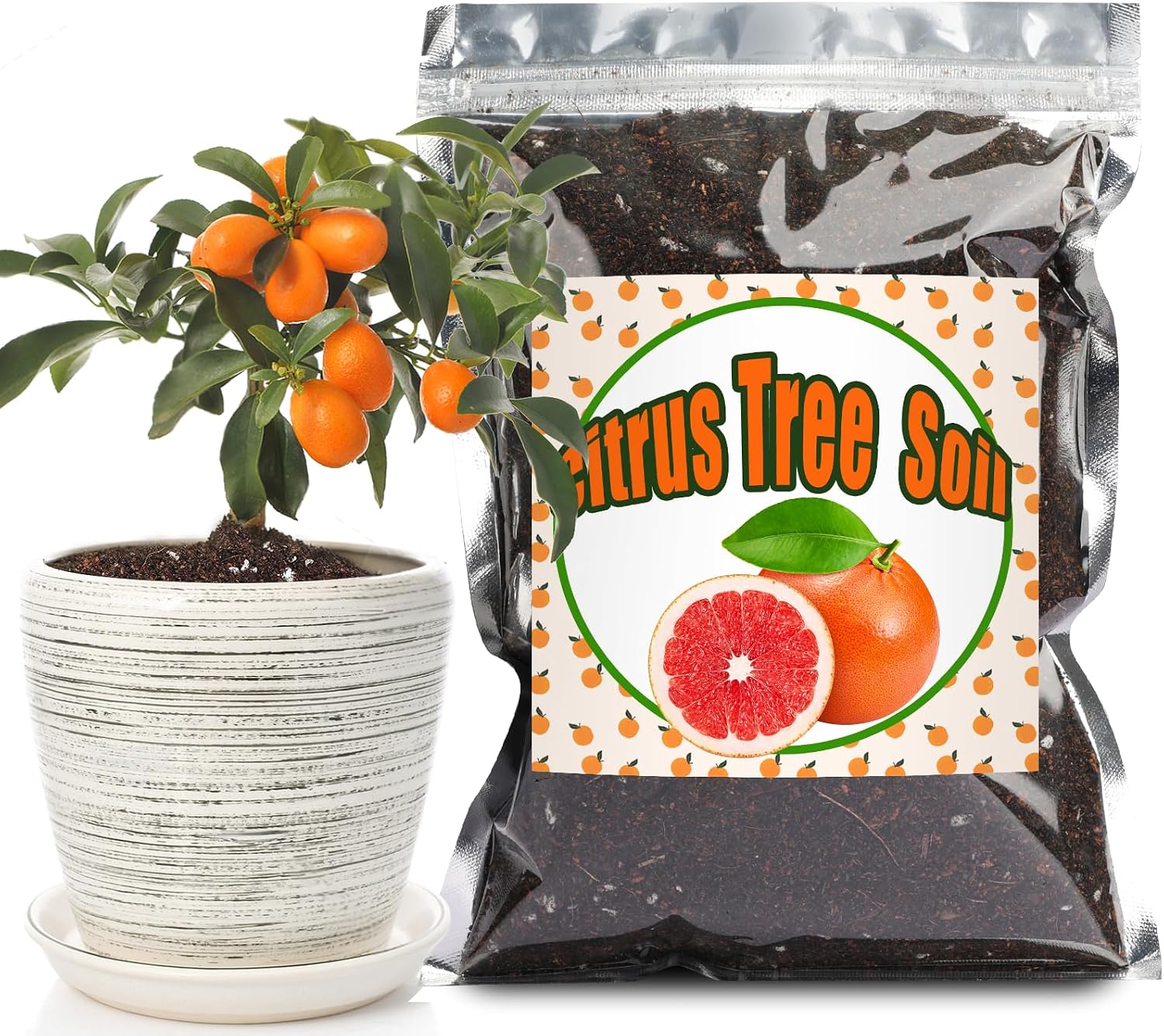
This 1‑quart Doter citrus potting mix is a purpose‑made medium for potted lemons, limes, oranges and other small fruit trees. It is formulated to hold a pH between about 6.0 and 7.1 and contains a mix of organic and mineral components to improve drainage and aeration while supplying nutrients that support growth and fruiting. In practice the bag is handy for repotting seedlings, topping up containers or testing the mix before switching to larger quantities. Notable features include its citrus‑specific formulation, nutrient enrichment and emphasis on good drainage to reduce the risk of root rot. Because the package is small it is convenient for container growers and balcony gardeners who need a measured amount without buying large bags. The main limitation is the volume: at one quart this is strictly a trial or touch‑up size and will not cover full repots or multiple trees, so plan to purchase multiple units or a larger commercial mix for bigger jobs.
Best for: Buyers who want a citrus‑specific, ready‑to‑use potting mix in small amounts for container fruit trees, seedlings, or occasional top‑ups and prefer to avoid committing to large bags.
Less Ideal for: People repotting mature trees or managing several fruit trees who need larger volumes and lower cost per quart should choose bulk potting mixes instead.
- Formulated pH optimized for citrus nutrient uptake
- Designed for improved drainage to help prevent root waterlogging
- Contains organic and mineral nutrients to support growth and fruiting
- Small, ready‑to‑use packaging convenient for container touch‑ups and seedling repotting
- Only 1 quart per package so not suitable for full repots or multiple trees without buying many bags
Verdict: A handy, citrus‑focused ready mix for container growers who want a small, trial‑sized bag with balanced pH and improved drainage.
E.B. Stone Organics Citrus & Palm Mix Potting Soil, 1.5 Cu Ft

| Brand | E.B. Stone Organics |
|---|---|
| Volume | 1.5 cubic feet |
| Intended plants | Citrus, palms, avocado, tropical plants |
E.B. Stone Organics Citrus & Palm Mix is a ready-to-use organic potting soil designed specifically for fruit trees like citrus and avocado as well as palms and tropical foliage. It combines aged fir bark and pumice for improved drainage and aeration, which helps prevent the waterlogged conditions that lead to root rot in container-grown trees. Beneficial mycorrhizae are included to support root nutrient and water uptake, making this useful when potting up young fruit trees or refreshing rootbound specimens. Use it straight from the bag for container planting or blend into garden beds when planting in the ground. The 1.5 cubic foot volume is large enough for several repots or a single 15 to 20 inch container. Limitations to note are that it is a specialty mix aimed at drainage and root health rather than long-term slow-release feeding, so regular fertilization appropriate for fruit trees will still be necessary. Overall it is a practical, reliable base medium for growers who prioritize healthy root environment for fruiting trees and tropical plants.
Best for: Growers who want a dependable potting medium that prioritizes root health and drainage for fruit trees and tropical container plants and who plan to maintain a regular feeding schedule.
Less Ideal for: Buyers looking for an all-in-one mix with long-term fertilization or those who need a general-purpose potting soil for a wide range of plant types.
- Formulated for citrus, avocado, palms and tropical plants for targeted root support
- Aged fir bark and pumice provide fast drainage and good aeration to reduce root rot risk
- Contains beneficial mycorrhizae to improve water and nutrient uptake
- Ready to use straight from the bag for container potting or for amending beds
- Not formulated as a complete long-term fertilizer so additional feeding is required
Verdict: Choose this mix when you need a reliable, well-draining organic medium that supports healthy roots for citrus and other fruiting tropical trees.
Miracle-Gro Cactus, Palm & Citrus Potting Mix, 8 qt.
| Brand Name | Miracle-Gro |
|---|---|
| Unit Count | 1 Count |
| Volume | 8 quarts |
| Item Weight | 16 ounces |
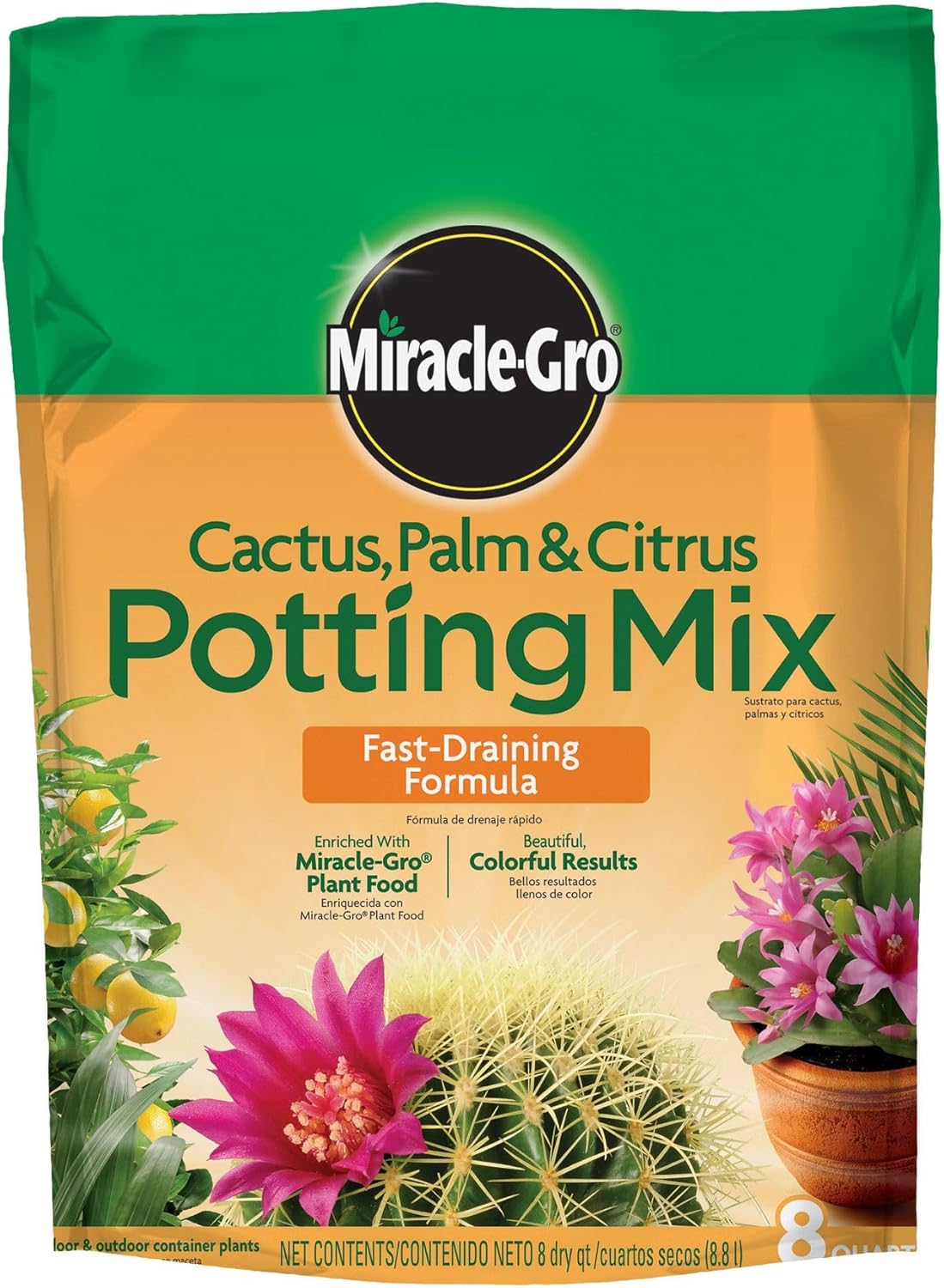
This 8-quart Miracle-Gro potting mix is made for container-grown cacti, palms and citrus, combining peat moss, sand, perlite and forest products with added Miracle-Gro plant food to encourage quick establishment and colorful growth. In practice it is used as a container soil for repotting or starting plants: fill a drained pot, set the root ball, top up with mix, water and let drain. The formula emphasizes fast drainage and reduced compaction, which helps prevent root rot in plants that prefer drier soil cycles. The enrichment with balanced nutrients gives seedlings and transplants an initial feed so you can delay the first fertilizer application. Limitations are its bag size and formulation focus: 8 quarts only fills small-to-medium containers and the mix is optimized for succulents and citrus rather than heavy-feeding orchard trees planted in the ground. For container citrus and small fruiting trees kept in pots this mix provides a reliable, low-compaction medium, but it is not a substitute for a deeper, high-organic soil or amended garden bed when establishing larger fruit trees.
Best for: Buyers who want a ready-to-use container mix for potted citrus, succulents or other dry-soil preferring plants and who value proven, widely used products with visible user endorsement.
Less Ideal for: Homeowners planting large fruit trees in the ground or anyone needing large volumes of soil for landscape beds should choose a garden soil or custom amendment instead.
- Fast-draining mix reduces risk of overwatering and root rot in containers
- Pre-enriched with plant food for an initial nutrient boost
- Includes perlite and sand to improve aeration and prevent compaction
- Small 8 qt. bag only suitable for small to medium containers and frequent repotting
Verdict: A dependable, fast-draining potting mix that gives container citrus and succulents an easy start with built-in plant food.
Back to the Roots 100% Organic Indoor Potting Mix, 6 Quart

| Unit Count | 192 Fluid Ounces |
|---|---|
| Item Type Name | Indoor Potting Mix 6qt |
| Item Highlight | Peat-free, 100% organic, made in the USA |
| Ingredients | Coconut Coir, Yucca, Mycorrhizae, Perlite, Horticultural Sand |
This 6-quart Back to the Roots indoor potting mix is a small, organic blend designed to keep roots healthy and soil evenly moist. It combines coconut coir, yucca extract, mycorrhizae, perlite and horticultural sand to improve drainage while retaining water, and includes dolomitic limestone to balance pH. In typical use it works well for repotting small specimen plants or starting seedlings where you want a clean, peat-free medium that resists gnats. The yucca helps the mix hold moisture longer than plain coir, and the added mycorrhizae can boost early root development. Because the bag is 6 quarts, it is convenient for testing with potted fruit tree saplings or for topdressing nursery containers, but you will need larger volumes or to amend with bulk soil for established trees. Expect a light, airy feel that drains better than garden soil but will not replace structured orchard mixes for in-ground planting. For risk-averse buyers this mix is predictable, organic, and easy to use, though limited in quantity for anything beyond small pots or young trees.
Best for: Buyers who want a predictable, organic, pet-safe potting mix for starting seedlings, repotting small saplings, or keeping young potted fruit tree varieties healthy in containers.
Less Ideal for: Gardeners planting in-ground fruit trees or repotting large established specimens who need larger volumes and a heavier structural soil should choose a bulk orchard or planting mix instead.
- Peat-free 100% organic formula suitable for indoor use and conscious gardeners
- Contains yucca extract to improve moisture retention compared with plain coir
- Includes mycorrhizae to support early root establishment and nutrient uptake
- Balanced components (perlite, sand, perlite) give good drainage while staying airy
- Small 6-quart volume is insufficient for established fruit trees or large repotting jobs
Verdict: A small, reliable organic potting mix that makes starting and container-growing young fruit trees easier thanks to moisture retention and root‑boosting mycorrhizae.
Choosing the Right Potting Mix for Fruit Trees: Key Factors to Consider
Drainage and Air Porosity
Fruit tree roots need a balance of moisture and oxygen. A mix that drains freely but still holds enough water between waterings helps prevent root rot and supports active root growth.
Look for coarse components such as pine bark, perlite, or pumice that create pore space. Very fine substrates or high peat content can compact and reduce aeration over time, so consider mixes with explicit porosity amendments.
Nutrient Retention and Release
Fruit trees rely on a steady supply of nutrients across the growing season. A potting mix should have enough cation exchange capacity or added slow-release nutrients to buffer feeding needs without constant fertilizer applications.
Organic components like composted bark and well-composted organic matter can hold nutrients and release them gradually. Conversely, inert mixes that drain quickly will require more frequent fertilizing, which matters if you want lower-maintenance container fruiting.
Structure Stability and Resistance to Compaction
Pots and raised containers are subject to wetting and drying cycles. A stable mix keeps its texture rather than collapsing into a dense mass that limits root extension.
Ingredients that resist breakdown, such as aged bark or stable mineral aggregates, help maintain air spaces over months and years. Consider how often you plan to repot; less frequent repotting benefits from mixes designed for long-term structure retention.
pH Buffering and Organic Matter
Most fruit trees prefer a near-neutral to slightly acidic soil environment. A potting mix should either be close to that pH out of the bag or include buffering components so pH does not swing rapidly with watering and fertilizer.
Organic matter improves water and nutrient holding but can also acidify over time. Know the typical pH range of your fruit species and choose a mix with organic content and amendments that align without requiring major adjustments.
Particle Size and Root Penetration
The size and distribution of particles affect how easily roots can grow through the mix. A range of particle sizes from fine to coarse encourages both moisture retention and pathways for new roots.
Extremely fine mixes can restrict root growth and become waterlogged, while overly chunky mixes may not hold enough moisture. For fruit trees, a balanced particle profile supports robust root systems and faster establishment after planting.
Ease of Wetting and Handling
Some potting mixes are hydrophobic when dry and resist wetting, which makes initial potting difficult and can cause uneven moisture. Others are dusty or heavy to work with.
Choose a mix that re-wets reliably or includes wetting agents, and that you can handle easily when filling pots or amending planting holes. Practical handling matters for both small backyard growers and those managing multiple containers.
When To Use Container Mix Vs Garden Soil
Container potting mixes are formulated to be lighter and more porous than garden soil, making them a better choice for potted fruit trees. Garden soil can compact in a container and limit oxygen to roots, which increases the risk of poor growth and root disease.
Use a purpose-made potting mix for trees in pots, patio planters, or grow bags. When planting into the ground, blend a small amount of structured organic matter rather than using straight container mix, which may hold too little moisture for in-ground conditions.
- Containers: prioritize drainage and structure stability.
- In-ground planting: improve native soil with compost and coarse amendments, not wholesale replacement with potting mix.
Adjusting Mixes for Different Fruit Species
Different fruit trees have slightly different needs. Stone fruits often prefer slightly better drainage, while some small berrying trees can tolerate more organic matter. Adjust the base mix by adding pumice or perlite for extra drainage, or more compost for nutrient-demanding varieties.
Always consider the mature root habit. Species with vigorous roots may prefer a deeper, coarser blend to encourage downward growth, while dwarfing rootstocks do well in mixes that balance moisture and aeration.
- Add coarse mineral components for improved drainage.
- Increase compost content for varieties that need higher fertility.
How to Repot and Refresh Mix Without Disturbing Roots
When refreshing a tree in a pot, you can often replace the top third of the mix with fresh material without fully removing the root ball. This refreshes nutrients and improves drainage without stressing the tree.
For larger or rootbound trees, lift the root ball just enough to loosen compacted outer soil, remove the most degraded material, and backfill with mix that matches the original texture. Avoid burying the trunk deeper than it was previously planted.
- Partial top-up for minor refreshes preserves established roots.
- Full repotting is best every few years for rapidly growing specimens.
Managing Watering With High-Drainage Mixes
High-drainage mixes reduce root rot risk but require a revised watering rhythm. Water until runoff and allow the top layer to dry slightly before the next irrigation. Containers with more porous mixes often need more frequent, shorter waterings.
Use moisture meters or finger checks to assess root-zone moisture rather than relying solely on surface dryness. Mulching the surface with compost or bark reduces evaporation and helps maintain steadier moisture levels.
- Water deeply but less often for mixes that hold moderate moisture.
- Increase watering frequency for chunky, fast-draining blends.
Simple DIY Mix Tweaks for Better Results
If a ready-made mix is too heavy or too light for your tree, small adjustments can tailor performance. Add coarse sand, pumice, or perlite to improve drainage. Blend in well-aged compost or slow-release organic fertilizer for more sustained feeding.
Test any changes on a single pot before applying broadly. Keep records of what you add and how the tree responds across a season so you can refine the recipe for your climate and species.
- Increase porosity with volcanic rock, perlite, or coarse sand.
- Boost fertility with composted bark or balanced organic amendments.
How We Chose the Best Potting Mix for Fruit Trees
We focused on horticultural traits that matter to fruit trees in containers or when used for establishing young trees. Primary evaluation criteria included drainage and air porosity because fruit tree roots need oxygen as well as moisture. We checked nutrient retention and slow-release feeding characteristics to ensure mixes support fruit set and steady growth without constant refeeding. Structural stability and resistance to compaction were assessed so the mix keeps its texture through seasons. We also considered organic matter content and pH buffering to match common fruit tree preferences. Practical handling factors such as dust, ease of wetting, and suitability for potting versus top-dressing were part of the filter. We excluded mixes designed only for annuals, seed starting, or non-growing media like hydroponics. Blends with unclear ingredient lists or known persistent pests and weed seed contamination were not considered. The final shortlist favors mixes with balanced drainage, stable structure, and demonstrable nutrient-holding capacity suitable for fruit tree root systems.
FAQ
How often should I repot a fruit tree in a container?
It depends on growth rate and pot size. Fast-growing trees may need partial refreshes annually and full repotting every two to three years. Slower growers can often go three to five years between full repots. Monitor root crowding and drainage to decide.
Can I use a general-purpose potting mix for fruit trees?
Often you can, but general mixes vary. Many are formulated for annuals and may retain too much moisture or break down quickly. Amend general mixes with coarse material and additional organic matter to suit fruit trees better.
Should I add fertilizer to the potting mix before planting?
Adding a modest slow-release or well-composted organic amendment at planting helps provide initial nutrients. Avoid heavy, fast-release fertilizers in the mix that can burn young roots. Top-dress or fertilize according to the tree's needs after establishment.
What pH should a potting mix for fruit trees have?
Most fruit trees do best in a near-neutral to slightly acidic range, roughly pH 6.0 to 7.0, though some species prefer slightly different ranges. Choose a mix that is close to your tree's preference and monitor pH over time, adjusting with appropriate amendments if needed.
How can I tell if my potting mix is compacting?
Signs include slow drainage, surface crusting, reduced root growth, and frequent waterlogging. Probe the root zone with a moisture meter or small trowel; compacted mixes feel dense and resist penetration. Refresh or amend the mix to restore structure.
Final Verdict
Prioritize a potting mix that balances drainage and nutrient retention for fruit trees. The best mixes keep pores open for oxygen, hold enough moisture between waterings, and supply steady nutrients without frequent corrections. Decide based on your container size, watering routine, and the specific fruit species. With the right mix and simple adjustments, you can establish healthy root systems that support reliable fruiting over multiple seasons.
