

Note: This article contains affiliate links. If you click on these links and make a purchase, I may earn a small commission at no extra cost to you. This helps support my research and content. Read my full affiliate disclosure here.
Growing microgreens relies as much on the medium beneath the seed as on light and water. The right potting mix for microgreens gives fast, even germination, steady moisture without waterlogging, and a clean surface that makes harvesting easier. In this guide we shortlisted six top potting mixes for microgreens and evaluated them for drainage, nutrient content, and cleanliness in small trays and shallow flats. Read on to understand which mix traits matter for your setup and why these picks suit different growing styles and space constraints.
Top Picks at a Glance
| Best Overall The best all-around choice for most situations | Espoma Organic Seed Starter Premium Potting Mix, 16 qt |  |
| Best Value The sweet spot between price and what you get | Rosy Soil Seed Starter Mix, Organic, Peat-Free, 4 Quart |  |
| Best Budget The cheapest option that still gets the job done reliably | Back to the Roots Organic Indoor Potting Mix, 6 Quart |  |
| Highest Rated A top-rated pick with lots of positive feedback | Wonder Soil Organic Expanding Coir Wafers (18-Pack) — Ready-to-Plant Potting Soil with Worm Castings & Perlite |  |
| Most Popular A crowd favorite that many people choose with confidence | Miracle-Gro Indoor Potting Mix for Seed Starting, 8 qt. (2-Pack) |  |
| Best Seller A high-volume bestseller chosen again and again | Back to the Roots Organic Expanding Coco Coir Potting Soil Brick (10 lb) |  |
Espoma Organic Seed Starter Premium Potting Mix, 16 qt

| Brand Name | Espoma |
|---|---|
| Volume | 16 quarts |
| Unit Count | 598.4 Ounce |
| Model Number | SS16 |
Espoma Organic Seed Starter is a peat-based, lightweight potting mix designed specifically for germinating seeds and rooting cuttings. The blend of sphagnum peat moss and perlite gives good aeration and drainage while the formula includes yucca extract to improve wetting and lime to balance pH. It also contains Myco-tone mycorrhizae to help early root establishment and improve nutrient access during the seedling stage. Typical use is filling trays, cells, or small pots for seeds and softwood cuttings; its fine texture and moisture retention reduce damping-off risk when used with proper sanitation and watering. Because it contains no synthetic fertilizers, it is appropriate for organic growing but you will need to begin light feeding once true leaves form or when transplanting. The bag size covers routine home-seed-starting needs, and the product is straightforward to handle and mix for small-scale propagation projects.
Best for: Gardeners focused on reliable seed germination and strong early root development who want an organic, ready-to-use mix for trays and small pots.
Less Ideal for: Growers wanting a peat-free or pre-fertilized seed mix or those starting very large volumes commercially should consider alternatives tailored to those needs.
- Formulated for seedlings with peat and perlite for balanced aeration and moisture retention
- Includes Myco-tone mycorrhizae to support early root development
- Organic ingredients with no synthetic fertilizers, suitable for organic growing
- Contains yucca extract to improve wetting and lime to help stabilize pH
- No starter nutrients included so plants need feeding after true leaves appear
- Peat-based mix is not the most sustainable choice for gardeners preferring peat-free media
Verdict: Choose this organic seed starter when you want a ready-to-use mix that promotes rapid root development and reliable germination for home seedlings and cuttings.
Rosy Soil Seed Starter Mix, Organic, Peat-Free, 4 Quart

| Net volume | 4 Quarts |
|---|---|
| Formula | Peat-free organic mix |
| Key ingredients | Worm castings, biochar, mycorrhizae |
| Intended use | Seed starting and propagation |
This Rosy Soil seed starter mix is designed for the earliest stage of plant growth and works well for microgreens, herbs, and small seedlings. You use it by filling trays or flats, sowing seeds, and keeping the medium evenly moist; its blend of pine bark fines, compost, sand, biochar, and worm castings gives a light, well-draining texture that reduces compaction and helps roots penetrate. The included mycorrhizae can improve early nutrient uptake and the organic inputs support steady initial growth without synthetic additives. Because it is peat-free and includes biochar, it is less prone to persistent sogginess and may discourage fungus gnat issues compared with heavier mixes. The resealable 4 qt bag is convenient for small-scale growers and allows you to keep a fresh supply between sowings. Limitations are the small bag size for larger microgreen operations and that it is formulated specifically for seedlings and microgreens rather than long-term potting of larger plants.
Best for: Best for small-scale growers and hobbyists who want a ready-made, organic seed-starting medium that gives microgreens and seedlings a quick, reliable start.
Less Ideal for: Not a good fit for commercial microgreen producers or gardeners needing large-volume potting mixes for mature plants.
- Formulated for germination with balanced aeration and drainage
- Contains worm castings and biochar to support nutrient availability and carbon storage
- Includes mycorrhizae to help early root nutrient uptake
- Peat-free composition reduces reliance on strip-mined peat and lowers gnat-prone conditions
- Resealable 4 quart bag keeps unused mix fresh for multiple sowings
- Small 4 qt quantity may require frequent repurchasing for continuous or larger microgreen batches
- Not intended as a long-term potting mix for mature plants
Verdict: Choose this peat-free, organics-forward seed starter if you want a compact, low-maintenance mix that reliably jumpstarts microgreens and seedlings.
Back to the Roots Organic Indoor Potting Mix, 6 Quart

| Unit Count | 192 Fluid Ounces |
|---|---|
| Item Type Name | Indoor Potting Mix 6qt |
| Item Highlight | Peat-free, 100% organic, made in the USA |
| Ingredients | Coconut Coir, Yucca, Mycorrhizae, Perlite, Horticultural Sand |
This Back to the Roots indoor potting mix is a ready-to-use, 6-quart blend designed for common houseplants such as pothos, monstera and ferns. It combines coconut coir, yucca extract, mycorrhizae, perlite and horticultural sand to improve moisture retention, drainage and root development without peat. In practice it feels light and friable, so it is easy to pot seedlings or repot mature plants and it reduces compaction that can suffocate roots. The added mycorrhizae helps young roots establish and take up nutrients more efficiently while yucca extract helps the mix hold water between waterings, which is convenient for forgetful or busy plant owners. Because it is peat-free and made in the USA, it is a more sustainable choice versus traditional peat-based mixes. Limitations are the small 6-quart size, which means frequent repurchasing for larger collections, and the bag does not include fertilizer so you will need to feed plants separately as they grow.
Best for: Buyers who prioritize low-risk, easy-care houseplant solutions and want an organic, ready-to-use potting mix that reduces watering hassles and supports healthy root growth.
Less Ideal for: Not ideal for gardeners who need large-volume soil for many pots or for those expecting a mix that includes built-in fertilizer for long-term feeding.
- Peat-free organic formula that reduces environmental impact
- Yucca extract improves moisture retention between waterings
- Contains mycorrhizae to support root development and nutrient uptake
- Light, well-draining texture suitable for repotting seedlings and houseplants
- Small 6-quart volume may require frequent repurchasing for larger plant collections
- Does not include fertilizer so additional feeding is necessary
Verdict: A compact, peat-free potting mix that simplifies indoor plant care by holding moisture and boosting root establishment.
Wonder Soil Organic Expanding Coir Wafers (18-Pack) — Ready-to-Plant Potting Soil with Worm Castings & Perlite

| Unit Count | 288 Fluid Ounces |
|---|---|
| Included Components | compressed soil |
| Item Type Name | Garden Soil Coir Wafers With Nutrients |
| Volume | 672 fluid ounces |
These compressed coir wafers are a compact way to get ready-to-use potting mix for small-scale planting and seed starting. Each wafer hydrates and expands into a potting medium blended with worm castings, mycorrhizae, kelp and perlite, so you can plant seeds or transplant seedlings without mixing separate amendments. For microgreens and other quick crops the wafers offer good water retention with drainage and aeration typical of coco coir, and they are peat free and low in salts because the coir is triple washed. The tube format is easy to store and 18 wafers expand to several quarts of soil so you can set up multiple small trays or pots. Expect reliable germination and faster early growth thanks to the added nutrients, but for larger or longer-term containers you may need to top up nutrients as plants mature since the supply is concentrated for seedling and small-pot use. Overall the product simplifies seed starting and reduces mess compared with bagged mixes.
Best for: Gardeners who want a low-fuss, ready-to-use medium for seed starting and frequent small batches of microgreens, prioritizing consistent, repeatable results with minimal preparation.
Less Ideal for: Growers planning to produce large, long-term container crops or who prefer to custom-blend their own soil amendments should consider a bulk potting mix or separate inputs instead.
- Compact, easy-to-store compressed wafers expand with water for immediate use
- Pre-mixed with worm castings, mycorrhizae, kelp and perlite for improved germination and root development
- Triple-washed coir provides low salts with good water retention and reliable drainage
- Peat-free, natural formula suitable for indoor microgreens and seed starting
- Nutrient reserves are focused on early growth so larger or long-term crops will need additional fertilization
- Tube format limits partial use control once opened if you need very small single wafers frequently
Verdict: A convenient, low-mess seed-starting medium that reliably expands into nutrient-enriched coco coir ideal for microgreens and quick crops.
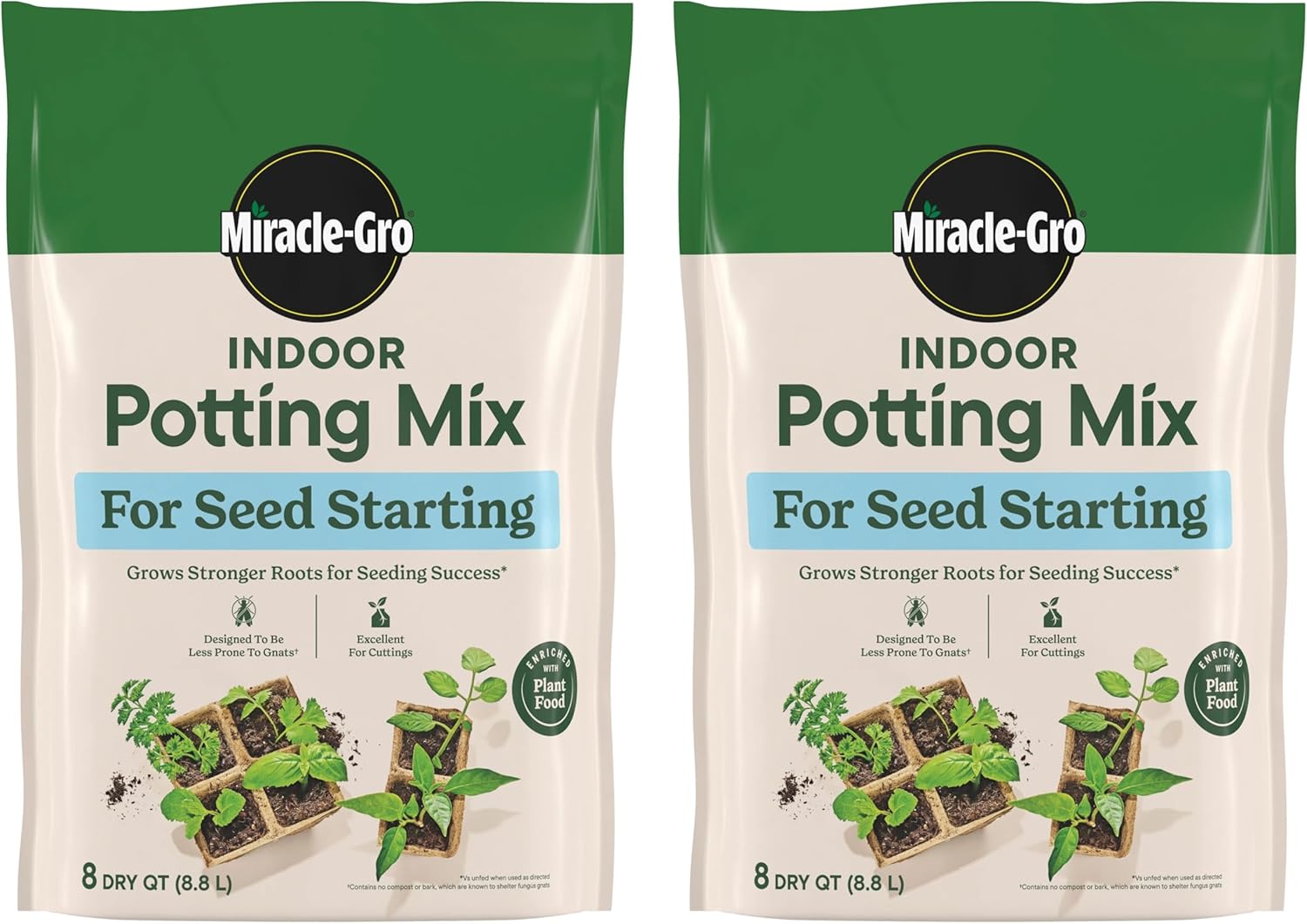
Miracle-Gro Indoor Potting Mix for Seed Starting, 8 qt. (2-Pack)
| Brand Name | Miracle-Gro |
|---|---|
| Item Type Name | Potting Mix |
| Number of Packs | 2 |
| Volume | 8 quarts |
This two-pack of Miracle-Gro Indoor Potting Mix is designed specifically for starting seeds and rooting cuttings indoors. The blend is lightweight and pre-enriched with plant food so seedlings get a nutrient boost during early root development, and the manufacturer says it yields stronger roots compared with unfed mixes when used as directed. It is intended for vegetables, flowers, and herbs and works well in cell trays and small containers; one 8 qt. bag will fill roughly three 72-cell trays. Notably, the formula omits compost and bark, which helps lower the chance of fungus gnat infestations in damp seed-starting setups. Use it by filling trays or pots, keeping the mix evenly moist, and shielding newly sown seeds from direct sun until germination. Important limitations are standard for enriched mixes: it contains fertilizer (so handle carefully) and it is a seed-starting medium rather than an all-purpose potting soil for mature plants, so you will likely transplant seedlings into a different mix or amend soil later.
Best for: Buyers who want a low-effort, indoor seed-starting medium that supports faster root development and reduces common pest risks while following proven seed-starting practices.
Less Ideal for: Gardeners who need a permanent potting soil for mature container plants or who prefer fully organic, compost-rich mixes should consider alternatives.
- Lightweight, ready-to-use formula tailored for seed germination and cuttings
- Pre-enriched with plant food to support early root and seedling growth
- Excludes compost and bark to reduce habitat for fungus gnats
- Comes as a two-pack so you have enough mix for multiple trays
- Contains fertilizer which requires careful handling and storage
- Intended for seed starting so not formulated as long-term potting soil for mature plants
Verdict: A practical, low-risk seed-starting mix that boosts early root growth and reduces fungus gnat risk, making it a reliable choice for indoor vegetable seedlings.
Back to the Roots Organic Expanding Coco Coir Potting Soil Brick (10 lb)

| Item Highlight | 10 lb compressed coco coir brick; peat-free; OMRI Listed |
|---|---|
| Item Type Name | Coconut Coir |
| Volume | 2 cubic feet |
| Ingredients | Coconut Coir |
| Style Name | Expanding Potting Soil |
This compressed coco coir brick provides a lightweight, peat-free potting medium that expands when you add water to create loose, airy substrate for containers and seed flats. It is typically used by hydrating the 10 lb block to about 2 cubic feet of coir and then using it alone for potted plants, mixing it into garden soil to improve drainage and aeration, or blending with compost for starting seeds. Notable features include OMRI listing for organic use, a balanced pH suited to a wide range of plants, and compact storage before expansion which saves space. Practical benefits are improved root aeration and water retention compared with heavy garden loam, easier handling than bulky bags, and versatility across vegetables, herbs, and ornamentals. Important limitations are that coco coir is a soilless substrate and does not supply significant nutrients on its own so you will need to add fertilizer or compost for long-term potted herbs like rosemary, and the product requires time and a water source to expand before use.
Best for: Buyers who prioritize low-risk, easy-to-handle, organic potting media and want a versatile base for container herbs and seed starting without dealing with heavy bags.
Less Ideal for: Gardeners who want a ready-to-plant, nutrient-rich potting mix out of the box or those who prefer soil with built-in slow-release fertilizer.
- Peat-free OMRI listed organic coco coir suitable for organic growing
- Expands from a compact brick to about 2 cubic feet for easy storage and transport
- pH balanced and airy texture that improves drainage and root aeration
- Versatile use: can be used alone, for seed starting, or mixed into existing soil
- Provides little inherent fertility so supplemental feeding or compost is needed for nutrient-hungry plants
Verdict: A compact, peat-free coco coir brick that expands into an airy, pH-balanced base ideal for low-risk organic container gardening and seed starting when paired with fertilizer or compost.
Choosing the Right Potting Mix for Microgreens: Key Factors to Consider
Particle Size and Texture
Particle size controls how well small seeds make contact with the surface. Finer textures let tiny seeds sit flush with the medium for even moisture pickup, which improves germination rates. Coarser mixes can create air gaps under small seeds and lead to uneven sprouting or missed spots.
Texture also affects airflow in shallow trays. A mix that compacts too tightly will reduce oxygen around developing roots and can encourage damping-off disease. Conversely, a mix that stays too loose may dry unevenly and force you to water more often. Aim for a balanced texture suited to the seed size you plan to grow.
Moisture Retention Vs Drainage
Microgreens need consistently moist conditions for the first several days but cannot tolerate standing water. The best potting mixes hold moisture near the seed while allowing excess to drain away so roots are moist but not waterlogged.
A mix with good water-holding components like coconut coir or well-aged compost can reduce the need for constant misting. Adding a small amount of perlite or fine vermiculite improves drainage and keeps the surface from staying soggy. Consider your tray type and watering routine when weighing this factor.
Nutrient Content and Feed Strategy
Microgreens grow quickly and often finish before they need heavy feeding, but the initial nutrient level affects stem strength and leaf color. A mix with a gentle, balanced nutrient base supports healthy early growth without causing overly rapid, weak elongation.
Many growers prefer a low-to-moderate nutrient mix and then supplement with a light foliar feed or dilute liquid fertilizer late in the run if needed. Avoid mixes with strong slow-release fertilizers intended for long-term container plants, since those can produce off flavors or excessive nitrate levels in edible shoots.
Cleanliness and Contaminant Risk
Because microgreens are harvested and eaten at a very young stage, surface cleanliness of the potting mix matters more than for larger potted plants. Fine dust, woody debris, or uncomposted material can cling to greens and add extra cleaning work or off flavors.
Sterilized or screened mixes reduce the risk of introducing pathogens and make harvesting and rinsing easier. Check ingredient lists for untreated manures or coarse bark that could carry contaminants or unpleasant textures.
pH and Salt Levels
pH affects nutrient availability even over a short growing cycle. Most microgreens do best in a slightly acidic to neutral pH range, where nutrients remain bioavailable and germination is not inhibited.
High soluble salt content can impair seedling water uptake and reduce germination. Avoid mixes with unspecified high-salt fertilizers or additives. If you are using tap water with significant hardness or salts, choose a low-salt mix or rinse the medium before seeding.
Ease of Seeding and Tray Handling
Microgreens are usually grown in shallow trays, so the mix needs to level easily, hold a thin bed depth, and compact just enough to support seed contact without becoming dense. A mix that spreads and levels well reduces waste and gives a uniform crop.
Consider how the mix behaves when wet: does it form a crust that inhibits emergence, or does it remain friable? Also think about storage and dust control; very dusty mixes can make filling many trays messy and may require wetting steps before seeding.
Preparing Trays and Bed Depth
Microgreens perform best in a shallow bed. Spread your chosen potting mix to a uniform depth, usually between 0.5 and 1 inch depending on seed size. Finer seeds like radish or arugula do well on the thinner end, while slightly larger seeds tolerate a deeper bed for more root anchoring.
- Level the surface using a flat tool to ensure even germination.
- Press the mix lightly so seeds make contact but the medium does not become compacted.
- Mist evenly after seeding to avoid displacing small seeds.
Using Coir, Peat, or Compost-Based Mixes
Coconut coir is a popular base because it holds moisture well and is relatively clean compared with raw compost. Peat-based mixes retain moisture effectively but raise sustainability questions for some gardeners. Compost adds nutrients and microbial life but should be well-aged and finely screened to avoid debris.
Choose a base that matches your watering habits. If you prefer less frequent misting, a coir blend with light perlite can give a forgiving moisture buffer. If you want a more nutrient-rich start without additional feeding, a screened compost addition works well in moderation.
- Coir: good moisture retention and neutral pH.
- Peat: excellent moisture retention, less sustainable for some growers.
- Compost: adds nutrients but must be fine and clean.
Sanitation and Preventing Disease
Microgreens are vulnerable to damping-off and surface molds during germination. Start with a clean tray and a low-dust, sterilized or pasteurized mix when possible. Avoid overwatering and ensure good airflow around trays during the light-up phase.
If you see slimy patches or a sudden collapse of seedlings, reduce humidity and increase air circulation. Using a screened, consistent mix reduces the amount of organic debris that can harbor pathogens.
- Use trays with drainage holes and elevate them slightly for airflow.
- Mist rather than pour when possible to avoid saturating the surface.
- Keep a fan on low to prevent stagnant, humid air around dense trays.
Adjusting Feed and Light for Strong Stems
Microgreens need adequate light to develop sturdy stems. If stems are pale and floppy, they are often light-starved rather than nutrient-deficient. Provide even, bright light and consider a short, dilute feed late in the run if growth seems slow.
Choose a mix with modest baseline nutrients and rely on light and timing to produce compact, flavorful shoots. Overfeeding from a rich potting mix can produce lush but weak stems and may alter taste.
- Strong, close light reduces legginess.
- Use a diluted liquid feed in the last few days only if needed.
- Monitor stem thickness as the best indicator of adequate nutrition and light.
Reusing and Refreshing Mix Between Batches
Reusing potting mix can save resources but increases the risk of soilborne disease and variable nutrient levels. If you reuse mix, refresh it by removing visible roots and composting or heat-treating it between runs. Add a small portion of fresh mix or clean compost to restore texture and nutrients.
Consider a rotation where a larger quantity of mix is cycled through outdoor composting before being reused to reduce pathogen load. For commercial or high-frequency growers, using fresh, screened mix each cycle lowers risk and labor for sanitation.
- Remove old roots and debris before reuse.
- Recondition with fresh coir or compost to restore moisture-holding and nutrients.
- Sterilize reused mix if you have had disease issues in prior runs.
How We Chose the Best Potting Mix for Microgreens
We focused on traits that directly affect microgreen success in small trays and compact growing setups. Selection began by filtering for mixes designed for small-seed propagation or labeled safe for edible sprouts. We excluded heavy garden soils, compost blends meant for outdoor beds, and any product with unspecified or potentially unsafe additives. Evaluation emphasized practical, measurable dimensions: particle size and texture for consistent seed-to-soil contact; drainage and water retention balance so seeds stay moist but not saturated; nutrient profile that supports quick early growth without forcing rapid, leggy stems; and cleanliness of the mix to minimize debris that complicates washing and harvesting. We also checked for ease of use in trays, including dust levels and how well the mix compacts without losing air. Other filters removed mixes with strong residual odors, visible contaminants, or unclear ingredient lists. Final selections represent a range of textures and feeding strategies suitable for different microgreen varieties and growing frequencies.
FAQ
What depth of potting mix is best for microgreens?
Most microgreens do well in a shallow bed between 0.5 and 1 inch. Smaller seeds need thinner coverage to maintain contact with moisture, while larger seeds can tolerate slightly deeper beds for root support.
Can I use regular potting soil for microgreens?
Regular potting soil often contains larger particles, bark, or slow-release fertilizers that are not ideal for microgreens. If you use it, screen out coarse debris and avoid mixes with strong slow-release nutrients to prevent off flavors and uneven germination.
Should the mix be sterilized before seeding?
Sterilized or pasteurized mixes reduce pathogen risk and are a safe choice, especially for beginners or high-density trays. Many growers use commercially screened mixes or heat-treatment when reusing media to limit damping-off issues.
How often should I water microgreens in trays?
Frequency depends on tray depth, mix, and environmental conditions. Aim to keep the surface consistently moist but not waterlogged. Mist daily or bottom-water briefly when the surface starts to feel dry, adjusting as seedlings develop.
Do microgreens need fertilizer in the potting mix?
Most microgreens finish quickly and do not require heavy feeding from the mix. A low-to-moderate nutrient base is sufficient for many varieties, with an optional light, dilute feed late in the run if growth is slow or color is pale.
Final Verdict
Choose a potting mix that matches your seeding style and tray routine. Prioritize a texture that promotes seed-to-soil contact, balanced moisture retention with adequate drainage, and a clean, low-debris composition to simplify harvesting. Expect tradeoffs between nutrient content and cleanliness: richer mixes reduce the need for feeding but can increase contamination and flavor risk. For most growers, a fine, low-dust mix with moderate nutrients and reliable moisture balance is the safest starting point. From there, tweak feed and tray handling to suit specific microgreen varieties and your harvest cadence.
