

Note: This article contains affiliate links. If you click on these links and make a purchase, I may earn a small commission at no extra cost to you. This helps support my research and content. Read my full affiliate disclosure here.
If you want a low-fuss houseplant that tolerates neglect, potting mix matters more than you might think. Snake plants prefer a well-draining, airy medium that dries out between waterings to avoid root rot. Choosing the right potting mix influences watering frequency, root health, and how well the plant tolerates low light or winter dormancy. This guide covers seven shortlisted potting mixes chosen for snake plant growing conditions. We evaluated mixes for drainage, nutrient balance, and long-term structure so you can pick a blend that matches your watering habits and pot choice. Below are the criteria we used, followed by practical guidance to help you match a mix to your indoor setup.
Top Picks at a Glance
| Best Overall The best all-around choice for most situations | Omitgoter Organic Snake Plant Potting Soil, 1 qt |  |
| Best Quality Built to a higher standard if you want something more solid | rePotme Snake Plant Houseplant Potting Soil Mix, 8 Quart Resealable Bag |  |
| Best Value The sweet spot between price and what you get | Grow Queen Craft Houseplant Potting Mix, Organic Peat-Free Indoor Soil, 2 Quart |  |
| Best Budget The cheapest option that still gets the job done reliably | Doter Snake Plant Potting Mix, 1 qt |  |
| Highest Rated A top-rated pick with lots of positive feedback | Gardenera Snake Plant Potting Mix, 1 Quart |  |
| Most Popular A crowd favorite that many people choose with confidence | Perfect Plants Snake Plant Soil, 4 qt Coco Coir and Bark Potting Mix |  |
| Best Seller A high-volume bestseller chosen again and again | Back to the Roots Organic Indoor Potting Mix, 6 Quart |  |
Omitgoter Organic Snake Plant Potting Soil, 1 qt

| Brand Name | Omitgoter |
|---|---|
| Unit Count | 32 Ounce |
| Style Name | Succulent, Well-draining |
| Volume | 32 fluid ounces |
This 1 quart Omitgoter mix is designed specifically to give snake plants the drainage and aeration they need while providing slow-release nutrients. The blend lists coconut fiber, peat, perlite, bark, and humus castings, so it will stay light in containers and reduce the risk of root rot from overwatering. It is pre-mixed and pH-balanced to roughly 6.0–6.5, which helps with nutrient uptake and can reduce leaf yellowing in sensitive Sansevieria varieties. In practice the mix works well for repotting small to medium houseplants, top-dressing older soil, or refreshing nursery pots; its texture lets water pass through quickly yet holds enough moisture for drought-tolerant plants. The one-quart size is convenient for occasional repots but means multiple bags are needed for larger collections. Also, the product description notes a slow-release organic fertilizer but does not give NPK numbers, so gardeners seeking precise feeding schedules may want to supplement with a measured fertilizer plan.
Best for: Buyers who want an easy, low-maintenance potting mix tailored to snake plants and succulents and prefer organic, ready-to-use solutions for occasional repotting.
Less Ideal for: Growers who need large volumes for multiple plants or who require detailed, measured fertilizer formulations should consider bulk mixes or mixes with published nutrient analyses.
- Formulated for succulents with components that improve drainage and aeration
- pH adjusted to 6.0–6.5 to support nutrient uptake and reduce leaf yellowing
- Contains organic ingredients and slow-release fertilizer for ongoing nourishment
- Ready-to-use texture that resists compaction in pots
- Small 1 qt volume requires buying multiple bags for larger plants or multiple repots
- Nutrient analysis (NPK) not specified, limiting precise feeding decisions
Verdict: A convenient, organic pre-mixed soil that gives snake plants the drainage and gentle nutrition they need for healthy growth.
rePotme Snake Plant Houseplant Potting Soil Mix, 8 Quart Resealable Bag

| Brand Name | rePotme |
|---|---|
| Item Type Name | Potting Soil |
| Unit Count | 96 Ounce |
| Volume | 8 quarts |
This rePotme houseplant potting mix is a hand-blended, small-batch soil designed for indoor plants including snake plants. It comes in a resealable pouch so you can use what you need and keep the remainder fresh. Typical use is repotting or topdressing snake plants and other common houseplants that prefer well-draining media. The formulation emphasizes good drainage and controlled water retention to help avoid root rot, which is especially useful for snake plants that dislike soggy soil. Because it is made for indoor varieties, it works well in standard pots and slotted pots used for aroids and succulents. Practical benefits include freshness from daily blending, convenience of the resealable bag, and a blend trusted by some conservatories. Important limitations are that the bag is relatively small for multiple large plants and the mix can produce dust so care is needed when handling. For growers who prefer to tailor soil components precisely, this ready-made mix may still require amendment for very specific drainage or fertility targets.
Best for: Buyers who want a ready-to-use, fresh indoor potting mix that prioritizes drainage and convenience when repotting snake plants and other common houseplants.
Less Ideal for: Collectors who need large volumes for many big pots or growers who require a custom-formulated soil for unusual species.
- Hand-blended in small batches for freshness
- Resealable pouch for easy storage between uses
- Formulation aimed at good drainage to reduce overwatering risk
- Marketed for a wide range of houseplants, making it versatile for mixed collections
- 8-quart bag may be too small for repotting several large plants
- Mix can produce dust during handling requiring protective measures
Verdict: Buy this if you want a fresh, well-draining, ready-made houseplant mix that simplifies repotting snake plants.
Grow Queen Craft Houseplant Potting Mix, Organic Peat-Free Indoor Soil, 2 Quart

| Brand Name | Grow Queen |
|---|---|
| Item Type Name | Potting Mix |
| Unit Count | 64 Ounce |
| Volume | 2 quarts |
This Grow Queen Craft Houseplant Potting Mix is designed for indoor plants that need a chunky, well aerated medium rather than dense bagged soil. The mix uses Douglas fir bark, lava rock and pumice to create permanent air pockets so water drains quickly and the mix resists compaction, which helps plants like snake plant avoid soggy roots. It arrives pre-moistened and contains organic worm castings plus charged biochar to hold nutrients and water near the root zone, reducing the need for frequent fertilizing. Because it is peat-free and perlite-free the texture is more stable over time and less dusty to handle. Practical users should note the bag is small at 2 quarts so it is best for individual repots or refreshes rather than large beds, and the product carries safety advice to avoid inhaling dust during handling. For everyday repotting, rooting cuttings, or refreshing a tired pot this mix simplifies care and lowers the chance of overwatering-related issues.
Best for: Buyers who want a low-maintenance, well draining indoor mix that helps prevent overwatering and supports healthier roots during routine repots and plant refreshes.
Less Ideal for: People who need large-volume soil for multiple plants or garden beds should choose a bigger bulk mix instead.
- Chunky blend of bark, lava rock and pumice for long-lasting drainage and aeration
- Contains organic worm castings and charged biochar to provide steady nutrients at the root zone
- Pre-moistened on arrival so it is ready to use for repotting or rooting cuttings
- Peat-free and perlite-free formula reduces compaction and dusty handling
- Small 2 quart bag limits usefulness to single pots or small collections
- May produce dust that can irritate skin, eyes, or respiratory system if handled without protection
Verdict: A peat-free, chunky indoor potting mix that helps snake plants and other houseplants avoid soggy roots while delivering steady organic nutrition in small repots.
Doter Snake Plant Potting Mix, 1 qt

| Brand Name | Doter |
|---|---|
| Unit Count | 32 Ounce |
| Item Type Name | Garden soil |
| Volume | 1 quarts |
This 1 qt Doter Snake Plant Potting Mix is a small, ready-to-use bagged soil blend made for potted snake plants. It is described as a well-draining but moisture-retentive mix with organic matter and nutrients to support root development and foliage. Typical use is repotting or top-dressing indoor sansevieria in small containers and planters where a lighter, aerated medium helps prevent root rot. Practical benefits include easy handling for busy or budget-focused plant owners since the mix comes pre-formulated and needs no amendments for basic care. The small size makes it convenient to try before committing to larger quantities but means multiple bags are needed for big pots or many plants. The product notes safety advice to wet the soil first to reduce dust. If you want a custom soil texture or larger volumes, you may prefer to mix your own components or buy bulk soil, but for small repots and beginner-friendly maintenance this mix is straightforward and functional.
Best for: Buyers who want an inexpensive, no-fuss potting mix for single snake plants or small indoor pots and prefer a ready-made blend over mixing components themselves.
Less Ideal for: Gardners needing large volumes, specialized gritty cactus mixes, or those who want to precisely control texture and drainage for custom potting recipes.
- Formulated for snake plants with a balance of drainage and moisture retention
- Ready-to-use blend saves time and avoids mixing components
- Nutrient-rich organic matter supports root and foliage growth
- Small 1 quart volume requires multiple bags for larger pots or multiple plants
Verdict: A small, economical ready-to-use potting mix that makes repotting a single snake plant quick and hassle-free.
Gardenera Snake Plant Potting Mix, 1 Quart

| Volume | 1 quarts |
|---|---|
| Unit Count | 32 Ounce |
| Brand Name | Gardenera |
This 1-quart Gardenera mix is a ready-to-use substrate made specifically for snake plants, combining peat moss, extra perlite, lime, and earthworm castings. It is typically used for potting or repotting Sansevieria varieties where fast drainage and aeration are important to prevent root rot. The added perlite and peat create an airy, well-draining medium that helps roots establish quickly while the worm castings supply slow-release nutrients for steady growth. Because it arrives pre-mixed and bagged in a small quantity, it is convenient for single potted plants or for trials before committing to larger volumes. Important limitations are the small 1-quart volume, which means multiple bags are required for larger pots, and the safety note about potential skin or respiratory irritation during handling, so use a mask or gloves if you are sensitive. For growers seeking a straightforward, plant-specific mix that promotes healthy, non-soggy roots, this is a practical option.
Best for: Plant owners who prioritize a reliable, plant-specific soil that reduces watering problems and helps snake plants establish quickly, especially for single pots or small collections.
Less Ideal for: People needing bulk soil for many or large pots should choose larger-volume mixes or blends designed for repotting mature specimens.
- Formulated specifically for snake plants with peat moss, perlite, lime, and worm castings
- Extra perlite provides strong drainage and aeration to reduce risk of root rot
- Pre-mixed and ready to use for straightforward potting or repotting
- Contains organic amendments approved for organic growing
- Small 1-quart volume is insufficient for larger pots or multiple plants
- May cause skin or respiratory irritation during handling without protection
Verdict: A convenient, plant-specific premix that delivers the drainage and nutrient support snake plants need to establish healthy roots in small pots.
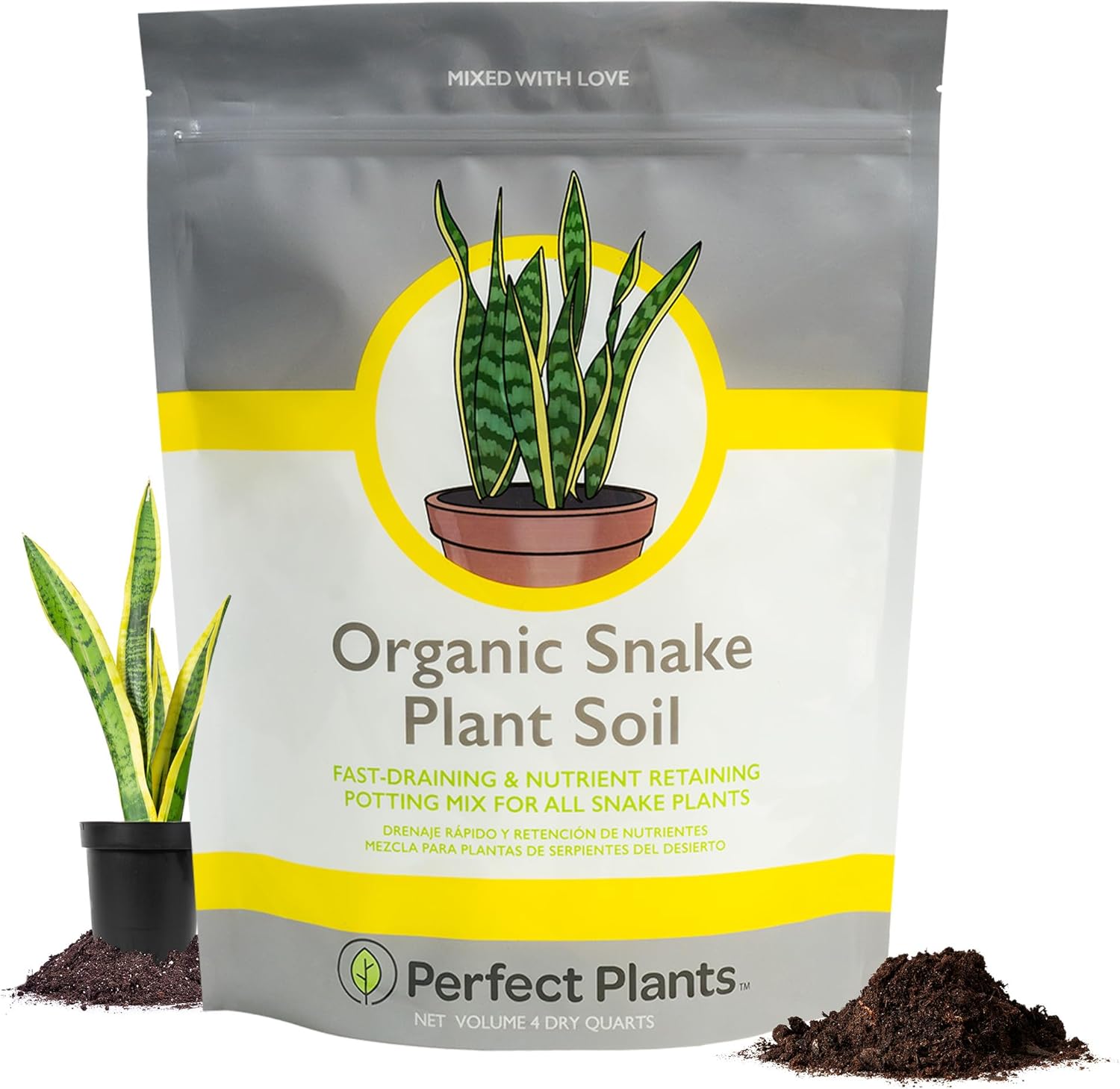
Perfect Plants Snake Plant Soil, 4 qt Coco Coir and Bark Potting Mix
| Volume | 4 quarts |
|---|---|
| Item Highlight | Pine bark, perlite and sand blend for Sansevieria varieties |
| Item Type Name | Snake Plant Soil |
| Manufacturer | Perfect Plants |
This snake plant soil is a ready-to-use mixture designed to improve drainage and airflow for Sansevieria varieties. It combines coconut coir, pine bark chips, perlite and sand so water moves through the root zone quickly, which helps prevent root rot in upright, thick-rooted snake plants. The bag is resealable and suitable for repotting houseplants or refreshing the top layer in containers. Because it contains no added slow-release fertilizer, you control feeding independently with liquid or slow-release fertilizers of your choice. The formula is produced in the U.S. and aimed at typical indoor and potted outdoor use. Limitations to note are the small 4‑quart volume, which means multiple bags are needed for large pots or several plants, and the lack of built-in nutrients so new transplants will need supplemental fertilizer for vigorous early growth.
Best for: Buyers who prioritize plant health and want a proven, drainage-focused substrate for snake plants and other succulents; especially good for cautious shoppers who value products with strong customer feedback and clear ingredient lists.
Less Ideal for: People looking for an all-in-one potting mix with built-in fertilizer or those who need a large volume supply for many or very large containers.
- Fast-draining blend tailored to snake plants reduces risk of overwatering damage
- Uses all-natural components like coconut coir and pine bark for better aeration
- Resealable bag format convenient for occasional repotting and storage
- No added slow-release fertilizer lets you control feeding schedules
- Small 4-quart volume may not cover multiple or large pots
- Does not include nutrients so fertilization is required after repotting
Verdict: Choose this mix when you want a purpose‑built, fast‑draining substrate that reduces root rot risk and gives you control over feeding for snake plants.
Back to the Roots Organic Indoor Potting Mix, 6 Quart

| Unit Count | 192 Fluid Ounces |
|---|---|
| Item Type Name | Indoor Potting Mix 6qt |
| Item Highlight | Peat-free, 100% organic, made in the USA |
| Ingredients | Coconut Coir, Yucca, Mycorrhizae, Perlite, Horticultural Sand |
| Volume | 6 quarts |
This 6-quart Back to the Roots indoor potting mix is designed for common houseplants and works well as a ready-to-use medium for snake plants and other easy-care species. The blend uses coconut coir as a base, plus yucca extract to help retain moisture and mycorrhizae to support root establishment and nutrient uptake. It includes perlite and horticultural sand to improve drainage and aeration, while dolomitic limestone helps balance pH. In practice the mix is lightweight and clean to handle, and because it is peat-free and made in the USA it appeals to buyers looking for an environmentally conscious option. For snake plants this mix provides a balance of moisture retention and drainage that reduces overwatering risk compared with straight peat-heavy mixes. Limitations are the small 6-quart size if you are potting several large plants and the lack of an added slow-release fertilizer, so you will need to feed established plants separately.
Best for: Buyers who prioritize a safe, organic indoor mix and want a low-risk, easy-care soil for snake plants and other houseplants that reduces the chance of overwatering problems.
Less Ideal for: Not the best choice for someone repotting many large plants at once or gardeners who want a fertilized all-in-one potting media.
- Peat-free organic formula using coconut coir for sustainable moisture retention
- Contains yucca extract to help soil hold water without becoming soggy
- Includes mycorrhizae to promote stronger root development and nutrient uptake
- Perlite and horticultural sand improve drainage and prevent compaction
- Small 6-quart volume may require multiple bags for several or large plants
- No built-in slow-release fertilizer so regular feeding is needed for mature plants
Verdict: A conservative, organic indoor potting mix that gives snake plants reliable drainage and moisture retention while supporting healthy roots.
Choosing the Right Potting Mix for Snake Plant: Key Factors to Consider
Drainage and Porosity
Snake plants need a potting mix that allows water to move through quickly while leaving air pockets around the roots. A mix with coarse components such as perlite, pumice, or coarse sand increases porosity and prevents the medium from compacting over time. Good drainage reduces the odds of standing water at the root crown, which is the primary cause of rot.
Look for particle sizes that are large enough to create channels but not so large that the mix falls apart when watered. Overly fine peat-heavy mixes retain too much moisture and slow oxygen exchange, which stresses snake plant roots during cool or low-light periods.
Moisture Retention Balance
While drainage is critical, the right mix also holds enough moisture for the plant between waterings. Snake plants are drought-tolerant but still need occasional moisture to access nutrients. A balanced mix blends chunky inorganic materials with a modest amount of well-aged organic matter so the medium does not dry out in hours nor stay saturated for weeks.
Consider your household conditions. In a consistently dry, warm room you may want a mix with slightly higher organic content. In humid or cool spots, favor faster-draining formulas that reduce dwell time for water around the root ball.
Nutrient Content and Longevity
Snake plants do not need heavy feeding, but a potting mix should supply slow, steady nutrition or accept topdressing easily. Look for mixes that contain aged compost, controlled-release fertilizer, or organic amendments that release nutrients slowly. This reduces the need for frequent fertilizing and minimizes salt buildup.
Longevity matters because repeated repotting stresses the plant. Mixes that maintain structure and nutrient availability for several months to a year are convenient for most indoor growers. Avoid mixes with high proportions of fresh, uncomposted organic material that break down quickly and compact.
Particle Size and Structure
Consistent particle size across a mix ensures predictable watering and root growth. A heterogeneous mix with a clear fraction of coarse particles creates stable air pockets and helps roots penetrate without circling. Uniformly fine mixes can cake and form a crust on the surface that impedes water infiltration and aeration.
If you plan to pot in shallow or narrow containers, choose a mix with more coarse particles to support airflow. For deeper pots, mixes with slightly more organic content can be acceptable as long as coarse drainage components remain present.
pH Stability and Salt Management
Snake plants tolerate a range of pH but prefer slightly acidic to neutral conditions. A stable pH in the potting mix prevents nutrient lockout and supports steady uptake. Some packaged mixes have additives that buffer pH; others rely on the raw materials. If your local water is very alkaline or high in dissolved salts, choose a mix that is low in retained salts and flush the pot periodically.
Avoid mixes with excessive slow-release fertilizers relative to plant needs, because salt accumulation can burn roots over time. Periodic leaching and occasional topsoil replacement will help maintain a healthy salt balance.
Weight and Suitability for Containers
The weight of the potting mix matters when you use hanging pots, narrow ledges, or lightweight decorative containers. Coarse mineral amendments like pumice and perlite keep mixes lighter than those relying on heavy vermiculite or large volumes of peat. A lighter mix also reduces stress on drainage holes and pot rims, and makes repositioning plants easier.
If you use decorative ceramic or stone pots without drainage, prioritize mixes that reduce overwatering risk and consider adding a drainage layer under the soil. For nursery-style plastic pots, a denser mix is usually acceptable if drainage is good.
Compatibility with Repotting Frequency
Decide how often you are willing to repot. Some growers repot snake plants every two to three years and prefer mixes that preserve structure longer. Others repot rarely and may accept mixes that require refreshes or topdressing more often.
Selecting a stable mix with coarse components extends the time between repots, while organic-heavy blends may need refreshing sooner. Consider also how root-bound the plant tends to get in your containers and whether you prefer dividing or leaving roots intact.
Simple DIY Mixes for Snake Plants
Making your own potting mix is an easy way to control drainage and organic content. A straightforward DIY blend combines a commercial indoor potting medium with substantial additions of perlite or pumice to increase porosity. Another reliable option swaps part of the potting soil for coarse horticultural sand to improve weight and drainage.
DIY mixes give you flexibility to tailor the blend to your home environment. Mixes that include small amounts of bark chips or aged compost add slow-release nutrients without compromising airflow. Always wet-test a DIY batch before potting: it should wet evenly but drain within a minute or two from the pot base after thorough watering.
- Common DIY ratio: 2 parts potting mix, 1 part perlite, 1 part coarse sand or pumice.
- Add 10 percent aged compost if you prefer slightly higher nutrient retention.
- Avoid fine builder sand that compacts; use horticultural or coarse sand.
Pot Choice and How It Interacts with Mix
The same mix behaves differently in terracotta, plastic, and glazed ceramic pots. Terracotta wicks moisture from the soil and helps the medium dry faster, which pairs well with mixes that retain a touch more moisture. Plastic and glazed pots retain moisture longer, so use a faster-draining mix to compensate.
If your chosen pot lacks drainage, improving the mix is only a partial fix. In those cases, reduce organic content, increase coarse mineral amendments, and water more conservatively to avoid waterlogging the root crown.
- Terracotta: slightly higher organic content is acceptable.
- Plastic/glazed: favor very fast-draining mixes.
- No drainage: avoid generous organic matter, water sparingly.
Watering Rhythm and Mix Choice
Your watering habits should influence mix selection. If you water on a schedule no matter the pot moisture, choose a mix with faster drainage and more inorganic content to reduce overwatering risk. If you check soil moisture and water only when the top few centimeters are dry, a balanced mix with moderate organic matter will keep the plant comfortable between waterings.
Seasonal adjustments matter: snake plants need less water in winter. A mix that dries reasonably quickly in warm months helps you reduce water during dormancy without leaving the plant overly dry in summer.
- Scheduled watering: prioritize fast-draining mixes.
- Moisture-based watering: balanced mixes work well.
- Winter care: reduce frequency regardless of mix choice.
Refreshing and Repotting Tips
When a mix breaks down, repotting or topdressing will revive growing conditions. For snake plants, spring repotting is ideal. If the old medium is compacted but roots are healthy, remove the top few centimeters and add fresh mix rather than a full repot to reduce stress.
If roots show signs of rot or the plant is root-bound, repot into a well-draining mix and trim damaged roots. Always allow freshly repotted plants a few weeks in moderate light and reduced watering while roots re-establish.
- Topdress annually if the mix is still structurally sound.
- Full repot every 2 to 3 years or when root-bound.
- Trim soft or black roots before repotting to prevent rot spread.
Feeding Strategy with Different Mixes
Mixes with more organic content supply nutrients longer and often need less frequent feeding. When using a very fast-draining, mineral-heavy mix, schedule light, regular fertilizing during the growing season to keep leaves healthy and promote slow, steady growth.
Use dilute fertilizer applications to avoid salt buildup, especially in mixes that are poor at retaining moisture. Periodically flush pots to reduce any accumulated salts from water or fertilizer.
- Organic-rich mixes: feed sparingly, once or twice during the growing season.
- Fast-draining mixes: apply balanced fertilizer every 4 to 6 weeks when actively growing.
- Always use weaker-than-label-strength solution for snake plants.
How We Chose the Best Potting Mix for Snake Plant
We evaluated a wide set of commercial and DIY-ready potting mixes and blends for their suitability with snake plants. Key filters removed mixes designed strictly for moisture-loving species or for seed starting because those hold moisture too long. We also excluded heavy garden soils and straight coco or peat products that lack adequate drainage unless they were clearly amended for succulents. Evaluation focused on specific, measurable attributes relevant to snake plant health: drainage and porosity, moisture retention balance, nutrient content and longevity, pH stability, and particle-size consistency that supports root aeration. We tested descriptions and ingredient lists for the presence of coarse components such as perlite, pumice, coarse sand, or bark that improve aeration. Longevity and structural stability were estimated from listed components and recommended refresh intervals. We prioritized blends that strike a balance between fast drainage and enough organic matter to supply gentle nutrition, and we favored mixes compatible with typical indoor pots and limited repotting cycles. Exclusions included mixes aimed solely at orchids, carnivorous plants, or water-retentive seed-starting mixes that do not suit snake plant root systems.
FAQ
Can I use standard houseplant potting soil for snake plants?
Often you can use standard houseplant potting soil, but it usually needs amendment. Standard mixes can retain too much water, so add coarse perlite, pumice, or sand to improve drainage and aeration for snake plants.
How often should I repot a snake plant based on the mix?
Typically every 2 to 3 years is sufficient if the mix maintains structure. Organic-heavy mixes may compact faster and require more frequent topdressing or repotting. Inspect roots and the soil texture to decide.
Is pumice better than perlite for snake plants?
Pumice and perlite both increase aeration. Pumice is heavier and stays in the mix longer without breaking down, while perlite is lighter and can float upward with frequent watering. Either works; choose based on weight preference and long-term stability.
Should I add fertilizer to a potting mix before planting a snake plant?
A small amount of slow-release or incorporated aged compost can be helpful, but avoid heavy pre-loading of fertilizer. Snake plants prefer light feeding. You can also rely on occasional liquid feeding during the growing season instead of a nutrient-rich initial mix.
Can I use cactus or succulent mix for snake plants?
Cactus and succulent mixes are often a good starting point because they are fast-draining. Ensure the mix has enough organic matter to supply modest nutrition, or plan to fertilize more regularly if you use a primarily mineral blend.
How do I adjust mix for winter care?
In winter reduce watering and use a mix that drains well so residual moisture does not sit near the roots. If you live in a cool, low-light home, favor a slightly airier mix to reduce the risk of rot during dormancy.
Final Verdict
Choose a potting mix for snake plant that prioritizes fast drainage and stable structure while offering modest nutrient support. Match the mix to your pot material and watering routine: faster-draining blends for glazed or plastic pots and slightly richer mixes if you rely on moisture-based watering. Prioritize mixes with coarse mineral amendments and consistent particle sizes to reduce rot risk and extend time between repots. With the right medium and a conservative watering habit, you will keep snake plant roots healthy and growth steady.
