

Note: This article contains affiliate links. If you click on these links and make a purchase, I may earn a small commission at no extra cost to you. This helps support my research and content. Read my full affiliate disclosure here.
A correct potting mix for terrariums makes the difference between a thriving miniature ecosystem and plants that struggle with rot or drought. In closed or open terrariums you need a substrate that holds enough moisture for plant needs while still offering good aeration and stable structure over time. This guide shortlists the top options for terrarium setups and explains the practical tradeoffs gardeners should weigh. We evaluate mixes on moisture control, aeration, organic stability, and suitability for common terrarium plants. Read on to see which characteristics matter most for your setup and why these shortlisted mixes made the cut.
Top Picks at a Glance
| Best Overall The best all-around choice for most situations | Josh's Frogs ABG Mix Bioactive Terrarium Substrate (4 qt) |  |
| Best Quality Built to a higher standard if you want something more solid | Leaves and Soul Professional Terrarium Soil Mix, 2.2 Quarts |  |
| Best Value The sweet spot between price and what you get | Soil Sunrise Terrarium Potting Soil Mix (4 Quart) |  |
| Best Budget The cheapest option that still gets the job done reliably | Doter Terrarium Potting Soil Mix, 1 qt |  |
| Highest Rated A top-rated pick with lots of positive feedback | Josh's Frogs ABG Mix Bioactive Terrarium Substrate (10 Quart) |  |
| Most Popular A crowd favorite that many people choose with confidence | Zilla Jungle Mix Terrarium Substrate Bedding, 8 Quart |  |
| Best Seller A high-volume bestseller chosen again and again | Zoo Med Creatures Creature Soil Bag, 1 Quart (Peat Moss Blend) |  |
Josh's Frogs ABG Mix Bioactive Terrarium Substrate (4 qt)

| Brand Name | Josh's Frogs |
|---|---|
| Item Type Name | Terrarium Substrate |
| Unit Count | 128 Ounce |
| Style Name | Tropical |
Josh's Frogs ABG Mix is a ready-to-use terrarium substrate formulated from the original Atlanta Botanical Garden recipe to support tropical plants and bioactive setups. It combines charcoal, milled sphagnum moss, pine bark, tree fern, and peat to create a moisture-retentive yet well-draining layer that breaks down slowly, so you do not need frequent replacement in long-term displays. The mix is vivarium-ready and works well for cultivating springtails and isopods that help control mold and waste, which simplifies maintenance. Preparation is straightforward: remix the bag and moisten with distilled or RO water to reduce dust and ease handling. Important practical limits are its plant-only guidance and a caution against saturation in setups that can trap excess water, so it needs proper drainage design or a drainage layer underneath. The 4 quart volume is suitable for small to medium enclosures but may require multiple bags for larger terraria.
Best for: Buyers who prioritize reliable, proven performance for tropical or bioactive terrariums and want a substrate that promotes plant health and a self-sustaining microfauna community.
Less Ideal for: People setting up large enclosures who need bulk substrate quantities in one purchase or keep animals explicitly listed as incompatible should consider other options.
- Formulated from the original ABG recipe trusted for tropical plant growth
- Balanced blend of charcoal, sphagnum moss, bark, tree fern, and peat for moisture retention and drainage
- Supports culturing of springtails and isopods for low-maintenance bioactive cleanup
- Breaks down slowly for longer service life in established terrariums
- Pre-mixed and vivarium-ready for simple setup after moistening
- Supplied volume (4 quarts) is limited for larger terraria and may require multiple bags
- Not recommended for use with hermit crabs or pac-man frogs and requires care to avoid saturation
Verdict: Choose this ABG mix when you want a proven, plant-focused substrate that supports a low-maintenance bioactive terrarium.
Leaves and Soul Professional Terrarium Soil Mix, 2.2 Quarts

| Brand Name | Leaves and Soul |
|---|---|
| Volume | 2.2 quarts |
| Unit Count | 81.91 Ounce |
| Made in | USA |
Leaves and Soul Professional Terrarium Soil Mix is a pre-blended 2.2 quart potting medium aimed at indoor succulent and terrarium setups. It combines pine bark for structure, peat for moisture retention, and coarse sand for drainage so the mix stays airy while holding enough water between waterings. Typical use is straight from the bag for potting small succulents, cactus, aloe, or filling layered terrarium planters; no additional amendments are required for most small-scale projects. The light, well-draining texture helps reduce the risk of overwatering and root rot and encourages healthy root growth in containers that do not have large drainage reserves. The resealable bag keeps leftover mix usable between plantings. Limitations are the small 2.2 quart volume, which means multiple bags are needed for larger collections, and peat content may be a concern for gardeners preferring peat-free blends. For growers who need a reliable, out-of-the-box soil for individual succulents and terrarium displays, this delivers consistent, easy results.
Best for: Buyers who prioritize a dependable, ready-made soil that reliably supports succulents, cacti, and small terrariums without extra mixing or fuss.
Less Ideal for: Gardeners outfitting large collections, outdoor beds, or those who specifically require a peat-free or bulk soil option should consider other products.
- Ready-to-use premix that requires no additional blending for terrariums or small succulent pots
- Balanced ingredient mix (pine bark, peat, coarse sand) that promotes drainage and aeration
- Resealable packaging preserves remaining soil between uses
- Formulation designed to reduce risk of overwatering and root rot in confined containers
- Only 2.2 quarts per bag, so larger projects require multiple purchases
- Contains peat, which some gardeners avoid for sustainability or preference reasons
Verdict: A convenient, professionally blended terrarium mix that reliably delivers the drainage and aeration succulents need in small pots and displays.
Soil Sunrise Terrarium Potting Soil Mix (4 Quart)

| Volume | 4 quarts |
|---|---|
| Ingredients | Coco coir, horticultural charcoal, pumice |
| Unit Count | 1 Count |
| Style Name | Compact |
This 4‑quart Soil Sunrise terrarium mix is designed specifically for closed and open terrarium displays. The blend of coco coir, pumice, and horticultural charcoal creates a lightweight, soilless medium that holds moisture without becoming waterlogged while allowing airflow around roots. In practice it is used as the primary growing medium for ferns, mosses, African violets and other small, humidity‑loving plants in glass containers. Notable features include built‑in charcoal for toxin absorption and pumice for improved drainage and aeration, so you can avoid frequent repotting or root rot in sealed environments. The bagged 4‑quart size is sized for a few small containers and is easy to scoop into layered terrarium builds. Limitations are the small volume if you want to fill several or larger closed terrariums and the lack of added slow‑release fertilizer, so plan to supplement nutrients for long‑term plantings. Overall it is a focused, low‑maintenance substrate for hobbyists building compact, high‑humidity displays.
Best for: Buyers who want a ready‑to‑use, low‑maintenance substrate for building or refreshing small closed terrariums and fairy gardens and who prioritize proper moisture control over added fertilizers.
Less Ideal for: Gardeners planning to plant many or larger terrariums, or those who want an all‑in‑one potting mix with preloaded long‑term fertilizer.
- Formulated blend of coco coir, pumice, and horticultural charcoal for moisture balance and drainage
- Charcoal helps absorb impurities and supports healthy microenvironments in closed terrariums
- Lightweight, soilless mix that promotes airflow to roots and reduces risk of root rot
- Appropriate texture for small, humidity‑loving plants like ferns, mosses, and violets
- Only 4 quarts per bag, so multiple bags are needed to fill larger or several terrariums
- No built‑in fertilizer so periodic nutrient supplementation is required
Verdict: A purpose‑built, low‑maintenance terrarium mix that keeps closed displays moist but not soggy, ideal for building healthy small terrariums.
Doter Terrarium Potting Soil Mix, 1 qt

| Unit Count | 32 Ounce |
|---|---|
| Item Type Name | Garden soil |
| Manufacturer | Doter |
| Volume | 1 quarts |
Doter Terrarium Potting Soil is a ready-made 1 quart mix built for closed and open terrarium setups. The blend combines components like peat moss, chunky perlite, pine bark, charcoal, moss and worm castings to offer both moisture retention and improved drainage, which helps prevent waterlogged roots while maintaining humidity for mosses, ferns and tropical terrarium plants. It is pH balanced and enriched with organic nutrients so young plants and cuttings get a gentle nutrient boost without frequent fertilizing. Practical advantages include its small bag size that is easy to work with for layered terrarium construction and visible chunky perlite that aids aeration. Limitations are that the 1 qt volume only covers a few small jars or one medium globe, and specialized mixes for carnivorous plants or succulents may still be preferable for those specific ecosystems. For simple decorative or beginner terrariums this mix removes the need to source and measure multiple ingredients yourself.
Best for: Buyers who want a simple, ready-to-use terrarium substrate for decorative or beginner projects and prefer to avoid mixing their own components.
Less Ideal for: People building large terrariums, filling multiple containers, or growing highly specialized plants like succulents or carnivorous species that require bespoke substrates.
- Formulated blend with peat moss, perlite, pine bark and worm castings for a balanced growing medium
- pH balanced and nutrient-enriched to support healthy root development
- Chunky perlite and pine bark improve drainage and aeration in tight terrarium containers
- Small 1 quart volume limits how many terrariums can be filled from one bag
Verdict: A convenient, pre-mixed terrarium soil that saves time and delivers the moisture balance beginners need for small decorative gardens.
Josh's Frogs ABG Mix Bioactive Terrarium Substrate (10 Quart)

| Unit Count | 320 Ounce |
|---|---|
| Included Components | 5 vivarium layers |
| Style Name | Tropical |
| Manufacturer | Josh's Frogs |
Josh's Frogs ABG Mix is a ready-to-use bioactive substrate built from the classic Atlanta Botanical Garden formula of charcoal, milled sphagnum, pine bark, tree fern, and peat. It is typically used as the main planting and bedding layer in tropical terrariums and bioactive vivaria where you want stable moisture without waterlogging. The mix holds moisture while allowing excess to drain, supports long-term plant growth, and breaks down slowly so a single application can last months to years with proper setup. It also provides a suitable medium for culturing springtails and isopods that help keep a vivarium clean. Preparation is simple: mix the bag contents, dampen with distilled or RO water to reduce dust, and pair with a false bottom and barrier for best drainage. Limitations are that it is sold as a blended bag so you cannot tailor ingredient ratios, and like most peat-containing mixes it will compact slowly over time and may need top-up or partial replacement in very heavily planted or high-traffic enclosures.
Best for: Buyers who want a dependable, low-maintenance substrate for tropical terrariums and bioactive vivaria that performs predictably over time.
Less Ideal for: People needing a highly customizable substrate recipe or those avoiding peat-based products for environmental reasons should look elsewhere.
- Proven ABG recipe trusted for tropical terrariums
- Balanced blend that retains moisture yet allows drainage
- Slow decomposition means long service life between replacements
- Works well as a base for culturing beneficial invertebrates
- Preblended proportions cannot be adjusted for custom setups
- Contains peat which can compact over very long periods
Verdict: Choose ABG Mix when you want a reliable, long-lasting bioactive substrate that simplifies terrarium setup and maintenance.
Zilla Jungle Mix Terrarium Substrate Bedding, 8 Quart

| Tank Volume | 8 quarts |
|---|---|
| Material Type | Moss, Wood Shavings |
| Pet Type | Amphibian, Reptile |
Zilla Jungle Mix is a ready-to-use organic substrate made from sphagnum peat moss and aged Douglas fir shavings intended for tropical and forest-style terrariums. You spread a 1 to 2 inch layer in the enclosure to support humidity retention and natural behaviors such as digging, nesting, and occasional egg incubation. Its soft, loamy texture is comfortable for frogs, rainforest geckos, toads, and many snakes, and it can be used as part of a bioactive setup alongside bark blend, live plants, and activated charcoal. Practical benefits include good moisture absorption that helps stabilize enclosure humidity and an earthlike scent that mimics natural habitat. Maintenance is straightforward: spot clean daily and replace the bedding monthly or as needed. Limitations are that it is not formulated for odor control or mold prevention in persistently wet setups, so proper ventilation, monitoring with a hygrometer, and routine replacement are still required.
Best for: Keepers building tropical or forest-style terrariums who prioritize a natural, moisture-retentive substrate and want an easy-to-use base for encouraging species-appropriate behaviors.
Less Ideal for: Owners needing a low-maintenance, odor-controlling substrate or those running very wet enclosures where mold is a chronic issue should consider alternative products.
- 100% organic blend of sphagnum peat moss and aged Douglas fir shavings for a natural feel
- Designed to retain and moderate humidity for tropical and forest terrariums
- Soft texture that encourages natural behaviors like digging, nesting, and egg incubation
- Suitable for bioactive enclosures when combined with plant material and drainage layers
- Not formulated to control odors or prevent mold in consistently saturated setups
- Requires monthly replacement and daily spot cleaning to maintain freshness
Verdict: Choose Zilla Jungle Mix when you want a natural, moisture-retaining organic substrate that encourages digging and nesting in tropical terrariums.
Zoo Med Creatures Creature Soil Bag, 1 Quart (Peat Moss Blend)
| Unit Count | 32 Ounce |
|---|---|
| Number of Packs | 1 |
| Style Name | Peat Moss |
| Volume | 2 liters |
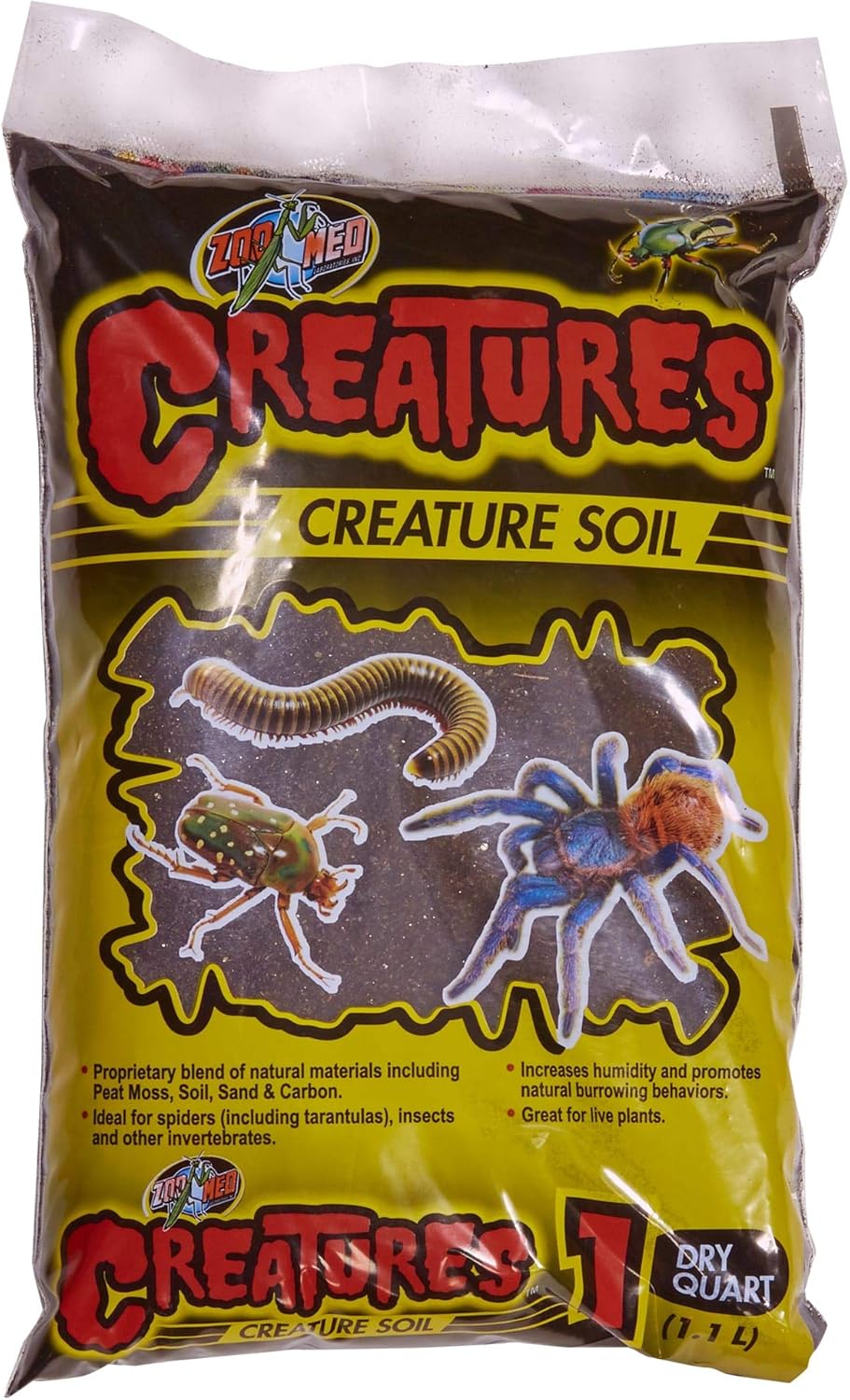
Zoo Med Creature Soil is a small, pre-mixed substrate aimed at terrariums that house spiders, insects, and other invertebrates. The bag combines peat moss with soil, sand, and carbon to retain humidity, encourage burrowing, and support live plants in smaller enclosures. It comes in a one quart (2 liter) bag that is easy to portion into starter setups or to top-dress existing substrates. The mix is practical for hobbyists who want a natural-feeling substrate without mixing components separately, and the peat content helps keep humidity stable for species that need moisture. Important limitations are the small volume for larger terrariums and the inhalation/irritation warning for peat moss, so handle it with a mask and avoid dusty clouds when filling a tank. For long-term use in active burrowing species you may want deeper quantities or periodic replacement but for planting, humidity control, and temporary setups this is a convenient, low-effort option.
Best for: A thrifty hobbyist setting up small terrariums for spiders, insects, or planted displays who prefers a ready-made substrate to save time and effort.
Less Ideal for: Not a good fit for builders of large or deep burrowing systems who need bulk substrate or for users seeking peat-free or sterile commercial mixes.
- Pre-mixed blend saves time compared with assembling peat, sand, and soil separately
- Peat moss base holds moisture well to support humidity-loving invertebrates and live plants
- Small 1 quart bag is easy to portion for starter tanks or to use as top-dressing
- Quantity is limited so multiple bags are needed for medium or large terrariums
- Contains peat moss which can produce dust and may irritate respiratory systems if not handled carefully
Verdict: A compact, ready-to-use peat-based substrate that delivers good humidity and burrowing performance for small terrariums on a tight budget.
Choosing the Right Potting Mix for Terrariums: Key Factors to Consider
Moisture Retention and Evaporation Balance
Terrariums, especially closed ones, create humid microclimates where evaporation is limited. The substrate must hold enough water to sustain plants between maintenance intervals without becoming waterlogged. Too much water retention leads to root rot and anaerobic conditions; too little forces frequent misting and stress.
Assess mixes for materials like peat, coco coir, or loam that store water in a controlled way and for the presence of larger particles that create air gaps. Consider how the mix will behave over weeks rather than just immediately after watering, because long-term moisture dynamics determine plant health.
Aeration and Drainage Pathways
Small terrarium containers limit vertical space, so the substrate needs internal pore space to allow oxygen to reach roots and to give excess water somewhere to go. Particle size distribution is the key driver: mixes that combine fine and coarse components create a balance between water retention and free-draining channels.
Look for formulations that include grit, perlite, pumice, or fine sand to maintain drainage. These coarse elements keep the root zone from sealing off as organic components settle, which helps prevent soggy, compacted layers that harm root systems.
Organic Matter Stability and Decomposition Rate
Organic components supply nutrients but they also break down, changing the mix structure and nutrient availability over time. In a closed terrarium, rapid decomposition can raise ammonia or nitrate levels and cause odors or algal growth. It also reduces pore space, increasing compaction risk.
Prefer mixes with stable organic matter or lower proportions of very fine composted material. If using compost-rich mixes, plan for periodic substrate refreshes or include buffering layers like charcoal to manage breakdown products.
pH and Mineral Content
Many terrarium plants prefer neutral to slightly acidic conditions, but some specialized plants require specific pH ranges. The potting mix should not swing widely in pH after planting. Mineral-rich soils or amendments can change water chemistry and affect sensitive species in a small closed system.
Check whether a mix contains lime, dolomite, or high-ash components. For mixed-plant terrariums, choose a substrate with moderate, stable pH, or be prepared to monitor and adjust with appropriate plants and amendments.
Contamination Risk and Cleanliness
Terrariums are small, closed environments where weed seeds, slug eggs, or microscopic disease organisms can rapidly become problems. A sterile or low-contaminant mix reduces the chance of pests and unwanted growth establishing in the system.
High-quality mixes should be free from visible debris and have low weed-seed loads. For extra caution, gardeners often sterilize substrates before use or include a charcoal layer to absorb contaminants and reduce odors.
Workability and Planting Ease
Because terrariums often involve delicate plantings, the texture of a mix matters when positioning small roots and arranging decorative elements. A substrate that is too loose will not support tiny stems; one that is too compact makes planting fiddly and can crush roots.
Choose mixes that hold shape enough to anchor plants but still allow roots to penetrate. The ability to compress slightly for stable planting without collapsing into a dense block is especially useful for miniature gardeners and for arranging layered substrates and decorative rocks.
Layering a Terrarium for Health and Longevity
Correct layering improves drainage and prevents substrate saturation. Start with a coarse drainage layer such as pebbles or expanded clay, then add a thin activated charcoal layer to absorb impurities, and finish with your chosen potting mix. This sequence helps keep water away from root crowns and reduces odor and algae in closed setups.
- Coarse drainage at the bottom to create a reservoir for excess water
- Activated charcoal thin layer to improve water quality and reduce odors
- A finished potting mix depth appropriate for plant root systems, usually 2 to 4 inches for small terrariums
Adjusting Mixes for Different Terrarium Types
Closed, high-humidity terrariums need mixes that hold moisture without becoming anaerobic. Increase coarse material and stable organics to keep pore space open. Open-air terrariums benefit from mixes that dry between waterings; add more organic-retaining components if you want slower drying.
- Closed terrariums: more drainage grit and stable organic components
- Open terrariums: slightly higher organic content for moisture retention
- For succulents or cacti in open terrariums, use a much grittier mix with fast drainage
Amendments That Improve Performance
Small additions can tailor a potting mix to specific plants. Pumice or horticultural sand increases drainage and aeration. Sphagnum moss or small amounts of coco coir gently raise water retention. Activated charcoal helps keep closed ecosystems balanced by trapping dissolved organics.
- Use pumice or perlite to increase aeration
- Add sphagnum for moisture without compaction
- Include charcoal to reduce odors and chemical buildup
Plant Selection and Root Needs
Match the potting mix depth and composition to your plants. Shallow-rooted mosses and ferns need a fine, moisture-retentive top layer. Taller or deeper-rooted plants benefit from more depth and a stronger structural base to anchor roots. Avoid forcing deep-rooted species into very shallow containers.
- Mosses and small ferns: fine, moisture-retentive top layer
- Taller houseplants: deeper substrate with more structural support
- Avoid plants that produce large root volumes in tiny terrariums
Maintenance Tips to Keep Substrates Stable
Monitor condensation cycles and water only when the substrate surface shows dryness appropriate to the plant. In closed terrariums, occasionally open the lid to moderate humidity and let trapped gases dissipate. Remove dead leaves promptly to reduce organic load and slow decomposition.
- Watch condensation instead of a fixed schedule for watering
- Remove dead plant material to limit decomposition
- Refresh top layers if compaction or odor develops over time
How We Chose the Best Potting Mix for Terrariums
To assemble this list we focused on attributes that directly affect plant health and the long-term behavior of a terrarium substrate. We prioritized mixes that deliver predictable moisture retention in confined spaces, maintain pore structure to prevent compaction, and resist rapid decomposition that can create anaerobic pockets. Evaluation criteria included water-holding capacity under closed-terrarium humidity, particle size distribution for aeration, organic matter stability to limit nutrient spikes, contamination risk including weed seeds or pests, and pH suitability for common terrarium species. We also considered ease of use for layering and planting, and how readily a mix accepts additional amendments such as activated charcoal or sphagnum. We excluded any blends designed solely for outdoor garden beds, heavy garden soils, or mixes with high fertilizer loads intended for rapid growth. Products that required significant, specialized treatment before use in terrariums were not considered. The final selection reflects practical performance in small, enclosed environments and compatibility with typical terrarium plants.
FAQ
Can I use regular houseplant potting mix in a terrarium?
Often you can, but many standard houseplant mixes are richer in organic matter and may retain too much water for closed terrariums. Adjust such mixes by adding grit or perlite and consider a charcoal layer to reduce decomposition issues.
How deep should potting mix be in a small terrarium?
Depth depends on plant root systems but typical small terrariums need 2 to 4 inches of growing mix above drainage layers. Shallow moss-only setups can use less, while deeper-rooting plants require more substrate depth.
Do I need to sterilize potting mix before building a terrarium?
Sterilizing is optional but can reduce the chance of weed seeds and pests. Many gardeners lightly bake or microwave damp mixes, or use high-quality sterile mixes to minimize contamination risk before assembly.
How often should I replace the terrarium substrate?
It depends on plant load and decomposition rate, but many terrariums go several years before needing a major substrate refresh. Watch for signs like persistent odors, reduced drainage, or heavy compaction as triggers to replace or top up substrate.
What amendments help prevent root rot in a terrarium?
Adding coarse materials such as pumice, perlite, and a thin charcoal layer helps keep excess moisture away from roots and absorbs harmful breakdown products. Ensuring proper layering and avoiding overwatering are equally important.
Final Verdict
Prioritize moisture balance, aeration, and long-term organic stability when choosing a potting mix for terrariums. Think about how the mix will age within a confined space and select or amend substrates to preserve pore space and moderate nutrient release. Focus on the tradeoffs between water retention and drainage that match your terrarium type and plants. With the right substrate and basic layering, you can build a low-maintenance terrarium that supports healthy roots and steady growth for months or years.
