

Note: This article contains affiliate links. If you click on these links and make a purchase, I may earn a small commission at no extra cost to you. This helps support my research and content. Read my full affiliate disclosure here.
Choosing the right potting mix for self watering planters matters because these systems change how moisture and oxygen reach roots. A mix that holds too much water will suffocate roots, while one that drains too quickly leaves plants thirsty between reservoir refills. This guide looks at five shortlisted potting mixes suited to self watering setups and explains how each addresses moisture buffering, aeration, and nutrient delivery. We evaluated mixes for how they behave in real containers and patio conditions, focusing on water retention, drainage, and root health. Read on to see the key tradeoffs and which mix characteristics work best for different plant types and planter sizes.
Top Picks at a Glance
| Best Quality Built to a higher standard if you want something more solid | Gardener's Supply Company Organic Potting Soil Mix (20 Quarts) |  |
| Best Value The sweet spot between price and what you get | Miracle-Gro Moisture Control Potting Mix, 16 qt. (2-Pack) |  |
| Best Budget The cheapest option that still gets the job done reliably | Back to the Roots Organic Indoor Potting Mix, 6 Quart |  |
| Highest Rated A top-rated pick with lots of positive feedback | Lechuza PON Mineral Plant Substrate Potting Mix, 12 L |  |
| Best Seller A high-volume bestseller chosen again and again | Back to the Roots Organic Indoor Potting Mix, 12 Quart |  |
Gardener's Supply Company Organic Potting Soil Mix (20 Quarts)

| Brand Name | Gardener's Supply Company |
|---|---|
| Volume | 20 quarts |
| Item Weight | 16 ounces |
This organic potting mix is designed for performance in self-watering planters and nutrient-hungry plants. The blend emphasizes aeration and water-holding balance so it wicks reliably from reservoir systems while still letting roots get oxygen. It includes a SuperRoot Booster with mycorrhizae-focused MycoActive technology to support root growth and improve nutrient and water uptake, which helps heavy feeders and transplants establish faster. In practical use the mix is easy to fill into planter boxes, works for both indoor and outdoor seedlings and potted vegetables, and holds shape well when repotting. Limitations include the bag size of 20 quarts, which means larger beds will need multiple bags, and safety guidance to avoid contact with eyes or ingestion. There is no detailed NPK analysis on the label, so gardeners wanting exact nutrient numbers or long-term soil amendment schedules may need supplemental fertilizers or labelling from their routine program.
Best for: Gardeners who prioritize strong root development and reliable moisture delivery in self-watering containers, especially those growing nutrient-demanding vegetables or large potted plants.
Less Ideal for: Those who want an exact, quantified fertilizer profile or need bulk volumes for large raised beds should consider a formulated soil with listed nutrient values or bulk compost options.
- Formulated for self-watering systems with good wicking action
- Includes mycorrhizal SuperRoot Booster to enhance root growth and nutrient uptake
- Lightweight blend that provides aeration while retaining moisture
- Suitable for indoor and outdoor seed-starting, transplants, and heavy-feeding plants
- Only sold in 20 quart bags which may require multiple purchases for larger planters
- No explicit NPK or long-term nutrient breakdown provided
Verdict: Choose this mix if you need a ready-to-use, wick-friendly organic soil that boosts root growth and supports heavy-feeding plants in self-watering planters.
Miracle-Gro Moisture Control Potting Mix, 16 qt. (2-Pack)
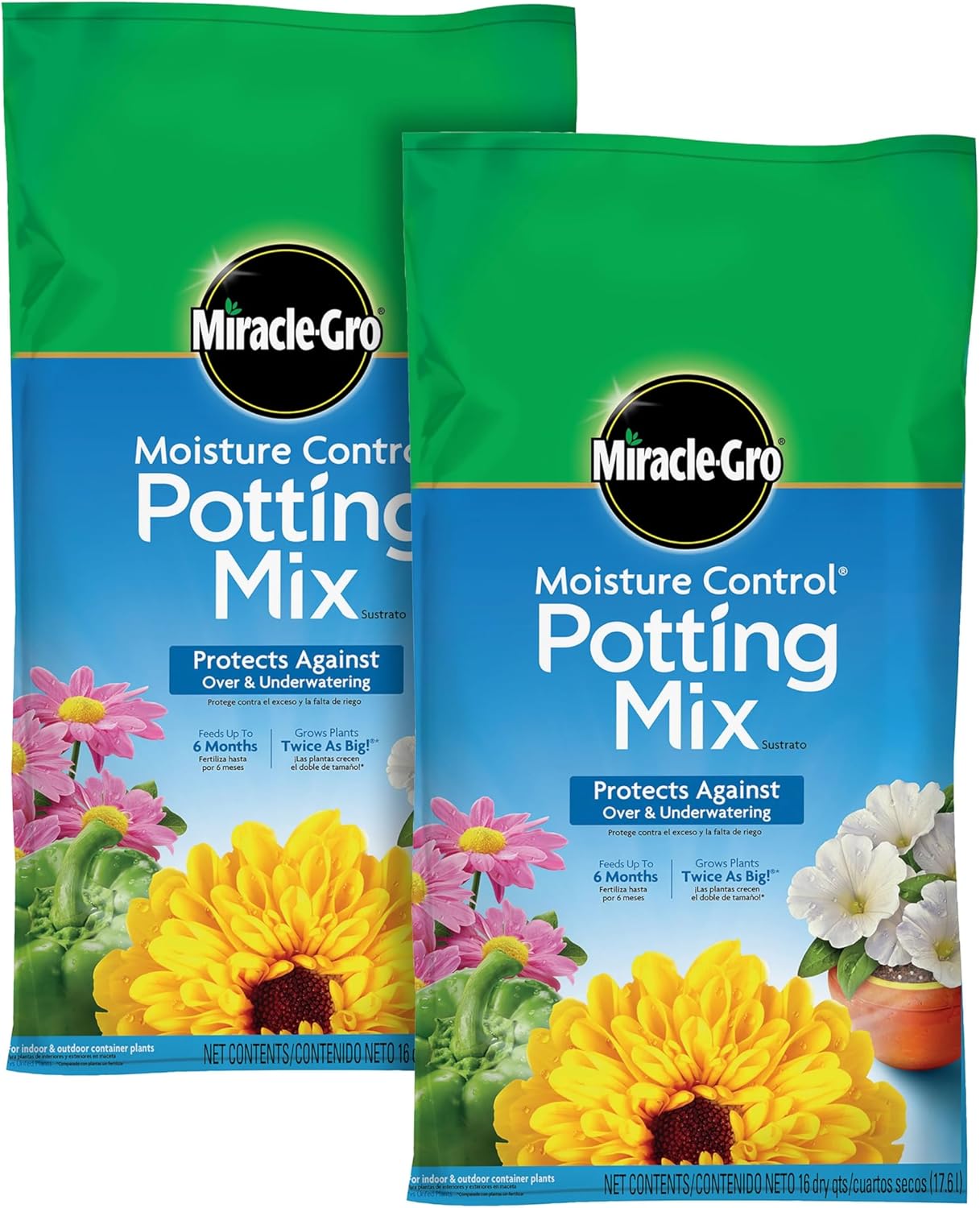
| Number of Packs | 2 |
|---|---|
| Item Type Name | Miracle-Gro Moisture Control Potting Mix |
| Feeds Plants | Up to 6 months |
| Best For | Containers & planters |
This two-pack of Miracle-Gro Moisture Control Potting Mix is built for container gardening and is easy to use when potting mint or other herbs. The mix contains an AquaCoir formula with sphagnum peat moss, coir, and a wetting agent that helps it absorb more water than basic potting soils, which reduces the risk of both over- and under-watering in pots. It is light and airy so roots can breathe and it includes nutrients that feed plants for up to six months, cutting back on how often you need to fertilize young mint plants. Typical use is straightforward: pick a pot with drainage, fill about one third, plant, top off, and water through. For someone growing mint in patio pots or herb containers this mix simplifies watering and supports vigorous root development. It is not a replacement for annual repotting or supplemental feeding beyond six months, and container gardeners who prefer fully organic mixes should look elsewhere.
Best for: Practical container gardeners who want an easy, low-maintenance potting mix that stabilizes watering and supports steady root growth for mint and other potted herbs.
Less Ideal for: Growers who prioritize fully organic inputs or who want a long-term in-pot soil that never needs replenishing should consider other specialty or homemade mixes.
- Moisture-control formula absorbs up to 33% more water than basic potting soil, helping prevent over- and under-watering
- Feeds plants for up to six months, reducing immediate need for additional fertilizer
- Airy texture supports healthy root growth in containers and hanging baskets
- Pack includes two 16 qt. bags, covering multiple 12-inch pots
- Not marketed as a fully organic potting mix, which may matter to some herb growers
- Nutrient feeding lasts up to six months so plants will need repotting or additional fertilizer afterward
Verdict: A convenient moisture-control potting mix that makes watering mint in pots more forgiving while providing up to six months of nutrition.
Back to the Roots Organic Indoor Potting Mix, 6 Quart

| Unit Count | 192 Fluid Ounces |
|---|---|
| Item Type Name | Indoor Potting Mix 6qt |
| Item Highlight | Peat-free, 100% organic, made in the USA |
| Ingredients | Coconut Coir, Yucca, Mycorrhizae, Perlite, Horticultural Sand |
This Back to the Roots indoor potting mix is a ready-to-use, 6-quart blend designed for common houseplants such as pothos, monstera and ferns. It combines coconut coir, yucca extract, mycorrhizae, perlite and horticultural sand to improve moisture retention, drainage and root development without peat. In practice it feels light and friable, so it is easy to pot seedlings or repot mature plants and it reduces compaction that can suffocate roots. The added mycorrhizae helps young roots establish and take up nutrients more efficiently while yucca extract helps the mix hold water between waterings, which is convenient for forgetful or busy plant owners. Because it is peat-free and made in the USA, it is a more sustainable choice versus traditional peat-based mixes. Limitations are the small 6-quart size, which means frequent repurchasing for larger collections, and the bag does not include fertilizer so you will need to feed plants separately as they grow.
Best for: Buyers who prioritize low-risk, easy-care houseplant solutions and want an organic, ready-to-use potting mix that reduces watering hassles and supports healthy root growth.
Less Ideal for: Not ideal for gardeners who need large-volume soil for many pots or for those expecting a mix that includes built-in fertilizer for long-term feeding.
- Peat-free organic formula that reduces environmental impact
- Yucca extract improves moisture retention between waterings
- Contains mycorrhizae to support root development and nutrient uptake
- Light, well-draining texture suitable for repotting seedlings and houseplants
- Small 6-quart volume may require frequent repurchasing for larger plant collections
- Does not include fertilizer so additional feeding is necessary
Verdict: A compact, peat-free potting mix that simplifies indoor plant care by holding moisture and boosting root establishment.
Lechuza PON Mineral Plant Substrate Potting Mix, 12 L

| Unit Count | 403.3 Ounce |
|---|---|
| Item Type Name | Plant substrate |
| Volume | 12 liters |
| Manufacturer | Lechuza |
Lechuza PON is a mineral-based, soil-free substrate made from pumice, lava and zeolite that replaces conventional potting soil in containers and self-watering planters. It is typically used to pot indoor and patio plants—including orchids, citrus and other container trees—by filling the planter around the root ball without fully washing the roots. The substrate maintains an air/water balance (about 55% air, 45% water) so roots get oxygen while capillary action draws water up from the reservoir. Notable features include contaminant-free mineral granules that resist compaction, built-in zeolite to buffer pH and a coated fertilizer that feeds plants for up to six months. In practice that means stable root aeration over years, reduced risk of root rot compared with dense soils, and less frequent repotting. Important limitations are that PON is not an organic potting soil so it does not store moisture the way peat-based mixes do and it is labeled not for use with food crops, so it is best for ornamental potted trees rather than edible production; users should also follow safety guidance when handling the product.
Best for: Buyers who prioritize root oxygenation and steady water delivery for container-grown ornamental trees and want a low-maintenance, long-lasting substrate solution.
Less Ideal for: Gardeners looking to grow food crops or who prefer organic, moisture-retentive potting mixes for heavy-water-demand plants should consider alternatives.
- Mineral, non-compacting granules preserve long-term aeration and root health
- Continuous capillary action helps deliver water evenly from the reservoir
- Includes zeolite to stabilize pH and act as a nutrient buffer
- Coated slow-release fertilizer supplies nutrients for up to six months
- Does not retain water like organic mixes so watering frequency may increase in hot, dry conditions
Verdict: For potted ornamental trees that need excellent root aeration and reliable capillary watering, Lechuza PON delivers a durable, low-compaction mineral substrate built to last.
Back to the Roots Organic Indoor Potting Mix, 12 Quart

| Volume | 12 quarts |
|---|---|
| Item Highlight | Indoor potting mix for pothos, monstera, ferns |
| Organic | 100% organic |
| Peat-free | Peat-free |
| Origin | Made in the USA |
This indoor potting mix is designed for everyday houseplants and seed starting, offering an organic, peat-free alternative that emphasizes moisture retention and root health. The formula includes yucca extract to help the soil hold water longer and added mycorrhizae to encourage stronger root development and better nutrient uptake. It also uses dolomitic limestone to balance pH and is made without bark or compost to reduce gnats and other indoor pests. Typical use is repotting monsteras, pothos, ferns and similar tropical foliage or refreshing topsoil in indoor containers. Practical benefits include easier watering management for busy or cautious plant owners and a reduced likelihood of pest problems compared with mixes containing coarse bark. Limitations are that the mix is an all-purpose indoor blend rather than a chunky, fast-draining aroid-specific mix, so growers who need very airy media for large root-bound monsteras may want to amend it with perlite, orchid bark, or pumice for extra drainage and airflow.
Best for: Homeowners who prefer a low-risk, easy-care potting mix for common tropical houseplants and want an organic, low-gnat option that reduces hands-on maintenance.
Less Ideal for: Advanced collectors growing very large or high-airflow aroids who need a chunky, fast-draining substrate straight out of the bag.
- Organic and peat-free composition suitable for eco-conscious indoor gardeners
- Yucca extract improves moisture retention for less frequent watering
- Includes mycorrhizae to support root growth and nutrient uptake
- Balanced pH with dolomitic limestone to help nutrient availability
- Not formulated as a very airy aroid mix so may require amendments for large monsteras
Verdict: A reliable, organic indoor potting mix that makes repotting monsteras and other common houseplants low effort and low risk.
Choosing the Right Potting Mix for Self Watering Planters: Key Factors to Consider
Water Retention Balance
Self watering planters rely on a reservoir and capillary action to supply moisture, so the potting mix must hold water without becoming waterlogged. A good balance means the mix can wick moisture upward while leaving pore space for oxygen near the roots. If the mix holds too much free water, roots sit in an anaerobic environment and plants decline. If it retains too little, the reservoir provides little benefit and you end up watering as often as with a regular pot.
Assess mixes by feel and by watching how they dry in container trials. Components like coconut coir, perlite, and fine bark influence retention differently. Choose a mix formulated for container moisture buffering rather than typical garden soil that either drains too fast or compacts when wet.
Aeration and Drainage
Even in self watering systems, roots need oxygen. Aeration depends on how the mix holds its shape and preserves pore space after repeated wet-dry cycles. Coarse particles and chunky components create stable air channels, while very fine, silt-like materials collapse and reduce oxygen availability. Good aeration helps avoid root rot and supports vigorous root branching.
Consider mixes with a proportion of coarse components such as perlite, pumice, or pine bark. These maintain drainage near the container surface and limit the extent of saturated zones. Also think about planter depth: shallower pots need mixes that drain and aerate more quickly than deep reservoirs.
Structural Stability and Compaction Resistance
Potting mix that breaks down or compacts quickly will reduce both water movement and aeration in a self watering planter. Repeated wetting and drying, root growth, and handling can cause some mixes to settle significantly, reducing reservoir capacity and altering the wicking profile. Stable mixes retain their particle structure and continue to provide consistent water delivery over a growing season or longer.
Look for blends that include coarse organic components or inert aggregates that resist decomposition. Avoid mixes heavy in fine compost or garden soil unless they are explicitly amended to prevent compaction.
Nutrient Holding and Fertility
A self watering planter changes nutrient dynamics because water is delivered from below and salts can accumulate if there is little leaching. The potting mix should have some cation exchange capacity to hold nutrients near roots while allowing occasional top feeding or reservoir fertilization. Slow-release components or mixes with good organic content can supply steady nutrition, but gardeners must monitor for buildup.
Consider how you plan to fertilize. If you use liquid feeds in the reservoir, choose a mix that will not bind nutrients excessively. If you prefer minimal feeding, pick a mix with built-in slow-release nutrients and organic matter balanced for containers.
pH and Plant Compatibility
Different plants prefer different pH conditions, and container mixes vary in their starting pH depending on components like sphagnum, compost, or lime-treated ingredients. For mixed plantings or edibles, choose a mix with a neutral to slightly acidic pH unless you are growing acid-loving species. pH affects nutrient availability and microbial activity in the root zone.
If you grow fruiting edibles or a variety of ornamentals, test the mix pH or choose a general-purpose container mix advertised for vegetables and flowers. Adjust pH with appropriate amendments only after confirming it is necessary.
Particle Size and Wicking Performance
Wicking relies on capillary pathways created by particle contacts. Too large a particle size reduces capillary rise, while too fine a texture clogs pores and impedes oxygen flow. The ideal particle distribution mixes fine moisture-retaining pieces with coarser bits to sustain capillary movement from the reservoir while preserving air space.
When evaluating mixes, look for explicit mention of components like coarse coir, perlite, or pumice and avoid mixes that are dominated by dust or fine compost. Think about the plants you will grow: seedlings and small-rooted herbs prefer finer textures than larger shrubs or vegetables.
How Self Watering Planters Change Watering Rhythm
Self watering planters alter the usual top-down watering pattern by supplying moisture from a lower reservoir. That reduces surface evaporation and can mean fewer waterings, but it also shifts where the wet zone sits inside the container. Understanding that change helps you choose a mix that supports steady root development rather than encouraging shallow rooting at the surface.
In practice, mixes that wick well and maintain aeration let roots access moisture deeper in the pot. Watch how roots grow over a few weeks to ensure they are not crowding the topsoil in search of moisture. If they are, the mix may be too water-retentive near the surface or not wicking effectively from the reservoir.
- Reservoir design affects how high moisture wicks; deeper reservoirs favor mixes with stronger capillarity.
- Surface soil that stays dry too long can lead to poor seedling establishment in reservoir systems.
- Planter depth and plant root habits should guide your choice of particle size.
Amending Mixes for Specific Plants
You can tweak a general-purpose container mix to suit specific plants. For succulents and drought-tolerant plants, increase coarse mineral content to speed drainage and reduce retained moisture. For herbs and many vegetables, add a bit more organic matter or a moisture-retentive component so the reservoir stretches between refills.
When amending, make small changes and test in a single pot before treating all containers. Too much amendment can upset the water-aeration balance and create new problems such as compaction or poor wicking.
- Add pumice or perlite to improve aeration and prevent compaction.
- Mix in coconut coir for gentler moisture retention compared with peat.
- Introduce slow-release organic amendments sparingly to avoid salt buildup.
Managing Nutrients and Salt Buildup
Self watering planters can concentrate dissolved salts if water and fertilizer are only introduced via the reservoir. Periodic flushing or occasional top-water leaching helps prevent salt accumulation that can stress roots. Choose a potting mix with some buffering capacity to moderate these fluctuations.
If you feed through the reservoir, use water-soluble fertilizers formulated for container use and adjust strength downward from label recommendations until you understand how the system distributes nutrients. Monitor plant foliage for signs of salt stress such as burned leaf margins or stunted growth.
- Flush containers with top water every few months to reduce salt buildup.
- Rotate between reservoir feeding and occasional top feeding for balanced nutrient distribution.
- Use a mix with organic content to buffer nutrient swings.
Seasonal Considerations and Freeze Risk
In climates with cold winters, water in reservoirs can freeze and damage root systems or break planter components. Choose mixes and planting strategies that reduce winter risk, such as removing sensitive plants indoors or allowing the reservoir to drain before freeze events. Some mixes with higher mineral content are less prone to freeze-related damage because they hold less free water in pore spaces.
For warm-season gardening, focus on mixes that keep moisture predictable during heat spikes and do not collapse into a hydrophobic state when they dry out. Rewetting previously dry mixes can be difficult if they have a high proportion of fine organics that repel water after drying.
- Empty or insulate reservoirs before freezing weather.
- For hot climates, use mixes that retain moisture without compacting.
- Rehydrate dry mixes slowly to restore capillary action.
Setting Up New Planters: Filling and Settling
When you first fill a self watering planter, settle the mix to remove large air pockets and ensure consistent wicking. Lightly tamp or water-in the mix so it contacts the reservoir wicking material. Expect some settling over the first few weeks; top off with fresh mix rather than compressing existing soil.
Avoid adding heavy garden soil to the pot as it compacts and reduces reservoir function. Use a suitable container mix or amend cautiously with coarse materials to maintain the designed balance of moisture and air.
- Pre-moisten mix before filling to check wicking behavior.
- Allow a settling period then top up instead of compacting the mix.
- Confirm reservoir fill level and adjust initial fill depth as needed.
How We Chose the Best Potting Mix for Self Watering Planters
We selected mixes that perform reliably in self watering planters based on practical, measurable gardening criteria. Primary evaluation points included water retention behavior in a reservoir-fed system, drainage and air porosity to prevent root oxygen starvation, and structural stability so the mix does not compact over time. We also considered fertility and nutrient-holding capacity for container-grown plants and the mix's suitability across a range of plant types from edibles to ornamentals. To narrow the list we excluded any blends formulated only for in-ground beds, heavy garden loam, or materials that require extensive on-site amendment to work in containers. We favored pre-blended potting mixes and container substrates that needed minimal adjustment for self watering planters. Measurable specs and gardener-relevant performance guided selection rather than marketing claims. Scoring emphasized water retention vs aeration balance, particle stability, fertility, and ease of use in typical balcony, patio, and greenhouse situations.
FAQ
Can I use regular garden soil in a self watering planter?
Usually not. Garden soil tends to compact in pots and reduce airflow, which interferes with reservoir-based watering and can cause root oxygen deficiency. Use a container potting mix or amend garden soil heavily with coarse materials before attempting to use it in a self watering system.
How often should I top off the reservoir?
It depends on plant type, pot size, and weather. Many containers need refilling every one to three weeks during the growing season. Monitor plant wilting and reservoir level, and adjust based on observed water use rather than a fixed schedule.
Will compost in the mix cause problems for self watering planters?
Moderate amounts of stable compost can improve nutrient content and water-holding capacity, but too much compost increases the risk of compaction and rapid breakdown. Choose mixes with modest, well-aged organic matter designed for containers.
How do I prevent root rot in a self watering planter?
Prevent root rot by using a mix with good aeration and avoiding overfilling the reservoir. Ensure the reservoir design allows an aerobic zone near the roots and that the mix does not stay saturated for long periods. Good air-filled porosity and occasional drying cycles reduce rot risk.
Can I fertilize through the reservoir?
Yes, many gardeners apply dilute, water-soluble fertilizer via the reservoir, but use lower concentrations than standard rates and monitor for salt buildup. Periodic top-feedings and occasional flushing will help maintain balanced nutrient levels.
Final Verdict
Selecting the right potting mix for self watering planters is about balancing moisture retention with aeration and structural stability. Prioritize mixes that wick reliably, resist compaction, and support steady nutrient availability for the plants you intend to grow. Expect to make small adjustments based on planter depth, plant type, and climate. Focus on the tradeoff between water buffering and root oxygen. When in doubt, favor mixes with a mix of coarse and moisture-retentive components and test a single container before committing across all your planters. That approach will give you consistent moisture delivery and healthier roots over the season.
