

Note: This article contains affiliate links. If you click on these links and make a purchase, I may earn a small commission at no extra cost to you. This helps support my research and content. Read my full affiliate disclosure here.
Dahlias need a potting mix that balances steady moisture with good drainage so their tubers stay healthy and flowers keep coming. The right potting soil influences root development, how often you water, and how well nutrients are available during the growing season. This guide walks through seven top potting soils for dahlias chosen for their structure, moisture-holding ability, and nutrient profile. We explain the criteria used to shortlist mixes and what to expect from different ingredient choices so you can pick the best option for containers, patio beds, or raised planters. Read on for practical tips that clarify which mix will suit your growing style and site conditions.
Top Picks at a Glance
| Best Overall The best all-around choice for most situations | Espoma Organic Potting Soil Mix, 16 qt |  |
| Best Quality Built to a higher standard if you want something more solid | FoxFarm Happy Frog Potting Soil, Container Garden (2 cu ft) with 2 Plant Tags |  |
| Best Value The sweet spot between price and what you get | Back to the Roots Organic Expanding Coco Coir Potting Soil Brick (10 lb) |  |
| Best Budget The cheapest option that still gets the job done reliably | Miracle-Gro Organic Outdoor Potting Mix, 16 qt. |  |
| Highest Rated A top-rated pick with lots of positive feedback | KXUPOIAV Premium Potting Mix with Mycorrhizae, Compressed 2 cu. ft. Bale (Expands to 4 cu. ft.) |  |
| Most Popular A crowd favorite that many people choose with confidence | Miracle-Gro Potting Mix, 16 qt. (2-Pack) |  |
| Best Seller A high-volume bestseller chosen again and again | Back to the Roots All-Purpose Peat-Free Potting Mix, 12 Quarts (2-Pack) |  |
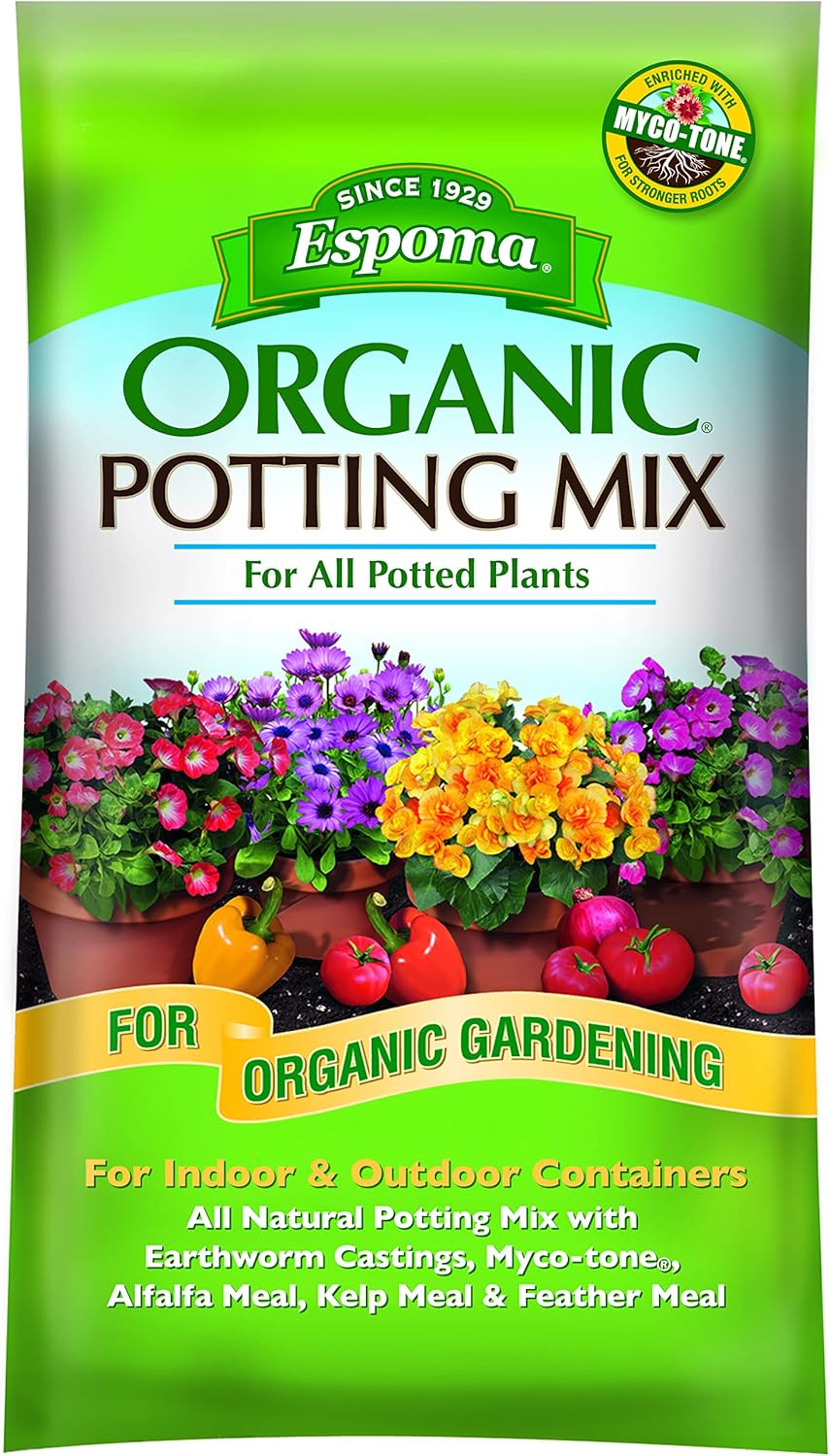
Espoma Organic Potting Soil Mix, 16 qt
| Brand | Espoma |
|---|---|
| Volume | 16 quarts |
| Style Name | Peat Moss,Potting Soil Mix,Planting Soil |
Espoma Organic Potting Soil Mix is an all-natural container mix intended for indoor and outdoor pots, including vegetables, herbs and flowering container plants like dahlias. The bagged mix combines sphagnum peat moss, humus and perlite for drainage and moisture retention while added earthworm castings, alfalfa, kelp and feather meals supply slow-release organic nutrients. It also contains a mycorrhizal blend to help root establishment after transplanting. In practice this mix is easy to use for repotting tubers or starting dahlias in containers because it balances water-holding capacity with aeration so crowns are less likely to sit in water. Expect healthier root growth and a steady nutrient supply over several weeks, though very heavy feeders may need supplemental fertilizer during peak bloom. The 16 quart bag is convenient for small- to medium-sized pots, and its organic formulation suits gardeners who prefer natural amendments, but you will still need to monitor feeding for large or long-season dahlia varieties.
Best for: Gardeners who want an organic, ready-to-use potting mix that supports healthy root development for container dahlias and other flowering pots without blending amendments themselves.
Less Ideal for: Growers who need bulk soil for large beds or those who prefer a nutrient-rich mix tailored specifically for high- feeding, professional dahlia production.
- Balanced mix of peat moss, humus and perlite for good drainage and moisture retention
- Contains organic amendments like worm castings, kelp and alfalfa for slow-release nutrients
- Includes endo and ecto mycorrhizae to promote root establishment after transplanting
- Designed for both indoor and outdoor container use, versatile for various plants
- 16 quart bag is small for gardeners growing many or large dahlia containers
- May require additional feeding for heavy-feeding or long-blooming dahlia varieties
Verdict: A convenient organic potting mix that gives container-grown dahlias reliable drainage, natural nutrients and stronger root establishment right out of the bag.
FoxFarm Happy Frog Potting Soil, Container Garden (2 cu ft) with 2 Plant Tags

| Brand Name | FoxFarm |
|---|---|
| Item Highlight | Ready-to-Use Amended Container Blend with Soil Microbes, Earthworm Castings, Bat Guano, and Aged Forest Products |
| Volume | 2 cubic feet |
| Style Name | Container Garden |
FoxFarm Happy Frog Potting Soil is a prepared container mix designed to feed potted ornamentals and edibles without extra amendments. It combines earthworm castings, bat guano, aged forest products and a proprietary soil microbe blend to encourage root development and nutrient uptake, so it is typically used to fill containers, large pots, and planters before planting. The mix is pH adjusted and contains mycorrhizal fungi that can help dahlias establish strong root systems and support vigorous vegetative growth and flowering in pots. Practical benefits include being ready to use out of the bag, nutrient-dense organic amendments that reduce the need for immediate fertilizer, and included plant tags for tracking varieties and bloom dates. Limitations are that it is a packaged potting soil so you may still need to adjust drainage or fertility for heavy-feeding dahlias in very large containers, and volume comes in a 2 cu ft bag which may require multiple bags for several large plants.
Best for: Gardeners growing dahlias or other flowering container plants who prioritize strong root development and a nutrient-rich, ready-made mix over mixing their own media.
Less Ideal for: Growers who need bulk soil for in-ground beds or who prefer to custom-blend exact drainage and fertility profiles for large-scale dahlia plantings.
- Ready-to-use mix formulated for containers so no initial blending required
- Contains earthworm castings and bat guano for organic nutrient supply
- Includes beneficial microbes and mycorrhizal fungi to boost root growth and nutrient uptake
- pH adjusted to improve availability of nutrients to plants
- Two plant tags included for labeling and record keeping
- Sold in 2 cu ft bags which may be insufficient quantity for planting multiple large dahlia tubs
- May still require drainage adjustment or supplemental feeding for very heavy-feeding varieties
Verdict: Choose this mix when you want a plug-and-play, microbe-rich potting soil that helps potted dahlias establish vigorous roots and produce strong blooms.
Back to the Roots Organic Expanding Coco Coir Potting Soil Brick (10 lb)

| Item Highlight | 10 lb compressed coco coir brick; peat-free; OMRI Listed |
|---|---|
| Item Type Name | Coconut Coir |
| Volume | 2 cubic feet |
| Ingredients | Coconut Coir |
This compressed coco coir brick provides a lightweight, peat-free potting medium that expands with water into roughly 2 cubic feet of loose, aerated soil. Typical use is simple: soak the brick, fluff the expanded coir, then use it alone for seed starting or mix it with garden soil or compost to improve drainage and root aeration for container-grown dahlias. Notable features include OMRI listing for organic use and a balanced pH that makes it versatile for vegetables, flowers, and herbs. Practical benefits are easier storage compared with bulky bags, improved water retention without becoming waterlogged, and a clean, uniform texture that reduces compaction in pots. Important limitations are that coco coir is low in nutrients so you will need to add fertilizer or compost for heavy feeders like dahlias, and the brick requires time to fully rehydrate and break apart. For gardeners who prefer an all-in-one amended potting mix, this is best used as a component rather than a complete fertilized soil on its own.
Best for: Gardeners who want a space-saving, organic amendment to optimize potting mixes and improve drainage and aeration for container dahlias and other flowering plants.
Less Ideal for: Growers who want a ready-to-use, nutrient-rich potting mix straight from the bag should choose a pre-amended or fertilized soil instead.
- Peat-free, OMRI listed organic substrate suitable for organic gardens
- Expands to about 2 cubic feet for compact storage and easy handling
- Balanced pH and fluffy texture improve aeration and water retention in pots
- Versatile: usable alone for seed starting or mixed into existing soil
- Contains no significant nutrients so additional fertilizer or compost is required for heavy-feeding plants
- Requires soaking and time to fully expand before use
Verdict: A compact, organic coco coir brick that expands into a lightweight, airy medium ideal for improving drainage and root health in dahlias when combined with fertilizer or compost.
Miracle-Gro Organic Outdoor Potting Mix, 16 qt.

| Item Highlight | Plant Soil For Outdoor Container Plants, Contains Quick-Release Natural Fertilizer, OMRI Listed |
|---|---|
| Brand Name | Miracle-Gro |
| Volume | 16 qt. |
| Manufacturer | Scotts Miracle Gro |
This 16 qt. bag of Miracle-Gro Organic Outdoor Potting Mix is aimed at outdoor container gardening and supplies a ready-to-use organic blend for flowers, vegetables, herbs, and perennials. It contains responsibly sourced peat, upcycled green waste, and a quick-release natural fertilizer that the manufacturer says feeds for up to two months. In practice the mix is easy to work with for planting or repotting: partially fill a pot, loosen the root ball, add mix around roots, and water. The texture holds moisture better than plain garden soil while still draining sufficiently for potted plants exposed to sun and wind. Being OMRI listed makes it a good choice for gardeners seeking organic-approved inputs. Limitations to note are the modest volume per bag—one 16 qt. bag fills roughly a 12-inch pot—so larger dahlia containers will require multiple bags and more frequent top-ups; the product is peat-based so gardeners preferring peat-free mixes will need an alternative. Repotting biannually is recommended to avoid compaction and restore nutrients.
Best for: Gardeners who want an organic-approved, ready-made potting mix for outdoor containers and prioritize easy planting and short-term feeding over bulk volume.
Less Ideal for: Large-scale growers or those who prefer peat-free or heavyweight soil amendments should consider bulk or peat-free specialty mixes instead.
- OMRI listed for organic use which suits organic container gardens
- Includes quick-release natural fertilizer that feeds up to two months
- Formulation balances moisture retention with drainage for outdoor pots
- 16 qt. volume is small so you may need several bags for large dahlia containers
- Contains peat, which some gardeners avoid for environmental reasons
Verdict: A convenient OMRI-listed potting mix that delivers easy-to-use organic nutrition and moisture balance for dahlias grown in outdoor containers.
KXUPOIAV Premium Potting Mix with Mycorrhizae, Compressed 2 cu. ft. Bale (Expands to 4 cu. ft.)

| Volume | 4 cubic feet |
|---|
This compressed premium potting mix is designed to expand from a compact bale into usable garden soil and is aimed at promoting vigorous root growth through added mycorrhizae. Typical use is for container-grown flowering plants and seed starting, where you rehydrate and fluff the mix before filling pots or beds. Notable features include a slow-release fertilizer that feeds for up to nine months and a polymer water-retention gel that reduces how often you need to water. For dahlias, the mycorrhizae and sustained nutrients can encourage larger root systems and stronger tuber development, while the water-holding gel helps maintain even moisture during bloom. The compressed packaging is convenient for storage and transport but requires time and space to expand before use. The mix is marketed as a general-purpose premium soil rather than a dahlia-specific formulation, so heavy feeders may still need extra feeding or adjustment of drainage depending on pot size and climate. Overall it is a dependable, low-maintenance base mix for growers who want steady nutrition and improved root health without frequent watering.
Best for: Gardeners who prioritize reliable, low-maintenance potting mix that supports root health and steady nutrition for container-grown dahlias and other flowering plants.
Less Ideal for: Growers seeking a custom high-phosphorus or high-potassium dahlia formula for maximum tuber size or those who prefer a dry, fast-draining mix for very hot, arid conditions.
- Contains mycorrhizae to support stronger root systems and improved nutrient uptake
- Slow-release fertilizer supplies nutrients for up to 9 months, reducing feeding frequency
- Polymer water-holding gel increases moisture retention so you can water less often
- Compressed packaging expands to 4 cu ft for easier storage and transport
- General-purpose mix not specifically tailored for high-nutrient needs of mature dahlias
- Requires rehydration and time to fully expand before planting
Verdict: Choose this mix if you want a convenient, dependable base soil that boosts root vigor and provides long-lasting nutrients with reduced watering needs.
Miracle-Gro Potting Mix, 16 qt. (2-Pack)

| Feeds up to | 6 months |
|---|---|
| Volume per pack | 16 quarts |
| Number of packs | 2 |
| Ingredients | Sphagnum Peat Moss, Perlite, Compost, Fertilizer |
Miracle-Gro Potting Mix is a general-purpose container soil designed for outdoor pots, planters, and hanging baskets. You use it by filling a pot partway, setting the plant at nursery depth, and topping off around the root ball; the bag includes simple planting guidance and emphasizes good drainage and not letting pots sit in excess water. The mix contains peat moss, perlite, compost, and fertilizer, which helps roots breathe and supplies nutrients that feed plants for up to six months. For dahlias grown in containers this mix gives a light, well-draining medium that supports strong root development and regular feeding during the growing season. The main limitations are that it is formulated for containers only and will compact over time, so annual repotting or refresh is recommended; gardeners wanting a heavier, in-ground soil or fully organic certified mix should look elsewhere. The two 16-quart bags are convenient for filling several 12-inch pots or refreshing multiple planters at once.
Best for: Gardeners who grow dahlias in containers and want an easy, proven potting mix that supports stronger roots and supplies months of nutrition with minimal fuss.
Less Ideal for: Growers planting dahlias directly in garden beds or who require an all-organic certified soil should choose a product formulated for in-ground use or organic mixes.
- Formulated for containers so it drains well and reduces root rot risk
- Includes fertilizer that feeds plants for up to six months
- Lightweight, easy to handle bags suitable for multiple 12-inch pots
- Clear planting guidance for proper potting and watering technique
- Not intended for in-ground planting or raised bed amending
- Will compact and lose nutrients over time so requires repotting or fresh mix after several months
Verdict: A convenient, well-draining container potting mix that feeds dahlias for months and simplifies container planting.
Back to the Roots All-Purpose Peat-Free Potting Mix, 12 Quarts (2-Pack)

| Number of Packs | 2 |
|---|---|
| Unit Count | 384 Ounce |
| Item Type Name | Natural & Organic All-Purpose Peat-Free Potting Mix, 6 Quarts |
| Manufacturer | Back to the Roots |
This Back to the Roots potting mix is a peat-free, nutrient-rich soil blend intended for general container gardening. It combines coconut coir for moisture retention, mycorrhizae to support root development, yucca extract to help water and nutrient uptake, and dolomitic limestone to balance pH. In practice it works well for repotting and container planting where steady moisture and a neutral pH help bulbs and flowering plants establish. The organic inputs mean you are adding living amendments rather than synthetic fertilizers, which is appreciated for long-term soil health. Because it is an all-purpose mix it is easy to use straight from the bag for dahlias in pots or for starting transplants, though serious growers who need a very airy, fast-draining tuber mix may prefer to amend it with extra perlite or coarse sand. The product is straightforward to handle, suitable for indoor and outdoor containers, and avoids peat to reduce environmental impact.
Best for: Buyers who want an easy-to-use, organic potting mix that supports root health and steady moisture for container-grown dahlias and other flowering plants, and who prefer low-risk, natural inputs.
Less Ideal for: Growers seeking a specialized, extra-fast-draining tuber mix or those planting directly in large in-ground beds should consider more tailored soil recipes or amendments.
- Peat-free formula using coconut coir that retains moisture without compacting.
- Contains mycorrhizae to encourage stronger root development.
- Includes dolomitic limestone to help balance soil pH for nutrient availability.
- Organic, nutrient-rich inputs suitable for edible and ornamental container plants.
- Not specially formulated for very fast drainage so may need added perlite for tuberous dahlias.
- Sold in modest bag sizes which may require multiple bags for larger projects.
Verdict: A reliable, peat-free organic potting mix that gives container dahlias better root support and steady moisture straight from the bag.
Choosing the Right Potting Soil for Dahlias: Key Factors to Consider
Particle Size and Structure
Particle size controls both drainage and how long a mix holds moisture. Larger, chunky components such as coarse perlite, grit, or pumice create stable air pockets that protect dahlia tubers from rot while allowing roots to expand. Finer particles like aged compost or fine bark increase water-holding capacity but can compact over time and reduce oxygen to the root zone.
When choosing a potting soil for dahlias, look for a mix that lists a combination of coarse and fine components. That balance gives you the ability to water less frequently without sacrificing oxygenation. For container-grown dahlias especially, structure is a primary determinant of tuber health and flowering vigour.
Drainage Versus Moisture Retention
Dahlias need steady moisture during active growth but cannot tolerate waterlogged conditions. A mix that drains well prevents standing water at the tuber level while still holding enough moisture in the finer fractions for consistent root uptake.
Good drainage is typically achieved with inorganic aerators like perlite, pumice, or coarse sand, while organic components such as coconut coir, peat, or aged bark moderate moisture loss. Understanding how those ingredients interact will help you manage irrigation frequency and avoid tuber rot or drought stress.
Nutrient Composition and Release Pattern
A balanced nutrient profile supports long bloom periods and the energy demands of tuber formation. Potting soils can supply nutrients via incorporated slow-release granules, enriched compost, or a baseline of soluble nutrients. Slow-release fertilizers provide steady feeding without frequent supplementation but may require topping up during peak bloom.
Avoid mixes with excessively high initial soluble salts that can burn young roots. If you prefer organic feeding, look for mixes that include composted materials and microbial amendments that help mineralize nutrients over time. Your feeding schedule will depend partly on the mix's baseline nutrient content.
pH and Salt Levels
Dahlias are happiest in a slightly acidic to neutral pH range. A potting soil's pH affects nutrient availability and can change during the season as fertilizers are applied. High salt levels, whether from fertilizer or contaminated compost, can stress young roots and reduce water uptake.
Choose mixes with indicated pH ranges close to neutral and low soluble salt reports when available. If you start with a slightly acidic mix, regular watering and moderate fertilizing typically maintain a suitable balance for optimal nutrient uptake.
Organic Matter and Disease Risk
Organic matter supplies slow-release nutrition and helps with moisture retention, but not all organic components behave the same. Finely composted materials improve nutrient content yet can contribute to compaction and higher disease risk if poorly processed. Coarser bark and well-aged compost reduce those risks while still contributing beneficial microbes.
Inspect ingredient transparency and prefer mixes that document source materials. In containers and small beds, replacing or amending the top layer each season helps limit buildup of pathogens and maintains a healthy root environment for dahlias.
Weight and Handling for Containers
Potting soil weight influences where you can place your containers and how easy they are to move. Mixes with high mineral content or saturated peat can be heavy, which matters for rooftop, balcony, or hanging displays. Lightweight alternatives using coir and perlite reduce load but may require more frequent watering.
Consider where you will grow dahlias and whether you need a lighter, easier-to-handle mix. Balancing weight against moisture retention and structure is a practical tradeoff gardeners make based on site and container size.
Best Mixes for Container Dahlias
Container-grown dahlias have limited rooting volume, so potting mixes that emphasize aeration without sacrificing moisture are ideal. Look for formulations that combine a lightweight organic base with a high proportion of coarse aerators to keep tubers healthy and roots vigorous. For deeper pots, mixes that retain slightly more moisture are acceptable, while shallow pots need faster-draining blends.
- Use pots at least 12 inches deep for larger varieties to allow tuber development.
- Add a drainage layer only if the container is very shallow; otherwise rely on a well-structured mix.
- Top-dress with compost midseason to refresh nutrients without repotting.
Soil Choices for Patio and Raised Beds
When planting dahlias in raised beds or patio planters that use potting soil as a component, you can afford mixes with slightly more organic matter. Those environments drain more freely than small pots, so a richer mix helps sustain blooms longer between feedings. Ensure the bed has good overall drainage and consider amending native soil with coarse grit or compost to improve structure.
- Blend potting soil with coarse sand or grit for beds that tend to retain water.
- Incorporate slow-release fertilizer at planting for steady nutrient supply.
- Avoid heavy clay in the planting zone; loosen compacted soil first.
Adjusting Mix for Watering Frequency
Your personal watering routine should influence which potting soil you choose. If you cannot water frequently, select mixes with higher proportions of water-retentive components such as coir or aged compost. If you water daily or live in a humid climate, prefer mixes that speed drainage to reduce rot risk. Trial a small pot with a candidate mix before committing to large plantings so you can observe wetting behavior and adjust the mix or schedule as needed.
- Test moisture retention by saturating a sample and observing drainage time.
- Consider self-watering containers with a well-draining upper mix for drier gardeners.
- Mulch the surface to reduce evaporation and maintain even moisture.
Feeding and Top-Dressing Strategies
Even well-formulated potting soils eventually need supplemental nutrients during the long dahlia season. Slow-release fertilizers built into the mix help bridge the early season but top-dressing with compost or a timed-release feed midseason supports late blooms. Liquid feeds are useful for an immediate nutrient boost during heavy flowering. Match your feeding approach to the soil's initial nutrient disclosure. If the mix is low on baseline nutrients, plan a regular fertilizer schedule. If it contains a long-lasting feed, monitor growth and only add supplements as growth or bloom intensity declines.
- Apply a light compost top-dress early in the season to build organic content.
- Use a low-salt liquid feed during heavy bloom periods to avoid foliar burn.
- Flush containers occasionally with clear water to prevent salt buildup.
Sterility and Disease Prevention
Potting soils should be free of weed seeds and pathogens when used for dahlias, especially in containers and greenhouse starts. Look for mixes that state sterilization or use well-composted ingredients. Always avoid mixes with visible fungal growth or foul odors. When reusing soil, refresh it with fresh mix or compost, and consider solarizing or heat-treating if you suspect disease. Clean pots between crops to minimize carryover of pests and pathogens.
- Store unopened bags in a dry, cool place to prevent mold.
- Avoid mixes with strong ammoniacal smells indicating immature compost.
- Replace or refresh potting soil annually for container dahlias to limit disease buildup.
How We Chose the Best Potting Soil for Dahlias
We focused on properties that most directly affect dahlia health in containers and small beds. Our editorial filters prioritized mixes that provide a balance between drainage and moisture retention, stable nutrient delivery through the bloom period, and a structure that supports tuber formation rather than compaction. We looked for ingredients that gardeners can identify and understand, such as the proportions of peat or coconut coir, the presence and type of aerators like perlite or pumice, and sources of slow-release nutrients versus soluble salts. Practical handling mattered: ease of wetting, dust and debris levels, and how the soil behaves in a pot were considered. We also assessed mixes for pH suitability for dahlias and any added mycorrhizae or beneficial microbes that aid root establishment. Products were excluded if they relied heavily on fine composted fines that compact quickly, had unclear ingredient lists, or lacked basic drainage amendments. The final selections are aimed at gardeners who want reliable structure, predictable watering intervals, and steady feed through the season.
FAQ
What pH should potting soil for dahlias be?
Dahlias prefer a slightly acidic to neutral pH, roughly 6.0 to 7.0. That range maximizes nutrient availability while keeping tuber health optimal. If a mix lists pH, choose one close to that range and monitor with a meter if you fertilize heavily.
Can I mix my own potting soil for dahlias?
Yes. Home mixes allow you to tailor drainage and moisture retention by combining components like coir or peat, perlite or pumice, and aged compost. Pay attention to particle size and avoid too much fine compost that compacts in containers.
How often should I water dahlias in potting soil?
Watering frequency depends on container size, mix composition, and weather, but most container dahlias need watering when the top inch of mix begins to dry. Well-structured mixes reduce how often you must water; heavier mixes need less frequent checks.
Is coco coir a good base for dahlia mixes?
Coco coir is a good moisture-retentive, lightweight base that avoids some ecological concerns of peat. It works well when combined with coarse aerators to prevent compaction and ensure oxygen reaches the tubers.
Should I add fertilizer to potting soil at planting?
A moderate baseline of slow-release fertilizer or incorporated compost helps early growth and tuber establishment. Plan to supplement with liquid feeds or top-dressings during peak bloom to maintain flower production.
Can I reuse potting soil from last year for dahlias?
You can reuse potting soil after refreshing it with new organic matter and checking for pests or disease. For containers, replacing a portion each year or reconditioning the mix reduces the risk of pathogens and nutrient depletion.
Final Verdict
Choose a potting soil for dahlias by prioritizing structure and a balanced moisture profile that supports tuber development without waterlogging. Decide whether you need a lighter, fast-draining mix for frequent watering or a more moisture-retentive blend if you cannot water as often. Focus on mixes that disclose ingredients, offer coarse aeration, and provide a modest baseline nutrient level. With those priorities in mind, you can confidently match a potting soil to your container size, site, and seasonal feeding plan to get healthier tubers and longer bloom performance.
