

Note: This article contains affiliate links. If you click on these links and make a purchase, I may earn a small commission at no extra cost to you. This helps support my research and content. Read my full affiliate disclosure here.
Picking the right potting soil for Kalanchoe matters because these succulents need a fast-draining medium that still holds enough nutrients for regular flowering. Use the right mix and you will see more consistent blooms, fewer rot issues, and easier watering routines. This guide shortlists six top potting soils for Kalanchoe chosen for their balance of drainage, aeration, and fertility. Below we explain how each soil was judged and what to watch for when caring for Kalanchoe in containers or small pots, then present our top picks and practical notes for use in sunrooms, patios, and indoor windowsills.
Top Picks at a Glance
| Best Overall The best all-around choice for most situations | Bonsai Jack Jack's Gritty Mix #111 Succulent and Cactus Soil, 2 Quarts |  |
| Best Value The sweet spot between price and what you get | Miracle-Gro Succulent Potting Mix, 4 qt. |  |
| Best Budget The cheapest option that still gets the job done reliably | Omitgoter Succulent & Cactus Potting Mix (1 qt) |  |
| Highest Rated A top-rated pick with lots of positive feedback | Gardenera Kalanchoe Premium Potting Mix, 1 Quart |  |
| Most Popular A crowd favorite that many people choose with confidence | Miracle-Gro Indoor Potting Mix for Cactus & Succulent, 8 qt. (2-Pack) |  |
| Best Seller A high-volume bestseller chosen again and again | Back to the Roots Organic Indoor Potting Mix, 6 Quart |  |
Bonsai Jack Jack's Gritty Mix #111 Succulent and Cactus Soil, 2 Quarts

| Unit Count | 64 Ounce |
|---|---|
| Item Type Name | Gritty Mix #111 – Fast Draining – Zero Root Rot – Optimized pH |
| Manufacturer | Bonsai Jack |
| Style Name | Gritty Mix |
Jack's Gritty Mix #111 is a coarse, ready-to-use potting medium designed to keep roots dry between waterings for succulents, cacti and bonsai. It blends crushed Bonsai Block, montmorillonite clay and pine coir fines to create a stable, ultra-draining structure that resists compaction and dries out quickly after watering. In practice this mix is used straight from the bag for repotting agave or similar desert plants, or as a component when you need to increase aeration in heavier soils. Notable features are the washed ingredients to reduce dust and an optimized acidic pH aimed at plants that prefer slightly acidic conditions. The main benefits are lowered risk of root rot, easier watering control and long-term particle stability that supports shallow, spreading roots. Limitations are the coarse texture, which makes it unsuitable for moisture-loving houseplants and certain succulents that need finer, more moisture-retentive media; you may also need larger bag sizes for multiple agaves since this listing is a small 2 quart unit.
Best for: Buyers who want a reliable, low-maintenance medium for drought-tolerant plants and prioritize drainage and root health when repotting agave or other desert succulents.
Less Ideal for: Gardeners who need a moisture-retentive potting mix, those repotting many large plants at once, or growers of non-succulent houseplants should consider other blends.
- Ultra-fast draining formula reduces standing moisture and root rot risk.
- Stable, coarse particles resist compaction and support good airflow to roots.
- Washed components to lower dust and impurities.
- pH optimized for acid-preferring succulents and bonsai.
- Small 2 quart volume may be insufficient for larger agave or multiple repots.
- Not suitable for moisture-loving houseplants or succulents that prefer finer, water-retentive mixes.
Verdict: Choose this gritty mix when you want a ready-made, ultra-draining soil that protects agave and other desert succulents from root rot.
Miracle-Gro Succulent Potting Mix, 4 qt.

| Brand Name | Miracle-Gro |
|---|---|
| Unit Count | 128 Ounce |
| Volume | 4 quarts |
| Style Name | Succulent |
This 4-quart Miracle-Gro Succulent Potting Mix is formulated for indoor succulent and cactus container gardening and is intended to make repotting simple for hobbyists and casual plant owners. The blend of sphagnum peat moss, processed forest products, and built-in Miracle-Gro plant food gives seedlings and established succulents a loose, moisture-moderating medium that drains more quickly than standard potting soil. Use it to fill an 8-inch pot (one bag typically fills that size), position your plant with a loosened root ball, and water lightly so excess drains from the pot. Notable features include the pre-mixed fertilizer for initial nutrition and a composition that reduces compaction compared with all-purpose mixes. The practical benefits are easier watering management for shallow-rooted succulents and less frequent repotting thanks to recommended two-year refreshes. Limitations are the small bag size for larger collections and that it is peat-based, which some gardeners avoid for sustainability reasons; very arid growers may still prefer coarser, mineral-heavy mixes for maximum drainage.
Best for: Buyers who want an easy, ready-to-use potting mix tailored to indoor succulents and prefer a balanced product that simplifies repotting and early care.
Less Ideal for: Collectors with many large pots or growers who require a coarser, grit-heavy or completely peat-free medium should look for larger or mineral-focused mixes.
- Formulated specifically for succulents and cacti to improve drainage compared with general potting soils
- Includes Miracle-Gro plant food for initial nutrition after potting
- Loose peat-based blend resists compaction and eases root placement when repotting
- One 4 qt. bag fills an 8-inch container, convenient for single-plant repots
- Small 4 qt. volume is insufficient for multiple or larger pots
- Peat-based composition may be undesirable for gardeners seeking peat-free or more mineral-heavy mixes
Verdict: A convenient, plant-food–boosted potting mix that makes repotting and establishing indoor succulents quick and low-effort.
Omitgoter Succulent & Cactus Potting Mix (1 qt)

| Brand Name | Omitgoter |
|---|---|
| Unit Count | 1 Ounce |
| Style Name | Succulent & Cactus Soil |
| Volume | 1 quarts |
This 1-quart Omitgoter mix is a preblended succulent and cactus potting soil aimed at giving drought-tolerant plants the fast-draining medium they need. It combines river sand, lava rock, vermiculite, and peat moss so pots shed excess water quickly while retaining pockets of moisture and nutrients for roots. The resealable zipper pouch makes it convenient to store and portion for repotting small succulents like jade, echeveria, and aloe. For a budget grower this saves time versus sourcing and mixing separate additives and reduces the risk of waterlogged roots. Expect good aeration and faster drying cycles compared with standard houseplant soil, but because it contains organic components you may still need to monitor watering frequency in very hot or compacted containers. The 1-quart volume is fine for a few small pots or top dressing but you will need multiple bags for larger collections or frequent repotting.
Best for: A practical buyer who wants an affordable, ready-made cactus and succulent soil to repot a few small plants like jade without mixing components themselves.
Less Ideal for: Not the best choice for someone managing a large collection or needing bulk soil for many repots or outdoor beds.
- Formulated for succulents with gritty components that improve drainage and aeration
- Resealable 1-quart pouch for easy storage and measured use
- Contains a mix of inorganic and organic materials to balance moisture retention and fast drying
- Small 1-quart volume requires buying multiple bags for several plants or larger pots
- Contains peat moss which can compact over time and may require occasional refresh or amendment
Verdict: A convenient, budget-friendly preblended mix that gives jade and other succulents the fast drainage they need for healthy roots.
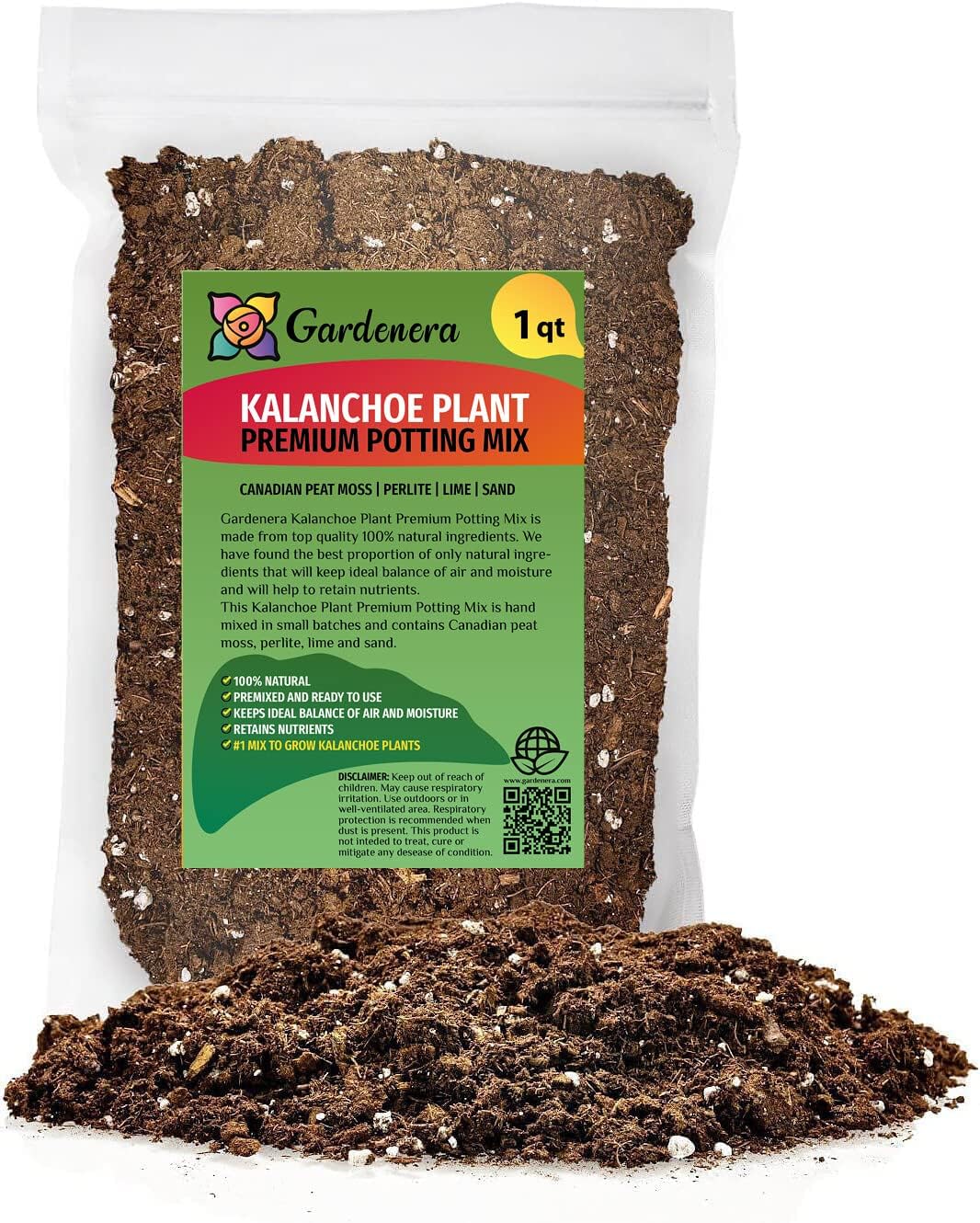
Gardenera Kalanchoe Premium Potting Mix, 1 Quart
| Brand Name | Gardenera |
|---|---|
| Item Type Name | Kalanchoe Plant Potting Mix |
| Unit Count | 1 Count |
| Volume | 1 quarts |
| Style Name | Kalanchoe Plant Potting Mix |
This Gardenera Kalanchoe Premium Potting Mix is formulated specifically for Kalanchoe care and is useful for repotting plants or filling small containers for new starts. The blend of Canadian peat moss and perlite provides moisture retention without becoming waterlogged, while added sand improves drainage so roots get oxygen. Lime is included to help moderate pH for plants that prefer slightly neutral conditions. The product is hand-mixed in small batches, which should give consistent texture and predictable performance from bag to bag. It is sold in a 1 quart volume, so it is best for small pots, cuttings, or topping up soil rather than full-scale replanting of many plants. The mix can irritate skin and eyes if dusty, so handle carefully and avoid inhaling dust. For growers who prioritize a reliable, purpose-made medium for Kalanchoe, this mix delivers a balanced growing environment; larger projects will require buying multiple units or switching to bigger-volume products.
Best for: Buyers who want a purpose-made, dependable potting medium for individual Kalanchoe plants or small collections and value consistent, ready-to-use mixes.
Less Ideal for: People repotting many plants or filling large containers who need larger-volume soil mixes or bulk bags.
- Formulated ingredients (peat moss, perlite, sand, lime) tailored to Kalanchoe needs
- Small-batch hand-mixed production for consistent texture
- Good balance of moisture retention and drainage for potted succulents
- Compact 1 quart size convenient for single pots, cuttings, or topping up
- Small 1 quart volume limits use to a few pots or touch-ups
- Contains dust that may irritate skin and eyes if not handled carefully
Verdict: Choose this small-batch, Kalanchoe-specific potting mix when you want a reliable, ready-made medium that balances moisture retention and drainage for individual plants.
Miracle-Gro Indoor Potting Mix for Cactus & Succulent, 8 qt. (2-Pack)

| Item Highlight | Fast-Draining Cactus and Succulent Potting Mix with Plant Food |
|---|---|
| Number of Packs | 2 |
| Included Components | 2 bags |
| Item Type Name | Soil |
| Ingredients | Sphagnum Peat Moss, Sand, Perlite |
This two-pack of Miracle-Gro Indoor Potting Mix is designed for repotting indoor cacti, succulents and other desert-loving container plants like Thanksgiving cactus. The mix combines sphagnum peat moss, sand, perlite and other forest products to promote fast drainage and reduce water retention that can cause root rot. Each bag is pre-mixed and ready to use, so you simply fill a pot with drainage, add the plant and firm the soil around the root ball. It also contains a measured amount of plant food to support early growth so you may not need extra fertilizer right away. Practical benefits include easier watering schedules for moisture-sensitive plants and a light, airy texture that helps roots establish after repotting. Limitations are that the bags are small for larger specimens and the formula is focused on drainage rather than long-term nutrient reserve, so plan to feed or repot periodically for established or heavy-feeding plants.
Best for: Buyers who prioritize protecting moisture-sensitive indoor succulents and want a trusted, ready-to-use mix that reduces the chance of overwatering issues when repotting.
Less Ideal for: Gardeners who prefer to custom-blend potting mixes for long-term nutrient delivery or who need large-volume soil for many or large containers.
- Formulated for cacti and succulents with fast-draining components like sand and perlite
- Pre-mixed and ready to use so no additional amendments are required at potting
- Includes plant food to give new repots an initial nutrient boost
- Light texture helps roots establish and reduces risk of overwatering-related rot
- 8 qt. bag size is limited for repotting larger plants or multiple sizable pots
Verdict: A convenient, fast-draining potting mix that makes repotting Thanksgiving cactus and other succulents safer and simpler.
Back to the Roots Organic Indoor Potting Mix, 6 Quart

| Unit Count | 192 Fluid Ounces |
|---|---|
| Item Type Name | Indoor Potting Mix 6qt |
| Item Highlight | Peat-free, 100% organic, made in the USA |
| Ingredients | Coconut Coir, Yucca, Mycorrhizae, Perlite, Horticultural Sand |
This Back to the Roots indoor potting mix is a ready-to-use, 6-quart blend designed for common houseplants such as pothos, monstera and ferns. It combines coconut coir, yucca extract, mycorrhizae, perlite and horticultural sand to improve moisture retention, drainage and root development without peat. In practice it feels light and friable, so it is easy to pot seedlings or repot mature plants and it reduces compaction that can suffocate roots. The added mycorrhizae helps young roots establish and take up nutrients more efficiently while yucca extract helps the mix hold water between waterings, which is convenient for forgetful or busy plant owners. Because it is peat-free and made in the USA, it is a more sustainable choice versus traditional peat-based mixes. Limitations are the small 6-quart size, which means frequent repurchasing for larger collections, and the bag does not include fertilizer so you will need to feed plants separately as they grow.
Best for: Buyers who prioritize low-risk, easy-care houseplant solutions and want an organic, ready-to-use potting mix that reduces watering hassles and supports healthy root growth.
Less Ideal for: Not ideal for gardeners who need large-volume soil for many pots or for those expecting a mix that includes built-in fertilizer for long-term feeding.
- Peat-free organic formula that reduces environmental impact
- Yucca extract improves moisture retention between waterings
- Contains mycorrhizae to support root development and nutrient uptake
- Light, well-draining texture suitable for repotting seedlings and houseplants
- Small 6-quart volume may require frequent repurchasing for larger plant collections
- Does not include fertilizer so additional feeding is necessary
Verdict: A compact, peat-free potting mix that simplifies indoor plant care by holding moisture and boosting root establishment.
Choosing the Right Potting Soil for Kalanchoe: Key Factors to Consider
Drainage and Aeration
Kalanchoe need a fast-draining medium because their roots are prone to rot if kept wet. Look for mixes with coarse components such as perlite, pumice, or coarse sand that create air pockets and allow excess water to flow through the pot. Good aeration also encourages a healthy root system that can support flowering and resists fungal problems.
In practice, a potting soil that feels loose and crumbly when dry and allows water to pass through quickly when you water reduces the chance of overwatering mistakes. If a mix is too fine or compacts over time, plan to amend it with coarse material or repot sooner.
Nutrient Balance for Blooming
Kalanchoe benefit from a steady but moderate nutrient supply to produce regular blooms without becoming leggy. A potting soil that includes a balanced, slow-release fertilizer or is compatible with regular light feeding helps maintain bloom cycles. High-nitrogen formulas promote foliage at the expense of flowers, so choose mixes aimed at flowering houseplants or that list balanced N-P-K ratios.
Consider how long the soil will feed the plant before repotting. Some mixes offer several months of nutrients, which is convenient for indoor growers; others rely on you to start a feeding schedule soon after potting.
Moisture Retention Vs Drying Rate
You want a mix that holds enough moisture to keep roots from desiccating between waterings, yet dries at a predictable rate so the plant receives intermittent wetting and drying cycles. Components like coconut coir or peat can retain moisture, while mineral additives like perlite moderate that retention. The right balance depends on your indoor humidity, pot size, and watering frequency.
In small pots or warm windows, soil that dries faster is often better. In cooler, drier conditions a slightly more moisture-retentive mix can prevent stress. Match the soil to your environment and adjust watering accordingly.
pH and Soluble Salts
Kalanchoe prefer a slightly acidic to neutral pH range; potting soils that fall outside this range can limit nutrient uptake and reduce flowering. Also watch for high soluble salt content, which can build up in container soils and cause leaf-tip burn or reduced growth. Soils labeled low-salt or that specify pH are easier to manage.
If your water is hard or you fertilize frequently, choose a mix with good leaching properties or plan scheduled flushes of water to prevent salt buildup.
Particle Size and Stability
Stable particle structure keeps a potting mix from compacting over time, which preserves drainage and aeration. Larger particles like bark chips or pumice maintain pore space, whereas very fine components can collapse and reduce oxygen to roots. Stability also affects how often you must repot or topdress.
For Kalanchoe, a mix with a mix of coarse and fine particles works best: coarse elements for drainage and stability, and some fine organic matter to hold nutrients and moisture without packing down.
Fertilizer Compatibility and Maintenance
Think about how the soil fits with your feeding routine. Some potting soils include starter fertilizers that feed for a set period; others are inert and require immediate feeding. Match the soil choice to how often you want to fertilize and whether you prefer slow-release granules or liquid feeding during the growing season.
Maintenance needs also include how easy it is to refresh the mix, topdress with compost, or repot. Soils that break down quickly require more frequent refreshment, while more stable mixes reduce long-term maintenance.
Preparing Kalanchoe for Repotting
Repot Kalanchoe in spring or after flowering when the plant shows active growth. Choose a pot only slightly larger than the root ball to avoid excess moisture retention. Gently remove old soil and inspect roots for rot; prune any soft or blackened roots before placing the plant in fresh potting soil.
Use clean pots with drainage holes and add a thin layer of coarse material at the bottom only if the potting mix is unusually fine. Firm the new soil around roots lightly so the plant sits at the same depth it did previously and water thoroughly to settle the mix.
- Repot in a slightly larger container to prevent overwatering issues
- Inspect and trim damaged roots before potting
- Avoid burying the stem deeper than before
Watering Practices With Fast-Draining Mixes
Fast-draining potting soil changes how you water. Rather than frequent light misting, water thoroughly until excess drains from the pot and then allow the top inch or so of soil to dry before the next watering. This encourages a healthy drying-wetting cycle that Kalanchoe prefer.
Adjust frequency seasonally: reduce watering in cooler months when growth slows and increase during active growth and flowering. Always check soil moisture with a finger test or a moisture meter rather than relying on a fixed schedule.
- Water deeply, then allow partial drying
- Reduce frequency in winter
- Use drainage holes to prevent standing water
Amending Mixes for Different Climates
In humid climates, increase coarse mineral content such as pumice or perlite to speed drying and lower disease risk. In dry indoor environments, add a bit more organic matter such as coconut coir to help retain just enough moisture between waterings.
If you reuse potting soil, refresh its structure by mixing in fresh coarse amendments and replacing degraded organic material. Always ensure amendments are clean and free of pests or disease.
- Humid climates benefit from more mineral grit
- Dry climates may need slightly higher organic content
- Refresh reused soil with fresh amendments
Feeding Schedule for Flowering
To support blooming, start a light feeding regimen a few weeks after repotting with a balanced fertilizer or one formulated for flowering houseplants. Use diluted liquid feeds during the growth period and consider a slow-release granule if you prefer less frequent feeding.
Stop or reduce feeding in late fall and winter when the plant enters a resting phase. Monitor for signs of overfertilization such as salt buildup, brown leaf tips, or unusually rapid, weak growth and flush the soil if needed.
- Begin light feeding a few weeks after repotting
- Use balanced or bloom-focused fertilizers
- Reduce feeding during dormancy
Troubleshooting Common Soil-Related Problems
Yellowing leaves and soft stems are often signs of overwatering or poorly draining soil. If roots are sour-smelling or black, repot into a faster-draining mix and trim affected roots. For compacted soil, gently loosen the root ball and replace some media with coarser material.
Slow growth and sparse blooms can result from low nutrients or high soil pH. Test pH and correct if needed, and switch to a mix with better nutrient content or start a targeted feeding schedule.
- Root rot indicates the need for faster drainage
- Compaction requires mixing in coarse amendments
- Sparse blooms may signal low nutrients or pH issues
How We Chose the Best Potting Soil for Kalanchoe
We evaluated potting soils for Kalanchoe using criteria that matter to people growing these succulent-flowering plants in containers. Primary filters were drainage and aeration to prevent root rot, and nutrient profile that supports repeated blooming without forcing excess, leggy growth. Particle mix and texture were checked to ensure the medium stays loose while retaining some moisture between waterings. pH and salt levels were considered because Kalanchoe prefer slightly acidic to neutral soil with low soluble salts. Fertilizer compatibility and ease of topdressing were assessed so gardeners can maintain bloom cycles easily. We also looked at longevity and how often repotting or refreshing is likely to be needed. We excluded straight garden soil, heavy loams, and mixes designed only for moisture-loving houseplants because those retain too much water. Commercial cactus mixes were included when their nutrient content matched Kalanchoe needs. No single-factor test determined inclusion; picks had to score well across drainage, nutrient balance, particle stability, and pH suitability.
FAQ
Can I use a cactus mix for Kalanchoe?
Often you can, because many cactus mixes provide the drainage Kalanchoe needs. Check that the mix has enough nutrients or plan to start a feeding schedule because some cactus mixes are low in organic matter and fertilizer.
How often should I repot Kalanchoe into fresh soil?
Usually every one to two years is sufficient, depending on how fast the soil breaks down and how root-bound the plant becomes. Repot sooner if drainage or nutrient supply has noticeably declined.
Should I add perlite or pumice to store-bought potting soil?
It depends on the mix. If the soil feels heavy or compacted, add perlite or pumice to improve aeration and drainage. If the mix already feels loose and drains quickly, extra amendments are unnecessary.
What pH should potting soil for Kalanchoe have?
Kalanchoe do best in slightly acidic to neutral soils, roughly pH 5.5 to 7.0. If the pH is outside that range, nutrient uptake can be affected and flowering may decline.
How do I avoid salt buildup in container soil?
Leach the pot occasionally by running water through the soil until it drains freely, and reduce fertilizer strength or frequency if salts accumulate. Using a well-draining mix also helps flush excess salts during watering.
Final Verdict
Prioritize drainage and a balanced nutrient profile when choosing potting soil for Kalanchoe. Expect tradeoffs between moisture retention and drying speed; match the mix to your container size and local conditions. Favor soils with stable particle structure and low salt content so roots stay healthy and blooms stay consistent. With these priorities in mind, select a mix that supports your feeding style and repotting rhythm. That approach will simplify care and increase the chances of reliable flowering and long-term plant health.
