

Note: This article contains affiliate links. If you click on these links and make a purchase, I may earn a small commission at no extra cost to you. This helps support my research and content. Read my full affiliate disclosure here.
Brick is durable but not invulnerable. The right pressure washer removes grime, algae, and efflorescence while preserving mortar and surface texture. Pick too powerful a stream or the wrong nozzle and you can etch brick or dislodge joints; pick too weak a machine and staining and biological growth will return quickly. This guide outlines seven top pressure washers chosen for cleaning brick surfaces. We explain the practical factors gardeners and homeowners should weigh, such as PSI range, nozzle options, and cleaning attachments, so you can match a unit to the condition and scale of the brickwork. Read on for a concise evaluation of what matters when cleaning brickwork safely and effectively.
Top Picks at a Glance
| Best Overall The best all-around choice for most situations | Westinghouse WPX3400 Gas Pressure Washer — 3400 PSI, 2.6 GPM |  |
| Best Quality Built to a higher standard if you want something more solid | EGO POWER+ HPW3200 3200 PSI Cordless Pressure Washer | 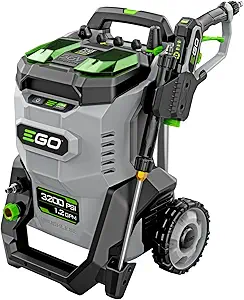 |
| Best Value The sweet spot between price and what you get | Westinghouse ePX3050 Electric Pressure Washer (2100 PSI, Foam Cannon & Turbo Nozzle) |  |
| Best Budget The cheapest option that still gets the job done reliably | BILT HARD 1600W Electric Pressure Washer with 4 Quick-Connect Nozzles and Detergent Bottle |  |
| Highest Rated A top-rated pick with lots of positive feedback | Westinghouse ePX3500 Electric Pressure Washer (2500 PSI, 1.76 GPM) |  |
| Most Popular A crowd favorite that many people choose with confidence | LWQ S5 Portable Electric Pressure Washer with Foam Cannon |  |
| Best Seller A high-volume bestseller chosen again and again | Westinghouse ePX3100 Electric Pressure Washer (2300 PSI, 1.76 GPM) |  |
Westinghouse WPX3400 Gas Pressure Washer — 3400 PSI, 2.6 GPM

| Maximum Pressure | 3400 psi |
|---|---|
| Maximum Flow Rate | 2.6 gpm |
| Power Source | fuel_powered |
| Hose Length | 25 feet |
| Tank Volume | 0.5 gallons |
The Westinghouse WPX3400 is a gas pressure washer built for powerful, high-volume cleaning around the house and the driveway. Its 3400 PSI and 2.6 GPM output, driven by a 212cc 4-stroke Westinghouse engine and axial-cam pump, tackles baked-on dirt on concrete, decks, siding, and heavily soiled vehicles when used with the gentler nozzles. It ships with five quick-connect tips including a soap tip and a 25-foot abrasion-resistant hose and a built-in soap tank so you can apply detergent for foam cleaning or switch to narrower nozzles for concentrated blasting. The steel frame and never-flat 12-inch wheels make it easy to move across uneven terrain. Expect robust cleaning power and durability, but remember a powerful unit like this requires safe handling around cars to avoid paint damage and regular engine maintenance since it is gas-powered. For cleaners who want vehicle-safe washing, use low-pressure or wide-angle nozzles and keep the wand at a safe distance.
Best for: Buyers who prioritize strong, residential-grade cleaning power for patios, driveways, and occasional vehicle washing and who are comfortable using gas-powered equipment safely.
Less Ideal for: People who need a lightweight, quiet washer for frequent delicate car detailing or who prefer electric, low-maintenance units.
- High cleaning power at 3400 PSI and 2.6 GPM handles heavy soil and grease
- Includes five quick-connect nozzles and onboard soap tank for versatile cleaning modes
- Durable steel frame and never-flat wheels improve maneuverability on uneven surfaces
- 25-foot abrasion-resistant hose and pro-style wand extend reach for larger jobs
- Gas engine requires regular maintenance and produces noise and fumes
- Higher pressure can damage vehicle paint if improper nozzle or technique is used
Verdict: Choose the WPX3400 if you want rugged gas-powered cleaning performance that handles heavy grime on hard surfaces while still offering detergent and nozzle options for versatile jobs.
EGO POWER+ HPW3200 3200 PSI Cordless Pressure Washer

| Power Source | Battery Powered |
|---|---|
| Maximum Pressure | 3200 psi |
| Maximum Flow Rate | 2 gpm |
| Hose Length | 7.62 meters |
| Tank Volume | 2 gallons |
The EGO POWER+ HPW3200 is a high-performance cordless pressure washer designed to deliver gas-like cleaning power without a cord. It pairs two 56V ARC Lithium batteries to reach up to 3200 PSI and a maximum 2.0 GPM for heavy-duty jobs in Turbo mode, while ECO and High modes let you dial back output for lighter tasks. The wand-integrated display and handheld pressure control make switching modes and checking battery status quick and intuitive. Setup is straightforward with quick-connect hose and wand fittings and the unit can draw from a garden hose or any fresh water source using the included siphon hose. A telescopic handle and 25-foot flexible high-pressure hose improve mobility around driveways, patios, and vehicles. Important limitations are that batteries are required but not included with this listing and runtime depends on battery capacity and selected mode, so you may need spare batteries for extended jobs. The unit also prioritizes portability over continuous commercial runtime compared with plugged or gas models.
Best for: Buyers who prioritize maximum cordless cleaning power and want a portable machine capable of tackling driveways, patios, and vehicles without a generator or extension cord.
Less Ideal for: Users who need continuous, all-day commercial operation or who prefer included batteries and charger out of the box should consider corded electric or gas models instead.
- High peak pressure up to 3200 PSI for tough cleaning
- Battery-powered portability that draws from a hose or fresh water source
- Three cleaning modes with wand display for on-the-fly pressure control
- Includes useful accessories such as five nozzles, foam cannon, and siphon hose
- Telescopic handle and 25 ft high-pressure hose for easier transport and reach
- Batteries and charger are not included with this model so runtime depends on separately purchased ARC batteries
- Actual runtime varies by battery capacity and chosen mode and may require spare batteries for long jobs
Verdict: If you want near-gas power in a truly cordless pressure washer for heavy residential cleaning, the HPW3200 delivers the strongest portable performance.
Westinghouse ePX3050 Electric Pressure Washer (2100 PSI, Foam Cannon & Turbo Nozzle)

| Maximum Pressure | 2100 psi |
|---|---|
| Maximum Flow Rate | 1.76 gpm |
| Power Source | ac |
| Hose Length | 20 feet |
| Tank Volume | 20 fluid ounces |
The Westinghouse ePX3050 is a compact electric pressure washer designed for typical homeowner tasks like washing cars, patios, fences, and driveways. It produces a maximum of 2100 psi and up to 1.76 gpm at the lowest pressure setting, with a rated output of 1800 psi and 1.2 gpm for steady cleaning. The unit ships with a foam cannon, a turbo nozzle plus 15° and 25° tips, a 20 foot abrasion-resistant hose, a wand with quick-connect fittings and a long GFCI cord for safer outdoor use. Practical benefits include a maintenance-free axial cam pump with auto stop for easier upkeep, five-inch never-flat wheels and a low profile for maneuvering around the yard, and compatibility with common M22 accessories. Limitations are the electric power source and mid-range flow rate, which make it best for medium-duty jobs rather than heavy industrial cleaning, and the onboard water tank is small so expect to use a garden hose for sustained tasks.
Best for: A practical homeowner who wants a reliable, easy-to-move electric washer for regular medium-duty cleaning of cars, patios, siding and fences without the fuss of gas engines.
Less Ideal for: Professionals or users who need industrial-level cleaning power, long continuous run times, or remote jobsite use where no AC power is available.
- Delivers up to 2100 psi for effective medium-duty cleaning.
- Includes foam cannon and three quick-connect nozzles for versatile cleaning tasks.
- Maintenance-free axial cam pump with auto stop reduces upkeep.
- Long GFCI cord and 20 ft abrasion-resistant hose improve reach and safety.
- Five-inch never-flat wheels and compact profile make it easy to maneuver and store.
- Electric power limits use where outlets are unavailable and reduces continuous heavy-duty runtime.
- Flow rate is mid-range so cleaning very large surfaces will take longer than with higher-gpm models.
Verdict: A compact, all-around electric pressure washer that gives homeowners strong medium-duty cleaning power with useful accessories and low maintenance.
BILT HARD 1600W Electric Pressure Washer with 4 Quick-Connect Nozzles and Detergent Bottle

| Power Source | ac |
|---|---|
| Maximum Flow Rate | 1.76 gpm |
| Maximum Pressure | 2465 psi |
| Hose Length | 20 feet |
This BILT HARD electric pressure washer is a budget-friendly machine aimed at routine outdoor cleaning around the home. Its 1600W motor can generate up to 2465 PSI and a 1.76 GPM flow, which is enough to remove dirt and mildew from cars, patios, fences, and driveways without the complexity of a gas unit. The unit includes four quick-connect nozzles (0°, 15°, 25°, 40°) and a 0.4 L detergent bottle, so you can switch spray patterns quickly and apply soap for better cleaning on grimy surfaces. A 20 ft high-pressure hose and 35 ft power cord increase reach so you do not need to move the washer constantly, and the automatic shutoff when the trigger is released helps save energy and reduces pump wear. Practical touches include on-frame storage for the cord, hose, and nozzles and rolling wheels for transport. Expect limits typical for compact electric washers: lower sustained flow compared with professional models and less force on deep-set stains or heavy grease, so it is best for light-to-moderate jobs rather than commercial heavy-duty cleaning.
Best for: A buyer looking for an affordable, easy-to-use electric pressure washer for regular home and vehicle cleaning who prioritizes convenience and basic soap application over professional-grade power.
Less Ideal for: Not a good choice for professional cleaners or anyone who needs high-flow, industrial-strength cleaning for large commercial surfaces.
- Powerful enough for home use with up to 2465 PSI and 1.76 GPM for effective cleaning of vehicles, patios, and siding
- Includes four quick-connect spray tips for fast adjustment between concentrated and wide sprays
- Built-in 0.4 L detergent bottle lets you apply soap without external attachments
- Long reach with a 20 ft high-pressure hose and 35 ft power cord reduces repositioning
- On-board storage and wheels make it easy to move and store the unit neatly
- Not designed for heavy commercial tasks; lower flow rate limits performance on very stubborn or oily grime
- Item weight and dimensions make it less compact than some ultra-portable consumer models
Verdict: A budget-friendly electric washer with soap dispensing and multiple nozzles that covers most light-to-moderate home cleaning tasks effectively.
Westinghouse ePX3500 Electric Pressure Washer (2500 PSI, 1.76 GPM)

| Power Source | ac |
|---|---|
| Maximum Pressure | 2500 psi |
| Maximum Flow Rate | 1.76 gpm |
| Hose Length | 25 feet |
| Tank Volume | 20 fluid ounces |
The Westinghouse ePX3500 is a compact, electric pressure washer built to handle tough home cleaning tasks like driveways, decks, fences and cars. It produces up to 2500 max PSI and up to 1.76 GPM for short, powerful bursts, while its rated output of 2000 PSI at 1.2 GPM gives a realistic working performance for common jobs. The unit includes a pro-style steel wand with five quick-connect nozzles (including a turbo and soap tip), a 25-foot easy-coil nylon hose and a 20-ounce onboard soap tank that makes detergent application simple. Four quick-lock wheels and a low center of gravity reduce tipping and improve maneuverability across concrete and lawn. A Total Stop System automatically halts the pump when the trigger is released to save energy and extend pump life. Trade-offs are typical of high-pressure compact electrics: flow is modest compared with larger gas models and maximum ratings are brief peak figures rather than sustained continuous output. For buyers wanting a small footprint and reliable cleaning power with user-friendly features, this model balances power and portability well.
Best for: Buyers who prioritize a compact, easy-to-store pressure washer that still delivers strong cleaning power for typical home tasks and who like proven, well-reviewed gear.
Less Ideal for: Users who need sustained high-flow performance for large commercial or industrial jobs or who require fully cordless operation in remote locations.
- High peak pressure (2500 PSI) for stubborn grime and quick spot-cleaning
- Compact, lightweight design with four quick-lock wheels for easy storage and maneuvering
- Includes five quick-connect nozzles and a pro-style steel wand for versatile spray patterns
- Onboard 20 oz detergent tank simplifies soap application for deep cleaning
- Total Stop System conserves energy and reduces pump wear when not spraying
- Rated continuous flow (2000 PSI at 1.2 GPM) is lower than the peak spec, so heavy-duty jobs may take longer than with larger gas units
- Electric power limits portability compared with gas models since an outlet is required
Verdict: If you want a small, easy-to-maneuver electric washer that packs serious peak pressure for home heavy-cleaning jobs, the Westinghouse ePX3500 is a top choice.
LWQ S5 Portable Electric Pressure Washer with Foam Cannon

| Power Source | ac |
|---|---|
| Maximum Flow Rate | 2.5 gpm |
| Maximum Pressure | 2030 psi |
| Tank Volume | 2.5 gallons |
The LWQ S5 is a budget-friendly electric pressure washer designed for routine outdoor cleaning like cars, patios, driveways and siding. It delivers up to 2030 psi and 2.5 gpm, and ships with four quick-connect metal nozzles plus a foam cannon so you can switch spray angles or apply detergent for safer vehicle washing. The unit is built for convenience: a 6.3 m hose, two transport rollers, a power-cord hook and onboard nozzle storage make setup, movement and storage straightforward. The 2.5 gallon tank and ability to use faucet or bucket water add flexibility for where you use it. Expect practical cleaning power for light-to-moderate tasks, though it is not meant for heavy commercial use. Noise, long continuous run performance and longevity are typical limits for consumer electric units in this price range, so plan for occasional maintenance and avoid relying on it for large-scale or industrial jobs.
Best for: Homeowners who want an affordable, easy-to-move electric washer for regular vehicle and patio cleaning and who prioritize convenience and a foam cannon over industrial-grade power.
Less Ideal for: Pros who need continuous high-volume cleaning, contractors, or anyone who requires a heavy-duty commercial unit for large properties.
- Up to 2030 psi pressure and 2.5 gpm flow suitable for cars, patios and driveways
- Includes four quick-connect metal nozzles and a foam cannon for detergent applications
- Portable design with dual rollers, hose length of 6.3 meters and onboard storage
- Can draw water from a faucet or bucket and has a 2.5 gallon tank for added flexibility
- Designed for light-to-moderate residential use rather than heavy commercial jobs
- Manufacturer information does not specify long-term durability or advanced safety features
Verdict: A practical, wallet-friendly electric pressure washer that pairs respectable cleaning power with a foam cannon and convenient portability for typical home jobs.
Westinghouse ePX3100 Electric Pressure Washer (2300 PSI, 1.76 GPM)

| Power Source | ac |
|---|---|
| Maximum Flow Rate | 1.76 gpm |
| Maximum Pressure | 2300 psi |
| Hose Length | 25 feet |
| Tank Volume | 20 fluid ounces |
The Westinghouse ePX3100 is a performance-minded electric pressure washer packaged in a compact, easy-to-store unit. It produces a 2300 psi peak and up to 1.76 gpm for short, powerful bursts and a 1900 psi rated output for sustained cleaning tasks. Typical use cases are cleaning driveways, decks, fences, cars, and patio furniture; the unit’s pro-style steel wand with five quick-connect tips and a 20 oz onboard soap tank make switching between rinse and detergent fast. The 25 foot nylon-braided hose and four 360° steering wheels with a low center of gravity improve reach and maneuverability around obstacles. A Total Stop System shuts the pump off when the trigger is released to save energy and extend pump life. Because it is an electric model, it is quieter and lower maintenance than gas machines but will not match the continuous power of a gas unit for very large jobs. Also, its higher pressures are best for stubborn stains rather than delicate surfaces without careful nozzle choice.
Best for: Buyers who want strong cleaning performance in a compact, low-maintenance electric unit for regular home tasks like driveways, decks, and vehicles and who prioritize convenience over gas-level continuous power.
Less Ideal for: Not a good choice for contractors or users needing long continuous run time and maximum sustained flow on very large commercial surfaces.
- High peak pressure (2300 PSI) for removing tough grime and stains
- Five quick-connect nozzle tips including turbo and soap for versatile spray patterns
- Onboard 20 oz detergent tank simplifies applying cleaning solution
- 25 ft nylon-braided hose and 360° steering wheels improve reach and maneuverability
- Total Stop System reduces wear by stopping the pump when not in use
- Electric motor delivers lower continuous flow than comparable gas models for very large surfaces
- Compact size limits long runtime and heavy commercial use
Verdict: If you want near-gas cleaning power for home projects without the fuss of a gas engine, this compact electric washer delivers strong, versatile performance.
Choosing the Right Pressure Washer for Brick: Key Factors to Consider
Adjustable PSI and Low-Pressure Settings
Brick and mortar tolerate only a limited range of impact pressure. Machines with a wide, easy-to-set adjustable PSI let you start on a low setting to test the surface, then increase pressure only as needed to remove embedded dirt. Low-pressure modes or dials are essential for flushing cleaning solutions and rinsing without blasting mortar joints.
Without clear pressure control you risk surface pitting, mortar loss, or uneven cleaning. Look for units with fine-grain pressure adjustment and an understanding of safe PSI ranges for different brick conditions.
Nozzle Types and Spray Pattern Control
Different cleaning tasks call for different spray widths. A 40-degree or fan nozzle distributes force broadly for benign rinsing and biological removal, while a 25-degree or rotary nozzle is for tougher stains but must be used cautiously. Variable or adjustable nozzles provide more control and reduce the need to swap tips frequently.
Consistent, predictable spray patterns help you keep even results across a wall. Narrow pinpoint streams concentrate impact and increase the chance of etching; wide patterns lower surface stress but take longer to clean. Good nozzle options reduce the chance of accidental damage.
Detergent Compatibility and Application
Many brick stains respond better to a detergent or masonry cleaner than pressure alone. A pressure washer that includes a built-in detergent reservoir or a low-pressure soap nozzle makes it safer to apply cleaners without over-pressurizing the surface.
How detergent mixes with water and the ability to pre-wet or dwell are important. Machines that let you switch between soap and rinse modes without manual nozzle changes make the workflow faster and reduce misuse that could harm masonry.
Flow Rate and Cleaning Efficiency
Flow rate, typically reported in gallons per minute, affects how quickly runoff and loosened deposits are flushed from the surface. Higher flow can speed cleaning of large facades, patios, and walkways, reducing time spent on scaffolding or ladders.
However, flow rate alone does not indicate aggressiveness; it combines with PSI to define cleaning energy. For brick, you want sufficient flow to rinse away loosened grime while keeping impact energy in a safe range.
Wand Reach, Hose Length, and Mobility
Cleaning brick often means working on walls, chimneys, or high faces. A wand with good reach and a hose long enough to access elevated areas without moving the machine repeatedly saves time and reduces tripping hazards. Lightweight, well-balanced wands reduce fatigue and help maintain a steady, controlled stroke across a masonry surface.
Consider how easy the unit is to move around the yard and whether hose reels or storage features are included. A unit that is awkward to reposition increases setup time and can tempt rushed technique that damages brick.
Durability, Maintenance, and Spare Parts
Pressure washers are mechanical and exposed to water, detergents, and grit. Units built with corrosion-resistant components and serviceable pumps last longer and are easier to keep functioning at safe pressure ranges. Access to common replacement parts such as seals and nozzles is useful for long-term upkeep.
Maintenance needs, clear service points, and simple winterization procedures matter if you plan to use the machine seasonally. A durable, serviceable unit reduces downtime and avoids risky workarounds that can harm masonry surfaces.
Safe PSI Ranges for Different Brick Conditions
Not all brick surfaces are equal. Soft or older bricks and degraded mortar need lower impact than newer, hard-fired brick. A cautious starting point is to begin at a low PSI setting and increase slowly while watching for mortar loosening or surface etching. Tests in an inconspicuous area are essential before treating large sections.
For heavy biological growth or thick staining, pairing a conservative pressure with an appropriate masonry detergent and longer dwell time often cleans more effectively than cranking up the PSI. For small, isolated stains a slightly higher pressure with a narrow nozzle may be appropriate, but take care around mortar lines and decorative features.
- Always test in a hidden area before full-scale cleaning
- Lower pressure plus detergent often outperforms high pressure alone
- Avoid narrow, high-impact nozzles on older brick or thin mortar
Preparing Brick Surfaces Before Pressure Washing
Remove loose debris, plant growth near the wall, and any objects that could be damaged by runoff. Protect nearby plants and porous surfaces with water barriers or plastic sheeting and rinse plants with fresh water after nearby cleaning to dilute residues.
Check for loose mortar, cracks, or flaking surfaces and make small repairs if needed before applying pressure. Tackling repairs first prevents the cleaning process from widening existing damage.
- Clear vegetation and overhangs that trap moisture
- Cover nearby wood, windows, and landscaping
- Repair obvious mortar loss or crumbling brick prior to cleaning
Techniques for Even, Non-Damaging Cleaning
Keep the wand moving in a consistent pattern and maintain a uniform distance from the surface. Sudden changes in distance or lingering too long in one spot concentrate impact and can create visible scars. Overlapping passes by about 25 percent helps avoid streaking and ensures even results.
Use a gentle fan nozzle for most work and reserve narrower streams for small spots. For tall walls, work from the bottom up to prevent streaks from running cleaners into untreated areas. Rinse thoroughly after detergents have had time to act.
- Maintain steady motion and consistent distance
- Overlap each pass slightly to avoid striping
- Rinse from bottom to top for cleaner runoff control
Protecting Mortar and Decorative Details
Mortar is softer than brick and more prone to erosion. Aim the spray slightly off-angle to reduce direct impact on joints, and avoid blasting mortar lines directly with concentrated jets. Use lower pressure and wider spray angles around corners, sills, and ornamental trim.
If mortar is already crumbling, consider hand cleaning and repointing rather than aggressive pressure washing. In many cases a soft-bristle brush and detergent followed by a gentle rinse preserves detail better than a machine approach.
- Avoid directly targeting mortar joints with narrow streams
- Use angled spraying to reduce joint erosion
- Consider manual cleaning for severely degraded masonry
Aftercare and Preventing Rapid Re-soiling
Rinse surfaces well to remove detergent residues that can attract dirt or encourage efflorescence. Ensure gutters and downspouts are functioning so water does not continuously saturate the wall face and encourage biological growth. For long-term protection, address sources of moisture and improve drainage around foundations and paved areas.
Regular light maintenance washes prevent heavy buildup and make each session safer and quicker. Frequent gentle cleaning reduces the temptation to use excessively high pressures to remove long-standing stains.
- Rinse thoroughly to remove cleanser residue
- Fix moisture sources to reduce biological regrowth
- Schedule periodic light cleaning to avoid heavy buildup
How We Chose the Best Pressure Washer for Brick
We focused on features and performance that matter specifically when cleaning brick and mortar. Key evaluation criteria included the machine's adjustable pressure range, nozzle and lance variety, and whether the unit offered low-pressure detergent application for gentle cleaning. Flow rate and sustained cleaning power were examined to estimate how quickly a unit handles large areas without overheating. Build quality and wand ergonomics were assessed for comfortable, controlled use during extended cleaning. Portability and hose length were considered for practical access to exterior walls, chimneys, patios, and pathways. We also noted safety features and recommended usage limits to prevent surface damage. We excluded units that lack pressure control or only offer a single high-pressure setting, since those increase the risk of damaging brick or mortar. Models intended solely for light-duty tasks without appropriate nozzle options were not considered. The final shortlist emphasizes machines that balance gentle cleaning modes with enough power to remove stubborn deposits, plus the accessories that make brick cleaning predictable and repeatable.
FAQ
What PSI is safe for cleaning brick?
It usually depends on the brick type and mortar condition. Start at a low PSI and increase cautiously; many brick cleaning jobs are completed at moderate pressures combined with detergent rather than at maximum machine PSI.
Can I use a rotary or turbo nozzle on brick?
A rotary nozzle concentrates force and increases risk of surface damage. It can be used sparingly on very stubborn spots but should be avoided on older brick and near mortar joints. Test first in a hidden area.
Do I need a detergent for brick cleaning?
Often, yes. Biological growth and stains respond well to masonry cleaners or mild detergents. Using a low-pressure soap application followed by a gentle rinse usually yields better results than pressure alone.
How do I protect nearby plants during pressure washing?
Cover or water plants before and after cleaning to dilute any detergent runoff. Use plastic sheeting where practical and rinse landscaped areas with fresh water after the job to minimize exposure.
Is pressure washing safe for historic or older brickwork?
It depends on the condition. Historic or friable mortar and soft bricks are at higher risk. Often a softer approach using brushes and cleaners, along with professional assessment, is recommended instead of high-pressure methods.
How often should brick facades be pressure washed?
Frequency depends on exposure, local climate, and biological growth. Many properties benefit from light cleaning every 1 to 3 years, while more sheltered or less soiled surfaces can go longer. Regular light maintenance prevents stubborn buildup.
Final Verdict
Focus on control rather than brute force when choosing a pressure washer for brick. Prioritize adjustable pressure, varied nozzle options, and safe detergent application so you can tailor cleaning to surface condition. Consider wand reach, hose length, and machine serviceability to make regular maintenance practical. The right choice balances enough flow and pressure to remove grime with the ability to dial back force around mortar and decorative details. If in doubt, start gentler and pair cleaning with appropriate detergents or manual touch-up to protect the masonry.
