

Note: This article contains affiliate links. If you click on these links and make a purchase, I may earn a small commission at no extra cost to you. This helps support my research and content. Read my full affiliate disclosure here.
A pressure washer for patio cleaning can turn a weathered, slippery patio into a safe, attractive outdoor space in minutes. The right unit makes removing algae, moss, bird droppings, and ingrained dirt far less labor intensive than scrubbing with a brush. This guide covers seven shortlisted pressure washers chosen for common patio situations – from small balconies and stone pavers to large concrete terraces and layered flagstone. We evaluated units on spray power, nozzle and accessory set, ease of use and storage, and surface safety so you can match a machine to your patio material and cleaning frequency. Below are the top picks and the key considerations to help you pick the best pressure washer for patio cleaning for your outdoor area.
Top Picks at a Glance
| Best Overall The best all-around choice for most situations | Westinghouse ePX3500 Electric Pressure Washer (2500 PSI, 1.76 GPM) |  |
| Best Quality Built to a higher standard if you want something more solid | Westinghouse WPX3000e Electric Pressure Washer (3000 PSI, 1.76 GPM) |  |
| Best Value The sweet spot between price and what you get | Westinghouse ePX3050 Electric Pressure Washer (2100 PSI, 1.76 GPM) |  |
| Best Budget The cheapest option that still gets the job done reliably | Sun Joe Electric Pressure Washer SPX205E-XT (1600 PSI, 1.45 GPM) |  |
| Highest Rated A top-rated pick with lots of positive feedback | MZK Lightweight Electric Pressure Washer with Foam Cannon |  |
| Most Popular A crowd favorite that many people choose with confidence | LWQ S5 Portable Electric Pressure Washer with Four Quick-Connect Nozzles |  |
| Best Seller A high-volume bestseller chosen again and again | Westinghouse ePX3100 Electric Pressure Washer (2300 PSI, 1.76 GPM) |  |
Westinghouse ePX3500 Electric Pressure Washer (2500 PSI, 1.76 GPM)

| Power Source | ac |
|---|---|
| Maximum Flow Rate | 1.76 gpm |
| Maximum Pressure | 2500 psi |
| Hose Length | 25 feet |
| Tank Volume | 20 fluid ounces |
The Westinghouse ePX3500 is a compact electric pressure washer built for routine home cleaning tasks like patios, driveways, fencing, and vehicles. It produces up to 2500 max PSI (2000 rated PSI at typical flow) and a maximum flow of 1.76 GPM, which gives it enough power to lift mildew, dirt, and light stains without the fuss of gas models. The unit is easy to move thanks to four quick-lock wheels, a low center of gravity with anti-tipping design, and a flexible 25-foot easy-coil hose that reaches most outdoor surfaces. The pro-style steel wand accepts five quick-connect tips including a turbo and soap applicator, and the 20-ounce onboard detergent tank simplifies soaping before rinsing. The Total Stop System automatically stops the pump when the trigger is released to conserve energy and extend pump life. Practical drawbacks are that electric supply limits mobility compared with gas units and the flow rate is modest for very heavy-duty cleaning projects, so jobs with thick, set-in stains may require multiple passes or a stronger commercial machine.
Best for: Homeowners who want a balanced, easy-to-use pressure washer for regular patio, deck, and vehicle cleaning and who value maneuverability and convenient detergent application.
Less Ideal for: Contractors or users needing continuous high-flow, heavy-duty cleaning for large commercial surfaces should choose a higher-capacity gas or commercial electric unit.
- Up to 2500 PSI and multiple nozzle options for effective cleaning on patios, driveways, and siding
- Compact, lightweight design with four quick-lock wheels and anti-tipping low center of gravity for easy maneuvering
- Onboard 20 oz detergent tank and five quick-connect spray tips including soap and turbo for versatile cleaning
- 25-foot easy-coil nylon braided hose reaches around most outdoor areas without frequent repositioning
- Total Stop System that shuts the pump off when trigger is released to save energy and prolong pump life
- Electric power restricts use to locations with an outlet and limits runtime compared with gas models
- Flow rate (1.76 GPM max, 1.2 GPM rated) is modest for heavy commercial or deeply set stains
Verdict: A maneuverable, feature-packed electric washer that balances power and convenience for routine patio and home cleaning tasks.
Westinghouse WPX3000e Electric Pressure Washer (3000 PSI, 1.76 GPM)

| Maximum Pressure | 3000 psi |
|---|---|
| Maximum Flow Rate | 1.76 gpm |
| Power Source | ac |
| Hose Length | 25 feet |
| Tank Volume | 0.45 gallons |
The Westinghouse WPX3000e is an electric pressure washer built to handle tough outdoor cleaning around patios, driveways, fences and siding. It pairs a heavy-duty AC motor with a maintenance-free axial pump to produce a 3000 PSI peak and up to 1.76 GPM at low pressure, while a rated output of about 2600 PSI/1.1 GPM provides a reliable working setting for most surfaces. The unit ships with a 25-foot abrasion-resistant hose, five quick-connect nozzles (including a turbo and soap tip), a built-in 0.45 gallon detergent tank and 10-inch never-flat wheels for moving across uneven yards. For patio cleaning this means you can strip mildew and ground-in dirt from pavers and concrete without a gas engine fuss, and the soap tank plus compatible accessories like surface cleaners and foam cannons make rinsing and detergent application faster. Important limits are that it is corded and relies on household power so reach is tied to available outlets, and the rated flow is modest compared with commercial gas washers, so very large drives will take longer to finish.
Best for: Buyers who prioritize strong cleaning performance on patios and hard surfaces and prefer an electric unit that is low maintenance and easy to use around the home.
Less Ideal for: Users who need gas-level flow and runtime for very large commercial jobs or who need cordless portability for remote sites without power access.
- High peak pressure (3000 PSI) useful for stubborn patio grime
- Maintenance-free axial pump for reduced upkeep
- Includes five quick-connect nozzles and onboard soap tank for versatile cleaning modes
- Long 25 ft abrasion-resistant hose and large never-flat wheels for easier maneuverability
- Compatible with common accessories like surface cleaners and foam cannons
- Corded design limits use to areas with 120V power access and extension management
- Flow rate is moderate (1.1 GPM rated) compared with gas models, so large areas take longer
Verdict: A high‑pressure, low‑maintenance electric washer that delivers the performance you need to restore patios and hard surfaces without the fuss of a gas engine.
Westinghouse ePX3050 Electric Pressure Washer (2100 PSI, 1.76 GPM)

| Power Source | ac |
|---|---|
| Maximum Flow Rate | 1.76 gpm |
| Maximum Pressure | 2100 psi |
| Hose Length | 20 feet |
| Tank Volume | 20 fluid ounces |
The Westinghouse ePX3050 is a user‑friendly electric pressure washer aimed at homeowners who want a compact, ready‑to‑use cleaner for patios and similar surfaces. It produces up to 2100 max PSI (1800 rated PSI) and a maximum flow of 1.76 GPM, driven by a 120V AC motor and a maintenance‑free axial cam pump with auto stop. The unit includes a 20 foot abrasion‑resistant hose, three quick‑connect nozzles (15°, 25° and turbo), a foam cannon and a lightweight spray gun so you can switch from gentle rinsing to deeper cleaning without extra purchases. Mobility is practical thanks to never‑flat wheels and a long GFCI cord that reaches around a typical yard. For patio cleaning this model balances pressure and flow to remove mildew, dirt and pollen on concrete, pavers and composite decking while remaining quieter and easier to maintain than gas units. Limitations are its modest flow compared with commercial machines and the turbo nozzle can be aggressive on soft wood or painted surfaces, so adjust distance and nozzle choice for delicate areas.
Best for: Homeowners who want a compact, low‑maintenance electric washer to keep patios, pavers and outdoor furniture clean without the noise and upkeep of a gas unit.
Less Ideal for: Contractors or users with very large commercial areas who need higher flow rates and faster coverage should choose a heavier‑duty machine.
- Delivers sufficient pressure for typical patio and driveway cleaning (2100 max PSI, 1800 rated PSI).
- Includes useful accessories out of the box: foam cannon and three quick‑connect nozzles for versatile cleaning.
- Maintenance‑free axial cam pump with auto stop reduces upkeep and risk of damage during pauses.
- Long GFCI power cord and 20 ft abrasion‑resistant hose improve reach without adding extensions.
- 1.76 GPM maximum flow is lower than commercial models so large areas take longer to clean.
- Turbo nozzle can be too strong for delicate or painted surfaces if used too close.
Verdict: A compact, maintenance‑friendly electric washer that gives homeowners the pressure and accessories needed to keep patios clean without the complexity of gas models.
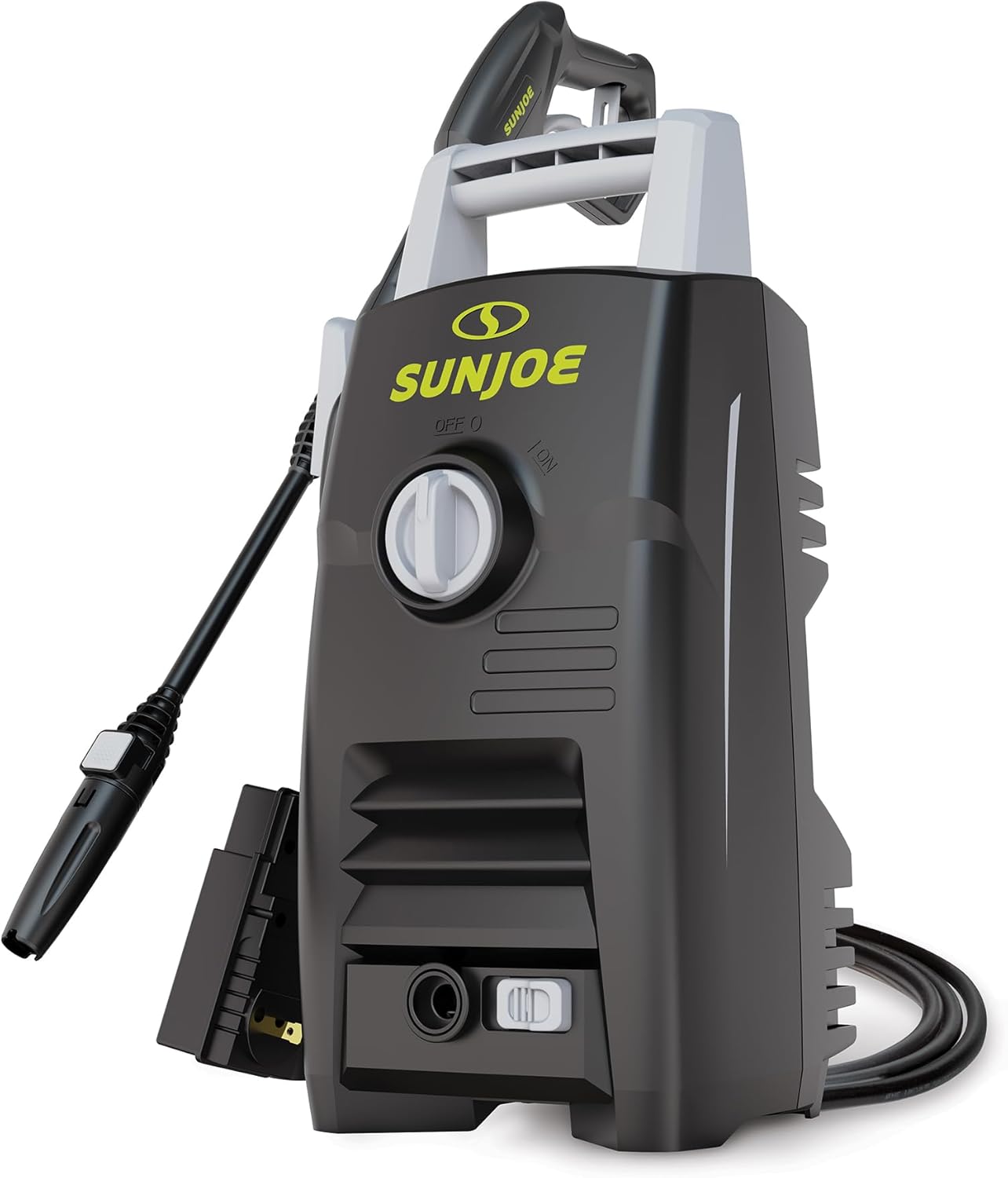
Sun Joe Electric Pressure Washer SPX205E-XT (1600 PSI, 1.45 GPM)
| Power Source | Electric |
|---|---|
| Maximum Pressure | 1600 psi |
| Maximum Flow Rate | 1.45 gpm |
| Hose Length | 20 feet |
The Sun Joe SPX205E-XT is a lightweight electric pressure washer intended for routine patio, deck, siding, and vehicle cleaning. Its 11-amp motor produces up to 1600 PSI at 1.45 gallons per minute, and the included twist nozzle and adjustable spray wand let you switch between a gentle rinse and a concentrated jet for stuck-on grime. The 20-foot high-pressure hose plus a long GFCI-protected power cord and a garden-hose adapter make setup straightforward and let you reach most patio areas without constant repositioning. The Total Stop System (TSS) reduces motor wear by shutting the pump off when the trigger is released, which helps extend the unit's life. Because it is an electric, compact unit with a 13.6-pound profile, it is easy to carry and store but not designed for heavy industrial use or large commercial driveways. For routine seasonal patio cleaning and light pressure tasks it offers a practical, energy-efficient option at a budget-friendly level, though users with very large areas or embedded concrete stains will need a higher-pressure model.
Best for: Homeowners seeking a budget-friendly, easy-to-store pressure washer for regular patio, deck, and siding maintenance who prioritize simplicity and safety over commercial power.
Less Ideal for: Contractors, users who need to clean very large patios or remove deep-set stains, or anyone who requires industrial-level pressure and flow for frequent heavy-duty use.
- Compact and lightweight design for easy carrying and storage
- 1600 PSI and 1.45 GPM are adequate for routine patio, deck, and outdoor furniture cleaning
- Includes 20 ft high-pressure hose, extension wand, and garden hose adapter for ready-to-use setup
- Total Stop System (TSS) and GFCI power cord improve safety and reduce motor wear
- Not powerful enough for heavy-duty concrete or large commercial cleaning jobs
- Shorter flow rate and pressure compared with professional-grade washers limits cleaning speed on big areas
Verdict: A practical, budget-friendly electric pressure washer that handles routine patio and deck cleaning with easy setup and low maintenance.
MZK Lightweight Electric Pressure Washer with Foam Cannon

| Power Source | Electric |
|---|---|
| Maximum Flow Rate | 2 gpm |
| Hose Length | 21 feet |
The MZK lightweight pressure washer is a portable electric cleaner built for routine outdoor jobs like patios, driveways, fences, and cars. It provides a steady water flow up to 2.0 gallons per minute and a 4-gear nozzle that switches between narrow jet and wide fan patterns, plus a foam cannon for detergent application. The included 21 foot hose and long power cord give a good working radius around a typical patio, and the one-button start and compact body make it easy to move and store. In practice it handles dirt, mildew, and light to moderate grime effectively without demanding complicated setup or maintenance. Because it is designed for convenience and mobility, performance on very large or heavily soiled surfaces will be slower than that of commercial-grade washers, and it relies on a household power source rather than a gas motor. For everyday patio cleaning and occasional vehicle or deck washing this unit balances ease of use with reliable build quality and leak-resistant connections.
Best for: Homeowners who want a reliable, easy-to-use electric washer for regular patio, deck, and vehicle cleaning and who prioritize portability and low maintenance.
Less Ideal for: Professionals or users who need high-flow, industrial-grade cleaning power for large commercial jobs or heavy-duty surface restoration should choose a more powerful machine.
- Up to 2.0 GPM flow rate suitable for effective patio and driveway cleaning
- Four interchangeable nozzle ranges for concentrated to wide spray patterns
- Includes foam cannon for easy detergent application when washing cars or decks
- Long 21-foot hose and extended power cord increase reach without moving the unit
- Compact, lightweight design for easy transport and storage
- Not as powerful as commercial or gas pressure washers for heavy-duty stripping
- Relies on household electric power which limits run time and maximum pressure compared with gas models
Verdict: A compact, dependable electric pressure washer that offers practical power and versatile spray options for regular patio and home exterior cleaning.
LWQ S5 Portable Electric Pressure Washer with Four Quick-Connect Nozzles

| Power Source | ac |
|---|---|
| Maximum Flow Rate | 2.5 gpm |
| Maximum Pressure | 2030 psi |
| Tank Volume | 2.5 gallons |
The LWQ S5 is a portable electric pressure washer built for household and patio cleaning. It produces up to 2030 psi and 2.5 gallons per minute, and comes with four quick-connect nozzles plus a foam cannon so you can switch spray patterns for tasks from heavy grime removal to gentle rinsing. Typical use is straightforward: connect to a faucet or bucket water source, select a nozzle, and roll the unit to the work area using its dual rollers. Notable features include a 2.5 gallon onboard tank option, 6.3 meter hose, cord wrap and nozzle holders for tidy storage, and an anti-tip base for stability. In practice it cleans concrete, patio furniture, fences, and cars effectively while using less water than a garden hose. Trade-offs are its mid-range power that may require more passes on very large or heavily stained driveways and the unit’s plastic-heavy construction that could feel less durable than pro-grade metal machines. For routine outdoor cleaning it offers good capability and convenient portability.
Best for: Buyers who want a portable, easy-to-use washer for regular patio, deck, and vehicle cleaning and who prioritize convenience and proven performance over commercial-grade durability.
Less Ideal for: People who need a heavy-duty, professional machine for very large driveways or frequent commercial use should consider a more powerful, metal-built model.
- Delivers up to 2030 psi and 2.5 gpm for effective dirt and grime removal
- Includes four quick-connect nozzles and a foam cannon for versatile spray patterns
- Compact, wheeled design with cord wrap and nozzle holders for easy transport and storage
- Long 6.3 meter hose and anti-tip base improve reach and stability during use
- Plastic-focused construction may not match the longevity of professional metal units
- Mid-range power can require extra passes on heavily stained large surfaces
Verdict: A portable, user-friendly electric washer that cleans patios and outdoor surfaces effectively with versatile nozzles and convenient storage features.
Westinghouse ePX3100 Electric Pressure Washer (2300 PSI, 1.76 GPM)

| Power Source | ac |
|---|---|
| Maximum Pressure | 2300 psi |
| Maximum Flow Rate | 1.76 gpm |
| Hose Length | 25 feet |
| Tank Volume | 20 fluid ounces |
The Westinghouse ePX3100 is a compact electric pressure washer meant for routine home cleaning like patios, driveways, fences and cars. It produces up to 2300 max PSI (1900 rated PSI in normal use) and up to 1.76 GPM, and comes with a pro-style steel wand and five quick-connect nozzles including a soap tip for detergent-based cleaning. The unit’s 25 ft easy-coil hose and four swivel wheels with a low center of gravity make it easy to move across a patio and around furniture while the onboard 20 oz detergent tank saves time when switching between plain water and soap. A Total Stop System halts the pump when the trigger is released to reduce wear and energy use. Because it is electric and relatively light and compact, it is simple to store and quieter than gas models. Limitations to note are modest flow for very large or industrial surfaces and the reliance on an AC outlet so extension planning may be needed for bigger yards.
Best for: Homeowners who prioritize an easy-to-use, low-maintenance electric washer for regular patio, furniture and vehicle cleaning and who value safety and predictable performance over raw commercial power.
Less Ideal for: Users who need a heavy-duty, high-flow machine for very large surfaces, commercial jobs, or properties without convenient access to outdoor power outlets.
- High cleaning pressure up to 2300 PSI suitable for typical patio and driveway grime
- Compact, lightweight design with four swivel wheels for easy maneuvering and storage
- Includes five quick-connect nozzles and a pro-style steel wand for versatile spray patterns
- Onboard 20 oz detergent tank and 25 ft hose make soap use and reach convenient
- Total Stop System reduces pump wear and conserves energy when idle
- Requires nearby AC power so may need extension for large yards or distant outlets
- Flow rate is modest compared with larger gas or commercial units for very heavy-duty surfaces
Verdict: A compact, easy-to-maneuver electric washer that reliably removes typical patio grime while minimizing pump wear and storage hassles.
Choosing the Right Pressure Washer for Patio Cleaning: Key Factors to Consider
Spray Pressure and Adjustability
Pressure determines how quickly grime and biological growth come off a patio but also how much risk there is of damaging the surface. Higher PSI removes heavy stains and ingrained dirt faster on hard concrete, while lower pressure or adjustable nozzles protect softer surfaces like wood decking or painted concrete.
Look for machines with variable pressure controls or a selection of nozzles that offer different spray angles and intensities. Being able to step down pressure for delicate grout or wood prevents gouging and splintering. Also consider whether the unit maintains consistent pressure under load; drop-off can mean slower cleaning and more passes.
Flow Rate and Real Cleaning Speed
Gallons per minute and pump design affect how much water the washer delivers across a cleaning pass. A higher flow rate typically clears wider swaths of grime with fewer passes, which matters on large patios or terraces where time is a factor.
However, raw flow rate is only part of the story. Effective cleaning is the combination of flow and pressure and how the nozzle converts that into cleaning force. For most homeowners, a balance of moderate-to-high flow with adjustable pressure yields the best practical cleaning speed without excessive water use.
Nozzles, Surface Cleaners, and Accessories
The right nozzles and accessories change a pressure washer from a one-trick tool into a patio specialist. Surface cleaners attach to deliver even coverage on flat areas and cut cleaning time dramatically while reducing streaks. Rotary brushes or gentle fan nozzles help on textured stone and between pavers where direct high-pressure jets could damage joints.
Consider the included accessory set and whether the machine supports aftermarket attachments. Good hose length, extension wands, and a retractable reel or storage bracket also improve reach and convenience during a typical patio job.
Surface Safety and Material Compatibility
Different patio materials react differently to high-pressure washing. Natural stone and concrete usually tolerate stronger jets, while softer stones and wooden decks need reduced pressure and wider spray patterns. Too concentrated a jet can etch stone, strip sealers, or lift mortar between pavers.
Choose a washer and nozzle strategy that matches the most delicate material on your patio. Using low-pressure detergent application modes and following with a wider-angle rinse reduces surface damage while still dissolving organic soils.
Mobility, Hose Length, and Storage
Patios often have obstacles, steps, and planters that require you to move the machine or run long hoses. Units with long high-pressure hoses, wheels suited to rough surfaces, and compact storage profiles are easier to use. Cord and hose management features reduce tripping hazards and save setup time.
Also evaluate how easily the unit can be rolled up ramps or onto storage shelves and whether parts detach for tighter storage. A bulky, heavy machine will make seasonal cleanups more of a chore.
Durability and Maintenance Needs
Pump quality, corrosion-resistant fittings, and material choices for wands and connectors affect how long a pressure washer stands up to repeated patio jobs. Salt air, sediment in supply water, or frequent detergent use accelerate wear if components are low grade.
Look for washable inlet filters, easy-to-service pumps, and readily available replacement hoses or seals. Regular maintenance tasks like winterizing, pump oil changes when applicable, and simple filter cleaning keep a machine usable year after year and prevent downtime when patio cleanup is needed.
Matching Pressure to Patio Material
Identify the dominant material on your patio before choosing a washer. Hard concrete tolerates higher pressures and tighter nozzles for rapid stain removal, while poured or composite wood surfaces need gentler approaches to avoid gouging. Natural stone like limestone or soft sandstones may require wide-angle nozzles and a lower setting to protect the surface texture.
If your patio includes multiple materials, plan to clean the most delicate section first using the lowest effective pressure and then step up for harder areas. This protects softer finishes and prevents cross-contamination of cleaning residues.
- Concrete and sealed pavers: higher pressure, narrower nozzles
- Wood and composite decking: low pressure, wide fan nozzles
- Textured stone and grout: surface cleaner or rotary brush attachments
Preparing the Patio for Pressure Washing
Clear furniture, loose pots, and fragile plants from the work area to avoid damage and provide unobstructed access. Sweep away loose debris so the washer can focus on embedded dirt and biofilm rather than moving dust around.
Cover nearby plants with plastic or rinse them with water first to dilute any detergent overspray. Protect painted walls, light fixtures, and electrical outlets by keeping the spray angled away and using lower-pressure rinses nearby.
- Move potted plants and outdoor furniture
- Protect vegetation and sensitive fixtures
- Sweep and pre-rinse heavily soiled patches
Using Detergent and Pretreatment Safely
Detergents formulated for exterior surfaces help lift oil stains, mildew, and organic debris. Apply cleaning solution at low pressure where the washer supports a soap mode, allow dwell time per product directions, then rinse with a higher-pressure setting. Using too-strong detergent or letting it sit excessively can harm plants and finish coatings.
Test any cleaner on a small, inconspicuous area first to check for discoloration or finish loss. For porous surfaces, use less-concentrated solutions and a quick rinse so the product does not soak in and alter the stone or mortar.
- Use a low-pressure soap application mode
- Allow recommended dwell time then rinse thoroughly
- Spot-test cleaners before full-application
Maintenance Steps After Patio Cleaning
Rinse the machine and accessories with clear water after use to remove detergent residues and prevent hose blockages. Drain remaining water from the pump and hoses, and store the unit in a dry, frost-free place when not in use. This reduces freeze damage and prolongs pump life.
Inspect nozzles and quick-connect fittings for wear after heavy jobs. Replace cracked hoses or frayed cords promptly and follow the manufacturer schedule for pump servicing if the unit has serviceable parts.
- Flush detergent from system after cleaning
- Drain and store in a frost-free spot
- Inspect and replace worn hoses and nozzles
Environmental and Water Use Considerations
Pressure washing uses substantial water compared with a garden hose, so be mindful of local restrictions and runoff. Use detergents labeled biodegradable and avoid sending concentrated cleaner runoff into storm drains. Position wash water to soak into vegetated areas where possible and use berms or absorbent materials to limit flow into drains.
When feasible, reduce water use by choosing a unit with efficient cleaning action, such as a surface cleaner that cleans more quickly and with fewer passes.
- Check local water restrictions before large jobs
- Use biodegradable cleaners and limit runoff
- Prefer efficient accessories to reduce water use
How We Chose the Best Pressure Washer for Patio Cleaning
We focused on practical performance and safety for patio surfaces. Our selection prioritized machines with adjustable spray pressure and multiple nozzle options so users can dial in force for materials from soft wood deck boards to dense concrete pavers. Flow rate and pump design were used as indicators of real-world cleaning speed, while accessory availability – such as surface cleaners and extension wands – showed how versatile a unit will be on large, flat patio areas. Ease of setup, hose and cord length, and storage footprint were included because patio cleaning often requires reaching corners and storing the unit near the house. Durability of core components such as the pump, hose fittings, and wand materials informed longevity expectations. We excluded specialty commercial machines and cold-water-only heavy industrial units that are overpowered for typical residential patios or require contractor-level handling. Units that lacked basic safety features or had poor user feedback about inconsistent pressure were also filtered out. The final list balances effective cleaning force, surface protection, usable accessories, and homeowner-friendly handling.
FAQ
What pressure is safe for cleaning a wood patio?
Wood patios usually need lower pressure to avoid splintering. Start with a wide-angle nozzle and the lowest pressure setting that removes dirt, testing a small area first. If fibers lift, reduce pressure or increase nozzle angle.
Can I use a surface cleaner on pavers and flagstone?
Yes, surface cleaners are ideal for flat paved areas because they provide even coverage and reduce streaking. For uneven flagstone, choose a surface cleaner with enough clearance or use a rotary brush to reach depressions and grout joints.
Is detergent necessary when pressure washing a patio?
Detergent helps remove oil, mildew, and deeply embedded organic matter but is not always required for light dirt. Use detergent for stained or moldy areas and follow with a thorough rinse. Always choose cleaners suitable for your surface and test first.
How long does a typical patio pressure wash take?
Time varies with patio size, surface type, and machine power. Small patios can take under an hour, while larger terraces may require several hours including prep and detergent dwell time. Using a surface cleaner and adequate flow rate reduces overall time.
Can pressure washing damage grout or mortar between pavers?
High-pressure, narrow jets can erode grout and jointing material over time. Use wider spray angles, lower pressure, or a surface cleaner to minimize joint damage. Re-sanding or repointing may be needed after aggressive cleaning on older patios.
How do I winterize my pressure washer after patio season?
Drain water from the pump and hoses and run a pump saver solution if recommended by the maker. Store the unit in a dry, frost-free area and remove batteries or fuel if applicable. Winterizing prevents freeze damage to seals and the pump.
Final Verdict
Choose a pressure washer that matches your patio material and the scale of the job. Prioritize adjustable pressure control, a useful accessory set such as a surface cleaner, and a pump and hose arrangement that reaches across your outdoor area. Tradeoffs include higher flow and power for faster cleaning versus gentler settings for delicate surfaces. Pick a machine that you can handle and maintain easily so seasonal cleanups do not become onerous. Matching pressure, nozzle choice, and safe detergent use will deliver effective patio renewal with minimal risk to the surface or surrounding plants.
