

Note: This article contains affiliate links. If you click on these links and make a purchase, I may earn a small commission at no extra cost to you. This helps support my research and content. Read my full affiliate disclosure here.
Cleaning a patio or deck is one of those chores that takes forever when done with a narrow spray wand. A pressure washer with patio cleaner attachment changes that by delivering a wider, controlled cleaning path that reduces streaking and keeps delicate pavers from damage. In this guide we narrowed the field to the top five pressure washers with patio cleaner built for outdoor surfaces, patios, and decks. You will find options that prioritize flow rate, brush pressure, and maneuverability. The shortlist covers machines suited to different household setups and surface types, and the evaluation focuses on practical criteria gardeners and homeowners care about such as cleaning speed, surface safety, and ease of use.
Top Picks at a Glance
| Best Quality Built to a higher standard if you want something more solid | Westinghouse WPX3400SC Gas Pressure Washer Kit with 15-inch Surface Cleaner |  |
| Best Budget The cheapest option that still gets the job done reliably | Westinghouse ePX3100 Electric Pressure Washer with 12" Surface Cleaner |  |
| Highest Rated A top-rated pick with lots of positive feedback | Westinghouse WPX2700e Electric Pressure Washer with 15" Surface Cleaner Attachment |  |
| Most Popular A crowd favorite that many people choose with confidence | Greenworks GPW2000-1RG Electric Pressure Washer with Surface Cleaner Attachment |  |
| Best Seller A high-volume bestseller chosen again and again | Westinghouse ePX3100v Electric Pressure Washer with 15" Surface Cleaner Attachment |  |
Westinghouse WPX3400SC Gas Pressure Washer Kit with 15-inch Surface Cleaner

| Power Source | fuel_powered |
|---|---|
| Maximum Pressure | 3400 psi |
| Maximum Flow Rate | 2.6 gpm |
| Tank Volume | 1.6 liters |
| Hose Length | 22 feet |
The Westinghouse WPX3400SC is a purpose-built gas pressure washer kit aimed at handling heavy outdoor cleaning tasks. It pairs a 212cc OHV engine with a maintenance-free axial cam pump to deliver up to 3400 PSI and 2.6 GPM, which provides the punch needed to strip grime from driveways, decks, siding and vehicles. The kit includes a 15-inch surface cleaner that speeds up work on large flat areas and produces a more even, streak-free finish than a single nozzle. Practical extras like the 1.6 L onboard soap tank and a foaming nozzle make detergent application simple, while the 25-foot abrasion-resistant hose, stainless-steel wand and five quick-connect nozzles add versatility for different surfaces. Mobility is aided by 12-inch never-flat wheels. Expect typical gas-washer considerations such as engine noise, periodic maintenance like oil and spark plug changes, and the need to store fuel safely. For buyers focused on performance and fast cleaning of patios and driveways, this kit brings the accessories and power to get the job done quickly.
Best for: Buyers who prioritize raw cleaning power and speed for patios, driveways, decks and large outdoor surfaces and want a kit that includes a surface cleaner and soap delivery for professional-style results.
Less Ideal for: If you need a quiet, low-maintenance or lightweight washer for occasional light-duty tasks around small yards or balconies, an electric model would be a better fit.
- High cleaning force with 3400 PSI and 2.6 GPM for heavy-duty grime removal
- Includes 15-inch surface cleaner for faster, streak-free cleaning of large flat areas
- Onboard 1.6 L soap tank plus a foaming nozzle for easy detergent application
- Durable accessories: 25 ft abrasion-resistant hose, stainless-steel wand, and five quick-connect nozzles
- 12-inch never-flat wheels improve maneuverability across driveways and yards
- Gas engine requires regular maintenance and produces noise and exhaust
- Relatively heavy unit which can be bulky to lift or store
Verdict: A tough, performance-focused gas washer kit with a 15-inch surface cleaner that speeds up and evens out cleaning on patios and driveways.
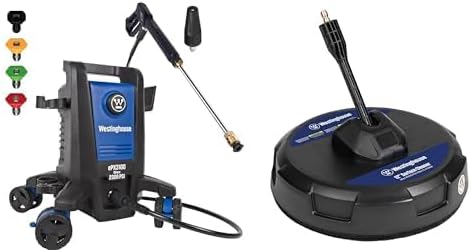
Westinghouse ePX3100 Electric Pressure Washer with 12" Surface Cleaner
| Power Source | Corded Electric |
|---|---|
| Maximum Pressure | 2300 psi |
| Maximum Flow Rate | 1.76 gpm |
| Hose Length | 300 inches |
| Tank Volume | 600 ml |
The Westinghouse ePX3100 is a compact electric pressure washer built for routine outdoor cleaning around the home. It supplies up to 2300 PSI and 1.76 GPM, and comes with a pro-style steel wand, five quick-connect nozzles and a 12-inch surface cleaner that speeds cleaning of patios, driveways, decks and sidewalks. The unit’s low center of gravity and four quick-lock wheels give stable, easy maneuvering and the 25-foot easy-coil hose plus onboard 600 mL soap tank let you switch between detergent and rinse without interrupting work. A Total Stop System stops the pump when the trigger is released to save energy and reduce wear. Practical limitations are its corded electric power source, which requires access to an outlet and limits mobility compared with gas models, and its pressure/flow ratings are geared to homeowner jobs rather than heavy commercial use. For typical patio and deck cleaning this package pairs usable power with a dedicated surface cleaner to make large flat areas faster to clean.
Best for: Homeowners who need an easy-to-use, compact pressure washer and want a dedicated surface cleaner to speed up routine patio and driveway maintenance without the complexity of gas models.
Less Ideal for: Professionals or users who need long-range mobility or sustained heavy-duty cleaning power should consider higher-flow gas or industrial electric units.
- Includes 12-inch surface cleaner for faster, even cleaning of patios and driveways
- Pro-style steel wand with five quick-connect nozzles for versatile spray patterns
- Onboard 600 mL soap tank lets you apply detergent without extra attachments
- Low center of gravity and 360-degree steering wheels improve stability and maneuverability
- Total Stop System helps conserve energy and prolong pump life
- Corded electric power limits range compared with gas models
- Pressure and flow are suited to homeowner and light-duty tasks rather than heavy commercial cleaning
Verdict: A compact, homeowner-focused electric pressure washer that pairs usable cleaning power with a 12-inch surface cleaner to make patios and driveways quicker to clean.
Westinghouse WPX2700e Electric Pressure Washer with 15" Surface Cleaner Attachment

| Power Source | Corded Electric |
|---|---|
| Maximum Flow Rate | 1.76 gpm |
| Maximum Pressure | 2700 psi |
| Hose Length | 25 feet |
| Tank Volume | 1.89 liters |
The Westinghouse WPX2700e is a corded electric pressure washer built to handle medium to heavy outdoor cleaning tasks around the home. It produces up to 2700 PSI at 1.76 GPM driven by a 13A induction motor and pairs with a 15" surface cleaner that speeds up work on patios, driveways, and decks. Typical use involves switching between five quick-connect nozzles for focused blasting or broad rinsing, using the onboard soap tank for detergent applications, and rolling the unit to the work area on its never-flat wheels. Notable practical benefits include a durable induction motor for longer runtime, a 25-foot abrasion-resistant hose for reach, and a surface cleaner rated to handle higher pressures to reduce streaking on flat areas. Limitations to consider are that it is a corded unit so you need access to power, and the 1.76 GPM flow is modest compared with higher-capacity gas models for very large commercial jobs. For residential and heavy-duty home use it brings reliable cleaning power with useful accessories that cut down time on patios and sidewalks.
Best for: Homeowners who prioritize a durable, low-maintenance electric washer for regular deep-cleaning of patios, decks, driveways, and outdoor furniture and want a faster option for flat surfaces.
Less Ideal for: Contractors or users who need fully cordless or higher-flow gas equipment for continuous, large-scale commercial jobs.
- 2700 PSI and 1.76 GPM provide strong cleaning power for most residential heavy-duty tasks
- Included 15" surface cleaner attachment speeds up cleaning of patios, driveways, and other flat surfaces
- Induction motor and maintenance-free axial cam pump designed for durability and longer life
- Onboard soap tank and five quick-connect nozzles make switching between detergent and rinse modes simple
- 25-foot abrasion-resistant hose and never-flat wheels improve reach and mobility around the yard
- Corded power requires access to a suitable outdoor outlet and limits portable use
- Flow rate is lower than commercial gas washers, so very large areas will take longer to clean
Verdict: Choose this model if you want a reliable, induction-motor electric washer with a dedicated surface cleaner to speed up patio and flat-surface cleaning.
Greenworks GPW2000-1RG Electric Pressure Washer with Surface Cleaner Attachment

| Power Source | Corded Electric |
|---|---|
| Maximum Flow Rate | 1.1 gpm |
| Maximum Pressure | 2000 psi |
| Hose Length | 20 feet |
The Greenworks GPW2000-1RG is a compact electric pressure washer designed for medium-duty residential tasks and it ships with a universal surface cleaner attachment that speeds up flat-surface work. It produces up to 2000 PSI at 1.1 GPM, which is sufficient for cleaning patios, decks, sidewalks, grills, and cars without the complexity of a gas unit. The unit includes a 20-foot high-pressure hose, three quick-connect nozzles (25°, 40°, and soap), and a metal spray gun for durability. In practice the surface cleaner makes even passes quicker and reduces streaking compared with a single-nozzle wand, and the 1/4-inch quick connect simplifies switching tools. As a corded electric model it starts instantly, runs quietly, and needs no fuel or engine maintenance, but it is limited to lighter to medium grime and relies on access to an outdoor outlet. For users who want a straightforward, lower-maintenance washer with a dedicated patio-cleaning attachment, this balances performance and convenience well.
Best for: Buyers who prioritize easy, low-maintenance patio and hard-surface cleaning and want a reliable electric washer with a surface-cleaner attachment for faster flat-surface results.
Less Ideal for: Not a good fit for contractors or users needing high-pressure, high-flow machines for heavy commercial stripping or large industrial jobs.
- Includes a universal surface cleaner that speeds up cleaning of patios, driveways, and decks
- 2000 PSI and 1.1 GPM provide effective medium-duty cleaning for residential surfaces
- 20-foot high-pressure hose gives decent reach for typical yard tasks
- Corded electric power offers instant starts, quiet operation, and low maintenance
- Metal spray gun and quick-connect fittings improve durability and tool changes
- Power and flow are lower than gas models so very heavy grease or deep-set stains may require multiple passes or a stronger unit
- Corded design limits mobility compared with gasoline-powered washers
Verdict: If you want a quiet, low-maintenance electric washer that makes patios and sidewalks faster to clean, the Greenworks GPW2000-1RG with a surface cleaner is a practical choice.
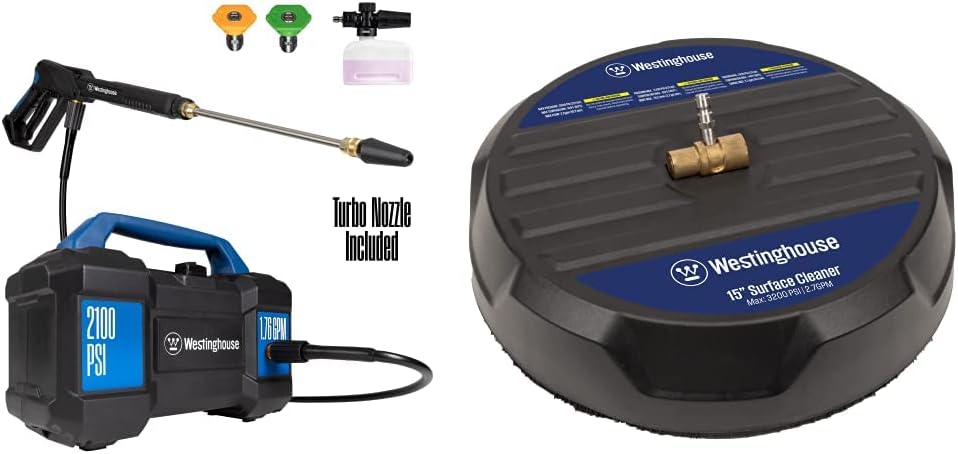
Westinghouse ePX3100v Electric Pressure Washer with 15" Surface Cleaner Attachment
| Power Source | Corded Electric |
|---|---|
| Maximum Flow Rate | 1.76 gpm |
| Maximum Pressure | 3200 psi |
| Hose Length | 20 feet |
| Tank Volume | 2.7 gallons |
The Westinghouse ePX3100v is a compact corded electric pressure washer designed for homeowners who want a portable, ready-to-use cleaning kit for patios, driveways, decks, and vehicles. The main unit delivers up to 2100 PSI (measured at initial discharge) and up to 1.76 GPM, and it ships with a pro-style steel wand, three quick-connect nozzles and a detachable foam cannon for detergent-assisted cleaning. A 20-foot easy-coil hose and built-in carry handle make moving between jobs straightforward, and the pump’s Total Stop System automatically shuts off when the trigger is released to conserve energy and reduce wear. The included 15-inch surface cleaner attachment speeds up work on large flat areas and keeps spray contained for more even results. Expect strong performance on mildew, dirt and light oil stains, but this compact electric unit is not a heavy-duty gas replacement for very large commercial projects. For a homeowner focused on convenience and predictable performance, it is a practical, user-friendly choice.
Best for: Homeowners who want a safe, easy-to-use pressure washer kit to clean patios, decks, driveways and cars without the noise and maintenance of a gas unit.
Less Ideal for: Professional contractors or users who need sustained high-pressure performance for large commercial jobs should choose a more powerful gas-powered model.
- Compact and lightweight design with built-in handle for easy portability and storage
- Includes 15" surface cleaner attachment for faster, more even cleaning of patios and driveways
- Detachable foam cannon and three quick-connect nozzles provide versatile cleaning options
- Total Stop System automatically stops pump when trigger is released to conserve energy and extend pump life
- Electric motor and 2100 PSI rating limit performance compared with larger gas-powered commercial units
- 20-foot hose may restrict reach on very large properties without additional extension
Verdict: This compact, plug-in kit is a convenient, low-maintenance choice for homeowners who want quicker, more even cleaning of patios and other flat outdoor surfaces.
Choosing the Right Pressure Washer with Patio Cleaner: Key Factors to Consider
Flow Rate and Pressure Compatibility
Flow rate and pressure determine how effectively a patio cleaner removes grime without causing surface damage. Higher pressure can knock away stubborn deposits but may etch soft stone or strip sealers. Flow rate, measured in gallons per minute, affects how quickly detergents rinse and how many passes you need. Match the washer's output to the patio cleaner head's recommended range to keep cleaning efficient and safe.
Also consider the water source and whether your home supply can sustain the required flow. Low-flow conditions can make a high-pressure unit feel weak, so check both pressure and flow rather than focusing on one number.
Patio Cleaner Head Design
The patio cleaner head is the business end of this setup. Look for a sealed housing with rotating nozzles that deliver a wide, consistent spray pattern and reduce splashback. A good design will have replaceable nozzles and a skirt that prevents water from spraying outward, concentrating force downward to lift dirt without streaking.
Durable materials and easy access for nozzle cleaning matter because debris and mineral buildup affect performance. Consider how the head mounts to standard wands and whether it swivels or has a rigid mount for different cleaning angles.
Surface Safety and Adjustability
Different patio surfaces react differently to pressure washing. Concrete, pavers, natural stone, and painted or sealed decking each require a different approach. Surface safety depends on the ability to adjust pressure, change nozzle types, and control distance from the surface. Some patio cleaner attachments are gentler because they spread the force across multiple jets and maintain consistent spacing from the surface.
Also account for any protective coatings or joint materials that might wash out under high pressure. Choosing a washer and patio cleaner combination that allows tuning reduces the risk of surface damage.
Hose Length, Mobility, and Reach
Hose length and the unit's mobility determine how easily you can clean a whole patio without constantly moving the machine. Longer high-pressure hoses increase reach but add weight and can reduce maneuverability. Consider whether the machine has a compact cart, swivel hose connections, and quick-connect fittings to speed setup and movement across uneven ground.
For multi-level yards or long driveways, verify that the hose and wand length let you reach corners and steps while keeping the unit on stable ground.
Ergonomics and Ease of Use
Ergonomics influence how long you can operate the equipment without fatigue. Look for lightweight wands, comfortable grips, and balanced hose routing that prevent strain. Controls should be simple to access, and attachments should connect without special tools. A patio cleaner that is quick to attach and detach encourages regular maintenance cleaning.
Storage features such as onboard hose reels, wand holders, and compact footprints matter for seasonal use. Easy winterizing and low-maintenance construction save time over the long term.
Durability and Maintenance
Durability affects both performance and ownership experience. Machines exposed to outdoor conditions should use corrosion-resistant fittings and abrasion-resistant hoses. Components like seals, nozzle tips, and the patio cleaner skirt are wear items; check for replaceability and availability of spares.
Maintenance requirements, such as filter cleaning and pump oil access, influence long-term reliability. A design that allows straightforward servicing reduces downtime and keeps cleaning consistent across seasons.
Which Patio Surfaces Benefit Most
Patio cleaner attachments excel on flat, hard surfaces where a consistent cleaning path matters. Concrete slabs, stamped concrete, and machine-laid pavers respond well because the rotating jets cover grout lines and surface textures evenly. Natural stone that is hard and non-porous can tolerate moderate pressure from an appropriate washer and patio cleaner combination.
Softer surfaces such as old sealed wood decking or recently laid natural stone may need a lower-pressure approach. For those surfaces, a washer with adjustable pressure and a gentle patio cleaner head reduces the risk of gouging or washing out joint material.
- Concrete and pavers: efficient and fast cleaning.
- Natural stone: use adjustable pressure and test a small area first.
- Wood decking: prefer low-pressure settings and wider spray patterns.
Setting Up the Patio Cleaner Safely
Attach the patio cleaner according to the manufacturer's recommended mounting method and check that all quick connects are secure. Verify water supply flow before starting and clear loose debris by sweeping first to reduce nozzle clogging. Position the unit on stable ground to avoid tipping, and route the hose to prevent kinks and tripping hazards.
Start on a low-pressure setting and make a test pass to confirm there is no damage to the surface finish. Work in overlapping passes and keep the cleaner moving at a steady pace; stopping in one spot concentrates force and can damage materials.
- Sweep surface first to remove loose grit.
- Test a hidden area at low pressure before full runs.
- Keep the cleaner in motion and overlap each pass slightly.
Using Detergents and Rinse Techniques
Detergents formulated for outdoor hard surfaces can loosen grime and biological growth before pressure washing. Apply cleaners with low-pressure detergent settings or a separate applicator, allow appropriate dwell time, and follow with thorough rinsing. Patio cleaner heads rinse efficiently when the flow rate is sufficient to flush foam and loosened debris.
Avoid overly aggressive chemical combinations that can strip sealers or harm surrounding plants. Rinse from high ground toward storm drains or permeable areas to control runoff; where possible, direct wastewater onto gravel or lawn to aid absorption.
- Use plant-safe cleaners and avoid runoff into sensitive beds.
- Rinse thoroughly with consistent flow to prevent residue.
- Adjust dwell time based on product instructions and surface type.
Maintenance Tips for Long-Term Performance
Regularly inspect patio cleaner nozzles and the skirt for wear and blockage. Clean nozzle tips with a small brush or needle and replace worn tips to maintain spray pattern consistency. After seasonal use, flush the system, drain water from hoses, and store components in a dry place to prevent corrosion and freeze damage.
Keep an eye on pump seals and connectors. Replace any brittle hoses or cracked fittings promptly to avoid sudden failures during a job. Simple preventive steps extend the life of both the pressure washer and the patio cleaner attachment.
- Clean and inspect nozzles after each use.
- Drain and store hoses to prevent freezing.
- Replace worn parts before they fail on the job.
When a Wand-Style Nozzle Is Better
A wand-style nozzle can be preferable for delicate trim, vertical surfaces, or tight corners where the patio cleaner cannot reach. It allows more targeted pressure control and a narrower spray for stubborn stains in grout lines or between closely spaced pavers. Use the wand for spot cleaning after the patio cleaner has done the broad passes.
Keep a selection of nozzle tips on hand so you can match spray angle and pressure to the task. The combination of a patio cleaner for area coverage and a wand for detail work gives both speed and precision.
- Use wand for corners, steps, and vertical surfaces.
- Keep multiple nozzle angles for detail cleaning.
- Alternate between patio cleaner and wand for best results.
How We Chose the Best Pressure Washer with Patio Cleaner
We chose products based on performance and real-world usability factors that matter when removing dirt, algae, and moss from patios and decks. Key evaluation points included water flow and pressure compatibility with patio cleaner attachments, the design and effectiveness of the patio cleaner head, and how easily the unit handles common outdoor surfaces. We also assessed hose length and reach so a cleaner can cover typical patio layouts without excessive repositioning, plus storage, setup, and durability for seasonal use. We excluded units that lack a compatible enclosed-surface cleaning attachment or that produce pressure or flow unsuitable for common patio materials. We also filtered out machines with poor hose or wand ergonomics that cause fatigue during repeated passes. The end result is a focused set of options that balance cleaning speed, surface protection, and everyday handling for gardeners and homeowners.
FAQ
Will a patio cleaner attachment damage sealed or painted surfaces?
It depends on pressure and dwell time. Enclosed patio cleaner heads spread force more evenly, which helps protect finishes, but high pressure or long exposure can still strip sealers. Test a hidden area first and use lower pressure if you have painted or recently sealed surfaces.
Do I need a specific flow rate to use a patio cleaner effectively?
Yes. Patio cleaners are matched to certain flow ranges. Too little flow reduces rinsing ability and may make the head spin poorly. Check the patio cleaner's recommended gallons-per-minute range and pair it with a washer that meets those requirements.
How do I prevent splashback when using a patio cleaner?
Choose a patio cleaner with a skirt or enclosed housing to contain spray, and keep it level above the surface. Wear eye protection and position the unit to minimize spray toward walkways or windows. Lower pressure settings also reduce splash.
Can I use detergents with a patio cleaner?
Often you can, but detergents need to be applied at low pressure and allowed to dwell before rinsing. Ensure the detergent is compatible with your surface and safe for nearby vegetation. Rinse thoroughly using the cleaner at normal flow to remove residues.
How long do patio cleaner nozzles last?
Nozzle life varies with water quality and frequency of use. Hard water and grit accelerate wear, while routine cleaning and replacement of tips extend service life. Inspect tips regularly and replace them when spray patterns become uneven.
Final Verdict
Choosing a pressure washer with patio cleaner comes down to balancing cleaning speed and surface protection. Prioritize matching flow and pressure to the patio cleaner head, choose a well-designed enclosed cleaner for even coverage, and ensure hose length and mobility fit your typical work area. Consider ergonomics and maintenance needs if you plan frequent seasonal cleaning. If you focus on those tradeoffs, you can pick a combination that cleans faster than a wand without risking surface damage, giving you reliable, repeatable results for patios, decks, and paved areas.
