

Note: This article contains affiliate links. If you click on these links and make a purchase, I may earn a small commission at no extra cost to you. This helps support my research and content. Read my full affiliate disclosure here.
When ants invade a kitchen, greenhouse, or commercial prep area, the right professional ant killer makes the difference between a temporary setback and a cleared infestation. You need options that act on contact and at the nest, keep working long enough to break foraging patterns, and fit the safety demands of indoor or high-traffic outdoor spaces. This guide shortlists seven top-rated professional ant killers suited to persistent or recurring infestations. Each pick was evaluated for real-world efficacy, residual activity, and how safely it can be applied around people, pets, and plants. Read on to understand how those criteria affect everyday control and which qualities gardeners and property managers should prioritize.
Top Picks at a Glance
| Best Overall The best all-around choice for most situations | Syngenta Advion Ant Gel Bait, 30 g |  |
| Best Quality Built to a higher standard if you want something more solid | Syngenta Advion Ant Gel Bait (4 tubes, 30 g each) |  |
| Best Value The sweet spot between price and what you get | Amdro Ant Killer for Outdoor Home Perimeter, 24 oz |  |
| Best Budget The cheapest option that still gets the job done reliably | Combat Max Ant Killing Gel, 27 g Syringe |  |
| Highest Rated A top-rated pick with lots of positive feedback | Atticus Talak 7.9% Indoor/Outdoor Bifenthrin Insecticide Concentrate (1 gal) |  |
| Most Popular A crowd favorite that many people choose with confidence | TERRO Liquid Ant Killer Bait Stations, 12-Pack |  |
| Best Seller A high-volume bestseller chosen again and again | Atticus Talak 7.9% Bifenthrin Indoor/Outdoor Insecticide Concentrate, 32 oz |  |
Syngenta Advion Ant Gel Bait, 30 g
| Item Form | Gel |
|---|---|
| Target Species | Insects |
| Active Ingredients | Indoxacarb |
| Item Weight | 1.1 ounces |
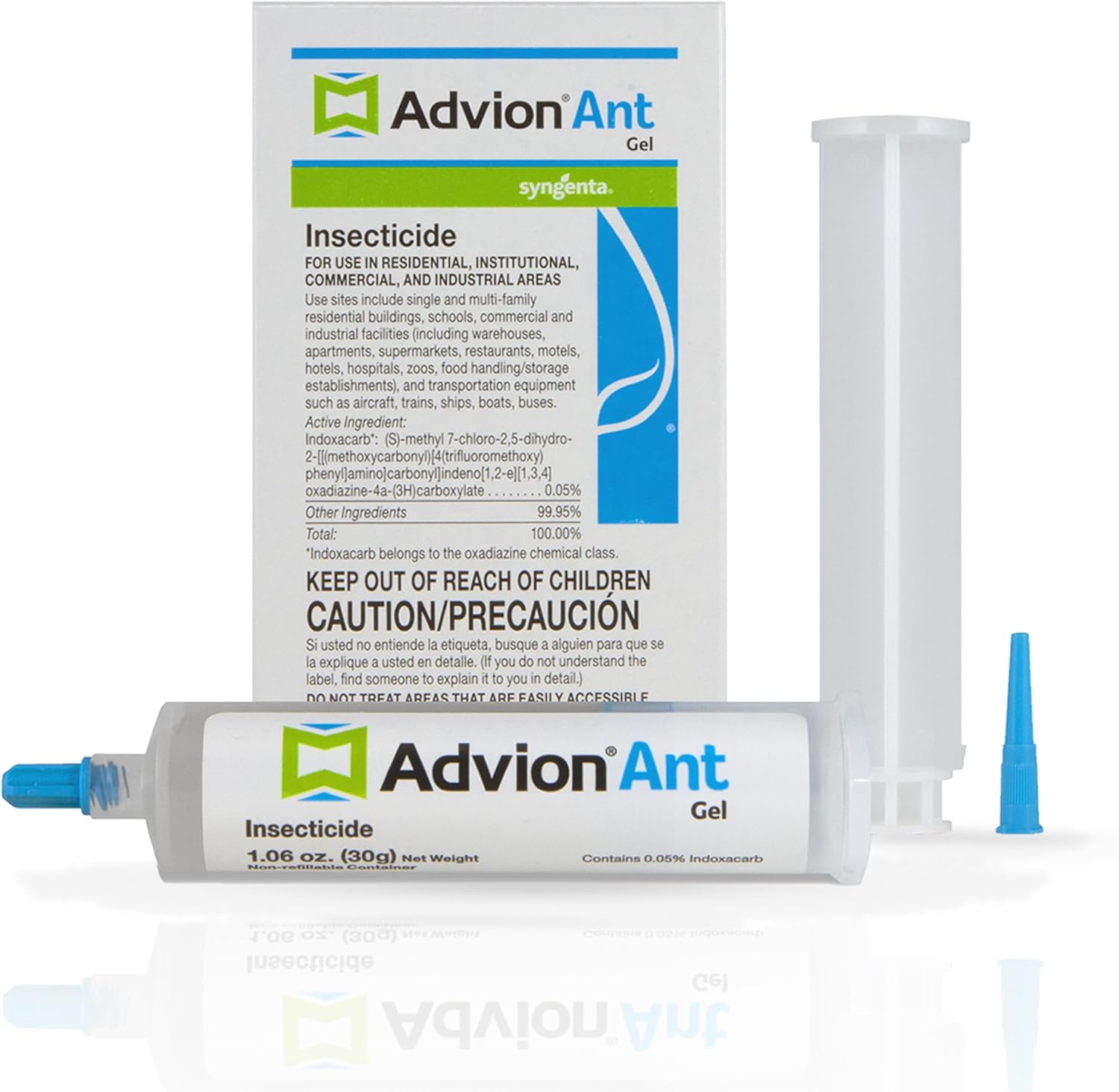
Syngenta Advion Ant Gel is a ready-to-use gel bait designed for targeted ant control in commercial and residential settings. Technicians apply small beads or lines of the translucent, no-odor gel where worker ants forage; the product is attractive to sweet-feeding species and is consumed and carried back to the colony. The active ingredient indoxacarb is a distinct chemistry that delivers delayed mortality, which helps infected ants spread the bait through the nest for more complete colony suppression. The gel formulation is non-staining and holds its shape outdoors for extended periods, reducing the need for frequent reapplication. It is labeled for both indoor and outdoor use, so it fits into standard integrated pest management routines. Limitations to plan for include the need for proper placement for transfer within the colony and standard safety precautions to keep product away from children and nontarget animals.
Best for: Pest control professionals and experienced homeowners who want a reliable bait to suppress ant colonies as part of an integrated treatment plan. Best for users who prioritize sustained colony control over quick surface knockdown.
Less Ideal for: Casual users seeking immediate visible kills or who need a broadcast contact insecticide for other crawling pests.
- Professional-grade active ingredient indoxacarb with a mode of action suited for colony-level control
- Highly palatable gel formulation attractive to sweet-feeding ants
- Translucent, no-odor, non-staining formula that maintains integrity outdoors
- Labeled for both indoor and outdoor applications for flexible use cases
- Requires correct placement on foraging trails to achieve colony transfer
- Not a contact spray so results depend on bait acceptance and distribution
Verdict: A palatable, professional gel bait with indoxacarb that is built to suppress entire ant colonies when placed correctly.
Syngenta Advion Ant Gel Bait (4 tubes, 30 g each)

| Item Form | Gel |
|---|---|
| Target Species | Insects |
| Unit Count | 4.23 Ounce |
| Active Ingredients | 0.05% indoxacarb |
| Included Components | 4 tubes, 1 plunger, 2 tips |
Advion Ant Gel is a professional-strength ant bait supplied in syringe-style tubes with a plunger and application tips for precise placement. It is a non-repellent formulation that ants readily take back to the nest, allowing worker ants to transfer the active ingredient and suppress entire colonies rather than just killing visible foragers. Typical use is small dots or thin lines placed along trails, in cracks and crevices, and near nests; the included tips make it easy to reach tight spots under appliances and along baseboards. Notable features are the MetaActive matrix designed to attract a broad range of species and the low 0.05% indoxacarb active ingredient that is fast-acting against many common ants. In practice the gel is odorless and compact to store, which suits routine monitoring and targeted treatments. Limitations are that it is a bait product so effectiveness depends on ants accepting the gel and on correct placement, and it does not provide a residual barrier against new invasions without follow-up inspection.
Best for: For owners or pest pros seeking a performance-focused, bait-based solution to eliminate established ant colonies through targeted placement and follow-up inspections.
Less Ideal for: Not well suited for users who need immediate broad residual perimeter protection or those unwilling to monitor and reapply baits as needed.
- Non-repellent formula encourages worker ants to carry bait back to the nest for colony control
- Syringe tubes with plunger and tips enable precise placement in cracks and tight spaces
- Odorless, compact packaging is easy to store and deploy for indoor or outdoor use
- Attractive bait matrix targets multiple common ant species including Argentine and carpenter ants
- Effectiveness relies on ants feeding on the bait so results vary with species and competing food sources
- Not a standalone long-term barrier treatment; requires monitoring and repeat applications if activity continues
Verdict: Choose this bait when you want a professional, non-repellent gel that ants will carry back to the nest for colony-level control.
Amdro Ant Killer for Outdoor Home Perimeter, 24 oz

| Item Form | Granules |
|---|---|
| Target Species | Insects |
| Special Features | Ant Killer for Outdoor Home Perimeter |
| Active Ingredients | Hydramethylnon |
| Liquid Volume | 24 fluid ounces |
This granular ant bait is designed to be spread around the outside of a house to interrupt ant foraging and carry toxic bait back to the colony. You apply a one-foot band around foundations, concentrate on visible trails and entry points, or sprinkle directly on individual mounds; for best results apply in the cooler parts of the day and avoid wet ground or forecasts of rain. The active ingredient, hydramethylnon, is formulated to attract worker ants and be shared so the colony and queen are affected, and the manufacturer says protection can last up to three months. Practical benefits include easy broadcast application, coverage of long linear distances from a single treatement, and compatibility with interior bait stations for layered control. Important limitations are that it is for outdoor perimeter use only, it requires dry conditions and active-foraging ants to be effective, and it is not an instant contact killer so visible reduction takes days to a week as bait is transferred through the colony.
Best for: Homeowners who want a straightforward, long-lasting perimeter treatment and prefer a bait-based approach that targets colonies rather than only killing surface workers.
Less Ideal for: People needing immediate knockdown of visible indoor ants or those who cannot wait for ants to forage and transfer bait should consider a fast-acting contact product or professional service.
- Granular bait attracts foraging ants and is carried back to the colony to reach the queen
- Designed to create a protective 12-inch band around a home and treat long linear distances
- Lasts up to three months per application when applied under recommended conditions
- Easy to apply by shaking or sprinkling without specialized equipment
- Requires dry conditions and active ants to work, so timing and weather limit use
- Not an instant contact kill; visible results can take several days to a week
- Intended only for outdoor perimeter use and not for indoor infestations
Verdict: Amdro delivers a simple, long-lasting outdoor perimeter bait that targets entire ant colonies, making it a practical choice for homeowners seeking sustained ant control.
Combat Max Ant Killing Gel, 27 g Syringe

| Active ingredient | Fipronil (0.001%) |
|---|---|
| Net weight | 27 Gram (0.95 oz) syringe |
| Indoor/outdoor | Suitable for both indoor and outdoor use |
| Fast control | Works in 3–5 days |
Combat Max Ant Killing Gel is a syringe-applied bait that targets foraging ants and carries a low-concentration fipronil bait back to the nest to eliminate queens, larvae, and workers. You apply tiny dots of gel in cracks, crevices, along trails, or next to nests indoors or in sheltered outdoor locations where ants travel. The syringe applicator gives precise placement in hard-to-reach spots and the odorless, vapor-free formula makes it acceptable for kitchens and living areas when used according to directions. Its high water content encourages quick feeding so control is often seen in three to five days. The product covers spot treatments rather than broad perimeter work, so multiple placements and occasional reapplication are needed for larger infestations. Safety precautions are important because the active ingredient is an insecticide and the gel should be kept away from food, pets, and children. For buyers wanting a focused, easy-to-use bait to eliminate colonies rather than just kill visible workers, this gel is an effective, economical choice.
Best for: Buyers who want an affordable, targeted colony-control bait they can place themselves in problem spots and value precise application over large-scale perimeter treatments.
Less Ideal for: People needing a one-time whole-structure barrier or non-chemical solutions should look at perimeter sprays or traps rather than a spot-applied gel.
- Syringe applicator allows precise placement in cracks and crevices
- Fast-acting fipronil formula often controls colonies within 3–5 days
- Odorless and vapor-free so it can be used in kitchens and living areas
- High water content encourages quick feeding by foraging ants
- Designed for spot treatments so multiple syringes or reapplications may be needed for large infestations
- Contains an insecticide that requires careful placement and avoidance of food, pets, and children
Verdict: An inexpensive, precision-applied ant bait that reliably eliminates colonies when placed correctly in ant activity areas.
Atticus Talak 7.9% Indoor/Outdoor Bifenthrin Insecticide Concentrate (1 gal)

| Unit Count | 128 Fluid Ounces |
|---|---|
| Liquid Volume | 1 gallons |
| Active Ingredients | Bifenthrin |
| Formulation | Suspension Concentrate |
| Length of Control | Up to three months |
Talak 7.9% is a professional-strength bifenthrin concentrate intended for versatile use around homes and landscapes. It is mixed with water and applied as a spray to lawns, landscaping, foundations, porches, and indoor perimeter areas to kill more than 75 pest types on contact and provide up to three months of residual control. The water-based formula dilutes easily, dries clear, and is formulated to leave no odor or visible residue, which makes it suitable for visible living spaces when used per label directions. Application guidance and measured mixing rates are printed on the label and the bottle includes a pour-friendly design to reduce spills when measuring small amounts. Important limitations are that mixed solutions should be used the same day and the product is not approved for foggers, so it requires a sprayer and some handling care; users must follow EPA and label safety instructions, especially around non-target organisms. For persistent ant problems the product can be applied as perimeter and landscape treatments or mound drenches where allowed by the label.
Best for: Buyers who prioritize reliable, long-lasting pest control and want a single professional-grade concentrate they can apply around structures and landscapes to prevent recurring ant infestations.
Less Ideal for: Casual gardeners who prefer ready-to-use products or those unwilling to handle concentrated insecticides and mix on-site should consider simpler, lower-strength alternatives.
- Professional-strength active ingredient (7.9% bifenthrin) for fast knockdown and long residual control
- Water-based suspension that dilutes readily, dries clear, and is low-odor for indoor/outdoor use
- Versatile label use: lawns, landscapes, perimeter surfaces and indoor baseboards
- Pour-friendly bottle design reduces mess when measuring concentrate
- Long residual activity up to three months per application when used as directed
- Mixed spray cannot be stored and must be used the same day
- Not labeled for use in foggers so requires a sprayer and some application effort
- Contains a broad-spectrum pyrethroid so users should take precautions to protect pollinators and aquatic areas
Verdict: A durable professional-grade bifenthrin concentrate for dependable, long-lasting perimeter and landscape control of ants and other common pests.
TERRO Liquid Ant Killer Bait Stations, 12-Pack

| Unit Count | 12 Count |
|---|---|
| Item Form | Liquid |
| Active Ingredients | Sodium Tetraborate Decahydrate (Borax), 5.40% |
| Specification Met | EPA |
TERRO Liquid Ant Killer Bait Stations are ready-to-use small bait traps that rely on a borax-based liquid to be carried by worker ants back to their nest, targeting the entire colony rather than only visible workers. Typical use is simple: open the tab and place stations along baseboards, in corners, behind appliances, or on counters where you see ant trails. The product is fast-acting for sugar-preferring species and can show reductions in activity within days while full control may take two to four weeks. Notable features include a long-lasting liquid formulation, compact trap design for discrete indoor placement, and an EPA-recognized active ingredient. Practical benefits are easy deployment across multiple rooms with the 12-count pack and effective colony-level control when other food sources are removed. Limitations are that it targets primarily sugar-attracted household ants and requires monitoring and replacement as bait is consumed; results depend on ants finding and regularly visiting the stations and it will not provide instant knockdown of large outdoor nests.
Best for: Buyers who want a straightforward, low-effort indoor solution to eliminate common household sugar-attracted ants and prefer a product with widespread consumer use and documented effectiveness.
Less Ideal for: People needing immediate knockdown of large outdoor infestations or a single targeted solution for ants that do not seek sweet baits should consider alternative products or professional services.
- Ready-to-use stations require no mixing or setup
- Borax-based liquid is carried back to the colony for colony-level control
- 12-count pack gives coverage for multiple rooms or repeat placements
- Compact design allows discreet placement along baseboards and behind appliances
- Formulation primarily attracts sugar-loving ants and may be less effective on protein-preferring species
- Requires ongoing monitoring and replacement as bait is consumed
Verdict: Choose TERRO Liquid Ant Bait Stations when you want an easy, consumer-proven indoor bait that targets entire sugar-loving ant colonies with minimal setup.
Atticus Talak 7.9% Bifenthrin Indoor/Outdoor Insecticide Concentrate, 32 oz

| Liquid Volume | 32 fluid ounces |
|---|---|
| Item Form | Liquid |
| Target Species | Insects |
| Active Ingredients | Bifenthrin |
| Specification Met | EPA |
Talak 7.9% is a water‑based bifenthrin concentrate formulated to treat lawns, landscapes, perimeter surfaces, and indoor problem spots like baseboards and cabinets. You mix measured teaspoons with water for applications ranging from mosquito perimeter sprays to turf treatments and mound drenches for fire ants. The formula kills on contact and the label claims residual control for up to three months, while drying clear with minimal odor and no phytotoxicity to plants when used as directed. The bottle includes pour markings to help measure small amounts for precise dilution. Important practical limits are that mixed solutions should not be stored and the product is not approved for foggers; follow label directions closely for safe use around people, pets, and food areas. Also check state registration since it is restricted in a few states. For someone who wants a broad, long‑lasting professional‑style product, Talak offers flexible application options and proven active ingredient performance when applied responsibly.
Best for: Buyers who prioritize dependable, long‑lasting control and prefer a measured concentrate they can apply themselves for perimeter, turf, and spot indoor treatments.
Less Ideal for: People who want ready‑to‑use sprays or fogger applications or who live in states where this formulation is not registered should look at alternatives.
- Contains 7.9% bifenthrin, a proven broad‑spectrum active ingredient
- Water‑based formula dilutes easily, dries clear, and is low odor
- Label lists application rates for lawns, landscapes, surfaces, and mound drenches
- Long residual control claimed, up to three months per application
- Convenient bottle with pour markings for measured mixing
- Mixed spray cannot be stored for later use and must be used same day
- Not approved for fogger application and restricted in some states
Verdict: A versatile, professional‑strength bifenthrin concentrate that delivers broad, long‑lasting indoor and outdoor pest control when mixed and applied according to the label.
Choosing the Right Professional Ant Killer: Key Factors to Consider
Mode of Action and Colony Reach
How a product kills ants matters for long-term control. Contact sprays may kill visible workers quickly but often fail to stop the colony if brood and the queen are not affected. Baits with slow-acting active ingredients let foragers carry toxicant back to the nest, which can collapse the colony over days or weeks. Granules and dusts can be effective in voids and nest sites when placed correctly, but require knowledge of ant behavior to work. Understanding the mode of action helps you pick a product that targets both foraging workers and the colony center, reducing repeat invasions.
Match the mode of action to the infestation scenario. Foraging trails in kitchens often respond well to gel or liquid baits placed near trails. Outdoors or in structural voids, water-soluble granules or dusts that reach nest chambers are often more useful. Choosing a product with an appropriate delivery method increases the chance of colony elimination rather than temporary suppression.
Residual Activity and Reapplication Needs
Residual activity determines how long treated surfaces continue to repel or kill returning ants. Long residuals can reduce the need for frequent retreatment in high-traffic perimeters or landscape borders. However, longer residuals also mean a longer exposure window for non-target organisms, so placement and label directions are important.
Consider the environment where you will treat. Indoors, choose products with shorter but effective residuals in living spaces and rely on targeted baits for colony elimination. Outdoors, perimeter treatments with extended residuals can form a protective barrier around structures. Always follow reapplication intervals on the label to maintain control without overusing product.
Safety, Non-target Risk, and Label Instructions
Professional formulations are often more concentrated and require careful handling. Labels provide critical information about personal protective equipment, safe distances from edibles, and restrictions around pollinator-attractive plants. For homes, choose products that have clear instructions for keeping children and pets away from treated areas until safe. For gardens and beds, observe restrictions on application near edible crops and water features.
Assess whether you can meet label requirements before purchase. If a product demands specialized equipment or respirators that you do not have, select a different option. Prioritizing label clarity reduces the chance of misuse and accidental exposures.
Application Method and Equipment Compatibility
Different formulations need different tools. Gel tubes and bait stations are applied by hand and work well indoors or along baseboards. Liquid concentrates may need a pump sprayer for perimeter work and are versatile for soil drenching, crack-and-crevice work, or broadcast applications. Granular products require a spreader or shaker and are suitable for landscape beds and lawns.
Choose a product that fits the application equipment you already have or are willing to acquire. Consider ease of precise placement to avoid overapplication. Compatibility with common sprayers and bait dispensers increases the likelihood you'll use the product correctly and safely.
Target Species and Behavior
Ant species differ in nesting habits and food preferences. Some common species forage widely and prefer sweet baits, while others prefer protein or grease. Some nest in soil, others in wall voids or under stones. A professional-grade ant killer that matches the target species behavior will be more effective because bait attractiveness and placement strategy vary by species.
If you cannot identify the species, choose products with multiple formulation options, such as paired sweet and protein baits or combined contact and bait strategies. Observing worker activity patterns before applying treatment will help you place baits and contact treatments where they are most likely to be picked up and carried back to the nest.
Environmental Conditions and Timing
Temperature, humidity, and season affect ant activity and product performance. Baits may be less attractive in very hot or wet conditions, and some active ingredients degrade faster under UV and rain. Soil moisture influences granule dissolution and movement to nest chambers.
Plan treatments for times when ants are actively foraging, typically in warm parts of the day. For outdoor treatments, choose periods of stable weather to avoid rain washing away applied materials. Understanding environmental impacts will improve control success and reduce wasted applications.
Common Application Scenarios
Different infestation sites require different tactics. Indoors, focused baiting along trails, behind appliances, and in cracks and crevices minimizes exposure to household members while directing toxicant to the colony. Outdoors, perimeter sprays and granular barriers can reduce the number of ants reaching the structure, while targeted nest treatments are necessary for high-density or mound-nesting species.
For commercial or high-traffic properties, combine monitoring with scheduled perimeter treatments and discrete bait placements in service areas. In greenhouse or nursery settings, avoid broadcast sprays over crops; instead use contained baiting or localized nest treatments and follow label restrictions to protect beneficial insects.
- Indoor trails: place baits near but not directly on food prep surfaces
- Perimeter defense: apply liquids or granules around foundation edges and entry points
- Garden beds: use granular or targeted liquid treatments away from blooms and edible plant parts
- Nesting sites: apply dusts or drenches directly into voids when nest location is known
Safe Placement and Protecting Beneficials
Even professional formulations can harm pollinators and predatory insects if misapplied. Avoid treating flowering plants or placing baits where bees or other pollinators will contact them. When treating soil or mulch, confine applications to non-flowering zones and use physical barriers to keep pets and children out of treated areas until safe.
Read label restrictions on proximity to water and follow wash-off guidance. For garden beds with edible plants, observe pre-harvest intervals and avoid using formulations that the label prohibits near food crops.
- Keep baits in tamper-resistant stations in public or pet-accessible areas
- Use targeted spot applications rather than broadcast treatments when pollinators are active
- Store professional products locked and in original containers
Monitoring and Follow-up Actions
Effective ant management includes ongoing monitoring. After initial treatment, check bait uptake and activity daily for the first week, then weekly until trails stop. Maintain visual records of treated spots and ant activity to determine if additional treatments or a different tactic is needed. If bait uptake stops quickly, try switching bait type or relocating stations closer to active trails.
Follow-up actions may include reapplying perimeter treatments at label intervals, sealing entry points to prevent reinfestation, and removing attractants such as exposed food or standing water. Persistent infestations sometimes require a combination of baiting and residual applications to eliminate the colony and prevent new colonies from establishing.
- Inspect treated areas after 24 to 72 hours to gauge initial response
- Rotate bait types if uptake is poor after several days
- Combine sanitation and structural repairs with chemical control for lasting results
Best Practices for Commercial and High-Use Sites
In commercial kitchens, warehouses, or multi-unit housing, document treatments and label instructions to comply with workplace safety standards. Use tamper-resistant bait stations and limit broadcast treatments in preparation and storage areas. Coordinate with facility managers to schedule treatments during low-activity periods and communicate safety precautions to staff and tenants.
For landscapes around commercial buildings, integrate ant control with other integrated pest management practices. Maintain a tidy perimeter by removing mulch buildup against foundations, sealing gaps, and trimming vegetation away from walls to reduce harborage and foraging corridors.
- Use a combination of baiting and perimeter treatments for severe infestations
- Train staff on bait station placement and monitoring protocols
- Keep records of product used and application dates for regulatory or audit needs
When to Call a Professional Pest Manager
Some infestations require expertise beyond homeowner tactics. Signs that you should consult a pest manager include repeated heavy infestations despite correct product use, ants nesting in structural voids or electrical equipment, or infestations involving species known for structural damage or aggressive behavior. A professional can confirm species ID, locate nests in hidden areas, and apply treatments that are not appropriate for untrained users.
Professionals also have access to a wider range of application tools and integrated strategies. For sensitive sites such as food-handling facilities, health code considerations may necessitate licensed applicators to ensure legal and safe treatments.
- Consider professional help for infestations that persist after several well-executed treatments
- Seek licensed applicators for commercial or sensitive-site treatments
- Request species identification to fine-tune bait and placement strategies
How We Chose the Best Professional Ant Killer
Our selection focused on products and formulations that deliver professional-level control while fitting realistic application scenarios. We prioritized efficacy against typical nuisance and structural ant species, looking for options that show fast knockdown plus colony-level control through baiting or slow-acting active ingredients. Residual performance was assessed for how long treated zones remain unattractive to returning ants. Safety and non-target exposure were crucial; we favored formulations with clear use directions and reduced risk to pets and beneficial insects when used as labeled. Application flexibility was another filter, including liquids, baits, and granular treatments that work indoors, along foundations, and in landscaped beds. Ease of use and labeling clarity were considered to help less-experienced users apply treatments correctly. Products that lacked documented residual activity, had no clear safety instructions, or were exclusively aerosol short-term knockdown without colony control were excluded.
FAQ
How long does it take to eliminate an ant colony with professional products?
It often takes several days to a few weeks for colony-level collapse depending on species, bait attractiveness, and how well foragers transport the toxicant to the nest. Contact sprays can reduce visible workers quickly, but slow-acting baits are usually required to eliminate the queen and brood.
Are professional ant killers safe to use around pets and children?
Many professional products can be used safely if label directions are followed, including keeping pets and children away from treated areas until surfaces dry or baits are secured in tamper-resistant stations. Always read and follow personal protective and reentry instructions on the product label.
Can outdoor perimeter treatments prevent indoor infestations?
Perimeter treatments can reduce the number of ants entering a structure by creating a treated barrier, but they are most effective when combined with sanitation, sealing entry points, and targeted interior baiting to address colonies already present inside.
What should I do if bait uptake is low?
If bait uptake is poor, try switching bait formulation from sweet to protein-based or relocating stations closer to active trails. Environmental conditions and competing food sources also influence uptake, so improve sanitation and monitor at different times of day.
Is one application usually enough for severe infestations?
Severe or large colonies typically require multiple applications and a combination of tactics, such as baiting plus targeted nest treatments. Ongoing monitoring and follow-up treatments scheduled according to label intervals help ensure lasting control.
How do I choose between liquid concentrates, baits, and granules?
Choose based on infestation site and goals. Baits are best for colony elimination, liquids are versatile for perimeters and crack-and-crevice work, and granules work well in lawns and beds. Consider application equipment, environmental exposure, and label restrictions when selecting a formulation.
Final Verdict
Choosing the right professional ant killer depends on matching formulation and mode of action to the infestation scenario. Prioritize products that offer colony reach through attractive baits or nest-directed applications, and balance residual protection with safety and placement that protects non-targets. For routine site maintenance, integrate monitoring, sanitation, and targeted treatments to reduce the likelihood of reinfestation. When in doubt about species or nest location, consult a licensed applicator to develop a plan that minimizes risk and restores control.
