

Note: This article contains affiliate links. If you click on these links and make a purchase, I may earn a small commission at no extra cost to you. This helps support my research and content. Read my full affiliate disclosure here.
If you maintain large hedges, estates, or commercial landscapes, a professional gas hedge trimmer gives the power and runtime needed for prolonged work without frequent stops. The right unit reduces fatigue, makes repeatable cuts easier, and stands up to rougher plant material. This guide looks at five shortlisted professional-grade gas hedge trimmers suited to heavy residential and commercial tasks. We evaluated each trimmer for how well it handles thick branches, how long it runs between refuels, vibration and ergonomics, and serviceability. Read on to see the factors that matter when selecting a commercial hedge trimmer and to compare the top contenders for demanding hedge work.
Top Picks at a Glance
| Best Overall The best all-around choice for most situations | Husqvarna 525HE4 22-Inch Professional Gas Pole Hedge Trimmer |  |
| Best Quality Built to a higher standard if you want something more solid | Husqvarna 322HD60 24-inch Gas Hedge Trimmer |  |
| Highest Rated A top-rated pick with lots of positive feedback | ECHO HCA-2620 21" Gas Articulating Shaft Hedge Trimmer |  |
| Most Popular A crowd favorite that many people choose with confidence | ECHO HC-2020 20 in. Gas 2-Stroke Hedge Trimmer |  |
| Best Seller A high-volume bestseller chosen again and again | ECHO SHC-225S Commercial Series 20" Gas Hedge Trimmer |  |
Husqvarna 525HE4 22-Inch Professional Gas Pole Hedge Trimmer

| Power Source | Gas Powered |
|---|---|
| Engine Displacement | 25 CC |
| Engine Cycle | 2-Cycle |
| Cutting Speed | 4,400 cut/min |
| Maximum Reach | 13 Feet |
The Husqvarna 525HE4 is built for high-performance hedge work where power and reach matter. It is a pole-mounted gas trimmer with a long cutter bar and an engine that serves as a counterweight for balanced handling, making it practical for trimming tall or deep hedges without ladders. Notable features include a 25cc X-Torq two-cycle engine that delivers strong cutting speed and torque, a 135° adjustable cutter bar to adapt to different hedge angles, and a heavy-duty gearbox designed for professional use. In practice this translates to fast, efficient cutting of thicker stems and dense growth at heights up to about 13 feet when using the pole. The Smart Start system and intuitive controls help reduce starting effort, but it remains a gas tool so expect typical maintenance tasks such as fueling, two-stroke mixing, and periodic tune-ups. Noise and vibration are higher than battery or electric models, and the unit is heavier than handheld trimmers, which can fatigue users during very long sessions.
Best for: Landscape professionals or experienced homeowners who prioritize cutting power and reach for thick branches and tall hedges and who are comfortable with gas-powered equipment maintenance.
Less Ideal for: Casual gardeners, apartment owners, or users who need a lightweight, quiet, low-maintenance trimmer for small yards.
- High-reach pole design lets you trim tall hedges up to roughly 13 feet without a ladder
- 25cc X-Torq engine delivers strong cutting speed and torque for thick, dense growth
- 135° adjustable cutter bar provides versatile angle cutting for varied hedge shapes
- Heavy-duty gearbox and durable blade materials suited for professional, frequent use
- Gas two-stroke engine requires fuel mixing and periodic maintenance
- Significantly louder and heavier than battery or corded alternatives
Verdict: Choose this Husqvarna pole trimmer when you need professional-grade power and reach to cut through thick branches and tall hedges efficiently.
Husqvarna 322HD60 24-inch Gas Hedge Trimmer
| Power Source | Gas Powered |
|---|---|
| Speed | 7800 rpm |
| Blade Material | Hardened Steel |
| Blade Length | 24 inches |
| Material Type | Alloy Steel |
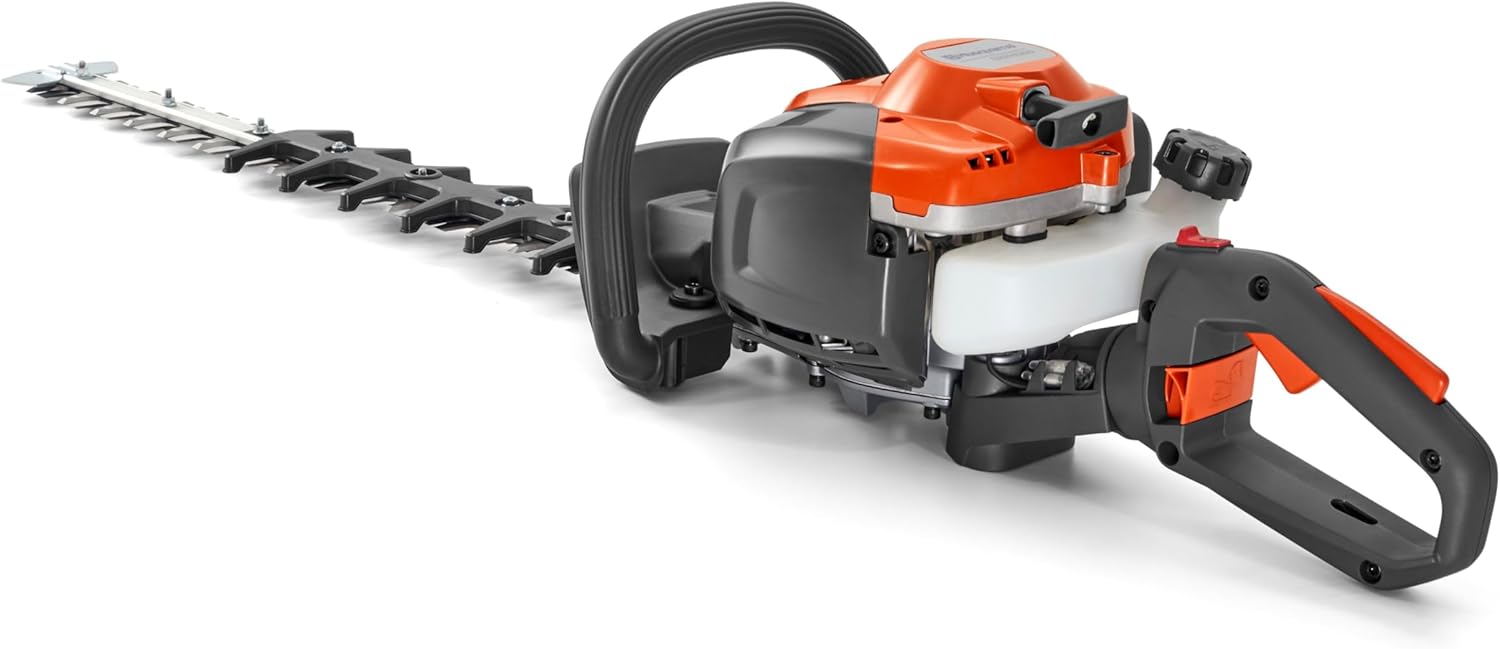
The Husqvarna 322HD60 is a gas-powered double-sided hedge trimmer built for high-capacity residential and light professional work. It uses a 21.7cc two-cycle engine that delivers strong cutting power and a 24-inch dual-action hardened-steel blade that cuts in both directions for faster shaping and fewer passes. An adjustable rear handle and relatively light overall weight make it easier to maneuver around large hedges and tight spots while the durable gearbox and professional-grade knife blades are aimed at frequent use. Typical tasks include trimming mature hedges, reducing overgrowth, and shaping long runs of shrubs where gas power and a long reach speed the job. Important limitations are the need for fuel mixing and routine engine maintenance, and the noise and vibration levels typical of gas tools compared with electric models. If you need long runtime and cutting force for thick stems, this trimmer delivers; if you prefer low-maintenance, quieter operation for smaller yards, an electric or battery model may be more suitable.
Best for: Buyers who prioritize cutting power and long runtime for heavy hedges and frequent trimming tasks and who are comfortable maintaining a gas engine.
Less Ideal for: Casual gardeners with small yards who prefer quieter, low-maintenance electric or battery trimmers.
- Powerful 21.7cc two-cycle engine for cutting thicker stems and long runs
- 24-inch dual-action hardened-steel blade that cuts in both directions for efficient shaping
- Adjustable rear handle and relatively light weight improve maneuverability during extended use
- Durable gearbox and professional-grade knife blades built for frequent residential or part-time professional work
- Requires fuel mixing and regular engine maintenance typical of gas tools
- Higher noise and vibration compared with electric or battery trimmers
Verdict: Choose the Husqvarna 322HD60 when you need gas-powered cutting power and a long dual-action blade for fast, professional-quality hedge work.
ECHO HCA-2620 21" Gas Articulating Shaft Hedge Trimmer

| Blade Length | 21 inches |
|---|---|
| Shaft Length | 59 inches |
| Engine Displacement | 25.4 cc |
| Fuel Capacity | 20.6 fl. oz. |
| Blade Type | Double-sided, double-reciprocating |
The ECHO HCA-2620 is a gas-powered articulating-shaft hedge trimmer built for tackling tall and dense hedges. Its 59-inch shaft and articulating gear case that pivots up to 135 degrees let you reach high or awkward angles without a ladder, while the 21-inch double-sided, double-reciprocating RazorEdge blades provide fast, clean cuts on thicker growth. The 25.4 cc two-stroke engine and large 20.6 fl. oz. fuel tank deliver long run times for multi-garden jobs, and the bellows-style fuel transfer plus two-stage air filtration improve starting and reduce field maintenance. Vibration reduction isolates the handles for steadier control and less fatigue during extended use. Expect a solid, tool-friendly service experience thanks to tool-less air filter access, but note this is a gas machine so it requires regular engine upkeep, fueling, and more noise than electric options. Its weight and engine complexity make it better suited to experienced users or professionals rather than those wanting near-silent, low-maintenance tools.
Best for: Gardeners and maintenance pros who need a powerful, reach-capable hedge trimmer for frequent or large-scale pruning and who are comfortable with routine engine upkeep.
Less Ideal for: Casual homeowners with small yards or those who prefer near-silent, low-maintenance electric or battery tools should consider lighter alternatives.
- Articulating shaft with 135° pivot for reaching tall and awkward hedges without a ladder
- 21-inch double-sided, double-reciprocating RazorEdge blades cut efficiently through thick growth
- 25.4 cc two-stroke engine and 20.6 fl. oz. fuel tank provide extended run time for larger jobs
- Tool-less air filter access and two-stage filtration reduce maintenance time
- Vibration-reduction system improves operator comfort during long use
- Requires regular two-stroke engine maintenance and fuel mixing
- Heavier and louder than electric or battery trimmers which can limit use in noise-sensitive areas
Verdict: Choose the ECHO HCA-2620 when you need a powerful, long-reach gas hedge trimmer that handles tall, heavy pruning jobs reliably.
ECHO HC-2020 20 in. Gas 2-Stroke Hedge Trimmer

| Model Number | HC-2020 |
|---|---|
| Blade Length | 20 inches |
| Power Source | Gasoline-Powered |
| Blade Material | High Carbon Steel |
The ECHO HC-2020 is a compact gas-powered hedge trimmer built for frequent use around medium to large hedges and shrubs. It uses a 2-stroke gasoline engine to deliver continuous cutting power while the 20-inch double-sided, double-reciprocating high-carbon steel blades let you trim both faces of a hedge without flipping the tool. The unit is unusually light for a gas trimmer, which reduces arm fatigue during longer jobs, and service points like a zero-type grease fitting and tool-less air filter cover speed routine maintenance. In practice it excels at clean, efficient cuts on established hedges and dense growth where battery models may run short on runtime. Expect typical gas-tool requirements though including fuel mixing, louder operation, and more vibration than electric alternatives. Its professional features and build quality make it suited to heavy home or light commercial use, but users who want near-silent operation or zero-emission tools should consider electric or battery options instead.
Best for: Someone who needs a dependable, gas-powered trimmer for frequent or commercial-style hedge work and values professional cutting performance and easy maintenance.
Less Ideal for: Casual homeowners who prioritize low noise, zero emissions, or minimal maintenance should look at battery or electric trimmers instead.
- 20-inch double-sided blades allow trimming both sides of a hedge without flipping the tool
- High carbon steel blades provide sharp, durable cutting edges for professional results
- Lightweight design reduces operator fatigue during extended use
- Tool-less air filter cover and zero-type grease fitting simplify routine maintenance
- Requires gasoline and 2-stroke fuel mixing which adds maintenance and handling
- Louder and higher vibration than electric or battery models
Verdict: Buy this if you need a lightweight, gas-powered hedge trimmer with professional cutting performance and easy field maintenance.
ECHO SHC-225S Commercial Series 20" Gas Hedge Trimmer

| Blade Length | 20 inches |
|---|---|
| Power Source | Gas Powered |
| Blade Material | Stainless Steel |
| Material Type | Alloy Steel |
The ECHO SHC-225S is a gas-powered commercial hedge trimmer built around a 20-inch stainless steel blade and alloy-steel construction. It is intended for landscapers and property professionals who need a robust handheld cutter for frequent use on hedges, shrubs, and formal hedgerows. The gas engine provides uninterrupted power for extended runs and the long blade covers more cutting area per pass, which speeds up shaping and maintenance of large hedges. Stainless-steel blades resist corrosion and hold a sharp edge longer than lower-grade metal, and the commercial design suggests durable internals for higher duty cycles. Limitations to note are the typical noise, vibration, and maintenance demands of a gas tool and the need for fuel and periodic engine servicing, which make it less convenient than electric or battery models for light or occasional work. For crews that prioritize continuous power and cut reach on large jobs, this model delivers the core performance features they will use most.
Best for: Professional landscapers and grounds crews who need a durable, gas-powered trimmer for frequent, large-scale hedge trimming and shaping.
Less Ideal for: Homeowners with small yards or occasional pruning needs and users who prefer quieter, low-maintenance electric or battery tools.
- 20-inch stainless steel blade gives long cutting reach for fewer passes
- Gas power provides continuous operation without battery swaps
- Commercial-series build aimed at durability for frequent professional use
- Alloy steel components resist wear under heavy use
- Requires fuel, regular engine maintenance, and produces more noise and vibration than electric alternatives
- Heavier handling and no cordless convenience for tight or indoor-adjacent jobs
Verdict: Choose this gas-powered commercial trimmer when you need continuous, heavy-duty cutting reach and durability for professional hedge work.
Choosing the Right Professional Gas Hedge Trimmer: Key Factors to Consider
Engine Power and Fuel Efficiency
Engine size and tuning directly affect how well a professional gas hedge trimmer slices through thicker stems and dense hedgerows. Higher displacement and better air/fuel management mean the motor holds RPM under load, reducing bogging when you meet woody material. Fuel efficiency matters because commercial crews need long runtimes between refuels to keep productivity high.
Poorly matched engine power forces operators to work in multiple passes or slow down, which increases labor time and wear on the machine. Look for engines with conservative cooling and accessible tune points so that field adjustments and routine servicing maintain peak efficiency over years of use.
Blade Design and Cutting Capacity
Blade length, tooth spacing, and build quality determine the trimmer's effective cutting range and the maximum branch diameter it can handle cleanly. Longer blades reduce the need for ladder repositioning on tall hedges, while closer tooth spacing makes finer shaping possible on formal hedges. Hardened steel teeth and precision ground cutting edges stay sharp longer and give cleaner cuts that heal faster on plants.
Blade mounting stiffness and backlash tolerance also affect repeatability. A blade that flexes or develops play will make uneven cuts and increase operator correction time. Easy blade access for sharpening and adjustments keeps downtime low in heavy-use environments.
Vibration Control and Operator Comfort
Vibration transmits from the engine and reciprocating blades into the handles and arms, and prolonged exposure causes fatigue and reduces control. Professional trimmers typically use counterweights, better dampers, and handle isolation to cut felt vibration. Ergonomic handle shapes, adjustable grasp positions, and thoughtful control placement reduce wrist and shoulder strain during long jobs.
Comfort features influence how long an operator can maintain consistent cutting quality. Lighter units are not always more comfortable if balance is poor, so consider both vibration ratings and how the tool feels in common working positions like overhead and lateral cutting.
Durability and Serviceability
Commercial hedge trimmers face frequent transport, heavy use, and exposure to sap, dust, and moisture. Materials and finishes that resist corrosion, robust gearboxes, sealed bearings, and reinforced housings extend service intervals. Components that are modular and easy to disassemble reduce workshop time when repairs are needed.
Serviceability also includes parts availability and clear maintenance access to items like spark plugs, filters, and carburetors. A design that allows routine tasks without special tools keeps fleets moving and lowers total cost of ownership over the life of the machine.
Weight, Balance, and Reach
Weight affects how long an operator can hold and manipulate the trimmer, especially for overhead work or long continuous trimming runs. Balance matters more than absolute weight: a slightly heavier trimmer with a well-centered mass can feel easier to control than a lighter, front-heavy tool. Reach, delivered through blade length and handle layout, determines how much ladder work or repositioning is required on tall hedges.
Consider the typical jobsite tasks you perform often. If you handle a lot of tall hedges, prioritize reach and balance. For dense, low-level shrub work, shorter blades with nimble balance might speed up both shaping and cleanup.
Common Commercial Use Cases
Professional gas hedge trimmers are used across municipal crews, landscape contractors, and estate maintenance where long runtimes and reliable cutting power are essential. Typical tasks include shaping long formal hedgerows, reducing overgrown privet or laurel stands, and cutting back woody hedges to maintain sightlines and property boundaries.
Understanding the primary use case helps narrow choices. For frequent overhead trimming, balance and vibration damping are priorities. For cutting through very woody material, engine torque and blade robustness are more important than marginal weight savings.
- Formal shaping and topiary benefit from finer-tooth blades and smooth reciprocation.
- Heavy rejuvenation cuts require higher torque and durable gearbox construction.
- Linear hedge runs emphasize runtime and fuel capacity to avoid frequent stops.
Maintenance Routine for Longevity
Regular maintenance keeps professional trimmers running longer and prevents common breakdowns. Daily checks should include inspecting the cutting edges, cleaning sap and debris from the blade area, and verifying control cables and throttle response. Periodic tasks include sharpening blades, replacing air and fuel filters, and checking gearbox lubrication if the design requires it.
Set up a simple log for hours run and scheduled service intervals. That practice reveals wear patterns and helps budget for parts replacement before failures occur, which is especially important for tools used on tight commercial schedules.
- Wipe blades after each use to prevent corrosion and sap buildup.
- Confirm fasteners and mounts are tight before every job.
- Follow manufacturer torque specs and service intervals for critical components.
Safe Handling and PPE Recommendations
Gas hedge trimmers are powerful tools that require clear safety practices. Always use eye and ear protection, cut-resistant gloves, and long sleeves to protect from debris and accidental contact. Keep bystanders and co-workers at a safe distance and maintain a stable stance when cutting from ladders or elevated positions.
When transporting or refueling, shut the engine, allow it to cool, and keep fuel containers sealed. Be mindful of kickback when the blade contacts hidden branches or metal fixtures and plan cuts to avoid catching the blade edges on fence posts or wire.
- Use ear protection rated for high dB exposure during long runs.
- Mark and clear the work area of obstacles before starting.
- Refuel with the engine off and cool to reduce ignition risk.
Upgrading From Consumer to Professional Units
Moving from a consumer trimmer to a professional gas model usually brings larger engines, longer service intervals, and better parts support. Expect differences in vibration control, heavier-duty gearboxes, and blade options that suit professional shaping or heavy cutback work. These design changes aim to reduce downtime and improve cut consistency for commercial tasks.
Budget for a learning curve: professional units can be heavier and require more rigorous maintenance. A transition plan that includes basic operator training and a maintenance schedule will maximize the long-term benefits of upgrading.
- Request operator familiarization for safe, efficient use.
- Adopt a regular maintenance checklist when bringing new units into service.
- Consider spare blades and common service parts as part of initial setup.
Environmental and Noise Considerations
Gas-powered professional hedge trimmers produce more noise and emissions than electric options. Plan work schedules to comply with local noise ordinances and to minimize disturbance, especially in residential areas. Proper muffler maintenance and tuned engines can reduce noise and improve combustion efficiency.
If emissions or noise are a significant concern for your job sites, evaluate how engine tuning, muffler condition, and fuel quality affect both. Sometimes operational changes such as scheduling noisy tasks for daytime hours can keep projects compliant while using gas equipment where needed.
- Check local regulations for allowable work hours in residential zones.
- Maintain mufflers and use fresh fuel to reduce excessive smoke.
- Use hearing protection and rotate operators on noisy jobs to reduce exposure.
How We Chose the Best Professional Gas Hedge Trimmer
We focused selection on tools built for frequent, professional use and tested available specifications and owner feedback to identify models that perform consistently in commercial settings. Key evaluation criteria included engine power and fuel efficiency to measure cutting capability and runtime; blade design and cutting capacity to assess how cleanly and quickly the tool shears through varying branch sizes; vibration levels and ergonomic design to evaluate operator comfort over extended shifts; durability and serviceability covering build materials, corrosion resistance, and ease of maintenance; and weight and balance to determine how manageable the trimmer is during overhead or extended use. We excluded consumer-grade hobby models, battery-only units, and trimmers primarily designed for occasional light landscaping. We also filtered out options with limited parts availability or unclear dealer support. The final shortlist emphasizes real-world durability, cutting performance, and features that reduce operator fatigue and downtime.
FAQ
How often should I sharpen professional gas hedge trimmer blades?
Sharpen blades as soon as you notice crushing instead of clean cutting or after any heavy woody work. For routine hedge shaping, many operators sharpen blades every few weeks of use, while heavy cutback work may require more frequent attention.
Can a professional gas hedge trimmer handle small branches and saplings?
Often yes. Professional models with higher torque and wider tooth gaps can cut through small-diameter branches and saplings, but very large stems may still require loppers or a saw. Using the correct cutting technique reduces strain on the engine and blade.
What maintenance is essential before storing a gas hedge trimmer for winter?
Flush or stabilize the fuel, fog the engine if recommended, clean the blades and housing, remove the spark plug for a quick inspection, and store the tool in a dry place. Regular lubrication of moving parts before storage prevents corrosion and makes spring start-up easier.
Are professional gas hedge trimmers significantly heavier than consumer models?
They are often heavier due to larger engines and sturdier components, but improved balance and ergonomic designs can make them easier to use for extended periods. Weight tradeoffs should be evaluated against cutting capacity and duty cycle requirements.
How can I reduce vibration when using a gas hedge trimmer all day?
Choose models with built-in vibration dampers and wear vibration-reducing gloves. Maintain sharp blades and correct blade alignment to minimize excessive vibration caused by uneven cutting. Rotate operators and schedule short breaks during long trimming runs.
Final Verdict
When choosing a professional gas hedge trimmer, prioritize engine torque and blade design for the types of hedges you cut most often. Balance runtime and serviceability against weight and vibration control to ensure the tool stays productive over long shifts. Tradeoffs are inevitable: more cutting power often brings extra weight, while lighter units may require more frequent passes. Match the machine to your workload and maintenance capacity, and focus on models that offer accessible service points and durable blade systems for the best long-term performance.
